And the stock I would begin buying this August from the list is Novo Nordisk.
Full Transcript
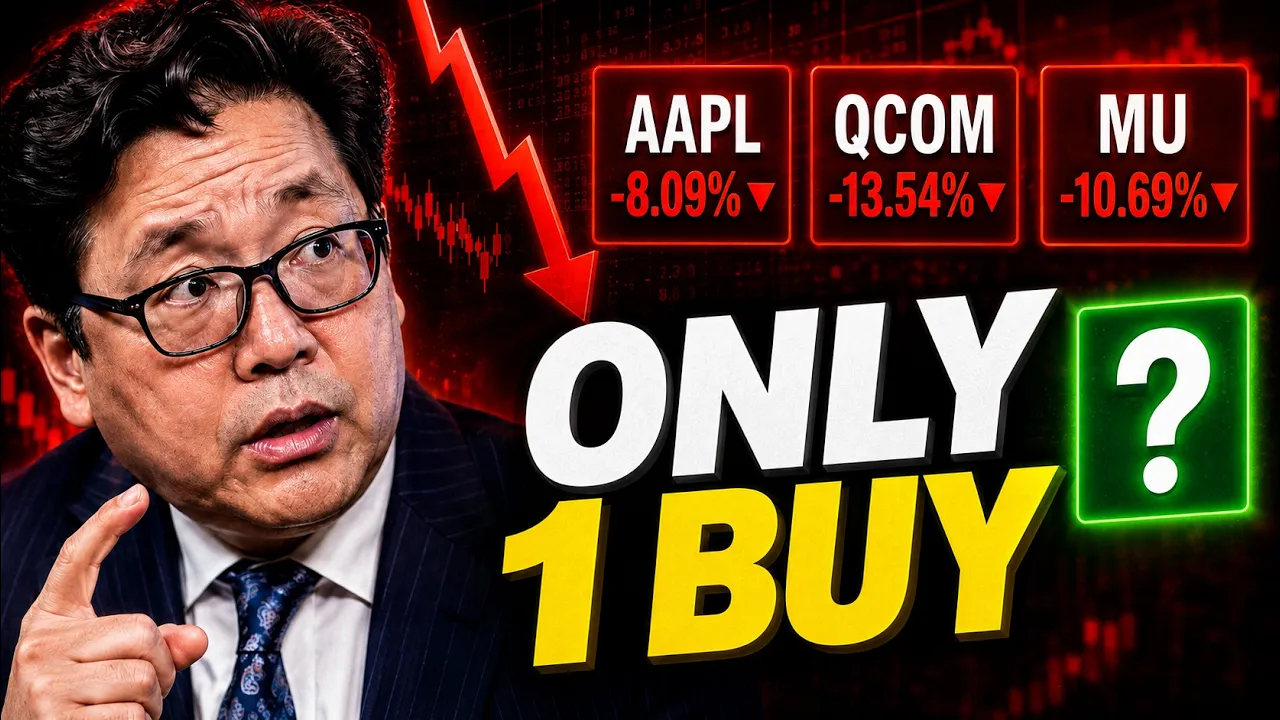
July did not end with the entire market collapsing. It ended with something arguably more important. Some stocks delivered historic gains while others suffered losses that would normally belong inside a bare market. In a single week, we had Qualcomm that was down more than 14%. KLA and Micron both of those dropping by double digits and Apple lost around 8% while we had both Caterpillar and L3 Harris punished almost as severely but this was not indiscriminate panic. Microsoft and Amazon surged after their earnings. Apple and Meta fell and investors were not abandoning the market. They were separating companies according to growth cash flow and expectations. And beneath the headlines, the broader market remains surprisingly healthy. The average S&P 500 stock is up around 12% this year, comfortably ahead of the cap weighted index at around 8.7, but financing conditions are becoming less forgiving. The 10-year Treasury yield surged from around 4.6% to almost 4.75 in just 3 days, increasing the returns investors demand from expensive stocks. Yet Tom Lee believes this volatility could be setting the market up for a strong August rebound. Here is why he describes the market as a coiled spring. Uh well, you know, I think August is a month to recover what how June and July have been sort of flat months, but earnings have >> earnings estimates have gone up a lot. So the stock markets kind of a coiled spring and then we had a huge deleveraging as you're talking about because of the AI unwind and Korea's policy makers panicking. So I I think the markets could actually rebound strongly this month. Like maybe we get to 7,800. Tom Lee could be right, but August and September have historically been the two weakest months of the year. And even a rising market does not guarantee that every fallen stock will recover. And that is ultimately the crucial distinction. A stock can fall because fear has temporarily overwhelmed fundamentals or because investors were previously paying far too much growth that is now deteriorating. So I've reviewed 10 recent losers based on four factors. Why each stock fell, its forward growth, its historical valuation, and the expectation embedded inside my discounted cash flow model. And I'm ranking them from the least attractive opportunity to the most attractive. Nine are stocks I would either avoid or wait on. And only one stock here is one that I begin buying this month. And at number 10, it is Apple. Now, that was down more than 7% after their earnings, potentially raising hundreds of billions of dollars in market value, but the decline here does need context. The stock still trades above the $300 mark, and the quarter itself, while it wasn't a disaster. The problem here was Apple's outlook. Management warned of significant component constraints while projected revenue growth of 9 to 11% became below the roughly 12% that Wall Street had expected. And if we look at their most recent growth, well, it's actually respectable. Yearon year, Apple's grown by around 14% while forward revenue is expected to remain around the 10% point. We can see both EBITD as well as EBIT. They're both forecasted to grow and earnings growth that still does look stronger 16% on the diluted forward basis and we can see EPS over the longer term sitting at 11%. Now these all sound excellent until we compare these numbers with the price that investors are being asked to pay today. And look even after the decline Apple still trades around 33 times Ford earnings against a 5-year which sits much closer to 28. The dividend yield is also materially below the normal level.35 versus 0.51. And if we were to look at the blue tunnel from Simply Safe Dividends, which highlights the intrinsic fair price, well, it sits above the upper end. This gap, although it is very small, does indicate a potentially undervalued situation. What's also interesting to note is where Wall Street see this company over the next year. When we look at the average price of $324, well that's very trivial in terms of the upside 4.9%. Although bear in mind range is quite wide, $215 low end, $400 at the upper end. And my base valuation comes to just under $241 against the market price of 308. Well, that represents zero margin of safety. In fact, we're talking about a 28% premium. Now, a one-day crash, it hasn't really repaired the valuation. And more importantly, when we look at the figures, the inputs, the assumptions, even my high case using 12% cash flow growth, that produces a value of $272, that still remains below the current price after the sell-off. And the reversed ETF here is suggesting that Apple needs to compound free cash flow at around 14% to justify today's valuation. Well, take a look. That is double the company's 10-year cash flow growth rate. Now, Apple, it does remain one of the world's best businesses, but a great business does not become a great investment at every price. At around $39, I'd need either significantly lower entry or a substantially stronger long-term growth. So, Apple, it comes in at number 10. The stock did drop, but based on my assumptions, it remains materially overvalued, and the next company has an even larger gap between market enthusiasm and cash flow value. But before we continue, I want to let you know that I released one weekly article covering severely undervalued stocks, as well as an update to the overall market, a fresh copy will be releasing a few hours after the release of this episode. So, click below, you can sign up and read all of these straight away. At number nine, we've got KA Corporation. Now, it's an outstanding semiconductor equipment business, and despite its recent decline, the shares remain more than 50% higher this year. If we look at the last 5 days, well, it's down around 13%. It is trading towards the lower end of the 52- week range, but still quite somewhere away from 52- week low of $83. And whilst we do get one buy rating from Wall Street, it is on the weak rent, 4.06 out of five. And the latest sell-off, it was partly driven by anxiety surrounding China's progress in domestic semiconductor equipment alongside a broad unwinding of crowded AI and chip trades. Now, unlike some companies in this ranking, KLA does not have a weak growth problem. Forward revenue, well, that's around 20% while both forward Ebit and EBIT sit around the 22 23% mark. Forward diluted EPS very strong as well, 25% with long-term EPS expectations above 21%. These are excellent numbers and KA's latest quarter while it supported the bullish operational thesis. In fact, KLA reported revenue above the midpoint of guidance, earnings at the upper end of guidance and accelerating momentum into 2027. That was not a bad earnings report. But the stock, well, it still trades around 33 times Ford earnings after we can see here reaching a peak around the 6065 mark. Compare that with the 5year average. Well, that sits below 23. The premium here is assuming that KLA's unusually strong growth will it continues to persist for many, many years. And probably no surprises to note that we do get that severe overvaluation signal. There's massive disparity from where it sits and the upper end of the fair value. Although going over the last 5 years, we can see it's not the first time we've seen a massive disconnect and it has lasted many years. Now, my base DC valuation is around $122 against today's price of $182. Well, no margin of safety again like we saw with Apple, but now we get an even larger premium sitting near 50%. If we just take a look, we have used the lower growth rate today of 15%. If we use the middle rate of 20%, it rises to 165. The shares only become undervalued in the most aggressive 25% assumption here where it sits at $222 and the market today is pricing in 21.6% annual cash flow growth. It means investors are already assuming something close to the company's optimistic forward trajectory. So KLA it may continue compounding at an exceptional rate and the stock could still rise. But when the valuation requires exceptional execution merely to justify the current price, the margin for error here becomes uncomfortably small. So KA ranks ninth. Excellent company, excellent growth, but still priced for near excellence after an 11 12% decline. Number eight though, closer to fair value, but it has their earnings tomorrow. And at number eight, that's Caterpillar. It's fallen sharply from its peak as we can see where it was trading over $1,000, now sitting somewhere around the midpoint of the 52- week range, but the stock is still up more than 40% this year and trades over the $800 mark. Now, the decline here reflects growing concern that Caterpillar's AI infrastructure premium moved too far too quickly. The stock became a major beneficiary of demand for data center power generation and related equipment. And we even had recent analyst downgrades questioning whether the AIdriven growth, the associated margins, and Caterpillar's premium valuation can be sustained. The company's now expected to prove the thesis in its upcoming results. So, it is worth flagging they report before the market open tomorrow. It makes the valuation especially important because the current price leaves very little protection against an earnings disappointment. Now, Wall Street overall, they see this at $959 over the next year, indicating around $18% upside. But again, like most stocks, the range is very wide at the higher end over $1,200. Now, the underlining growth itself, it's not poor. Revenue is up 12% year-over-year, and forward revenue expected to be around the 9 to 10% mark. long-term EPS estimate that's also very healthy. But the cash flow picture here is less impressive. We can see that EBIT in fact that was down 3% year-over-year and levered free cash flow down 45%. It creates a significant gap between narrative in current cash generation and it trades around 32 times Ford earnings almost double its 5year average of 17 its dividend yield only8% compared with the average level of 1.8 8. And we also get the disconnect when we take a look here at the blue tunnel. Quite significant as well, although it's been that way over the last 12 months. Pretty much started from mid 2025. And my blended valuation comes to $89, almost identical to the current market price. On that measure, Caterpillar is fairly valued, not a bargain. But the individual methods here, while they tell a more complicated story, the multiples model around 812, dividend around 932, while the cash flow model only produces $682. In fact, when we take a look, the reverse DCF requires around 14% cash flow growth. That's a demanding hurdle for a cyclical industrial company whose latest annual free cash flow was essentially flat. So, I'm not saying to short Caterpillar a strong earnings report in fact could easily produce a very sharp rebound, but with the shares around fair value before results. I don't see enough upside to accept the downside risk. So, Caterpillar comes in at number eight. And number seven offers a yield above 6% but the valuation is less attractive than the headline income may initially suggest and that is Ultra Group is an entirely different investment from the technology names in the list. limited growth, high cash returns, and a dividend yield that now sits above 6%. If we take a look at the last five days, well, it's down just over 5% over the last month, down around seven. And they did recently have their earnings, although they recovered part of the decline before the end of the week. So, the market reaction was severe, but not sustained at its worst level. The reason is straightforward. Ultra miss quarterly profit estimates as premium cigarette demand weakened. Marble volumes declined while consumers increasingly moved towards lowerc cost alternatives. The on nicotine pouch business also disappointed amid greater competition and adjusted earnings missed expectations. Although management maintained their fullear earnings guidance now it does remain a low growth company. Forward revenue that sits below 1%. Forward EPS well that in fact sits around 4.6% 6% and estimated 3 to 5 year EPS well that sits around 4%. Now a 6.2% yield does sound attractive but Ultra's 5year average yield sits closer to 7.8 meaning the shares are actually less attractive on income than they've typically been. And the same issue appears when we look at the earnings multiple. It trades around 12 times Ford earnings against a historical 10. It's inexpensive absolutely but relatively expensive for Ultra. And you can see a slight overvaluation signal when we look at the blue tunnel. Now my blended intrinsic value sits around $66 with a share sitting around 68. The stock sits slightly above fair value. The DCF we can see around $73. It is more favorable producing a value of 73. Now the reverse DCF that's even suggesting the market is pricing in slightly negative cash flow growth which does offer some downside protection. But the valuation range is narrow. Most methods here cluster between $66 and $73. At today's price, the likely returns depend predominantly on collecting the dividend rather than meaningful multiple expansion. For investors who are prioritizing income, Ultra may remain a reasonable hold. For this video, we're looking at which decline created the most compelling total return opportunity. On that measure, Ultra is not the winner. So, it comes in seventh. And at number six is going to be one of the fastest growing companies in the market and one of the hardest to value. And that's Vertive, which supplies power and cooling infrastructure to data centers, placing it directly at the center of the AI capital spending boom. It's up 49% year to date. But when we look at the last 5 days, it's down around 18%. Now, it tells us expectations entering the quarter were extraordinary high. They reported quarterly sales around 3.27 billion, up strongly year-over-year, but below the rough 3.38 billion that Wall Street expected. The modest miss here triggered an outsiz reaction. Now the operating growth, it does remain exceptional. Revenue was up 26% year-over-year. Forward growth above 31% is not a company whose underlying demand is disappeared. And we can see both forward EBIT DAR and EBIT in fact sitting above 40%. Forward EPS that's close to 47% while free cash flow per share that's projected to increase almost 40%. However, the problem as probably expected here is the price. It trades around 36 times on a forward earnings basis and nearly 27 times when we look at EV to EBIT DAR. Substantial pre as well when we compare it to the sector. We're talking triple digits and their forward enterprise value to sales. Well, that's around three times the sector which sits at 2.22 for comparison. The market already assigns considerable value to the AI infrastructure opportunity. And Wall Street, they do like it. They have 40% implied upside over the next 12 months, target of $338. Where my base ECF gives a $260 price against where it sits today. There is a margin of safety, although on the smaller side at 7% positive, but not enough for such a volatile growth stock. The range we can see here is wide. In fact, at 10% growth is worth around $191, 15% 259, at 20% 351. And as always reverse DCF very important requires just below 14%. It's below present forecast with a cash flow history is short and highly influenced by the recent data center boom and Vertive's opportunity is real but his customers are spending at unprecedented levels while their combined free cash flow is under pressure. It raises the questions about how long the present spending rate can persist. And there's also another reason investors demanding greater valuation discipline. Muhammad El Arian argues that the rise in yields is being driven by real financing pressure, not merely changing inflation expectations. >> Again, no, it's real rates that have gone up, not break evens. And I think the basic issue and I I've been talking about this for the last few months is if you do John a very simple sources and uses of loanable funds what we used to do in the old days before the the era of abundant liquidity you would figure out very quickly that between the government deficit between the tech bond issuance that is happening this year weights need to go higher. We have an amazing capital markets. It can fund innovation. It can fund what's going to move productivity up. But in the short term, the funding cost is going to have to go up to attract the sort of money we need for all the potential uses of bond financing. >> That matters because higher real rates compress what investors are willing to pay for future growth. Companies like Vertive can continue growing rapidly while their valuation multiples still decline. So, Vertive, it ranks sixth. I like the company far more than I like their current margin of safety. A price closer to the lowercase range would change the decision considerably. Now, entering the top five is UPS. It combines three features investors normally associate with a bargain, a low earnings multiple, a yield above 6%, and a price near the lower end of its range. And we can see in just the last week, the stock was down nearly 10%. Essentially, it dropped even though it beat quarterly expectations and raised its fullear revenue and profit outlook. That is the first time this decline deserves closer examination. They reported around 23 billion in quarterly revenue and adjusted earnings of $1.76 ahead of expectations and management raised fullear revenue guidance to around 91.2 billion. But investors, they remain skeptical because recent growth has been weak. Revenue in fact declined on a year-on-year basis. EBIT, well that in fact fell around 7% and diluted earnings per share down 20% year-over-year. Now the forward outlook does suggest stabilization rather than rapid expansion. Forward revenue expected to grow 1.4% forwardy bit around 2.6 and we can see forward diluted earnings per share 1.5% where UPS in fact trades below its normal earnings multiple sitting at 13.3 against the 5year average of 15.4. yield. Well, that's also well above its historical norm, 6.3. So, investors are currently being compensated while the company attempts to complete its operational turnaround. And we do get a slight undervaluation signal when we look on the blue tunnel. Zooming out to the last 5 years though, it is worth pointing out that the underlining fundamentals have been deteriorating. So, you are betting on a turnaround play. Now, my blended intrinsic value comes to $112. Against current price, we're talking around a 7% margin of safety. That is also without considering the dividend. Now the models they actually disagree considerably. The DCF $117, the dividend coming in at $102 and the historical multiple sits at 140. The blended result, well, it pretty much sits between them. The main concern is dividend coverage. We can see here they reported 5.5 billion in free cash flow in 2025, while UPS expects around 5.4 billion of annual dividend payments. That leaves little immediate flexibility. Now, on the more positive side, the market requires around 3.7% long-term cash flow growth. UPS here doesn't need spectacular growth to deliver a respectable return from this valuation. And the company's also completed its plan reduction in lower margin Amazon volume and is targeting 3 billion of cost savings. But investors still need evidence that these actions will produce sustainable margin improvement. Wall Street not the most in terms of upside around 11% over the next year but it ranks fifth here because the valuation and yield are becoming attractive but the cash flow and dividend equation they remain too tight for it to become my single buy. Now before reaching the final four this is the framework I use every week growth historical valuation cash flow assumptions and margin of safety. Subscribing here helps you avoid confusing a falling price with genuine value. At number four, we've got Micron, and it's delivered extraordinary results this year, gaining around 190% even after its latest fall. That alone should make investors cautious about calling a 10% or so decline cheap. Over the last 5 days, down 11% over the last month, it's down around 29. Now, it lost more than just 10% over the week. And it looks to continue to be falling when we're looking at the pre-market. It's following enormous volatility across global memory and semiconductor stocks. Now, there's also profit taking which is playing a role, but investors are also weighing higher interest rates, Chinese competition, and the possibility that today's extreme memory pricing eventually attracts additional supply. The current growth metrics here though are unlike anything else in this ranking. Revenue was up 167% year-over-year. forward revenue expected above 100% and Ebitar climbed up 332% year-over-year while operating growth that was sitting even higher at 676. Micron is benefiting from exceptional demand for high bandwidth memory and constrained industry supply reported EPS growth exceeded 700% while EPS growth moving forwards expected to be close to 400%. These figures are real, but they're also a reminder that Micron is emerging from a deep cyclical trough. The historical valuation here from Simply Safe Dividends comes around six from seeing Alpha around 11. Either way, the multiple looks remarkably low. But remember, low multiples often appear near peak cyclical earnings. The important question is not whether Micron looks cheap on next year profit. It's how much of that profit survives when supply catches demand. Look at the blue tunnel though. This is what we would call a potential severe undervaluation signal. Now this is my lowase DCF which produces around $829 against $799 where we're talking only a 4% margin of safety. But the critical assumption here we can see it immediately 3.7 billion of free cash flow in 2025. Analysts are forecasting a little bit higher than what we've used for 2627. So, we have tried to be a bit more conservative, but that is almost a t-fold increase just for full year 26. And then once that enormous starting year cash flow is accepted, we're only seeing 5% growth. That is the rate that we've used. 10% produces over $1,000,5,400. And the reverse DCF, well, therefore, it appears conservative at 4.3%. But the apparent conservatism comes after assuming a dramatic step change in the cash flow base. That distinction matters and it's one where Wall Street see a lot of upside over the next year implied 85% from their target of 1522. Bear in mind low sits at 361 at the upper $2,200 and their latest official guidance remains exceptionally strong including continued HPM shipments and record financial expectations. The business momentum is undeniable but the risks are equally clear. Chinese rival is increasing capacity and market share while investors must determine whether the current memory shortage is structurally different from previous cycles. But Micron does illustrate why investors need to distinguish between volatility and permanent impairment. Normal markets can produce substantial corrections without destroying the long-term trend. >> So our base case has been we're going to be higher over the next 12 months, but it's not going to be in a linear fashion. And we assume that we're going to have at least one maybe more draw downs of five to 10%. We call that tier one on our tiers of fear framework. >> A 10% correction can be completely normal. But after Micron's nearly tripled, I require a larger margin of safety than 4% before buying into one of the most cyclical industries in the entire market. So Micron ranks fourth. Its upside could ultimately be enormous. But the present DCF result depends too heavily on peak light cash flow for it to become my highest conviction purchase. At number three, we have L3 Harris and unlike many defensive companies. It's down for the year despite powerful demand for missiles, communication systems, and national security infrastructure. The stock itself, when we look at the last 5 days, down 9% after reporting their results. Yet, the earnings themselves were strong. Revenue and profit beat expectations and management increased fullear guidance. Now, forward EPS growth sits around 20% while estimated long-term EPS around 21-22. These figures place L3 Harris among the stronger growth profiles in the ranking today. Revenue growth more modest. We can see 6% on a forward basis but expected free cash flare that's anticipated to be around 14%. The company also benefits from a substantial defense backlog. The market focus instead on the planned IPO of L3 Harris's missile solutions business. management delayed the transaction because of market conditions postponing a catalyst investors expected to unlock value and they're also not cheap on earnings multiple iteings above the 5-year average of 17 and that is consistent when we see the overvaluation signal here sitting above the upper end of the fair value we can see the valuation methods vary dramatically the DCF coming in at $372 multiple $247 dividend coming in at 265 where the blended sits just below the $300 mark. Now the DCF when we look $372, we can note we use a growth rate of 8% market is only expecting $4.5%. So if L3 Harris achieves anything close to the model's base assumptions, the shares appear meaningfully undervalued. The underlying defense demand remains strong here. Earnings expectations are improving and the delayed IPO changes timing more than it changes the core business. It makes the sell-off interesting today where Wall Street expect around 32% upside over the next year. So, LHX comes in third. Next company though offers the largest raw valuation gap of the entire group. And at number two, we've got Qualcomm, which trades around $147, down 14% year to date, and sits very near towards 52-E lows. If we look at the last 5 days, it's down around 13%. And that's after management issued a disappointing near-term earnings outlook. Unlike KLA, this decline reflected genuine weakness in expected earnings power. Revenue growth as well yearonear that's around 2% forward growth expected 4.7%. These numbers are significantly lower as we can see their own 5year average as well as the wider semiconductor sector. EBITR when we take a look EBID as well as earnings per share. All of these on a year-on-year basis, they've all declined. While forward EBIT, that in fact remains negative. Diluted earnings per share pretty much flat expected. It explains why the market assigns Qualcomm a lower multiple and higher memory costs are pressuring their margins while Qualcomm expects its share of Apple's modem business to decline more quickly. Its next core EPS4 cost also came below market expectations. And we can see they trade at 16 times forward earnings slightly above the 5-year 14. And on the blue tunnel we do sit not only sitting just above the upper end but also the underlying fundamentals have started to deteriorate. Now the base case DCF comes at $238 against where the price is today. That's a headline margin of safety of more than $ 38% even using zero growth where we can see here comes to $184. that indicates upside around 25% at 4% grows to 238 and at 8% well over $300. The reverse DCF here is negative. In other words, the market appears to be pricing in sustained decline in cash flow despite Qualcomm's efforts to expand into automotive PCs and data centers. Cash generation has recently improved substantially even while accounting earnings have weakened. The diversion may indicate that the market's pessimism has become excessive. So Qualcomm is the closest challenger for first place, is profitable, financially strong, and valued as though his Apple exposure and handset challenges will overwhelm every diversification effort. But the earnings reset is not theoretical. Apple modem revenue is declining, costs are rising, and the newer businesses will still need to prove that they can replace the loss profit at attractive margins. It comes in in second place. At this price, I would continue watching it extremely closely. But the stock at number one offers a cleaner separation between the latest bad news and its central earnings thesis. And the stock I would begin buying this August from the list is Novo Nordisk. It's down we can see 7 and a half% year to date over the last 5 days down around five, but in fact fell around 10% after reporting disappointing results from a major cardiovascular drug trial. The failed Zeus trial well it tested in patients with cardiovascular disease, chronic kidney disease and inflammation. The drug reduced inflammatory markers but failed to reduce major cardiovascular events. And this is obviously a genuine scientific and financial setback. It weakens their efforts to diversify beyond diabetes and obesity and results in a non-cash impairment charge and their broader growth that's also slowed where forward revenue sits around 4.6% 6% while forward EPS growth sitting at 1.3. The market is here correctly recognizing a significant reset but that reset is now reflected in the valuation trading 14 times Ford earnings less than half its 5year average of sitting around 30. The yields also risen to near 4% compared with their 5year of 1.4. Investors are being paid far more while waiting for the business to stabilize. And my DCF produces an intrinsic value of around $60. Against today's price, we're talking margin of safety around the 21% mark. And when we take a look at the inputs from the DCF model, we're using only 4% cash flow growth. Novo Nordisk is worth roughly the current price at $860 at 12% rising to 75. And the market is requiring just 3.9% annual cash flow growth. Novo no longer needs to recreate its historic growth rates to generate an acceptable return from this valuation. And bear in mind, we have used analyst estimates for the next two years, 2627 before stabilizing using the growth rates provided. More importantly though, the latest fail trial does not alter Novo's current 2026 operating profit outlook. It damages a pipeline opportunity but not the existing OMIC and we gave earnings base. Now, important to note that they do report earnings on Wednesday, which creates short-term risk, which is precisely why I would not buy a full position immediately before the announcement. And the risk with Novo is that the obesity, market competition, pricing pressure, or weaker demand causes estimates to fall again. The current growth rate is poor for a reason, and Novo is no longer the effortless growth story it once appeared to be. But trading around 14 times earnings, the valuation no longer assumes effortless growth. It assumes a much slower company and that creates the opportunity if the core franchise merely proves durable. So these 10 declines are not equal. Apple and KLA remain expensive. Caterpill and Ultra sit near fair value. Vertive offers growth without enough protection. UPS becoming attractive but need stronger cash coverage. Micron has extraordinary momentum but highly cyclical assumptions. And L3 Harris does look like it could be undervalued today. Qualcomm though, it offers the largest raw valuation gap and could ultimately become the highest return stock in the group, but its near-term earnings deterioration is directly connected to the reason the shares fell. And Novo's latest decline came from a failed pipeline asset that does not change current operating guidance. While the market now demands less than 4% long-term cash flow growth, the combination, well, it gives Novo the best balance of valuation, embedded expectations, and risk adjusted upside. It's not risk- free. It's simply the only one where the current price sufficiently compensates for those risks today. Let me know your own thoughts below, whether or not you agree with number one, or maybe you choose others from the ranking, as well as subscribing. We've just released the latest weekly article minutes ago. More importantly, though, have a great day. I'll see you on the next

Comments 0
Sign in to join the discussion.
Sign inNo comments yet. Be the first to share your thoughts!