The Global Monetary Reset Has Begun (Japan Is Just the Start)

- Video return
- -0.62%
- Calls
- 3
- Buy / Sell
- 3 0
- Published
Recommendations
Entry is the asset's closing price on the publication date. Current is the last close on record.
-
Entry $123.54 04 Aug 2026Current $121.29 07 Aug 2026Result −$2.25
Yeah, and I still like it. It's Credential Financial. ticker symbol is PRU. Great dividend yield, 4 and a.5% yield.
-
Entry $179.79 04 Aug 2026Current $180.82 06 Aug 2026Result +$1.03
So, Bank of Montreal. Ticker symbol is And this is a stock that is currently in the Oxford Income Letter right now.
-
Entry $128.00 04 Aug 2026Current $128.37 06 Aug 2026Result +$0.37
We have the same situation here right now with Merc, ticker symbol MRK.
Full Transcript
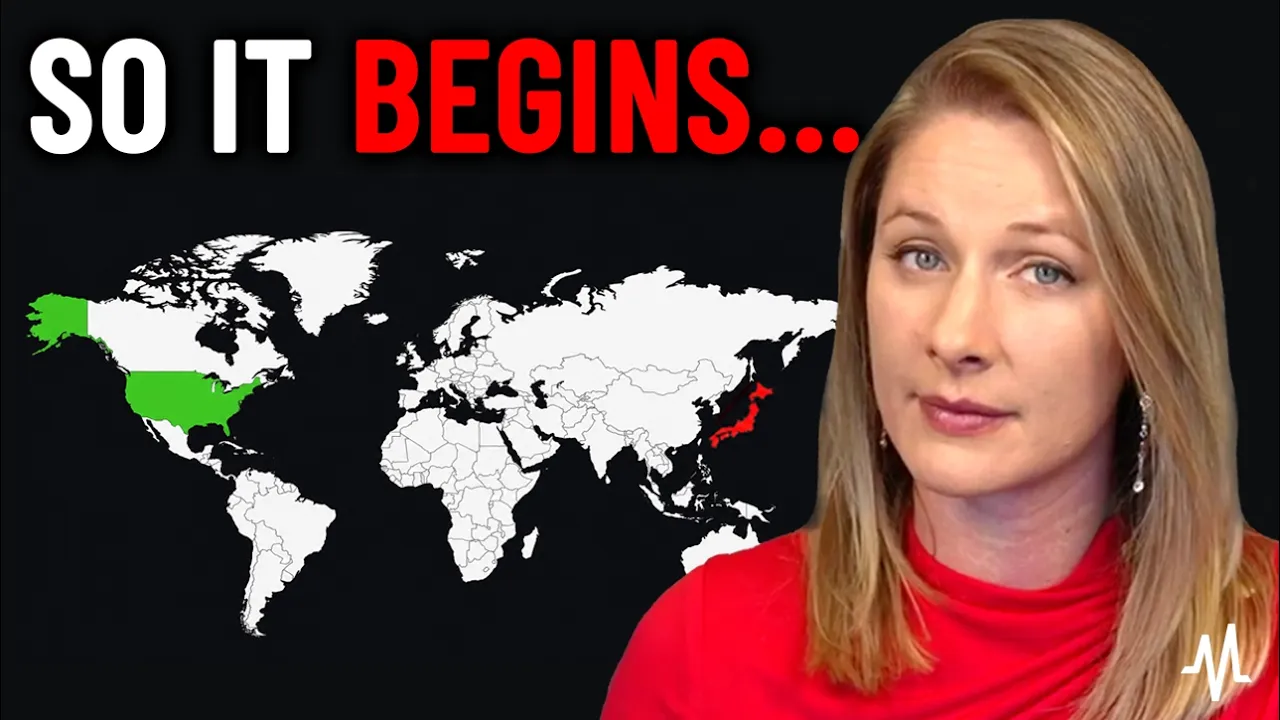
Japan's currency was [music] just the beginning. A global monetary reset is underway and it could have a tremendous [music] impact on your investments. Joining us today is Mark Likenfeld with the Oxford Club to talk about how this could all impact the US economy, the stock market, and your investments. By the end of this video, Mark is going to share three different stock ideas that are perfectly positioned for exactly the kind of economic setup we are in today. Mark, thank you so much for joining us and sharing some of your wisdom with our viewers. So, let's start with that broader picture. Let's talk about what is happening in Japan with our currency and the historic move the US made. Why is this such a big deal? >> Sure. Well, the yen is the weakest it has been in 40 years. Uh so that's, you know, that's pretty significant. You know, countries do defend their currencies uh you know, occasionally when it gets too weak, but this is the first time in I believe about 30 years that the US has joined Japan in defending the currency and trying to prop it higher. So, it was a a pretty unusual move by the United States for sure. >> We certainly saw some reactions in the market after that move was announced. Let's talk about that that ripple effect. You know, oftent times we're seeing this referred to as a global reset happening with wealth and and the currency markets across the globe. Do you think that the implications really are that big because of this one move with one country? >> Perhaps it's a canary in the coal mine, meaning that other countries now know that the US is going to ensure that uh that other countries don't have to sell their treasuries. And what I mean by that is the reason that the United States came to the yen's rescue is in order to to buy yen, Japan needed to sell dollars. And to sell those dollars, they were going to have to sell treasuries to get their hands on those dollars uh in order to then exchange them for yen. United States did not want that to happen because a massive sale of US treasuries is going to raise interest rates. uh you know as as bond prices go down uh the rates go up. So the United States wanted to ensure that didn't happen and which is why the United States then enacted uh and or acted I should say uh and then bought yen with US dollars themselves. So Japan did it as well but they avoided having to sell off US treasuries in order to do so. So the fact that the US did that and it's not the first time they've ever done it, but it's not a very common thing that they do. The fact that they did that perhaps signals to other countries that if they need to take a similar course where they need to defend their currency and prop it up, then perhaps the US comes to the rescue uh in order to make sure that those treasuries don't get sold. Yeah, it's an interesting precedent, but I think the reason that you just explained is the key point for retail investors to latch on to here. You talked about interest rates and the concern over rising rates and that has been such a key conversation in the US. The the Fed meeting last week sent shock waves through the market with everyone reacting to that rate news differently. Some were upset that rates didn't lower. Some were upset that that rates didn't raise. Um there was a a huge reaction to that Fed meeting and the decision to really not change rates. There's lots of speculation about what's going to happen with interest rates from the Fed over the next few months and the rest of this year. Uh how are these all tied together, Mark? As far as the currency markets, uh, you know, as I mentioned, if treasuries are sold, rates go higher and and certainly, you know, not just President Trump, I think any president would try to avoid uh a similar situation. But the president has certainly made it very clear he does not want interest rates higher, does not want the Fed to have to raise interest rates. So, you know, this is this is a a very clear connection between the currencies and overall interest rates, what happened at the Fed. Um, so, you know, going forward, it it appears that Kevin Walsh, the Fed chair, is okay with letting the the markets kind of dictate where interest rates go rather than forcing their hand. And right now, interest rates have been rising pretty steadily uh without the Fed need needing to raise rates or at least in his opinion. So if the if the market can kind of take care of that and raise rates and and perhaps slow inflation down a little bit on its own, then maybe the Fed doesn't have to take its own action. >> So if we are in this uh environment where interest rates are kind of naturally raising on their own, what does that mean for investors? And that's really the main point of this video that we're talking about today is offering some guidance on how to best navigate your own investments during this higher rate environment right now. So let's talk about just broad broadly what does it mean for investors when you start to see um an economy in a market like this right now? Well, generally speaking, it means that investors have alternatives to stocks because if you can get uh you know a higher rate of interest on a bond, whether that's a treasury or a corporate bond, what have you, uh which are typically safer than stocks, then some investors will gravitate towards those safer investments in order to get uh you know, if if not a similar return, but you know, something that's certainly higher than it has been the last few years without the risk of stocks and especially right Now, I think where, you know, we've got the AI bubble in full effect. Doesn't mean that it can't continue to expand for several years, uh, and stocks would go a lot higher, but there's certainly risk and I think there are a lot of people that are concerned that it it could, you know, it could pop. We could hit a bare market um, at any time really. And and you know, bare markets happen whether you're in some kind of tech bubble or not. Bare markets do occur. So having investments where you might be able to earn five, six 7% uh fixed where you don't have the risk of the stock market suddenly gets appealing especially if you have a shorter time horizon. So uh that's why interest rates are are very much on investors minds because it can not only give you alternative investments but sometimes it does take the the wind out of the sales of the stock market as well. Yeah, there's certainly plenty of investors out there who are going to move to safety when there's any kind of canary in the coal mine situation happening and so a more attractive bonds are interesting. But for those investors who'd rather stay in the market uh investing in individual stocks, are there specific sectors of the market or specific stocks that do better in this kind of rising rate environment? >> Oh yeah, absolutely. And I'm glad you brought that up because there are areas of the stock market that do well when rates rise. And one of the the main areas is financials because typically uh you know the financial companies and and and in a wide variety of different types of businesses in that sector. But for the most part they very are often are investing whether it's your insurance premium, whether it's your your bank deposit, what have you in fixed income instruments. And so as rates are rising, they're earning more income. those financial institutions are generating more income from the money that they have collected from their customers. So financials are a great place to be when rates are rising and we're actually seeing that in the market right now. Financials have have really started to pick up over the last few weeks to few months as rates have risen. >> Well, that is what you have for our viewers today are three different stocks where investors can turn in these kind of high interest rate environments that can really pay off long term, especially in this environment. And I'm really excited about some of these names that you have for us. I know that a couple of them are names that you have recommended in your Oxford Income Letter. This is your newsletter specifically for your subscribers where you share stock ideas every single month that are all about generating income as investors. And a couple of these names have performed incredibly well for your members. If you would like to join Mark's Oxford Income Letter newsletter, we have a special offer for viewers today. Scan the QR code or click the link in the description to get your special offer to join that Oxford income letter now and learn about these stocks when Mark first recommends them so you can see some of these same gains in your portfolio by following the guidance and advice that Mark and his team at the Oxford Club have to share. Mark, let's get to this first name. And again, this first one is one that you have in the past recommended to your followers even a couple years ago. >> Yeah, and I still like it. It's Credential Financial. ticker symbol is PRU. Great dividend yield, 4 and a.5% yield. They've been raising the dividend every year since 2009. And you know that I love those perpetual dividend raisers, the companies that are raising their dividend every year. So, you know what I love about those kinds of companies, these dividend growth companies, is it increases your buying power or at least maintains your buying power in a high inflationary environment where you're getting more income every single year. So, I think that's really, really important. As far as the company itself, they're one of the the big sellers of annuities. Now, I will say, and I've I've published I've been on record. I'm not a big fan of annuities as an investment. I know there there are plenty of people that like them, and it's one of the reasons I like Credential Financial. They're quite popular. Um, to me, uh, they are extremely complex. They are expensive, and if you're buying a variable annuity, they they have a cap on your upside. So, I don't like them as a product, but that doesn't mean I can't like the stock. I don't I don't love tobacco but tobacco stocks uh are very good stocks as well. So credential financial is a big seller of annuities which become more popular as interest rates rise because for the investor they can lock in a higher rate of return. So as rates are rising this should be a very very uh strong environment for credential. Earnings are projected to grow 32% over the next three years. So they've they've got a you know really nice fundamental picture. It's dirt cheap. It trades at just eight times earnings versus 12 for its peers. And kind of a cool thing that they have done besides for just selling annuities and insurance products, they have acquired pension obligations from some of the largest companies in the United States. We're talking IBM, RTX, the former Rathon, uh, Lockheed Martin. So, how that works is for a premium. So the companies pay Credential a premium and now Credential manages these pension obligations and is responsible for these pensions. U but as interest rates go higher they are now making more money on the money that's set aside to meet these obligations. So even though their costs haven't gone higher they're generating more income from these pensions. The other thing too is as rates rise, they are then able to uh to offer cheaper products or or services to the companies that want to offset their own pension obligations. So, it's it's really very much a win-win for a company like Credential. >> Yeah. And when you look at Credential's chart, you can see what you mentioned earlier that the financials are already starting to get a nice little boost and getting more interest right now from the market and that is showing up in their chart. There has been a really steady gain the last few months for this stock. It's up uh 20% in the last year, which you know compared to tech isn't a massive gain, but it's a very steady growth stock. And I I think it's important to talk about that a little bit more about why adding in some of these names are important for your portfolio, especially in the kind of environment that we are in. >> You know, you you certainly want some slow and steady win the race type of companies. when interest rates rise, if they rise quickly, generally that's not great for any company, but tech especially can get hit very hard. Uh so having a financial company or having several in your portfolio typically provides some ballast when when things get a little hairy. This stock like I said is trading at eight times earnings. So if we hit a bare market, uh the you know the floor is a lot closer to the current price than a lot of other sectors especially tech. >> Yeah. Let's talk about competition a little bit in this one. I I know you mentioned that this is cheap compared to competitors. How does credential stack up against the competition as far as business and earnings as well? >> Yeah. So, uh, Credential, you know, it's right in there with the the rest of the insurers, especially the annuity companies. One of the reasons I do like it is because it is cheaper. Uh, like I said, you know, earnings growth is expected to be substantial, 32% over the next three years. though on average that's double digits annually which is is pretty strong especially trading at eight times earnings. So I I love the fact that it's got that big yield and it is cheaper than its peers while it is still delivering or or should deliver significant growth and if rates do continue to rise then those earnings projections I would think would only go higher. >> All right, a great first stock to look at. Let's move on to the second name that you have for us today. >> Sure. So, we're going to stick with the financial sector for the second one, and that's Bank of Montreal. Ticker symbol is And this is a stock that is currently in the Oxford Income Letter right now. Uh, so Bank of Montreal is a 2.7% yield. So, not a huge yield right now, but it's it's, you know, it's significant. It's something. Uh, but they also raise their dividend every single year. Uh, for the past 11 years, they operate in Canada and the United States. They have a very meaningful presence in the US. So, it's not a pure play for Canada, but it is a Canadian company with a a very large presence in Canada. And Canada's rates are rising, too. If you look at a chart of their 10-year uh government bond versus our US Treasury, it's it looks exactly the same. The numbers are different. Their rates are a little bit lower than ours, but the the chart looks exactly the same. So, their rates are rising as well. Uh that's going to be positive for Bank of Montreal. I'm bullish on Canada in general as we've talked about before. I'm I'm bullish on commodities, natural resources and Canada obviously a very dependent on natural resources. Uh it's a very important part of their economy. So should that continue to do well uh you know that's going to be very positive for Canada. Also uh the dollar has been strong uh over I mean the last couple of days not so much with this intervention in Japan but for the most part the dollar has been very strong. That's actually very positive for Bank of Montreal because their earnings are in dollars. So, like I said, they have uh a substantial presence in the US. Those US dollars when they come over the border uh and come back to the the corporation in Canada, that means more Canadian dollars if the US dollar stays strong. So, even though they're not making more money in the US, it translates to higher earnings in Canada. So, I I really like that. uh and then also double digit earnings growth like credential are expected in each of the next three years. So they have a a great track record of earnings growth, net interest income which is kind of the most important way that we measure a bank's performance uh that has been rising steadily every year for at least a decade now. So really really strong bank in a a geography that has a lot of advantages right now with that that decent yield that's growing every year. >> Few things to unpack from that. One thing that really stood out to me is you noting that interest rates are also rising in Canada and we started this video talking about kind of a global reset and it's just another canary in the coal miner. This isn't just interest rates are not just a US discussion right now. This is something happening globally. There's some different cracks showing in different markets all over the globe. So, it's something for investors to pay attention to. So, that that stood out to me. But also, just looking at the chart for this one, it has been such a strong and steady growth story. Uh so many investors are looking for large gains right now. That's what we hear from most of our viewers all the time and rarely do they look in the financial sector. But if you look at this stock's performance, it's up over 60% in the last year and this is a finance stock. Um and so you can find that kind of larger returns in stocks just like this one. Talk about the kind of returns the stock has seen for your subscribers to the Oxford Income Letter when you guys first recommended the stock. Yeah. So, I first recommended uh Bank of Montreal uh three years ago in May of 2023. So, just slightly over three years ago. And the position is up uh over 140% in 3 years. So, pretty much hanging in there with technology, which you would not expect from, you know, somewhat of a a sleepy Canadian bank. It certainly was not on people's radar, I think, three years ago as something that was going to deliver big gains. But, you know, kind of one of the things that that I have found in in running the Oxford Income Letter portfolio for 13 years now, we started in in 2013, is that very often some of the stocks that you you don't expect are going to be, you know, really big winners end up going on these fantastic runs. They're they're not on people's radar and then they just, you know, they they really go crazy. We've had for example Abby, a drug maker in the portfolio for quite a long time. Uh and that's position is up almost 600% as of as of we're recording this right now. It's 569%. And this was a time where uh the stock was kind of beat up. People didn't really like it for various reasons. And and I'll be honest, I didn't expect this to become a five or six bagger myself. I certainly expected the dividend to continue to rise. I expected to be a steady performer, but that happens sometimes with these dividend payers where you get the right stock in the right sector at the right time and they'll perform just as well as some, you know, big tech stocks, some stocks that you're seeing on in the in the mainstream media every single day and nobody's talking about these other names, but uh they'll they'll put in some big performance. So, you know, I'm not against tech stocks at all. you know, if if if that's what you're into, that's you you want that kind of momentum, you can handle that kind of risk, go for it. But you should absolutely have some of these other kinds of names, not only for the income and the income growth, but also because of the performance because they do take off. Some of them do absolutely put in monster returns. >> Yeah, we can absolutely see that with this stock in particular. Such a great name to look at. I think that the first question people have is it's great to see that this stock had some really great returns. If you missed getting in two or three years ago, is there still a chance to get significant gains as an investor just coming to the table in this stock today? >> Yeah, I definitely think so for the reasons that we discussed. We've got rising interest rates uh in the US and Canada, that's going to be positive for BMO's earnings. Again, a Canadian economy is is pretty solid and if natural resources are strong, that's going to be very very strong for You know, the the currency exchange if the dollar stays strong. So, you know, there are several things that kind of have to continue the way they are for this to to kind of really achieve some more liftoff. But even without that, it's definitely a, you know, slow and steady wins the race type of investment. Even if those other things kind of um reverse or or or you know don't have a a hockey stick type uh uh you know chart, I do think this is a a stock that is going to perform well over the long term that will provide stability in the portfolio, will provide that dividend growth and that's worst case scenario. Best case scenario, we do get that that really big ramp higher uh and as as it's continued. I mean, you know, you could argue that to some degree this is a momentum stock right now because, as you mentioned, it's up 60% for the year. So, uh, you know, there there's no reason to think that that's going to stop anytime soon at this point. >> Yeah, this one very much looks like it's it could be considered a momentum trade with how well the stock is performing right now. And you mentioned your performance in Abby as well. Some of these names that also generate income uh also generate some really great gains as you said earlier. And so if you're looking for more names like this to add into your portfolio, make sure to check out this special offer to subscribe to the Oxford Income Letter so you can learn about these stocks when Mark first recommends them. Again, Mark, some really great information here already. You can scan that QR code, click the link in the description, and get that special offer today. It won't last forever, so definitely go and check that out if you're interested. Right now, Mark, you've got one more name for us, and I know you mentioned Abby already. We're moving on to kind of a similar space. Yeah, and it really reminds me of Abby quite a bit. When I recommended Abby, they had the biggest selling drug in the world at the time called Humira. And everyone was worried because it was facing a patent cliff. It was going to eventually go generic and everybody thought that was going to be the end of Abby um and their revenues and and you know, basically the company was in a lot of trouble. Uh I argued that that was not going to be the case that they were going to uh be able to hold on to their patents a little bit longer than other people expected. Plus, they were a very inquisitive company. They were buying companies, getting new drugs in the pipeline. They're also developing their own drugs. We have the same situation here right now with Merc, ticker symbol MRK. The biggest selling drug in the world right now is Merc's Kruda. It's a cancer drug. $32 billion a year in revenue. Treats a variety of cancers including uh non small cell lung cancer, melanoma, triple negative breast cancer. Um but and this and this does face uh patent clips in 2029. I believe they are taking steps to come up with different formulations to be able to extend that patent. Uh and and I am pretty confident they're going to succeed. Uh and Kruda revenue is not going to drop off a cliff. But they also have 60 other approved products. They've got 50 programs in phase 2 trials. Uh 30 in phase three, five that are waiting FDA approval. But also like Abby did, they are making acquisitions and they've acquired two companies recently that have some very very strong uh possibilities for drugs that are in late stage development. Uh one is a leukemia drug. They also uh will have a new flu vaccine that is what they call strain agnostic. So right now, as you're probably aware, when the new flu vaccine comes out, then they, you know, they they have to make these vaccines months in advance and then they come out and say, well, you know, this one wasn't an exact match to the the predominant uh strain that's out there. This would solve that problem. This would not be dependent on that particular strain. So that could be a very big winner for them as well. Other things to like about Merc, a 2.6% dividend yield, raise their dividend every year for 15 years. earnings are projected to rise 316% over the next decade. So that's going to be a very very meaningful growth in earnings uh over the long term. So that's something that you can um you can certainly hit your wagon to for lack of a better term uh because you certainly want a company that is going to be growing their earnings over the long term and especially I think with drug companies which which are long-term bets. you know, when you're investing in, let's say, small cap biotech, that can be a a kind of a oneanddone thing. You're waiting for an FDA approval or strong clinical trial results. The big pharma, those are much longer term stories and and I think Merc's long-term story is really, really bright right now, and people aren't giving it the credit because they're so worried about Kruda and uh and going off patent. I like that you already mentioned this is very different than those small biotech companies um that we've also often covered on the channel that can have lots of volatility and one FDA announcement one way or another can you know greatly spike or bring down the stock and this one has so many different names in it that it's a completely different category really it's that large pharmaceutical company versus a biotech company with just one or two drugs under its brand. Another thing I wanted to have you talk about with this in particular, we you explained how financials are very much connected to raising rate environment. How would a pharmaceutical company like this be impacted by that raising rate environment? >> So in Mark's case, uh it it really shouldn't affect it too much. So rising rates aren't going to be a big positive catalyst for Merc. It it's kind of um it's it's it's pretty much neutral. uh you know if they have to go out into the market and raise more money then uh then they might have to pay a little bit more but but generally speaking you know nobody's talking about that being a a particular issue for them right now they actually will get a little bit of a benefit um you know when we were talking about credential I mentioned you know the pension obligations u so merc actually uh does manage their own pensions and so rising rates actually are are benefit for pensions it's a little bit complicated with the accounting it's a cash benefit, meaning no more cash comes in their door. Uh it's really an accounting thing, but it will add a little bit to earnings. So that that number uh you know that bottom line number uh should rise slightly as interest rates rise. So it's not the reason that you would buy it. Um you you wouldn't say I'm buying Merc because interest rates are rising, but it's it's kind of a a nice safe place to be if interest rates are rising and it'll have that that tiny little benefit. Speaking of earnings, Burke just reported earnings today. Uh, what do you think about that earnings report that just came out? >> Sure. So, if you if you kind of just read the headline, it looks like a gigantic miss, but that was because of some write-offs due to some of the acquisitions that I just mentioned, the two big acquisitions. So, the bottom line number, the EPS number is not particularly important for this specific quarter. Uh, they did raise their revenue guidance by a decent amount, so that was certainly very positive. So, um the stock is up uh in the morning uh as we record this. So, uh the market certainly is taking this as a positive quarter for sure. >> All right. Well, three really interesting names for our viewers to consider today and a really great conversation and a really great economic discussion that I think investors need to be aware of and know how it could impact their portfolios coming down the road the rest of this year. Mark, thank you as always for some great guidance and advice for our viewers. Again, if you'd like to learn more from Mark all of the time, make sure to check out that special offer. Again, we've got that link in the description. And check out the last video we recorded with Mark 2 last month. Some other really great names to consider that are all strong, diversified names for your portfolio. You can watch that full interview
Comments 0
Sign in to join the discussion.
Sign inNo comments yet. Be the first to share your thoughts!