Context
Yeah I think financials I think industrials, particularly in the smaller cap space, are some areas where you can find that. And I also think, even just some, some big classic companies like, like Berkshire Hathaway, you know, there's it's been a strong year for the market overall, but there are certainly plenty of stocks that could have a strong second half after either being down in the first half or being being more muted.
alphabet is the leading franchise in in advertising.
Context
Yeah, I think you know, the big tech names out of the Meg seven that we think are most attractive would be you know alphabet is the leading franchise in in advertising.
Context
And lastly, you know, Apple may have the last laugh because they've spent the least amount of anyone on, AI there borrowing and partnering with a lot of people to build out the Siri AI that we think is less as technology, as just perhaps the best high end consumer electronics company out there.
Context
One boring and cheap stock you'd buy today. Boring and cheap. I would say, She works. Building materials.
Full Transcript
Joining me now, Christopher Davis,
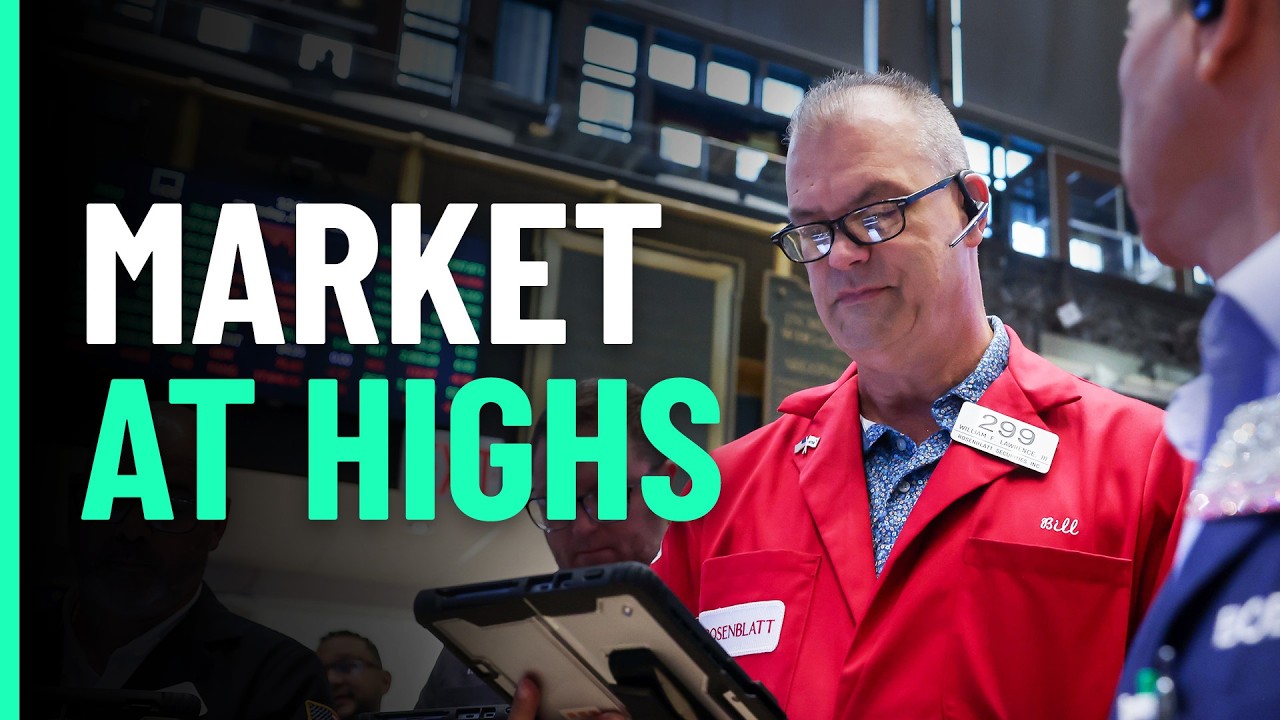
founding partner, Hudson Value Partners. Christopher welcome. So good to have you here. Thank you for having me, Caroline. I appreciate it. So, Christopher, the S&P 500 is on track for another winning week,
sitting right around 7800 right now. What did you learn about the market
this week that you didn't know a week ago? Well, I think what we've learned
is we're now at the tail end of earnings season,
and it has been a robust earnings season. You know, if you take the big headline
number, earnings are up 45% year over year. Now some of that's due
to some of the markups that, many of the big tech companies
have in their private company portfolios. But even if we look at a more conservative measure,
so what the median stock has done. Earnings are up 14%. And we're fundamental investors at Hudson
Value Partners. So earnings drive our thought process. And and it's hard to be you know anything but optimistic
when you see earnings growth like that. We did also
get retail sales data this morning though. And that actually missed expectations. We've been hearing about how resilient
the consumer is to today's number change your view at all. I you know I think it was a little bit
of a slight mess. And part of that could be even due to just the timing of Prime Day
that ended up being, you know, difference
between between June and July. But I think, you know, a
lot of the consumer stocks are doing well. Average hourly earnings,
even up for the lowest quartile of the
the economy of wage earners are still, you know, on track to outpace
cumulative inflation since 2019. So we couple that with PCE
and the CPI numbers that we've gotten this week
as well as the unemployment numbers. And I still think it all gives the fed plenty of breathing room
to to not raise rates and to wait and see. What is more important for the market right
now, the fed giving it what it wants when it meets next
and potentially stays on hold, or earnings
continuing to justify these valuations. I think, you know,
I try to look at the fed and what the fed does, as it's
just one of many inputs that we have when we evaluate the economy, evaluate
valuing stocks and companies. So I think if companies can continue
to deliver on earnings, that's going to matter more than 25
or 50 basis points one way or the other. What gives you confidence that this is a
market that still can run, though? How much of that strong earnings growth
is already priced in with an S&P at 7800? Well, the S&P is at 7800. But I think, you know, multiples
aren't really expanding in a blowout way. I think they're
they're pockets of the economy right now in pockets of the stock market
where we're not seeing multiples go up. Multiples are staying flat,
but earnings are growing. And that's a good scenario for investors
to feel comfortable legging in and putting more money to work
I think would also gives me confidence. And our view is
we're seeing the strength of the AI driven economy right now, spillover
into other sectors beyond tech. So we're seeing strength in health care. A big user of AI, we're seeing strengthening
the financials and industrials. And we think it also is letting us broaden out to see some of those small
and mid-cap names as well. So if you're if you're nervous
about the market, your portfolio, you know, just make sure you've got positions
beyond big tech and beyond the large gaps. What are
some of those pockets of the market where the multiples are staying flat? Yeah I think financials
I think industrials, particularly in the smaller cap space,
are some areas where you can find that. And I also think, even just some,
some big classic companies like, like Berkshire Hathaway, you know, there's it's
been a strong year for the market overall, but there are certainly plenty of stocks
that could have a strong second half after either being down in the first half
or being being more muted. Yeah, you mentioned Berkshire Hathaway. I know that, last I checked
I was just taking a look here. It's basically about flat year to date
as a value investor though, in a market sitting at record highs and dominated by
some very expensive companies. Is it actually getting harder for you
to find things that you want to own here? I think it's it's always a challenge
when you're when you're a selective investor, but you're we're getting
still seeing some opportunities. I mean, we like to run
a fairly concentrated portfolio of 25 to 35 names,
maybe 20% turnover a year. So we're just looking for that
3 to 5 really good ideas. And we've been able
to find a few recently. But you know,
you have to look beyond some of the, some of the headlines and get a little bit
more, more under the radar. What are some of those other good ideas that you have, aside
from Berkshire Hathaway? Yeah sure. So in in Small Cap,
it's actually one of the most recent names we added to the portfolio. And we're very excited about
is Morningstar. So Morningstar is about $7.3
billion market cap company, 37.5 million shares outstanding as trading
at about 16 times forward earnings. Now, it's a great example of being patient
for one of those great franchise businesses,
great companies to go on sale. In the past 12 months, Morningstar's
multiples actually been cut in half, roughly. That's attracted stock that traded up
around 30 times at some point. Now what? Morningstar, you know,
they were caught up in really the I scare financial data companies always traded
at a fairly strong valuation. Everybody knows Morningstar
for their ratings of mutual funds, stocks, star ratings. But they also have a leading database
about private markets called PitchBook. They also have, a bond ratings agency. In addition, they also have,
you know, index provider business CRSP that they have, acquired in the past year
and are growing. So what's changed about Morningstar
is really just investor perception and valuation that the market
was giving them their earnings profile, their earnings growth and the financial discipline
the management shows haven't changed. And that really creates a great entry
for us as investors. And we think long term. The data
that Morningstar has is more valuable not less valuable over time,
especially in the age of AI. People say that data is the new oil,
and if that's the case, then Morningstar is probably one of the super majors. We can call them
of the financial data world. Okay, so
Morningstar is down about 5% year to date. I was taking a look at your notes. Another pick is a momentum, a MTM that's down about 25% year to date. Tell us why you like that one. And what's the catalyst for a turnaround? Yeah, well, we think it's a great pick
for the second half. Again, another small cap. Call it about $5.4 billion market
cap out there trading at nine times forward earnings. Now a momentum is involved
in the defense business. Some government contracting as well
as operating nuclear plants and a variety of other mission critical type
solutions that they provide for, you know, some very large professional businesses
as well as the US government. And we think the catalyst there is government
services have had a very tough first half. And that's largely because of the government shutdown
that covered periods in Q1 and Q2. And companies like a momentum work
on on long term contracts. You know, it's a $5.4
billion market cap with a $48.2, $48.2 billion order backlog. And that's that's substantial. So they're doing a good job
as a now independent company. In the past year or so, they were spun off
from Jacobs Engineering. And as a spin off, you know,
we think of those as special situations. And management's
doing a good job of, growing EBITDA. They're deleveraging the balance sheet. They're growing free cash flow. And they're focusing on
some of their core areas of business. So we think investors can give it
a little bit of room to breathe. Now what's interesting
is when you have that strong order backlog and they've affirmed their guidance
for EBITDA and EPs, you know, all the investor
attention goes to companies that are in rockets, space
drones, data centers, nuclear companies, and the ones that get the headlines are profitable and they are growing
for cash flow and momentum. So we think it's a great way you can play
on all those themes in a profitable way. And, and a great small cap value stock. Are you finding any value in tech
right now? If you take a look at the mag seven,
all but two names, Nvidia and Amazon are actually underperforming the S&P
500 year to date. Yeah, I think you know,
the big tech names out of the Meg seven that we think are most
attractive would be you know alphabet is the leading franchise
in in advertising. And they even though they went free
cash flow negative in the past quarter. You know they still are very,
very generative on a on a cash flow basis. We think Microsoft is the indispensable
software company. And we think long term, you know,
they're going to be a big winner in this AI story because they're already
on all of our desktops and they already have that relationship
with with consumers. And lastly,
you know, Apple may have the last laugh because they've spent
the least amount of anyone on, AI there borrowing and partnering
with a lot of people to build out the Siri AI that we think is less as technology,
as just perhaps the best high end
consumer electronics company out there. And and everybody loves their Apple things
and people all over the world aspire to have. So those would be the three areas of the
Mac seven that we find most attractive. Christopher for someone who's portfolio
is already dominated by big tech, where would you diversify first? Yeah, I think getting into some of those I there's some financials,
some of the small cap, value names. But I also think it's important
to have health care in your portfolio. We think health care is a long term winner
from all the science and information that's coming out of AI,
that's going to lead to more drugs being tested quicker and potentially
being going to market sooner. So we think, you know, getting making sure you have a good health care
allocation is important to it. Would you get exposure to that
through a sector ETF or individual stocks? I think I think you could certainly use
a sector ETF if that's how you invest. I think sometimes healthcare sector ETFs
can be a little more challenging just because, you know, some drug
companies are going to do better. Sometimes the insurers are going to be in a worse position
and they may need each other out. Healthcare right now,
we like companies like Merck, Johnson and Johnson, Amgen and Thermo
Fisher. But, you know, we're going to favor
more of the pharmaceutical side of the equation over some of those
those other health care companies. If somebody already owns the S&P 500,
what exposure do they think they have that
they actually don't have enough of? Yeah, I think, you know,
you probably think you're diversified. You're not realizing that you're,
you know, call it more than 30 to 40% in tech and communication services. You probably also don't realize that
when you add up all the companies that are really tied
in that the magic way to AI right now in your portfolios, over
probably 60% levered to that thing. So the exposure that you
I don't like don't think you have and that you need to get are to things
that aren't really tied to to a and that's
where some of these financial companies or some of these health care companies
or some of the smaller companies that operate in the real economy
or the consumer sector, can be helpful. How much of a portfolio
should be exposed to big tech and IE versus things
like financials, health care, industrials? Yeah, I think, you know, in between health
care and communication services, especially if you're doing it
in a valuation and price aware way, I think you can get close to
to a market weighting. You just want to have some different companies
and not just be matching with markets doing, you know, 1 to 1, I think call it,
you know, 25 to 30% in technology and maybe 5 to 10% in
communication services is, you know, reasonable for a long term
appreciation, growth oriented investor. But you don't want to shortchange the
the other sectors. And when you own technology,
you don't just want, chip stocks and you don't just want to own software
stocks. You got to have something
within all your different subsectors. For someone listening, wondering
if they've already missed the rally, what would you tell them? Well, I would tell them that, you know, the best time to plant a tree is today
or 30 years ago. And, you know, timing
the market is a fool's errand. Time in the market
is going to be timing it every time. So I think you just got to get started. Give yourself room to add to positions. And if you're buying things in a valuation
where price of where way you should be comfortable that those great businesses
are going to do well over time and no one knows what the market's going
to do the next 30 days, 60 to 90 days. But once you give yourself
that longer time horizon, you can be a lot more comfortable
as an investor. How do you know, though,
as you think about valuations, how do you know when a great company
has become too expensive of a stock? Yeah. So we do a calculation called the market
implied value of growth. And it's a little bit of a decomposition
of earnings power value. So sustainable earnings of a company
plus its assets. And we subtract that from the enterprise
value of the company. And that gives us
sort of like an indicator a range of how much is the market paying for growth
in that company. And to give you an example like on that
Morningstar stock that we bought recently, you know, that went from being having
a market implied growth value, north of 70%, down to 50%. So when you look at that over time
and over history, you want to be buying companies
when you're not paying as much for growth, because that's what helps to create the margin of safety
as an investor, that cushion in case you're wrong,
or in case some sort of large macro or risk event happens in the market. What is that large risk event that could derail this market? Yeah, it's not our base case,
but I think we all have to be cognizant as investors right now
that if there was a re escalation or a spread of the war
in the Middle East with Iran right now, that could lead to an energy price spike,
that which would hurt the economy, which would hurt consumers, might force
the fed to more aggressively raise rates. It's not our base case, but you do have to
have that in the back of your mind and be mindful of the news flow of things
look to deteriorate. And so we do have the midterm elections
this year, and I know the market can get choppy
heading into those. What should everyday investors be doing or should
they be doing anything differently? If we do see that choppiness
or should they just stay the course? I think you can largely stay the course
with your existing positions. You know,
we always want to be mindful and cognizant of seasonality, adults and value partners,
but not a slave to it. And just knowing that the midterms are out
there means, as you said, it's good. Probably going to be a choppy period.
It usually is. And use that to your advantage
as an opportunity to add to some positions that you've been looking at or some things that you know
may have been feeling more expensive. We're
probably going to go on a little bit of a a sale in the next couple of months. Now, we're not really taking
a political stance here. We think the most likely outcome
is divided government and the market typically is fine
with that. It does does
well in more of a gridlock scenario, but the big thing is just to get past
that event risk. And once we do, investors will shift their
mindset back towards the fundamentals. We'll have another earnings season. And I think, you know,
the second half of Q4 probably is stronger than the first half. That would be in my guess. And that's just a guess
based on based on experience and based on a little bit of history
and looking at what's out there. What's your guess in terms
of what those returns could look like? With the S&P 500 up about 14% year
to date at this point? Yeah. I mean if earnings hold up
I think we, you know, could have a back
half of the year that gets us some some additional low to mid-single digit
returns on top of what we've seen. Okay. Okay. I think this is a great time to pivot
to our rapid fire round of this or that. Quick questions, quick answers and a few fill in the blank
or finish the sentences as well. Are you ready? Yes, ma'am. Here we go. By one Morningstar momentum or Berkshire? Morningstar S&P 500 at 7800,
fairly valued or overvalued. Fair. Keep a cash pile or be fully invested. Small pile, almost full invested. Buy any dip or wait for a real correction. I think you always, always be buying. Always be investing. Buy more of what's working or rotate into what's lagging. A mix of both. Just mind your position size
on the winners. Meg seven or the other for 93. For 93. AI leaders or AI beneficiaries. Beneficiaries. Your top AI beneficiary pick. Oh, I would say it's probably the drug
companies pharmaceutical. So I'll go I'll give you market. Sector ETFs or individual stocks. Individual stocks once your portfolio. Quality
at a premium or value at a discount. Value at a discount and quality
at a fair price. One boring and cheap stock
you'd buy today. Boring and cheap. I would say, She works. Building materials. One exciting and expensive stock that's actually worth the price. I think Everest Construction Services Group, eg. And one word to describe how your feeling about the market
for the rest of this year is optimistic. And let's finish this sentence. If I had $10,000 to invest today,
I'd put it in. A diversified
portfolio of 30 value stocks. What's the number one
value stock on your list. For Berkshire Hathaway? The one market catalyst I'm
watching for the rest of this year is. The midterm elections. The market is too complacent about. Energy price spikes. Investors are paying
way too much attention to. What Kevin Warsh isn't saying. What Kevin Warsh isn't saying is. You know, he's
giving us much less guidance and forward guidance and just overall said heads speak than any of his predecessors,
and people are wigging out about it. You know, the biggest opportunity
over the next 12 months is. Biggest opportunity is probably
just to keep keep investing. That's that's always big opportunities to add to your portfolio
and take advantage of time. The biggest market trap is. Chasing the hot dog, especially companies that don't have free cash flow
or earnings from. The stock. I would not chase right now. Is space X. The biggest mistake retail investors are making right now is. Thinking that one stock
is going to change their life. One company every investor should have on their watch list is alphabet. A stock becomes too expensive when. Its earnings profile, isn't keeping up
with growth expectations or its moat. It's durable. Competitive advantage
is starting to erode. The biggest difference
between a great company and a great stock is. The price you pay. If you only remember one thing from this interview,
it should be price matters. Christopher Davis,
founding partner, Hudson Value Partners. Thank you so much for playing along
and doing it in a speedy way. We appreciate your picks
and your insights. My pleasure.
Thank you. Caroline, lots of fun. If you enjoyed this interview,
check out our full street talk with Nancy Tengler.
She breaks down the stocks she's still buying,
even with markets at all time highs.

Comments 0
Sign in to join the discussion.
Sign inNo comments yet. Be the first to share your thoughts!