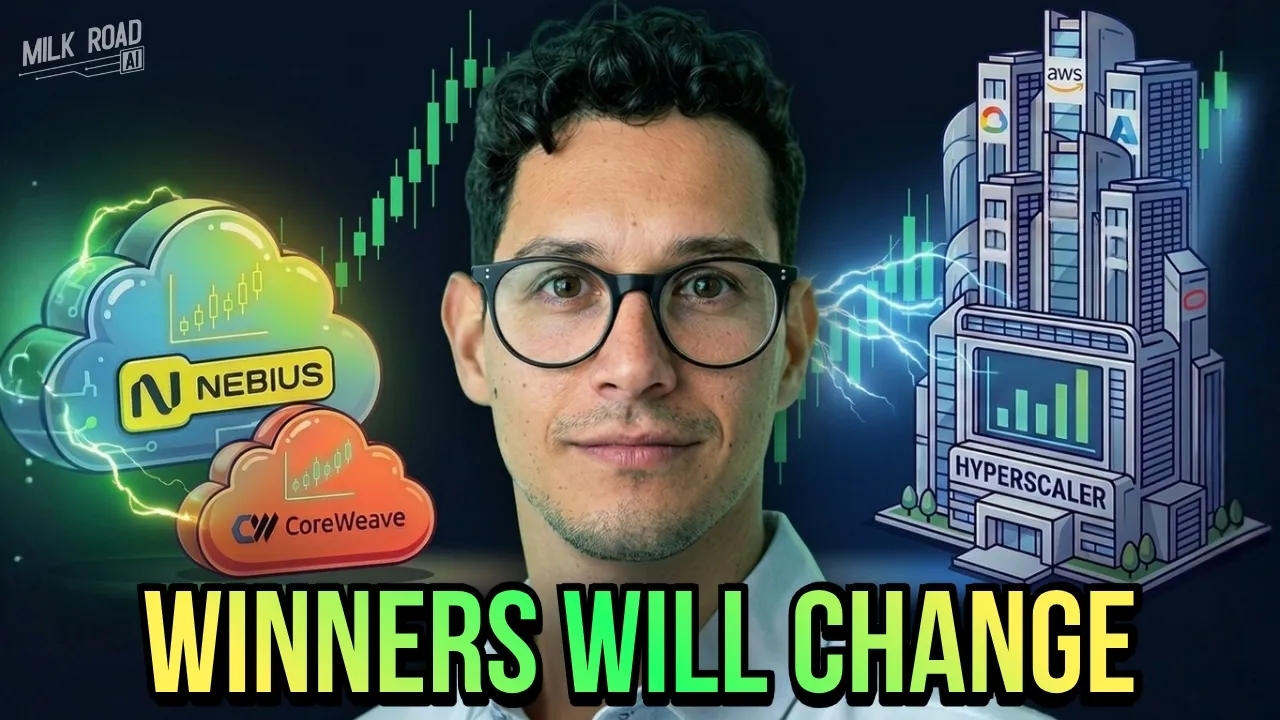
AI Compute Is Entering a New Phase - And the Winners Are About to Change

- Video return
- —
- Calls
- 2
- Buy / Sell
- 2 0
- Published
Recommendations
Entry is the asset's closing price on the publication date. Current is the last close on record.
-
Entry $229.94 14 Aug 2026Current $229.94 14 Aug 2026Result +$0.00
my personal focus has always been more on kind of the picks and shovels or the energy plays like blue energy everybody knows is is is my core play still to this date.
-
Entry $971.66 14 Aug 2026Current $971.66 14 Aug 2026Result +$0.00
We started to invest in Bloom Energy and and and Micron and all those names.
Full Transcript
We have a lot of people out there that have 20, 30, 40 stocks in their portfolio and they keep losing kind of focus and I'm just not that guy. I want to have my core bets. What's up everybody? It's LGD set here and welcome to Milk Road AI, the daily AI show that needs to do one more podcast about compute this week because three simply was not enough. Today is August 14th, 2026, recording on August 13th. Compute is very hot right now and you might be asking yourself what exactly is the right play here. Neoclouds of course are earning but also spending at unprecedented levels and they're trading like memecoins. Plus, SpaceX is now in the compute and hyperscaler conversations and seems to be playing a game of its own. We have a diversity of opinions about this at Milk Road. And our AI researcher Vincent is on the show today to share his. He believes that although the speed of getting compute online is the current driver of revenues, notably the premiums on that compute, the point where efficiency takes over is coming sooner than many think as early as 2028. He doesn't actually own any Nebius, Core Weave, or even SpaceX. And today, he'll give us an in-depth presentation on that thesis and talk through how this will all play out in his view. And if you do want to see his full portfolio, including what he does own, you can get a peek at Milk Road Pro just for a dollar at the link below. And a reminder that our podcast today is free and it wouldn't be possible without our partners at saber.money, the stablecoin payments platform built for Asia. Keep an ear out for more information about them later in the show. Vincent, good to have you back. Uh I'm keen to learn about compute, man. There's so much information happening these days. So many different ways to invest in just compute as a blanket term. Uh and I'm keen to hear what you have to say today, man. >> Yeah, man. Nice to be back, LG. Uh I think great timing for this episode talking about compute as we're answering two key questions with this pod. Number one is what is the best way if there's the best way to to invest in compute right is it neoclouds is it hyperscalers is it EWS so Elon web services um and then number two how is the compute mark market evolving over time right will not uh remain as it is today because there are some things on the horizon I think it's really important for the investment teases and uh yeah that's what I prepared >> beauty well take it away Sure. So let me just frame the picture on kind of where we are today, right? We are in a compute constrained world. And I think the strongest sign you can see on on this slide here with the chart is that the old GPUs are still getting more valuable even though they're coming much better chips to the market. That's basically telling you that demand is outgrowing the supply of of compute, right? Um, and that's that's the core teases basically on why Nebas is up what 25% or even 30% or more over the last uh uh two days. And what like the core take takeaway for you as an investor is as long as those old GPUs hold their value compute access remains scarce. It is that simple and there is so much noise on X on around depreciation of those chips and life cycle of those chips. It's just as long as the old GPUs and and and the one we're having on the chart right here. It's the H100s, the four and a half years old. Core Reef actually this week signed a deal for their uh with the A100 chips. That's the chip architecture from 2020 and they signed a deal until 2029. So yeah, it is just telling you that compute is scarce and that is important or that is actually determining who's uh winning today and that will change over time but we'll dig into that. >> So there's so the demand for chips is so extreme that companies are willing to purchase chips that are almost obsolete or that are like so much older than the new stuff being made. not obsolete, but like the the a the A100 is a good example where it's like these are chips that are what from 5 years ago and Cororee was able to basically sign a deal for them that runs for the next 3 years because that's how the people just need it. They'll just take anything at this point. >> Exactly. I mean the bare teases was always that once there's a new chip uh architecture of Nvidia coming out all the old chip all the old chips will be useless right but compute is so constrained that while they're coming so many new types of chips to the market not only from Nvidia but from AMD from from Google right the old the A6 from Amazon as well the old chips hold their value actually get even more value so that those neo clouds but also the hyperscalers can uh yeah basically increase the life cycle and and and and and sell those chips um yeah more often than what they have planned in the past right and it's just absolutely destroying the the bare case of of of of people that are kind of against the compute trade these days >> right of course yeah so then the people were saying that it's like well the new chips will eradicate that it's like well that's that's not even true anytime soon because people want the old chips at this point, right? So, you're talking about >> they're signing signing deals until 2029 for old chips. [laughter] >> That's crazy. [gasps] Oh, man. That is wild. And is this something is this something that Vincent that that the market anticipated at all? Like, is this is this something you had on your your radar that they would be signing deals for old chips? Like, I feel like nobody's really mentioned that until this week. >> So, me personally, no. Otherwise I would have would have invested earlier into uh the NeoClouds. What was the like in hindsight what what was the sign was definitely the kickoff end of last year with Agentic AI, right? You you see it on this chart as well when when was the reaceleration, right? I I kind of highlighted it with inference. There is basically when AI agents came to market and this whole compute craze kicked off because AI agents need so much more compute versus like LLMs and and the humans prompting in LLMs, right? That was the the core sign. That was when like the entire hardware trade kicked off, right? And we started to invest in Bloom Energy and and and Micron and all those names. But this would have been also the perfect timing to to buy the simple compute trades. But um yeah, I my personal focus has always been more on kind of the picks and shovels or the energy plays like blue energy everybody knows I think is is is my core play still to this date. But then also memory like that was the focus of the market. That was the focus of social media of X and and and and Nebas I mean also two weeks ago right when Nebia crashed what almost 50% or so people were like okay compute trade is over we're done and then they reported earnings like Coref and Nebas reported earnings uh this week and we're we're back again right so um was was tough to foresee and there's still a lot of volatility in the names even though it's so clear that what they're selling will be valuable moving forward and their business will not be destroyed. >> Just going to pause there for a second to point out that the market is showing signs of something kind of different happening and our analysts at Milkro Pro are all over it. They spent the last couple weeks making a lot of trades, getting out of some positions and getting into a lot of new ones, getting ready for the next wave of robotics space or even kind of picking some different AI winners. If you want to see what they have in their portfolios, what positions they're opening, it's just a dollar in Milkroad Pro at the link below. So Vincent, signing signing these deals is important, but I think you I think you also wanted to tell us about bringing these chips online is also a huge part of it is a huge part of the trade. I think that that's also kind of the core of of your thesis today or at least your your presentation today is that it's not just about signing chip deals, you know? It's like you also have to do something with those chips. Exactly. So this slide number one was basically just giving you the context takeaways. We're in a compute constraint world. Now the question is who's winning in that compute constraint world? The winners are those that can turn power into live compute the fastest, right? That's why Nebas, that's why SpaceX with Elon Web Services are performing that well. these days because the real bottleneck is not about the chips. It's about getting the the data center sides powered, built, connected and all that stuff, right? and and and and the the Neoclouds and and Elon with SpaceX is just so much faster than for instance the the hyperscalers um which is why they're winning uh these days and they can bring in the returns faster, the revenue faster because they can provide the market with compute with that with with the asset that is so scarce these days. [snorts] >> Yeah. So so so go ahead. the the the core takeaway is just you're winning today in kind of the compute trade when you're the fastest when you can bring compute to the market the fastest >> and that's why you've highlighted XAI right because they just on an accelerated pace and for people listening just yesterday we did an episode with Kyle about SpaceX uh and I know Vincent this is you know the kind of the core of this was based around that as well but uh that's a good deep dive into SpaceX and how they've been able to to build that so quick and how they're they are catching up as a hyper scaler as well. >> Exactly. Yeah. That's why I highlighted on this slide and and and and if you jump to the next slide, you can also see that in terms of what they're able to charge for their compute is by far the highest. Now, the chart is not completely up to date because Nebas came out this week saying, "Hey, by the way, for really short-term compute, like contracts that are smaller than 6 months, we can also also charge between 40 to $50 million per megawatt per year." And the crazy thing is they also said that we're not selling all of our like we could sell at this rate 40 to 50 million all of our compute into 2027. of what we're bringing online in 27. We can sell today at these rates, but we're holding off because we can we expect higher prices that we can charge into 2027 because the shortage gets uh even more more severe. >> Can you can you explain to me one more time why SpaceX is able to charge so much more? It's because there is so much demand in this market and there are very few companies who can supply that demand. Now Amazon Amazon the SpaceX EWS so Elon web services but then also the NeoClouds can tell their customers hey we can build you XY Z megawatts in a couple of months and then you have access to that compute versus the hyperscalers they tell you okay it takes a couple of years until you get that compute right and because they're faster and provide you that compute on on a on a on a shorter note, they they charge premium or they're able to charge premium. >> Got it. Got it. Okay. Okay. Great. And there's nobody who's the closest that can do who who who charges the most after them? Iron. >> Yeah. I mean, the new clouds in general are charging the most. Core Reef is already is is also up there, right? They they also had great earnings this week. But um yeah, I mean the like on a on a very large scale it's definitely SpaceX and and and Nebius these days, but also Core >> and Nebius is just holding back because they think they'll be able to sell it for more next year. >> Yeah, I think I mean Nebas came out publicly but I guess all of them uh are doing that. Who who who are because you have a choice, right? You have a choice today. Are you there? There is a customer coming to you today telling you hey we are paying you let's say between 50 to 60% of the total contract value upfront and you are delivering us the compute next year at between 40 to 50 million per megawatt per year right that's a lot of money and that's a lot of derrisking your business because you take in the money, then you have the money on your your on your account. You can use that to build more compute. Right. >> Right. >> But they're anticipating that next year the market will be even more constrained that they can charge more than the 40 to 50 million far more because they're they're they're calculating in obviously the the builder costs, the cost of capital, the interest rates, all that kind of stuff, right? So this just telling you that currently the market is constrained and they can more or less charge whatever they want. >> Why will the market be more constrained next year? >> Because the AI adoption will not slow down. We will have more AI agents. That's number one. Or like that that's the most important thing, right? We will have agentic AI being adopted in companies in in in private use cases more and more in governmental use cases. um and this will just accelerate the compute demand. Right? This is I mean obviously this is the it's it's a fair question to raise right the bears of the compute trade probably outlining that AI adoption will not happen at that pace and therefore we're overbuilding capacity. Me personally as a as as an AI uh bull, I do not see that because I have different lenses on that. I use AI at least 10 hours a day, right? For Milk Road, for for my other company where I work in and and and there I also see what it means to adopt AI also what it costs to adopt AI in a in a company where 10,000 people work. how much you spend on compute, right? How fast that explodes as people start to kind of token max, right? Um, and this is just making me bullish on we need more more compute because I see it I I see it in my personal I see in my business life. Um yeah. And and also one more point on this, we also start to see the ROI, right? We talked about this this wheel on on on on Tuesday on the on the roll up with Kyle, right? We're starting to see the the adoption of AI and the and the value cases, right? Palunteer to me is still the best proof point of this. They're adopting AI, they're spending compute, but they're making companies more efficient. They save companies money. And obviously once companies realize that hey we found this kind of way or this proper way of adopting AI yes we're spending money on that but the value we're getting is so much more that this naturally uh incentivizes you as a company to spend more on compute because you're expecting more return right um and and and this is kind of the core explanation of why compute demand will not slow down anytime soon and it's also explaining why we're not overbuilding capacity. >> Right. Right. So what happens I guess what happens when that scarcity starts to actually dissolve a little bit if you could call it or that compute actually starts to scale? >> Yeah. I mean obviously this situation will not always be like this right we are we are running to build more compute. We had the Nvidia announcement from this week saying, "Oh, we have 500 billion dollars for all for compute. Use use that money to build compute, right?" Then we have we had another massive announcement. I think it was today or yesterday. Another big American bank, not part of that Nvidia consortium saying, "Oh, we have 200 billion here to invest into the AI AI market." So I'm not saying that compute or I'm saying that compute can stay scarce while the entire market just becomes easier to to scale to finance and also to price and that is kind of the the change versus where we are today. Um, and it reduces the value of just having that capacity, right? And I think I need to explain that a bit, but what I'm trying to picture here is that I'm not saying compute demand will slow down. I'm not saying we're not in a scarce market. It's just we're getting into a more mature market that um, yeah, is is you can compare it to the oil oil market kind of, right? It's more standardized. It's a it's oil has still a lot of value. There's still a lot of demand for for oil, but it's it's a way mature market versus compute. And this is kind of the world we're moving to as we're building more supply, as more capital is flowing in, as we're building these market structures with with futures where people have better price discovery, as they can hedge compute as well. Um, and then and and and why am I saying this? Why am I having this slide in this presentation? This changes who's winning in this market, right? It's not about simply having this compute anymore, but providing this compute in a very low cost and efficient way. And that's kind of the and that changes who's winning in the market versus today. Would this future like beyond 2027 would that not make you bearish on NeoClouds after that? Because like basically that if if as the market becomes scalable and more efficient, this premium that you've described on these other slides here, does that not erase that? Right. So, is this so is this is this not what you're describing? Is this not a short a short-term bullish long-term bearish thesis on Neoclads? Cuz even even what you're saying about chips too, it's like well they'll need those chips for the next few years but beyond that there will be new chips that are more efficient cuz that's what everybody's building, right? So does that not paint that picture? >> Yes, sort of. I mean the core question is obviously when are we moving into this world, right? in terms of access to capital, in terms of building future markets, allowing for hedging, allowing for more transparent pricing. We're we're seeing that this year, right? Hedges from CME, that's kind of a big big institutions um is is coming October this year. And this is just making the market more mature. And yes, it will probably take away this kind of very premium pricing that I was describing earlier from from Neoclouds from from Elon SpaceX. Um but obviously the the driver number one is demand versus supply. And then the core question is when is this point coming where we're not having more supply versus demand but it balances out a bit more than it is today. Right? Today we have this much uh demand and this little supply and it's slowly slowly slowly slowly over the years get closer to together right um and that's obviously the the biggest question here to answer based on my analysis I think 2027 we're still in this very constrained world and still allows for premium pricing and actually the market maturing is bullish for the NEO clouds because if you think about it. The consortium that and Nvidia announced giving you $500 billion is really bullish for them because they're competing against hyperscalers who have massive mass massive operating cash flow from the legacy business. So they need they can borrow money at at lower interest rates versus the Neoclouds having higher interest rates or need to sell equity or raise debt or whatever. um and and and and those are the structures that kind of alleviates that issue for them, right? And then also the futures, they can they can use that to hedge um against the falling compute price, which again makes it easier for them to access capital. So on the one hand, you could argue it's kind of bullish for them, but as we're kind of moving slowly slowly to towards this future where this real constrained world is going away, then yes, it's probably bearish. Uh but that's down the road. To me, that's 2028 and later. >> So what I mean, okay, I I agree. I mean, that's that's a good take. I'm just I'm just wondering at what point the the market realizes that. I feel like I always end up talking to you about timing. I feel like every time we have said this I'm in a in a dja vu Vincent that of like whenever we have these shows you and I I always you so much my own main questions come back to timing. Uh but I think you actually have a slide about that. Um that pretty much just described what you just said that that's when that's when you in 2028 is when you get into like an efficiency cost market versus right now we have been in like a scarcity and speed market right which is why why SpaceX is able to command those premiums. >> Yeah. No, you're you're absolutely right. Timing is the core part here and people will disagree with me and they will say hey this the timing for this is 2030 and beyond right I and and then they're telling me oh 60% of the data centers are delayed um and those are all fair kind of arguments when it comes to alleviating that real compute constraint world that we are in today I'm just seeing that there's so much institutional capital but also attention and also from the White House flowing into this right now, especially over the last two to three weeks. Those announcements were just massive and it it it just takes the issue of money out of the equation. Um and then we're left with the physical constraints like energy and just makes me more bullish that we're building out uh compute supply faster than what people may be expecting and we're alleviating that issue. And to come to to to to what is on that slide, right, it changes to what you as a compute provider need to do, right? Remember I was how you win today's speed to compute how how fast you can bring compute to the market and supply demand in the future. It's about how cost efficient you can bring that compute to the market and by that steering your margin. Right? speed still stays valuable definitely but it's less of a of a mode in that 2028 world that I'm personally describing right and this has different implications on the neoclouds on the hyperscalers on on on on Elon and to me also changes kind of who wins you know one thing we've talked about a lot on this show is that crypto is quickly becoming a huge part of the global payments infrastructure and nowhere is that more obvious than in Asia But if you're actually running a remittance company or a payment business, you know that the hard part isn't moving the stable coins. It's dealing with local banking partners, compliance, liquidity, and all of the operational headaches that come with sending money into places like India and Southeast Asia. That's why today's partner is Saber. They give payment companies stable coinpowered infrastructure to collect and make payouts across Asia without having to build all of that complexity themselves. They've already processed more than $3 billion in transactions across 40 different countries. So, this isn't just a concept. These guys are actually doing this for real. If you're building payment infrastructure or expanding into Asia, make sure you check out saber.Money. >> How does the um you know, we've talked about this on every show this week, Ben, and I think that is the is the major AI news on or on top of the the great earnings that Neo Neocloud's uh have reported and SpaceX as well. Um but the $500 billion from Nvidia is is definitely kind of like the the the underlying boost I think that a lot of the market has has gotten this week. Maybe you can tell us and we've talked about this in the last three shows already this week, but how does that how does that benefit the Neocloud companies like like the core weaves and and the Nebuses or or even the hyperscalers? Like what is your view on that Vincent? Like how does that trickle in? >> Yeah, so there again the the Neoclouds are winning today because they're fastest. They bring compute fastest to the market. What they need to do in order to remain successful is they need to be better operators or more efficient operators to offset some of the costs that they're having today. Right? When you think about it, they they they have two very weak spots. one, they have a financing issue because they're competing against hyperscalers who have that kind of legacy balance sheet and and and and business that is where they're making real revenue so they can use money internally. They do not need to um lend from anybody more or less. Yes, I know Google came out selling depth, but they're doing that from a financial engineering perspective. They more or less could finance it from their operational cash flows, right? just ballpark the new clouds have a have a disadvantage there and it it it is an important disadvantage because it impacts their their P&L from a cost of capital perspective. Um and then number two where they're weak is is that they're they do not have their AS6 their their individual silicon right the hyperscalers have their um Google has the TPUs Amazon has the tranium right so they're dependent on the Nvidia chips um which obviously may be less efficient for the certain workloads that they're looking for right and so how they need to win in the future is by number one keeping their mode in speed still being like the best when in terms of infrastructure securing power right the the core mode they're having today just keep that and number two further raise the bar when it comes to squeezing out or when it comes to squeezing the GPUs and and this is what they're already doing very well today they're operating the GPUs very efficiently and they're squeezing out more compute per megawatt out of the GPUs because they're using different software layers. They they have very specialized AI um focused data centers, right? Versus a hyperscalers having data centers where they have parts serving the AI cloud business, but then obviously you have non nonAI cloud business as well, right? And this is just how they need to become more efficient in the future to to kind of survive and and and and benefit in this 2028 world and beyond. >> Mhm. Okay, that makes sense. So they they so basically you're telling me they are really well positioned for the efficiency change. >> Yeah, generally yes. I think buying NeoClouds today, even though they performed really well, yes, it's a good trade and they will and and and and you will probably make money over the next couple of years. Just some risks that you need to understand as an investor that you need to to monitor, right? And that is basically this capital access issue for them and the um that they do not that they're dependent on Nvidia on the Nvidia chips, right? Um those are the kind of two biggest risks I foresee for them versus the hyperscalers and others. Right. >> Tell me about the hyperscalers, man. like how does how did how do the hyperscalers not how are they not prone to those same risks cuz they're using different in infrastructure basically. Yeah, I mean they they're best positioned when it comes to finding structural cost advantages in in this market because mainly because they have their silicon chips as as I was outlining and because they're having access to those huge kind of legacy business cash flows, right? That takes two massive issues off the tape, right? They can think about the silicon chips for instance. Google can can design their TPUs in a way that are most efficient for their specific workloads, right? And that's how they're say that's how they're squeezing more compute and output out of every mega megawatt they're having and they're not dependent on on the the Nvidia chips, right? [snorts] On the flip side, what the hyperscalers issues are and if you decide to invest into the hyperscalers, which I personally understand as well because they're growing massively. Google this quarter proved that cloud business is growing strongly that they're generating strong margins in the in the mid30s regions and and growing. You just need to understand that their kind of broader cloud model adds complexity and it can make them it can make them slower and versus the kind of more specialized neocloud operators. Um and that's their biggest disadvantage which may lead to a future where the compute they are providing is a fraction more expensive versus the neoclouds uh because they're not as specialized as as as as Elon Nebas Corbye and the others. It's just the the biggest risk you need to understand when you're investing into the hyperscalers as from a compute perspective. So they're so the hyperscaler compute is not specialized the same way. So the hyperscalers are at a disadvantage in terms of charging the premium. Yeah. Because they're building like their cloud business is not only focused on AI, right? They're building data centers which are also non AI, right? So and and they have like way higher standards that they need to achieve because they they they have different kind of uh demands from the data centers and and and the compute they're building versus the the the neoclouds and Elon they're just saying hey LLM model layers um you can come to us when you want to we're only selling compute AI compute you you can compare it to uh a gasoline station that is that is saying, "Hey, we're only selling diesel and nothing else." And then you have another gasoline station that is selling g diesel and and and all other types of fuels, gas, right? It's just makes the operations more more complex and more costly and you need to uh yeah, it more costly is is is the point here. And that's that's kind of how they're disadvantaged in that sense. >> I want to I want to kind of end uh Vincent by talking about something we've already talked about a lot even just yesterday on the show uh which is Terraab as well, right? And I think that that's such a huge factor. They haven't even Have they broken ground on Terraab yet? >> I don't know if they have. Have they started building it? >> No. No. No, they haven't broken ground yet. They're still um the money is the money is ready, but they're still waiting for permits and stuff, but it's the permits. Okay. Okay. They're still waiting on permits. Okay. But that's something that is anticipated to really put SpaceX at the front of the pack basically with this massive facility. >> Yeah. Yeah. And I I have this slide in last because I really think from a if you want to trade the compute side, yes, Neoclouds will make you money. Yes, hyperscalers will make you money. I'm bullish on those as well. But SpaceX is the one that is providing the highest upside. Probably also the the the riskiest from all of them. But they're they're having the highest upside because long-term they just have structural cost advantages that are really beneficial in that 2028 world and beyond that I was describing right this more mature demand market. They have with Terrafab they're vertically integrated. They have their own silicon. They have their own chips. They're not dependent on Nvidia similar to what uh the the hyperscalers have. They have Elon which has proven that speed is not an issue. They are the fastest when it comes to building out data centers. They have capital because of the other parts of the businesses which is Starlink. when they merge with Tesla, they have all the physical um physical AI cash flows from robo taxis from humanitutes. So that issue is taken out um out of the way. Plus, they do not have this tradeoff that I was describing earlier with the gasoline station that they that the hyperscalers have. They're only focusing on AI compute. And last but not least, that's a major wild wild card. That's compute in space, right? Yes, it's a probably 2030 story. I still believe that. Um, but if comput in space really works out, it's by far the lowest cost compute because you're taking out the whole energy side of things, uh, etc. that he will be able to provide computers at probably the lowest price tag. Um, and that's obviously really important in kind of this yeah future more mature market that I was describing. >> You know, one thing that that I realized with the episode with Kyle yesterday too is that and this is kind of what you're describing as well is that SpaceX is just has planned so well and is planning so well for every stage of the journey. >> Yeah. >> Right. that it's like they're not just and that's where maybe they have a you know you're saying that the advantage for Neoclouds is will be in the future when they're that they they should be well set up for the efficiency part but that SpaceX SpaceX's plan has always been to just own the entire stack regardless right and to actually just be the the the largest company of any of these sectors >> um and this you know and they haven't even started on two of those major goals which is one which is Terraab and the other the actual orbital compute right so it's like that's a few years from now and 10 or 15 years from now they're ready to kind of um you know make money on this entire trend as it grows. >> Yeah, 100%. I mean the cool thing is you're getting both right they're positioned well for the short term like the first couple of slides that I was outlining right this compute constraint world that we are in today because they're building the fastest and they're positioned well for this 2028 and beyond because they have because they're vertically integrated because they have Elon who had this foresight a couple of years ago that the market will move in in into this way and they're they're building already today for this future and that makes it really really interesting because you're benefiting shortterm. You're you have a major upside in the future at least upside potential uh that that you can buy. Makes me really and and I think the market is slowly starting to wake up on this. I think the stock is up 40% or so from its lows a couple of weeks ago. Just slightly above its IPO price. um but still far away from from the all-time highs it had also just a couple of weeks ago. Um so yeah, interesting opportunity for me. Then again, as a as a as a Tesla investor, you need to make a decision, right? Are you are you buying SpaceX and having both or are you betting on on the kind of M&A, right? On the on on the future where both of them merge and then you have exposure anyways. Um that is a decision that yeah every investor needs to to make on his or her own. Me personally I uh I actually decided against it because I think the merger is really close and SpaceX needs the capital of of this future physically AI revenue. Um but yeah it's it's it's from a comput side of things the mo most attractive trade. >> Why don't you have it at Core Weaver Nebius in your portfolio? >> Yeah, this is a question I'm asking every day myself. [laughter] So I think two major reasons. Number one, my core focus is on the pixon shuffle straight on the energy side of things on on memory um on and also power semis and in kind of this whole 800 VDC world that is about to hit. That has always been my my my core focus. Um, and I just have a way kind of deeper view on those companies. Um, I never really built that conviction in the compute side of things because there a there's so many peers that you can buy. I think about the neoclouds. Yes, we're talking about Nibius and Core, but there are like five to six others that that that you can buy. Um, and then also after this massive run up, I'm not the guy who is kind of chasing stocks. Maybe that's a that's a wrong decision from here because they're they just keep running, but I don't want to chase here. If they're coming down to levels where I think they're attractive like two weeks or three weeks ago, then maybe I'm thinking about doing that again because obviously opportunity cost is high. But uh yeah, and then and and last point for me and and I think this is really important for investors. We're all human beings, right? We're not AI. We're we have a lot of people out there that have 20, 30, 40 stocks in their portfolio and they keep losing kind of focus. And I'm just not that guy. I want to have my core bets on and be just focused on them. And I'm adding companies only where I have full conviction and where I did due diligence for like at least 70 80 hours or even more. Right? And um I'm starting to get to a lot of hours on the on the on the whole compute side of things, but I just haven't built this conviction yet versus a Bloom Energy for instance, and that's why I haven't bought in yet. I think it's also hard for to buy into such volatile stocks at this point, right? It's like you think about Nebius and these guys. It's like two weeks ago they were Nebius was what like in the touched like 155 160 170 or something like that and today it was 265, right? It's like that's a great opportunity for short-term but or for long-term accumulation, but I think it's also hard for more for more mature investor to to if you don't have a deep thesis like you're saying, um it's hard to find the right entry considering you're seeing swings of 60%. >> And also from a portfolio construction perspective, right, if you already have Bloom Energy, Micron, etc. in your portfolio. Do you really want to add the compute trade, which yes, the last two days you wanted to have it in your portfolio. That's fine. I'm a long-term investor. I don't really care. But on the downside, they're all moving the same, right? The the R squar there is really high. The correlation is really really high. So maybe also kind of from a a diversification perspective. Yes, I'm saying that having what 10 10 names in my portfolio um it probably also makes sense to to not load more of the same risk into your portfolio, but in the end it's all AI infrastructure and they're moving more or less the same. >> Mhm. Mhm. That makes a lot of sense. Well, that's that's good advice. And for anybody who wants more, Vincent is part of Milk Road Pro. You can see his portfolio for just a dollar at the link below if you want to see what else he has uh or even want to ask him questions why he doesn't own those stocks. uh and and kind of further the conversation. Vincent, great to see you as always, man. Uh thank you for the deep dive. Uh and we'll see you again next week. >> Thank you, LG. >> Want to stay ahead of the biggest technological shift in history. [music] Subscribe now to get insights straight from the sharpest minds in tech and finance. Quickly, you'll note this show is for educational purposes only. [music] Nothing here is financial advice. Investing always carries risk. Never invest more than you can [music] afford to lose. Thanks for tuning in. See you in the next one.
Comments 0
Sign in to join the discussion.
Sign inNo comments yet. Be the first to share your thoughts!