I first bought Google a long time ago in my story fund portfolio... I started buying Google way back in 2020 and then over time I've added to this position.
Context
“I first bought Google a long time ago in my story fund portfolio. This is the more aggressive fast growing portfolio, but I started buying Google way back in 2020 and then over time I've added to this position.”
Full Transcript
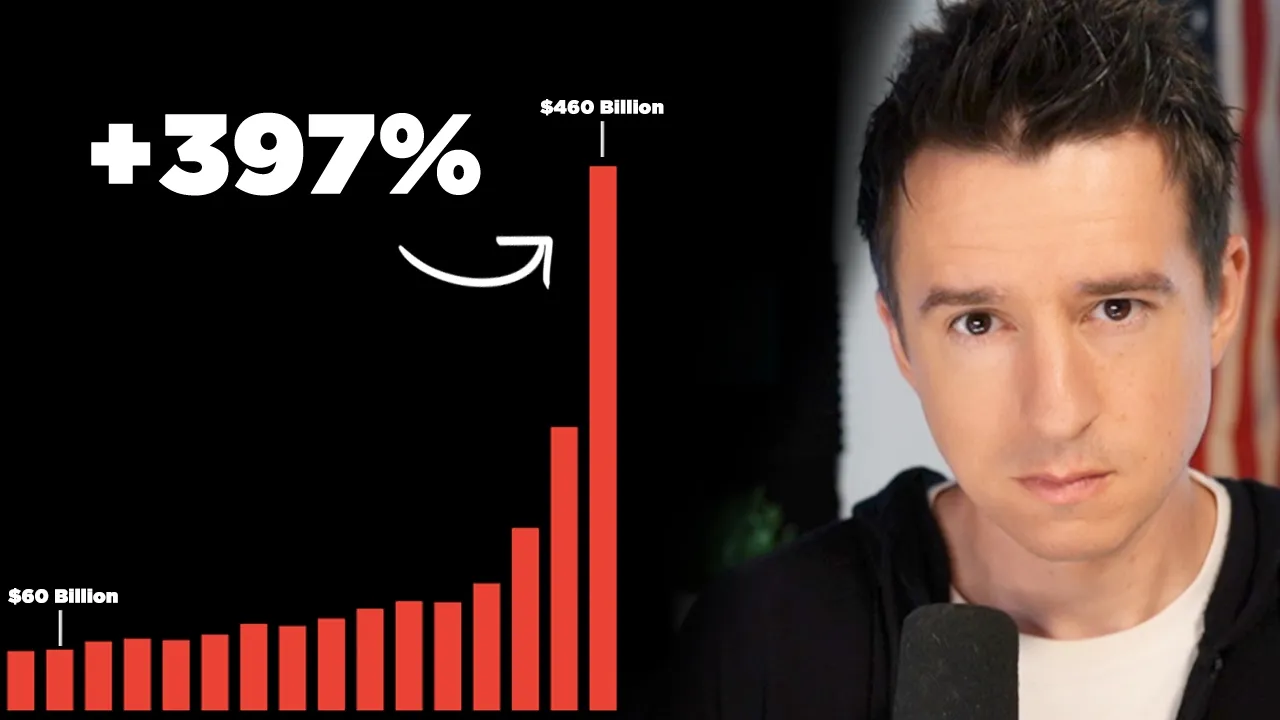
We just made it through one of the craziest weeks ever in earnings. In fact, yesterday was one of the most spectacular days that I've seen in terms of companies reporting earnings. We had Meta, Microsoft, Amazon, and Google all report earnings at the same exact time and the results were pretty surprising. Meta has dropped 10%. Even though it grew 33%. Investors are concerned about a number of things. We had the daily active users of Meta go down for the first time in a long time. Meta is increasing the amount of capex spend it's doing. Investors are concerned about that. And then Mark Zuckerberg lays out his image of what he believes AI actually means and it's quite different than what we've seen from the anthropic CEO and others. We also have Google which is up big today. Google is definitively my largest position, my most successful investment ever. It's just been a monstrous investment and this one continues to grow. Google's firing on all cylinders. every single facet of the business is just nailing it and Sundar Pachai lays out the groundwork for the future ahead with Google. We'll be looking at why investors continue to be so bullish on this company as well as the concerns about Microsoft. Microsoft is down over 5% on the day and a lot of those concerns are inspecific to what Amazon is now doing. Yes, Amazon is now causing Microsoft stock to go down. And Amazon in and of itself had a little bit more of a muted reaction from Wall Street even though this earnings report was a blockbuster one. It was an incredible earnings report. We'll be looking over the details of what Amazon's actually doing. So, we have a lot of groundwork to cover in this video. Those are four massive companies, and what we're going to be doing is breaking this all down and making sense of it. as well as we have the fail of the week, which in this case is this question of whether you're on the red side or the blue side. Mr. Beast asked this viral Twitter question. It's been floating around Twitter for a while, but he posed it to his own audience. It received 31 million views, over 300,000 votes within 24 hours, and it started an internet cultural war, an ideological warfare. There's people now saying that the reds are bad, that the blues are good, or that the blues are dumb and the reds are smart. There's now all these people, all this conversation online about whether or not you're on the red side or the blue side. And I'll be breaking it down and I'll be giving you the right answer and which side you should be on in the fail of the week. So, we have a ton to get to in this episode. Let's go ahead and jump in. Now, just a quick mention, if you like these type of earning reaction videos and you want to see more of them, we have more of them at qual.com. Plus, you get all the software, you get the Discord community included with it. But on Qualum, you have Queltum Studio, which is all the exclusive episodes, the longer format content, additional content that you're not seeing here. We have all these original episodes put there at your convenience. If you want to join, you can try it out risk-free with a 7-day free trial. Now, to start things off, we need to look at Google. To me, this was the shining star of the day. It was one that excelled just a step above all the others for a lot of various reasons. Google is up 5% on the day. And this wasn't a situation where Google stock has been beaten up. In fact, Google ran up into earnings and then went up even more after earnings. That is rare. Typically, when a stock runs up 30% right before earnings, you think, well, it ran up so much, the expectations are so much higher now, it's likely going to sell down a few percentage points. But then they release earnings and Google goes up even more. That is because of how impressive yesterday was. Now before we go into Google, I just want to give some transparency into my position and my dealing with this company. I first bought Google a long time ago in my story fund portfolio. This is the more aggressive fast growing portfolio, but I started buying Google way back in 2020 and then over time I've added to this position. In this position, my cost basis for Google is $30,000. My average share price is $129. Meaning that on this position, Google is up 397%. If you bought Google back in 2020 or 2021, you're looking at 300 to 400% gains. It's just been astonishing. This this stock is on fire. Now, I also bought more Google just more recently in the past year and a half in my passive income portfolio. That's the larger one here. I started buying in the passive income portfolio in late 2024. So basically end of 2024, beginning of 2025, I started buying the position. I added way more to the position. In 2025, I became increasingly confident that Google's a stock I needed to own. My cost basis on this one is $66,000. Of that, the position size is now currently $133,000. So this one's a $130% gainer. So in both portfolios, Google has been an astonishingly good performing stock. When I look at this combined, Google's now a $221,000 position with a $124,000 of that being gains. The crazy thing about this is now Google's roughly, in fact, it's getting close to being a4 million position, which thinking back like 10 years, that would have been it would have been insane to think it would have grown that big. And obviously, I didn't build the position this big. It's just grown into it. What's really turned this into a winning position is buying it early, buying it during times of uncertainty, and then especially continuing to hold it and never selling a share. I've continued to hold Google even as the valuation has crept up. So, when I'm looking at these earnings, I'm looking for any weaknesses that I can find. And let's go ahead and just take an overview of what's happened. First of all, Google's revenue looks like this over a trailing 12-month basis every single quarter. So, this shows you that the revenue is accelerating. Now back in 2021 again if you could have bought at hair the stock price is much lower you got 400% returns from hair it was growing at 41% during co everybody's locked down everybody's watching YouTube every service of Google's growing that was unnatural and it had some pull forward pull forward effects in fact Google's revenue you can see after it sped up during that time period it basically went flattish for like the next three or four quarters the stock price went down like crazy you could have bought the stock again during that time period where went down, but then Google's revenue started to regain. It started to grow more organically. Uh we had the concerns about chat GPT, about the search volume, about all those type of things. So, the stock price was rather cheap in 2025. But if we look at what Google's actually doing these most recent quarters on a trailing 12-month basis, Google grew its revenue by 17.5%, which is the fastest that it's done since about 2022. So, we're looking at accelerated growth from Google. Overall, AI is making Google grow. Now, how is AI making Google grow? Well, through a lot of various ways. For example, when we look at just this quarter, so we're not looking at a trailing 12-month basis. We're just looking quarter over quarter. Google grew by 21%. In fact, 22% this most recent quarter. 22% is massive. We're talking about multi-t trillion dollar companies and they're growing faster than a lot of startup companies, a lot of small smaller companies. This is the type of growth that you would like at any size of business, but you're getting this type of leverage with a Google sized company. These companies are defying the odds. They're doing something very special. We look at the revenue by segment and we can see that every segment of growth is strong. Google search grew by 19%. There's some people that gave messages that Google's volume of search was going to go down. It did it. It grew substantially. People are still using search even more. Even with Claude and ChateBT and Grock, people are still using the old-fashioned Google search more because it's not so old-fashioned. It's actually super smart. It works well and it makes you want to use it more. So, Google search is actually growing more. Another interesting thing about just the Google search business management noted on the call that because Google search is smarter and AI overviews is much smarter, they can monetize complex search queries that they could have otherwise never monetized. So basically the AI search engine is a better monetization tool than the previous one. Analysts just a year ago thought the exact opposite. They thought the AI was going to be more expensive that it wouldn't work as well for monetization. Turns out they were wrong. It's way better and they're monetizing it even more. And that's evidenced by Google search revenue growing by 19% and organic search volume increasing dramatically. YouTube ads grew by 10% overear. You may look at this and say, "Well, that's a little bit disappointing. Only 10% growth." But part of what they're doing is monetizing YouTube far outside of ads. Keep in mind that this segment right here is only ads. It's not the whole YouTube business. Lots of YouTube channels have memberships. YouTube takes a 30% cut of those memberships. There's YouTube Premium, which is now massive. We'll get to those numbers in a minute. So, YouTube is actually doing quite well, even despite the ad growth just being 10%. Those are all the core business lines of Google aside from cloud. When we look at Google Cloud, this is the most special business of the bunch. Google Cloud is phenomenal. It grew by 63%. Now, that's not a mistake. It actually grew by 63%. That number is so crazy. It looks almost fake. In fact, a lot of these numbers that Google's putting up. I'm running Qualram and I'm looking at them going, "Are these real?" I have to check, is my data, is my KPI person putting these numbers in? Are they getting them right? And I check them and sure enough, they're all correct. Everything is actually true. Google's just putting up numbers that raise red flags. They're so abnormally huge. These are nonlinear growth. They don't follow a pattern. Google's having outrageously explosive growth. Another one of these that frankly looks fake is the backlog of their cloud. This is the cloud backlog. You notice the trend? Well, there's not really a trend. It was basically growing at a normal pace. And in fact, all of this time period looks flattish, but Google Cloud was actually growing its backlog at a a brisk pace. That was a good pace. But then we get to the most recent quarters and it just goes completely parabolic. It it's completely out of control. The Google backlog is $460 billion. 460. It went up by hundreds of billions of dollars in a single quarter. They have customers signing up left and right wanting to use their stack. And why are they all wanting to use Google? Because it's so good. What they're doing is so good. They have the full stack approach. We also have the cloud growing 63% adding on almost as much revenue as Amazon's cloud. Amazon's cloud is double the size, but Google's is now growing about as fast in total revenue dollars. And while that's going on, you can just add on the fact that the cloud margins are going up. They're not sacrificing margins during this. Margins ticked up from 30% to 33% quarter over quarter. So looking at this, overall, we have the fastest growth in years. We have cloud taking off like crazy. We have margins expanding. On top of that, we have just little, you know, side things like the robo taxi network from Whimo has reached 500,000 weekly active rides. No one else has really even disclose their public paid active rides per week. Whimo is the only game in town as far as that's concerned. And how is Google doing this? How are they seemingly just on top of everything? Well, it's because of the execution. When we look at how they're positioned, there's no company positioned better to take advantage of all of this. Right now, just in the search and ads business, this is from the earnings call. Search queries are at an all-time high. AI overviews and AI models are increasing search usage, including commercial queries. Alphabet is deploying Gemini across the entire ad stack to improve the quality and relevance. Advertising tools, monetization of new AI experiences. AI and Gemini deepen understanding of user intent and context, even without explicit queries. In discovery, new AI models improve ad alignment with user interests. In maps, Gemini makes promoted pins more contextually relevant, surrounding history, intent, lifting relevance by 10% and boosting engagement. Over 20 improvements to search and shopping bid strategies, uh, smart bidding now in Gemini to better match user intent to advertiser inventory. So basically every part of ads is becoming better, more contextual, more personalized, more natural and organic and it's even increasing the landscape of which they can advertise. You have advertising tools making it easier for their businesses to list ads and create ads, AI generated ads. You have the monetization now of new AI user experiences. Google is designing new ad formats for AI models and AI overviews, not just porting legacy formats. You have direct offerings in AI mode that are being piloted with new brands like Gap, L'Oreal, Chewy. Early user and customer feedback is positive. They're testing new ad formats where AI models organic product recommendations are paired with retailer ads for those products. The company believes AI improves ad coverage beyond the historical 20% of queries by understanding longer, more complex searches. So, consider this. Google's ad business has really only been effective for 20% of queries. Meaning 80% of them are not commercial queries you can't really advertise. So AI is actually increasing the breadth of what they can advertise on because now they're turning more nuanced layered contextual information queries into advertising queries. This is very powerful for a business like Google. Now from the beginning I've called Google's approach of being vertically integrated a very smart approach. When you control the entire stack bottom to top, you control the margins throughout the business. If you're reliant on external inputs, they can always squeeze you. That's the problem with not being vertically integrated. But Google is a full stack, vertically integrated company, and now it's paying off massive dividends. They say that Google positions itself as a uniquely offering of a vertically integrated AI stack. They have the custom silicon, the TPUs, Axion and CPUs, plus Nvidia GPUs, Hopper, Blackwell. They offer all of that as well. So, they have every type of uh every type of chip that you could imagine at Google. They have frontier models, Gemini, and open models, Gemma. They have the platform and tools, Gemini, Enterprise, data cloud, security. And then they have the enduser products search Gemini Workspace YouTube, Maps, vertically integrated, full stack. When you go to Google, you have everything built in. They boasted about the TPU8. They've been working on this thing for a long, long time. And again, now it's starting to pay dividends. It has 80% better performance per dollar than prior generations. Three times more processing power of Ironwood and two times the performance. This new model has improved reasoning, multimodal understanding, cost efficiency, power search, core experiences, cost effective flash models. 3.1 Flash Live improves audio precision reasoning, powerful conversational features. search and Gemini for app support speech to text in 70 languages. Google is on the bleeding edge of everything AI and then they're also on the distribution edge of owning all the apps that everybody uses on a daily basis in their workflow and in their personal lives. That is a very powerful combination. Now the Google cloud I think is worth highlighting a few more things here. They say that the growth driver is basically their suite of products. things like the the demand for their infrastructure, their TPUs, their GPUs, their AI solutions like Gemini 3 and other related offerings. There's also people that enjoy the infrastructure, the cyber security, the data analytics. Again, there's not just one thing that's causing everybody to move to Google. It's the fact that they have everything built in one. The cloud is is very robust. The only other company that has any type of similar offering is Amazon. Although Amazon doesn't have their own AI infrastructure, they have to offer others. Google is unique in that they have Gemini plus all this other integration with it. In the backlog, the cloud backlog nearly doubled sequentially to 462 billion. The majority is still typically from Google Cloud Platform agreements. A portion now includes TPU hardware sales to customers. Just over 50% of the backlog is expected to be recognized as revenue within 24 months. So Google has at least two years plus $200 billion worth of backlog beyond that to fulfill on. Meaning that we have revenue years out from today. Google's not making wild guesses building this capex. They already have the customers signed up. Also, their TPU business is huge. Google's going to start selling these externally because they can make a lot of money doing so. YouTube is continuing to dominate. YouTube engagement. In the living room, viewers watched over 200 million hours of YouTube content daily. 200 million hours daily. Over 10 million channels publish shorts every day as of March. YouTube has led US streaming watch time for three consecutive years. Netflix is the only one that comes close and they're soundly beating Netflix. In advertising, we have YouTube ad revenue up 11% year-over-year. Now, to me, that feels a little bit on the slower end, but I think that's okay for how mature YouTube is because there's a lot of ways they're growing outside of advertising. YouTube subscription revenue is growing faster than ads. Total Alphabet paid subscriptions reached 350 million. Now, to put that in context, 350 million paid subscribers for all of Google's products. When you compare that to Netflix, the last number that we know from Netflix is that they have 325 million. So, Google has more subscribers than Netflix at this point. And there's two primary drivers for this. YouTube subscriptions, music and premium, and Google 1 subscriptions, including the AI plans. Q1 was Alphabet's strongest quarter ever for consumer AI subscription plans, largely driven by the Gemini app. So, what's happening right now is Google used to be an all advertising company, and now they're growing into a subscription company. They're a hybrid, which is far better of a situation because you have some of the money coming in every month, every single month on a subscription. Some of it's based on ad demand and you have that hybrid approach which insulates the business against ad volatility which would make the stock more resilient and therefore deserve a higher multiple. So as investors are looking at this subscription amount continue to grow. They're saying that this company deserves to trade at a higher multiple and you're seeing that in the stock price today. Google's now at a higher multiple than Microsoft. It's trading at a 34 PE. Now they highlight that they're improving things for Agentic Shopping. Google's making a big effort into this. They want to take out the grunt work and the stuff that's frustrating shoppers and they want to enhance and keep the part that's fun and fulfilling with shopping. Lastly, we get to Whimo. Whimo is an important part of the business. I think it's worth at least hundreds of billions of dollars at this point. We have it operating in 11 major US cities, launched in Nashville recently, six new cities in 2026 so far, surpassing 500,000 fully autonomous rides per week, doubling in less than a year. identified as a key focus area where Alphabet continues allocating significant resources. Whimo has a five-star rating in the app store. People love it. So, this is a great product, a great feature, something that Google should continue to invest in for a long period of time. The company's on fire. The stock is up an additional 7 7.5% today. We're up to $373. We're going to be flirting with $400 by the end of this year. I think there's a chance Google could get there. This stock is so good. I I've really seen nothing like it. And I feel like I'm repeating myself. I feel like it's deja vu. I say this every single quarter, but I'm just waiting to see cracks in the company. Some type of thing that I can criticize and I just don't see anything. There's no weaknesses here. Uh it's not just cuz I own the stock. I've I've been critical of many stocks that I've own or shown weak parts of it, but with Google, I really have a hard time finding it. I I'm truly impressed by what they're doing. It's just incredible. Now, moving on, we got to look at what's going on with Meta. It's currently down 10% back down to $600 per share. So, Meta didn't have the same fortune as Google and what went wrong. Investors are obviously finding some problems here. Let's go ahead and take a look. Now, before we look at specifically what's going on, I just want to share my position and give an update on it with this 10% decline. I'm currently at $149,000 position with Meta and $20,000 in the red. So, right now, this is a red position, which is never fun. You never want to see in a beautiful portfolio with all these companies that are in the green. You never want to see one that's in the red. It just bums you out a little bit. But realize that Meta is a new position. I started buying into it just this year, and in most cases, it takes 2 to 3 years to really start to work your way in the green on a stock. Stocks take time. But I think it's important to look at what's going on with Meta. First of all, let's take a look at the growth. There's no really good way to say this other than the growth of Meta is crazy fast. It's astonishingly fast. Google grew last quarter by 20% and over the trailing 12 months, Google's growing at a rate of around 17%. So, Google has has really fast growth. That's really impressive. The high teens on a trailing 12-month basis. When we look at that and compare it to Meta, uh it's not close. Meta is growing substantially faster. In fact, Meta put up growth numbers that beat out all the other big tech companies. On a trailing 12-month basis, they're they're growing 26%. Just the most recent quarter, they're growing 33%. They beat Wall Street's whisper numbers, the estimates. When we look at some of the other metrics, there are some that could be alarming. For example, one of them is this daily active people. This is basically how many people are using Meta on a daily basis. And you can see that it's been growing steadily quarter after quarter for years. This is a small growth, but they're already at such a big base. It continues to grow until the most recent quarter. The previous quarter was at 3.58 billion users. This quarter, it's at 3.56. So, you can understand if you're a Wall Street analyst looking at this number. This looks like a crack. It looks like something going the wrong direction. You have one of their main KPIs that has been going up continually for years and then this quarter it starts to tick downwards. That's a little bit alarming and it can cause you to want to sell out of the stock or issue downgrades to the company which is exactly what happened in Meta's case. There are now downgrades after downgrades from all the major banks like JP Morgan stating that Meta is not as predictable as the other the other big tech companies. Now Meta quickly addressed this user engagement issue and this KPI and they say that the reported dailies dipped slightly first December due to the Iran outages and what app restrictions in Russia but would have grown without those events. So they know the reason the number went down. It was nothing organic with the company. It was literally because some people in Iran are cut off from the internet. So they can't even they can't use Meta's apps that they're typically using. And yes, there's people all across the world that use Meta apps. And the restriction with WhatsApp is part of the reason that it's gone down as well. And that feels very similar to when Netflix pulled out of Russia. They had their net subscriber loss. Investors panicked. You're seeing a little bit of that happen now as they're being blocked from Russia as well. If you give this context and look at what's actually going on with the engagement of Meta and their apps, it's overwhelmingly good. WhatsApp momentum remains strong globally, including in the US. Threads is described as on track to be the leading app in its category, which means it would be surpassing Twitter or X because that's the same category it competes in. So engagement is actually quite good despite the fact that they're kicked out of Russia with WhatsApp or that Iran is having some outages. Outside of those, engagement's good and that's why the revenue is up 33%. People are spending more time on the app. They're watching more effective advertisements. The advertisements themselves are more organic and they're more convincing and they have a lot of the same groundwork that Google's doing behind that. So, there has to be some other reason that investors are concerned about Meta. And of course, with Meta, the concern is always back to capex. When we look at Meta, they have a history of sometimes wasting money. And they've done so with Reality Labs. If you refer back to when Mark Zuckerberg talked about the metaverse and he had this whole online world, we know that Meta threw tens of billions of dollars at that project and the returns on it were very low. So, Wall Street is already very skeptical about Mark Zuckerberg's vision and how profitable it will be for investors. And will this new infrastructure build out with AI and personal assistance be better than the metaverse? Well, that's the debate that Wall Street's having. And because of that, the stock has gone down. One of the main issues is that Meta basically raised their capex guidance, but it wasn't because they're actually investing more. It's more so because things are just getting more expensive, which is also not a great story. For example, they state that the fullear 2026 capex guidance has raised from 120 through 135 to now 125 to 145. Either way, they're going to spend at least $5 billion more than they previously guided on capex. And you may say, well, that just means that they're investing even more. They they're growing even faster. And that's not really the case. The reason they're increasing the capex is because of higher component costs, especially memory pricing. That's good for micron technology, but it's not good for meta. It just means they're paying more for the same thing. And on top of that, they raise the capex guidance without raising the revenue guidance. So capex going up a little bit, revenue staying the same equals a stock that's going to have even lower margins, more of a drag on the free cash flow, even more negative free cash flow, and analysts are looking at that saying that the situation looks a little bit more grim. Therefore, the stock should be dinged 10%. Now, while the Meta team is having to share this slightly negative news that their capex spend is going to be marginally higher, margins are going to be even lower, and their revenue growth is remaining the same, that's not what they want to be sharing. And of course, analysts are laser focused on these numbers. We also have Mark Zuckerberg trying to paint the overall picture of what Meta is trying to accomplish and how he sees artificial intelligence playing out in the long term. See, Zuckerberg is not focused on this year's financials. I don't think he really cares about him. He's willing to build and build today for what he believes is the most true and relevant future. What he believes will position his company to have the most power, the most influence, and to be able to help the most people. and what he shares with his vision of artificial intelligence I believe is a a great ambassador for AI. We've had so many people left and right. We have politicians. We have the CEO of Anthropic painting a very bleak picture of artificial intelligence saying that everybody's going to lose their jobs. Over 50% of white collar workforce will lose their jobs. Uh new college graduates are hopeless. These are very negative things to share and they're not even true. What Mark Zuckerberg shares is a a far more, I believe, accurate and a far better ambassador of artificial intelligence. Zuckerberg addressed these type of doom and gloom statements headon. He says, "I hear a lot of people talk about how AI is going to replace people. Instead, I think that AI is going to amplify people's ability to do what they want, whether that's to improve your health, your learning, your relationships, your ability to achieve your personal career goals, and more. My view is that human progress has always been driven by people pursuing their individual aspirations and I believe that this will continue to be true in the future. People will be more important in the future, not less. Meta believes in empowering individuals and those are the kinds of products that we're going to build. And I believe that they're going to be some of the most important and valuable products of all time. We are building a personal agent focused on helping people achieve the diverse goals in their lives. We're also building out a business agent focused on helping entrepreneurs and businesses across the world. Use our tools and others to grow their efforts, reach new customers, serve existing customers better. These agents will work together to form ecosystems. Meta is building their AI agents specific to their users most common needs, the things that they think they can be of help with, things like shopping, health, communication, relationships, advice. They want it to work day and night. He has this whole idea of like having agents just do things for you all the time. And they're also building a business agent, not to replace employees, but to help businesses grow bigger and more prosperous. And they allow different people to start businesses they could have otherwise never started, helping with things like operation, customer acquisition, marketing, and so on. So, we know the vision of Mark Zuckerberg, how he's directing the company. He wants personal assistance and business assistance to help more growth. He wants to use the AI to help embolden the platform, help the advertising, and grow new experiences. And they're doing all of this very effectively. Meta is growing by 33%. After all, it's growing at least 10 10 percentage points faster than any of the other big tech. That's impressive. But regardless, there's enough things that Wall Street in particular can look at and see that there's cracks here. There's things that aren't perfect. The daily active users did go down. Now, you can fill in excuses or try to explain why, which Meta did, but it went down nonetheless. You also have their free cash flow basically going to zero. It's going to be below zero this year. So, free cash flow is going down because Meta doesn't have enough money to pay for this capex in of themselves. They're having to take out loans, which means that they're also not doing any buybacks. Zero buybacks in Q1. So, even with the stock price down, Meta can't buy back any of the shares because again, they're doing so much in capex. all their cash flow needs to go to that. So we have a situation where Meta themselves can't prop up the stock through buybacks at all. So whether it's a 10% decline or 20, you just have to rely on outside investors to buy the stock for it to go back up. So the biggest contrast between Meta and a Google is a Google is wellproven. There's no questions of whether or not they have the demand for their server capacity. There's no questions about the return on capital for Google. It's going to be high. They've already proven it to investors. Meta is trying to prove that through their revenue growth, through their ad effectiveness, but there's still a lot of capex beyond that, beyond the necessity to grow their their ad revenue that they're spending, and that portion of it is not proven. So any slight change like higher capex or the daily active users declining creates cracks that cause Wall Street to become more skeptical of this stock, especially in light of the fact that Mark Zuckerberg did waste money on the metaverse. So I completely understand where Wall Street's coming from being skeptical here. This sell-off does not surprise me to a large extent, but I believe the sell-off is likely overstated, and I believe that Meta today still represents one of the best options in the market. It is a very highquality equity. It's growing super fast. If Meta wanted to be, they could be extremely profitable, producing 60, 70 billion in free cash flow. Their choice of spending on capex is a deliberate action they're taking for the future of the company. It's not a a question of something they're forced into. So, they're going on offense, they're not going on defense. Meta is being aggressive here. And for that reason, I'm still going to hold my position, and I'm still very bullish on this company. Now, next, we have Amazon, which I thought was in second place so far. So, if I'm ranking these, I have Google as the best report. I'd have Amazon in a close second place. I actually think it's it's way underrated based on the reaction today. And then I'd have Meta in third place. And when we look at the chart showing Amazon's growth over a trailing 12-month basis with its growth rate, we see it accelerating up to 14% over the trailing 12 months. The same type of thing we've seen with both Meta and with Google. It's accelerating and AI is causing revenue acceleration, the most that we've seen since we go back to 2022. So all of these businesses are being impacted in a very positive way by artificial intelligence, at least by the revenue. The big question investors have shifted to is the profitability. In fact, when we look at some of the biggest things of how they can monetize artificial intelligence, it comes down to AWS. When we look specifically at AWS and we eliminate all the other revenue lines, it grew by 28%. When we look at the growth rate of AWS, it accelerated again the most in like four or five years back to 2022. We look at the commitments and very similarly to Google, it went up dramatically quarter over quarter. And we have their commentary on this earnings call about the cloud. With the revenue up 28% year-over-year, this is the fastest growth in 15 quarters. AWS backlog of 364 billion excludes the recently announced 100 billion deal from Enthropic. So if you were to throw in that 100 billion number, now it's at $464 billion, which is right there with Google with broader customer participation beyond just the largest labs. So, they want you to know that this isn't just because of a few big labs announcing deals. There's lots of deals coming from all sorts of companies. Management sees that the current AI cycle is a once ina-lifetime opportunity, expecting every major application and customer experience to be reinvented with artificial intelligence. Over 125,000 new customers use Bedrock. Nearly 80% of the Fortune 100 are using it. All of Open AI models will be available in Bedrock. All of them. That's not good news for Microsoft as that used to be something that was unique to them. Moving up the stack, Amazon is massive when it comes to tranium and chips. They say that their revenue run rate for their chip business is 20 billion, tripledigit year-over-year growth. If structured like a standalone external chip seller, their run rate would be 50 billion. Management believes that this makes Amazon one of the top three data center chip businesses globally, which they certainly are. They'd be between AMD and Nvidia. Now, investors are almost entirely consumed with the AWS spend, with the artificial intelligence. And Andy Jasse is always having to remind investors that Amazon has a lot of other really good businesses. They got a pretty good thing going with their retail business, and they're improving that with artificial intelligence in a lot of different ways. The monthly active users for Rufus, the shopping assistant, is up 150% year-over-year. Engagement's up nearly 400%. They're running ads all throughout their retail business, throughout their stores, and through Amazon Prime Video, which by the way, Prime Video is doing a great job. It continues to grow very quickly. They highlighted Project Hail Mary, an Amazon produced film that has generated nearly $615 in global box office. Its opening weekend was the second largest for a non-sequel non-franchise film in the last decade. This is a massive success. They also included an overview of Amazon Leo. This was formerly named Project Kyper. It's their satellite business. I like the name LEO more. I think it's a a little bit easier of a name. But Jasse talks specifically about how this is differentiated than the competition. Now, it's differentiated than Starlink. That's specifically who he's talking about here. On launch, Amazon expects LEO to be one of the two most advanced constellation technologies. That's what Starlink management anticipates roughly two times better down link and six times better uplink performance versus existing alternatives. The key differentiator is a tight integration between LEO constellation and AWS allowing customers to pipe satellite data directly into cloud for storage analytics and AI. They believe long-term LEO will become a many billion dollar revenue business. Business profile resembles AWS's early years capital inensive upfront with longived assets but attractive medium to long-term free cash flow and ROIC. We have a little update on Zuks. It's basically in the early stages, but they're now starting to expand a little bit. They say public service is going to be available in Las Vegas and San Francisco. Testing is underway in eight additional cities. They recently launched a partnership with Uber to to launch it with uh Las Vegas through the Uber app. But with Amazon, you have something else here. Amazon has tens of thousands of vans every single day delivering packages. Those drivers are expensive. Paying them every single day, long shifts, is expensive. If Amazon can get Zuks to the point where it's well proven, they could use that same technology theoretically to deliver packages. They could have automated driving. It could be much easier on drivers to have it automatically drive for you. The driver could simply be a package delivery person. You can see how robotics will evolve over time to make Amazon's core retail business higher margin. It's very difficult to be critical of this report. Everything looks really good here, including the guidance. It continues to be strong. they have so many customers lining up for all of their products and AI for all of these companies continues to be an accelerating trend. Now, next we have Microsoft. If we look at it, we see the exact same trend that we've seen with all of these. Microsoft likewise is accelerating its revenue growth. It's up to 17.9% on a trailing 12-month basis. So, very similarly, we have the same story. AI is making these companies grow faster. Microsoft stock is down 5% today. With all these big tech companies spending this amount on capex, the big question is, are they monetizing it as fast as they're spending it, Wall Street is constantly shaping and changing their model. They're super focused on when and how effectively this AI will be translated into profits. With Microsoft, they didn't share quite as clear of a story of either Amazon or Google. And there's a few small things to be concerned about. Notwithstanding that, Microsoft's report overall was great. The numbers were great. And don't have any doubt about it. Microsoft is still an incredibly strong company. It likely has very good returns ahead of it. First of all, the revenue grew 18% this quarter, so that's good. Microsoft Cloud grew by 29%. AI revenue run rate was up to 37 billion at a 123% year-over-year increase. Gross margins fell to 68% and 66% on the cloud due to heavy AI infrastructure spend partially offset by efficiency gains in Azure. Microsoft is so profitable, even with their large capex spend, they still are generating free cash flow. When I look through Microsoft's report, I believe that they're strong in some ways and they're weaker than Google and Amazon in other ways. Microsoft is very strong through all of the bundle and the relationship that they have existing with every Fortune 500 company. They have their whole business and productivity segment. This is up 17%. This is a core part of Microsoft Microsoft 365 commercial cloud, commercial products, consumer cloud, LinkedIn, Dynamics, all of this type of stuff makes them deeply embedded in the Fortune 500. And this is where you're seeing a lot of growth from Microsoft. It is the overall breadth of their products in the Microsoft bundle. One of the best parts of Microsoft's cloud was their deal with open AI. That was a very unique thing that they had. They also highlighted here saying that the number of customers using Anthropic and OpenAI models doubled quarter over-arter. So this has been a huge growth driver for them. But now that OpenAI is on Amazon, you'd have to believe that some of that volume of OpenAI growth is going to be going to Amazon. So that may impair Microsoft's future growth to some extent with their cloud. And another thing I like more with Google Stack, specifically with this new AI advancement, is their positioning with their custom hardware. Microsoft does have custom hardware. It's real and it's relevant, but it's not nearly far along or as advanced as Google's. Google TPUs just blow away what Microsoft's doing right now. So, there's a couple areas where I think that Google is actually in a superior position. Both of them have huge breath of scale. They have huge product distribution, but Google's just more vertically integrated with their own models and their own hardware. When looking overall at this, we have Microsoft integrating all these AI agents and tools with their core suite. They have good growth with cloud, but the growth isn't nearly as strong as Google's cloud growth. The vertical integration in the stack is not nearly as compelling as Google's. And some of their core advantages like OpenAI being a unique proprietary offering is now more commoditized. It's being offered on Amazon, which makes the overall case for Microsoft weaker today than it is for Google. Simply put, when looking at how AI is going to be monetized, Google is showing more clearly with more convincing evidence that they are monetizing it today. Now, Microsoft is still fine and I still plan on holding my position, but right now I like the positioning of Google being a much larger position because what I see is a more compelling narrative. I actually agree with Wall Street to some extent here. I I think that Microsoft is in good shape. I think it's going to go up over time, but there's just not quite as many catalysts that I can see for it today other than valuation. And when you're looking at companies going up over long periods of time, valuation is not the strongest thing. Typically, the fundamentals and developments of business line are stronger. Overall, all four of these companies I thought did great. These reports are really good across the board. If I was to rank them, I'd put Google in the lead. I'd put Amazon in second place. Third place, I'd put Meta. In fourth place, I'd put Microsoft. But overall, there's no losers here. Now, moving on, we get to a fail of the week, which in this case is this theoretical game theory question. It's a bit of a brain teaser to some extent, but it's more than that. It's caused a separation. It's c caused a great divide amongst different groups of people. You have the red side and you have the blue side. And you have to pick which side you're on. What pill are you going to take? Or in this case, what button are you going to click? Let's go ahead and just read the poll here and we'll look at the results. Mr. Beast tweeted this out. Now, he wasn't the original person to to think of this. He saw on a different post, but he wanted to give it more verality, which he's good at doing. Uh but he says that everyone on Earth takes a private vote by pressing a red or blue button. If more than 50% of people press the blue button, everyone survives. If less than 50% of people pressed the blue button, only people who pressed the red button survive. Which button would you press? Be honest. Now, the results are that 44% of people pressed red. 56% of people pressed blue. Now, again, it's kind of a complicated thing when you read it. You're trying to figure out how this works. But again, it's if more than 50% if more than half press blue, then everyone survives. But if less than half press blue, then only the people that pressed red survive. So just think about that for a minute. What button would you press? Are you on are you on the blue side or are you on the red side? Now, this has caused a lot of a lot of debate. We look at some responses here. Here's one of the things that was tweeted out viral. Um, it says that this is an absurd trolley problem. It's like a variation of the trolley question. You have people here lined up and there's a train track next to it and there's the red and blue button and it says, "Oh no, a trolley is heading towards the track. Push the red button and don't get on the track or press the blue button and get on the track and if at least 50% of all people do the same, the train will stop." Now, this way of illustrating it clearly shows that red is the right decision. Uh if you press red, you don't get on the track. You never put yourself in harm's way in the first place. Uh the only way that there's actual harm introduced into the situation. The only way that somebody actually can get harmed is by pressing blue. If nobody presses blue, nobody gets harmed. So people are deciding between red and blue. And surprisingly, when we look at this again, the results are that over half the people chose blue. But this breaks it down in a different illustration where pressing blue is the only way that you're actually introduced to harm. Now, it didn't stop there. We have people like uh Evan loves warf. This is a popular political account. He says people are really out here just admitting that they're sociopaths. So, he's suggesting that anybody that pushes red is a sociopath because they put the people in blue in danger. This got nearly 500,000 views. We also have accounts like this extrapolating this example into our overall political structure. The world is mostly blue button pushers and we're being ruled by red button pushers. So, we have political statements here. We have other people mocking the blue button pushers. We all pushed blue and saved each other. If everyone pressed red, nobody needed to save anyone. We have this account saying that the whole blue and red button drama is basically this summarized. If everyone clicked red, nobody would die. Those that click blue have suicidal empathy. The blue group is standing under this crusher complaining that the red group wants to harm them. This has gone on to hundreds of thousands of posts, millions of people involved in this. The question has been reframed and rethought out over and over again. There's back and forth debates of people insulting each other. People creating this ideological warfare of whether or not you're on the blue side or the red side. There's people creating more of a philosophical debate with this. If you're voting blue, I am willing to risk my life to save others. And if you're voting for red, you're saying I'm willing to risk other lives to save myself. Now, obviously when you're looking at this, there is a correct answer. And if you're confused, I'll give you the answer now. The answer is red. And the reason why is fairly simple. The only way that harm is introduced into the situation at all is if you vote blue. That's the simple game logic here. Basically, the the people voting blue are creating a crisis out of thin air. It doesn't need to exist. So, when I look at this, I think the obvious answer is red. you survive either way, no matter what happens. Uh, if people vote blue, they are introducing voluntarily harm into the situation that otherwise wouldn't exist. It just wouldn't happen either case. So, that's my answer, but I'm open to your debate. You can decide which side you're on in this cultural battle. That's going to be it for this episode. Hope you enjoyed. See you in the next one.

Comments 0
Sign in to join the discussion.
Sign inNo comments yet. Be the first to share your thoughts!