I don't think this funding is over and Uncle Sam could step in with another round boosting that stock even higher.
Context
...let's start with Intel ticker INTC, the largest and most public of these investments. ... I don't think this funding is over and Uncle Sam could step in with another round boosting that stock even higher.
Something they're sure to emphasize while doubling down with a new investment.
Context
I'm going to reveal three completely new stocks to buy before the government next, but another follow-on could be MP Materials, ticker MP, one of the first announcements in July of last year...
That's because the US has neglected the undisputed leader in chips, Nvidia Corporation, ticker NVDA.
Full Transcript
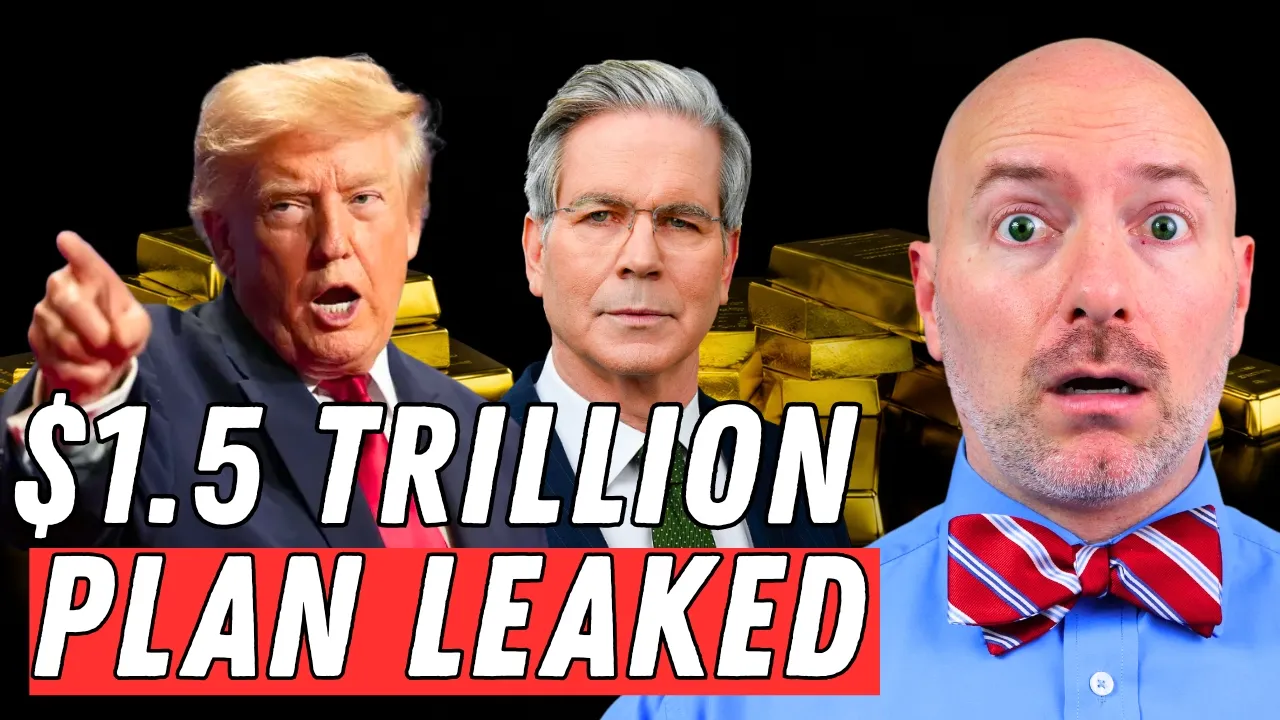
24 days. That's how long investors have before Trump's $1.5 trillion plan starts making headlines >> [music] >> and sending five stocks higher. The president and Treasury Secretary Mnuchin already told us that this was coming, [music] but almost nobody paid attention. I'll show you how they plan on building this massive investment fund, the gold reset that could unlock over a trillion dollars, and five stocks the government could target next. Before I show you that first stock though, the most interesting piece of all this is how the government is going to create that 1.5 trillion dollar wealth fund all without just printing more money. You see, the US Treasury holds roughly 261 million ounces of gold as reserves. Like any investor holding a hard asset as a long-term investment, totally normal. But now here's the bizarre part. Because of some archaic law from 1973, that gold is accounted for at $42.22 per ounce. Yes, the government reports that 261 million ounces of gold as being worth just $11 billion. In fact, at today's market price of $4,400 an ounce, it's actually worth $1.1 trillion. That's not just conservative accounting. It's like valuing your house at what your grandfather paid and wondering why Zillow thinks you're a But the US Treasury may have a way to turn that paper gain into actual usable cash to invest in the stocks I'm going to show you next. Here's how the system works today. The Treasury Department owns and holds that physical gold. Treasury then issues the Federal Reserve, the government's central bank, a gold certificate at that statutory of $42.22 an ounce, and the Fed gave the government $11 billion to spend. But that all changes with the stroke of a pen. I'm going to highlight the ways President Trump could raise money for this trillion dollar wealth fund later, which he can do by just executive order and which might need congressional approval. But by overturning that law valuing gold at that price 53 years out of date, this creates over a trillion dollars in investable assets. All they would have to do is that the Treasury revalues that 261 million ounces at the current $4,400 price, buys back the old $11 billion in certificates held by the Federal Reserve, and then issues new gold certificates worth that $1.1 trillion. Think of it like this. It's like owning a house that Zillow says is worth $900,000, but you still think of it as that house that you bought for $470,000. Updating the value doesn't create more money, but it does revalue it for a cash-out refinancing. Over $1 trillion in investable firepower, and that's just the first method the government could use to create this $1.5 trillion wealth fund. Now, I know I always hear about it in the comments when I do a video about politicians or government investing. I want you to think like an investor here. Forget about whether you love Trump or you hate him. Ask this question that we always ask on the channel. Where is the money going? I've highlighted this list on the channel before. The 30 companies that the government is already investing billions into for those ownership stakes, including 12 that trade as stocks you can buy right now. Most of these are in critical industries like semiconductors, rare earth minerals, defense, and quantum computing. These are industries where the government has determined that the market just isn't putting up enough funding to really develop these technologies, and that it's in the nation's interest to make sure that funding is there. In those rare earth minerals, these are metals used in everything from electric batteries, data centers, missile technology, and health tech. Critical technologies we cannot fall behind it. In quantum computing, with the billions being poured into that research, the government wants to seat at the table as an owner and a regulator. Now, of course, government support doesn't guarantee success, but I think it's fair to say that the 12 publicly traded companies the government already owns a piece of having a definite leg up against the competition. A lot less uncertainty around growth funding. I'm going to highlight two of these companies that could get follow-up investments by the government. Then three more stocks that aren't on this list, but let's start with Intel ticker INTC, the largest and most public of these investments. The government offered 8.9 billion dollars for a 10% stake in the company August of last year with another warrant or the right to buy additional shares for another 5% ownership. The chip designer crashed 70% to last year when CEO Gelsinger tried to pivot from a chip designer to manufacturing as well, falling behind on Intel's one core advantage and doing neither job well. Understand that Taiwan Semiconductor TSM manufactures more than 90% of the world's high-performance chips, a strategic disadvantage for the US. So the government stepped in with that 9 billion dollars backing it and the shares took off for one of the government's highest returns, up 130% since that pre-announcement price. But evidently building chips in the desert isn't cheap and Intel recently said it would sell 15 billion dollars in stock for capital expenditures or that spending will top 20 billion dollars this year alone. The US desperately wants to nurture that chip manufacturing industry, so I don't think this funding is over and Uncle Sam could step in with another round boosting that stock even higher. And we've still got four more stocks that could be government targets next, but this is all part of a bigger plan, a plan by the government to create a US sovereign wealth fund with trillions of dollars to buy stocks. On February 3rd of last year, Trump signed an executive order directing the Treasury and Commerce Department to develop this fund. And at the time Secretary of Treasury Mnuchin said this, "We are going to monetize the asset side of the US balance sheet for the American people." Of course nobody but us finance nerds says monetize the asset side of the balance sheet, so everyone just kind of ignored it, but that laid out the plan and that plan was to drop this right in front of the election with some massive news for the market. In plain English here, folks, America owns an enormous amount of stuff that either sits idle or like that school and it's valued at hilariously outdated prices. Monetizing it means just finding ways to turn that ownership into cash to invest. Basically, Uncle Sam finally looked around the attic and realized that some of this crap up there is actually worth money. And this goes way beyond just those gold reserves. Starting with over 640 million acres of federal land, about 28% of the total 2.2 billion acres in the United States, the government originally leases land to oil and energy companies collecting nearly 15 billion dollars last year, as well as straight out selling property that it's no longer using, like the 900 properties it sold since 2013 for 1.3 billion dollars. So, expanding that drilling, mining, and critical mineral development rights to these lands could generate another 25 billion dollars in annual income. And what nobody is talking about yet, since nobody wants a data center in their backyard, leasing federal land out to those hyperscalers for data centers could be billions dollars more. Then there's Fannie Mae and Freddie Mac, government-sponsored companies that buy mortgages from banks to help keep that money flowing into the US housing market. As part of the 2009 bailout, Treasury received warrants for 80% ownership in these companies, basically putting the government in control. Recent estimates are that the government could net as much as 300 billion dollars if it sold its stake and return those companies to private ownership. So, put this all together with that gold reset and we're talking upwards of 1.5 trillion dollars the government could use to invest in this fund and in these stocks. I'm going to reveal three completely new stocks to buy before the government next, but another follow-on could be MP Materials, ticker MP, one of the first announcements in July of last year, a 400 million dollar investment in preferred stock and warrants for 15% of the company. Now, MP Materials is one of the few rare earth producers with US assets, including production and processing at Mountain Pass, California. Makes it an integrated leader into an industry critical to those next-gen technology and robotics, automotive, electronics, and defense. And this is also the government's highest return so far with shares up 177% since that investment. Something they're sure to emphasize while doubling down with a new investment. Now, I've got three more stocks to watch, but not all of this is as easy as just signing an executive order by the president. And so, why I think we hear news of this within the next 24 days. The executive branch, so the part of the government under the president, has authority to manage federal land and those leasing rights and identify surplus property to sell. Now, the gold reset and privatizing Fannie and Freddie could be something Trump tries with an order, but are likely to need approval from Congress to pass legally. Since the Senate is out of recess until September 14th and only has about 3 weeks from then before it goes into those pre-midterm recess, I think the president tries to move fast on this, announcing some changes over the next two or three weeks before Congress gets back to put this idea at the top of its agenda. Quantum computing leader IonQ, ticker IONQ, could get added to the government's portfolio. This $16 billion company is one of the largest in the industry and already posting hundreds of millions dollars in revenue. Growth of 120% this year could take it to 287 million in sales, though it is still deep in the red on that income and cash flow basis. Now, the government is already a big investor in nine quantum computing companies, including IBM, Global Foundries, ticker GFS, D-Wave Quantum, QBTS, and Rigetti Computing, ticker RGTI. Now, neither of these last two pure-play quantum stocks have nearly the scale of IonQ, with Rigetti at just $23 million in forecasted sales and D-Wave at just $43 million. IonQ is the industry's only full-stack quantum platform built on over 30 years of research. Performance anchored on a world record 99.99% two-qubit gate fidelity. Now, the government's investment into quantum isn't about picking winners as it is about backing the companies that are going to keep this industry growing, and IonQ is going to have a big part of that. Now, another potential add-on could be Cameco Corporation, ticker CCJ, the primary producer of uranium for nuclear energy in the US. The administration has come down favoring nuclear as a renewable source, but it has so far only made one investment, a $17.5 billion loan facility to Westinghouse for a reactor deployment. Now, Westinghouse is actually a segment of Cameco, so the government might diversify a little and invest in competitor Uranium Energy, ticker UEC, but any new support should drive both of these stocks higher. I'm going to reveal that next stock. Frankly, one I'm surprised the government hasn't already bought, but if you want to see all the stocks I'm buying in real time, you can now by joining me on the Blossom Social Investing app. This is the app we've been waiting for, created by investors for investors. I've been using it for about 2 years and love the app for getting ideas and sharing my portfolio. Now, you can connect your brokerage accounts or just input all your portfolio to track all your stocks in one place. You're going to see insights like portfolio percentages and average dividend yield across the entire group. You'll also be able to join more than 500,000 investors in the social feed to see what everyone else is talking about. Now, I've shared my portfolio on the app. It is totally free to download and use, plus it helps support this channel, so I appreciate that. Look for the link I'll leave in the description or just scan the QR code here for the special invite and check it out. The government has already invested tens of billions of dollars in semiconductors, first into Intel, and as recently as July in seven new companies as part of an $870 million incentive from the Chips Act. An investment that was made extremely quietly by blog post without even a word by Secretary Lutnick or a tweet from Trump. Maybe it was not to send prices higher before this next big investment. That's because the US has neglected the undisputed leader in chips, Nvidia Corporation, ticker NVDA. Now, even a giant $10 billion investment like it made in Intel wouldn't give the government more than about 2/10 of a percent of ownership in this 5 trillion dollar giant, but it would put Uncle Sam on the list of owners for the world's largest company. I know it's not like Nvidia actually needs that funding. Already producing about 119 billion dollars in free cash flow a year, but this is all as much about publicity as it is about investing and that puts the chip leader on the list of the government's new wealth fund. Join me on Blossom and see all the stocks I'm buying right now with the invite link below. Don't forget to join the Stock Money Community by tapping that subscribe button and clicking the bell notification.

Comments 0
Sign in to join the discussion.
Sign inNo comments yet. Be the first to share your thoughts!