At $214, I believe Nvidia offers an attractive long-term risk-to-reward. And I'd be comfortable buying gradually rather than waiting for a perfect entry.
Context
So my conclusion is still positive. At $214, I believe Nvidia offers an attractive long-term risk-to-reward. And I'd be comfortable buying gradually rather than waiting for a perfect entry.
So my conclusion is that in offers the most interesting recovery setup of the two software stocks at $367. I'd buy gradually, but the next report must support management claim that this is a repairable pricing problem.
I keep Salesforce smaller until Agent Force produces clear acceleration in the wider business.
Context
Salesforce is cheap but has the most approved operationally. At today's prices, I would buy Nvidia and Intra gradually. I keep Salesforce smaller until Agent Force produces clear acceleration in the wider business.
Full Transcript
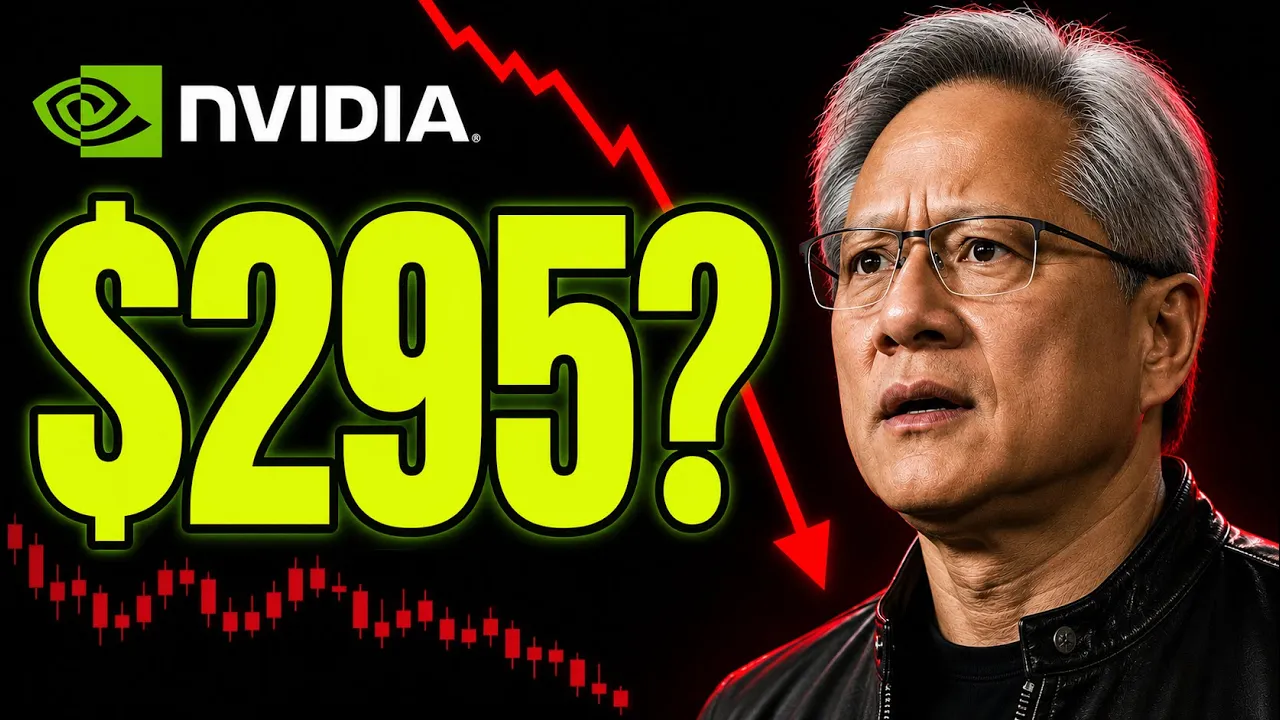
On Tuesday, Intuitit reports Wednesday morning, we get the Federal Reserve's preferred inflation measure. Then after the closing bell, sales and Nvidia report on the same evening. And before the week is over, the new Fed chair speaks at Jackson Hole. While investors are already questioning whether long-term interest rates, they're getting out of control. You can also notice when we look at the 30-year Treasury yield, it's reached 5.31%. That's only five basis points below the 2007 closing peak. So, this is not going to be an ordinary earnings week. In fact, it's going to be a direct test of the two things holding this market together. Spectacular earnings growth and investors willingness to keep paying for it while borrowing costs rise. And Tom Lee described next week as a clearing event. Listen carefully because this is the bullish expectation Nvidia now has to beat. You know, you're not going to hear from Nvidia again for a while after next Wednesday. And then I don't think people really think that anything from the Fed's going to happen in September or even October until you get to the midterms. That feels to me like it makes even more consequential for stocks. Uh I'd agree. I think it's what I'd consider a clearing event because let's take the AI story. There's been concerns about data centers and political opposition and it's caused this the trade to stall. I think it I think Jensen Hong is going to reinject a lot of confidence that look there's still this relentless demand story and it's going to be taking place regardless. And that is the expectation great numbers renew confidence and a clearing event. But the hard questions are not whether Nvidia is a great company. It's whether great is already now the minimum requirement. Because take a look at this data. Nvidia can beat expectations and still fall into it. It can look historically cheap and still disappoint. And Salesforce can repurchase billions of dollars of stock and still struggle to convince the market that the growth is returning. And with individual investors already holding close to 70% of their portfolios and stocks, there's a lot of optimism already committed. And today I want to separate what the market hopes will happen from what these valuations actually require. We're going to start with the market, move into the exact numbers Nvidia must deliver, and then examine two software stocks that may already be pricing in a much darker future. And look, over the last week, the headline index is hidden a meaningful rotation. Nvidia that was down 5%, Brocom more than six, AMD 8%, Intel that dropped more than 12%. And at the exact same time, we've got healthcare and parts of energy which has provided shelter. So this is not indiscriminate panicking. It's investors becoming more selective about where they're going to tolerate duration and valuation risk. And the one-mon view, it makes that even clearer. We can see Microsoft, Alphabet, Amazon, and Tesla, they've been strong. While AMD of Meta, they've fallen sharply. Nvidia, that's positive, but only modestly. And one thing I like to do as well, zooming out to the draw down map, this is from 52- week highs, almost every major part of the market remains below its peak. So remember the index, it can look calm because different groups have taken turns absorbing the pressure where we note the NASDAQ 100 that finally broke a 5-day losing streak. But also one small positive session doesn't resolve the underlying question. It just merely tells us that buyers have not disappeared. And also something very important that we need to keep our eye on that's yields. The bigger pressure is coming from the bond market. Long-dated yields are rising in the United States, the United Kingdom, France and Japan. This is a global repricing of what investors demand to lend their money for decades. And then you can also see the global yield on government bonds with maturities beyond 20 years. That's climbed to around 4.4%. That's the highest level when we look at the last 10 years. So this raises the hurdle rate for every longduration asset with the United States giving the clearest warning. The 30 yields traveled from below 1% in 2020 to 5.31% today. It essentially changes what future cash flows are worth. Yet stocks have continued to rise is why one side of the debate believes that rates no longer matter as long as earnings remains powerful enough. And this next view is important because it explains the entire case in under 40 seconds. is that yields rose but earnings overwhelmed them. >> Does next week hold the key on both regards earnings and Fed speak? >> I don't think next week even matters and I'll tell you why. >> That is a bizarro suggestion. So please explain yourself. >> I think Wor is off the hook because earnings are doing all the work, right? We've had a year where the tenure's gone from 4.2 to 4 and 3/4 >> and the market's up. If you told me at the beginning of the year that interest rates are going to be up that much, you wouldn't think stocks are up that much. Why are stocks up? Because of this spectacular earnings growth, what happens every time Nvidia reports? Every time they have great numbers, they're already anticipated. >> And that is a strong argument. And so far, it's been correct. Earnings have beaten the bond market. But it also reveals the vulnerability. Spectacular growth is no longer upside is the assumption supporting today's allocation. And if earnings merely become good while the discount rate keeps rising, both sides of that support weaken at the exact same time is why Nvidia's report matters far beyond just one stock. So Wednesday begins with PC inflation before the opening bell. It ends with Nvidia and Salesforce after the close. The market must absorb the price of money and the price of growth on the exact same day. And Nvidia, well, it's currently trading around $215. When we take a look, in fact, year to date, it's up around 50%. But the stock has just completed its longest losing streak in four years ahead of their earnings next week. You'll also notice it is sitting towards the upper end of the 52-E range, an all-time high price of $237, where Wall Street, as they have done for quite some time, maintain a strong buy rating. And the recent weakness is visually dramatic, but it's only taken the shares from around $227 to around $215. Nvidia, they're still less than around 10% below their high. And historically, Nvidia's experienced 37 6 day losing streaks. This is the only one on this study that occurred while the stock was not already in a correction of at least 10%. And the last four earnings periods, they all produced a post-report sell-off around 10%, 9%, 16% and 6 and a half from the prior close to the eventual trough. Now look, at the same time, this doesn't predict another decline. It tells us something more useful. The company and the stock are being judged against different standards. Nvidia can execute brilliantly while expectations execute even faster. And this analyst expects another strong report, but his uncertainty about the share price reaction is exactly the distinction investors need to understand. >> So Stacy, it's a great company. It always seems to knock it out of the park when you bet against them. Why the underperformance? And even if they have another stellar quarter, what makes me believe that my money should be put into that stock that's underperformed drastically its peers? >> Yeah. And and to be fair, like like I'll be honest, I think it's going to be a good print. I don't know what the stock is going to do in the near term. Like most of my coverage is reported earnings. By and large, they've all had very good prints and I I've barely had any stocks actually go up um the the day after the the print. So like I I guess we'll just have to to to see >> exactly a beat is not the thesis. The size of the beat, the guidance, and the market's reaction will tell us whether expectations have finally reset. And there are four numbers here that matter for Nvidia. Now, Consensus expects around 92 billion of revenue and normalized earnings around $29 per share last quarter, while Nvidia generated 81.62 billion and normalized earnings of $187. So, before any surprise, the market expects revenue to rise around 13% sequentially and normalized earnings to rise roughly 12%. Those enormous absolute additions at Nvidia scale. And the first test is whether the revisions remain onedirectional. Over the last 3 months, Nvidia's received 42 upward annual EPS revisions against only three reductions. Revenue revisions. They tell us the same story. 46 increases and four decreases. The market is not approaching this report with depressed expectations. And the second test is the magnitude of the surprise. Nvidia's beaten EPS expectations in all eight of the last quarters. A small beat may now be interpreted as a deceleration where for the full fiscal year, Consensus expects $9 one of earnings per share. That's up around 89%. It then expects just over $13 followed by $1616. It means expected growth falls from around 89% to 45% then down to 24. Nvidia does not need infinite growth, but it must convince investors that deceleration still leaves an exceptionally profitable runway. And relative to other semiconductor companies, Nvidia's valuation is surprisingly restrained. This comparison places Nvidia at around 22.6 times current year earnings and 15.9 times next year's estimate is below the multiples assigned to several slower or less profitable peers. But the apparent cheapness depends completely on those forward earnings arriving. The third test, well, that is the Reuben product cycle. We've got UBS estimates they're projecting hyperscala capital spending rising from 492 billion in 2025 to more than 1.6 trillion in 2028. And over the same period, it projects Nvidia data center revenue rising from 194 billion to 792 billion. Now obviously these are estimates not guarantees but they show the scale embedded into the bullish case where we have the four test as profitability memory and wafer costs they've in fact increased and the broader memory trade has also produced extraordinary gains. Nvidia must show it can protect margins as input costs rise. Where we have one Morgan Stanley research model estimating token sale net margins improving from around 58% on the Blackwell infrastructure to nearly 80% on Reuben and around 19% on Fayman. Now these are model economics not Nvidia's reported company margins but they explain why each product cycle matters. Better performance can expand the economics of the entire installed base. And you have the caution that is the price paid per million tokens that's already pulled back from its recent peak. Now, as always, greater uses does not automatically mean every layer of the AI stack keeps the same pricing power. With all of this leading to the financing question, Nvidia is no longer simply selling chips. It's helping an ecosystem find the power, land buildings, and capital required to buy them. And this short clip matters because it shows how Nvidia intends to remove one of the largest constraints on future demand without funding the entire build from his own balance sheet. >> Um, but we have to start with this news, Jensen. Um, this is a big deal and it's a big number, half a trillion dollars, more than that in terms of financing. We know this is an expensive build, but tell us a little bit about how this came together and what exactly it is. >> Well, first of all, I want to thank all of my partners for joining me here today. I think this is first time this has ever happened before and and uh I can't imagine a more important time to do it. We're announcing six partnerships today. These partnerships are going to pull together independent long-term capital to fund and support AI infrastructure buildout. >> The conclusion is bullish for demand, but it deserves scrutiny. Nvidia's widening the pool of capital available to its customers while also becoming more deeply involved in creating the demand it ultimately serves. And we have China. That's another swing factor, easing restrictions on limited H200 shipments that can improve near-term demand, but policy can change faster than any product road map. And competition, we can see it's evolving. This forecast expects Nvidia GPUs to retain roughly 78% of training compute through 2030, which would ultimately preserve a dominant position. But expects GPUs collectively to fall from 95% of inference compute in 24 to 45% by 2030. And that's as A6 and custom TPUs grow. Notice that this is GPUs a category, not Nvidia alone. So the bare case is not that AI disappears. It's that growth normalizes, custom silicon captures more inference, and investors eventually refuse to capitalize today's economics forever. And Nvidia roughly 22 times forward earnings. We can see this data from simply safe dividends. It trades well below its 5-year average multiple of around 36. On this measure, the stock is cheaper than its own recent history, giving us a severely undervalued signal, which when we combine it with the blue tunnel, which highlights the fair value intrinsic price. Again, another massive undervaluation signal. The stock price today sits much, much lower than even the bottom end of the fair value. But Nvidia is one of those companies that at least over the last few years, the underlining metrics have grown incredibly fast. Yet, the stock price has failed to keep up. And Wall Street as a whole, their average price target sits around $35, implying around 42% upside, but also very important, the range here stretches from $180 at the low end to $500. This tells us how assumption sensitive the outcome is for Nvidia. And using my bare case discount and cash flow valuation, the intrinsic price comes to $235. That does give a margin of safe, we can see around 9%, although bear in mind this is using an 8% discount rate. When we take a look at the base case, we get $32 almost exactly in line with what we saw with Wall Street and that sits around a margin of safety of 29% today. And then the bull case for Nvidia that reaches $330. On the surface, all three scenarios suggest Nvidia's undervalued. But there is one assumption we can't ignore in the public market today, and that is every one of those headline valuations uses an 8% discount rate. If we raise that rate to 10% on the base case, well, the value falls from $32 to around $27, leaving no margin of safety. We're talking a 3 to 4% premium. If we do the same with the base case, well, at 10%, the value falls down to 161. Clearly, no margin of safety, a huge 33% premium. So, the same business can look cheap or expensive depending on the return that investors demand from the future. is why I don't want to present the base case. $32 as a promise is the output of a set of assumptions. Nvidia's earnings determine the cash flows. The bond market helps determine what those cash flows they're worth today. So, my conclusion is still positive. At $214, I believe Nvidia offers an attractive long-term risk-to-reward. And I'd be comfortable buying gradually rather than waiting for a perfect entry. But I wouldn't build a full position immediately before a binary report. If great numbers produce another 6 to 10% decline without damaging the long-term outlook, well, that would interest me far more than chasing an initial spike. So, Nvidia is my highest conviction business in the episode today. The uncertainty is not the quality of the company. It's how much perfection the market will demand on Wednesday night. And Nvidia, they're not reporting alone. Salesforce releases earnings on the same evening and its setup, well, it could hardly look any more different. In fact, Salesforce trading around $29. It's still down year to date. We're talking 21% and yes, it has recovered from the June low. In fact, 52 week low at $146, but it remains far below where it began this year. And 52- week high still sits around $270. In fact, today it's sitting around the midpoint of the 52- week range with a double respectable buy from both SE Alpha as well as Wall Street. We can also see that their forward price to earnings multiple that sits around 15. Compare that to their 5year average of 27. Well, that's a substantial reset for a highly profitable subscription business. Another potential undervaluation signal, which is also confirmed when we take a look at the blue tunnel. Not only do we see a massive disconnect, but this is one that we've actually seen for quite some time over the last 5 years. Investors very rarely for Salesforce are happy to pay a premium. In fact, more often than not, this one does trade severely undervalued. We're seeing that same thing again in 2026. And then when we zoom out for the history making it even longer what's even more striking Salesforce we can see trades at 11.32 on a forward enterprise value to Ebitar against a mean of 26 since 2014 and not far above the period low. And for the coming quarter consensus expects 11.32 billion of revenue and $327 per share of normalized earnings. The most recent quarter where we can see that produced revenue of 11.1 billion and normalized EPS $388 where in fact EPS revisions they're notably positive 46 upward revisions and zero reductions over the last 3 months. Revenue revisions they're less clean 28 increases and 13 decreases. With Salesforce they've in fact beaten EPS expectations in eight consecutive quarters and revenue expectations in seven of eight. As with Nvidia, simply beating is not enough to resolve the debate and consensus expects fullear EPS growth of around 13% followed by just under 10% next year. So, the valuation's low because the market's questioning whether low double-digit growth is actually durable for CRM. And the average analyst target, that's around $244, indicating around 70% upside. But personally, I care less about the target than the operational evidence that the company must provide. And at the end of fiscal 26, Agent Force's annual recurring revenue reached 800 million, up 169% year-over-year. Salesforce reported 29,000 Agent Force deals up 50% from the previous quarter and current remaining performance obligations grew 13%. These numbers suggest AI is becoming a real commercial product, not merely a presentation slide. And then we also had the enormous April repurchase. We can see here more than 27 billion of gross quarterly buybacks, but this mustn't be treated as a normal recurring run rate. Salesforce entered a 25 billion accelerated share repurchase agreement financed with 25 billion of newly issued senior notes and it initially received around 103 million shares at an average price of $198. But for Salesforce, buying back stock near 198 where the long-term valuation is this depressed that can create substantial per share value. But debt funded repurchase, they're not free money. Interest, expense, and balance sheet risk, they also increase. Now, my Salesforce DCF makes an intentionally severe assumption is that free cash flow, as we can see, never grows from its current level. And that an 8% discount rate, it still produces an intrinsic value of $248 is around 19% in terms of implied upside. But once again, rates matter. If we for example increase this to 9% while we can see $23 here slightly below today's price. So my conclusion is that Salesforce is viable around $210 for a patient investor because the market is already pricing in years of weak growth. It's not however something I'd call a risk-free bargain. I'd essentially want to see agent force translate into faster remaining obligation growth, not just impressive percentage growth from a small base. Until then, I'd say this would be a smaller position than Nvidia for me personally. And in fact, before we get to Nvidian Salesforce this week, intricate reports on Tuesday evening, of the three stocks, this has experienced the most severe reset. It traded at $367, still down massively year to date, we're talking 45% and only modestly above their 52- week low. the market rapidly changed what it's willing to pay for the company where we notice like Salesforce a double respectable buy from both C alpha as well as Wall Street and when we take a look at the valuation well forward P sits around 14 times 5 year well that sits at 31 so the multiple been cut by more than half another severe undervaluation signal you can also see the yield 1.3 although just weeks ago this was sitting near two in either case still above the 5year average of 7 And probably no surprises when we take a look at the blue tunnel. Well, massive, massive undervaluation signal. As I've said in the last few reviews of the company, the price today sits closer to zero than it does even the bottom end of the fair value price. Just tells you how severe the correction has been. Yet, investors don't seem too optimistic. Sentiment still very poor. And we can see the history of the company going back to 2014. It shows the same reset. Their normalized forward PE sits around 13.4. Compare that with a mean of 32 since 2014 and a period low of 9.5. And while the obvious narrative is that artificial intelligence has broken into its consumer tax mode, but management explanation of the immediate problem is much simpler, it lost price sensitive customers on price. Management said it was constructively dissatisfied with its performance among DIY filer earnings below $50,000 a year and admitted directly, we lost on price. And we also saw later an investor conference, management could not have been clearer. None of this is anything to do with AI. The plan change is about pricing the product correctly for customers earning less than $50,000. So the distinction matters enormously in AIdriven structural collapse that deserves a permanently lower valuation, a self-inflicted pricing mistake that you could argue can potentially be fixed. and the vulnerable DIY segment represents a 5 billion market or around 12% of Turboax total addressable market. It matters but it's not the whole company. Mandrin also said in fact that customers using both Turboax and Credit Cler they generated around 30% more revenue per user than Turboax only customers and more than 35% adopt its fast money offerings. And for Tuesday's report, while Consensus expects 4.3 billion of revenue and around $359 per share of normalized earnings, the comparison it see unusual because the previous quarter included the tax season peak. And while despite the collapse in share price, annual estimate revisions remain strongly positive. 31 EPS increases against one cut and 27 revenue increases against two reductions. and into it. Well, they've beaten both EPS and revenue expectations in every one of the last eight quarters. Again, the questions no longer whether it can manufacture another beat. The market wants evidence that the lower price DIY strategy can stabilize customer trends without destroying revenue per return or creating more churn elsewhere. And consensus expects well around 4ear EPS just shy of $24. That's around 18.3% growth followed by $27 which is slower sitting around 14.5 and then slower again to around 12.9. The company expected compound earnings in the low to mid- teens is now trading at a very similar forward multiple that is far more attractive than the valuation in it carried before the selloff and Wall Street's average price target $446 implies around 22% upside. My valuation is somewhat higher, but it also contains meaningful interest rate sensitivity. My DCF produces a value of $476, offering a margin of safety sitting close to 23%. That's against the current price today. But the valuation, it only uses a 2% annual free cash flow growth rate and an 8% discount rate. If we raise this say for example to well 10% well the value falls around $342 that's below today's price which is why I wouldn't say in it is automatically cheap simply because its multiple is near a historic low a lower multiple can persist when the market believes the competitive position is ultimately changed. So my conclusion is that in offers the most interesting recovery setup of the two software stocks at $367. I'd buy gradually, but the next report must support management claim that this is a repairable pricing problem. If ultimately customer trends stabilize, the valuation leaves room for a substantial rerating. If they continue to deteriorate after the pricing change, the market will conclude the problem runs deeper than management believes. So here is how I see the week. into it is Tuesday's test of whether a 45% decline has already priced in a reparable mistake. Nvidia, that's Wednesday's test of whether the spectacular growth can still overpower rising yields and extraordinary high expectations. And Salesforce is the same evening's test of whether historically low valuation, rapid AI growth, and enormous repurchase can overcome doubts about the core growth rate. And surrounding all three is the macro question. Does inflation allow long-term yields to settle? And can the Fed chair reassure markets without pretending the inflation target no longer matters? So, my ranking is straightforward. Nvidia is the highest quality growth opportunity and my highest conviction. Intra is the most attractive recovery setup. Salesforce is cheap but has the most approved operationally. At today's prices, I would buy Nvidia and Intra gradually. I keep Salesforce smaller until Agent Force produces clear acceleration in the wider business. And most importantly, I wouldn't treat an earning speed as the finish line with investors already heavily allocated stocks. The reaction may reveal more than the reported number. And if Nvidia produces excellent numbers and falls, expectations were still too high. If interest stabilizes its consumer business and remains near 14 times earnings, the market may be offering an opportunity. And if Salesforce cannot accelerate despite an 11 times enterprise multiple and a dramatically lower share count, cheapness alone will not rescue the investment case. So next week is a clearing event, but not because one earnings report predicts the next 10 years. It will show us what this market still rewards and what is finally stopped forgiving. Let me know below which of the three stocks you'd be most comfortable buying before earnings, which one you think has the greatest downside if expectations are wrong. And don't forget, as always, you can sign up to the free weekly newsletter by click on the pin comment below. We release one weekly covering severely undervalued stocks as well as what's gone in the market over the last few days. So, you can sign up, read all of these straight away. More importantly, have a great day. I'll see you all on the next one.

Comments 0
Sign in to join the discussion.
Sign inNo comments yet. Be the first to share your thoughts!