it's it's a lot of upside from here that wasn't recognized in the way the financials have been um produced by the company.
Context
"And then you get to look at, you know, back to the capital allocation side. when you start to build a self- storage facility, there's a lot of capital you have to put in the ground um before you ever take rental one into into the facility. So, we have um a business that is now on the upswing now that they've built a bunch of the um the properties. It's it's a lot of upside from here that wasn't recognized in the way the financials have been um produced by the company."
we feel very strongly that Alphabet is is uh well positioned and also culturally very well positioned to to succeed.
Context
"But as we look at sort of winners and losers that can that can occur in in a time period like this, we feel very strongly that Alphabet is is uh well positioned and also culturally very well positioned to to succeed."
Full Transcript
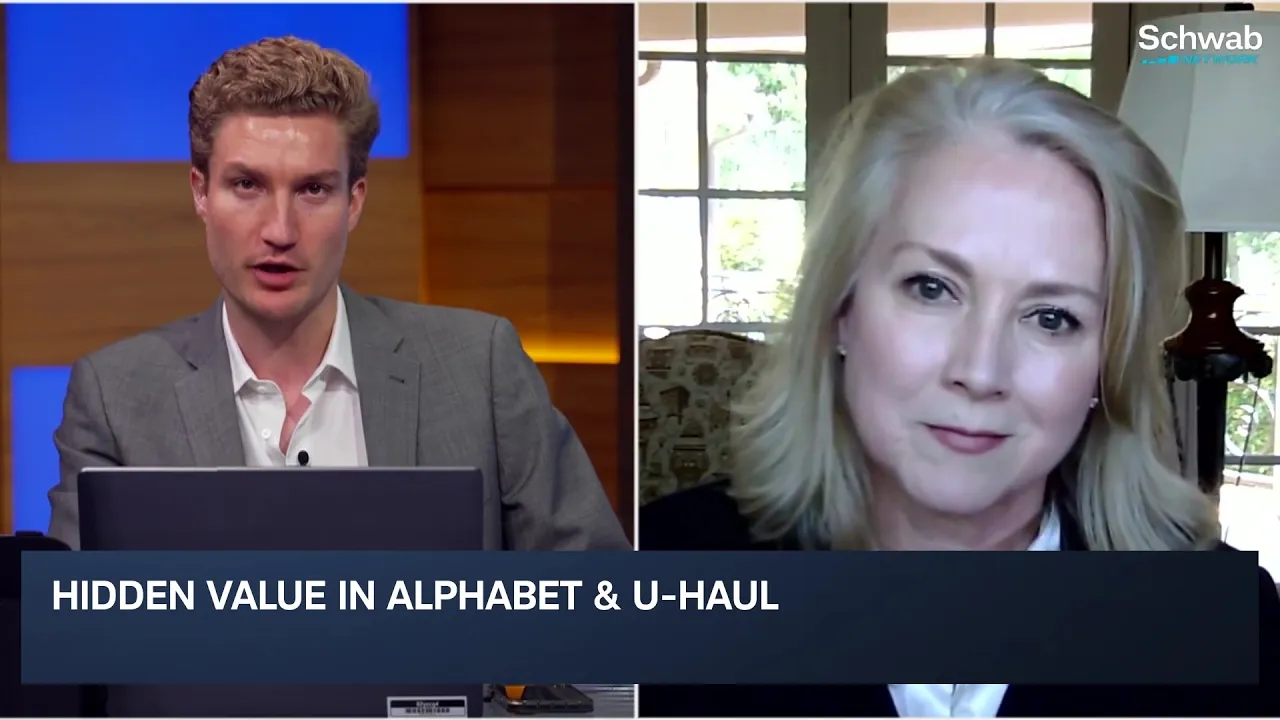
So, for more on these stocks and the recent performance from both of these names, we are joined by Molly Prony, president of Yakman Asset Management. Molly, great to have you with us. Now, U-Haul is where we'll start. Best known for, of course, its truck rental business, but you've argued that the market is missing the value of its self-s storage segment. And so, why do you believe that investors are perhaps not properly recognizing what those storage assets are now worth? >> Right. It's a it's a really great story. We've owned U-Haul for lots of years. And we all know U-Haul with the uh the trucks that you all showed on the trailer before uh where we move from place to place when we switch apartments or have a family change of some sort. Uh but they do have also a self- storage business that you've you've seen as you drive around and sometimes they're colllocated with their trucking facilities. uh but because they produce their financials in a way that doesn't break out this line of business element quite so clearly. Um often they they get thrown in together. Um the the the self- storage business is actually we think worth uh the entire market cap of the company based on comping it to um a recent acquisition in the self storage space of the number five player and you get the trucking business essentially for free. And we think that the families into the family controlled and owned business, they're oftentimes making capital investments that are very long-term in nature as business owners themselves. And we at Yakman really like companies that have this type of long-term investment because you end up being able to make capital allocation decisions that are really good for the business long term. Yeah, maybe not as exciting as some of the AI names, some of these high beta infrastructure plays, but certainly a business that has stood the test of time and has a little bit more of a consistent way about it when you look at its kind of performance over time. Um, is it a little bit more cyclical in nature? Is it going to be exposed to the economic cycle? >> Yeah, great question. It's it's uh we've done the math on what what has hit this company over time in terms of the cyclicality of of moving. And oftentimes people think it's also tied to housing starts. Um but the fact is most people who do do it yourself moving are moving from apartment to apartment or they're going to college or they're um having uh having some other life change type of event. And it's actually very uh counter it's not even cyclical at all. Uh it it's something that even during COVID, the only issue they had was all of the uh since we're Texas based, a lot of a lot of the trucks wound up leaving California. So there's a little bit of load balancing you had to think about. But it's definitely, you know, it's a it's a a company that we think is um very defensive against any cyclical uh risks as well as AI. I mean, there's not too much you can think about with AI that would impact the truck rental and storage business. >> Okay. Okay. And so when you look at the growth profile, how do the truck rental and self- storage businesses complement one another and which do you see perhaps creating them the most value over just the next several years? >> Yeah, I think we're encouraging the company to go ahead and start producing financials that would allow us as investors and other investors importantly to be able to see that more clearly because if you think about the way we're set up on Wall Street, we have analysts focused on self- storage. Um, and this is not a self-s storage REIT, even though it's in the top five of the self-s storage REIT market. Uh, and it's not a trucking company solely because of course they have the other business. So, I think even just simple things like, uh, releasing financials that break out the line of business elements would be a really big step in the right direction. And then you get to look at, you know, back to the capital allocation side. when you start to build a self- storage facility, there's a lot of capital you have to put in the ground um before you ever take rental one into into the facility. So, we have um a business that is now on the upswing now that they've built a bunch of the um the properties. It's it's a lot of upside from here that wasn't recognized in the way the financials have been um produced by the company. And then let's uh shift gears here, I guess, no pun intended, something completely different and one that really hasn't been questioned a ton over the last few decades until recently. Uh and that's Alphabet. Now, a big part of the discussion is just the extraordinary amount of investment that they're making and that they've had to, you know, tap equity markets, tap debt markets a little bit to finance this. Um, I'm guessing since it's here, it's on your list, that isn't scaring you away. Uh, what what stands out to you about Alphabet? >> Yeah, great great point. And it's a company we actually invested in Alphabet initially back in 2019. And we do tend to think very long-term as we make our portfolio company investments. But we all remember the day in November 22 when Chat GBT showed up on the scene. And it was at that point in time where if if Clayton Christensen were around right now, the guy who wrote The Innovator's Dilemma, he would say, "Okay, your search business just got um just just got a lot more risk." They um the company actually launched their Gemini product a year later. But as investors back in 2019, you can appreciate we were looking at an asset asset light in a fairly dominant share type of business model in and paid search and all of that got um questioned at the time that Chat GBT showed up on on the scene very publicly. And now we're up against chatbt anthropics and Chinese models and the list runs on. But I think we look at it and look at the core ethos of Alphabet. We look at this often with companies in terms of what are they really made of. Um the deep mind team on the AI side has been around for for decades before most of the world even knew about AI and they really have a a culture there of delighting users on any number of the products that they launched. Um I remember back to predictive text when you started typing into the search bar and it would figure out the rest of the word you were using and how delightful that was back back in the day. Um there was a woman Marissa Mayor actually I think she was employee number 20. She really helped to cultivate that culture very on very early on. We think it's actually part of what makes Alphabet really unique. But now they get to play in the full stack. They've got the data centers um with that infra infrastructure play which is uh very capital intensive these days. They've also gotten into the chip business with their TPUs. They're in cloud. They've got the models and then all kinds of distribution. And that's not to say anything about they also own YouTube and Whimo. You get other assets in in the entire Alphabet ecosystem that that are well beyond uh you know what we think about in terms of paid search. So really it's just it's going to be a big debate right now about how capital intensive will this infrastructure buildout be. But as we look at sort of winners and losers that can that can occur in in a time period like this, we feel very strongly that Alphabet is is uh well positioned and also culturally very well positioned to to succeed. >> Okay. And you mentioned some of the the exposure that this company of course has beyond just AI like YouTube, I mean Whimo, Google Cloud. And so which of those businesses now do you see perhaps is the most underappreciated by the market? Yeah, I think it depends on who you talk to because I think different parts of the market are focused on different elements of of this company. U but you know there's even a differentiation between you know Google search and uh the AI insights that you see pop up that that Gemini tempts you with. And actually it's interesting if you think about that that AI um uh the first block you see when you do a Google search actually has you search more if you look at it. you get more ideas on what you could be looking at and then it and works you deeper and deeper into the search experience. So I think at our core we have to look at the core business model um that that we initially invested in in terms of the of the search the search business itself and we're looking for ways that that can remain defensible and other ways they can innovate to uh to create the revenue model that they've enjoyed for so many years. You know, if I go back in time, let's say like, you know, a decade and a half, two decades, and I think about Amazon and how it basically broke even for like, you know, 15 years as it was building this empire, and the street kind of just looked at it and said, "Hey, they have this faucet of earnings they can just turn on whenever they want." And then, of course, they did and the rest is history. It kind of seems like the same still true for Alphabet. It's not like these aren't uh core businesses that are extraordinarily impressive. the Google Cloud growth is tremendous. They've just chose to make tremendous investment in a time they think it's very necessary. So, as a a steward of capital, are you able to look past sort of the now and say, "Hey, it's just a decision point away from being this extremely lucrative free cash flow generating business once again." >> That's super well said. That's very similar to how we're looking at it. And we also think that like for example, we invested in Microsoft back in 2003 when it was basically left for dead and everyone was moving away. They they they thought their entire enterprise model was at risk and so and Steve Balmer was running the company at the time. So to your point there there are companies like Alphabet that have a really strong footing in some really strategic areas and some of this we have to also know that the the leadership of the company and the board will be thinking about the same things we as investors are are thinking about and it's there's very good alignment we believe in in uh in Alphabet's mission. Yeah, and I definitely think that the street is in agreement with you because at least this name has seen some decent recovery. But really appreciate it. Great conversation today that Molly Prony, president of Yakman Asset Management.

Comments 0
Sign in to join the discussion.
Sign inNo comments yet. Be the first to share your thoughts!