my verdict for Nvidia is that it remains the best risk adjusted AI stock in the group I wouldn't chase it on a euphoric rally but around the low 200 gradual accumulation is reasonable for long-term investors who can tolerate volatility.
Context
my verdict for Nvidia is that it remains the best risk adjusted AI stock in the group I wouldn't chase it on a euphoric rally but around the low 200 gradual accumulation is reasonable for long-term investors who can tolerate volatility
And among the semiconductor equipment companies, ASML is my preferred choice. I would accumulate both gradually rather than attempt to predict the exact bottom.
Full Transcript
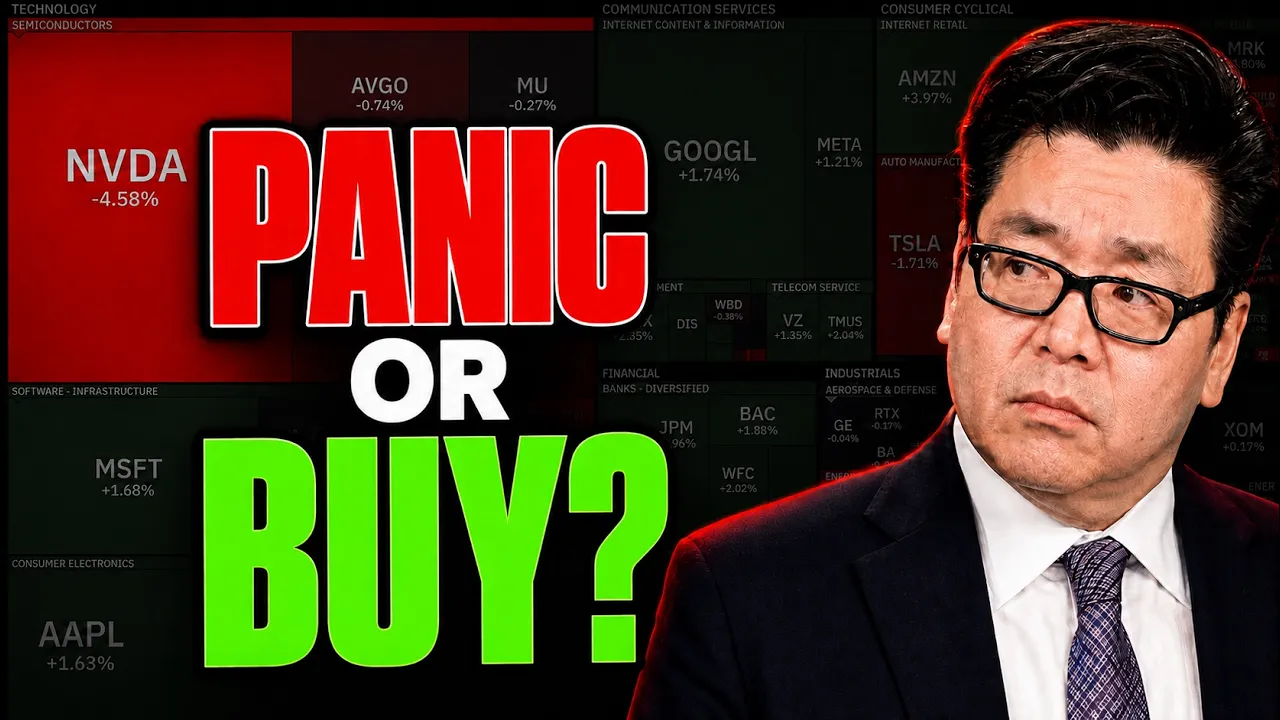
Nvidia delivered another green light for artificial intelligence. The company reported explosive profits. The stock had its best day since April of last year. And Wall Street appeared convinced that the AI boom was accelerating. But in fact, less than 24 hours later, investors suddenly dumped some of the most important companies powering the boom. While Marvel that crashed more than 10%, Nvidia fell almost 5% and semiconductor equipment stocks, they were hit across the board. Now, several of these companies are down 20, 30, even more than 40% below their recent highs. So, did the AI bubble finally burst? Or has Wall Street just handed patient investors their next opportunity? Today, we're separating the companies that are genuinely becoming attractive from the ones that only look cheap because their prices collapse. But before examining individual stocks, we need to correct one important misconception. This was not a broad stock market crash. The S&P 500 declined only around one quarter of 1%. The Nasdaq lost roughly 1/ half of 1% and the Dow was approximately flat. In fact, we can see that Alphabet, Meta, Amazon, and Microsoft, all of those were positive. This was something more revealing. A selective repricing of the most expensive and expectation sensitive parts of the AI infrastructure trade. And that distinction matters. Investors were not saying that artificial intelligence is over. They were saying that extraordinary growth may no longer be enough when a stock already assumes perfection. Here's how one market strategist described the dependence of this market on artificial intelligence just before Friday's selloff. >> Whole rotation around AI though, isn't it? >> Oh, it all hinges on AI. If we don't have AI and I think Nvidia kind of gave us the the green light that anything AI networking, AI infrastructure, AI is back on. >> That comment captures Friday's contradiction perfectly. Nvidia supposedly gave the entire AI trade the green light. But the very next day, the market sold the infrastructure companies anyway. Why? Because a green light for the business does not automatically mean a green light for every stock at every valuation. I mean, we can see the fear and greed index that finished at 54 neutral territory. There was no marketwide panic and no rush for the exits. Instead, three risks collided inside one very crowded trade. The first that was in fact interest rates. The 30-year Treasury yield climbed to around 5.31%, its highest level since 2007. When long-term yield rise, investors can earn a higher return from government bonds. It raises the return they demand from stocks and reduces the present value of profits expected many years into the future. Now, that hurts high multiple growth stocks more than mature companies whose cash flows already exist today. A company can therefore report excellent results while its stock declines because the discount rate being applied to those results. Well, now they've changed. The second risk that came from the Federal Reserve chair Kevin Walsh emphasized that inflation had not convincingly returned to the target and left additional rate increases on the table. Now, it doesn't destroy the overall AI thesis, but it makes a low margin of safety much more dangerous. Many discounted cash flow models we're about to examine use an 8% discount rate when the 30-year Treasury already yields more than 5%. While that assumption is not extremely conservative, a small increase in the discount rate can materially reduce fair value, particularly when a large portion of the value comes from cash flows 5, 10 or 20 years away. And the third risk that's positioning many of these stocks have already delivered spectacular returns. I mean when we take a look for example Marvel that entered earnings up more than 150% this year. AMD was up more than 100%. Investors were not merely expecting growth. They're expecting immediate almost flawless growth that inevitably creates an asymmetric reaction. A huge beat might produce a modest gain but a small disappointment that can produce a 10% decline. So the important question is therefore not whether AI demand is real that it clearly is is whether today's prices provide enough compensation if the growth takes longer to arrive. We're going to get into the bullish side of the argument and listen carefully to the distinction here. He's not simply claiming that AI will be important. He's arguing that the spending's already connected to identifiable financial returns is the strongest defense of the AI infrastructure cycle. >> Is it real? >> It's real. I think we're in the second inning, Joe. And you know, I know today's week zero for football, so I should probably using football analogies, but you're just seeing these teams step on the field. So, I know people get excited, but I go back, remember a couple quarters ago when Andy Jasse at Amazon, the CEO, articulated that we can identify whatever capex we are putting, which is in some people's eyes egregious the amount of money they're spending, but they can match the return on that investment. So, whatever they spend, they already know what's coming in and it's not a speculative 2, three years out. They are spending money and they are returning. >> That is the bull case that even if the AI cycle is only in its second inning, investors can still overpay during the second inning. Cisco was an essential company during the internet buildout. Is revenue continue growing after the dotcom bubble? But investors who paid the wrong valuation still suffered. A transformative technology and attractive stock price are two different questions. So today I'm judging each company using three filters. First, strength and durability of the business. Second, how much future growth is already embedded in the price. And third, whether today's valuation gives us a margin of safety if the forecasts are delayed. We begin with the company setting the standard for everybody else. And that's Nvidia closing around $218 after falling near 5% on Friday. And despite the dramatic reaction, the stock, well, it's up only around 17% year to date. And it's trading less than 10% below its 52- week high is very different from a company like Marvel or AMD. They've more than doubled before their recent declines. And something interesting to note, we get a strong buy rating from Wall Street and Quant see Alpha still buy four out of five. But more importantly, Nvidia's fundamentals remain extraordinary. Operating profit reach around 64 billion. That's growth of 124% year-over-year. It's not a respective company waiting to produce cash. It's already one of the most profitable businesses in the world. And then when we take a look in fact at their forward earnings, this is from simply safe dividends. It trades around 18 times forward earnings. Let me just repeat that Nvidia trades 18 times forward earnings. Their 5-year that's much much higher around 36 which highlights that Nvidia's trading at a much lower multiple than its own history and far below as we'll come on to the likes of AMD Marvel is the first important conclusion. The AI lead is currently cheaper than several of its challenges. And again from Simply Safe Dividends, if we take a look at the blue tunnel, which highlights intrinsic fair price, while we can see the disconnect from the stock price and the bottom end where the underlying fundamentals, they're only increasing more and more. This we can see was just from their latest report. Although over the last 5 years, over the last 10 years, we can see the fundamentals have increased so much the stock price is yet to catch up. And the other important thing to point out is that Nvidia has effectively no net debt. Higher rates can reduce its valuation model, but they do not create an immediate refinancing problem. And just after their latest report, well, Wall Street have increased their price target sitting at $323. That's close to 50% upside. Now, as always, analyst targets, not guarantees, but they show how large the gaps become between current price and earnings expectations. Now, let's get to the DCF. And as we can see, our base case valuation sits at $33 compared with where the market sits at $27. That equates to a 28% margin of safety. If we look at the inputs, even the low growth scenario produces a value of 254. That's 17% above the current price. Base case suggests 40% upside while the high case that suggests 66%. But there is an important warning here. Bear in mind that this model is assuming an enormous jump in free cash flow. Now these numbers are taken from analyst estimates 97 billion in the most recent year to starting at 180 billion in 2027 and then it jumps to 274 billion by 2030 before these essential rates are used. Now if the jump fails to materialize, fair value will obviously decline. So I'm not going to treat $33 as a precise prediction. The stronger observation is relative. Nvidia requires less heroic growth than several other AI stocks while offering stronger profitability and a lower earnings multiple 4 12% that is what is baked in to justify today's price incredibly low when you look at the most recent increase of 59 5 year of 86 10 year of 59 so my verdict for Nvidia is that it remains the best risk adjusted AI stock in the group I wouldn't chase it on a euphoric rally but around the low 200 gradual accumulation is reasonable for long-term investors who can tolerate volatility. So, that was Nvidia, the next company now offers potentially faster percentage growth, but requires far more perfect execution. And before we dive into that, just want to let you know I've released my latest weekly article. You can click on the pin comment below, sign up, read all of these straight away where we discuss severely undervalued stocks and what's gone in the market just in the last few days. And the next stock is AMD that sits at $465. It was down just over 2% on Friday, but still up more than 117% year to date. Now, in terms of where it sits on the 52- week range, it is still towards the upper end, although we can see it's sitting around 20% below its 52- week high. And a 20% draw down, it can sound significant. But remember, the stock has more than doubled. So, a 20% decline does not automatically make it cheap. Where we notice another double strong buy rating from Wall Street and Quan. The only difference here is the buy rating from Seek Alpha. much weaker 3.6 6 out of five than what we saw for Nvidia and AMD it does deserve their strong growth grade where we can see here of an A current revenue that was up 40% year-over-year forward revenue expected 50% forward Ebidar expect to exceed 78% and we can see forward diluted EPS around the 67% projection while long-term earnings per share coming in at 66 phenomenal numbers the valuation challenge though becomes obvious when we examine the earnings multiple because look AMD trade around 61 1/2 times estimated 26 earnings. It's projected to fall to around 30 times based on 27 21 on 2028 and then down to 16 on 2029. At first glance looks incredibly attractive, but the multiple does not compress automatically. It compresses only if AMD produces the earnings that Wall Street is forecasting. And we can see that's 81% in 26, 104% in 27, 41 in 28, and 33 in 2029. In other words, AMD's multiple can fall from 61 to 21 without its share price declining, but only if the earnings arrive almost exactly as expected. And revenue is estimated to grow from around 35 billion in 2025 to almost 120 billion in 2028. It means AMD would more than triple revenue in only 3 years. And the operating forecast, well, that is even more dramatic from around 4.4 billion over the last 12 months to more than 35 billion in 2028. That would be an 8-fold increase. And AMD, they could capture a growing share of AI accelerators and data center processors. Lisa Sue and her team, they've got excellent execution record. But the valuation does not merely assume that AMD participates. It assumes that AMD scales rapidly, expand margins, and converts that growth into cash. The good news is that AMD has no net debt. Balance sheet is not the primary risk. The risk is the price investors are paying for profits that do not yet exist. And Wall Street, they're forecasting 32% upside. That's actually less than what we just saw for Nvidia. Average price 614. Look at that bullish case. Some analysts are saying in the next year they see AMD as high as $1,250. Now, my base case, it produced a value of $468, almost exactly what we can see from the current price. It means the model overall provides essentially no margin of safety. And at the lower end here of the sensitivity table, 15% free cash flow growth. The value falls to $348, 25% below the current price, 20% growth, the stock is fairly valued at 25% fair value rises to 626. This unusually wide range demonstrates here that AMD's valuation is controlled by future growth assumptions where the base model's free cash flow nearly doubles immediately again from Alna expectations 10 billion in 2026 and then reaches 14 billion the following year. Yes, it's possible but it is aggressive. My AMD verdict is therefore different from Nvidia. AMD may deliver faster growth, but Nvidia currently offers a stronger combination of existing profits, valuation, and financial uncertainty. At $465, I view AMD as a hold or watchless stock, not a high margin of safety purchase. Below 400, it becomes more interesting. Between 350 to 375, the expected growth would offer a much healthier margin of safety. So, AMD is the aggressive challenger. Nvidia is the more reasonably valued leader. And now we reached a stock that exposed the entire expectations problem. And that's Marvel that was down more than 10% on Friday, trading $216. And even after the client, the stock is still up 155% year to date. The single fact explains much of the reaction. Now, it's also trading around the midpoint of the 52- week range where we noticed just one strong buy this time from Wall Street. And in terms of their results, it wasn't bad. Adjusted earnings per share 94 cents. that in fact did beat 93 expectation revenue 2.74 against 2.71. Both numbers beat but it was just around 1%. Now when the stock has already gained more than 150% a 1% beat it doesn't satisfy investors who are positioned for something spectacular. Revenue was up 37% year-over-year. Adjusted EPS up 40%. You probably say these are outstanding numbers for almost any ordinary company but Marvel remembers not price like an ordinary company. And before going further, listen to how this apparent contradiction was described immediately after the earnings. It explains both sides of the sell-off. The business is accelerating, but some of the revenue investors were celebrating. They'd already been included in management forecast. The market wanted additional upside and just didn't receive enough of it. >> We know this. The AI buildout is accelerating, not cooling off. Stock still falling, actually down 6% now. The good CEO Matt Murphy raised the company's revenue target for next year to roughly 18 billion. You actually saw the stock turn around after hours when he said that on the call and to roughly 50% growth next year. The engine is the data center. Again, this company makes custom chips, also does networking. Murphy says that the business is now growing more than 60% driven by the optical parts that connect AI servers and by custom chips, which he expects to more than double. Why is the stock falling though? I got asked that from a producer. I know it's very dramatic, but >> why did you just sing that? >> I don't know. It's been a long day. It comes back to that big warrant deal with Google from last week. The one Wall Street treated as upside on top of everything else. On the call, the CEO said the revenue from that deal for next year is already baked into Marbell's numbers. It's not exactly extra. The bigger payoff, he says, comes the year after, and that's what cooled things off. The final point is the key. The Google relationship may be extremely valuable, but much of the near-term contribution was already inside Marvel's existing outlook. The more transformative financial impact is expected later. The stock's price tomorrow's growth as though it arriving today and management expects data center revenue to grow more than 60% in fiscal 28 with custom silicon more than doubling. That is a powerful fundamental story where look forward revenue growth that's estimated around 47% forward ebitar 53% forward operating income growth we can see 63% and forward diluted EPS growth near 62. The company also has long-term EBS growth estimate of around 38%. So why am I not calling this stock an obvious bargain? Because Marvel still trades around 42 times forward earnings. This from simply safe dividends. Seek Alpha has it higher at 52. 5year average sits at 30. So therefore, even after falling 10% in one day, more than 30% from its highs, Marvel remains expensive relative to its own history. And this conclusion also arrives when we take a look at the blue tunnel. It's been sitting for quite some time now above the upper end of the fair value. Even though the blue tunnel is increasing, there's still a disconnect here. And I have to say though, the balance sheet it is excellent. Net debt to EBIT DAR is only 0.27. Net debt capital sits at 0.05. Debt is not the problem. The expectations are the problem. Yet we notice Wall Street they believe 29% upside will occur over the next 12 months implied from the average price target 279. Although the range is wide 126 low and 400 upper end. And my base case DCF valuation sits at $25, slightly below today's value, indicating a 5% premium. Now at 10% growth, fair value falls to $139. 15% the stock is worth $25. 20% it rises to 301. Once again, the valuation changes dramatically when we make a relatively small adjustment to future growth. And the base model, according to analysts, expects free cash flow to jump from 1.4 billion to 3.5 billion by 2027. and then compounding at a 15% growth rate. Marvel may achieve that, but investors should understand this model is not conservative and is where the comparison with Nvidia becomes uncomfortable. Nvidia trades 18 times Ford earnings. Marvel that trades around 42 to 52. Marvel may grow faster from its smaller base, but investors are being asked to pay more than twice Nvidia's multiple for a company with less established profitability and more revenue concentrated among a handful of hyperscalers. So, my conclusion is that Marvel is an excellent business, but Friday's decline did not create an obvious bargain. The stock is now close to fair value under the base assumptions. Around $200 becomes more interesting. Between around 170 180, the valuation would offer a more convincing margin of safety. Doesn't mean the stock cannot rebound immediately. It means the current price still requires considerable growth to arrive on time. Marvel's the perfect example of why a falling stock and a cheap stock are not the same thing. Now let's examine the company supplying the equipment needed to manufacture the entire AI chip ecosystem. And as we can see, Friday's sell-off was not limited to chip designers. Lamb Research fell more than 5%. Ka and Apply Materials both decline more than four. These businesses occupy different parts of the semiconductor manufacturing, but they share one major advantage. They can benefit from AI investment without needing to predict which chip designer ultimately wins. The equipment companies sell the tools needed to make increasingly complex semiconductors. However, their valuations are not equally attractive. Now, KLA that trade around $175 down near 5% just on Friday is also when we compare it to 52- week high, trading 43% below. This is the largest draw down in this group. KA specializes in process control and inspection. The tools that help semiconductor manufacturers identify defects and improve production yields. As chips become more complex, finding microscopic defects becomes more valuable. And KLA's operating margin is around 40%, notably higher than the rough 30% margins produced by applying materials and lamb research. This is exceptional profitability for an equipment manufacturer where we can see forward revenue growth estimated 21% while forward EPS growth coming in around 26. These are attractive numbers, although not as explosive as the levels we saw projected for AMD or Marvel. The issue here though is valuation. KA trades around 32 times forward earnings compared with a 5year of 23. Even after falling more than 40% from its high, the stock remains expensive relative to its own history. And that is also why we see an overvaluation signal. Oliver KLA, we've seen it all over the last 12 months. Zoom out last 5 10 years. Last time this looked anywhere in a reasonable signal, you'd have to go to the beginning of 2025 undervaluation signal where we noticed a slight dip at the beginning of 2023. Now, Wall Street, they clearly like it. We can see $234 price target 34% implied upside and their balance sheet also looks fine. Net debt debit dollar2 net debt capital.16 where the base case DCF suggests $140 per share around 20% below the current price where we notice a 25% premium. If we take a look at the assumptions well in fact only the 20% growth scenario produces meaningful upside with a value of around $198. Ka may be the highest quality American equipment company in the comparison, but investors still paying for near-perfect execution. Below around $150, I become more interested. Around 130 to$140, the stock would offer a stronger combination of quality and valuation. Now, Apply Materials closed around $462. That was down over 4%. When we take a look trading midpoint of the 52- week range, but against their 52- week high, they're down around 40%. But to be fair, it's still up around 80% year to date and we can see a strong buy rating from Wall Street. Apply Materials, I'd say it has the broadest portfolio in the group. It serves multiple stages of semiconductor manufacturing and also benefits from recurring service revenue. And in the latest quarter, semiconductor systems produced around $7 billion in revenue while services contributed 1.8 billion. the service business. It adds stability during normal semiconductor cycles and forward revenue growth estimated just shy of 20% forward EPS that's coming in a lot stronger around 29. It gives apply material slightly stronger forecast earnings growth than KLA although it margins are lower and it also trades around 26 times forward earnings versus a historical near 19 less expensive than KLA on this measurement but it remains above the normal valuation. Hence why we do in fact still see an overvaluation signal again like we saw from KLA pretty much consistent over the last year over the last 5 and 10 years you do get chances to get this in an undervalued level although not that common in the period and the market expects free cash flow to increase from around 5.6 6 billion to almost 14 billion by fiscal 28 is enormous increase if AI related manufacturing investment remains exceptionally strong. Apply materials can grow into today's valuation. But once again the current price depends on optimistic cash flow forecast. Now the base case we get a DCF value of $383 around 17% below current price at 20% premium. At 20% growth fair value reaches $562. At 10% well it falls around 260. So I'd say my applying materials verdict similar to KLA excellent company insufficient margin of safety below 400 more interesting around the base DCF value of 380 I'd be much more comfortable where Wall Street forecast $640 around 39% implied upside and also like we saw with KLA no issues to their balance sheet. Now ASML it declined only 2% on Friday significantly less than the American equipment companies. Normally the stock that falls least appears less attractive, but in this case, ASML may be the cheapest of the group relative to its competitive position and historical valuation. We can see it's up 59% year to date, trading towards the upper end of the 52- week range, where we get a strong buy from Wall Street. Remember, ASML has a near monopoly in extreme ultraviolet. These machines are essential for manufacturing the world's most advanced chips, and there's no equivalent competitor investors can simply substitute tomorrow. In their latest quarter, ASML generated 9.3 billion euros in revenue. Five billion in fact when we look at gross profit, three and a half billion operating, just under three net profit. Operating margin also reached 37% while net margin sat at 31. And revenues grown from around 9 billion in 2017 to more than 35 billion over the last 1 month. A compounded annual growth rate of 16.5%. But perhaps the clearest evidence of ASML's pricing power is the price of an EUV machine. is increased from around 58 million in 2012 to almost 284 million in 2025, an annualized increase of 13%. Customers continue paying because advanced semiconductor production cannot proceed without this equipment and at the same time ASML's Ultra reduced its share count from around 430 million to 384. It increases each remaining shareholders ownership of the business. And with regards to growth, forward revenue sits around 29%, forward ebitar 41% and forward diluted EPS projections 44. These forecasts are considerably stronger than the equivalent KLA and apply materials estimate. But now let's get to valuation. ASML trades around 30 times forward earnings, slightly below its 5year of 33. Compare that with KA around 32 times versus a historical 23 or apply materials sitting at 26 versus historical 19. ASML has the strongest competitive moat, the highest forecast growth, and the only forward multiple below its own 5-year average. And that is why we get a slight undervaluation signal sitting right at the bottom end. Over the last 5 years, though, we have seen a much larger disconnect between the price and the bottom end of the fair value tunnel. Another thing to point out with ASML, it has zero net debt, which reduces financial risk if interest rates remain elevated. We'll as well see 27% upside price target $2,159. Very large range though, 900 bottom end, just shy of $3,000 on the upper end. And the base DCF estimate comes to just over $1,800, around 7% above the current price. Not a huge margin of safety, but it's the only positive base case result among these three equipment companies where we notice the low rate growth of 10% value falls to around $1,200. 20% rises to just shy of $2,700. and the reverse DCF requires 14.1% long-term growth, lower than 17% from applied materials and 18% from KLA. My equipment ranking is therefore very clear. ASML ranks first because of monopoly like competitive position, superior forecast growth, clean balance sheet and valuation below its historical average. KLA ranks second because has the best margins among the American equipment companies and an excellent process control franchise. But the valuation it remains demanding and Apply Materials ranks third not because it's a bad company but because its current valuation depends on an especially aggressive increase in future free cash flow. So ASML is the equipment stock I'd be most willing to accumulate gradually at today's price. Around $1,500 it would become more attractive. Around $1,400 I'd view the margin of safety as significantly stronger. And that produces a counterintuitive conclusion. The equipment stock that fell the least on Friday may actually be the cheapest. So, if we bring everything together, Friday's decline did not prove that AI demand is collapsing. The evidence still points towards strong data center spending, rising semiconductor complexity, and enormous demand for compute, but it did prove that Wall Street's expectations have become unforgiving. This is now a stock pickers market. And here is how the strategist describes the opportunity. This final clip today matters because it explains why the answer is not to sell every tech company and it's also not to buy every dip indiscriminately. the dispersion between winners and losers. That is the opportunity. >> And I think if you look at the opportunity to deploy cash to be a stock picker, this has been a phenomenal year. Joe, you think about look at the DSPX. That's a dispersion opportunity. If you look at the DSPX in July, it was 47, a really high rating. Typically, for the last couple years, it's been around 22. Today, it's coming in at 34 and a half. And all that means in layman's terms is that you are seeing a lot of dispersion between the stocks in the S&P 500. So, that provides opportunity. And I think if you look at software, look at IGV compared to uh socks which was obviously the semiconductor ETF that dispersion was about 100%. That's narrowed in. So I think the time going into the fall seasonally September people get a little bit apprehensive but I think now is the opportunity and the risk is actually Joe being underinvested. >> I agree with the stock selection conclusion but not with the idea that investors need to rush. Being underinvested can be a risk. Paying any price because we fear missing out is also a risk. The solution is not all in or all out. It's to demand a larger margin of safety from the companies whose profits are least certain. So my risk adjusted ranking would be to have Nvidia at number one. Number two would be ASML then AMD, Marvel, KLA, Apply Materials. But it's not a prediction of which stock will rise the most next week is a ranking of business quality, valuation, and margin of safety based on the information that we have available today. Nvidia, well, it has the strongest combination of current profits and relative valuation. ASML, well, it offers the most durable equipment mode and the most reasonable valuation relative to its history. AMD, well, it has extraordinary upside potential, but essentially no base case margin of safety at the current price. And Marvel's business is accelerating, but the stock still assumes substantial future growth, where both KLA and Apply Materials are excellent companies. I simply want lower prices before accepting their current growth assumptions. So, did AI stocks just crash? Some individual names certainly did, but the broader evidence does not show that the AI investment cycle was collapsing. What collapsed was the willingness to pay any valuation for any company connected to AI. That's healthy, provided investors understand what they own. Friday gave us three major lessons. First, excellent earnings cannot protect an overpriced stock from high expectations. Second, higher longerterm interest rates make disting cash flows less valuable and reduce the room for optimistic assumptions. And third, the best opportunity may not be the stock that declined the most. It may be the company whose valuation was already reasonable before the sell-off began. That is why Nvidia remains my preferred AI chip stock. And among the semiconductor equipment companies, ASML is my preferred choice. I would accumulate both gradually rather than attempt to predict the exact bottom. AMD Marvel remain on the watch list, but I want either lower prices or stronger proof that extraordinary growth forecasts are being converted into free cash flow. Now, I want to hear from you. Do you believe Friday was the beginning of a large AI correction or a temporary opportunity before the next move higher? And between Nvidia, AMD, Marvel, and ASML, which company would you feel most comfortable owning for the next 5 years? Let me know in the comments. If you found this analysis useful, smash the like button, subscribe, turn on notifications, and tomorrow we're going to look beyond the selloff and examine the strongest opportunities heading into September. Don't forget as well to sign up to the free weekly newsletter. You can click on the pin comment below. More importantly, have a great day. I'll see you all on the next

Comments 0
Sign in to join the discussion.
Sign inNo comments yet. Be the first to share your thoughts!