his most recent prediction tracked here is that Nvidia could lose 40 to 90% of its revenue within a couple quarters.
Context
"And then his most recent prediction tracked here is that Nvidia could lose 40 to 90% of its revenue within a couple quarters."
Full Transcript
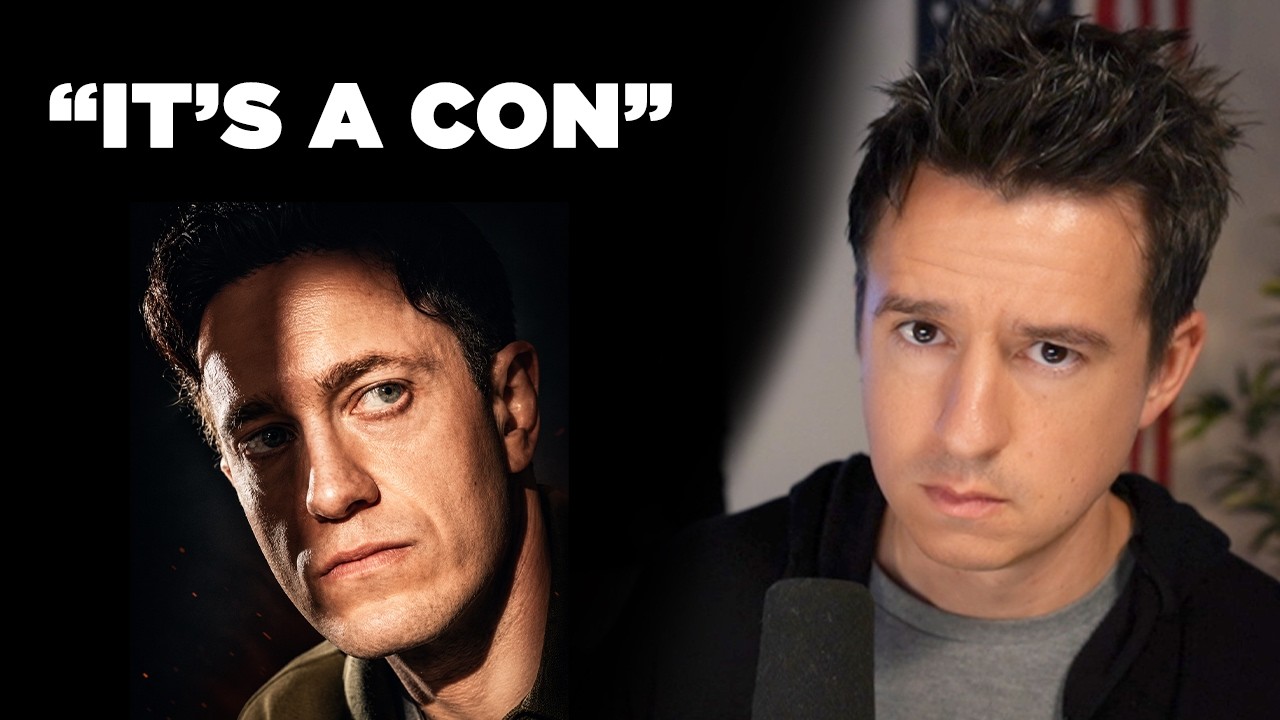
Today on the Joseph Carlson Show, at any given time during an investing career, there always seems to be the bear, the one prominent figure that's brave enough to go against the crowd to say, "All of you investors investing in this thing, all of you are wrong, and I know better." And they wave that red flag, warning investors of the impending doom ahead. We've seen the bears before. In fact, there's many of them that are still prominent today. We have Michael Bur, the one who sniffed out the 2007 mortgage crisis by looking through mortgage back securities line by line. He still remains one of the most prominent bears today with one of the most popular financial substacks. Then of course we have Jeremy Grantham who hasn't called any specific financial crisis like Michael Bur, but Jeremy Grantham has been more focused in his bearish commentary on overall valuations market cycles. He has what he refers to as super bubbles or two sigma bubbles where he believes that valuations get so far above their historical norm that everything is going to collapse. Jeremy Grantham has made massive CNBC appearances that garner a lot of attention. We have people like Ray Dio that manage massive amounts of money that write constant opeds about the big downfall of America, the super cycle, the credit problems. He's also been calling for doomsday for some time now. And there's more of them to be sure. But in this competition of who can be the biggest bear, it seems like there's a new bear on the block. He has entered into the competition waving a critical red flag. And his message is much more focused and pronounced than bears of the past. Rather than talking about general valuations or super cycles or economic cycles of the United States, no, he's focused specifically on AI. He is the AI bear. And his message and his rank amongst the bears has risen incredibly fast. He is now basically the general of the bears, the one leading the pack, the one garnering the most attention today, even more so today than Michael Bur. Normally, I don't mean to address every single bear or every single bear argument as many of them are just trying to gain attention. But in this case, Mr. Ed Zitron has already accomplished that goal. In fact, he's gained so much attention, 5 million views in 4 days, that he is now one of the most notable people in all of the financial markets. He is likely being watched more than any other individual. I don't know of anyone garnering this much attention in financial media today. And part of the reason why, of course, is because many big claims are being made. I think generative AI is at its heart con. And seeing these ultra rich, ultra powerful people lie through the table. Turns my stomach. The word con is a strong word. Well, what do you call something where from the very beginning they've sold it in the terms of magic, but it's just a halfass arcery machine? They are misleading the entire world. >> You are the first person that I've spoken to that has that opinion. >> Well, the fact that this is happening is insane and the fact it's not a scandal is insane. And I've been in the tech industry for 16 years now and I love technology and I'm enthusiastic about it, but I don't like being misled. And this is the largest non-consensual push of technology in history. Now, in this 2 and 1 half hour podcast, Ed makes a series of massive claims regarding AI. Not only calling it a fraud, but many other huge claims throughout this video. And as I've looked at this, I have not seen anybody offer a sound rebuttal. I haven't seen anybody go point by point giving the truth about this. And as this video has 5 million views, I think that's overdue. So, what I plan to do is go point by point through this video, address Ed's strongest arguments that he makes, and share a perspective that I believe is the truth because I believe a lot of people, in fact millions here, are being misled by a lot of the things Ed is saying. So, let's go ahead and jump in. Now, before jumping into this interview and going point by point with my rebuttal to his arguments, I think it's good to first take a look at who Ed is, how he became so popular so quickly. I don't know much about him, but I do know that Reddit surfaced a list of his predictions of the past. So, this is not the first group of predictions he's made. He's been making predictions for year, and this is the collection of Ed Zitron's predictions. Now, looking at this list of predictions that was compiled by some Redditor, it became clear to me that every single prediction on this list was wrong. Every one of them was incredibly wrong. And this went viral. It got spread around and a lot of people saying, "Look, Ed gets everything wrong. Why should we listen to him?" But usually, usually bears don't get everything wrong. And it was a little bit skeptical to me that Ed would literally get every prediction he makes completely wrong. Even bears that get the majority of things wrong, like a broken clock, they're usually right twice a day. They get some things right eventually just by the law of average. If you make enough guesses, some of them will be correct. But in this case, none of these were correct. So, I went and did my own research. To treat Ed fairly, I tried to look at all of his predictions and not just cherrypick the ones that he got wrong. And I think these are worth looking over. So this is a more holistic comprehensive group of Ed's predictions, both the ones that he got right and the ones that he got wrong. Well, back in 2021, this was kind of during the co era, he said Pelaton would get hammered when people returned to normal life. And that of course is a great call. Pelaton went down 95%. So he made a great call there, although one that I think was mostly obvious to most people. He also said in 2021 to 2022 that web 3 and NFT economics were mostly unsustainable. Now, this one was also very correct, even though I would say again this was somewhat of an an obvious call. Now, in 2022, I believe this is his most important and his best call to his credibility. He said a major crypto exchange would be discovered insolvent and withdrawals would trigger contagion. Now, he didn't say exactly which one, but he just said one of these major crypto exchanges was going to go belly up and FTX collapsed almost exactly this way 3 months later. He also said in 2022 that Reality Labs in the metaverse would burn enormous amounts of money. And of course, this was another good call. Now, again, this one is more on the obvious side. It was very clear to a lot of people back then, me included, that Reality Labs was going to burn a lot of money. So, up until around 2022, it looks like he has a very strong track record. All of these are correct. Ed seems like he's just saying truths here, predicting the future accurately. But then, as we move on, things start to take a turn. This is where we get into a lot of very bad calls by Ed. Back in 2023, he said that Zuckerberg would ultimately destroy Meta. So Meta instead became vastly more profitable and valuable. The exact opposite of his call that Zuck would destroy Meta. In 2023, he said that there would never be another crypto bull run after FTX. Crypto subsequently had another huge bull run. In 2024, he said that Reddit was a terrible business and that shares will quickly fall below the IPO price. Reddit became a major post IPO winner. He said that generative AI had essentially peaked and it was a dead-end technology and then what really happened was usage, capabilities, revenue and investment subsequently exploded. So far he is very very wrong on that call. He also said in 2025 that Anthropic's projected $9 billion revenue run rate was total BS. Anthropic actually reached roughly that level. SoftBank couldn't fulfill its enormous OpenAI funding commitments. SoftBank ultimately funded those commitments. And then his most recent prediction tracked here is that Nvidia could lose 40 to 90% of its revenue within a couple quarters. That was January 2026. Nvidia reported 106 year-over-year revenue growth to 96.2 billion. They even guided revenue growth next year of 70%. The point here is that Ed gets things right. He got a lot of calls right back in 2021 and 2022, and that likely gave him a lot of confidence to continue making calls. But his most recent ones, especially regarding AI, have not been correct so far. But that hasn't stopped Ed from making even bigger and bolder calls that are getting more attention from now millions of people. Now, let's go ahead and dive into this viral interview, and we'll just start off with his introduction and his overview of how he views AI. This is what's getting so much attention. I think generative AI is at its heart a con. I don't think it is sold as honest software. I think that they overstate both what it can do, what it will do, and the underlying financials to the point that they are misleading the entire world. And they're actively exploiting the weaknesses in journalism, in our economies, and indeed within the responsible parties with sellside analysts, governments, and all over the shop. >> The word con is a strong word. >> Yeah. I mean, what do you call something where from the very beginning they've sold it in the terms of magic as this thing that will replace all jobs, that will cure cancer, as all of these things? And when you look at it, it's boring cloud software that's extremely expensive and unprofitable and also unreliable at its core. >> So Ed's description of a con is basically when all these different groups, they have different incentives to kind of play along with this game that AI is better than it really is. And he describes it as being talked up way too much. Like it's magical. It can solve all these problems. In reality, it's just boring cloud software. And he continues building his case against AI. >> So that's the funny thing is people say he's not going to finance experience. So, he's not going to take I've been in the tech industry for 15 16 years now in PR, but still had practical experience and I love technology and I'm enthusiastic about it and this thing just comes along that everyone is telling me is the best thing since sliced bread. It can't even do the basics. It can't even do search well. Whenever you ask an AI person, well, what's your setup? They describe this PeeWee's Playhouse thing of like, well, you got a harness here and you got to use the right prompt. Well, you don't want to use that prompt. You want to use this prompt here with this model, but don't use this model for the beginning. But at the end, you're going to want to use this model. And this is meant to be artificial intelligence. It's meant to be smart. It's meant to be autonomous. It's meant to be something that you set and forget. So, a second argument I would define is him describing AI as being complex. You kind of need a nerd out to know how to use it. It's unwieldy. You have lots of different settings and toggles and use cases. The contingencies are being changed all the time of how you use it. And that's not magical or easy to use. What you'd rather see in a magical product, one that's really AI, is you just tell it to do something and it does it and you don't have to overthink it. You don't have to set everything up like you're an IT admin. So AI is not really as smart or as special as it's pointed out to be. And this is one of the pillars of his arguments that AI really isn't as good as it's talked about. The other one has to do with the financial incentives and the fundings and profitability of the major companies behind AI. Well, their revenues are not really coming from AI. Up until fairly recently, none of their revenues were coming from AI. Like dribbles a bit. Right now, 70% of all AI revenues across those three companies are from OpenAI and Anthropic to unprofitable, unsustainable companies that literally cannot afford to exist without these very same companies giving them money. Amazon sent $50 billion to OpenAI this year. They sent $5 billion to Anthropic. Google sent $10 billion to Anthropic. And in the next 3 and 1/2 years, OpenAI and Anthropic based on actual sellside analyst evaluations, their estimates that inform whether stock is going to go up or down after earnings, they are expecting 400 or more billion dollar of revenue, 30 or something% of cloud growth just from these two unprofitable companies that will need to be given the money from somewhere. And on top of that, these companies have such low respect for the average investor, for the analyst, for everyone really that they don't even disclose their AI revenues. The few times they dain us worthy, they use something called a run rate, an annualized run rate, which means well nothing. They never define it. It can mean month 12. It can mean months 13. It can mean last 4 weeks time 13. It's different every time and they never define it. And then they sometimes just don't mention it. So, you've got this big thing that is meant to be the biggest, most influential change to software ever. And whenever you ask them about it, when you say, "What? How much you making from this?" They go, "Oh, I couldn't possibly say. I'm too shy." These are public companies, or at least the ones that aren't anthropic and open AI. When they have good news, they'll tell you. And when they don't tell you something, well, that actually speaks volumes. So, you can see the second leg of his argument. The first part is that AI overpromises. It's not really magical, and in fact, it's difficult to use and unreliable. The second part is all about the finances. That these companies are really trying to make their revenue look like more than it actually is. That Open AAI and Enthropic give you revenue run rates which they don't closely define. And that the big tech companies which are already publicly traded are very discreet with what they share. They're opaque and they don't really break out how much money they're actually making from AI. That is a big part of his argument. Now, he has many more points that he brings up that we'll continue to go through, but I want to loop back to the first one. The first one being that he claims AI is really not that good. And this is the first point that I'd like to rebut. I think it is actually the biggest flaw in his entire argument. And I think this is the biggest flaw with Ed's entire bear case for AI. Ed does not understand AI. He simply just doesn't understand it. And that's self-evident in this interview. The things that he says in this interview itself are immediately falsifiable. They can be disproven today. His entire argument rests on the idea that AI is really not that useful. It sounds ridiculous to anybody that actually uses AI, but that is the entire core foundation of his argument. Everything else after AI not being that useful is built at top that flawed argument. and he continues to expound how much he doesn't understand AI throughout this interview at multiple points. Let's go ahead and take a look at a few. The interviewer literally asks him, "Have you used AI? Do you not see any value in it?" >> Used these tools, the AI tools, Gemini, Anthropic, Chat, GBT, etc., and you found no value in them. >> There's some value, but when asked if there's any value in AI, he kind of shrugs his shoulder, shakes his head, and goes, "There's some value. Like there's there's a little bit there's some some value in AI. I suppose if you have if you have to make me admit there's a little bit of value. This is AI we're talking about. This is chatbt Claude and he says there's there's some value and I'm not taking him out of context. Let's listen to the full thing. >> Robic chatbt etc. And you found no value in them. >> There's some value but it's not there's they have spent over a trillion dollars in capex. See what he does there? He deflects the question, which is, "Have you personally found any value in these products?" And he says, "Well, they're spending a lot of money on them." Those are two different questions. The interviewer didn't ask, "Do you agree with the economics behind funding AI?" That wasn't the question. And Ed knows that's not the question. Ed was asked, "Do you see value personally in using AI products?" And Ed says there's some value in it. And then he deflects and shifts the conversation back over to the economics behind AI. Now, to anybody that actually uses AI, that implements it in a business that actually sees the power of it and what it can accomplish, the suggestion that AI is simply it simply has some value, a little bit of value, is delusional. It is profoundly ignorant. And in fact, the only reason that someone could conceivably believe that is if they didn't understand what AI is and they didn't use it themselves. And Ed actually makes it clear throughout this interview that he does not understand AI's capabilities and he doesn't use it himself. >> What do you use AI for? generous. I really don't. The interviewer asks him, "Ed, what do you use AI for?" And he says, "I really don't." Now, that raises some questions because again, I already have the position that there's no way you can believe AI is not that useful unless you genuinely don't understand AI or you don't use it yourself, which if you don't, that's fine. You don't have to understand the use of every product. But Ed here is a big bear. He's on Wall Street. He's giving he's giving video interviews that have 5 million views. And he's doing so on a product that he admitted to himself he does not use. And in fact, he outlines why he no longer really uses AI. So, how do you know it's bad? I've used it. I've put it through its paces. I've used it to try and do financial models and found one error and immediately be like, "Ah." So, Ed used AI one time to run a financial model. He found one error and immediately abandoned AI and concluded that it was an con, overhyped, and that the product is essentially useless. And this is the biggest bear on AI today. Now, this is not a one-off experience Ed has had with AI. It seems that he views it very negatively because his personal experience with it so far has not been good. And he reveals this even more later. E said it might have said this earlier. So it makes the easy things easy, the hard things harder. When you know you're doing a really distinct small script for something and it can plop that out, it's awesome. I used Claude the other day for something useful. My kid loves Minecraft. I was trying to fix a broken mod cuz he loves his wither storm. It's awesome. And it still took me half an hour and kept getting things wrong. See, what Ed's doing here is extrapolating his personal negative experiences with AI to say that the whole thing is really just a scam. It's a con. He says that he encountered a problem when he was trying to run a financial model with Claude. So, Claude's not that useful and he doesn't use it anymore. He says when he was troubleshooting something with his kid that it worked, but it took too long and it wasn't that useful. And he even boils down the use cases to say the AI is really only good at things that are easy and it makes difficult things way more difficult. See, Ed's personal experience is what informs the rest of his arguments, and that's the reason that I stress it. All the stuff about the finances, about open AI or anthropic, all the stuff about whether or not it'll be adopted in society, whether it will pay on all of that, all of that investment that's going into it, all of that is determined really on how useful AI is. If Ed is right and AI is not that useful, then of course all of this is a con. If AI is really just a small thing, not that useful in that many applications, if it really is just this complicated software that makes things more complicated and more difficult for difficult tasks, then all of this is a con. All the big tech companies that we're invested in, anthropic and open AI, those revenues will collapse eventually. The problem with Ed's argument here is that he is profoundly wrong. This is incredibly, incredibly wrong. in his predictions of the things that he got right and wrong. Saying that AI is not that useful is right now today one of the ones he got wrong. We don't even need to wait. This is not something that I need to wait 5 years to prove. We can prove this right now. Ed makes most of his judgments about the usefulness of AI based on his own personal anecdotal experience. So, let me first before broadening this out, just go with my personal anecdotal experience with AI and go through a couple of ways that I'm using AI currently in my business and in my process. Now, in Qualrum, I use AI all the time. Not just to vibe code the app by entering in a couple sentences. It's more complex than that, but to look at industry standards, to look at how certain user interface designs are supposed to work, to look at how different buttons and messages and haptics, all of that works together. to look at the chart behavior, workflows, all of the debugging. A lot of that is handled by AI today. It improves the product dramatically. And any developer that that works in the industry today will tell you how much AI is being implemented into the workflow. Debugging technical issues, currency conversion issues, chart issues, data issues. Adding a layer of AI to be able to validate all the data has been tremendously helpful reducing those issues. In customer support, AI can read and categorize and prioritize based on the problem. It can automatically sort different tickets by severity. It can make it so that we can have a one customer support team do the work of five. It is dramatically more effective in content production. Now, I never have AI give me scripts to read. I never read scripts to begin with, but in researching topics, I use AI all the time. I look at the bullcase and look at the bare case. I research different notes about it. A lot of that is getting a base level through artificial intelligence. And anyone that's not using any AI to research any topic, they might proudly say that while they get left behind. AI makes it dramatically easier to learn about a topic at a much quicker rate than doing other methods than reading through random websites. AI can look through hundreds of websites. It can think and analyze data and it can surface exactly what you're looking for. AI is incredibly useful all across business administration. Even in a business as simple and small as mine, where there's only a handful of employees, I can bring in all my revenue lines. I can connect it with Qualram. I can connect it with Patreon, with YouTube, with Spotify, with everywhere that I earn money. Have it bring in all of these thousands of transactions, tens of thousands. And AI can look through all of it, look for fraudulent transactions, duplicate transactions, mistakes, and errors. It becomes an informed data analyst. Somebody's so good at it that I would normally have to pay $100,000 a year, but instead, I can have an AI do that for me. Outside of looking at all the payment issues, it can give me flowcharts and categorizations, visuals of all my finances. It can show me in live time how much money my business is making or losing. It can also show me red flags and give advice and suggestions on different things to consider with your business. And it does that by analyzing tens of thousands of rows of data in only a minute. This is incredibly useful stuff. The business administration is endless with AI. It looks at contractor communication. It can inform you on tax documents, policy language, compliance. I've gone as far as to make custommade bookkeeping software for my business that specifically addresses all of my specific needs and nothing more. And the monthly statements that it prints out, I've passed by a CPA who said they look excellent. And this is a business of one YouTuber that has a couple people working on it. Imagine the use cases that AI has for major corporations. Imagine the reasons why they're paying billions of dollars a year to use these products. It's not because they want to give away money. Businesses are all about saving margins. They're all about spending less to get more efficient. That's capitalism to try to make as much money as possible. All these corporations throughout the United States are not implementing AI deeply into their processes, embedding it into their workflows out of the goodness of their hearts. They're not just wanting to donate to anthropic or open AI. They're not doing it because they want to lose money. They're doing it because they're finding it so incredibly useful every single day that it's worth it. Not only is it worth it, but it is the most useful product that has come along for businesses in decades, likely since the internet itself. Now, that's just me. That's my personal anecdotal experience with my small business. And I find it extremely useful. In fact, I'd say extremely is an understatement. I need something that's more of a superlative, something that's bigger than extremely. And when I look at what Ed says, the reasons that he doesn't believe it's useful, I've encountered those, too. AI has made mistakes before, it's getting better all the time. It's dramatically better just just where it was 6 months ago. But it is true in some cases it's made mistakes, but humans make mistakes as well. Everybody makes mistakes. AI makes mistakes as well, but it does a lot of work really quickly. In many cases, much faster than humans can. And for many tasks, it makes far less mistakes than humans. What Ed did here is he extrapolated a couple negative experiences to now saying a claim that AI is overhyped and it's a con. And that's just not true. And you don't need to rely on my anecdotal experience. This is blatantly disprovable today. For example, the suggestion that AI is not that useful and that it can only do easy tasks. One of the things that AI is exceptional at is coding. And as a previous coder myself, I can assure you coding isn't easy. If it was easy, everyone could do it. And not many people could do coding. Not many people could do it well. Coding takes a long time to learn. App architecture takes a long time to learn. I know Ed probably doesn't have an appreciation for that because it doesn't sound like he's done any coding in the past. But if you have, if you built entire apps by coding every single line of code, you can appreciate how good AI is at it and how very few mistakes it makes. AI has revolutionized one of the most important fields in the world, which is writing software. The modern economy, making digital products, AI is incredibly good at it. It doesn't just code. It debugs. It tests. It documents. It refactors. It can jump into a massive codebase, explain all the issues with it, give you recommendations. It can mitigate issues. It can check for vulnerabilities. It can do rapid prototyping with design. In the field of coding and software itself, AI is endlessly useful. It is endlessly useful. The suggestion that it's it's just okay. It's it's a a little software, some boring cloud software. It is blatantly false. It is incredibly misleading. And you may say coding is the only thing that AI does really well. Well, that would be wrong. AI is rapidly going across different categories and the use cases are becoming more and more seen by different companies. It's becoming more and more implemented. For example, if you go into customer service, AI is already there. It's answering calls. And in many cases, you have a better experience if AI picks up than an actual human. It's more attentive. It's quicker at resolving issues. It's getting rapidly better. The suggestion that, "Oh no, I got an AI bot on the phone is no longer that good. I've had experiences with an AI bot that was far better than talking with a human, and it's only getting better." The legal field is being revolutionized by AI. When you have attorneys that need to look up contracts, look up reviews, look up red flags, discovery, previous cases, all of that background work, AI is exceptionally good at it. It can summarize things much faster. It can read through documentation. There's a reason that every lawyer is using AI. All of them. Even if they say they aren't, they're likely using AI a little bit in their practice or they'll soon be out of business. The amount of headache that AI can save in legal reviews is incredible. It's yet another field that's being completely revolutionized by this technology. In medicine, we have increasing amounts of uses of artificial intelligence. The most obvious one was reading images, looking at scans, and scanning for things that maybe the radiologists missed. AI is exceptionally good at looking at little nuances and pictures that humans can't quite pick up. Now, there's still radiologists that need to review the work, and of course, there needs to be the human touch, but they can do far more work. They can view far more scans and they can do so with something else, checking their work, making sure they don't miss things, which of course will reduce the amount of false positives and false negatives, reducing the amount of patients that get told they don't have cancer when they really do have something to treat. This is another massive benefit. But it doesn't just end at radiologists. You also have documentation. You have all the business operations behind healthcare. All the background stuff, the accounting stuff, the legal stuff, the HR stuff. All of that again is being implemented and proved by AI. You have doctors that can now bring a simple recording device in a meeting with a patient. The recording device records the entire transcript and then automatically enters in those patient notes highly categorized. They previously had to hire scribes to do this in hospitals. People to take notes of every single meeting. That was literally their job. Now scribes still exist, but again this makes it so they can do much more. They can focus on categorizing and not just listening to every single meeting. In finance, the use cases of AI are becoming more and more prominent and they are again virtually endless. With reconciliation, much easier to do with AI, with financial modeling, much easier to do with AI. With fraud detection, much easier to do with AI. You can do invoice processing, financial analysis, audit work, reporting, and so on. These companies are implementing AI into every facet of their business because it speeds up so many processes. It makes these companies dramatically more efficient. With education, the use cases of AI are never ending. Of course, you can now have one-on-one AI tutors. That's exactly what Dualingo is doing. A company that it took them years to build course content to learn languages. Now, they can build course content much faster. Engagement is picking up. More and more users are using the app specifically because they're building more content. They're making it so that there's more step-by-step guides. And this isn't just with Dualingo. It's across the entire education field. They're implementing AI not only into the administrative part and the back-end part, but also the teaching part. AI can give you dynamic and immediate feedback when you make mistakes. Unlike deterministic logic, AI is already being used across science and biotech and protein design, molecular prediction, synthesizing previous research, being able to have more predictive outcomes in marketing and media. It is incredibly useful. You can make drafts, copies, images, you can make designs immediately with these companies. It has revolutionized this industry. In fact, in fact, it makes marketing and media much easier for businesses to launch products because they don't have to spend as much time with a full marketing team. With managing sales, AI is incredibly useful. Used across the CRM, prospect research, outreach to customers, managing relationships. The non-deterministic nature of sales is exactly why AI is so useful in those cases. You can see why Salesforce, a company that has been in sales forever, just partnered with Anthropic. And it's making it so that they can crawl through their data and do all of these valuable things. They're not doing that because they want to. They're doing it out of necessity. Salesforce knows that they need to have the best for their customers. They need to have AI integrated. And we could continue on across all different verticals, all different fields across the entire economy from engineering to logistics to cyber security to so on. If there is a category of work, AI will impact it. And this isn't just me saying so. This isn't just a narrative that I'm building. It's also proven by the numbers today. The reason that Anthropic and Claude are growing so fast is because customers are using their product. The reason that customers are using their product is not because they believe it's a con or overhyped or they don't find any value. If that was the case, Ed, then they would have used the product for a while and like you concluded it was mostly hype and not worth it and they would have discarded it. They wouldn't have kept using the product and kept using more of it and kept finding every single week additional ways to implement AI. That's not what you do for useless products. You considered it useless. You used it once to do analysis and a couple things for your kids uh Roblox account or whatever it was. You decided it wasn't really worth the hassle. And so now you're saying that it's essentially overhyped and it's all a con. That's not the normal experience that businesses have. Normally they use AI, they have some headaches getting it implemented at first, but then they have some factor that wows them. There's some feature that does something so much better than what they expected that they start to use it more and more. And we're seeing that throughout the growth rates of anthropic and open AI. The reason that I stress the usefulness of AI again is because everything that Ed says throughout this entire two-hour interview, all of it is built on a foundation that AI is not useful. That is his argument. It's not really useful. It It's got some uses, but not much. And it's not that good, and it can't do this, and it can't do that. And it's overpromised. It's overhyped. That's the core of his argument. Everything else, all the finances, builds upon that. And Ed is just profoundly wrong on this topic. He's so wrong that he doesn't even understand the capabilities of AI today. For example, in one part of this, he says that AI is not even good at search. >> Everyone is telling me it's the best thing since sliced bread. It can't even do the basics. It can't even do search well whenever you >> AI can absolutely do search and it can do it very well. Chat GBT has an entire API that's dedicated to live search data. The second you call this API, it'll search. It'll search across all different search engines, hundreds of different results, and it will give you live data that second. Google has a billion people using AI overviews, which is live AI search every single day. And they noted that people that use AI search use it more, more frequent, more frequent searches, more frequent follow-ups. They like the product so much that they actually get more use out of it and they use it more. It is directly contrary to your claim that AI can't do search. Now, ironically, Ed believing that AI is not that useful is something that is not a new belief. Again, when we look back at his predictions back in 2024, he made the assertion in the same prediction that generative AI had essentially peaked was a deadend technology. Ed has continually underestimated the use of AI, and he's doing so today in a strikingly falsifiable way. Now, you may believe that Ed sees the different use cases of AI and doesn't think they're all that good. And this is the trick that Ed tries to play. He tries to say even though AI does have all these use cases, it's not improving the numbers. These companies really aren't doing much better because of AI. And he does this with a lot of subtle tricks. There's a lot of tricks throughout this interview and I want to highlight a couple of them here. One of them is how he does comparisons of the capex spend to the AI revenue. Let's go ahead and just outline what he does here. Need a bunch of power. So an example, OpenAI and Oracle are building a data center in Texas in Abalene, Texas. 1.2 in 2 GW called Stargate Abalene. Within that, with each one of the eight buildings, there'll be 50,000 Nvidia GB200 GPUs. So, city of Bristol takes about 7800 megawatt of power a year, right? Well, Stargate Abene is condensing more power than that, 1.2 gawatt into a space around 1,172 times smaller. City of Bristol is about 1.2 billion square ft. Star Elyn is about 998,000. So you're condensing all of this power, all of this money, all of this labor into this one spot. And all of these data centers cost billions of dollars. All of these companies other than Microsoft have now to take out debt. And the thing is they've spent over a trillion dollars so far and they want to spend another trillion dollars next year. And for what? To make tens of billions of dollars, most of which comes from two unprofitable companies, Anthropic and Open AI. He always says one number which is the trillions and trillions of dollars these companies are spending and then he compares that to the tens of billions of dollars of AI revenue today. And this is the juxtaposition that helps his argument but it's also very misleading. See what Ed is doing here is he's taking the commulative cost outlined for years and years of AI construction. This is the capex bill that these companies are outlining for for five plus years they're going to be spending. That's the trillions of dollars. And then he's comparing that to the current AI revenue. But that's not a fair comparison, Ed, because these companies aren't going to earn money for AI just this year. The the way things work is you you spend a lot of money upfront to build an investment and then that investment can earn you returns for multiple years. You can take the example of an Amazon warehouse. Amazon pays billions of dollars upfront to build a warehouse and then they earn money from that warehouse for years and years and years down the road. Amazon doesn't have to keep paying for the cement, the land, the steel, everything every single year. No, they have to pay some costs continually, but the majority of them go down dramatically as they earn continued returns. It's the same thing with a Costco warehouse. Costco spends a couple billion dollars to build a warehouse to buy the land. It's a lot of construction, a lot of expense, and then they gain income from all their members that shop there for the next 10 to 20 years. See, this is the game he plays. He compares the upfront massive expense of the capex buildout to the current AI revenue today. Here's another example of Ed playing the same game with these false comparisons. We have the apex predator of cloud software, Microsoft. They can only get singledigit billions from selling AI software. And Christ almighty, outside of OpenAI and Anthropic, we barely get $22 billion. And the thing is, $22 billion is a large amount to you and me. It's not a large amount of money when you spent a trillion plus dollars when you have anthropic and open AI with $1.1 trillion worth of cloud commitments. That's the comparison. The amount of money they're spending to build infrastructure that will serve them for half a decade. And he's comparing that to the line item revenue of these companies AI revenues today. So this is a strikingly false comparison that he continually makes across all of his appearances to make the false impression that AI is in some massive bubble. But this isn't even theoretically how any investment works. This is like saying, "I can't believe Texas Roadhouse pays $10 million to open up a new restaurant when they only earn $150,000 a week per location." $150,000 against 10 million. Jeez, this is such a waste. Well, those are the actual numbers, but Texas Roadhouse is an economically profitable business. He is placing two things together, hoping to trick people that are financially illiterate enough to believe him. Now, even when presented with examples of how AI is impacting businesses positively, when they say that AI is leading to faster growth, more efficiency, more customers, a better product overall, all of the good stuff that the CEOs and executives will outline, Ed, of course, is very skeptical and he believes that these companies are growing for different reasons. Their AI bets have paid off. Wow, their AI bets have paid off. as these companies refused to say how much they're making from AI, but because their existing businesses continued to grow and did so, by the way, through price increases, changes to how Google and Meta uh did advertising, Amazon bumped up prices and changed how they did actually Amazon started a remarkable ad business during this whole time as well and the selling through Amazon platform. Anyway, nothing to do with AI, but because number go up, because revenue go up, everyone went AI because these companies wouldn't spend a trillion dollars for for no reason, right? So even when we have companies that say they're growing in part in a large part because of AI, he says no, they're not. They're growing because of old-fashioned price increases, if it was simply price increases that led to the growth of these companies and the success of them, then how did Meta become successful? Meta is a free product. They didn't increase prices on anything. Yet, their company grew 30% revenue year-over-year. It's one of the fastest growing, largest companies in the world. Meta actually had a lot of disadvantages leading into this growth. Apple cut off their tracking, which was supposed to be a huge blow to Meta. It temporarily was until it wasn't because they found this magical tool that all of a sudden solved that problem. A tool that could use more nuanced ways of measuring what people liked. Meta implemented AI directly into their social graphs and it led to substantial revenue growth, tens of billions of dollars of their core product. Meta doesn't need to break out an AI revenue line item. You can simply look at the core product. itself and how much it's being aided by AI. And Meta is not the only case. The proof of AI helping businesses out is so incredibly apparent. It's so indisputable, yet he continues to dispute it. Now, after addressing how Ed doesn't use AI himself, doesn't seem to understand or appreciate the usefulness of it across different industries, and after addressing how he inaccurately or falsely portrays AI as not having a return potential because he's comparing commulative long-term spend on capex compared to today's revenue. I want to finally address what I believe is the third most important point and it's the argument of circular financing that there's not really natural organic demand for AI. It's all just a bunch of companies handing money over to each other taking money out of one pocket and putting it into the next. 70% or more of all that demand comes from these two companies who are funded by these three companies. And that's the funny thing. The reason that they don't want to break out their AI revenues is because it would become alarmingly obvious that this was the case. It turns out that the only real big customers because it's not like they're building a few data centers. They're building trillion plus revenue potential. They believe they'll get speculative. It's entirely speculative. They're building it because they saw the biggest companies in the world buy a bunch of GPUs and they said, "I want in on that." They must have diverse customers, right? they wouldn't just have two unprofitable fail sons that they're propping up with Christ, they've raised $217 billion just in 2026. >> Now, even when you look at the way that he illustrates this, it's with all these different companies and he just talks about how the the money's going between hands. All of it is just kind of changing hands from one company to the next. And the party that he leaves out intentionally is the customers, the actual end users of AI. The reason that Ed seemingly forgets to mention them is because it completely defeats the point that he's making. The number of actual customers funding money into Claude and OpenAI is staggering. They have millions of businesses using their product, millions of businesses. We have Cloud that has hundreds of thousands of businesses using it more and more, more and more spending every single year. And we have billions of end users. CatchBT has over a billion monthly active users. Even their ad business, which they just launched, is growing at a blisteringly fast pace. See, the problem with the circular financing argument is that only works if it's really companies just moving money around between their own hands. But that's not what's happening here. There are billions of customers that are adding to the revenue of these products. So, when we look overall at Ed's claims here, there is a reason that they gain so much exposure. It's because they're very big claims. That all of this is a con. is because it fits with the same trope that all these hands are working together to make this whole thing boil up in a way that it doesn't deserve. The real truth is much more boring. It's much more mundane. AI is just an incredibly useful technology, the most useful since the internet. And lots of businesses are finding a lot of uses with it. So, they're paying for it. And they're not stopping. As it is proven to be useful and indispensable because of its ability to have non-deterministic logic, companies are going to continue using it. in more and more diverse ways. That's a more boring truth because there's no big conspiracy here. Now, the boring truth, unfortunately, does not get as many views. It has been proven throughout time that the bears get the most attention. It is over and over again that we see the ones raising the big red flags always garner the most clicks, the most attention, and this is no exception. Even as faulty as this bear case is, it's garnered more attention than any mundane bull case. And that just goes back to the fact that in the short term, the pessimistic bears get the attention. In the long term, the optimists make the money. That's going to be it for this episode. Hope you enjoyed. See you next one.

Comments 0
Sign in to join the discussion.
Sign inNo comments yet. Be the first to share your thoughts!