Is SaaS Currently a Generational Buying Opportunity?

- Video return
- —
- Calls
- 1
- Buy / Sell
- 1 0
- Published
Recommendations
Entry is the asset's closing price on the publication date. Current is the last close on record.
-
Entry $259.23 06 Sep 2026Current $259.23 04 Sep 2026Result +$0.00vs. index +0.0% SPY +0.0% over the same days
Then we'll buy
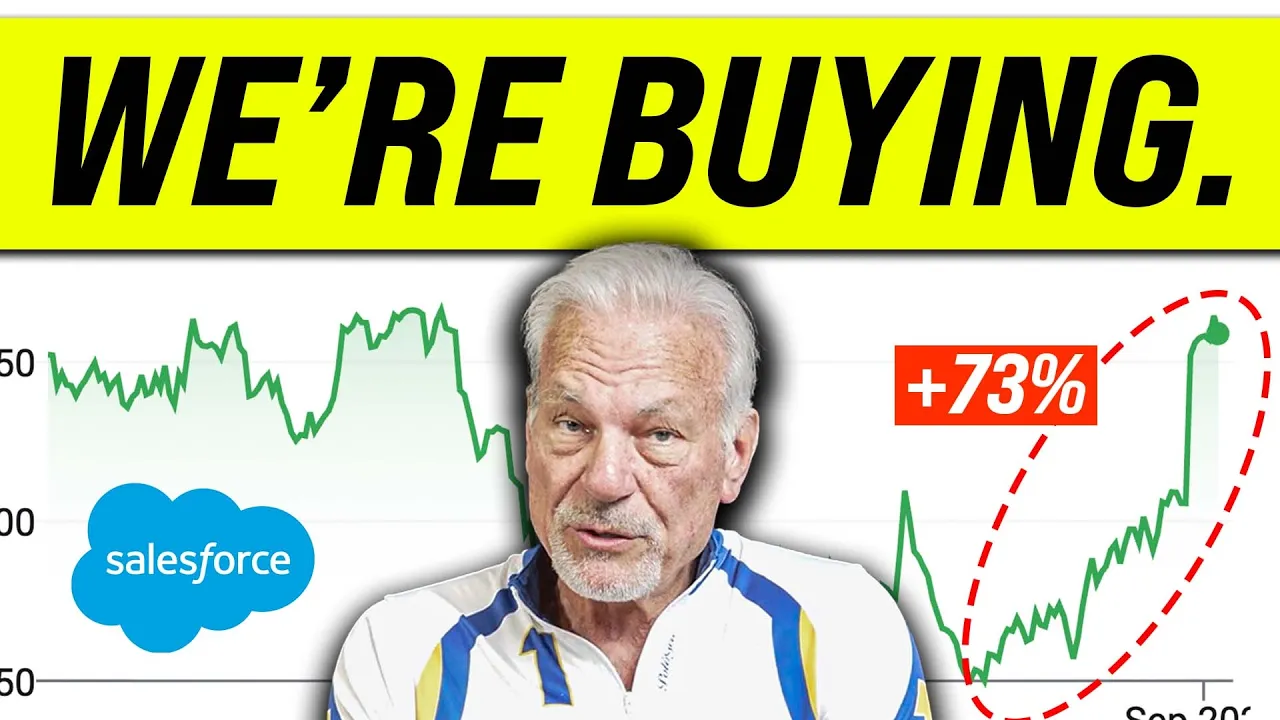
Context "I was talking to Austin yesterday because yesterday, congratulations. You made millions of dollars literally in one day on the back of a beaten down software stock by uh by I'm I'm going to spill the beans by the name of Salesforce that posted incredible numbers... So yeah, we thought this is good... Then we'll buy"
Full Transcript
Wall Street is running such a scam. That combination is lethal, right? We want to find the reasons not to buy this. If something goes wrong here, are you going to be dead or are you just going to be reducing your return by a bit? It's not going to break even though it's broken every single time in history. I was so frustrated. Yeah, that was my >> as an investor, you have to be aware of this. There's no better investment that you can make than >> Well, Phil, to start off, I'm going to spill a little bit of a secret. I was talking to Austin yesterday because yesterday, congratulations. You made millions of dollars literally in one day on the back of a beaten down software stock by uh by I'm I'm going to spill the beans by the name of Salesforce that posted incredible numbers. I'm sure you saw. Let me chat. Do we have all of what we want to buy? Yes, we do. Go. Okay. Go ahead. Spill the beans. >> And this is an interesting company because it's it's, you know, there's so much talk about this SAS apocalypse and AI taking over the software industry. So, I think it's a really interesting example that you've also spoken about on your channel. I'm interested when a stock is beaten down like Salesforce was, how do you distinguish between like a genuine mispricing of a company and then something that's very cheap for a reason? Yeah, this is the critical thing because they're almost always cheap for a reason. The question is what's the reason? How long is the problem going to last? And that is what we really dig into. So, it's really interesting how how Buffett kind of defined the answer to this thing. It's defined by some intrinsic characteristic that competition really can't replace. They're they're trying they're trying to bust into the castle with AI right now, but they can't do it. they because they are the the corporate record. All of that corporate record that they keep track of is fundamental to the entire operation of the entire corporation. And if you don't have that, I don't care what kind of AI that you have, you can't replace these guys. And so when we realized that as the SAS apocalypse happened, we looked at all these different companies. We realized some of them don't have that and they're really in danger of being replaced. We saw that these guys really have a gigantic moat that protects them from AI competition. Not only that, but they're going to be able to use the AI tools themselves. And what they really have to deal with is just changing the way that they charge people for what they're doing. And they're in the process of doing that. So, you can't get rid of them. You have to have them. And then it's just a question of how much are you going to pay them? We thought that was the real risk of our of our investment is could there be some gigantic change in the way these guys get paid. And then we realized, well, that's exactly what a moat is out to protect is how much you get paid. It it's there to protect the margins. The moat that these guys have is so critical to a company. The company's going to have to pay them what they've been paying them at least, if not more, right? and that meanwhile Salesforce's operating expenses may be impacted by AI in a really good way. So we may see their margins expand. We probably won't see their margins contract. We won't see their revenue contract. And they were super super good price. So yeah, we thought this is this is good. So the critical thing to understand, I think, Brand, is that you're not going to have companies that go on sale for no reason. Wall Street is full of very smart people and they're not going to sell something for, you know, $100 that's worth $200. They're just not going to do it. So, if they're unloading this thing, it's because they think that $200 value has been permanently impaired, right? They think, "Oh, it used to be now it's 100." Well, we look at that and try to understand how long is the impairment going to last. And if it lasts more than a year and less than three years, we are very confident about stepping into that investment. Whereas Wall Street looks at it and says, well, if it's less than a year, we're not going to get out. If it's more than a year, we have a high degree of uncertainty and we cannot afford to stay in because our peers are also getting out. And if our peers get out and leave us holding the bag, we will then lose our jobs. So the job the job impact of a fund manager in Wall Street is critical to understanding why they would be exiting when I would be entering and that's that's the thing is okay so find out can we know that there's an end to this problem and with Salesforce the end of the problem is happening quicker than we thought where Wall Street will start to realize oh AI is not going to impact these guys with a company like let's say Chipotle Mexican Grill when they got EC coli that was a sure thing that it's everybody is always fixed ecoli in their restaurants and it'll just take a certain amount of time to get the brand back, you know, and we just look for that kind of an opportunity and and we stay in cash until we find it. >> So for those that are newer to this whole rule one style of investing, the Buffet style of investing, what do you actually look for? What gives you confidence in the case of Salesforce, but really of any stock? What gives you confidence that actually I believe they do have a moat and that they will be able to get through this? What are you looking for? That question reflects your deep thinking about this because that is really the heart of it to recognize when you can know and when you can't, right? And so what we're looking for is a company that is simple and predictable. I'd say those two words are super key. We want something simple enough that I can understand it. I'm a former soldier, a former river guide. I have no Wall Street experience. Didn't go to any fancy schools. Flunked out of several. It's just like it has to be simple enough that I can get it, I can understand it. That quality is so important and even when some of the smartest fund managers in the world, guys like Bill Aman, when they make a mistake, Bill has said it inevitably comes down to the company wasn't simple and we we dealt with some hubris where we think we're really smart and then we find out we're not smart enough for something that is very difficult to understand. So that's the first real screen is can we understand this business and once we understand the business we just boil it down to a handful of critical numbers that are really easy to find and which you know we keep on our on our tool set that we call the 4 M like numbers that are qualifying the meaning of the business that is is it something really understandable the numbers predictable are we seeing that kind of predictability in the numbers and then does it have a moat and we look at the numbers that predict a moat would be the growth rates of revenue, earnings, free cash flow, so on, right? So, so maybe five numbers that we look at at are those numbers growing over time. And then we look at the management side of things are numbers like how much debt do they have? Do they have a good return on invested capital? Those kind of numbers reflect management's ability to allocate capital. Well, so really it boils down to I don't know 10 numbers or something we're going to look at. And so if we understand business and those 10 numbers are good, then we know we've got a business that we should really dig into and at that point we'll start a 100 to 200 hour deep dive into that kind of a business and fully understand it. Then we'll buy >> I'm interested because you don't work alone, you work with your portfolio managers Travis Austin Hunter etc. Do you guys have like a process how you work together to kind of check each other's homework? And also like any sort of tricks or checks that you do with companies to make sure you don't accidentally fall into confirmation bias or you don't end up kind of hyping each other up on businesses too much. >> Oh, that's such a big question, man. I have to say we deal with confirmation bias constantly. I don't know that we ever get away from it, right? Because if you're putting in a 100 hours on a company doing a really deep dive and it's really good all the way down, all the way down, right? It's really hard not to become biased against data or information that says you're wrong. Some quality of believing that you really know this business now creeps in there, which was hubris, and it creeps in and then you start to think, well, that that data, I understand where that's coming from, and that's not really a critical inversion to this company. and you can kind of slide it along, particularly if you don't really understand the business. That combination is lethal, right? So, we do our best to not have that happen. And we started years ago, we would basically collaborate on everything, right? We'd all be in it reading the same stuff and looking at all the same stuff. And it's not an efficient way to dig through hundreds if not thousands of companies. Not only that, but we found that it's really easy to point the finger at the other guy when nobody's really responsible for saying go on that company. So over the years, we've just brought it back down to what you would do as an individual investor is we individually do the work and we'll keep each other apprised, right? We we meet every morning and like how's that going? What's going on with that? and you just kind of give a a quick overview that you're still in it and still looking but at the end of the day we know who is responsible who's as Travis says whose neck am I going to ring right and that has turned out to be just a much better way to collaborate because now each of us knows we're the guy on that particular company and then we seek help from the other the rest of the members on the team you know what about this what about this can you find some problem with this And that is really really useful. We got smart guys and they are really good at poking holes and stuff. I mean essentially that's what we do for a living, right? Is we try to poke holes in everything and do our very best to not invest in something. That that is really kind of how we go at it. >> We want to find the reasons not to buy this. >> I think that's quite different. A lot of people would in their heads kind of think the opposite. They're like, "Oh, why should I buy this?" Whereas you guys do the Charlie Munger approach. sounds like an inversion where it's like why should I not do this? >> We love the thing with Charlie deciding how he could best kill all the American pilots. Did you know about that? Remember that he's doing the weather forecast out of Great Britain and he he figured, well, there's a lot of ways I can try to help these guys, but how would I best kill them all? And the answer is, well, you fly them out of gas into a foggy airport. So he's just don't do that. >> Don't do that. >> I remember in the big short there's this great scene in the movie where I think Vinnie who's on the the Deutsch Bank team he's been told do the deal right by I forget the actor's name that was playing that role but he's a really good actor. Steve Carell, right? >> So Steve going to do the deal. And so Vinnie is going to do the deal and he calls the guy over probably at Goldman or something that's trying to sell him this package of insurance against mortgage bonds and he goes, "All right, look, how are you going to f me? I want to know. How are you going to do it? Because I know you're going to. So tell me how." And it was like such a crystal statement of the inversion. I want to know how you're going to screw me so I can know if it's going to kill me or not when it happens. Right? And that's you want to know. You want to know if something goes wrong here, are you going to be dead or are you just going to be reducing your return by a bit. >> So that's that's our process is to really get in deep. And it's not fun for the person that just spent 100 hours coming to the conclusion this is a really good deal and this is a really good price and we really need to be buying this thing and have three guys rip it to shreds as hard as they can. >> That's great. Yeah. Damn. Lowering the confidence a little bit. >> You have to have a solid ego to be in this business. All of us do. And therefore, we get into trouble with confirmation bias and hubris. And thank God we've got our partners in there to say, "Hey, you're full of crap. This is what you're forgetting." >> Yeah. At least you've got each other. Well, I guess the last part, so we've spoken about meaning and management. The last part of I guess this formula for reducing your downside risk is this concept of valuation and particularly margin of safety. So I'm interested for say a company like Salesforce or any company that you end up buying, it doesn't have to be Salesforce. What is this concept of margin of safety and and how do you go actually applying it? How do you figure out that Salesforce, sure it might be a great company, but on top of that it's also now at a price which makes it a good investment. This is where the rubber meets the road because you can get a lot of things wrong when you're looking at the meaning and the mode and the management of the business and things can change as they go down the road. Particularly with management, management has a way of doing some things that you just really wish they wouldn't do in in their own self-interest. And the critical thing that protects you from taking a a a real permanent loss of capital is this concept that Ben Graham came up with a margin of safety that Warren absolutely pounds on for 60 years and Charlie pounds on and talks about the vicissitudes of life are going to creep in there. They're going to have they're going to impact you in some way that you can't anticipate. You just don't know, right? You can look out and say, "I have a high degree of certainty." You know, like Warren talks about buying $10 bills for $5 and then you're certain you're going to make money, right? But we can't be that certain in the real world. So, we say we have a high degree of certainty that 10 years from now this business will be bigger and better than it is today. That's sort of a fundamental hurdle, right? We want we want to make sure that's the case. And then we want to buy it at a price that doesn't reflect that at all. It it reflects it going through a nightmare scenario. Not just a base case, but sort of like a bare case scenario. We want to buy it at that kind of a price in order to protect ourselves against our own inability to see clearly into that crystal ball into the future to see perfectly what's out there. We we really are we really are driving through the Sanwaqen Valley where they have these fog banks come in on the highways and 100 cars will crash. They'll just crash into one after the other. Bam, bam, bam, bam, bam, bam. Because the drivers are just anticipating that everything's the the same in the looking forward as it was in the past. That the road is clear and it's going straight and everything's great and then they find out it isn't great. Right? So, if we're driving in the fog like that, we have to do everything we can to go slowly, to take our time, to make sure that we're not making a mistake. And still, we wouldn't be able to drive at all unless we make forward motion. And in that forward motion, there's risk. We try to reduce the risk as much as possible. And then we want to put bumpers all over our car so that if we hit something, we're not too badly damaged. And that's what margin of safety is all about. It is a real challenge on many companies to determine what that margin of safety is. Now, I'll tell you a story. We got into investment a long time ago that will remain nameless, but we got into it with Mones PBI and we got into it with Guy Spear and we got into it with Matt Peterson. We got into it with you. >> I think some people have figured it out already, but anyway. Yes. Continue. >> And we really thought we had this business nailed down in terms of understanding it well and we did. What we didn't know was that management were crooks and were willing to sell us out and they did. And as a result, we ended up in bankruptcy court. And we plead with the judge to give us a committee that would be paid for by the company and would allow us to have lawyers in the bankruptcy action. And you have to do that or you're not in it and you have no say. So, we really wanted that as an investor committee and we got it. And we went through about 5 months, 6 months of a bankruptcy trial and we found that we were evaluating the company. We put a value on the business that ultimately the judge agreed with. So we went through our process to figure out what this company is worth, looking into the future, trying to determine the future cash flow of this company under a reasonable scenario, then discounting that back to today to find a reasonable value to pay for that. The judge ultimately agreed with us. and he agreed with us because both sides had come well there was a gap of about $200 million between what we said and what the bankruptcy guys said on the company side but Demodoran if I'm saying his name right is a professor at NYU who does valuation and he teaches valuation and I've read his books and they're phenomenal and if you ever want to understand valuation from the point of view of a bankruptcy court or from anyone from a trust from anyone that must put a value on every single company that comes before them, then Damodor's stuff is the best. Absolutely the best. And he came in similarly to where we came in. And so we basically won and we were going to get our $200 million. And then the judge said that the bankruptcy trial process with all of the attorneys that were involved and all of the maintenance money that went into the company while it was sort of sitting idle ate up the $200 million that we were supposed to get and there was nothing left. So all there was left to do is to sue the board and the officers of the company which we did and you know four years later we won some money back. So point being that valuation is an art and if you have to do valuation on a company then if you if you must then you should probably learn Damodoran's techniques. But here's the thing with us we don't have to value every company. We only have to value the ones we really understand. And if we really understand the business and it's simple and it's predictable then finding the valuation is really one of the easier things we do. It really isn't hard at all. There's some basic ideas about how to come come to a conclusion about what that cash flow looks like out into the future. And then we come up with a valuation based on a discount to that cash flow. That's the typical business school valuation. But we also do one where we look at it from my background in private equity where I wanted to buy a company on a private equity price. And that private equity price is often about half of the price of that same company when it's public. So for example, private companies often sell for about seven times earnings. Public companies average about 16 or 17. So immediately we can see that there's this amazing thing that happens when you take the same exact company that you bought at seven times earnings and take it public at 16 times earnings. It's magic. You double your money instantly because now you've provided liquidity. Now you've provided transparency. all of those things that the market desires on Wall Street that they didn't have private equity. So that's a pretty good game and it basically indicates that if we can buy a public company at half of the public company price, we are in a pretty good spot to protect ourselves against those vicissitudes. I guess this is a good time for a quick plug that these four things meaning management and margin of safety are exactly the things that people learn at the workshops that you do and that I've been tagging along to for the past year and a half now. And we have one coming up on the 18th to the 20th of September, which we'll both be at for 3 days. So, I'm going to leave information for that down in the description and pin comment if people would like to come along. We got to get in quick because I understand the venue is limited to 300. Like that's about the max we can take, right? So >> we are limited. >> And by the way, the price is zero. It's free. We love teaching it. And obviously we would love to have you learn. The people at the workshop for three days learn enough about investing that after the workshop, we invite you all into a webinar that I do every week called Portfolio Manager Live where we dive into a multi-million dollar portfolio and go into every trade we're doing, what the research looks like on things we're trying to figure out if we want to buy. We have hundreds of students in there and many of them have been in there for years. And it's a really a professional class. It's got lots of fund managers in it. And here's the thing. After three days, novice investors are sitting in that class and they understand everything we're doing, which is just amazing. So, you get an unbelievably great education and you just got to decide you want to be there. >> Honestly, it's a fantastic 3 days. Out of all the things I do related to this channel, doing the workshops is by far the most fun that I have. If you're around, if you can make it, I definitely encourage you guys to come along to the workshop. It's really fun. But with that said, another topic I wanted to pick your brain on, Phil, is have you have you checked out the latest 13Fs by chance? >> Nope. My guys are doing that right now. >> Well, let me tell you about one particular 13F, that being the 13F of Mr. Warren Buffett. His 13F came out and he has added another 45% to his Google stake. So, he's loading up the truck when it comes to the Google Assets. It's now his fourth largest position in his portfolio. I'm interested in your take. I asked Monish Pbry about the Berkshire Google investment and he had some interesting things to say. But now that we know that it actually was Buffett that initiated the position, I'm interested in what you and your guys think about Bergkshire buying Google. Do you think that it was expected? Do you think it was unexpected? What what what was your take away from that? >> Well, I tell you what. I know that Buffett initiated that investment. I think probably the followon investment was that are you sure was Buffett or was it was it Greg? >> No, I'm not sure that's true. I'm not sure. I'm just assuming because he started it that he's continuing with it. But you're right. It it might have continued to be Abel. I guess >> I mean I can't speak for these guys, but I can say that Michael Bur took a look at that and just said, "I'm done buying Birkshshire." Did you hear that? >> Interesting. No, I didn't hear that. Really? >> Yeah. you thought, okay, that's that's the indication that the old way of investing is now over and they've gone to something else. >> You got to understand the pressure. I I mean, I know you understand already, but I'm just saying everybody has to understand the pressure that Warren and Charlie were under that they somehow managed to not be pushed around by the pressure of of managing billions and billions of people's money creates what's I think of as an institutional imperative to just be really good. And Warren has talked about it. You know, this is where he's saying you're standing at the plate and in this game you don't have to swing. But you've got these people in the bleachers saying, "Swing, you bum." Right? You're not swinging, and I want you to swing now. I'm paying you to swing. And that's where most fund managers are sitting. They're being paid to swing by the by the pension fund managers who put millions of dollars and billions of dollars with them. And they have to swing. Well, that institutional imperative, I think, is sitting heavily on Greg Ael's shoulders. He's taken over a legend position, and there's that's plenty heavy all by itself. But a legend who's willing to sit on $380 billion dollars in cash while people are screaming swing you bum. That is really a lot of pressure. And I think Greg is trying to get the money working someplace where he feels pretty confident it's in a good spot. And why not Google? They've done an incredible job. I mean, I gotta say, I mean, just a a a you know, mayopa here is my team took me into Google and I was good. Okay, we're buying into this, but I want to know what the trigger is on this technology company that's going to take us back out. What is the change in the story that will cause us to exit this trade? Because I know the story is going to change. That's what technology does. It's it's a destruction of your current products that are making you all your cash and coming up with something better in the future or you die. That's technology. So they were like, "Okay." So Travis and Austin and Tre sat down and they said, "Okay, the the trigger to exit will be when the Google search numbers start to fall because of AI not pulling people over to the Google search. The AI tool will put you right onto the website that you want to go to. You don't need Google search. you don't need the blue underline and therefore you're contributing to Google's revenue from search ads. And so that was the trigger. So we go along, we go along, Google's going along pretty good. And then Apple announces that Google's search is having problems that they're not seeing the numbers and we pulled the trigger on it. And then within two years, Google doubled. So it's >> that's the way it goes, right? the way it goes. When you do what we do, those are the mistakes that you just want to bang your head against the wall. We don't make very many mistakes buying bad companies. We make our mistakes not keeping them or selling them too early or getting out on the wrong signal. And of course, it turned out that shortly after Apple made that announcement, Google's Gemini finally kicked in and they found a way to integrate Google Search and Google Gemini. That was brilliant and they took off and ran to the ran to the moon. So, in terms of looking at Birkshshire and what Greg's doing, he's not paying a good price for this company in my view. That last round of purchases was a fully valued Google with all the expectations that the hundred billion dollars they're putting into data centers is actually not going to be obsolete by the time they get them up and running. And they're not going to have to write off hundred billion dollars against $50 billion of earnings and see their earnings go into the red, which I think is highly likely. So I I'm just thinking >> interesting. >> I think Greg's looking at the long run. We're going to buy this. It's going to be a winner in the long run. That's certainly going to be true. But in the meanwhile, I'm I'm going to be really surprised if we don't see Google back around 150 at some point. >> Well, I guess that's part of the equation for Greg as well is that because Buffett was sitting on nearly 400 billion of cash. I think a lot of people look at what Buffett's buying to judge what the next big winner will be. And I think a lot of people fail to recognize that that's not the goal with Bergkshire's portfolio anymore because they have 400 billion sitting in treasuries. It's just more of the fact of will whatever I'm putting this money into reasonably outperform even if it's only modestly will it reasonably safely outperform US treasuries over a medium to long period of time. It's not even like Berkshire trying to find the next, you know, 100x multibagger. It's literally just is this going to get more than 4% per year? If so, let's because I think the position size now is like 30 billion in Google. It's like is sitting $30 billion in Google going to be slightly better over the long run than sitting 30 billion in US treasuries. I don't know the answer to that, but I I feel like that's the equation. Do you feel like you agree with that? >> Yeah, I think that's a really good bet. And I think that they believe that they're in a position, unlike fund managers, they're in a position where the investors who are upset that Google just got cut in half because it had to put all of this write off onto their books and the stock dropped like a brick. That would upset a lot of pension fund managers in a typical hedge fund enough where they would pull the money from you. Well, Birkshshire doesn't have to deal with that ever. Its stock price might go down, but other than that, it's not losing capital. It doesn't have to pull money out of anything. So, I I totally get Greg's point of view and it it almost certainly is going to do better than the treasuries. It's definitely not a Warren Buffett purchase in my opinion. Never seen Buffett spend money like that on something that isn't on sale. He spent a lot of money on Apple, but I was buying Apple right when he was starting to enter that position. We'd already started buying it because it was at an 11 cap rate. I mean, Google's at a five or a four right now. Yeah. >> Right. Google's like buying an expensive apartment building right now. Are you going to make money on it? Sure. Yeah, you'll do fine. It's it's going to be good. It's go it's it's a in a great location, but it isn't like buying that same apartment building at an 11 cap rate where your cash flow is 11% on your investment. No, you're not you're not getting that deal at Google at all. And that's what Warren spent a career doing is getting those kind of deals. Also, just to emphasize the pressure Greg is under, Warren spent a career beating the S&P 500. And you have an S&P 500 that is historically on fire. Like just unbelievably huge rates of return in the S&P driven almost entirely by AI companies. And so if you're not participating in those companies, you're not keeping up with the index at all. And I think this purchase of Google is twofold. It's going to do better than a treasury and it's gonna help Birkshshire keep up with the wind behind the sale, the AI trade. >> That kind of leads me to something else I wanted to ask you about and that is the broader market. I know we don't spend a lot of time worrying about what's happening in the broader market cuz it's kind of pointless in a way, but I think at the moment we've got a lot of opposing forces. There's obviously the AI boom. There's stocks at all-time highs. At the same time, we're seeing valuations quite stretched. There's conflict. There's geopolitics. There's trade wars. inflation, interest rate concerns, debt concerns in the US. If you were talking right now to someone that's kind of just getting started in the stock market, they they want to get into investing. What's your advice to them now? Do they have a hope in hell of learning to invest it and doing it successfully or are you more in the camp of just park it in an index fund and move on? No, I would have said parking your money in an index fund and moving on and and doing it the way you have to do it, which is you put the money in an index fund and then you keep putting it in, right? You're you're still working, you're not retired yet. You keep putting that money in. No matter what that index fund is doing, you just keep putting it in and you're dollar cost averaging to a reasonable price of probably, you know, 9% return or something like that. I just couldn't bring myself to tell anybody to do that right now. There's just too much out there that you can't ignore. I mean, God, I mean, if you're 60 years old, you put your money in an index fund and then the market does what Warren just said in July, it will do, which is it will crash. It will crash. And I think this next one's going to be a be I think you're going to see it really crash. And the result is you put your money in that and you watch half of it disappear into a market that then sustains essentially a 0% rate of return for the next 15 years or something. I mean, this is not what anybody almost anybody that's in the market right now has ever seen before. And yet, it's unbelievable. It hasn't happened yet. In other words, you're betting that the 99% likely thing isn't going to happen. It's just not going to happen. You're going to safely cross over this horrifying gulch on this little string of a rope and it's not going to break. Even though it's broken every single time in history, it's not going to break this. I don't think you could make that bet. I just don't I don't know whether this market's going to crash this year or next year or two years from now or five years. I have no idea. This AI trade is carrying this thing like like helium balloon. But I just can't stomach the idea of losing half of your hard-earned money by putting it into a highly speculative market. I mean, understand there's a couple of really good indicators about how crazy this market is being priced right now. One of them got Robert Schiller at Yale, a Yale behavior economist, the Nobel Prize for pointing out that over the last 140 years, there has never been a time when the market has been at a cycllically adjusted PE ratio where it is right now and not cratered. >> Every single time it is cratered. Now, that's just too heavy a load to put on for me to put on a financial advisor. I I just couldn't do it and yet financial advisors are blightly going on and just hey yeah this is what you do because they don't have alternative right so I wouldn't do that I would say your best shot >> as an investor as someone who wants to protect your family is to affect learn you have to learn to become financially literate and we are we are in an absolute revolution Bran and you know this better than anybody an absolute revolution of information that no one in history has seen in the last 400 years or no even longer than that 1400 what is it 600 years since Gutenberg invented the printing press because that printing press made the tools of literacy free in the form of Bibles that were printed in the in your language all over the Europe and the result was the reformation the result was the call for liberty the result was the little guy learned learned how to take care of their own life and to be responsible for their own life in a way that the aristocracy didn't believe was even possible. And now it's accepted as just just truth. Well, it took 200 years of printing stuff before over half of Europe became literate. 200 years of the tools being there for free. And yet the paradigm was no, you can't do this. You're a little guy. You don't need to learn this. This is a waste of your time. Right? You don't, the air stocker is telling you, "No, no, no. You don't need this. Let me continue to run your life." Well, that's exactly what financial analysts do. That's what financial adviserss do. They were like, "No, no, no. This is really hard stuff. You can't learn this. This is not possible." You know, I mean, even Buffett was like, "Nah, you know, most people aren't going to learn this, so they should just stick with the S&P 500 index." But we believe that a revolution is occurring with these tools that make it mandatory. That now the playing field has been flattened completely between us and Wall Street. There's nothing you can't learn about a stock that Wall Street knows that you can't find out using tools that are online right now within minutes. We believe that AI alone has increased our productivity on an order of magnitude. It's like having multiple $240,000 a year analysts sitting on my computer and all of us are using those analysts all day, all night. We're we're making them go work and so things that us eight or 10 hours now take us eight or 10 minutes and it's done. So it's like massive order you. >> So that revolution is I think mandatory in a couple ways. Number one, it's going to make the market more volatile. When the market goes up, it's going to go up like crazy. like it has and then it's going to crash like crazy like it hasn't for many many years maybe even since the depression and it's going to go up like crazy again. We're going to have this wild swing going on because of this flattened Wall Street information situation. Those guys don't know anything that you don't know now. That information is spread so widely that if something happens there's a violent change in the market and that change is being seen more violently than we've ever seen it before. It's already doubled in terms of the volatility going on in the market over the littlest thing and then lately the market has managed to recover each time really quickly. But that volatility swing is getting bigger. And that is going to be what you see in the future. So if we have two things happen, number one, the market crashes and then flatlines and doesn't make any money for 10 or 15 years, which is the standard thing that happens after a big crash, then sitting your money in the market's going to go nowhere and it'll be a disaster. And that's what happened in the 1970s. My dad told me to put $600 in a mutual fund that I'd earned and I put it in there and by the end of the 1970s I had $400 in the mutual fund. So >> yeah, that was >> so I come from a generation that saw this in the firsthand way and you guys haven't seen it but it's coming and when it does you don't want to be in that flatline. You don't want to be there. And secondly, the tools of financial literacy are now with us and there's just no excuse not to learn them. They are really simple. We can teach you guys in three days how to use all the tools you're ever going to need in your life and we'll do it for free. Just want to see you do it and go out there and change the world >> and then you can start to vote with your money for the kinds of companies you want to see in the world which is where things really take off. So yeah, I'm I'm pretty pumped up about so going here. I remember you telling me as well, you were the person that first taught me that you shouldn't really think like the fund managers. And in fact, as a small investor, you don't realize it, Brandon, but you actually have a really big advantage over the fund managers. Can you explain exactly what you mean by that? Cuz I feel like a lot of people that want to get started with investing, they get scared of this idea of maybe trying to find your own companies to invest in because Wall Street tells you you shouldn't do that. But in reality, you actually have a massive advantage. >> Wall Street is running such a scam. Now, not the part of Wall Street that trades, not the part of Wall Street that creates, you know, instruments, financial instruments, all those guys. And not the ones that take your company public, not the ones that do merger acquisitions. No, no. Just the ones that run all these funds that that your your IRA is invested in and your 401k are invested in. One of my daughters is a surgeon and and she's putting money away and has no real choice about where it goes. Goes into this plan and they stick it in funds and they ask her what fund she wants to stick in like she would have a clue. And she showed me all the funds. I don't have a clue either, right? It's just like I don't know. Stick it in a broad market fund. So this is Wall Street's little scam is that they tell you that they're you should be in it for the long term and they tell you they're in it for the long term. But I sat next to a Fidelity Mellan fund manager, one of the largest funds in the world. He told me that the longest they stay in, and this is a broad market mutual fund that longest they stay in any investment is about 90 days. So they're very actively moving money around because of what the major driving force on Wall Street activity is. And that is keeping your job. That is the number one activity on Wall Street for everybody who's there. They have learned over many, many decades all of the cautionary tales of people trying to be a Warren Buffett type investor. It almost inevitably turns out badly for them as a fund manager, even while they make a lot of money for their clients, but it turns out badly for them. And here's why. Wall Street funds get their money predominantly from insurance pensions, from banking funds, and from pension funds like like your 401k. They get their money from that in big blocks that are managed by a pension fund manager. Let's say the California Teachers Pension Fund, which last I checked had almost $200 billion in it. That is run by a by a pension fund manager at the top. And that fund manager's job is to select submanagers who are running mutual funds and hedge funds to actually put the money to work. All right? So he doesn't put the money to work. He pays these guys to put the money to work. If they don't put the money to work effectively against their peer group over the next two quarters, right? We're talking half a year, then that pension fund manager is likely to start thinking about pulling out of that fund. And if they don't keep up within the next year with within the full year, then he will pull the money out of that fund. And everybody knows it. So he puts the money in and there you go. Now what that means is that the fund manager that's managing the pension funds money has to be right and he has to be right right now, not three years from now. That doesn't count at all. He's fired by then. So what these guys do is stay very actively managed. They're fully invested. They're not sitting in cash. They are going to put the money in the market. You give them your money this month, they're going to find a place to put it, right? Because if they sit in cash, Brandon, and this is the key thing, if they sit in cash, like Warren Buffett's sitting in cash, $390 billion. Nope. That pension fund manager would be like, "Dude, I can sit in cash without paying you anything. I'm a good investor. I know how to be in cash." Okay? If we're going to be in cash, I don't need you, buddy. So they know they can't do that. And as a result, even though they know Buffett's way of investing is the best way that's ever been proven, it is the one way you can be sure you're going to make money in the long run. They simply can't do it by the problems they face as an employed person from these funds. So my god, do we have an advantage or what? Brand, if you look at what you can do when something's going wrong with a salesforce or, you know, with a sprouts, you know, you name it. oil company, whatever is going wrong. If you can evaluate that thing, understand the business well enough and see that problem will with almost total certainty be fixed within a couple of years or three years. That's an investment they can't make on Wall Street and you can. And that's all. >> You can sit in cash. You can just sit in cash. Who's going to tell you to swim? Nobody. You're the boss. Maybe your wife. She might tell you. Have you Have you swung? >> Oh, no. money. We're very conservative and we're not swinging until we know we're going to get a great company at a great price. >> I guess another thing I wanted to ask you is we sure we don't have to swing, but I think a lot of investors will look at the market right now and they just see every company that they look into and it's just overvalued. it's just expensive and they've got maybe this money that they want to invest and they know that they should get in that you know the sooner you get in with investing the better because of long-term compounding and whatnot. What do you do if you are sitting on a sum of money and you're looking at the market and you've just keep looking at companies and consistently you're seeing ah this is not at a margin of safety price this is not an a margin of safety price then what do you do you just wait >> well no we're going to put that money to work what we want to do is what Warren has done his whole career he's one of the largest options traders in the world if not the largest that I'm aware of and we learned from Warren the kinds of options that you do when you understand the business and you understand the valuation of the business. There are times more often than not when you can do very conservative options trades that will result in creating cash flow on a weekto-eek basis or a month-to-month basis so that your money is still working, but you're not invested long-term. You're only there on a short-term basis. And those trades are phenomenal. They I'm so glad we learned these from Warren. The first one I saw him do, I saw him do it in 2008 and it got out publicly that he did it, but mostly he doesn't really get this out there. He did he was trying to buy Burlington Northern Railroad >> and I knew that he was trying to buy it and he couldn't buy it. And I was looking at it and thinking, well, this this railroad has got to be worth $120 a share maybe. And it's trading at about 80. And I'm thinking if I want to buy it, Warren's trying to buy it. And I I got God, Brandon, I I must have bought 40 railroad books to try to understand the whole the whole >> That was your flavor of the month. >> Yeah, exactly. That was me parked away learning railroads. And I thought this is not this is a pretty simple business when you get right down to it. And so I thought I understood the business well. Here's Burlington Northern. I know Buffett's trying to buy it. And then I see what he does. He sells these options like he's the casino, like he's the house. He's basically selling people insurance policies against a company he doesn't own. He's ensuring that they can exit that company. If they want to get out, if the if the fires continue to burn and they want to get out, then Warren is the buyer and they are paying him big money to take that risk. Now, for Warren, he's looking around going, "How do I acquire enough of this business at these low prices that I want to buy it at without driving the stock price up?" And this is how he did it. It was so clever. He just sold these options, collected huge He collected millions. One trade that I saw he did in the paper, he collected $1 million on the trade. He was able to quietly as the stock price kept going down, he was able to quietly acquire that stock price without it becoming, you know, front page news. Warren Buffett's buying Burlington Northern. And then finally, the stock got low enough. I started buying it in the 60s and then continued buying it down into the 50s. And then Warren finally just said, "Okay, well, I've bought all this that I can." And he made an offer on the company for $90 a share, I think. And he bought the >> bought the whole thing. >> Yeah. Bought the whole thing. And I was so frustrated. It was It's so hard to find a great company that you want to stay in forever. And here I am got a load of Burlington Northern at an average price of about $58 a share. And Buffett is confirming my view of value by offering 90. I'm thinking it's worth 120 to 150. And he took it all. He took it all. And instead of being able to run this compounding machine off into the sunset, I got a double on my not quite a double on my investment. And then I got to go find another one, you know. >> Yeah, it was I remember this well because it was it was like ah nuts. He went and bought the whole thing. So we implemented that for our students. We we do it in our fund and I I can't give you the actual rates of return, but I can tell you that it's very effective at creating cash flow, more effective even than a 4% T bill or something like that. And we feel like it's just slightly riskier, but not much riskier than a T- bill if you do it properly. And one of the things we're going to show everybody at this workshop is how to do that properly. We spend an entire day of the workshop on just that. how to create cash flow when the markets are skyhigh. You can't get your portfolio invested and you don't want to be sitting there with your thumb in your ear while you know the market's going like crazy and way hot and you can't really buy in. >> Here's how you do it. We have students compounding that they write me letters and I'm sure there are students that don't do this well, but you know when they write a letter, it's because they're doing pretty good. We're seeing people in in the mid 20s mid 20% range in that range. I remember when Trent because Trent takes that on day the end of day two and day three I think and when Trent gets up on stage the options master as I call him that's when people's jaws kind of hit the floor. I remember the first time I went through the workshop and I listened to Trent do his options stuff. I was that that was when my mind was like blown. He's a he's a good teacher. >> We got a lot of really good teachers but he's phenomenal. people love his classes and he's a great trader and he's trading real money. I finally just gave up being jealous and gave him about $100,000 and said, "Okay, go to it." And that is now $400,000 in a matter of I think three or four years. It's just like an >> I remember he told me uh he told me the the the story of how he's traded his way to a negative cost basis on Google. He says it free. It's just free stock sitting there. The the house. I know. He's he's really incredible. >> Yeah, you should definitely not miss that class. Boy, he is super good. >> Hey, Phil, would you be up for answering a couple of questions from the audience to round out the chat? >> Here we go. Here's where I make idiot out of myself. Okay, go ahead. >> No, not at all. Not at all. The first question is, uh, would you do anything differently if you started again today versus what you did back when you started? You guys know I started as a river guide and I was making about $4,000 a year and I had the great good fortune of nearly drowning a multi-millionaire who was willing to take me under his wing and I apprenticed to him for a year and then I started on my own doing the things we teach you guys in this class and in five years I had turned my initial $1,000 into 1.4 million. I'll walk you through how that happened in class. But the most important thing that I would do differently knowing what I know now is get started on this 10 years earlier because the power of compounding is just enormous. And an extra 10 years of compounding can double your money at at a really decent rate of return. An extra 10 years of compounding could double your money twice >> and even higher double it three times. Instead of having 10 million, two doubles would put you at 40. And that's a real different lifestyle, right? as we go into area. So I would just want to start as soon as I absolutely soon as I can. Number one. And number two, the other thing I would do is I would instead of having an intermediary between me and Buffett, which is really sort of what my teacher was, who was doing mostly Buffett but some other stuff, I would want to just get right with Buffett. I would this would have been an opportunity to to learn right at the feet of the greatest teacher in the world. And I don't know how I'd pull that off, but I'd sure try. I would try to get with a teacher who could teach me everything I needed to know, and I was never going to run out of things that they knew. That would been Buffett 40 years ago. And now, you know, I' I'd say we are a very good choice for that. Actually, we would be happy to have you come on with that point of view where we could teach you for a lifetime and and I I think could change your life completely. >> All right. Next question. How extensively do you use the 13F filings? And are there any specific signals when you're looking at them that make you start to deep dive on a company? >> We consider the 13Fs to be sort of biblical in in in nature. That is just super phenomenal place to find great companies. I'm going to copy manra here. We are in veterate cloners. We love to clone Buffett all through his career in Munger. We love to clone PBR. is a great one to clone or Guy Spear another one, Matt Peterson is another one. So, there are some really really good people to clone out there and actually we went out and and found every single one of them that we really like and there's about ballpark 60 or so that we found and we put we put those on our website actually in terms of our guru kind of a uh a carefully selected guru list that we'd say if these guys are buying something there's a reason to pay pay attention to it. And so that is something just really what an advantage to be able to have effectively have somebody like Mones call you up once a quarter and tell you what he's been doing. I mean come on that is just nirvana, right? So yeah, you we really really do love those. And in terms of anything specific we're looking for. Yeah, we go immediately to return on invested capital. So if I see money is buying something, I'm going to look at cash flow, return on invested capital immediately. And then the third thing I look at that often triggers a big huh is the amount of debt that company has. Particularly with Michael Bur, he is willing to buy companies with debt that we wouldn't touch with a 10-ft pole because we're so afraid following our one really negative experience of going into bankruptcy court of just getting screwed. If you're having a bad experience, you know, somebody gives you a really bad experience, shame on them. And then if they give it to you again, shame on you. Really, really the truth. So we look for those two things, debt and return on invested capital. And then we start digging in. Do is this something we can understand? Is this something we think we can get into as well? >> US debt is now at 40 trillion and the average interest rate has risen from 1.77% in 2020 to 3.45% today. The interest expense of the country has now risen from 523 billion per year to 1.22 22 trillion. Is this something that investors need to be genuinely concerned about? And is there a genuine risk of a debt spiral? That's a big question. >> This is a huge question because if you ask a politician that they would give it lip service and do nothing more than ever before in our history as a country. We have always had politicians willing to kind of take advantage of adding debt, but there's always been other politicians who are screaming from the rooftop to get this thing under control before it really damages the currency of the of the country. And we are now in a kind of a revolution of political thought where more and more politicians are either actually talking about or at least tacitly acknowledging this idea of modern monetary theory which basically says that if you have a printing press and you are the world's reserve currency, there is no debt amount that you can't print to print yourself out of trouble. And this is a really controversial idea. I don't know any really good economists that believe it because we have seen in the history of the world allahare reallio that every great nation state every great empire has destroyed their currency by using the power of them being the single currency in that empire. They've destroyed it by manipulating it by by filtering it down watering it down. They watered down gold. They watered down silver. They watered down everything. And ultimately it happens slowly and then it happens all at once and they lose their country. And that has been 100% universal without exception. So the United States certainly thinks we're the exception. The politicians are ignoring it. It's gone from 30 trillion to 40 trillion faster than I can even think. It was just like 30 trillion yesterday and now it's 40. There is no party. Trump's certainly not fiscal conservative and the Democrats are being hammered by the far left where it's going to be even higher taxes, more money printing, more debt. Nobody's looking after the currency long term. And I think our trading partners recognize that and are starting to jack up the price that they need in order to lend money to us. So if we're 40 trillion in the hole, where are we getting the money from to pay this this all out? We can't get it from taxes. Our budget is 7 trillion. Our taxes are 5 trillion. So, we're going to be adding $2 trillion a year to that, not counting the money that they're printing with qualitative easing or doing anything else to manipulate the amount of money flowing around in the country. And we haven't gone into a real recession for a decade more. And we're headed potentially for one. And when we when when we hit that road bump, the Federal Reserve is going to have to raise interest rates. And if they do, and you're already running, let's say this happens over the next decade, you're already running $2 trillion or $1 trillion of debt payments. Now you raise interest rates. That 1 trillion goes to two trillion. But meanwhile, the debt has gone to 50 or 60 trillion. And now you're collecting $5 trillion and you're paying out three trillion in in debt service. You only have $2 trillion to fund the country. So now you're printing not two trillion, you're printing 4 trillion every year. It's a spiral that I don't know how you get out of without crashing the currency. And for those of you who don't know how currency crashes, here's how it crashes. You wake up, let's say you have a million dollars in your 401k. You will wake up and that will be $100,000 in your 401k in terms of the buying power of the currency. They just do that. I've been in Brazil when they did it. They did it not too long ago in Argentina. It's just the bank just does it. The the government just says, "Oh, you know that currency you got there? That $20 bill is now a $2 bill." And you know what? Life goes on. You think it's not going to go on, but it goes on and people people figure it out. But meanwhile, poverty skyrockets. People are out of work. 20% unemployment. There's a huge struggle that starts to happen as you have the rich and the poor starting to square off in the streets. It's a it's a nightmare scenario. and we're headed that way like a freight train. So yeah, as an investor, you have to be aware of this and you have to invest in things that are going to survive this and that's what we really look at. We look at anti-fragile companies, companies that'll get stronger in that survival in that environment. In the 1930s when the stock market went down 90%, there were companies that killed it all through the 1930s. They did really, really, really well. For example, Chipotle Mexican Grill crashed like crazy. It lost 2/3 of its price, stock price in 2008, 2009 and it was still growing at 20% a year. It was still growing like a crazy thing. And so those are the companies we want to own. We want to own companies that are going to grow in whatever the currency is. If they're paying in sea shells, we're growing in seashells. If they're paying in gold, we're growing in gold. That's the way it goes. There's no better investment that you can make than a great company that has the the control of its market that people are going to do. They're going to buy it. They're going to buy lipstick. They're going to buy Coca-Cas. They're going to buy stuff with the money that's available. And those companies are going to continue to prosper. And that's what we want to have for you guys. Figure that out for you. >> Hey, I've got one more question for you, Phil, then I'll let you go. I'm interested in this question, so I want to ask it to you. I've heard about Phil's investing career, but I want to know what got him into the horse business. I've been out to his farm at one of the workshops, and it looks like a lot of fun. I'm interested to hear the dollars and cents of the business behind horses. I'm going to hazard a guess. I don't know, but I'm going to hazard a guess that the dollars and cents. I'm going to say that it takes a lot of dollars and there's not a lot of cents. That's going to be my guess. >> This horse farm is our yacht. It's sitting at the >> Okay. >> sitting at the dock with a full crew busily maintaining the ship and we take it out once in a while and sail it and bring it back. It's what is it? What does somebody say? yaching is like standing in a cold shower tearing up money. The horse world would be standing in a stall, you know, ankle deep in horse manure tearing up money. So, yeah. I mean, not only is it expensive, but Melissa insists on going out and actually working in it, just paying all this and turned it into a bluecollar job for herself, >> which is uh >> it's an interesting interesting process. But yeah, man, horses are really expensive. Now, they don't have to be. You can you can get horses on a on a budget, but the game that Melissa wants to play is to put a horse into the Olympics, and we've been very close. Very close. >> And so, it's a really thrilling game to see that level of skill and talent in horses and riders, and it's really fun to to be at that level. But, oh man, you go make a lot of money if you're going to play that game. For sure. Clearly, there is a business here. What is the horse business? Is it to train up horses? I imagine as they compete at higher levels, the horses become more valuable and then you sell them or you just breed them and hopefully you sell them for more than you breed them for or >> Yeah, that's exactly right. You're either buying young horses that have a bloodline that you really like and then you train them and then they're worth a lot of money if they don't break a leg or you breed your own horses and that's of course much riskier. Even if you have the breeding genetics right, the horse might have a hoof that's twisted when they come out to have a genetic defect can happen. That's exactly the way you do the business and and then the business is selling those horses down the road. So horses that can't make it to the Olympics, they get sold by our farm into fox hunters. They get trained as really good fox hunters, which are a unique brand of horse or a unique job for a horse, really requires a lot of a lot of training. And those horses can go for 35 to $60,000 a piece. And the better, the ones that have the talent, if you want to think of it like like this, the talent to make the NFL football teams or something like that, right? The All Blacks or something. Or is that is that a bad way in Australia? >> No, that's rugby. That's all right. That's that's New Zealand. But the walabeees are our are our rugby team. But yeah, >> it's a walabee. You get you get to that far. You have that kind of talent, which is rare. We were offered a million dollars for one of our horses by the Saudi Arabian. >> Sadly, we didn't take it. And we >> we thought we were going to go to the 2012 Olympics with this horse and he got hurt right three weeks. >> That's hot right now. But that's the way the prices can go. One of our riders for our horses is Becky Holder is an Olympic level rider. She was offered 1.5 million for Courageous Comet and she turned it down. You know, just the joy of getting there is just the moment of walking into the stadium at the Olympics for Becky was so compelling that she just wanted to do it every time she could. Like there's just nothing like it. She said that the organizers there have you in the tunnel and they tell every single one of you as you walk out of the tunnel, keep walking, keep walking, keep walking. They tell you that and you walk out and there's this roar of sound, lights, everything is going crazy that you've never seen before in your life and you're the center of it and you stop walking and then they keep walking. It's apparently, you know, kind of once in a lifetime experience that she wants to have over and over again. So, she didn't sell our horse. We didn't sell ours. It's just a thing. But those horses can go for a lot of money when when they get trained upright. And we have we have a bunch of them that are in the advanced levels now. They're worth a lot. So, yeah, Melissa Melissa's out to to make this thing make money, unless she decides she really does want to go to the Olympics, in which case, here we go again. >> Which horse is making it to the Olympics? Is it GoGo? Is it Legion? Or is are you going to have to trade up to get a an Olympic level horse? >> I know. Go's got the goods. She could get there. >> Go's got the goods. >> Yeah, she's got two more years and she could get there. So, we'll see. >> This is going horribly off topic, but for those that are still watching, I'm currently at Phil's horse farm in Atlanta while Phil is in Bosezeman and I'm staying here on his farm. So I I now have firsthand experience of seeing go- go in action and winning. I I'll say Sarah Beth won the advanced at Chat Hills and I got to meet Carl Bukart and his wife Susan and also an Australian former Olympian in Clayton Frederick's who apparently is the designer for the Adelaide Five-Star. So that was a very strange but I didn't know who these people were. So I was just introducing myself. Hey, I'm Brandon. I'm that that Australian guy. But I'm talking to the largest land owner in Atlanta and I'm talking to two former Olympians and Suzanne is a former gas CEO in Spire Inc. and I was like, "Oh, okay. Here I am." >> You know, with loyalty, I mean, Carl Bukart has written for the Belgium Olympic team, Multiple Olympics, and is, as you said, the largest land owner, I think, in in in Atlanta. and just a really good friend and just a really good guy. I know you liked him. He's just absolutely a people. >> He was great. >> Yeah, super cute guy. And Clayton, of course, is inventing royalty. Represented the Australian team and just, you know, a phenomenal rider. We would hope to have her get into his his league at some point. That would be amazing. >> Fingers crossed. >> Yeah, fingers crossed. Exactly. >> All right. Well, Phil, I'm gonna wrap this thing up. I I got to let you get back on because now we we've kind of descended from interview into just us having a chat. So, Phil, thanks very much for giving me your time as always. And and to all those that are still listening, I don't know if you made it through horse chat or not, but we would love to see you at the September workshop. If you're around, if you're going to be in the area or if you'd like to travel as well, it's September 18th to 20th just outside Atlanta in Peach Tree City at the Hilton Conference Center. And of course, as Phil said before, it is free. It is ticketed. This is the thing people get wrong. It is ticketed, so you do need a ticket. You can't just rock up, but the ticket is free. But we do need to manage tickets because, of course, it's limited to 300 people. But we hope to see you there. Thank you very much, Phil, for once again inviting me out to the States to do this workshop with you. It's going to be a great time. Thanks for your time today and uh I'll talk to you soon. >> All the best. See you, man.
Comments 0
Sign in to join the discussion.
Sign inNo comments yet. Be the first to share your thoughts!