companies to consider selling or trimming when it was sitting right there above the $300 mark.
Contexte
Now, this is one that kept appearing in our videos when we were talking about companies to consider selling or trimming when it was sitting right there above the $300 mark.
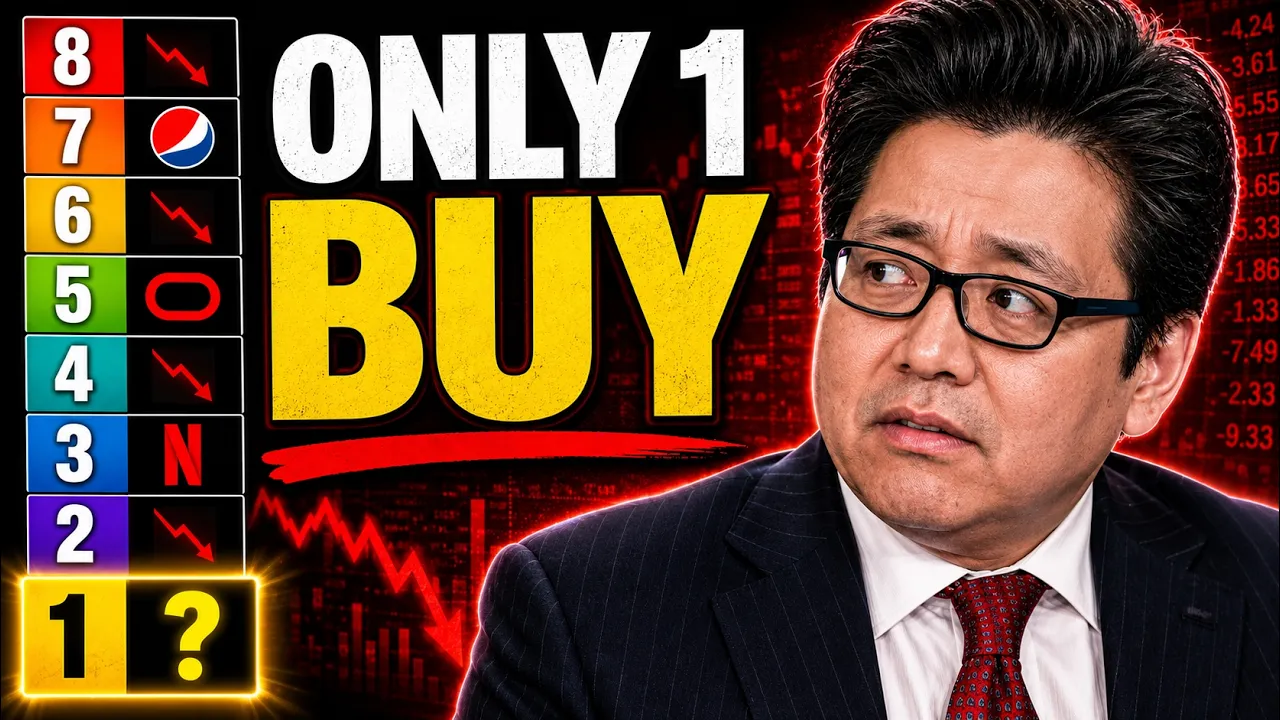
Uber is the only stock from the ranking that I'm prepared to add today.
Contexte
That makes Uber the only stock from the ranking that I'm prepared to add today. But because of delivery hero acquisition, I'd build the position gradually rather than committing all of the intended capital immediately.
Transcription Complète
Oracle is now more than 60% below its high. We've got Netflix where that's almost been cut in half and companies including Uber, KLA, and Lamb Research are approaching 30% draw downs. But the biggest fall does not automatically create the biggest opportunity because some of these companies are suffering from temporary fear. Others are facing genuine fundamental problems and today I'm ranking them to reveal the only one I'm personally prepared to buy at the current price today. And the headline market is hiding how severe the damage has become. The MAX 7 and NASDAQ remain only around 6% beneath their highs, but semiconductors are down 20%, software and services are down 26% and the Hang Sen technology that's down almost 30 and the moves are becoming increasingly violent. Semiconductor stocks are now almost five times as volatile as the broader market, the highest relative level in 30 years. And parts of this, while it appears to be positioning, technology exposure became extremely crowded before reversing sharply, meaning too many investors were attempting to exit the same trade simultaneously. And that may explain why the initial declines were so aggressive. But it doesn't mean the selloff is over. One of Wall Street's leading technical analysts believes the major indices could still have considerably further to fall. So let's take a listen. Well, last week we saw the NASDAQ 100 index take out short-term support. That was based in part on the 50-day moving average. You can see it's starting to roll over as well. And listen, that does increase downside risk because the next support is pretty well below 8 or 9%. And the same would be the case for the S&P 500 if it were to break down below equivalent support, which is defined also by that 50-day moving average in addition to our cloud model. We're putting that level right around 7340 for the S&P 500. Importantly, both indices have been somewhat coiled up in these consolidation phases. And when we see the consolidation phases resolve to the downside, it can be associated with a big pick up in volatility. So, we're sort of bracing for that right now. And clearly, the downside leadership is pretty localized from the semiconductor sector in the broader AI trade. And that warning matters because a stock being down 20, 30 or even 50% does not mean it cannot fall further. Especially when the markets beginning to question the economics supporting its previous valuation. And this chart, well, it shows how dramatically forward- free cash flow expectations have diverged. Estimates for the hyperscalers funding the AI buildout, well, they've fallen sharply. While estimates for semiconductor suppliers, they've moved in the opposite direction, which creates an uncomfortable question. Are semiconductor companies capturing the financial rewards while the largest customers absorb an increasingly unsustainable level of spending? Or is this simply the cost of building the next major computing platform? Because the current demand is not disappeared. Depending on the category, memory spot prices remain hundreds or even thousands of percent above their January 25 levels. In other words, these stocks are not falling because today's pricing's already collapsed. They're falling because investors are worried that today's exceptional conditions may represent the peak. And that distinction's crucial because in a cyclical industry, the strongest current earnings can sometimes create the most misleading cheap valuation. And here's the warning from Dan Niles. Yeah, I mean, looking multi-year out is a fool's errand because you can go back to 2000. The predictions were really rosy for 2002 and NASDAQ went down 78% from peak to trough. So when I hear people saying, "Well, memor is not cyclical anymore," it just makes me itch because I remember people saying the same thing back in 2000. And it's just not true. So the conclusion is that not every falling technology stock should be avoided. Is that a low earnings multiple means very little if those earnings are close to their cyclical peak. That's why every company today must pass three tests. Has the underlying business genuinely deteriorated? Has the valuation fallen far enough to compensate us for the remaining risk? And most importantly, is there a credible catalyst capable of reversing sentiment? Or could the stock remain cheap for years? Some of these declines have created genuine opportunities. Others are traps disguised by falling share price. And by the end, I'll reveal the only company from today's ranking that I'm prepared to buy at the current price. So, let's begin with the first company. And we're counting down from number eight to number one. And the first company demonstrates exactly why a large decline does not automatically create an attractive investment. Now, Lamb Research is fallen 23% in 1 month. Now, we can see a bit of recovery around 5% in the pre-market trading. But even after this rebound, well, it remains more than 25% below its 52- week high. And we can see that much of the decline, well, it's occurred alongside the wider semiconductor sell-off. Investors have been taking profits after an extraordinary run, unwinding leverage positions and questioning whether AI infrastructure spending can continue growing at its recent pace. Bam's underlying business is not currently collapsing. Analysts, well, they're expecting forward revenue to grow by more than 27%. They're anticipating EBITD dollar growth of 35% and operating income well by around 37 earnings per share that's close to 39%. These would be exceptional results for almost any company. And it's important to highlight that we also see this growth with the free cash flow. In fact, free cash flows anticipated to grow by around 28% and long-term earnings per share by around 22. And the current memory market well it remains exceptionally strong supported by tight supply and enormous AI related demand. That's why investors looking only at today's industry conditions may believe this 20% decline is an obvious buying opportunity. But the valuation it tells a very different story. Lamb research while it's trading at roughly 41 times Ford earnings. Its 5-year average is closer to 22 times. So even after the recent crash, investors are paying almost twice the company's normal multiple. If you want to look at the blue tunnel from simply safe dividends where it highlights the intrinsic or expected fair price, well there's a massive massive disconnect between the upper end of the fair value and where it sits today. That is what we would say potential severe undervaluation. Yes, it has dropped significantly from where it was before, but still that disconnect is wide. Just look at the last 5 or 10 years. This is a company that's traded in both an overvalued level as well as severe undervaluation. This highlights the cyclical nature. Now, Wall Street, they do remain bullish with an average target price of $368, but from the pre-market price around $322, that represents only around 15% potential upside. This is not especially attractive when the business operates within one of the market's most cyclical industries. And my discounted cash flow model produces an intrinsic price just shy of $200. The model already assumes free cash flow grows by around 15% annually for the next decade. I mean at 10% growth, the value falls to $140 at $15199. And even if free cash flow grows by 20% annually for 10 years, the model only reaches around $281. That's still below today's pre-market price. And one of the most important things is the reverse DCF. Well, it shows that today's valuation at 321, well, it requires around 22% annual free cash flow growth, that is possible, but it leaves almost no room for a memory downturn, lower equipment orders, export restrictions, or weaker AI capital expenditure. Now, Lamb could continue delivering excellent results, and still produce disappointing returns because today's price already demands excellent for years. It makes Lamb Research an outstanding company, but not an attractive investment at this valuation. So, we've got it here at number eight. My verdict is avoid at today's price. And the next company's also declined sharply, but once again, the valuation may be hiding more risk than opportunity. And that is Caterpillar, which has fallen around 14% in one month. That's after reaching $1,073 per share. But this needs context. The stock remains dramatically higher than it was one year ago. Meaning this is a correction following an enormous rally, not a deeply neglected company after finally being rediscovered. Year to date, well, it's up around 51%. And the bull case is straightforward. Caterpill is benefiting from improving construction demand and explosive demand for power generation equipment used in AI data centers. Its power and energy business has become one of the company's biggest growth engines and analysts are expecting forward revenue growth around 9.3%. EBITDA as we can see and EBIT they're anticipated to grow around the 10% region. Now these are respectable numbers for an industrial company of Caterpillar scale but recent free cash flow growth while we can see negative 45% very weak and the company still faces significant tariff related costs that could pressure margins and they previously estimated around 2.6 billion of tariff costs by 2026. The biggest problem is the valuation. It trades around 34 times forward earnings. The 5year sits around 17. So the stock is trading at approximately double its normal valuation despite the recent decline and maybe no surprises to see a massive massive overvaluation signal. Yes, the underlying fundamentals are in fact increasing but nowhere near as fast as the stock price. That is why we get that massive disconnect. Look at the last 5 10 years. We've never seen such a wide range between the upper end of the fair value and where it sits today. And Wall Street's average target comes at $970. It implies around 10 to 12% upside from the current price with an unusually wide range of analyst outcomes. 575 on the bottom end, 1218 on the upper end. And my standalone DCF or that produces a fair value of $680. Even the blended valuation which includes the historical multiple as well as dividend model reaches only around $86. That's below the current share price. More importantly though, as we can see here, the reverse ETF, if you solely look in fact at discounted cash flow, while the market is effectively requiring around 15% annual free cash flow growth, but forward revenue and profit growth, they're currently expected to remain closer to 9 to 12%. So, Caterpillar may continue benefiting from AI infrastructure and improving industrial demand, but at this price, investors are already paying for a large portion of that success before it occurs. So, Caterpillar therefore comes in at number seven. The company's high quality, but my verdict is avoid at today's valuation. The next stock is considerably cheaper, but its problem is not valuation is whether the growth is strong enough to create meaningful returns. And that is PepsiCo, which is in fact trading pretty much around 52- week lows. And that is after years of underperformance over the last 5 years. Well, it's actually down around 13%. And unlike Caterpillar or Lamb Research, the stock now looks inexpensive on several traditional valuation measures. But there is a reason investors remain cautious. And in fact, their North American food sales recently dropped by 2% despite price cuts of up to 15% on brands including Lays and Doritos. Management's also facing rising commodity, packaging, and logistic costs. While consumers are becoming more selective about snacks, the weakness is visible in the forward expectations. revenues only anticipated to grow by around 3 and a half% forwarding bit and in fact offer rate income growth they're close to 4% while forward diluted earnings per share that growth is only sitting around 3%. Now the valuation that's clearly more attractive. Pepsi is trading around 15 12 times Ford earnings compared with the 5-year which sits at 21. This is pretty much the lowest we've seen in at least the last 5 years. While we know today's dividend yield of 4.4% 4%. That's considerably above their historical average that sits at the three mark. Wall Street's average price target is around $156. That implies around 15% upside alongside the dividend is respectable, but not an obviously exceptional riskreward setup. Now, my standalone DCF that produces a value of $146. That's only around 8% above the current price. The blended value reaches around $175, but that result is heavily influenced by the historical multiple valuation and dividend discount model. Those assume Pepsi eventually returns closer to its previous valuation and growth profile. And the DCF, well, it assumes 6% annual free cash flow growth. The reverse DCF is suggesting the market's pricing in around five. So, the market's assumptions, yes, they're cautious, but they're not obviously irrational. And yes, Pepsi is cheaper. It pays a strong dividend and could recover as pricing and volume stabilize, but forward growth remains too modest for me to call it the best opportunity in the ranking today. So for me, Pepsi rank sixth. My verdict is hold or watch rather than buy. And now let's move into the five companies that offer considerably greater upside, but also considerably more uncertainty. And before we do that, I want to let you know I've released my latest weekly article where we looked at eight quality stocks were only three passed the 20% margin of safety test. You can click below, sign up, and in fact read all of these straight away where we deliver one every single week, looking at severely undervalued opportunities as well as what's in the market in just the last few days. Now we move on to number five, Netflix, which has fallen around 28% this year and pretty much trading around 52- week lows. From its previous highs, we can see $127. This stock has lost around half of its value. And unlike the company's rank below, Netflix is the first stock where the valuation, growth, and reverse DCF all begin to look genuinely compelling. Now, the latest decline that we can see, in fact, that's actually come from their disappointing third quarter forecast, they guided for 12.86 billion of revenue and earnings of 82 cents per share, slightly below Wall Street expectations. Investors were also unsettled by the decision to publish viewing hour data less frequently. But the actual business is not shrinking. Forward revenue, that's expected to grow around 13.5%. EBIT DAR as well as operating income growth. They're both anticipated more than 22% while diluted earnings per share forecasted to grow by around 24. Free cash flow per share that looks very strong anticipated forward basis 27%. And Netflix also reported that overall viewing hours increased by around 2% suggesting the engagement picture is more nuanced than the share price reaction implies. Now Netflix trades around 19 times forward earnings. Yes, it is above in fact the sector by around 43% but it's also near 50% below Netflix's own 5year average and the forward PG ratio well we can see that's now below one and Wall Street they've updated their price target after the earnings it now sits at $97 but that does imply more than 40% upside we do however want to point out here the wide range from $70 up to $135. It shows that analysts they remain divided over how quickly the growth will mature. And my central DCF that assumes 10% annual free cash flow growth and produces an intrinsic value of around $83. That represents 24% upside from the current share price at 5% growth while Netflix worth around $61 at $10.83 and at the higher end $113. The reverse DCF that suggests the market's priced in only 6.6% long-term free cash flow growth. That's far below current expectations for revenue, earnings, and free cash flow growth per share. Now, the risk is that Netflix is transitioning from a rapid growth disruptor into a more mature media company. Competition from YouTube, Tik Tok, traditional entertainment that remains intense. While advertising, gaming, and live events must become larger growth drivers. But unlike many, in fact, previous Netflix selloffs, today's valuation no longer requires flawless execution. The company can grow considerably more slowly than analysts currently expect and still appear reasonably valued. So Netflix ranks number five is an attractive watch list candidate and potentially a staged buy for more aggressive investors. But I wouldn't say it's my single winner because ultimately the final four companies all appear to price even more pessimistic long-term outcomes. And the next one may offer enormous upside provide it can survive the cost of fulfilling its own ambitions. And that is in fact Oracle which has fallen around 34% in one month and in fact more than 60% from its highs at $346. The stock now trades around $120 despite some of the strongest forward growth expectations in the entire market where analysts are expecting forward revenue growth of 31%. EBIT DAR expected climb by 36% while diluted forward earnings per share sitting at 22. These numbers would normally command an extremely high valuation. Yet, Oracle trades at around 15 times Ford earnings. Its 5-year average is around 20. On earnings alone, Oracle appeared remarkably cheap. And when we take a look at the blue tunnel, we actually get our first undervaluation signal over the last year. Over the last 5 years, last time we saw this was in 2022. And this is one that kept appearing in our videos when we were talking about companies to consider selling or trimming when it was sitting right there above the $300 mark. Now, Wall Street's average target is around $248, more than double the current price today. But the range does extend from $110 to $400, revealing extreme disagreements about Oracle's future. And the disagreement centers on one issue. Can Oracle fund its extraordinary AI infrastructure expansion without causing permanent damage to its balance sheet and free cash flow? Listen carefully to this warning. And cash flows are are down with all the hyperscalers. So there is going to be a wet blanket thrown on this market. I'm not sure which company it'll be. I mean Oracle has some very high lofty goals uh going into 2030. I think that's coming into question right now. I think that's going to be the the issue uh in the next this quarter perhaps uh next quarter. Goldman Sachs said that the first one that cuts capex is going to be the winner. >> That is the central oracle risk. The company spent an enormous amount of capital expenditure exceeding their previous target while investors remain concerned about the increasing debt load required to fund the expansion. and my model which is in line with analyst expectations. It expects free cash flow to remain negative through 2028 before recovering strongly. It means the valuation depends not only on demand but also on Oracle successfully converting its enormous contracted backlog into profitable cash generating revenue and it also carries around 167 billion of debt. The company has indicated that its infrastructure buildout will require a combination of operating cash flow, customer prepayments, debt, and equity financing. At 5%, long-term free cash flow growth, while Oracle sits around $121, which is pretty much around today's price. At 10%, the value rises to $160. At $15, $28, and the reverse DCF, it requires only around 5% long-term growth. It looks extremely modest compared with Oracle's forward revenue expectations, but the cash flow starting point, well, that's unusually weak. So, Oracle could become one of the market's greatest AI infrastructure winners, but his valuation is unusually dependent on financing, capital discipline, and several years of flawless execution. So, Oracle comes in number four, the verdict is spective watch list rather than buy. The upside is enormous, but I need greater visibility over free cash flow and debt before committing capital. Now, this next company has a very different problem. Its free cash flow is already strong, but the market increasingly questions whether AI will strengthen the platform or make traditional software less valuable. And that Salesforce down 34% this year, trading right there towards 52- week lows. And the stock has fallen where it used to sit above $270. Today, it sits closer to $170. And ultimately the decline that we can see it reflects slowing growth, weaker enterprise software spending and fears that autonomous AI agents could reduce the value of traditional software subscriptions. Their latest quarter exceed expectations but the following quarter revenue was slightly below consensus. Forward revenue that's expected to climb by around 10%. EBIT DAR as we can see and in fact operating income expected to rise by around 10 to 12% while forward diluted earnings growth that's sitting closer to 15% free cash flow that in fact does remain healthy as we can see here 15% year-over-year 10% expected moving forwards although this growth is in fact below the historical average the business it is therefore slowing but not experiencing the outright deterioration implied by the share price and it sits around 12 1/.5 times forward earnings 5 average 27 1/2. The multiples therefore being cut by more than a half and we can see the constant undervaluation signal. Yes, the underlying fundamentals have barely moved but the share price continues to get deteriorated. Hence that massive undervaluation signal and Wall Street's average price target $242 implying close to 40% upside. The higher target as we can see that touches 475 but the low target that remains near today's share price. And my DCF assumes zero free cash flow growth after 26. Even with that exceptionally cautious assumption, the model produces an intrinsic price around $240. Even if free cash flow declines by 2% annually, the model still produces a value of $23 and only 2% growth, the valuation sits at $283. The reverse DCF is suggesting the market's pricing in long-term free cash flow decline of 4%. That is extremely pessimistic for a business still producing double-digit revenue and earnings growth. And there are also early signs that Salesforce's AI strategy is gaining traction. The company reported 98 new deals worth more than 1 million annually, while subscription and support revenue was up 14%. But Agent Force remains early. Salesforce must prove that customers will move from testing AI agents to deploying them at scale and that those agents expand revenue rather than cannibalize existing software seats. So for me, Salesforce number three, it looks materially undervalued and is extremely close to becoming a buy. But the final two offer an even greater disconnect between current business performance and the expectations embedded in their share price. And here we have number two, the company experiencing the deepest crash in the entire ranking. Init 56% year to date. The shares we can see they're also down by around 5% in the pre-market and is trading around the $280 mark. Compare that with a 52- week high of $814. This is no ordinary correction. Investors fearing that generative AI could weaken Turboax, QuickBooks, and the broader value of paid tax and accounting software. Now these concerns intensified after they reduced their Turbo tax revenue forecast and announced plans to cut around 17% of their workforce. But the wider business here it is still growing. Forward revenues expected to climb 134%. EBITDAR as we can see and operating income they're anticipated by around 16% while diluted EPS sitting at 17 and forward gap earnings growth expected to exceed 22%. And obviously important to highlight free cash flow. This is expected to climb 21. They also raised their overall annual revenue forecast despite reducing the outlook for Turboax. And the valuations collapse to around 11 times Ford earnings. Their 5-year average is more than 31. This is one of the largest valuation compressions in the entire market. And just look at the blue tunnel. As we always say, or at least most recently when analyzing into it, this company is closer to zero than the bottom end of the fair value. That shows you how much the valuations compressed and how bad the sentiment's got. And Wall Street's average target $463. It represents around 65% upside actually from the pre-market price. Although the enormous ranges here shows that analysts remain deeply divided over AI disruption. And my DCF is delivery conservative. It assumes only 2% annual free cash flow growth and produces here an intrinsic value of around $456. at 2% growth 456 at 4517 at 6586. All three outcomes remain dramatically above today's price and the reverse DCF suggesting the markets pricing in long-term free cash flow decline of around 6%. That is an extremely severe assumption for a company still expect to deliver doubledigit revenue and earnings growth. So the opportunity is clear. The market may have moved from pricing slower growth to pricing permanent destruction of into its competitive position. And the current evidence does not yet justify the outcome. But the risk is also greater than it appears in a spreadsheet. General purpose AI can increasingly answer tax questions, automate bookkeeping, and reduce the friction that historically drove customers towards inuits products. And recent lever free cash flow growth was also close to flat. So, Intra must prove that its own AI tools strengthen customer retention rather than simply accelerating disruption. So, Intra ranks second is potentially the largest valuation opportunity in the ranking and it came extremely close to becoming my one buy for the company. Now, to discuss Uber that currently offers a strong combination of growth, expanding profitability, cash flow, momentum, as well as valuation and is down around 30% from its 52- week high. The decline yes less dramatic than intuit or salesforces but the underlying financial trajectory may be the strongest of all eight companies. Forward revenues expected a client by around 15% EBIT DAR by around 28 and operating income we can see here by almost 57%. That is significant operating leverage and lever free cash flow well that's climbed as we can see by more than 20%. Forward free cash flow per share growth expected 23.5 while long-term earnings per share that's anticipated to climb by 28%. Now Uber trades around 22 times forward non-GAAP earnings compared with its 5year that sits around 32 forward PG that sits at only.77. So the valuation looks reasonable both absolutely and relative to the growth. And Wall Street's average target sits at $104 implying around 44% upside. But the market remains divided over whether competition and autonomous vehicles will eventually weaken Uber's position. Here's the debate. >> Uh Muffet Nathansson saying it's going to get worse for Uber before it gets better. Sirat, you own it. >> We do. And if you look at the stock chart to go back a little bit, it almost hit 100. Now it's back into the 60s and 70s. We trimmed a bunch of it up in the 90s. Now I'm looking I'm actually getting very interested in this level because they also just did an acquisition over in Germany, right? and they're trying just to use it more as a super app and yeah we know the danger or let's just say Whimo and all the others are coming at them but at the end of the day Uber is an international company that's growing and I think as the app gets bigger and bigger it's a company that we're watching for and watching for the cash flow earnings to grow. >> Now my standalone Uber DCF assumes only 8% annual free cash flow growth that produces an intrinsic price of $125 compared with today's value of 72. So, at 8% 125, at 10% 141, and the higher end 160, the reverse CCF is suggesting the market is pricing zero long-term free cash flow growth. That's difficult to reconcile with current revenue growth of 15% and free cash flow per share growth above 20%. That does not require Uber to dominate every part of autonomous driving. Uber's advantage is its enormous network of consumers, drivers, merchants, and delivery partners. Even autonomous vehicles operators, they need demand distribution and customer access. But autonomous vehicles remains a genuine risk. If companies such as Whimo eventually control both the technology and the customer relationship, Uber's take rate and negotiating power could come under pressure. That risk cannot be dismissed. The second major risk is capital allocation. Ubers's agree to acquire delivery hero in a transaction valued around 15 billion or around 14 after adjusting for the existing state and management expects a transaction to be accredited to adjusted earnings when it closes and to reduce high singledigit percentage accretion by year three. But that depends on financing integration regulatory approval and successfully managing a much larger global delivery platform. And this caveat is essential. My 125 valuation is based on Uber as a standalone business. It doesn't yet fully include the acquisition price, financing costs, integration expenses, or delivery heroes, future cash flows. But based on existing business, Uber offers the strongest combination of continuing growth, accelerating profitability, expanding free cash flow, and a valuation that assumes almost no long-term cash flow growth. That makes Uber the only stock from the ranking that I'm prepared to add today. But because of delivery hero acquisition, I'd build the position gradually rather than committing all of the intended capital immediately. So in eighth place is Lamb Research, an excellent company whose current valuation still requires extraordinary growth. Seventh would be Caterpillar, benefiting from AI related power demand, but still priced far above its historical valuation. Sixth would be PepsiCo, reasonably valued and offering an attractive dividend, but with insufficient growth to become the winner today. And number five would be Netflix. A genuine opportunity, but one that still faces maturing growth and increasing competition. In fourth, we have Oracle potentially offering enormous upside, but with too much debt, negative free cash flow, and execution risk for me today. In third would be Salesforce, deeply discounted with the market appearing to price a persistent decline in free cash flow. In number two, Int. The largest apparent valuation disconnect, but also one of the most exposed to direct AI disruption. And first place, Uber. At today's valuation, the market appears to be pricing Uber as though it's free cash flow growth is finished. The evidence currently says the opposite. The delivery hero acquisition introduces meaningful uncertainty. So, I'd be buying cautiously, not blindly. But among all eight companies, Uber offers the strongest overall balance of valuation growth and improving hash generation. But let me know your thoughts in the comments below. Which of the eight companies would you buy at today's price? Which one do you believe is the biggest value trap? And don't forget to sign up to the weekly newsletter by clicking on the pin comment below. Most importantly, have a great day. I'll see you all on the next

Commentaires 0
Connectez-vous pour rejoindre la discussion.
Se connecterAucun commentaire pour l'instant. Soyez le premier à partager votre avis !