
- Rendement de la vidéo
- -21,94%
- Appels
- 1
- Achat / Vente
- 1 0
- Publié
Recommandations
L'entrée est le cours de clôture de l'actif à la date de publication. Le cours actuel est la dernière clôture enregistrée.
-
Entrée $65,77 22 juil 2026Actuel $51,34 27 août 2026Résultat −$14,43
I'm cautiously optimistic about STM and still think it's a buy, just not an extremely aggressive buy.
Transcription Complète
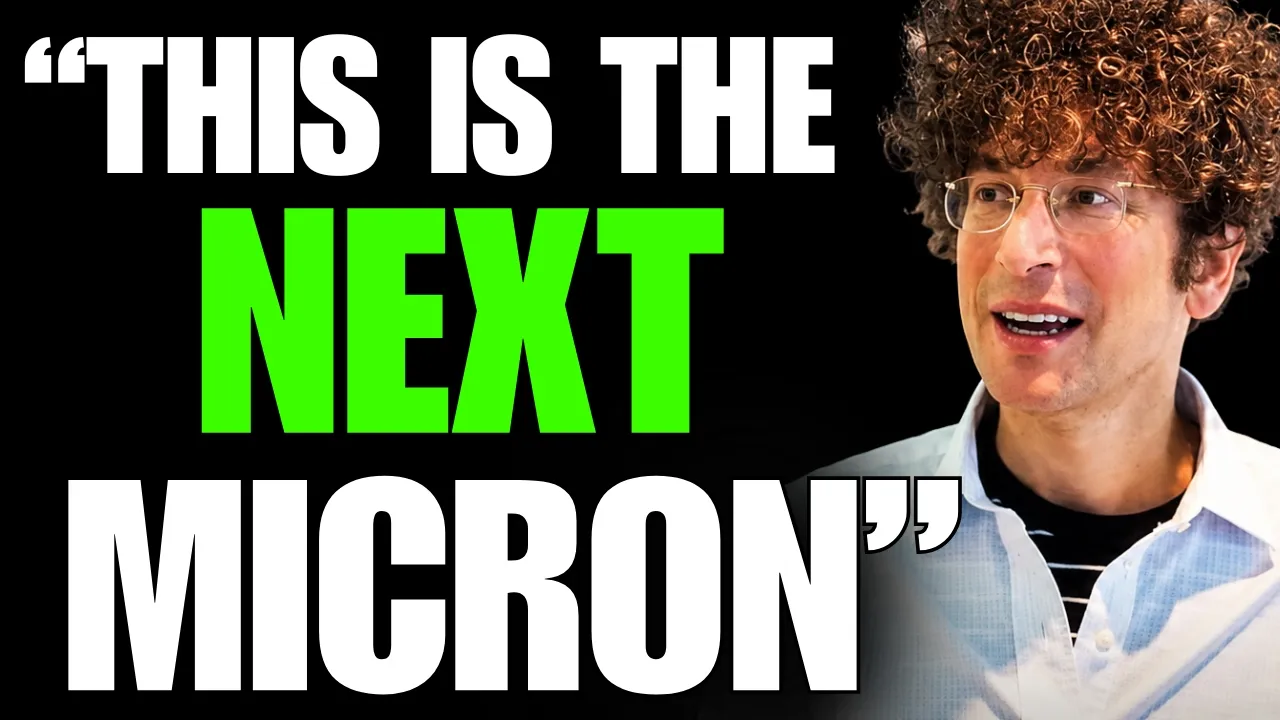
James Altucher says Elon Musk could announce the biggest merger in history, combining Tesla, SpaceX, and xAI into one massive company. And according to Altucher, this so-called mega merge could create four enormous stock opportunities. Of course, he wants you to pay to learn their names, but I figured them all out based on the clues in his presentation and reveal them all here for free. There are multiple stocks to uncover, so we'll just jump right into things. This presentation is pitching stocks that could benefit from Elon's new Terafab and the broader data center buildout. Here are the clues for stock number one. It is supplied Tesla and SpaceX for more than a decade. It reportedly ships more than 5 million components per day to Starlink. It supplies technology used in Tesla drivetrains. It is developing photonics technology that replaces copper connections with light. It plans to quadruple production by next year. It believes it could capture as much as 30% of the AI data center market. ST Microelectronics, ticker STM. This is a stock James has been pitching for over a year now in different presentations, and other stock pickers have been pitching it a lot lately. STM is one of Europe's largest semiconductor companies. It produces chips used in electric vehicles, factory equipment, smartphones, sensors, and connected devices. The company is especially strong in automotive power chips, including silicon carbide technology that helps electric vehicles operate more efficiently. Here's the bull case. First is built into the future. ST Microelectronics supplies essential chips for electric vehicles, factories, power systems, and connected devices, giving it exposure to several long-term technology trends. Second is AI growth is arriving. Its silicon photonics platform is now in high-volume production, with capacity expected to quadruple by 2027. ST expects cloud AI revenue to reach about $1 billion in 2026, and potentially double in 2027. Third is more than one big bet. Unlike smaller chip stocks, ST combines AI upside with established automotive, industrial, sensor, and microcontroller businesses. And the bear case. First is the The business is still weak. Automotive and industrial chips remain highly cyclical and customers are still working through excess inventory. ST's 2025 revenue fell 11% while its operating margin dropped to just 1.5%. Second is AI is still a small piece. The $1 billion cloud AI target sounds exciting, but it would still represent less than 10% of last year's revenue and the projected doubling in 2027 is far from guaranteed. Third is factories cut both ways. ST's manufacturing footprint provides control, but weak demand creates unused capacity and margin pressure. If automotive demand remains soft or photonics adoption disappoints, the recovery could stall. STM is an interesting stock. Last year I was hesitant to give it a buy rating, but I finally did the day before it went on a big surge and doubled. It is now pulled back like many other AI stocks, but it is still pricey in terms of valuation. The good news is that STM doesn't need to benefit from any Elon TeraFab project to justify its valuation. It mainly needs to recover its automotive business and actually reach its AI goals over the next few years. If you think it can do that, then it's a good stock. I'm cautiously optimistic about STM and still think it's a buy, just not an extremely aggressive buy. I'm going to reveal the rest of stocks in 15 seconds, but just want to quickly tell you about my new ebook series. If you want to invest in the space economy, I created a seven ebook series covering rocket companies, satellites, defense plays, picks and shovels stocks and 60 ranked space stocks. The entire series is just $39. Link below. Here's the clues for the second stock called America's chip king. It is described as the largest semiconductor manufacturer in America. It produces chips domestically, making it a potential US alternative to TSMC. Elon Musk has reportedly already partnered with the company. It is developing new chip manufacturing technology that Apple and Nvidia are reportedly evaluating. The company has received billions of dollars in support from the US government. The pitch predicts the stock could rise another 300% as demand for American-made AI chips grows. This is Intel, ticker INTC, and it is one of America's largest semiconductor companies. It is best known for producing processors used in personal computers and data centers, including its Core and Xeon product lines. Unlike many chip designers, Intel also operates its own factories and is building a foundry business to manufacture chips for outside customers. The company's investing heavily in advanced manufacturing, AI processors, and domestic production as it tries to regain technology leadership and become a credible American alternative to TSMC. Here's the bull case. First is the comeback is taking shape. Intel's new 18A manufacturing process is now powering commercial products, while its upgraded 18A P technology has already entered risk production. Second is America needs Intel. Intel owns advanced US factories, giving customers and the government a domestic alternative to relying almost entirely on TSMC. Third is the upside is enormous. If Intel rebuilds its processor business and attracts major foundry customers, today's struggling chipmaker could become a critical manufacturer for the entire AI industry. And the bear case. First is the foundry is still bleeding. Intel foundry lost $10.3 billion in 2025 and another $2.4 billion in the first quarter of 2026. Turning its expensive factories into a profitable business could take years. Second is big customers are missing. Intel still has relatively few outside foundry customers. Without a major customer for its next generation 14A process, Intel has warned it could reconsider further leading edge development. Third is the comeback must be earned. Intel needs strong product launches, better factory utilization, and major external orders. If 18A disappoints or customers remain cautious, the turnaround could stall while losses continue. Intel is another stock that is already priced as if it has turned around its business. In 2025, Intel generated around $52 billion in revenue, and its gross margin was 41%. For this valuation to make sense, Intel would likely need to reach $80 billion dollars to 90 billion dollars in annual revenue, push margins above 50%, and generate approximately 18 billion to 22 billion dollars in net income. This would likely need to happen by 2030. The turnaround is in progress, and reducing America's reliance on China for chip manufacturing is a major national priority. I think this one is a toss-up. It was hit during the recent AI pullback, so the price is a little more attractive. I probably won't buy it though, and I'll chalk this one up to missing the best time to buy, which would have been in March. Here are the clues for the third stock called the tiny ASML supplier. It is a publicly traded electronics manufacturer and an important supplier to ASML. It produces high-precision electronic systems and modules used inside ASML's chip-making equipment. It recently expanded a European manufacturing operation specifically to support ASML. The site includes an ISO class 8 clean room and began delivering ASML-approved modules in 2025. The company is valued at roughly 3 billion dollars, less than 1/2 of 1% of ASML's valuation. It could benefit as new semiconductor factories increase demand for ASML machines and the components inside them. This is Benchmark Electronics, ticker BHE, and it is a contract manufacturer that helps other companies design, engineer, and produce complex electronic systems. It serves industries including semiconductor equipment, aerospace and defense, medical technology, industrial machinery, and advanced computing. Here's the bull case. First is picks and shovels of the chip boom. Benchmark doesn't need to invent the next AI chip. It manufactures the complex electronic systems used by semiconductor equipment companies and other advanced industries. Second is growth is accelerating. Semiconductor equipment demand is strengthening, and Benchmark recently raised its 2026 revenue growth forecast to 9% to 10%. Third is multiple ways to win. Aerospace, defense, medical technology, and advanced computing provide additional growth drivers, reducing its dependence on one market. Here's the bear case. First is growth but thin profits. Benchmark operates a low-margin contract manufacturing business. Despite $2.7 billion in 2025 revenue, it earned only $0.68 per share on a GAAP basis. Second is tied to the chip cycle. Semiconductor equipment is its largest market, making Benchmark vulnerable if chip makers delay factory expansions or equipment spending slows. Third is ASML isn't a guarantee. Supplying ASML creates opportunity, but Benchmark remains one of thousands of suppliers. It still must win orders, control costs, and prove that stronger demand produces meaningful earnings growth. This is actually my first time ever hearing about Benchmark. So, I'd have to do a lot more research before I could give it a buy rating or anything like that. But, the research I've done so far doesn't make me too eager to buy. It has valuation issues just like every other AI-adjacent stock. But, the biggest red flag to me is the small margins. Its operating margin is just 3%. So, after subtracting the cost of making its products, along with expenses such as salaries and marketing, Benchmark makes only 3% more than it spends. That's not a very attractive business model to me. In comparison, ASML's operating margin is 37%. So, to be honest, I'd probably just go with ASML over this company. Here are the clues for the last stock, which is a microreactor stock. It is developing factory-built transportable nuclear microreactors that could potentially be delivered by truck. Its technology is aimed at AI data centers, remote communities, industrial facilities, and military installations. It describes itself as the first portable nuclear microreactor company publicly listed in the United States. It trades on the Nasdaq and was valued at less than $2 billion when the promotion was released. Its reactor portfolio includes Chronos MMR, Loki MMR, Zeus, and Odin. It remains an early-stage development company pursuing regulatory approval and demonstration projects, with commercialization previously targeted around 2030 to 2031. This is Nano Nuclear Energy, ticker NNE. My video editor is acting really slow and weird right now, so this will be quick. I'm not really interested in this stock because commercialization is so far away. It could take 5 to 10 years, and I just have no desire to buy a stock like that right now. Before you go, if you want to learn more about the space economy, check out my space investing ebook series. You'll get seven ebooks covering the top rocket, satellite, defense, and picks and shovel stocks, plus rankings of 60 space companies and model portfolios for different risk levels. The entire series is just $39. Click the link below to get it today.
Commentaires 0
Connectez-vous pour rejoindre la discussion.
Se connecterAucun commentaire pour l'instant. Soyez le premier à partager votre avis !