I look at something like Solana. Solana can handle more transaction volume than the FX fixed income and equity markets combined. It's now a default technology for a lot of big institutions, enterprises, financial firms, and it's seeing adoption from the startup world, too. It's got a thriving ecosystem and a really solid community. Things got a $45 billion market cap, I mean, there are hundreds of public companies on the US stock market that are bigger than Solana and ones that I think have a lot dimmer growth prospects than Solana.
Contexte
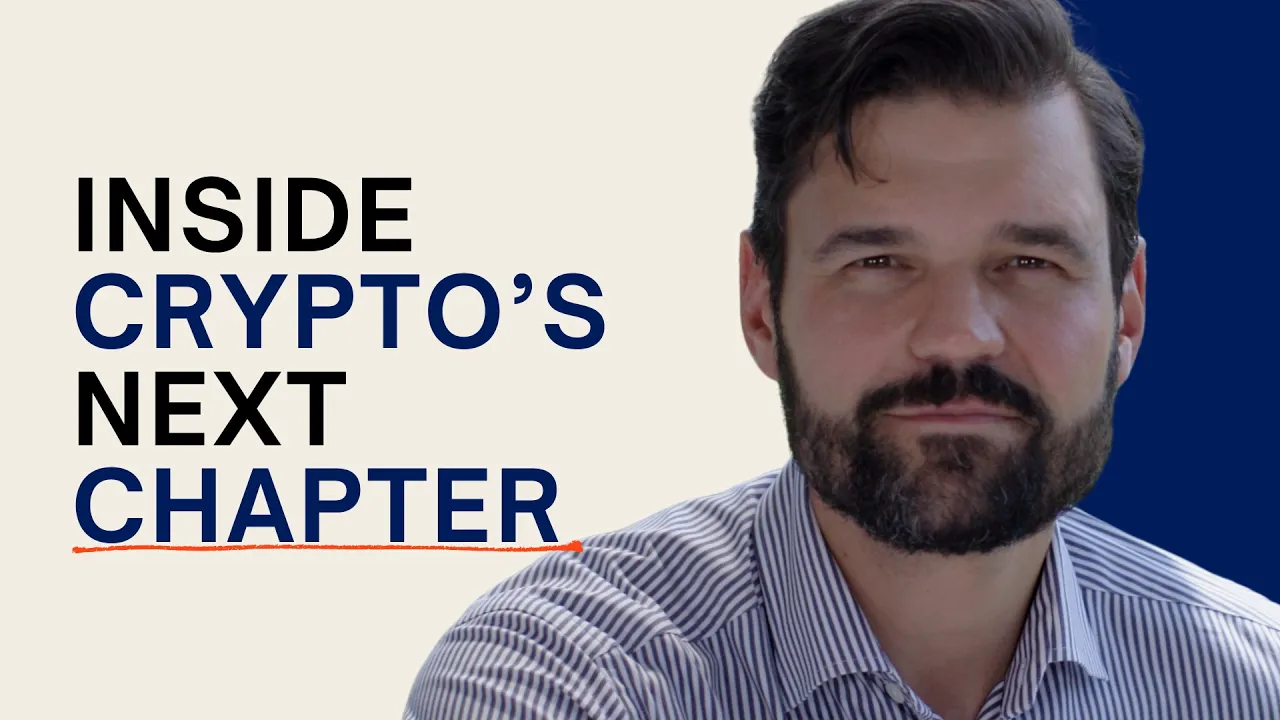
“I look at something like Solana. Solana can handle more transaction volume than the FX fixed income and equity markets combined... Things got a $45 billion market cap...”
Transcription Complète
Clarity is being hotly debated right now. There's a new version of the bill which just hit the floor like moments before we sat down for this conversation. And that has prediction markets perking up. I think right now it's at around 47% to 50% that it will get passed. Personally, I think that's wildly optimistic. >> Agreed. >> I'm still very, very skeptical that this bill can get the support that it needs to get through the Senate. >> We're here with Alex Tapscott. Alex, thank you so much. >> Pleasure. >> Yeah, it's good to chat. I think out here at the Audi Summit, yeah, huge intersection of TradFi and crypto. >> Yes. >> Uh I want to start there with the hot topic which is uh clarity. >> Yeah. >> And how many people are talking about it? >> Well, we are uh at the Long Island fork. >> Uh-huh. >> And we're at a fork in the road. >> Hey, nice. >> Whatever relates to regulation. So, it feels like an appropriate setting for this discussion. >> Indeed. >> Clarity is being hotly debated right now. There's a new version of the bill which just hit the floor like moments before we sat down for this conversation. And that has prediction markets perking up. I think right now it's at around 47% to 50% that it will get passed. Personally, I think that's wildly optimistic. >> Agreed. >> I'm still very, very skeptical that this bill can get the support that it needs to get through the Senate. >> Well, the question I want to ask you is, you know, a lot of people are hopeful that it does, but if it doesn't, do you see kind of like money coming off the sidelines? How does it compare to what we saw with stablecoins post genius in your eyes? >> I would say it's not priced in at all in the markets, right? So, I think if it doesn't go through like is there going to be a big correction or some sort of deflation or deceleration of adoption? Not really. >> Yeah. >> Um I think that right now the market, the prediction markets may be saying it's a coin flip and Twitter may be saying it's going to pass, but the actual markets are saying that the odds are still pretty low. And so, I don't think it's priced in. So, I think if it does pass, there's a huge surprise to the upside potential. If you look at genius last year, for example, in the immediate 7 to 14 trading days after it passed, names like Coinbase, Circle, and other crypto-related equities like Robinhood popped like 25 to 30%. Interestingly, [clears throat] Bitcoin didn't really move, but I think it was sort of front-running the announcement because genius, unlike clarity, there was more and more visibility that this was going to pass. So, if it if this one passes, the the upside surprise I think could be really significant, especially to regulated crypto businesses that operate primarily in the United States cuz that's the thing that the regulations most affect. So, that means companies like, you know, not NFI or NFA or whatever but these companies are going to benefit from the regulatory environment that allows their businesses to operate more easily. >> Well-named bill in terms of clarity and what we're trying to get as an industry, but but I guess, you know, backing up, thinking about the intersection of TradFi and crypto, it's been very interesting and I know you sit there with what you're doing at CMCC Digital. Want to talk about that and your kind of path? >> Sure. >> one of the first Bitcoin ATMs. I mean, what has it been like watching this industry as it has evolved to where we are now? >> Well, I mean, how much time do you have? >> [laughter] >> Not not to to make it a long story, but I first got into the industry back in 2013, right? So, I first learned about I think it was called Bitcoin before blockchain or crypto entered the vernacular. There was this one single asset. And at the time, the the market cap of all crypto assets I think was like 7 or 8 billion dollars. So, if it were a publicly traded company, it would have been, you know, barely big enough to crack the Russell 2000, right? This was a rounding error compared to the rest of financial markets. But in Bitcoin, I saw something that held a lot of potential. And to make a long story short, I found a a kindred spirit who felt the same way. That was my dad, who's a business author, consultant, someone who's written many successful books about how technology changes business. And together we wrote a book called Blockchain Revolution, which was an exercise in good timing. It came out the week of the Ethereum DAO, which was really the first crypto news story that kind of broke through into the mainstream. People were like, "Okay, let me get this straight. A bunch of people on the internet somehow raised $160 million in less than a week to fund some new on-chain VC firm. Like, what what is that?" And so, we were there and we were able to explain it. So, the success of that book has allowed me to do lots of fun things in the space. One of the things, as you mentioned, was that in January of 2021, launched the world's largest, at the time, closed-end Bitcoin fund. It's called the Ninepoint Bitcoin Trust. So, this is 2 years before the US allowed for ETFs, and it was at a time when Grayscale was having success with over-the-counter uh listed single asset trusts. So, we basically said, "Let's Why don't we do something that's on a major global stock exchange. We'll do a full prospectus. We'll offer it broadly to institutional retail investors, and we'll see if there's any uptake." And there was. We raised uh almost 200 million US, which at the time was the biggest deal of its kind. And I eventually converted that into an ETF, which at its peak reached around half a billion dollars. We saw a lot of that in Canada before the US got up to speed here. Uh but now, I mean, I guess with where we are today, it's interesting to think about value accrual moving beyond just Bitcoin as an asset now into kind of Web3. And I know you also wrote a Web3 book. So, talk to me about kind of I guess what you're seeing in the evolution of where some of these new projects, revenue-focused projects, are relative to maybe the L1 excitement that happened in years past. Yeah, absolutely. Well, the original insight that we had way back when was that Bitcoin was a new form of money. You know, it was a speculative asset, but more importantly, it was a new technology platform. That blockchains were ushering in a second era of the internet. That for decades, we had internet of information, which transformed how we communicate, how we collaborate online, how we consume content, but hadn't had as big an impact on value-based industries like financial services. Because when you use the internet to send and move information, you're not sending an original unique thing, you're sending a copy. Sure. And so, blockchains uh enabled uh digital scarcity, which meant that they could be applied not just to information but to assets. And so, I think the L1 phenomena was really a realization that this was going to be a big deal. But, people with no idea where it was going to be a big deal. >> [laughter] >> They didn't know exactly what kinds of applications were going to be successful, what industries were going to be most impacted. I think probably people had a pretty good idea finance was going to be disrupted, but there might be other things as well. So, where do you place a bet when the application ecosystem is so nascent? Well, you look at the underlying platform, right? Maybe if I can own the roads and the bridges, eventually there'll be cars and they'll be paying tolls and then I'll be able to make a lot of money from that. So, I think that's what really fed the L1 mania that that really actually began in 2014, right? People think of it as occurring with Solana and alternative L1s to Ethereum, but really it was Ethereum itself that made the sort of bold bet that you could have a general purpose blockchain, that it could be used for more than just moving and storing the same asset, but that it could be programmed to move other kinds of assets and do other kinds of tasks. And that was really the big insight. And I think that that's what really led that initial boom. I would say that probably L1s were overly valued at one point, but now I think they're massively underrated as an investment. I think people basically moved on. I was at an event recently where the the proposition for a panel was, are L1s cooked? Basically, like are they the most massively overvalued asset out there? I personally, my unscientific view is, you know, I look at something like Solana. Solana can handle more transaction volume than the FX fixed income and equity markets combined. It's now a default technology for a lot of big institutions, enterprises, financial firms, and it's seeing adoption from the startup world, too. It's got a thriving ecosystem and a really solid community. Things got a $45 billion market cap, I mean, there are hundreds of public companies on the US stock market that are bigger than Solana and ones that I think have a lot dimmer growth prospects than Solana. So, I think with the pendulum that always in crypto swings way too far too far to one side, and in this case it's probably swung way too far to the other side. >> That's a hot take on the >> Not financial. Not financial. >> no, but it's a hot take on the L1 side because now we are seeing, I guess, maybe a shift in focus and Hyperliquid might be a good example of kind of the app layer now. As you mentioned the cars and everything else being built on these roads. >> Yeah. >> Um I mean, how do you kind of look at that from a TradFi lens of what everyone else is doing? Cuz right now the hot theme is RWAs and tokenization, but kind of tokenizing products that look very similar to what you can already trade in in shares out there. >> Yeah, I think that there's a sort of a incrementalism >> Uh-huh. >> to the tokenization trend. It's sort of like, let's take all these things that exist in the traditional market and we'll put them on chain. >> Yeah. >> Like, well, what is the benefit of that? Well, we'll reduce settlement times to T plus zero from T plus one. Um and we'll allow people to hold assets in the brokerage account or in a wallet. >> Uh-huh. >> It's like, okay, well, this is it's important innovation, [snorts] but it feels incremental >> [laughter] >> to me. It doesn't actually feel like a big step function, you know? >> Like, would it be even included in your book if you were to rewrite the book today? >> would. I actually wrote a book called Digital Asset Revolution and I talked about the need for um uh natively digital assets, right? And there's a big difference between natively digital assets and assets that are represented on chain as like a a facsimile or proxy of a real-world asset. >> Sure. >> And I think that the most exciting area for me is not taking assets that already exist and moving them on chain, but rather using blockchains as a way to create and organize uh capabilities, to create new kinds of organizations, what you'd call companies >> Yeah. >> um to do the things that companies in a traditionally corporate incorporated way used to do, right? And that's frankly what Ethereum and Solana and L1s actually are and to a degree, you know, projects like like Hyperliquid, too. Yeah. So, to me the most exciting thing is not how do we get Apple shares on chain, it's how do we create the next Apple on chain, right? And disintermediate the traditional path that companies used to take in order to build value. >> No, I would agree. I mean, preaching to the choir, too. I definitely agree with you 100%. >> Well, you were a founder, are you not of one of those very organizations? >> talking on right now. Totally I completely agree with that in terms of trying to figure out different ways to, you know, create equity and have value accrue to a community. I think DAOs have tried in multiple different ways, and co-ops has been fun to explore. But, the idea of kind of where we go from here, wanted to get your take for sure on what we've been debating at the conference with a lot of people, which is 4-year cycle. Yeah. Whether or not you're in the camp that October's going to be time to get back into celebration mode. >> Yeah. Yeah, I don't know. I mean, things are cyclical. Markets are cyclical. But, there's something sort of um Calvinist about this, like deterministic, right? Like, what about free will? Don't we have the ability to change our future? Are we all beholden to a 4-year cycle? Is Is our destiny already preordained? >> Well, can you have Can you have this idea of like if there's more transfi players in the crypto sense, does that become now more kind of to the whim of the same kind of things that real assets are in real markets? >> I think that there's definitely cyclicality to it, but I don't think you can discount the power of a good catalyst, right? Like, if if clarity passes, the winter's over. I think Matt Hogan said that recently at the CIO of Bitwise, friend of mine and a very articulate commentator on the space. Like, it all it takes is actual adoption to break the cycle, right? Like, if there's widespread adoption of these platforms and they start generating more fee revenue and that fee revenue accrues to stakers, then the value of those assets should go up. It doesn't just have to rely on the month and time of year, right? This is not the moon we're talking about. We're talking about an industry, an industry that has some control over its own fate. >> So, you're in that camp. You're saying, "Yeah, we're back to the good old up times again." >> Yeah, having said that, yes, there's a 4-year cycle. >> [laughter] >> Yeah. No, I mean, I think it's it's it's been one of those things that's worth watching, but I guess writ large, putting clarity aside, what's what's got you most excited about kind of this next chapter in which we're we're now seeing the whole space kind of grow up? >> You know, I am really excited about the potential for blockchain to transform industries in really profound ways. And I think that we've lost sight of that a little bit. Like we're still we're not we now seem very focused on as I call like incrementalism. >> Mhm. >> And I think it's important to engage enterprises and have Wall Street at the table and for clarity to pass so that businesses can invest. >> Yeah. >> After all, like a big company is not going to put billions of dollars to work building out a new business line if in 3 years time with a change of government everything they've done is proven to be illegal. So of course they need clarity. But at the same time it's like you don't need regulations. You don't need big enterprises in order to change the world right? >> Yeah. >> Um it's like usually not leaders of the old paradigm that go on to build the new. You know, there's a reason why you know, GM didn't invent Tesla or why Holiday Inn and Marriott didn't create, you know, Airbnb. >> Yeah. >> Um you know, why Intel didn't build, you know, Nvidia GPU chips and so forth. And that's because typically they're beholden to legacy culture, they're tied down by the businesses that work really well for them. And often times new industries are not that lucrative at least initially, right? So I think there was a time and you've been in the space as long as I have at Satish. There was a time when we were thinking about how we build the future differently. >> Mhm. >> Not how we co-opt the way things work and make it a little bit better. So that's the thing that always motivates me because otherwise I think it's sort of you get to the sort of are we at the end of history when it comes to crypto? You know, and I've seen some blog posts like is this the end of innovation? Is everything that can be built has it been built? And I just feel like that's awfully depressing. And I don't think it's true. >> Maybe a good full circle way to end this is just kind of the idea of what was mostly sued into oblivion if you were trying to offer any sort of upside value >> Yeah. >> old regime that simply wasn't allowed. And you'd be sued. >> Well, exactly. And I do think one of the things that does excite me is how regulatory clarity can actually help unleash tokens as a way to raise money, distribute ownership, and build value. >> Yeah. >> Because the token contortions that had to occur to say that the thing you're building is not equity made a lot of these token projects like frankly laughable right? >> Yeah. >> It's like why is your thing worth billions of dollars when it doesn't accrue any value? It's like, "Oh, I don't know." It's People had to sort of um contort themselves. And now we don't hopefully don't have to do that. Now if you want to raise money, you're a new venture, you can issue equity on chain as a token. >> Yeah. >> You can say what the thing is, right? Say the thing. This is equity. This is something we're going to build it and we hope that it creates value on behalf of the people who support us. >> Yeah. >> But we can also use it as a way to spread ownership amongst our users, which is the whole point of crypto, to turn your users into owners, to align incentives. >> Exactly. >> And um and we can do that in a clear and and um transparent way where we're doing it all above board, right? >> Yeah. >> So, not to downplay the importance of these things, but I think that that could help to unleash a new a new era of growth. And and hopefully some really exciting new kinds of projects that we haven't even imagined yet. >> That's a good place to leave it. I like the optimism here. It's something that gets lost in the sauce sometimes in this >> Come on. Let's be optimistic. >> Alex, I've got to thank you >> Thanks so much.

Commentaires 0
Connectez-vous pour rejoindre la discussion.
Se connecterAucun commentaire pour l'instant. Soyez le premier à partager votre avis !