It's called Mastec, but the company is going to post 170% earnings growth, get $20 billion back on why data centers. So that's why it's AI related
Contexte
"It's called Mastec, but the company is going to post 170% earnings growth, get $20 billion back on why data centers. So that's why it's AI related."
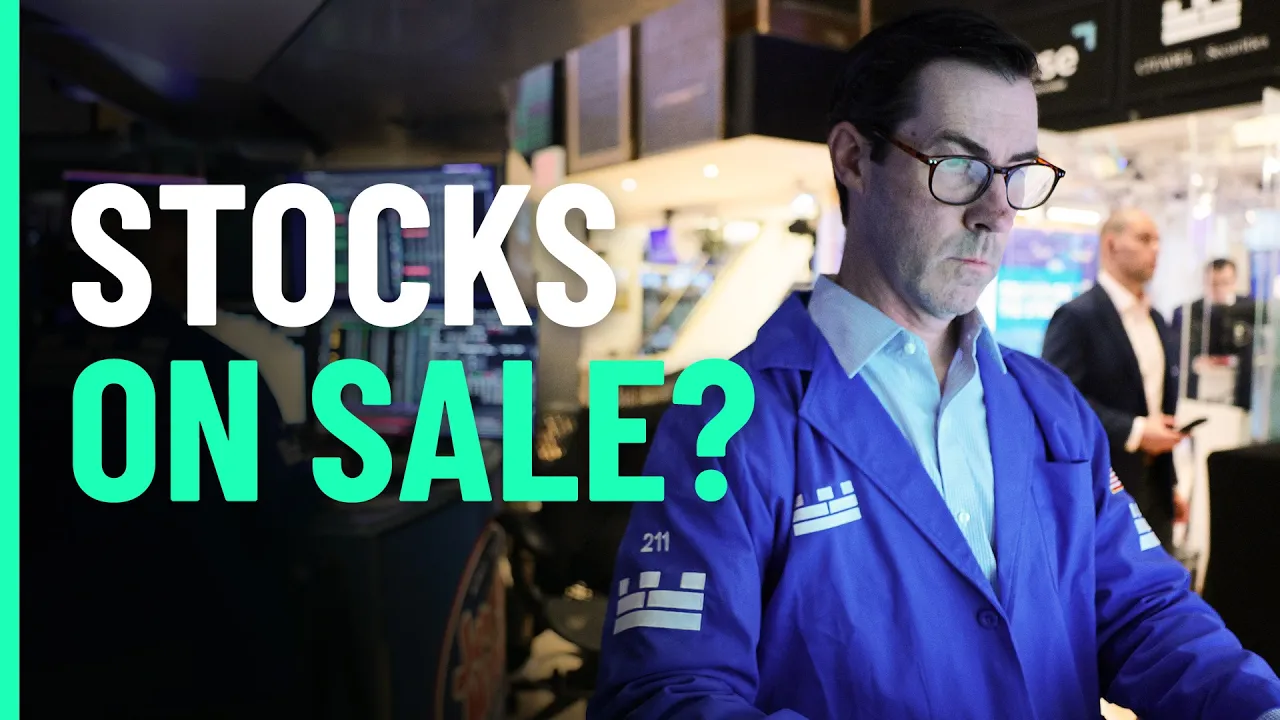
Joining me now, Phil Cardo, chief market strategist at mosaic. Phil, thanks so much for being here. Thank you for having me. So Phil I want to kick things off with a disclaimer. We are filming this on Wednesday ahead of tech earnings and the fed decision. So by the time our viewers are watching this we'll have a lot more information. So regardless of those headlines though, what's the investment story that's likely to matter long after the week is over? I think it's a period of volatility that you have this situation, regardless of what the fed does or does not do. And even tech earnings, we've seen company after company report exceptional earnings. Micron technology said really impressive earnings beat the stocks down quite a bit from as high. So you have this period of time right now. It's not unusual that July August September period have waves of volatility. And the reasons for it this time. But there's always risk. So I would expect investors to say this is your opportunity to film both fist with cash going to the market and say where is the stock that I've been wanting to buy today? It's it's something it's finally on sale. Regardless of the fed, the price of oil or even earnings. What are the quality images you want to own? I think it's becoming not quite yet, but becoming the opportunity to do just that. Okay so two part question here. Where do you get those fistfuls of cash. Do you have to sell some of your winners to get it. And then when do you know if a stock is on sale. Enough. If we're going to continue to see volatility. Yes. Do very good questions. I think you take the cash from where you have won, and I'm sure most of your viewers have one on one in video or Allen's here, which is all for bid, but it's a lot of terrible. I did a routine from the names that got us here to rotate to the names that I think are the next wave of leadership. So think about the the software that got us here. Think about the chipset guys here. Now I think it's much more about the the ancillary impact of AI, whether it's the cabling, the data centers, the power forward or other parts that would not only diversify your portfolio, which is always a good thing. And it also means you can go into a sector where I think we're going to get great growth. So that's where the cash should come from. And then the other part of the question, when I think about where we are from an impact standpoint to the next wave of this market and where and what the volatility is going to look like, and how, I would manage my portfolio here. I think sometimes we've forgotten that in every sell off there's opportunity. So looking for something that's been really punished for no good reason is a good place to start. I'll make it simple on you. Look for a name that was 15 to 20%. You're going to find them. Look at micron down almost 20% from its all time high. I'm not recommending it just yet. I think it's an excellent company of some other names. I'll talk to you about today, but I think you want to draw the line at 10% down and then say, is there something greater than that? Why? And if you find in most cases with these double digits, sometimes triple digit earnings growth, that's where you make your bet. But here's the issue. If we're seeing this rotation into other areas of the market, some of the hardest hit stocks are in tech. So does that mean that tech exposure overall should be less or should we should just be, you know, adding exposure to other tech stocks. I think you have exposure to other tech and tech related areas. So I don't want you out of tech, but think about what's coming, whether it's obviously the space for this incredible jump to start. And now it's been a bit of a disappointment, but I think it just takes time. With anthropic and OpenAI behind it, those are going to be very interesting to be a part of. But that aside, leave those crazy things aside after you mega IPO, was it switching from, say, The Metals of the world, which is still a good company but obviously struggled to. Google was put up an incredible number with it's still struggling to other areas to say. Today I want to talk to you about an energy company. And the reason why is it's AI related. You can almost are your everything is AI related. Right now we think about a Western Digital, another company I really like. When are companies that are putting up double time, double digit earnings growth, if not triple digit. And those are names that I think are still to benefit. So it's not to your out of tech, but be tech and tech related. Why? Because as we move up the stream from AI to creation to implementation, you want to win on implementation and less on creation right now. Okay, so Western Digital does fit the bill. It's down more than 25% this month, although still up over 150% year to date. What's the other AI company that you said you like? It's a it's an energy company. Now you guys think I'm crazy for calling it an AI company? It's called Mastec, but the company is going to post 170% earnings growth, get $20 billion back on why data centers. So that's why it's AI related. They're a multi-faceted energy company that's interesting in of itself, using different types of energy to to meet this demand we have for power. But primarily they're going to be a source of power for data centers. Why is it relevant? Because we need a lot more power. So I want to see your portfolio be paired one on one hand and Western Digital on the other hand. An energy company, while they're both going to be impacted by the growth of AI, they both are necessary components in the food chain. The supply chain of AI. Without them, you don't have a successful implementation of AI. That's my argument. I want to see you do really well with companies that have incredible earnings growth, but are necessary for the future growth of AI not to be the difference. Time for a quick break. Thanks to GoDaddy for sponsoring today's video. I spend a lot of time talking to people building businesses, so I wanted to see how easy it actually is to go from an idea to a working website using AI. So I decided to put GoDaddy AI builder to the test. Instead of writing code or starting with a template, you just describe what you want in plain English. I asked it to build a website for a financial newsletter with a place to publish market insights, feature video interviews, and grow an email list. It asked me a few questions about what exactly I wanted to build. Then within minutes, it turned that prompt into a working website. Then I refined it through conversation. I asked it to change the colors, rewrite the copy, reorganize the homepage, update the header, and even redesign the logo and an updated everything from those prompts. When you're ready to publish. Hosting security and a subdomain are included. Every site is also optimized for search engines like Google, and I answer engines from the start. If you're wondering, no I'm not actually launching a newsletter, but maybe I should stay tuned. Anyway, if you've had an idea sitting in your notes app because building a website sounded way too complicated, this makes it feel surprisingly approachable. Click the link in my description box or scan the QR code to start using GoDaddy AI builder with 50 free credits. Thanks again to daddy for sponsoring today's video! So AI is still very much the theme as you look ahead, but we have seen this pretty sharp selloff in tech. Do you look at that at all as a sign that the AI trade is starting to crack, or is it really just a reset before the next leg higher? I think it's a reset before the next leg higher. There's been some profit taking that's normal. Look I'm a big fan of small cap stocks. I think international offers a defensive play in your portfolio, but there's no denying when we have a 700 to $1 trillion spend this year on AI, that to some degree is inflationary. But a bigger picture is an impact with all the other companies that feed off that trough. So sure, we've had a little of a sell off. You've had these incredible years of of of explosive growth. Eventually there's some profit taking, especially at a time when the narrative is too they spend too much. It's my favorite phrase. Is the juice worth the squeeze? In other words, is all this spending going to really equate to something more powerful? And when you look at today's data of the 22,000 companies that are effectively using AI every day in an intense manner, they're adding people to the workforce, not detracting their productivity is up anywhere from 5 to 8%. The future of American productivity is in AI, so I think it's just an opportunity to pivot and be prepared for a multi-year period of growth in this sector, not to say explosive growth, not these ridiculous 20, 30, 40% returns. I think that's silly, but I do think a steady growth in your portfolio, not this is the only portion of it you want to be, not just in AI, but have it as a core component of your portfolio. We'll talk about the other portions of the portfolio in just a second, but just bringing it back to the Mag seven, obviously, we'll know a bit more, when the big tech names report four of them this year, you know, today and tomorrow. But. Have they peaked, do you think, or do you think that they will be part of the next like higher once we see this reset and profit taking play out? Was never a fan of putting them all in one broad brush because they are really different companies. But for example, if you're a $3 trillion Apple computer company, Apple company, Apple is a three in all the company almost $4 trillion today. If you think about that, to make it an $8 trillion firm is really hard. That's a lot of selling globally and domestically. So there's so many things that impact a company that's that size to make it bigger. There is a headwind, a ceiling on all of these things, whether it's a video veteran or Google and so on. Look at the antitrust suits that Google's fighting in Europe. So I don't think these names should be painted in one fell swoop. I think Google is probably the leader of them. All right. Now. Nvidia stocks has been really difficult to push higher, especially at a time when China is trying desperately to take them out of their supply chain. So I would say I'd rather see you have less mag seven and much more of the other stocks. But if you had to ask me which of the mag seven I like the best, I'll give you a Maggie. I'd say space X over all of them. I think the long term opportunity space is very fascinating, but I'd go differently and say if you had to force me to pick one, I think Google first and Apple second, and the rest are going to take some time to capitulate. Microsoft's an outlier, and that is something we use every single day. But again, a massive company that's going to get very hard to grow from here, not at a prolific growth rate above the market. Okay well space X fits the bill as well, down more than 30% in July. Trading around 112 right now. I heard you mentioned the small caps. I heard you mentioned international. Talk to me about the other portions of the portfolio. What areas outside of tech look most attractive to you right now? So to be provocative, I don't think the fed hikes rates. I may be wrong about this, but let's assume as we go forward in the next few months here, we don't get a fed rate hike. I mean, the only way that happens is a really extend, a significant increase in the conflict between Iran and Israel, the United States, so on where we see oil up somewhere around 120 to $140 a barrel for an extended period of time. Much of what I'm telling you today will change. And for that reason, you want some defense in your portfolio. Not the international small caps will represent defense. We could talk defense in a second, but assuming that doesn't happen, that's not my base case. Oil goes back to $7,075 a barrel. But once this resolution is once there's a resolution in play for Iran. But the reason why I like small caps, I think we're in a deflationary world, not inflationary. I think the k-shaped economy as well as technology, specifically AI, is deflationary long term, not inflationary. And why that's relevant. I think we do get back to a 2.5% inflation rate. But when you couple the productivity I does for small cap cuts, the lower borrowing rate somewhere over the next 12 to 18 months, I think it's a great opportunity when you see earnings growth in the small cap space between 30 to 50%. So that's why I really like it. I don't think the US consumer stressed the low end consumers a bit who spends in these places but nowhere, no, nothing of significance here. Our labor force is quite strong. Again, big, big win for small caps. I want to think about that area. I just think it's a great way to diversify your portfolio. Look at the returns this year, more than double the S&P. And international is going to have no choice but to rebuild their defense with $2 trillion over the next five years. So I think it asks for a dividend play and a relative solid growth play, especially when international stocks still traded about 30% discount to U.S. stocks. As you're thinking about adding small caps and international exposure to your portfolio, do you get that through having to stock pick or do you get that through index funds then that are a bit broader? It's a really good question. How many of your listeners, I don't want to make this alphabet soup. I absolutely prefer an index fund for those areas wide, because it's much harder to pick the winner and loser in small cap and international, especially small cap. Small cap is inefficient. What does that mean? More bankruptcies happen in small cap than than people realize more lack of success stories, and there are some big winners that push the indexes higher. And what happens is when a small cap stock, it's big enough, it gets pushed up to another index. So by being in it, by being in a index based actively managed ETF, I think it's a very smart way to win there. You don't have to try and decipher small cap earnings. It's much harder than large cap and international. The problem with international, why would use an actively managed ETF there as well is because we know international has been a boring place to be for the better part of the last ten years. Leaving last year side international is not going to win even this year. It's just tied with the S&P. So we're doing this based on a spending story and why I'd rather see you buy an ETF rather than a stock because the spending story hasn't developed yet. We don't know where the money's going to be spent. Exactly. What were some of you spent in the United States, some of it overseas? What happened with Ukraine? U.S. partnerships in defense? Where does that become an area where Europe will spend? So there's still some unknown. So the reality of the money being spent is why I like it. Not clear picture. How it's going to be spent is why you buy an ETF rather than individual companies. Okay, bringing it back to the broader market, you kicked things off by saying you expect a volatile period. So how should investors know if that volatility is normal and just kind of part of the process? We know the market can't go up forever. And when should they start to worry. Look we're still up about 8% on the year. So it's not like it's a bad year. It's still a pretty phenomenal year for the S&P 500. Any time we see a correction of 5% I want you to take a pause. The reason why there's 3 or 5% corrections in every single year this year you want a 10% just about every year. So that's that's the only time you have to really worried about a market selling washout is there's something unusual happen that's changing the market's momentum and created right now in oil pushing up higher because of the latest conflict with the fed sort of being a bit of a unusual place in that the fed chair saying one thing and there's some dissenting by the fed members. So that could create it a scenario where we had the fed raise rates and oil over $100 a barrel, that's going to cause a 10% correction instantly. That would be a really tough day. Remember, seasonality matters traditionally, or this is a pretty tough month. We're not quite there yet and September is even harder. So you have one seasonality. This time of year is always very volatile, as we take a hard look at the fourth quarter. And what's going to be the best one is in the fourth quarter. And then beyond that, I just think you have this problem right now where we've had great markets for many, many years. We still have strong earnings. Look, you have over 20% earnings growth for the S&P 500. This is incredible margin growth on the S&P 500. How much companies make if you run a company and you and you and you make $0.10 on the dollar, that's a really good year. Well guess what. We're talking $0.15 on the dollar. So you look at incredible earnings growth for the average company out there. Incredible. Just profit growth for companies out there. So in that kind of time period you rarely get corrections of 1,015%. So a 5% correction is a chance for you to reevaluate. Look where we are and look for those names like you've mentioned already great names that are down a lot. I don't think you worry so much about the broad market. Do you worry about what's that name you always wanted to buy is finally cheaper, like we open with. And that's where your focus, your attention. Okay. And over the next 6 to 12 months, as volatility aside, do you think this is a market that will be higher than where we are now? And that's an excellent question. So I don't know if you're going to like my answer. The return back to normal is something that I think folks out there be prepared for. You see folks, we've been living in a bit of an abnormal world for the past ten years in terms of the S&P, between 13 and 14% on average. I don't think that continues. And the reason why I don't do that continues is government spending is being called in domestically, internationally, we're not spending prolifically the way we did pandemic earnings growth, but quite strong has to help prices equal the amount companies earn. If you look at the PE, the return by the price to earnings ratio, we're finally starting to get back to somewhat normal earnings momentum. And that means probably something like 16 to 18 times earnings on the S&P. Not 22. So what does that mean. Probably average S&P 500 growth of 6 to 8% over the next 12 months, not 30. And I think that's where some folks get caught up on give me one caveat, one little caveat that the third year of the election cycle is usually the best year of the S&P 500 of the four year presidential cycle. And at a time when more than likely, the House and Senate will flip 1 or 2, maybe both. And it's not. A lot of things are going to change in the years after the midterm. The market likes that. So in a scenario where there's not a lot of change and we continue to get solid earnings growth, you could do a bit better 12 to 14% on the S&P next year. But I want to have the expectations of more of around eight. All right. So it might be a roller coaster. And we might get right back to where we are right now. I think this is a great place to pivot to our rapid fire game of this or that. Quick questions, quick answers, no hedging. Okay. This is your first time playing with this. Phil, are you ready? I can't wait, I'm excited. All right, here we go. Stocks by year end. Higher. Lower or flat? Flat. Second half. Optimistic or cautious? Cautious. Stay invested or raise cash. Stay invested. Pullbacks. Buy them or fear them. Buy them with both hands full of cash. Add risk or play defense for now. Defense market leadership broadening or tech comeback. Broadening tech sell off. Opportunity or warning. Sign opportunity. Semiconductors or software. Oh semiconductor. Software. A name you'd buy here. Salesforce. AI builders or beneficiaries? Builders. A builder that's a must own Nasdaq. A beneficiary that's a must own Western Digital. Small caps or large caps? Both at their website. Small cap Western Digital or Nvidia. Western digital. One sector you'd avoid in the second half of the year. Staples. One sector you'd buy. Discretionary. One stock everyone will wish they bought by year end. And Encino and C and oh. Finish this sentence. I would turn bearish on the market if. Oil goes above $120 a barrel. All right, we'll leave it there. Phil really appreciate you joining us. Thanks so much. It's a lot of fun a lot of fun. Thank you so much for having me I really appreciate it. That's Phil Van Keto of Mosaic. If you enjoyed this street talk check out our full interview with Liz Thomas. She says the S&P 500 has not peaked yet and shares the sectors to buy now.

Commentaires 0
Connectez-vous pour rejoindre la discussion.
Se connecterAucun commentaire pour l'instant. Soyez le premier à partager votre avis !