
- Rendement de la vidéo
- -2,81%
- Appels
- 3
- Achat / Vente
- 3 0
- Publié
Recommandations
L'entrée est le cours de clôture de l'actif à la date de publication. Le cours actuel est la dernière clôture enregistrée.
-
Entrée $373,51 03 août 2026Actuel $354,59 07 août 2026Résultat −$18,92
What was our big tech stock pick for 25, Ed? >> Google.
Contexte "What was our big tech stock pick for 25, Ed? >> Google. It was Alphabet and I think it was up 68%."
-
Entrée $284,02 03 août 2026Actuel $276,14 07 août 2026Résultat −$7,88
What was our big tech stock pick for 26? >> Amazon.
-
Entrée $590,24 03 août 2026Actuel $592,90 07 août 2026Résultat +$2,66
My prediction is that this is the bottom for Meta.
Transcription Complète
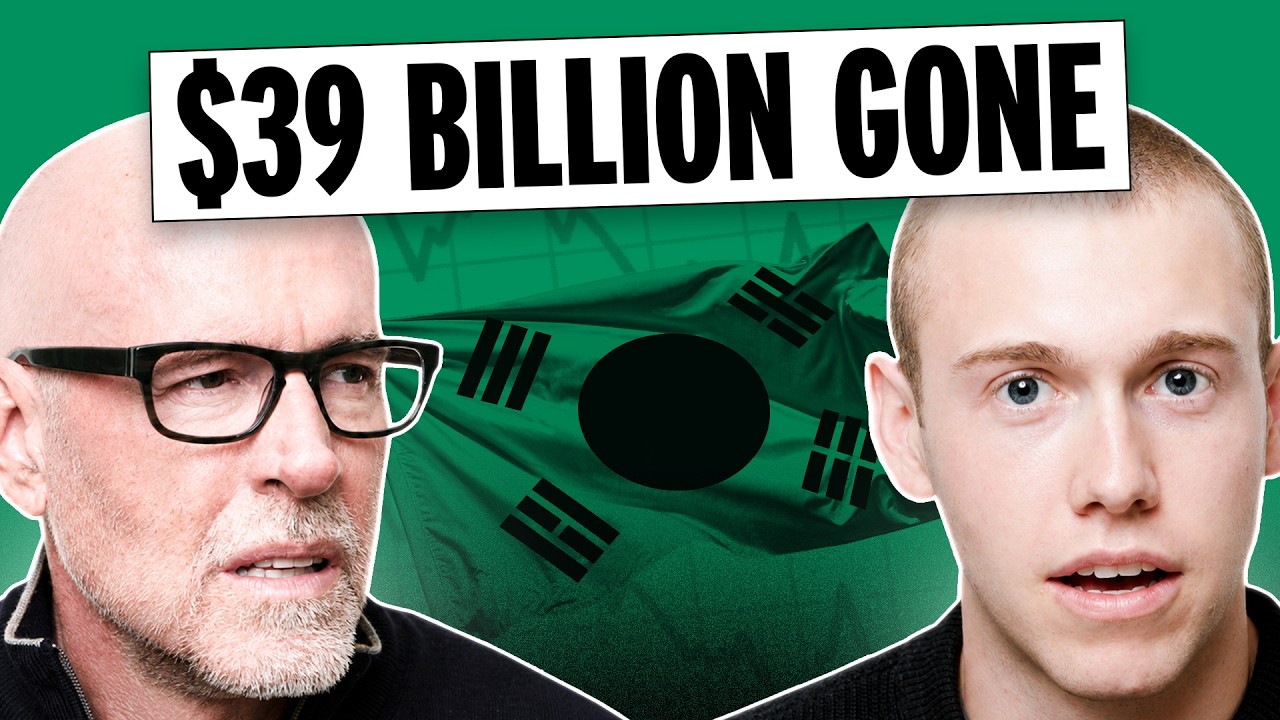
Those retail investors in South Korea have lost $ 39 billion so far. But I think probably most astounding is some of the imagery that we're seeing coming out of South Korea. If you go to the National Assembly building in Soul, South Korea right now, and you go on the sidewalk, you will find a pile of funeral reads on the street. >> Yeah, I saw that. with a sign that says abolish the single stock leveraged ETF because suddenly everyone is realizing that this stuff is extremely dangerous. Today's number 21.4 million. That's how many Americans use marijuana daily in 2025, making it the most frequently used substance above alcohol at 17.2 million. Ed, I do believe if the entire world got hi together for a couple hours, it would be a better place and then we'd have a global food shortage. That number blew me away. I mean, granted, >> it's a great number. >> I'm 90% of that, but still, what are these young people doing? >> It's kind of interesting to me. I I I feel like none of my friends are smoking weed or eating weed or however they're consuming weed. None of them are really doing it in my friend group. I'm not doing it either. Um I'm kind of surprised to see it, but I guess it's just the decline of alcohol. >> Are they drinking? Are they doing mushroom chocolates? Are they just just trying to pay off their their student loans from Princeton? >> A lot less substance use at this age. I would say like a few years ago there was a a kind of uptick in the mushroom chocolates and the psychedelics and all of that stuff, but it does seem like everyone's trying to kind of getting to that stage where they're getting their [ __ ] together and it's like, okay, do I really want to piss away, not just tonight, but the several days after with a with a hangover. Certainly ketamine was a was a thing uh back in the day. >> Ketamine back in the day. Wow. God, I feel old. I never I miss that. >> Yeah. Well, I'm say back in the day means 18 months ago. >> Last summer at a party in Mkos. Um, yeah. From the age of when I got out of UCLA, we spent we smoked a lot of pot in college. Um, but from like 22 to 30. I don't think I did much of anything. I was so I was just, you know, working all the time and I don't know, just didn't really drink or smoke or >> That is my criticism of myself right now. I think I need to be having more fun than I'm than I'm currently having. >> I've got much better criticisms than that. I I can help out there. I can make that seem like one of your better qualities. Um yeah, there's there's I had that kid Jack Reigns on the Propy office hours talking about and his whole thing is, you know, make sure you have some fun in your 20s. You don't want to give up your 20s. Um, but my sense is my sense is young people will always find time and a way to have fun. I'm not worried about that. >> Are you still a marijuana user? >> I do edibles uh probably once or twice a week when I'm having trouble sleeping, but I don't smoke. I don't really do I I'm I I'm taking down my drinking substantially cuz I do realize a 51-year-old liver cannot process the way it did at 21. Is the edible when you take the edible is it just to go to sleep or you having fun watching TV messing around like or is it literally just I'm going to take the edible and then I'm going to go to bed and fall asleep. >> For me quite frankly it just quiets the mind. um my mind kind of starts firing at about 11:00 p.m. And so if I want to if I feel especially not anxious but just awake, I'll take a small like 5 milligrams of inedible and this this brand I like called Wild Time that I get at this dispensary in Aspen, pear flavored, and it just kind of quiets my mind and makes it easier for me to sleep. But I don't I don't ever do I don't think I ever do drugs outside of the house. I just abuse drugs home alone as I'm playing video games. Um, >> it's a good way to do it. >> No, but I I mean occasionally I'll, you know, I I'll watch some stuff on, you know, I'll stream something or watch something on TV or, but mostly I just hang out with the dogs and wait till I feel tired enough to to get into bed cuz I find if you get into bed and you're not tired, I just sit there and stare at the ceiling for two or three hours. But I don't, you know, when we were younger, we would do things like like I'm going to see the Odyssey today. When I was a younger man, I'd do it on a Sunday and take an edible and go with a bunch of friends and then watch the Odyssey and whoa, dude, that scene was amazing. And then we'd all go to In-N-Out Burger. Um, but now it's mostly just a a sleep aid for me. It's interesting you say that. I I actually have the opposite experience with marijuana where my mind starts racing and I feel like I'm having all of these thoughts, all of these ideas. I'm having a lot of fun, but it's not a a sedated state. Maybe it's just a type. Um, I guess there's different var variations. Um, but yeah, it's it's it would not work as a sleeping aid for me, I don't think. But on a side note, I'm very excited for you to see The Odyssey, as I think I've mentioned to you, uh, one of the best movies I've seen in a long time. It is number two on my Nolan list behind Interstellar, but it it beats a lot of his films and it's the best adaptation of that story I've ever seen. So, I'm very excited for you. >> Yeah, I'm excited to see it. But more importantly, let's talk about the South Korean stock market. >> Let's do it. Lots to get into in the markets this week. There's been an enormous amount of volatility in the South Korean stock market. Just last week, the Cosby index fell 22%. And then days later, it rose 15%. One of the biggest culprits appears to be a new wave of leveraged ETFs. In late May, the country launched single stock leveraged ETFs tracking two of its biggest chip makers, SKHEX and Samsung. These funds use borrowed money to multiply the daily return of their target by two, three, or even five times. That means that the gains are amplified when the stocks rise. But so are the losses when they fall. The products quickly became popular with retail investors looking to capitalize on the AI boom. But last week, when AI sentiment briefly soured, the pressure quickly spread to South Korea's chip makers. SKH Highix reported weaker than expected earnings adding even more pressure. All told, Samsung plummeted 32% and SKH crashed 40% and the Cosby index fell into a bare market. So Scott, this is really just a fascinating story here. What happened? The South Korean stock market's down 44%. $2 trillion in market value has been wiped out practically overnight. And the two main reasons for that are, as I said, Samsung and SKHEX. These two chip companies, which now make up roughly half of the entire South Korean stock market. And those two have tanked in the past month. This stock market crash in South Korea right now. This is the worst they've ever seen since the financial crisis in 2008. So, you know, why is it down so much? The AI trade, as we've been talking about throughout the week, appears to be unwinding. It's not just Samsung and SKH Highix. as a lot of the other semiconductor names like Micron and AMD and TSMC chip stocks lost about $1 trillion in value in the past week. Not because of anything that happened with their earnings reports which were generally pretty good but the euphoria is beginning to lose steam because there are these concerns that we have discussed at length like the extreme debt issuance like the circular financing like the SPV mania and everyone's asking where's the ROI but in South Korea specifically there is this other killer ingredient that is crushing their market and that is the leveraged ETF specifically the single single stock leveraged ETF which has become the most popular financial instrument in South Korea by a mile. So that was great when things were good, now things are bad and it is total chaos. Scott, your reactions. >> It reminds me of that Charlie Monger statement where he said the way smart people go broke is or are ladies liquor and leverage which by the way are awesome. I had uh dinner with the podcaster and he was saying that he's been shorting the market or or thinking about shorting the market. I said, "Well, you're you're under the impression then that you can time the market." And as a hedge, I get it. Um and the if you're worried about the markets going down, unfortunately, I think hedging or buying buying puts, it's very expensive because other people have the same ideas. The more boring way if you think the markets are volatile or you want to lock in gains is one diversification but also lowering your leverage and to a certain extent lowering leverage costs something on the upside but you don't I don't know if you saw this hedge fund that was all the rage situational awareness is basically shutting down because of leverage and just buying AI stocks at 5 to1 leverage that's not a strategy or that's that's just a strategy until it isn't. I think of leverage like divorce in the sense that um if you get divorced, the only thing you know about it is it'll happen at exactly the wrong time to sell assets that you're going to have to typically you have to sell a home, you have to sell some stocks, you know, you start dividing [ __ ] and inevitably it happens at the worst time. The way you go broke and just have huge hits to your financial well-being is if you put it yourself in a position what what what you need to ask yourself is the following. At what point do I or the investments what is the likelihood at some point we might become forced sellers? Because the market senses you're a forced seller and gives you a shitty price. And I I mean the kind of the the worst call in history was when Jim Kramer probably thinking he was doing his viewers a favor said in the teeth of the crisis, "If you can't stand the volatility, you should think about selling your stocks." That was the worst piece of financial advice given in this millennium because basically the NASDAQ recovered within I think something like 14 or 17 months. But if you were levered, you had to sell. If you weren't levered, you just didn't look at your phone and and you know, sooner rather than later, the stocks recovered. Leverage on the way up is a ton of fun. It's ugly on the way down. And I my understanding is, talk about a gambling economy. 92% of investors in these products were retail. And so there were two brokerage accounts for every citizen in South Korea. Uh so it was never institutional risk, it was household risk. and that Goldman estimates that 3.4% of South Korea's adult population has received a margin call. I mean, that's insane when you think about it. So, the human cost here is so real that South Korea has rolled out a debt counseling hotline as part of its suicide prevention plan. Uh, that's a sentence that give should give us all pause. And so, the lesson here isn't new. It's just very expensive for you know for every generation to relearn this and that is leverage doesn't create risk it removes your margin for being wrong and I think this is you know you miss some upside it does cost you but I think once you get to any sort of asset base one one means of of protecting yourself we keep talking about diversification but it's a good idea to game theory out and I and you can use AI for this. Put in all your assets, what your mortgage is on them, what you have what you have pledged against them or you've taken money out on margin, whatever it is, whatever qualifies as leverage. What are the scenarios where you might be a force seller and you want to give up some upside if and when the market draws down as it always does through cycles, you can ride it out. Your thoughts? Well, the Leopold Dash and Brener, this situational awareness thing is really interesting because for those that don't know, this is this hedge fund that was started by this former Open AI employee um who wrote this paper called situational awareness that was all about how the AI revolution is going to change the world and all of these things that we should be thinking about. it went super viral and like many uh upand cominging uh asset managers today I it happened because he went viral and then he kind of launched his hedge fund career off of that and the fund performed unbelievably well. Uh I mean just looking at this year it was from June it was up 439% on the year and basically all he was doing was investing in AI stocks and chip stocks all of the names that have just gone absolutely crazy over the past few months. By the way side note his wife is the chief of staff at Anthropic. So a lot of people have been saying like oh my god this guy's a genius. How does he know when to buy all these stocks? how does he know when things change? And the answer is probably like he's literally married to one of the most inside insiders uh in Silicon Valley. But last week we learn a truth bomb which is that it turns out he was 5x levered up. He was then margin called and then he decided well not decided he was forced to liquidate his entire public equity portfolio and supposedly he's also selling his stake in Anthropic too. And it is remarkable because if you've been online if you've been on Twitter and you're kind of plugged into the investing community this guy was considered AI Jesus. He was like the savant of our time. He could predict the future. He knew everything that was going to happen. And literally overnight, the whole thing has collapsed. And what is it? It's a story of leverage once again. He was levering up into the hottest stocks, into the hottest momentum trades in the world. Looked really smart until suddenly he didn't. And it is just so fascinating because we have seen this story over and over and over again. We saw it with Michael Sailor and the Micro Strategy play. We saw it with Kathy Wood and Arc Invest yoloing and levering up into Tesla. We saw it with Bill Hang. We saw it with long-term capital management. And it's just it's just hilarious to me how we always kind of fall prey to the same game. We see these gigantic numbers and then we assume these people are geniuses. In reality, they're just taking on a lot of leverage. By the way, interesting side note, he sold his entire position, all of his longs, like SK Hinrix, by the way. All of his shorts as well, like Adobe. He sold them all to a single buyer. Do you have any guesses at who that buyer was? >> I think I read it was Citadel Ken Griffin. No, >> that's right. Ken Griffin. >> Yeah. And by the way, Ken's going to make a lot of money to be if you could find a fund that said we're buyers on of nothing but assets from force sellers that those are the I think the greatest investment trade was when Bill Aman there was a family that owned all of these malls. I think it was called GS GCC. Anyways, they General Growth Properties GGP and they got caught in a a down cycle. I think it was '08, and basically they couldn't make their debt payments. He came in and basically squeezed them and bumped them into bankrupt bankruptcy. If they had been able to hold on for literally like 3 months longer, they would have been fine. And he got something like a 35,000% return on it. It just insane amount return. And that's again, it's really easy in good times to mistake leverage for IQ. I was just with my I was just talking to my tax advisor and she said, "Uh, we should put some leverage on your real estate." I'm you at my age, I'm now just I've been I've had my eyebrows burned off and my fingers like not burned, but chopped off a couple times in the market. So, I don't like any leverage at all. And she convinced me that a little bit of leverage is actually healthy and strategic. So again it's like you know it's like I don't know what the term is prescription drugs as taken as prescribed can be very good for you too too much of anything is going to kill you know so I I I think leverage is something you need to understand you need to understand I was thinking that um like what could we do at the University of California like how do the curriculum needs to need need to change and I was thinking going back into high school how does it change and I take a course on adulting that spent a decent amount of time talking about leverage whether it's the mortgage on your house what margin is credit cards are essentially leverage on your on your lifestyle or or taking leverage out but understanding the concept and what is the healthy zone of leverage very few people can buy a home for cash I'm in a position of privilege so what is a healthy amount of leverage >> yeah and I think the South Korean stock market story is the perfect example have leverage gone wrong. Um, and I think it's a good warning against the downsides because it looked like I mean a lot of people in South Korea, a lot of retail investors probably convinced themselves that they were geniuses. They probably convinced themselves that they were the new Leopold Ashen Brener. And we saw the inflows into those leveraged ETFs, these single stock leveraged ETFs, which is basically just a a levered up version of SKH Highix and Samsung. And that's basically it because those two stocks are the only stocks that mattered in the market. The the assets under management of those ETFs tripled in one month in South Korea. And I think as you mentioned 92% of the the investors in those ETFs were retail investors. Now we look at the damage. Those retail investors in South Korea have lost $39 billion so far. You mentioned the the craziest stat I think which is that more than 3% of the adult population has now received a margin call in South Korea. But I think probably most astounding is some of the imagery that we're seeing coming out of South Korea. If you go to the National Assembly building in Soul, South Korea right now, and you go on the sidewalk, you will find a pile of funeral wreaths on the street. >> Yeah, I saw that. with a sign that says abolish the single stock leveraged ETF because suddenly everyone is realizing that this stuff is extremely dangerous. There are literally thousands of people who have lost their life savings because they convinced themselves that this was the way to do it. This is how they were going to get rich. I mean, if you look at the amount of of people in South Korea that are in the red on those two names on SKH Heinix and on Samsung, it comes out to around 70%. That is according to uh the the Korean uh stock market regulators. The response from from regulation from the people in charge of of uh South Korea's version of the SEC is they're going to just stop allowing these new listings of the single stock leverage ETF. they realized, wow, this was probably a bad idea. And you listen to some of the quotes that are coming out of South Korea right now. One of the uh parliament members said that the country has turned into a casino. Another said that the launch of the leverage ETF was a quote man-made disaster. The chief of the FSS, which is one of their securities regulators, said quote, "I should have laid down to protest the launch of the leverage ETF by any means necessary." So, they're suddenly realizing, "Oh my god, why did we allow this to happen? Why did we encourage this? Why didn't we put out more protections, put out more regulations?" All of the things that I think you and I have been advocating for in America, but which we kind of get a lot of [ __ ] for because everyone's like, you know, you're you're patronizing investors, like let people do whatever they want to do. We're now seeing the downside. We're now seeing that people are taking to the streets and saying, "Why didn't you ban this? Why didn't you stop me from myself?" And it's a really good warning story for uh for America where we're seeing trends brewing in the same direction. And South Korea is an example of where it went wrong. >> Yeah. It's and I'm curious if you agree with this, but there's a balance between infantilizing people and also protecting them, right? A government has a paternal or a maternal feel to it. We don't, you know, we make it illegal for people to take, you know, you can kill yourself by eating ice cream or going to Oregon for assisted suicide, but we put a lot of regulation and friction in between those things, saying that, okay, on certain levels, we do know better than you. And this to me feels like an example where we know what's going to happen here. We get we get regulated backwards. We wait for retail investors to absorb the downside of financial engineering which likely had really juicy fees for the middleware. We then apologize and then we regulate it. And the apology should come before these products launch, priced into the approval process with friction that says, "Okay, retail investors, and this isn't fantalizing them, should probably not be have access to products with 5x leverage." That that just presents an existential risk. and our population probably doesn't have the maturity, the experience, or the knowledge to realize you're putting nuclear weapons in their hands that are seem to be endorsed by ads on CNBC South Korea. So it feels to me like this probably is there probably is regulation that's required here that says okay at some point when you're putting in place products that are subject to a cyclical downturn which is you know happens in cycles that would wipe out the household wealth potentially of millions of households. We're not going to let them do it. Just as we wouldn't allow certain products, the availability of certain products that would that are dangerous. I mean, these products are dangerous. And at a minimum, you you know, I don't think warning labels are enough here. If you're if you're selling on the Cosby and by major brokerages that have ad campaigns of 5 to one lever product, it's not if it's going to blow up, it's when it's going to blow up. So good regulation is prophylactic. Um uh so anyway, I'm I'm curious to get your take because at the same time what you're doing is saying institutional investors have access to more products and more leverage than retail investors. Uh but at the same time, you know, there is a need for protection, if you will. Do you think it's from your generation's viewpoint, do you think it's buyer beware? Don't infantilize me. I'm comfortable taking my own risk. you just want to sequester greater returns to yourself with access for wealthy people and corporations for access to a product universe that we don't have access to or do you think the government has a role here in kind of being more paternal and saying no we're not going to give you access to these products I think it's a balance I think that you need to there are things that you can do to protect investors from themselves you can limit the amount of leverage that they can actually take on you can increase the minimum deposit requirements there are things that you can do um which we used to do in America but increasingly seem to not be interested in doing because we've swung so far into this infantilization argument which I think has gone way out of control but also the education as you say the warning label um we don't have nearly enough of that and part of the problem is that there there is a coordinated campaign by people who make money selling these products and executing the trades on these products to blur the lines as to what is leverage and what is gambling and what is risky and what isn't. And I think what we're seeing is a proliferation of a lot of these financial instruments that are kind of just taking these weird side routes around the law and around regulations. The perfect example would be these perpetual futures which have become the most popular form of trading cryptocurrencies today. They made up 70% of all Bitcoin trading volume last year. And it's basically a way to lever up by like like a hundred times or even in some cases a thousand times on crypto with no actual expiration date. It's basically just a bet on whether the price is going to go up or down tomorrow. Um and and it's it's wiped out a lot of investors. Again, these are the stories that you don't hear because everyone brags when they're up a,000%. they never brag when they're down and they lose all of their investments. Um, but it's it's things like that. It's like the perpetual futures. It's the single stock levid ETF. It's the the DeFi yield farming. It's all of these products that we are presenting to young people as if they are a legitimate financial product that is very complex and sophisticated. And if you can figure out how to do it, then that means that you're smart. And a lot of people get lured into this stuff. And so I think we could be doing a way better job of describing to people what it really is. Another example would be buy now pay later. It's a little different, but what we had when that industry exploded was you had these companies going around and saying, "Hey, this isn't credit. We know that you guys don't like credit cards. We know that you guys don't like debt. This is a new thing where you buy it now and then you just separate the payment up into little increments and you pay it later." And this was the story that they told us. They said that we were the debit generation. We don't like credit, so we'd prefer to do buy now pay later, which is literally the definition of credit. And eventually our regulators kind of stepped up. But honestly, it was a little bit too late. And they said, you need to be be clear with people about what your product actually is. It is credit. It is debt. It is leverage. It is not a form of debit. It is not just taking it out uh of your checking account. So it's issues like that I think we need to be a lot more serious about making sure that people know exactly what they are buying, what the risks actually are. We could actually put these warning labels. Another example would be events contracts in the prediction markets. Are we going to step up and start explaining to people what these in instruments actually are? But we've decided no, we don't want to do that or at least this SEC has decided they don't want to do that. So, I think there's a lot of work that that is to be done. Um, I have another angle on this South Korea story which I think is very interesting, but before I do that, I'll just get your response. >> I'm I agree with everything you've said. I'm I'm Don't tease us. Don't be Rachel Madding me. >> Well, when you think about why has this happened? Why are all these young people flinging their money into these leveraged ETFs and then praying that the stock goes to the moon and then being upset when it crashes to the ground? Uh if you look at South Korea on a demographic basis, there are few nations in the world that are experiencing a loneliness crisis more severe than South Korea. Uh you look at their marriage rates which have declined 40% in the past decade. You look at the fertility rate which hit8 last year. It's the only OECD nation with a fertility rate below one. You look at what the local governments are doing where they're actually paying people to get married. Now, I don't think it's a coincidence that they're suffering the same loneliness crisis that we're starting to see in America and also seeing the same sense of financial nihilism that is becoming pervasive among young people such that they are levering up on these names. uh and praying and hoping that that it'll take them into a state of financial security and success. Um I think the two are definitely linked and I think South Korea is ground zero for the problems that we're about to see in America. >> I think that's really insightful and I had connected those dots and it seems pretty obvious the way you lay it out that that's got something to do with it because 3% of Americans I don't know what is in South Korea but 3% of Americans have a gambling problem. It's 10% of young men. And one of the most beneficial things for a young man, if not the most beneficial thing, is a relationship. And one of the most beneficial things for a young man in a relationship is quite frankly guard rails. And that is what the [ __ ] are you doing? I thought we were saving for a house, right? Or no, you know, don't take these kinds of risks with our money. And sometimes it's the opposite, right? uh not as often, but people check each other when they're in groups. There's not only a wisdom of groups, there's a wisdom of relationships where you check each other. And the fact that fewer and fewer young people are connecting and it sounds like the trends are also if you're expecting a child, your your your risk profile goes down. You think, well, maybe I shouldn't be in this 5 to1 lever levered fund because I've got to, you know, I've got to I've got to get a rent a place with a second bedroom. So there's definitely something. Also, relationships are hard, but they give you a lot of dopa. They give you a lot of upside. They keep you busy. And when you're lonely and looking for a dopa hit, I mean, and I'm addicted to this when I used to buy options or sell calls, it's fun. And you know, the more time you have and the or you know, or the less time you're spending on kids or just focusing on work. And so what do you have? Fewer guardrails, a greater risk profile, fewer people to keep you in check, and quite frankly, you're probably just bored and looking for some entertainment value. But I think that's a really insightful comment. I hadn't connected those dots. >> Yeah. And hoping that this is the way that you're going to get rich and then maybe if you get rich, then that will mean you get a relationship. I mean if we just look at the relationship inequality in South Korea specifically only 8% of the men in the bottom desile of earners in South Korea are in a relationship currently and in the top desile it's around four times higher. So there is clearly a connection in South Korea and probably just in the world between financial success and romantic success. Um, and I think that a lot of young people in South Korea, similar to what we're seeing in America, they think, "I'm not going to be able to afford a home. I'm not going to be able to afford afford a life. I can't get to where I want to be by just continuing to work the current job I'm in and continuing to do the the wage treadmill." And so, I need to figure out a way to get 2,000 3,000 4,000% returns. And this is my ticket to doing it. And for maybe like a handful of people it works. And then for the rest of them, we're seeing this in the statistics. For the majority of the people who take that risk, it it it ends up being literally ruinous. And I think nothing tells that story more than the funeral re that we're seeing outside the National Assembly building in Seoul. Just one final point. This is rising in America. You look at US leveraged ETFs. They've jumped from $120 billion dollars in AUM in April to more than $200 billion today. It's up nearly 70% in just a few months. Uh the number of US leverage ETFs has more than doubled since 2025. And more than half of them are single stock ETFs. This is the exact same thing that got South Korea into trouble. So it'll be really interesting to see how this plays out in the US. I think the same trend is happening, but it's almost like we're maybe a couple of months behind South Korea, or at least we're less concentrated than South Korea is because of how dependent their stock market is on those two names in particular, but the same trends are beginning to happen. Uh, and I think I think it can only end badly. >> Leverage is risk. It's not a strategy. And I agree with you that that I mean what you basically said, the crossway connecting the dots around Cosby is a lot of young men think that leverage is going to get them laid and that is they're a story as old of time only 40% of men throughout history have reproduced 80% of women and men don't have the right to reproduce and women aren't obligated to service men but the reality is a minority of men have had the opportunity to find a mate and to reproduce the greatest innovation in history which is not GPS or AI but the American middle class gave a a lot more men agency to build a home and quite frankly attract mates. That is a uniquely western postworld war II phenomena. 75% of men in the west have had the opportunity to reproduce. And when men feel as if they don't have the and unfortunately because our society has become so much about the idolatry of money and we've created a system with weaker social safety nets, you're kind of unviable in the eyes of a potential mate. I mean essentially relationships have become a luxury item and there's we're regressing to the law of the jungle where the world is basically Porsche polygamy where a small number of men through luck or hard work or inheritance get all of the mating opportunities and from 45 to present in the west we gave a lot more people the opportunity to have mating opportunities by reinvesting in the middle class and when we have this sort of income inequality and the general public decides we'd rather have a super class of billionaires and giving more people an opportunity to be millionaires. You end up with returning to the way the world has been through the majority of history and that is a small number of men have all of the mating opportunities. But the problem is those types of societies collapse on themselves because those men get very angry and upset and a strong man takes advantage of that anger and invents wars or starts blaming people or saying the enemy is within. So this is I like this framing, but this is a story as old as time. And again, we don't I don't think we fully appreciate that the middle class is this incredible innovation that requires investment. And it's not a self occurring or it's not a self-healing organism that's a natural part of history. A middle class and and the majority of people having the opportunity to find someone to love and have children with, that's the anomaly. That's the exception to history. And by the way, it's [ __ ] wonderful and a huge achievement on our society and it's worth investing in. We'll be right back after the break. And if you're enjoying the show so far, send it to a friend and please follow us on YouTube and Spotify and wherever you get your podcasts. Support for the show comes from Apple News Plus. Apple News Plus has everything you're into all in one place. Over 500 publications covering the topics that matter most to you. Thousands of recipes from celebrated food publications around the world. Local news from all 50 states. Sports coverage from across the globe. Audio stories you can take anywhere. And daily puzzles exclusive to Apple News Plus. All of it curated just for you. New subscribers. Try it free for 1 month at news.apple/learn. Terms apply. Support for the show comes from Delete Me. Nowadays, it's so easy for scammers, stalkers, and hackers to try and harvest your data. But it's important to remember there are always ways to protect yourself. That starts with protecting your data, and Delete Me can help you do just that. Delete Me does all the hard work to wipe your personal information from data brokers websites. It was named the top pick for data removal services by Wire Cutter. Our producer, Jennifer Sanchez, has tried Delete Me, and she had very nice things to say about it. Also, I've used it. I enlisted and didn't even know they were a sponsor and I decided I should probably create some digital hygiene across the ecosystem. Take control of your data and keep your private life private by signing up for Delete Me now at a special discount for our listeners. Get 20% off your DeleteMe plan when you go to joindeme.com/propg and use promo code propg at checkout. The only way to get 20% off is to go to joindeleteme.com/provg and enter code propg at checkout. That's joined me.com/profg codeprofg. Support for the show comes from indeed. Imagine this. Your business is on fire. Deadlines are slipping. Meetings are going over time and your entire team is heading to Burning Man. That might be the time you finally realize that you need Indeed sponsored jobs to save the day. People are finding quality hires on Indeed right now. And in the minute that this ad is running, companies exactly like yours have made 27 hires on Indeed, according to Indeed data worldwide, you can join the 3.3 million employers worldwide that use Indeed to connect with quality talent that fits their needs. Spend less time searching and more time actually interviewing candidates who check all your boxes. Less stress, less time, more results. When you need the right person to cut through the chaos, this is a job for Indeed sponsored jobs. And listeners of this show will get a $75 sponsored job credit to help get your job the premium status it deserves at indeed.com/mpodcast. Just go to indeed.com/mpodcast right now and support our show by saying you heard about Indeed on this podcast. Indeed.com/mpodcast. Terms and conditions apply. Need to hire. This is a job for Indeed sponsored jobs. We're back with profit markets. Big tech reported earnings last week. We got earnings from Microsoft, Amazon, Meta, and Apple. The winners were Microsoft and Amazon. The losers were Apple and Meta. Meta shares plunged 8% after earnings. Apple shares plunged 7%. Meanwhile, Microsoft and Amazon were up 16% and 14% respectively. Scott, I'm going to jump right into these earnings because there is so much to get into here. Um, and I think we should probably start with the winners. Headline numbers on Microsoft revenue really strong, up 18%, net income up 31%. They beat on earnings per share. You know, that's good. But I think the numbers that actually matter are the AI numbers because in this market AI is the only thing people care about. So their cloud revenue uh was up 43%. Which is really strong. That's the money that they're making selling compute. Their productivity and business processes market and that houses their office 365 product and also Microsoft C-Pilot. This is the segment that was supposed to get crushed by AI. Uh that is up 14%. So some strong growth there. They also reached over 30 million paid seats on Microsoft Copilot. There is some nuance there that we could get into, but free cash flow was down. Uh not negative, but down. It fell 23%. Uh it's pretty good compared to Google's free cash flow, which of course turned uh negative and also compared to Amazon, which which we'll get into, which also turned negative. But the the market was really excited about this and the stock has been rewarded pretty pretty massively. Your reactions to Microsoft's earnings, Scott? Look, it was it was nothing short of staggering. And I think I got to think the reaction to the markets around Microsoft and Amazon make them make for each of them some of their best single day gains in history. Um, and they're both sort of proved the thesis that if you can point to actual revenue from AI, co-pilot's 30 million paid seeds, AWS growing 37% its fastest clip in 5 years, the market rewards you up 16 and 14%. And meta sort of is the opposite. Uh and that is if you spend billions on AI with no clear monetization story and Wall Street stops giving you the benefit of the doubt, the market is is starting to stop giving you the benefit of the doubt is the way I would put it. Meta's free cash flow fell 91% down to 784 million with zero explanation or visibility into what they expect the payoff to be. It's more it feel it's beginning to feel people are starting to say okay is this investment or is it faith-based spending and the the real thing the tell buried in the Amazon numbers that I don't think the market has digested yet is that 53 billion of their 63 billion in net income came from their anthropic stake and if you strip that out the beat is mostly marktomarket gain on private investment not operating performance And also a similar story at Alphabet. 87% of the combined Amazon Alphabet net income uh trace back to anthropic and SpaceX gains. So it's really weird. These companies are beginning to trade like less on earnings and more the people are starting to try and price their VC portfolio marks. The Apple earnings were really interesting. The problem is in demand. iPhone sales are up 22%. I just think that's staggering. I wouldn't have guessed that because I thought the latest iteration was just sort of meh. And that's a June quarter record, right? It's a record increase in iPhone sales. The the issue they're having is supply. The quoteunquote Tim Cook's hundred-year flood line uh on memory pricing is Apple for the first time in a decade not fully controlling its own cost structure. You know, supply chain has always been in my view their competitive advantage. And that's that sort of new territory for a company whose supply chain command gave them them gave gave people the sense that they were the controlling feature in the supply chain and they aren't able to control the memory prices. And then where I'll wrap up here, the real story under the story here where you'll see articles next week is the markets able to absorb these numbers is is capex. Alphabet spending up to 205 billion, Amazon 220, Meta 145 billion, and Apple's spending 11 billion. And so I think one of the reasons Apple's had a a pretty decent runup is that everyone else is betting the company on AI infrastructure and Apple's betting the company u on not needing to which I actually think is the right bet and we'll find you know we'll find out in 18 months who was right but I was sort of blown away by I wasn't I wasn't I wasn't surprised on their you know some of the numbers here. I was surprised. I was blown away by the market's response, especially to Amazon and Microsoft. What are your thoughts Ed? >> I think the capex story is definitely one of those stories underneath the stories. Um, and I think that's something to keep track of. In the case of Microsoft, their capex was unchanged for uh calendar year 2026, which I think the marketers were pretty happy about. And then as it relates to the next 12 months, they basically just said that the capex would go up. And that's all they said. They didn't really give a dollar amount. Uh which is Gillura said when he came on the show last week was kind of them sort of playing it safe. They're saying yes, the AI thing. We're still investing in it, but we're not investing in it like crazy. And I think that was something that the market responded to quite well. I would just say on the AI ROI question because this is the big question like how are you going to monetize your your AI investments. It's clear that that Microsoft is doing it through their cloud business selling the compute to AI companies. It's clear that Amazon is doing that too. The trouble is how much of that is going to two companies specifically open AI uh and anthropic and the answer is we don't know because they won't tell us uh what what they have told us what Microsoft told us is that they they told us something about their remaining performance obligations which is their future revenue coming down the pipeline in January they told us that half of those remaining performance obligations were tied to OpenAI This quarter they told us that the 82% growth they were registering in their remaining performance obligations would have been 25% if it weren't for OpenAI. So they're telling us in so many words that they are pretty dependent on Open AI. But we're still not getting a clear sense of exactly how dependent they are. And I think if we really wanted to understand these businesses, then the big tech companies would tell us this is how much of our revenue in this quarter was derived from two companies, specifically OpenAI Anthropic. Maybe we'd throw SpaceX in there, too. And the reality is that Microsoft is the one that's been given us the most disclosure on this front. Amazon has told us nothing about it. Google has told us basically nothing as well. uh we really don't know how much they are reliant on these these two companies or these three companies which as we have said before those are companies that are losing tons of money and it's not really clear how sustainable this business model actually is which brings me to something you mentioned which I think is the realest story of the stories which is the fact that in the case of Amazon specifically 85% of their net income was derived from their stake in private companies specifically Anthropic and now open AAI uh and in the case of Google that number was 87% but for Anthropic and SpaceX and so the paper gains that these companies are registering in their private AI investments and who knows how they're valuing these companies are now being funneled into the bottom line of their earnings. And the real problem is when you look at the price to earnings multiples of these companies because you look at Amazon which is on a tear right now. The stock's up 20% year to date. Uh Google uh is up around 11% year to date and yet their multiples have come crashing down. So Amazon's PE multiple right now is 19 times earnings. Last year it was 32. And so you look at that valuation multiple and you think, "Oh my gosh, Amazon is really cheap right now." And I'm sure that a lot of investors have looked at that multiple and gone, "Wow, now's a great time to buy Amazon. Look how cheap the valuation is." Look at the S&P, which is on average trading around 25 times earnings. Amazon is at 19. What that number isn't telling you is the extent to which the private investment in anthropic is juicing the net income which literally g like tripled last quarter because of that investment in anthropic and the same goes for Google as well. So, this is the new problem that we're really starting to see based on these reports here, which is that we now need to create a new price to earnings multiple um that reflects the real multiple of these companies. We now need to create like a PE that subtracts out their private investments in anthropic and open AI and SpaceX because those private investments are distorting the most fundamental valuation metric that exists in markets and that likely many investors are basing their portfolio strategies around. So we're getting some very murky territory here. By the way, we did the analysis. If you took out those investments, Amazon's real PE would be 30 times earnings and Google's would be 31 times earnings. So, they're actually a lot more expensive right now than the valuations would imply or the multiples would imply. But this gets to what we've been talking about with the SPVS and the trouble with the forward earnings where Open AI just comes out with these contracts and says this is how much we're going to make and spend over the next several years. Point being, traditional metrics have been compromised by AI and it is becoming increasingly difficult to get an actual understanding of what these companies are worth. >> Yeah. You're just saying I think that analysts have an obligation and good analysts will do this to have a kind of venture adjusted earnings, right? >> And those earnings do that money does flow back to shareholders, but it's a sugar high. It's not anything structural about the business. Maybe they would argue well actually given our position in the marketplace, we're going to have future opportunities to make these types of investments. But >> right, >> that is kind of empty calories from a street standpoint cuz it's a it's it's great for the time being, but we can't we can't count on that money. The the lessons I take away from this are the following. So I have an investment in an AI adoption company called Section. And Section works with big corporations on how to upskill their employees for for AI competence, so to speak. And one of the things, one of the learnings from them is that Microsoft's co-pilot, their AI offering um is not considered one of the frontier models. It's not considered one of the better models. At the same time, uh Microsoft 365 co-pilot has over 30 million paid seats, meaning that Microsoft has one of the largest revenue producing AI products in all of tech. And that is I think the business lesson here is okay. Having the frontier model, the best model is important. What's profound is your ability to get mass adoption. And I I just see the narrative right now from Microsoft salespeople in the field. Well, we're already in the enterprise. You've already checked us for bugs and security risks from AI. Yeah, maybe we're not quite as good, but you know us. You love us. We've got billing set up. It integrates into the rest of your Microsoft workflow. This is just plug. And by the way, we're Microsoft. We're scared. We're a public company. We're the least likely ones to have a hugging bear like whatever it was AI jailbreak within your company from our AI. Do you really want to trust all these little AI companies that might have better a better product, but we're Microsoft? And it's I mean it's just these companies have such an advantage with their installed base. Microsoft probably has the most consistent recurring revenue business in the world. Something like 97% of the global 10,000 corporations have a monthly recurring revenue relationship with Microsoft. And and then the other takeaway for me was the technology will outlast these valuations. uh you know the internet outlasted outlasted the crash of 2000 and I think that AI will outlast what I think is going to be a crash in these valuations. The place I think valuations will will actually increase as it relates to AI are two places. Autonomous I'm in LA. I've been taking Whimos. I'm just fascinated. I think we're hitting a tipping point where autonomous autonomous vehicles or autonomous ride hailing is about to go parabolic and and Alphabet has 5,000 operational autonomous vehicles. I think Tesla has 24 and the amount of data they're collecting, the trust. AI as it relates to autonomous is a big winner. And then the second place is AI as it relates to industrialized robots. And that's where I think Amazon is going to really uh really register incredible benefits. And then the other what I'll call AI bet that's going to pay off is not betting. And that is I think Apple's taking the same approach to AI they took to search. And that is they're saying, "Okay, you guys fight it out and enter into this capital war and we're just going to wait in the background and figure out a way to charge one of you an enormous licensing fee for access to our billion consumers. But never missing an opportunity to pat ourselves on the back." What was our big tech stock pick for 25, Ed? >> Google. It was Alphabet and I think it was up 68%. It was the best performer in big tech. What was our big tech stock pick for 26? >> Amazon. >> So, let's just review year-to- date stock movement. Meta is off 15%. Microsoft's down 5%. Alphabet's up 12. Apple's up 12 and survey says Amazon year-to date is up 15%. It's the number one performer as of this morning in big tech. This is all I find it all super interesting. And then the final takeaway is the following. For all of the [ __ ] posting, not you, but I do about big tech and its harms, these companies are so incredibly well-run. Their ability to balance what what to let flow to the bottom line in return to shareholders in the form of earnings or stock buybacks with what is the right level of forward-leaning investment based on the ecosystem and the market and what what what the what the markets will register or not register. these companies are just so incredibly well-run. >> But I think that I think the concern is that that's not true anymore. I mean, Google's free cash flow is negative. Amazon's free cash flow this quarter is negative. Meta is spending tens of billions of dollars on data center infrastructure. And I mean, you look at why did the stock plummet, it's because Mark Zuckerberg did not have an answer as to how he's going to generate a return on those investments. I mean, we we saw the reporting about how he's going to build a cloud business and he was asked point blank. He didn't discuss the cloud business. He didn't address the reports about how Meta was in talks to sell its compute to Anthropic. He he simply avoided the question and that's exactly why the stock tanked. Now I think that that there's an open question as to whether these guys are geniuses when it comes to capex and they are geniuses when it comes to balance managing the balance sheet. Um but that's certainly not a given at this point and it's certainly the thing that markets are trying to digest and trying to ascertain. I mean, Zuckerberg has a okay track record. Like, he's clearly a great founder and a great business person, but he did have the metaverse and he did lose $80 billion on that thing. And he did change the name of the entire company on a pipe dream uh and a vision of the future, which did not come to pass whatsoever. So, I mean, I think this is an open question for a lot of these companies. Um and I think for me I do think we are getting to a place where you do want to see more responsible spending. You don't want to see free cash flows turning negative. I mean considering the amount of money that these companies are generating to begin with. The idea that you would spend all of that and then as we're now seeing issue debt to finance these plans that to me does seem irresponsible. And I think the only company uh out of the list here for whom I feel probably better about in terms of how they are managing their AI risk would probably be Microsoft whose free cash flow is coming down but it's still positive and it's still they're still in a better position. >> I thought you were going to say Apple. Apple's mostly on the sidelines in terms of so so Apple I I have a slightly different view. Apple I'm actually not even putting into this list. because it's just a completely different company now. I mean they are firmly not in the AI race. They have been rewarded for not getting into the AI race and yeah that that that's what investors are excited about. I have a slightly different view on Apple which we can get to. I'm not so bullish on the company uh at the current price at least. But as it relates to the AI companies, this is an open question for sure. So I would argue as if I were on the board of these companies uh like use the word irresponsible. These companies what they're doing is the following but on a Apple decided all right Zuckerberg's going really big into headsets into a consumer device. He's probably wrong. All the data shows he's wrong but let's take one or two billion dollars. Throw it out a headset. Get Tim Cook on the cover of Vanity Fair. And if he's right and this whole new world of spatial computing is the next thing, we need to be letter D when we find that out, not letter A and be flatfooted. I think these companies on a much on an exponential level have said AI might may be the next thing. And I, you know, the level of spend that warrants is up for debate and that's what you're saying that the level of spend is out over its skis relative to and to to be fair, >> it felt good lost to you. Now I'm like, what what what are we doing here? To be fair, the market is turning from will AI work to will AI pay. That's the question right? >> Having said that, I think their level of capex and the whatever you want to call it, the efficient frontier of investment, >> these companies are such cash volcanoes, Ed, that if AI ended up being a giant head fake or or the capex does not justify the short and medium-term return, they're fine. I mean, anthropic and open AI go out of business or go down 90% and they get bought by one of these companies, >> but these companies have to play aggressively in this field. And quite frankly, they could they could see all of their capbacks, all of these companies that we're talking about here because we're not talking about anthropic or open AI. All of these companies could see their capbacks go to zero. It would impair their stocks for 12 maybe 24 months and that's it. So now, are they spending too much? Okay, I I think there's a solid argument that they may be. They have to put a lot of chips down on this AI number. They cannot get caught flat-footed. And the amazing thing about being a monopoly in your respective field, whether it's social or e-commerce or search or enterprise uh uh enterprise software, is that they can afford to take these types of bets. And if it doesn't work out, you know, it's going to be a bummer for several quarters. But the bigger bummer, it's sort of like when Janet Yellen said they overdid the stimulus in America around COVID. And she said the risks of overdoing it were much less than the risk of underdoing it. And I would argue that the CFO and the CEOs of these companies say Apple's taken a different strategy per your comments. But the rest of them are saying the risk of underdoing AI and being the company that got displaced because we didn't bet in the future versus the risk of having, you know, to take huge writedowns over the next 6, eight quarters and then we're back to the [ __ ] cash volcanoes we've always been. That's a good risk. Yeah. what the efficient frontier or the right place on that line is. I agree with you that is now people are starting to say that curve is too steep right now. >> But these guys, it's it's good to be king. They can make these kinds of bets and if they don't work, they're still fine. We'll be right back. And for even more markets content, please sign up for our newsletter at profitmarkets.com. Support for the show comes from Framer. If your team wants a website that looks and feels handcrafted, but is still fast to ship, Framer is built for that. Design on a visual canvas with responsive layouts, hosting, and a CMS builtin, so the work is production ready from day one. Agents work alongside you to draft pages and polish sections. Then you review and publish what goes live. Framer is the prosite builder for creators, teams, and businesses that want a professional site and care enough to get every detail right. Agents solve the gap between AI generated ideas and productionready website work. And the agent works in the same place where the real site is designed, managed, reviewed, and published. That means it lands on the canvas, stays editable, and can be published when the team is ready. Learn how you can get more out of your site from a framer specialist. or get started building for free today at framer.com/markets for 30% off a framer pro annual plan. That's framer.com/markets for 30% off. framer.com/markets. Rules and restrictions may apply. Support for the show comes from Vanta. Every new tool your team signs up for, every vendor that turns on AI features, every new integration has a chance for something to go wrong. And most security programs weren't built for AI space of growth. Enter Vanta. Vanta is the number one Aentic trust platform used by over 16,000 fast-moving companies, including Ramp Cursor, and Harvey to ensure they're always audit ready. And now, Vanta is helping companies like yours watch for the risks that show up between audits across your vendors, your AI tools, and your entire environment. How? The Vant agent network works like a 24/7 GRC engineer in the background, finding issues, drafting fixes for you and cutting vendor assessment time by up to 50%. Whether you're a fast growing startup or a global enterprise, Vanta is here to help you automate your security and compliance and earn and prove trust. Get started today at vanta.com/markets. That's venta.com/markets. Support for the show comes from BCX, the public ticker for private tech. For generations, American companies have moved the world forward through their ingenuity and determination. And for generations, everyday Americans could be a part of that journey through perhaps the greatest innovation of all, the US stock market. It didn't matter whether you were a factory worker in Detroit or a farmer in Omaha. Anyone could own a piece of the great American companies. But now that's changed. Today, our most innovative companies are staying private rather than going public. The result is that everyday Americans are excluded from investing and getting left further behind while a select few reap all the benefits until now. Introducing VCX, the public ticker for private tech, now available wherever you buy stocks. VCX by Fundrise gives everyone the opportunity to invest in the next generation of innovation, including the companies leading the AI revolution, space exploration, defense tech, and more. Visit getvcx.com for more info. That's getvcx.com. Carefully consider the investment material before investing, including objectives, risk, charges, and expenses. This and other information can be found in the funds perspectus at getbcx.com. This is a paid sponsorship. We're back with Profy Markets. All of that anxiety that I am expressing about overdoing it, overinvesting, that's all being reflected in current prices. And I think a decent argument to make is to think, okay, let's imagine that AI just disappears. That the AI thing doesn't work at all. Open AI goes out of business. If that's the case, anthropic goes out of business. If that's the case, a lot of the names that have become very popular during the AI boom maybe won't go out of business, but certainly their businesses will be really, really harmed, perhaps ruined. for big tech that's not the case because big tech was still king before AI. So I think an interesting question to consider is how did the market price these big tech companies before the AI boom and the answer is we went back and looked the multiples were higher. So you look at Meta at the beginning of 2023 just a few months after chat GBT was launched Meta was trading at 31 times earnings. It's currently trading at 20 times earnings. So it it has been the the market it is not an AI winner based on the multiple. The market has decided that this is a real problem and they are they are certainly pricing in the risk when it comes to meta. Microsoft is down from its uh multiple at the beginning of 2023. uh technically Amazon and Google are also down but again we need to make those adjustments because of the weirdness because of their net income but if you look at Amazon if we find the real PE it's 31 today it was 79 at the beginning of 2023 Google is up a little bit so Google you could argue is priced a little bit expensively but the mo the outlier is Apple it's trading at 38 times earnings today January uary 2023 it traded at 21 times earnings. So the market has attached a premium to Apple simply for not engaging in the AI race. >> Yeah. >> And the question is do you think that makes sense? I would argue it doesn't. I would argue maybe they've they've you know not gotten involved in this big dick contest of who can build the most amount of data centers and maybe that's good. But what I would like to see from a company like Apple is here's what we're investing in instead. We're going to take this other route and it's not going to be AI. And instead what they've done is they have literally done nothing. And for some reason the market is is communicating to us that they believe that there are huge growth opportunities for Apple. But to me, I don't know what those growth opportunities actually are. It's I don't think it's growing their share in the smartphone market because the only way they could do that is to reduce prices. They already have a fifth of the global market and they can't do that right now because memory prices are going up. You could say, "Oh, they'll build the headset, but the headset was a giant flop. I don't think that's going to work." They're not building a car anymore. Like, I don't actually know how they're going to grow into the into the multiple that they are currently commanding, which is why I think that actually Apple's the most overvalued of all of them. Um, and you could argue they they made the right call maybe by not get getting into AI, but it's like, well, what are you getting into? Are you just going to rest on your laurels and sit around? >> Well, resting on their laurel laurels has been the right Tim Cook. People have been shook posting Tim Cook for decades around not getting into other products and get into the car and they decided no, it's not working and they pulled the plug on it. I think they're disciplined around basically saying the iPhone is the most profitable product in history and continues to be the ultimate signal of wealth and utility not of wealth aspirational value. The billion most important people in the world have one thing in common and that is to use iOS. And so so your point and I think it's a valid one is that Apple trades in terms of a P multiple as if it's a growth stock and it's a mature company. But what they would say is the following. Mature [ __ ] our revenue is up 16%. We've managed to increase revenue on one of the largest topline tech companies in history. 16%. We are a growth company and deserve a growth multiple. The other thing that is different about Apple. >> Do you think that sustains? I like I agree. It's it's phenomenal. Like the fact that they've been able to grow the iPhone revenue the way they have double digits pretty consistently. Like it's it's really impressive. But do you think that that lasts for the next 10 years? Say >> okay. Is it sustainable? I think Apple is the ultimate indicator of wealth and creativity. And what you have globally with demographics and productivity is that income inequality is infecting every nation. And that is the top 10% of every nation even now in China is starting to aggregate more and more of the spoils. And it used to be once you go into the middle class, you buy a car, you get air conditioning, and you start buying beef. Once you get into the top 10%, you buy an iPhone. And I think there are going to be millions, tens of millions of people in India and Indonesia and other growth markets, Southeast Asia, that the first thing they do is they buy an iPhone. Also, it is a little more resil much more resilient to the vagaries and unknown wild west of software specifically AI because of all these companies look at all of the things they offer maybe with the exception Microsoft Office you would say the most enduring thing and the hardest thing for any of them to replicate is hardware and that is no none of these companies have been able to produce anything that doesn't get I mean what is it the the Microsoft tablet, the Amazon Firephone, the what was it called? Facebook's portrait computer hardware. Apple and the iPhone in my view have the biggest moes. China is flooding the market with openweight LLMs that pose a real threat to the AI components of these companies. Um, you know, a lot of people were saying Atlassian posed a real threat to Microsoft. Did it or did it not? What's the competitor to Apple's hardware? >> Right? >> Do I think it's Apple? Apple Apple's probably overvalued right now. Probably. I'm not selling any stock though because if there's one company in 10 years that I think will still be producing a product that has gigantic margins and be the ultimate, >> the best bet, the biggest moat in all of these businesses right now are probably Amazon's warehouses. >> Ag number two. And number one would be would be the iPhone. I just think that's going to continue to gush your money for a long time. >> I I I totally agree with that. But to me that is an argument as to why their current business and their current market share is protected. >> To me it's not an argument as to why it's going to grow. And I look at that multiple and I think what the market is saying is that it's going to grow dramatically over the next several years. I agree. I mean, and by the way, they they have accomplished all of the things that you you have described, like they have 20% market share of this global smartphone market. So all of those rich people, like they've already got them. And to me, if you want to grow that business now, you have to actually go not to the rich people, but you have to go down uh the the income stream. And to me, I I don't think that they should do that because I think that they should protect their positioning as the premium luxury product in hardware. >> And but I could see that becoming a potential route that they want to take and it could look like it looked like for Nike where Nike decided, okay, let's lower prices to expand our market and it had a bad impact on the brand and that was a problem. So I I agree with you that that they have the things that you've described they have crushed and no one's with coming close. I just don't know how they grow. And I think the only way that they do it at least commensurate with the multiple that they are currently commanding is if in the next couple years they come out with the new iPhone of the next generation. like a hardware product so incredible um that it it it it extends into an entirely new market. And I think that's what they thought that the Apple Vision Pro would be and maybe it's what they thought that the car would be at one point and agree props to them for just sunsetting that and recognizing this isn't our ball game. We're not going to play in this. I think one potentially good thing for the Apple Bulls would be the new CEO, John Turnis, is a hardware guy, so maybe the plan is like he's going to come up with something incredible, but I just don't see it right now. Um, and I I think you I think you're praying on John Tus to be a genius for this to work out. Yeah, I would I would describe this as less praying and more rational. And I want to acknowledge the PE may be ahead of itself. And also on Amazon, >> the PE even even stripping out the returns on its investments at a PE of 30, it's it's historically traded at an average of 55. I mean, basically, >> so it actually I don't want to say it looks cheap, but it looks it looks like it's the best value it's been on in a while. Again, I they're saying that the the stat that just absolutely I find staggering is they're planning to double their retail revenues by 2033 without an in one single incremental higher because see above AI and industrial robots. You compared Apple to Nike. I don't think that's an apt analogy. Look at the substitutes for Nike. I wear on running. My sons love uh Adidas. There's Hoka. My sons just went and spent a ridiculous amount of money to buy shoes that look like they've been worn for a year from this company called Golden Goose that I had never heard of. There are a ton of really outstanding I used to wear Puma for a while. There are a ton of outstanding substitutes, really viable substitutes for Nike. What is the really viable substitute for an iPhone? >> Yeah. No, it's true. >> And you said you said it has to produce new products. No. The global economy has to produce new middle class and upper middle class consumers because the 100 or 200 million new middle-ass consumers that India is going to prod produce in the next 36 or 48 months, what do they do when they go into the middle class? Do they get a paid LLM? Maybe, maybe not. They all buy a [ __ ] iPhone. So, as long as we believe the global economy is going to push more people into the middle and upper middle class, Apple is good as gold. There's no substitute. There's no You want to buy a nice car? Oh my god. You get rich. Well, okay. There's There's BMW, Mercedes, and and Porsche and Audi. No, there's not. Have you seen what the Chinese market is doing to luxury automobiles? There's so many amazing options right now. Yeah. I I want to send my kid to an elite college. Well, he needs to go to Chicago. Well, okay. He could also go to WashU, MIT, Brown. Name a premium brand with this type of aspirational value, these types of margins, these types of self-expressive emotional benefits that doesn't have a ton of competitors. It all roads lead to one place, Apple. >> I don't know. I I I don't know if they I mean, we'll see. This is an interesting one. I just don't >> They're already at 20% smartphone global smartphone market share. If we're saying that they're going to do it by selling more iPhones, I think that's going to be >> again >> misleading. Ed, 20% of hardware sales, what is their what is their revenue generation they sit on top of in terms of app and e-commerce? What percentage of dollar volume flows through the iOS operating system? >> I don't have that number in front of me, but >> I don't know the number. I just know it's the majority of it. >> No, the majority of their revenue is iPhone. It's it's selling the iPhones. They also but but the majority of purchases done on in the e-commerce ecosystem, the majority of money that flows through for any app, any paid app is flowing through iOS. It has a 20% market share, but that's misleading because quite frankly, the 20% of the world that owns like the iPhone are the people who matter. The 20% of people who have iOS have 110% of the influence around the world. That 20% number is misleading. >> Uh I'm just looking at the services revenue. They they did did $54 billion in iPhone revenue, $30 billion in services revenue, which by the way missed. And I think that's why the market was upset about this because I think they wanted to see what you're saying, which is like the service is how they grow >> and it's it's I mean it's up 12%. It's not it's pretty good, but I'm skeptical, but this is what the markets are. We have different opinions. It's a weighing machine. We'll see. >> I just want I I I hear you and I I I I understand and empathize. >> You disagree. >> Yeah. Yeah. No, I I'm listening. I'm listening. I'm listening. >> Okay. Let's take a look at the week ahead. We will see earnings from Palunteer, AMD, Fizer, Eli Liy, Spotify, Disney, Uber, Snap, and SpaceX, which I cannot wait for. We will also see the US employment report for July. Scott, do you have any predictions? >> In the month of August, we're going to see a half a dozen force sales events based on the downward the downward trajectory of AI stocks and the leverage. And it's not to say that the party's over. It's to say that, you know, if you don't get leverage puts you flying at Mach 3 at 50 ft of altitude, meaning if you hit a bump or an air pocket, you might die. And I think there's a lot of people skimming along the surface um at Mach 2 right now with leverage and this downward trajectory. I just got to think all over the world there are margin calls and people scrambling who trying to hold on to their assets that aren't going to be able to that that this is this bump is going to you know Buffett says you know when the tide goes out we see who's swimming naked. The way I would describe it is these people are going 200 miles an hour and they're hitting their first speed bump and we're going to see who has airbags. So the prediction is in August a half a dozen quote unquote fairly significant headline force selling events from companies that we mistook um leverage for IQ. >> I like it. I think that's a good prediction. Uh my prediction, the first part is a quick victory lap on Microsoft because as I said on this podcast, I bought after the SAS apocalypse at 400. I bought again after the second SAS apocalypse at 380. Stocks up to 460 after those earnings. So I'm up more than 20% on that trade. But the people the thing that people will say is, "Well, what about Meta, which you also bought and it just got crushed after earnings?" Yes, it did. The good news is that I bought at the low. So, I'm down like 1% on Meta. But my prediction is that this is the bottom for Meta. Um, I think that there are some very real concerns about the company, about how they're building AI, about the debt that they're taking on, but all of that is being reflected in the price right now at 20 times earnings. I don't see how Meta goes much lower than this. So, I think that this is the bottom for Meta. Thank you for listening to Profit Markets from Propy Media. If you liked what you heard, give us a follow and tune in tomorrow for a fresh take on the markets.
Commentaires 0
Connectez-vous pour rejoindre la discussion.
Se connecterAucun commentaire pour l'instant. Soyez le premier à partager votre avis !