
- Rendement de la vidéo
- —
- Appels
- 2
- Achat / Vente
- 2 0
- Publié
Recommandations
L'entrée est le cours de clôture de l'actif à la date de publication. Le cours actuel est la dernière clôture enregistrée.
-
Entrée $53,28 21 août 2026Actuel $53,28 21 août 2026Résultat +$0,00
Overall, I give this a 7.5 out of 10 and think it's a moderate buy.
-
Entrée $53,28 21 août 2026Actuel $53,28 21 août 2026Résultat +$0,00
So, my final rating is moderate buy.
Transcription Complète
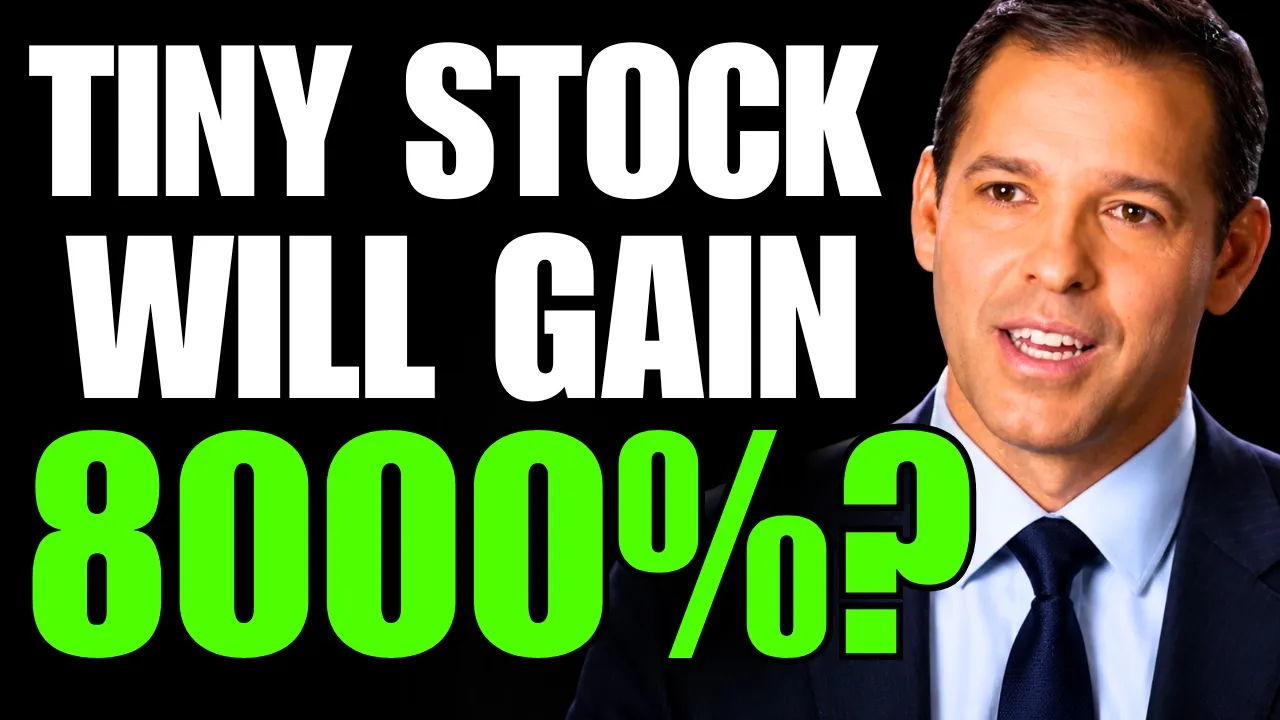
Ian Kane claims he found Elon Musk Master Key and if you buy this tiny stock right now, it has a chance to ADX. However, he won't give you the name of the stock unless you buy his newsletter. However, I sat down and watched this hourong presentation and was able to figure out the stock. In this video, not only am I going to show you how I figure out the stock and reveal it completely free, I'm going to tell you whether or not this stock is a buy. Before we do anything, let's look at Ian King's recent track record to see how good he is. Ian recommended Coherent in December 2024 when it was around $95 and it's been a huge winner. The stock is about 287 today. He recommended Excelis Coherent again and Pterodine in the fall of 2025 in his convergence X nanochip pitch with George Gilder. All three have worked out. Excelis went from roughly 88 to around 130. Coherent was 115 and it's about 287. and Pterodine went from 139 to 384. He recommended Kraken Robotics, Black Sky, and and Joby Aviation in October 2025 in his Code Red Defense Triad presentation. Kraken is up. It went from 310 to around 439. Black Sky went from 30 to 28. So, it's basically went nowhere. And Joby went from $18.89 89 to around $7 today, which is about a 60% loss. Now, let's go through Ian's new presentation and figure out the stock. The presentation is built around one simple idea and one you've heard before. AI has an energy problem. Ian King starts at Elon Musk Colossus Data Center in Memphis, arguing that companies like XAI, Microsoft, Google, Meta, and Amazon are building AI infrastructure faster than the electrical grid can keep up. New grid connections can take years, while these data centers need enormous amounts of electricity right now. According to King, Musk's solution was to essentially bypass the grid. Instead of waiting on the local utility, he turned to mobile natural gas turbines. Basically, small power plants that can be transported directly to a data center site and provide behind the meter electricity in a matter of months rather than years. And this is where King's mystery stock comes in. He says one relatively small company has become a major supplier of this mobile power infrastructure and has now gone far beyond being just another Musk vendor. Mus side actually formed a joint venture with the company to supply roughly 900 megawatts of electricity to his AI operations. King calls this the Musk master key because his thesis is that a AI becomes more increasingly constrained by electricity. the companies capable of delivering power quickly could become one of the biggest beneficiaries of the entire AI boom. And here are the specific clues that King leaves us so we can figure out the stock. Clue number one, this is a company specializing in mobile natural gas power generation. King describes its solution as a power plant on wheels. Large turbines that can be transported directly to a data center and provide behind the meter electricity without waiting for the grid. Clue number two, the company was founded by someone who spent decades in the Texas energy business and it already controls a growing fleet of these mobile turbines. King also says it has locked up manufacturing slots for dozens more. Clue number three. This company has signed long-term power agreements with three major technology companies with more than two gawatts of capacity already contracted under deals lasting roughly 10 to 15 years. But the biggest clue is the relationship with Musk. King says that the company formed a joint venture to supply approximately 900 megawatts of electricity to Mus AI data center for the next 7 years. And he gives us the exact ownership structure. Musk's side owns 49.9% and contributed 86 million in cash while the mystery company owns the remaining 50.1%. That combination, mobile gas turbines, Texas energy routes, multiple big tech contracts, and especially the 50.149.9 joint venture gives us a very specific company to look for. I'm going to reveal the stock in 15 seconds. But before I do, I want to tell you about my free report on the top 10 stocks to buy and hold right now. These are companies I believe have the best mix of strong long-term potential and growth. When you're done watching, click the link in the description, enter your email, and I'll send it right to your inbox. The stock being pitched here is Solaris Energy Infrastructure, ticker SI. However, figuring out the stock was only half the battle. Now, we have to figure out if this company is worth investing in. And to do that, we're going to start with what this company actually does. Solaris evolved from an oil and gas logistics business into something much more focused on power infrastructure. Its main growth business today is Solaris Power Solutions, which provides rapidly deployable electricity for data centers, energy companies, and other industrial customers. Instead of waiting years for a traditional grid connection, Solaris can bring natural gas turbines, power controls, and distri distribution equipment directly to a customer's site. The company still operates its older logistics business, which provides equipment and service to the oil and gas industry, but power has increasingly become the centerpiece of the story. And Solaris is expanding beyond simply supplying turbines. In 2026, it acquired GESA, adding power plant installation, operations, maintenance, and other technical services. So, at its core, Solaris is becoming a fullervice provider of on-site power infrastructure with AI data centers emerging as one of its most important markets. So, now that we know what the mystery stock is and what it does, now we have to figure out whether it's as attractive as Ian King says it is. Financially, the company is growing very fast. In the second quarter of 2026, Solaris generated about 219 million in revenue, up roughly 47% from the same quarter last year. Adjusted Ibida reached about 108 million, up nearly 80%, while net income came in at around 25 million. But what's really important is where the growth is coming from. Solaris Power Solutions generated approximately 158 million of revenue during the quarter, up 23% just from the previous quarter. It now represents roughly 72% of the total company's revenue and 80% of segment adjusted Ibida. Meanwhile, the company's older oil and gas logistics operation generated about 61 million. So the transformation is happening very quickly. Solaris is increasingly becoming a power infrastructure company rather than an oil field logistics company. And the growth p and the growth pipeline is enormous. Polaris currently expects his power generation capacity to reach approximately 3,200 megawatts by the end of 2029 with the majority of the future capacity already committed to customers. Management says the most recent expansions to three existing contracts should eventually add more than 100 million of annual adjusted IBIDA. One of its major data center projects has also expanded to roughly 660 megawatt with a potential contract life as as much as 18 years. That's probably the strongest part of the investment case. Polaris isn't simply hoping AI companies eventually need more electricity. The contracts are being signed. The equipment is being ordered and capacity is being deployed. Management is guiding for another 90 to 105 million of adjusted IBIDA in quarter 3 followed by 100 to 120 million in Q4. But there's a very important catch. This growth is extremely capitalable capital intensive. During just the first six months of 2026, Silera spent about 835 million on capital expenditures, primarily buying turbines and other equipment for the power solutions business. By comparison, the company generated about 266 million of operating cash flow during the same period. And management expects to spend approximately another billion during the remainder of 2026. So this isn't a software company where additional revenue drops almost directly to free cash flow. Has to spend enormous amounts of money before those turbines are deployed and begin generating revenue. And that has changed the balance sheet dramatically. At the end of June, Solaris had about 824 million in cash, which is good. But it also had approximately 1.6 6 billion of traditional debt, plus another roughly 883 million of convertible notes. The company has plenty of liquidity right now, roughly 1.4 billion between cash and available borrowing capacity. But investors need to understand that a significant portion of this growth is being financed with debt. And that's probably the biggest financial risk I see. If Solaris keeps signing long duration contracts with creditworthy technology companies, these power plants come online on schedule. This leverage could work extremely well because the company is financing assets that should produce cond contracted cash flow for years. The company itself warns that this outlook depends on continued AI power demand, equipment availability, regulation, and the pace at which new infrastructure gets deployed. There's also valuation to consider. With Solaris trading around $58 per share, the company currently has a market capitalization of roughly 4.6 billion and the trailing PE is around 73 times earnings. So, this is no longer some completely undiscovered little energy company. Investors are already pricing in a substantial amount of future growth. What makes Solaris interesting is that there really is a rapidly growing business underneath the promotional story. Revenue is rising, IBIDA is rising, the power solutions business is becoming more dominant, capacity is expanding towards 3.2 gawatt, and several major technology companies have already committed to long-term contracts. But the other side of the growth is massive capital spending, substantially higher debt, and evaluation that leaves considerably less room for execution problems. So for me, Solaris comes down to one question. Can the company successfully turn billions of dollars of new power infrastructure into long duration, high return cash flows fast enough to justify the amount of capital it's spending today. That's what I'm going to weigh in in the scorecard. Now, let's look at the scorecard for core business. I give it an 8.5 out of 10. I really like what Solaris is becoming. The shift from oil field logistics towards a full-ervice power infrastructure platform makes the business much more attractive, especially because these projects can generate revenue for years rather than being one-time equipment sales. Growth potential 9.5 out of 10. This is the strongest part of the story. Demand is already translating into signed contracts, expanding projects, and a rapidly growing power fleet. If Solaris executes on what it has already contracted, the company could look dramatically larger within a few years. Strategic positioning, nine out of 10. Is positioned directly in one of AI's biggest bottlenecks, getting power to data centers quickly. And because it can now provide generation, distribution, batteries controls installation and maintenance, its offerings is becoming much harder to replicate than simply renting turbines. Financial strength 5.5 out of 10. This is my biggest concern. Polaris has plenty of liquidity, but this expansion requires enormous upfront spending and significantly more debt. That makes the business much less forgiving if projects are delayed or returns come in below expectations. Execution and risk 7 out of 10. So far, management is executing well. The bigger challenge is doing it at much greater scale while simultaneously deploying equipment, integrating acquisitions, and managing a heavily financed expansion. The opportunity is huge, but the margin for error is shrinking. Valuation 5.5 out of 10. I don't think Solaris is cheap anymore. The market clearly recognizes the AI power opportunity. So investors today are paying for a significant amount of future growth before all of that cash flow actually arrives. That doesn't mean the stock can't go higher. It just means expectations are already fairly high. Overall, I give this a 7.5 out of 10 and think it's a moderate buy. I like the business more than I like the stock at the current price. Solaris has real customers, real contracts, and exposure to one of the biggest infrastructure bottlenecks created by AI. But you're also taking on substantial execution risk, heavy capital requirements, and a valuation that assumes a lot goes right. If Solaris converts this massive buildout into years of contracted cash flow, there could still be meaningful upside. But at today's valuation, I don't think the riskreward is strong enough for a strong buy. So, my final rating is moderate buy. And before you go, don't forget to grab my free report on the top 10 stocks to buy and hold right now. These are companies I believe offer the best combination of long-term growth potential and strong underlying businesses. Just click the link in the description, enter your email, and I'll send the full report straight to your inbox.
Commentaires 0
Connectez-vous pour rejoindre la discussion.
Se connecterAucun commentaire pour l'instant. Soyez le premier à partager votre avis !