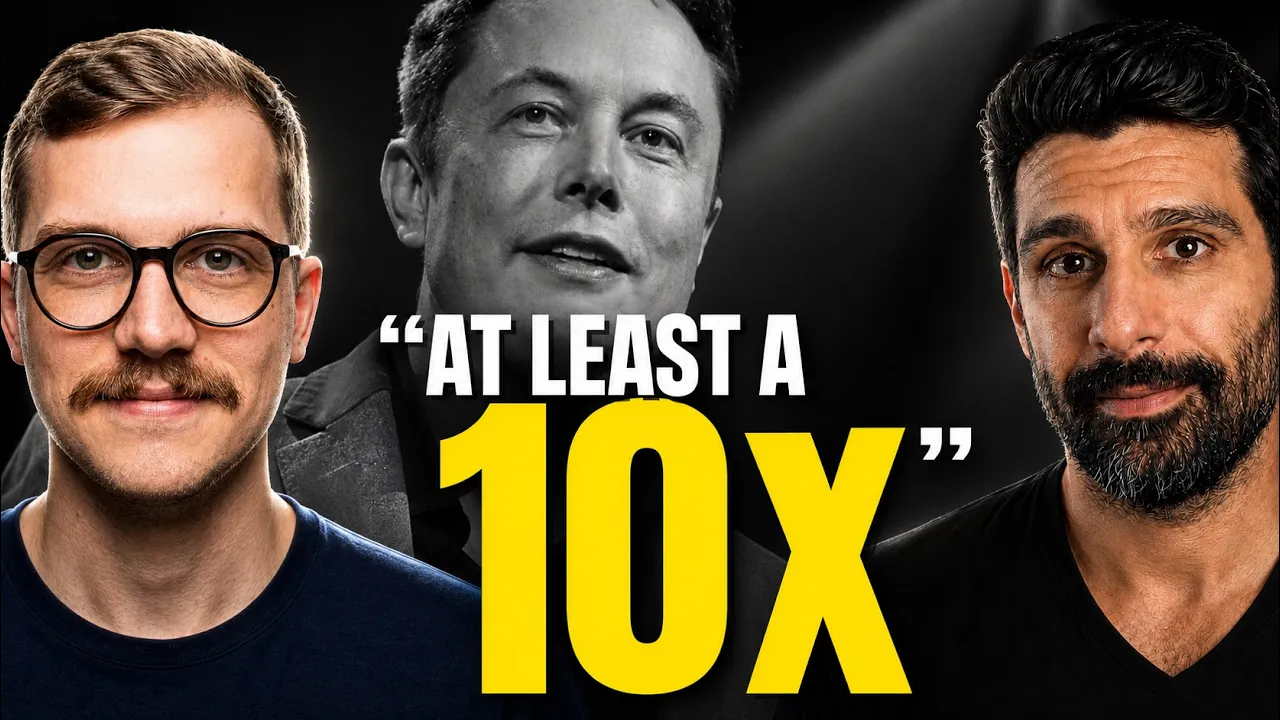
Once that gets there, what does the market value that company at? And from where I sit, it's at least a 10x. Not financial or investment advice, it's at least a 10x.
it's very hard for me to get my head wrapped around how Uber in its current form is able to weather the storm that a self-driving network... I don't see how Uber survives in a world where you have a in its current form again in its current form when you have a company that is able to manufacture as many Uber drivers that there are in the United States every six months.
Contexte
"it's very hard for me to get my head wrapped around how Uber in its current form is able to weather the storm... I don't see how Uber survives in a world where you have a company that is able to manufacture as many Uber drivers that there are in the United States every six months."
Transcription Complète
A question that might get you in trouble. Which company is going to zero? >> It's very hard for me to get my head wrapped around how Uber in its current form is able to weather the storm that a self-driving network, Starship, that's going to transform pointto-point transportation on Earth and it's going to allow us to harvest uh the moon and harvest asteroids, etc., etc. So, in like 20 years time, why shouldn't these companies combine be a hundred trillion a terowatt per year of of compute? That sounds absolutely bastard crazy. Back in 2015 when Tesla started the Gigafactory project, the goal at the time was to make as many lithium batteries from one facility as the rest of the world combined. And at that point, people were like, "That's crazy." And then in 10 in 5 years time, they did it. >> So that's how I would think about Terraab. Their goal is to match global supply of chips. I think the biggest risk for this, and I'm going to sound like an absolute crazy person, I don't think there's going to be enough cash to fund these things. I think that's more likely than a bubble, let's say. But ladies and gentlemen, it's about that time. I'd like to welcome the next guest on the channel, the great and powerful. >> How you doing, brother? >> Good, man. How you doing? Oh, we're both wearing glasses. Heck yeah. >> Yeah, >> I uh >> Where's the wig? >> Do it all my life these days. >> Where's the wig, bro? Where' the wig go? >> It's uh it's right here. >> There it is. I love it. But yeah, during Nvidia earnings, I thought I'd try to dress up like Jensen, but it just came off as some sort of weird uh grandmother or something. I don't know. It didn't look like Jensen at all. >> Oh man, I I uh I thought it was brilliant. Uh it looked very good on you and uh I encourage you to wear it all the time. >> Yeah, there you go. >> Um >> yeah, thanks for having me, man. >> We were just talking about Nvidia. I'm curious some of your thoughts. Obviously um >> you know Elon Musk just in the recent SpaceX earnings call just announced that Nvidia may be an exclusive provider of GPUs and CPUs for >> um SpaceX potentially one of their next largest growing customers and yet >> they blew out earnings and the stock is down 5%. >> Yeah. >> How do you look at the stock in general? I do. I don't. Yeah, I don't. I I'm much more focused on the technology to be honest like like from my standpoint um you know everything that I've always done with these companies is understanding the technology that they're trying to innovate on and investing based on that. So that's how I started in the stock market from the very beginning. So I've been I've been a retail investor since 2012. And the reason why I invested in Tesla from that point was because it became obvious to me that electric vehicles would be the future of transportation. And I think if you fast forward to today, it's become very very obvious that that's the case. >> Extremely obvious, right? And so and the layer on top of that that they built was a self-driving stack on top of that. And when you combine manufacturing prowess with uh physical AI that can drive the cars, you get this uh tremendous moat that will develop over time, which has come slower than all of us hoped. But the moat remains because you're pairing a gigantic manufacturing process that's underpinned by gamechanging technology with a an entire stack they've built from the ground up that teaches the cars how to drive using neural networks. Photons in, actions out. They have uh they fully integrate the chip to fully integrate the data flywheel. They fully integrate the manufacturing process. So what does that mean? You can uh marry everything together and then you also have the lowest cost versus the competitors and you have the biggest scale versus everybody else. So that's the Tesla story. SpaceX is doing the same exact thing with rocketry. They're building their own data centers for their Grock models. They're going to space to harness energy. And Nvidia does something very similar too, right? So like they co-design everything. They they're trying to do everything like like the Vera Rubin system, the more I learn about it, like it's such a interesting thing to learn about because it's literally the entire system that would generate a token. and they are b essentially building in house and they're packaging it so that when a customer uses it, it gives them the highest level of intelligence for the lowest amount of cost. And as we transition into the future of artificial intelligence, people are going to worry a lot more about speed and cost as a certain threshold is hit around intelligence. Right? So like the the the analogy I like to use is like, okay, let's say Fable 7 can cure cancer, >> which I hope it does. Okay, Fable 7 cures cancer, >> but then you have, I don't know, uh, whatever the pick a model, DeepS v4.9 or 5.2, and DeepS version 4 9 5.2 or whatever is very good at doing taxes. Uh, Fable 7 cures cancer, but it's $1,000 per million tokens. Deepseek 5.2 is the best tax uh, processor of all time, and it's $1 per million tokens. which one are you going to use to use do your taxes? You're not going to use Fable, right? You're going to use the other one. So, so as these things happen, as these models proliferate and they become a lot cheaper and a lot more capable and they reach a threshold, the the ability to serve these models at the cheapest cost possible, at the fastest speed possible becomes the moat. And so the hardware systems that can do that are the ones that are going to win long term. And if that's Nvidia's focus, then they're going to be a giant winner. And that's obviously what they're doing by bringing everything together, right? And the demand for AI is going to be so gigantic that you're going to have you're going to have room for multiple players. You're going to have room for Nvidia. You're going to have room for AMD. You're going to have room for Tesla to vertically integrate. You're going to have room for OpenAI to vertically integrate because there's going to be so much unbelievable demand. It's like we're going from a world without electricity to a world with. >> We don't have one one electricity provider in the world. We have multiple. And even the United States, we have one, you know, we have multiple grid providers in the Texas. And then the federal one is all jacked up, which I think will change by the way. Um, so yeah. So that's that's my that's my uh rant for the last I don't even know how long I've gone for. Five minutes. Sorry Tanner. Hi. How you doing? >> I'm doing great, man. I I wanted to touch on some of the things that you just said. So I I completely agree with you. By the way, um I I I think both open- source and some of the smaller end models are going to do well, but so is Frontier. The way that I sort of thought about it is like imagine the you know smaller end models have 120 130 IQ or something like this. >> The large frontier models that would essentially be orchestrating the lower models might have 160 170 IQ but that actually makes them >> better because you want those models telling the other models which direction that they should be essentially going. So I'm a big believer that >> every single person and business is going to be orchestrating a team of agents underneath them. So >> yeah. >> Um, by the way, let's talk on on Tesla. >> Can I actually jump on that real quick, Tanner? Like even on that, like even if that doesn't materialize, like let's say even if the frontier models get to a point where um let's say like the the smaller models have the IQ of 170 and the Frontier is at 390. So like my my one thesis is is that actually there is a certain threshold to AI that once you reach it, people are not going to appreciate it. like people are just not going to appreciate it. So for example like uh this is a stupid analogy but this is like how I view the like the lens that I view it through. How many people appreciate the genius of a 210 IQ person or 170 IQ person is very few people. >> Yeah >> very few people right and I think I uh AI is going to be the same thing like once you reach a certain level of IQ it's going to be like okay like what am I even looking at anymore? So like at even if the models are all good enough >> and they all hit a threshold even then you still need to generate tokens >> and so the companies that are best at generating tokens are going to be the are going to be the winners. So, it doesn't even matter what happens on the frontier landscape or in the in the open- source landscape, you still need to generate the tokens. And the and the cheaper it is and the more accessible it is to people, you're going to have Jeban's paradox kick in, which means that you're going to have this effect where as it gets cheaper, there's going to be more demand, which is going to generate far more revenue on a lower cost than you would otherwise. So, I just want to make that point, too, because it's like if you're very good at making the tokens, you're going to win it anyway. It doesn't matter. >> Yeah. >> Yeah. at at some point you kind of reach a threshold of managing your email workflow that like the smarter and smarter models they're not going to make any difference you know I >> I get that >> um but speaking on Tesla because uh obviously you you cover these companies quite closely I mean that's uh that's obvious >> too closely >> um the first time I ever invested in Tesla was the first company I've ever purchased was in 2015 held it for an extremely small amount of time probably made like $40 and then uh rebought in at 2018 >> uh and then held that till 2025 and then now I'm no longer a shareholder. But I definitely still want to be a part of the Elon um sphere. I don't hold any SpaceX. I don't hold any Tesla. That's just purely based on valuation. >> But I definitely believe in the vision. My concern and I want to uh sort of point this to you is how do you feel about some of the timelines and when we're actually going to see some of the aspirations of Elon end up materializing? >> That's that's the big struggle with holding Tesla and SpaceX. It's it's always a waiting game, right? I think ultimately like when it comes down to holding a like a Tesla or SpaceX is the belief that Elon will outperform in the long term. It's it's the belief that he's going to be able to deliver sort of like the bot and the self-driving car and the reusable rocket. It's it's uh it's executing on very hard technology, >> right? >> And like that's why these companies get the premium because that's ultimately what people are going after. >> Delivered the impossible before. >> Exactly. But it but it's if if you're trying to time it, it's the worst. It sucks. It sucks. It really does suck. Like I'm not going to sit here and be like, "Hey, I'm a Tesla investor and I'm like, I'm glad robo taxi is delayed and I'm glad that it's taken longer than, you know, than we would have wished for bot to come." Like these this is true. But but the thing is like the reason why these companies uh trade at such high valuations is because he has done it in the past multiple times. That's why Tesla trades at whatever I don't even know what the P is anymore, like 110. I don't even know what the P is anymore. It's it's it's it's a it's a big number, but that's because Elon carries a premium. So if you look at the past performance of the company, you look at okay what happened between say 2012 and 2018 like when when it had it first run up and then it had its next runup after co was that the company was able to lay a foundation to build an EV profitably and that took a lot of time. Now the next leg is I'm going to build a foundation to deliver on a a fleet of cars that are going to be able to drive themselves everywhere using neural nets end to end. that's also very hard. And you also have the regulatory aspect that you have to climb through. Um, and so now like the big debate is like, okay, well Elon is intentionally misleading investors because he keeps shooting for these like crazy goals that don't materialize versus maybe he's just too optimistic and this is a lot harder than all of us thought and it just sucks. Like that that's where my standing is that is like it just sucks, right? But if you just view like the track record of the companies and the track record of the leader and you think about all the things that they've delivered in the past, it will materialize in the future. And so if you're confident that it's going to materialize in the future, then the question becomes okay like from a riskadjusted basis, what's the likelihood that Tesla's going to deliver robo taxi bot by 2035 versus me trying to find a better return on my investment by then if I think that bot's going to sell millions of units per year and Tesla's going to be the only atscale manufacturer of self-driving cars. And then from my standpoint, for somebody who has the patience, you know, like let's say like yourself, Tanner, you're in the market 24/7 literally like you live and breathe this stuff, right? You it's much easier for people like you and others to find better opportunities in the next, let's say, even one to three years, >> right? But for me, it's like I'm I I have the luxury, thank God, that I can wait 10, 20 plus years. So for me, I can missed deadlines and I can tolerate the hyper optimism and I can tolerate the, you know, like the drama between Tesla and SpaceX mergin. I can I can tolerate all those things, but I I fully understand why that's hard for a lot of people because truth be told, if you look at the last 5 years performance for Tesla and you compare it to literally any other company basically, you're going to be like, "Okay, I should have been in something else, right? Totally get it." But I'm obviously hindsight it's 2020. But I'm not going to sit here and like dismiss the the frustration. It's it's 100% valid. So now the question becomes what's the likelihood that robo taxi and bot if they materialize in the next 5 to 10 years, what does that do to to valuation? And that's where it's like it's very easy for me to sit down and be like, "Yeah, if you know, for my opinion, when they solve self-driving fully at scale because I already don't drive my car in my driveway. So, I already experienced this uh technology on a daily basis. So, I know they've done it. It's just a matter of just getting it out there and fixing the sort of the the very few edges and getting regulations to buy in and then transplanting that technology to the bot. Once that gets there, what does the market value that company at? And from where I sit, it's at least a 10x. Not financial or investment advice, it's at least a 10x. So then the question becomes, what is a more obvious 10x for the next 10 years? >> And so from my stand like SpaceX maybe. >> So I I I want to talk uh on that really quick because help me understand >> right now I'm not questioning at all Tesla full self-driving. No one comes close. >> Okay. Whimo has a really good option, but it's impossible for them to get road cars on the road at scale the way that Tesla does. >> Yeah. Is there a future where a company, let's say Nvidia with Alpio 2 and and whatever they're creating has a uh out ofthebox opportunity to offer to Toyota and Honda and and put cars on the road, not based on real miles driven, but on simulated uh simulated miles that Whimo and AV ride and all of those companies have demonstrated that they can do self-driving as well, although it's not at the quality that Tesla's at. What is the pricing premium that Tesla can offer if other companies potentially are following behind? >> What is that? The pricing premium is that because you're vertically integrated, your cost per mile is going to be lower versus the other solution because if you're if you're a third party company that has to integrate a third party solution, then by theory your cost structure is going to be higher than the company that's fully vertically integrated. So the way I think about this is Tesla over the long term with its scale with its proven scale of a brand new technology for transportation with these electric vehicles which every single legacy automaker has failed at. Let's let's separate China. China is phenomenal. China is something else. But take every other legacy automaker. Have any of them done an EV at scale that has been successful and profitable? No. >> No, >> they haven't. So the scale doesn't exist to actually deliver on this technology. So Nvidia can be blue in the face in trying to develop this technology and make it happen, which they will. The question becomes which company will be able to do it at scale and be competitive from a cost per mile perspective versus a fully integrated end-to-end vertically integrated company in Tesla that is psychotic about cutting the cost per unit and the cost per mile. That's that's the lens I view it through. And so like ultimately Yeah. Does it need to be an electric car in order for it to be fully self-driving? >> For sure. >> It makes it a lot easier, right? Because because you don't like you don't have to deal with gas stations. You don't have to deal with like uh you lose uh the flexibility of like being able to be in somebody's garage, >> being able to go into a building, like the fumes and stuff. Um also with a with a gas car, the response is a lot slower because when you press the accelerator, you have to wait for the cylinders to spool up. So from a safety perspective, gas cars are far less safe. Like when you're thinking about like 200 milliseconds response time, an electric vehicle is going to be a far safer alternative than a gas car. And so if your competitor says, "We've been able to avoid 10 times more accidents because we're electric." People are not going to ride the less safe one by default, right? >> So the electric vehicle becomes a huge selling point in this, right? Um and then and then my other the other thing I would posit too is like since Tesla controls the entire supply chain for the chips as well. They can custom build all their chips for for the for for the vehicle dynamics. I mean not not the chip level but the model level but then that model sits on a chip that's fully fully vertically integrated that's extremely good at running that model. In theory Nvidia will do the same exact thing with their chip. But the thing that they will be missing is marrying the vehicle platform to that thing. And my assumption is there's going to be something there. Even if it's like small, there's going to be something there that's going to differentiate the experience from like a it's faster response time. It's a little bit more smooth around the corners. The bigger vehicles are easier to train on the Tesla on the on the Tesla one because they have all the data from the smaller cars whereas with the Nvidia one, they don't have as many miles to train on the bigger cars. So maybe when you make the right turn with the bigger cars from Tesla, you don't curb yourself versus where the other companies that like all these minutia start to show up, right? >> Yeah. >> Um so it's it's Nvidia is dependent on a legacy automaker system to get their together and the legacy automaker system hasn't and won't because it's unprofitable for them to make electric vehicles and they have a culture problem. That would be my argument. I I I've sort of thought about uh Tesla versus literally every other name as being similar to the fight between Android and Apple that uh Tesla is similar to Apple as a full >> fully integrated endto-end system, >> but then there's going to be a hundred or a thousand other companies that work together to create uh an opportunity or a solution to self-driving and robo taxi on the other end. Is that a fair way to look at it? >> 100%. I view the same exact way. I talk way >> as a part of expanding that ecosystem. Obviously, Tesla's not the only thing that Elon is doing. We also have SpaceX and there's some conversation about potentially integrating these two businesses. >> Where do you stand on that integration and >> how should investors play that into, >> you know, investing in SpaceX versus Tesla? That's the big drama of today right now in in Tesla land, SpaceX land because Tesla lands Tesla land people feel like they're going to get jacked over >> because um let's say SpaceX proposes let's say they propose $400 a share under alltime highs as the premium Tesla investor is going to be pissed because they're going to say number one you're offering me under I'm just hypothetical. This is a I'm not saying this is going to happen, but hypothetical like the narration is going to be, okay, so not only are you offering me under all-time high prices, you're giving me a discount on robo taxi and bot. So like why why should I take that deal when I you're telling me bot's about to take off? You're ramping up cyber cyber cab, right? FSD is starting to sell cars very clearly. Like you have all these things starting to and it's like, oh, by the way, here's I'm going to actually buy you at a discount. Tesla investors are not going to like that. They don't like that. And that's a lot of the drama that's happening uh in this case. Now, in my opinion, if SpaceX comes, and I'm and I'm just describing investor sentiment right now. I don't know what's going to happen, but this is how investor sentiment is going to play out. If SpaceX says, you know what, 650 bucks a share, then people are going to be like, ah, okay, I can go with that, you know, or even 700 bucks a share. Oh, yeah. Then I'll really go with that, right? Or or what? There's a number there. Everybody has a number. But but what what does SpaceX investors then say if you're willing to pay 650 700 is that >> exactly there you go. Now that's that's Elon's in an impossible >> Yeah. >> Someone's going to be pissed. >> So the question is are the Tesla investors going to be pissed or the SpaceX investors are going to be pissed. Now this is a short-term discussion. This is a one to threeyear 5year discussion over a long enough time horizon. If you believe the AI boom and you believe that uh uh this is a next industrial revolution where in the next 20 years GDP might double, triple or double again on top of that where we have this amazing um uh you know Elon calls it amazing abundance if we have this like transformation of society then it's like okay well as a Tesla investor you're like you know what I'm kind of happy getting a piece of SpaceX because SpaceX is going to send data centers to the freaking like in space and they're going to have by far the largest amount of tokens that are going to be generated. They're going to have this entire satellite network that's going to deliver uh data connectivity to everybody and you have this reusable rocket in Starship that's going to transform pointto-point transportation on Earth and it's going to allow us to harvest uh the moon and harvest asteroids etc etc. So in like 20 years time, why shouldn't these companies combine be a hundred trillion dollars? >> And at that point, it's like, who cares if I get acquired at 1.3 or 1.7? It doesn't matter. So it's like this is where the Elon factor comes in where Elon sets this grand vision and then people are like, you know what, you're doing crazy You I think you're gonna Excuse my French. I don't know if I concur. Sorry, Tanner. Um, >> you do have >> Sorry, I won't do it again. >> I I won't do it again. um you you'll have investors that um I lost my train of thought. What was I saying just now? >> Just uh in terms of if the company goes to hundred trillion dollars, the Tesla investors are not going to >> care what the valuation is >> or the SpaceX ones, right? And this is this is where Elon's going to be able to get away with it, quote unquote. People are still going to be pissed is because his investor base believes in his vision. The investor base believes in his vision. And so the question becomes at what price? You know, Tes investors are going to very much believe in his vision uh when it's at 650 and SpaceX is going to believe it when it's at 500. I don't know, pick a number, right? But once he navigates that uh that uh minefield, I think we'll get on the other side of this. And I think on the other side of it, you have this sort of very fascinating story that you have a vertically integrated stack of a company that's basically trying to build the next generation of of like like the foundation of civilization. You'll have transportation systems and autonomous cars. You'll have uh physical labor in the bots. You'll have digital labor in Grock. You'll have uh point-to-point uh uh transport uh through space in Starship. You'll have a communications network in Starlink. You'll have data centers that power the whole system. you have vertically integrated chips with Terra Fab. It goes on and on and it was like, okay, why wouldn't you want that company? >> No, I honestly I this is why I want to be back involved in Elon's uh vision because I do believe in a lot what he says. The the only thing that gets me caught up and this is from an investor standpoint. I know you're very focused on the technology and and happy to just make that long-term bet. But >> if that vision does play out, >> there are companies that I believe like Nvidia that are going to be a part of that buildout that >> look much cheaper on the valuation today, you know, but still benefit as a proxy. >> Um, >> yeah, >> that's one of the things as well, >> Elon's vision, and this has always been what he's been good at, but he's good at buildouts hardware uh obviously building Colossus 1. I think it was something like 89 days. Colossus 2 was not too much longer than that. And this is gigawatt scale first in America. >> Unbelievable. Just as a Neocloud, that is a big differentiator. >> Sure. >> But every single one of these products or projects are tens of billions of dollars. >> Yep. >> Where does he even get the capital? SpaceX is not cash flow generative. As of last quarter, Tesla fell below being a cash flow generative business. Yeah. >> Combining these two businesses is where do you get the money? >> Uh, you know what? That's that's an amazing question to ask for almost every other CEO, but Elon is the greatest capital raiser of all time. >> Yeah. Yep. Yep. >> So, it's like to me, he'll find the money. I mean, like like I think I think it's one of those things where like like he has and I know this sounds like like sort of hand wavy like okay like you're you're sort of trivializing something. I'm like I'm not. It's going to be a big deal. is going to be unbelievably expensive. The combined entity is probably going to be cash flow negative for years as he's building out this entire system. But um it's also true that objectively he is one of if not the greatest industrialist alive today. Up there with Jensen, up there with talents like your Alex Karps, I would put Palmer Lucky in there. You have these like monsters of industry. monsters of industry that people believe in because they not only believe in their own the thing that they're selling, they're actively executing against it. And when you do that, you're kind of a magician because you can just raise money. >> Yeah. >> People will just give you the money, right? And that's and I I think that's what's going to happen is whatever capital needs he need, whatever capital he needs, he'll get. What what's going to happen is the valuation will suffer. like if I don't know if he's he if he'll do it through a through a c like if he'll do like a raise on the stock market if he'll do it through the Nvidia I know Nvidia is doing that partnership with those six banks or whatever for 500 billion my guess is SpaceX is probably a big player in that they'll probably get a significant percentage of that that's going to be extremely helpful for them to sort of build out on the chip side >> um but you know I think SpaceX has what like almost 100 billion in in the bank Tesla has like 40 if I if I remember correctly something like that so 140 billion between the two of them it's not nothing right. They have no definitely not they have a growing business. They have growing businesses like you know Tesla is still back almost to all like all-time high sales. I think last quarter was 480,000 delivered. That was their sec second or third best quarter ever. There's clearly uh increased demand now because people are buying the cars because of FSD. On the SpaceX side, you have Starlink uh growing like crazy. You have their data center business is about to 5x year over year. Well, three to 5x call it. that might put the call the the the the the company closer to cash flow uh even by say 2028 2029 potentially. Um who knows like like when these numbers come but I think the the end result here is that there is a pathway for Elon to have an underlying business model that's going to allow him to raise whatever money he needs just like Jensen would just like Alex Karp would if we needed to. but he's he's been clear of that boat for God knows how long. >> There's just certain people that know how to raise capital and they have the businesses to do it. So, I don't think it's going to be a problem. >> And I think to add to your point, I read somewhere that everything from Starlink to um Dragon and uh Starship and all of these different programs that they have done was in total something like $30 billion to essentially make everything that is >> um SpaceX. So adding an additional $90 billion of capital on top of that, it's like what? >> Who cares? >> 4xing the, you know, the amount of new projects that you're potentially making. >> Yeah. >> Now, one of them that gets me going, I need I really need your help here cuz I'm not even fully sure I know what this is, and you've been making a ton of videos, and everyone should go and watch them, by the way. But help us understand what is Terraab. >> I still don't know. it's still kind of like this black box. So the understanding from how the company has framed it is that they are building basically their own uh chip. I don't even want to call it a manufacturing facility, but it's it's the way it's being sold right now is as a packaging facility where they're basically trying to bring in all the different uh pieces that go into chip making, which is, as you and your audience is super aware, is one of the most insane bastard. One of the craziest things in the world to manufacture. Just lithography on its own is so is truly the most mind-blowing technology I've ever learned about is lithography. Yeah, >> you're exploding droplets 50,000 times a second to etch ultraviolet light into a freaking silicon wafer and then that whole thing powers our entire civilization. It's like what? Like we live in a simulation very obviously. How's this even real? Right? >> But but the thing is there's a long lead time to get there. There's a long lead time because you have to have you know you have to do your variations on on what what the mask is going to look like. You have to make sure that uh it it actually aligns with how you're trying to execute on the model. You have to make sure it's not wasting more power than you thought it's going to waste. You have to think about the design of how, you know, where you're going to put your memory chips in relation blah blah blah. Like you just go down the list of crazy stuff you have to do. The thought process is with Terraab, you bring everything in house. So instead of having say uh um a 6 to9 month lead time on landing on the chip you want to use, you have a four-week lead time. You have a twoe lead time. And that helps you move a lot faster in a world where speed and cost become unbelievably important. Okay? And then over time the thought process is is my guess again this I'm talking about like how Elon usually executes is he'll find the biggest bottleneck in the process and then he'll bring it in house. So my guess is at some point he will probably make his own lithography machines 5 10 years into the future maybe. Um he talked about having a free electron laser underneath the the the terrafab. So it's which is a new light source that would be used instead of using tin tin droplets to make the EUV the the light itself. He would use basically like uh if you guys are not familiar with this is a technology that's been around for a while um but it's just starting to be commercialized. You basically uh shoot an electron and you sort of like use magnets to undulate the electron which generates lasers and then you use those those lasers to print on the on the thing. And so what that allows you to do is you actually it's a lot cleaner. So you don't have to constantly clean the machines from those tint droplets, but you can also do you can it's kind of like a utility. So you basically have like you know how you have your electricity at your house or your water line for example, you just have your E UV light coming into the building and then you shoot the EUV light other places, right? So when you have your own facility, you can do that. So it just enables uh the the company to have that variability. I think ultimately what Terrafab is long term, I think it's just uh ensuring that uh the United States as a whole, but especially uh Elon's companies have a way to get chips long term if something were to go down in Taiwan >> or if something like like it's a more of a national security more like a we need to ensure that we have access to the chip actual manufacturing of the chips. So like TSMC uh in this case um so because it's going to be unbelievably important because if let's say something god forbid something happens in Taiwan an earthquake or let's say you know China either through peaceful or otherwise means decides to reroute that uh supply to itself it's like okay what happens then the US is kind of screwed right and so I think it's just it's that kind of play it's like um technologically super ambitious but then ultimately at its core It's ensuring that a bottleneck is addressed in case the worst were to happen because if the worst were to happen, your entire business crumbles, a lot of businesses will crumble, right? Nvidia would suffer tremendously if something were to happen. >> 100% 100%. So, um I was looking into this. Do you have any metrics in terms of just the sheer scale of this or even I've heard some projections on how much this might cost to build. I've heard as high as a trillion dollars. What is >> Yeah. >> Who knows? >> Who knows? >> How do you even benchmark what Terraab is is going to be or what the output of that is into the future? And what's the timeline? >> Yeah. Well, the the goal so so the the thought process here is if you get, you know, the way um Elon does his sort of long-term thinking like, okay, I'm he's going to come from the angle of assume assume that you can do a ter a terowatt of compute per year with Starship. That's where he'll start. It's like, now that I've solved Starship reusability, assume that we're going to get to 10,000 to 100,000 launches a year. And those Starships are not going to go empty. They're going to have AI satellites in them. And so, if I want to fill up every single one of those satellites or rockets per year, per launch, how many chips do I need? And then he'll work his way backwards from that goal. So, I think the goal the again it's they have been unclear about it. I mean they did throw out like a terowatt per year of of compute but that sounds absolutely bashet crazy. >> The way I would think about it is um back in 2015 when Tesla started the Gigafactory project in Nevada uh for the batteries right the goal at the time was to make as many lithium batteries from one facility as the rest of the world combined. And at that point people were like that's crazy and then in 10 in 5 years time they did it. So that's how I would think about Terraab is I think probably not 5 years but let's say in 8 to 10 years their goal is to match global supply of chips. >> That's how I would think about it. So >> yeah single-handedly but but but that's what's going to have to be required >> because if we really need to match the demand of what a we all think AI is going to be then without chips you don't get there. It's literally impossible. So, so at least we have uh these guys trying to make it happen, but then you also have Nvidia trying to massively scale up their business with TSMC. Uh they're doing everything they can to go as fast as humanly possible. Right? So, this I I would view this as a confirmation that the biggest players in the game are putting the money where their mouth is, which is ensuring that the underlying supply chain is there for a revolution in how AI is going to change our lives. That's the way I view this ultimately. >> Now, is that purely a SpaceX project? Because I thought I saw something around it also Tesla also has a part of that as well. >> Yeah, it's and that's like the biggest clue for for people that follow this stuff closely. It's like, okay, this is like this is almost like the feeler >> to put it out there is like, hey, just imagine Tesla and SpaceX work together. >> We're doing this together. But it makes sense because you know the cars need chips, the bots need chips, the satellites need chips, the AI data centers in space need chips, the terrestrial data centers need chips. So it's it's like okay like like it's a it's a shared project because we all need the chips, right? So but I do think >> I like how you say it's a feeler. It's the biggest human project development ever of all time. >> Welcome to the most crazy person on the planet right now. That's how he operates, you know. It's it's it's it's just so fascinating. And and I do I do love, you know, a lot of people are like, you know, people that follow this story are like kind of crazy. It's like, yeah, yeah, we are kind of crazy because it's like it's like um it's one of those things like it's one thing to believe it, it's another thing to like actually study the technology and getting familiar with the product and being like, "Holy crap, like this is kind of actually happening." It's kind of like like when you watch Starship come back, you can't help but feel like this is the most incredible thing, you know, that I've ever seen. That's my personal opinion, right? So, it's kind of like, okay, like there's some pretty special stuff happening here with the with these companies. But what's even more beautiful I would say is like if you look at the surrounding landscape uh around like what's happening right now you have your Jensen's in Nvidia you have your Alex Carps with Palunteer you have all these like incredible entrepreneurs are starting to come up they're starting to do crazy things again and they're starting to do hard things again and they're bringing America to the forefront of industrialism and building hardware that's I think this that's the lens I view this entire thing in is that is that the West specifically America is going back to building stuff. >> We are finally building stuff again. And for the long term, this is an unbelievable premise because building stuff is not only great for the economy, but it also generates the most secure jobs. Sure. >> Because it's in hardware and it's some of the most durable modes because hardware is infinitely harder than software. Building a rocket is a lot harder than building a piece of software. And that some pieces of software are a lot harder than others for sure. But like what's harder uh lithography machines or uh an ontology? >> I'm going to say lithography machines. >> No, >> no disrespect to ontology. >> 100%. Um but e even that being said though um I I I think one of the potentially um most exciting parts about SpaceX is Starlink and due to some of the comments that Elon has said 99% of you know this business of the future is going to be AI. I feel like people have already kind of brushed past a little bit about what's about to happen with Starlink. So, can you speak to uh not only satellite V3 and what that unlocks for SpaceX, but also how that might be, you know, one of the larger funding sources for SpaceX for the next little bit. >> Yeah, that that Starlink is fascinating because I agree with you because, >> you know, the way Elon thinks about the long term of the company like Starlink is an afterthought for him, right? It's like we're gonna terrif we're going to put stuff on the moon. We're going to have a mass driver on the moon. >> And then people are like, so what's Starlink? Like what are you what's going on with Starling there? It's crazy. Like what's fascinating about Starlink is it's already the it's already massively cash flow positive as a business, right? It's like I think 60% margins or something. Um and so for people that are not familiar, Starlink is basically the internet that you get in from space. Uh but it's very fast latency. It's on a lot of planes now. You can get it uh with a you just go to Home Depot, buy the satellite, you connect to it. It basically works like your internet at the home, but you can basically have it anywhere on the planet. Basically, that's the selling point. >> And any college that I've gone to recently, it's been powered by Starlink. the internet. >> And it's fast, right? It's it's like it's like you wouldn't even tell the difference if it's like cable or internet unless you're like doing something like uploading 100 gigabytes worth of uh data or something. Uh it's going to be much slower there obviously. But uh what V3 unlocks with the next generation of the satellite unlocks is that it allows the company to have a lot more bandwidth per satellite. So the current so the the the new satellites uh I don't remember the exact number but it's somewhere between 6 to 20 times more bandwidth per satellite which means that you need fewer launches to cover the same amount of data throughput and data throughput is directly correlated to the amount of money you charge obviously because you can have a lot more users right so that's one unlock you can put a lot more uh units per satellite of bandwidth then the second unlock is starship which is gives you two unlocks Because Starship is a lot bigger, you can put a lot more of those satellites in there versus the Falcon 9. Yeah. >> So, per per launch, you can do um instead of let's say uh 20 V2 equivalents on Falcon 9, you can do 400 equivalents in Starship per launch. And then the other unlock is that Starship is rapidly reusable, which means that Starship can then after it puts the Starlink up, it comes back the whole rocket, not not the first and second stages, the the whole rocket. And then you can fill the rocket up again very quickly to a point where within hours or a day or two, you can go up again on the same rocket. And so that re that massively reduces the cost of putting stuff in orbit. So if what this has from an effect like if you think about the total uh effective like impact to uh Starlink is that the cost per a unit of bandwidth in space plummets by like 90%. And but but you can charge the same essentially right >> is it whenever you talk about the throughput >> Yeah. >> is it more customers per satellite or also faster speeds per customer? >> Both. >> Okay. Okay. >> Right. both, right? Because because the the bandwidth is going to be spread. So if you if you have like a set number of bits you can send. If you only have one person, then theoretically you're capped by that satellite or the receiver or the cap that the company's going to put on that user says you can't go past a terabyte, whatever that number or a gigabyte, whatever the number is. But of course, if you have more people connected to it, then your total throughput goes down. So the beauty behind that is that they can select like it's okay. Some customers will put extra ones and then we'll charge for massive premiums for say uh military use cases that need really fast bandwidth all the time like uninterrupted or boats or planes etc etc. So that and that you you have a lot more flexibility on the customers that you that you uh can service. And so what that's going to allow the the company to be even more cash flow positive on on Starlink uh to the point where I don't know they'll probably make close to hundred billion dollars a year at like full scale let's say might be even bigger that number. But then the funny thing is if you compare that to like the AI side of the business where you're generating tokens that pulls in comparison because intelligence is far more valuable than bandwidth. Sure. Right. Unless unless you're limited on bandwidth for the amount of intelligence that you actually put out, which means that you need more bandwidth. So, you might be choked out on the bandwidth side, but that that becomes like a easily solvable problem because you just put more Starlinks up, >> you know. >> Yeah, it's it's pretty incredible. It's just the the valuation that I have to come to grips with. But all of the different opportunities are absolutely unbelievable. Not even to speak like like you can get excited about the the selling of electric vehicles, you know, best model ever sold. Um not just in the EV market, but just in general, uh the Model Y. >> Um on top of that, full self-driving and then this weird long-term vision for Tesla of Optimus. >> Yeah, >> this seems to be continuously delayed. I I I think some investors got concerned about some of the commentary uh that um >> Elon said. He said, you know, I kind of want to recalibrate everyone's >> timelines on on Optimus. >> Where are we? And then also >> the question on top of my question, Elon said there's not even a second place whenever it comes to robots essentially. >> Yeah. But we haven't seen a demonstration or at least I haven't seen a demonstration of Optimus in a while seeing the whole Beijing Olympics thing. How do you feel about China's uh advancements in humanoids as well? Those are sort of my questions there. >> Yeah, China's uh China's awesome when it comes to this stuff. Like that that robotic Olympic thing was so brilliant for them to do. Like talk about a content generation machine. >> Just so smart. I was so pissed that we didn't do that as a country. Like come on. Like you guys, what are we doing? Right? It's it's so frustrating because these guys like China is so unbelievably good at harnessing people's um like natural talents to build stuff and just letting them go build. Right. That's what it seems like to me. >> Sure. >> Now the big missing piece that China doesn't have is the brain. So the brain is like what I have the body kind of but what do I do with the body? That's where the US has a huge advantage, right? because not only do we have the chips to actually train the models and deliver the inference, we have the models as well. Like even even though open source is getting closer uh and you know like we're not even talking about like uh like world models like for example that FSD operates on or like the physical AI models where they can interpret what the real world looks like and what actions I should take. The US is far more advanced. Um, so, so the the hope is, let's say the hope is from Tesla investors, which kind of was backed up by Jason Calcanis on a on a clip recently where he said he just saw Optimus very recently. He's like, "It's going to easily be the best robot ever." But we we we can't say that because we haven't seen it, right? Um the hope is is that Optimus will deliver on the promise of the marriage of a human or robot that has amazing hardware that is extremely usable in almost all use cases which requires a hand a hand that can actually create actions that's paired with a brain that knows how to execute those actions. That's that's the big deliverable on on Optimus. Um, now the the the struggle is that this was about a year or so ago. Tesla made the comment that they would stop doing live demos. I forget how long this ago this was, but they're going to start doing live demos of Optimus because they were finding that competitors were copying their design. So, they were able to go in there and kind of find the secret sauce and then develop sort of in parallel with them. So, like their justification is sorry, their justification is we are going dark because we don't want people to copy us. Okay. the the cynic viewpoint is you're not making as much progress as you hope you would make. Right? So like those are the two things that are fighting each other right now. So and from where I stand, it's like it's going to be impossible to tell until the product gets shown to the public. But the reason why I'm optimistic about their their ability to do this is is twofold. Number one, they are a manufacturing expert. >> They know how to build hardware, I would argue, just as good as anybody else on the planet. And they they've proven it because they have the bestselling car in the world and the bestselling car in the world is electric whereas huge number of cars on the road are not electric. Right? So, you you already took a uh quote unquote hard to sell product relative to the rest of the fleet and you have the bestselling car. And then if you compare that bestselling car to the rest of the uh uh competition, especially on a dollar per dollar basis, like at at that price point, it blows everybody else out of the water minus a handful of amazing Chinese competitors, right? So, it's it's creme de la creme um number one basically. My wife keeps sending me pictures of my son. It's like it's funny. Um so that's that's one thing and then the other thing is sorry >> I just want to add in if the the whole brain body thing um >> you know we talked earlier about >> the models getting to a certain point of intelligence where you can't even uh appreciate the the quality there. Is there a possibility that just Chinese distilled models off of American models would be good enough to make these robots in indistinguishable between American robots? >> Totally 100%. Yeah, I think I think that the the complexity with that's a great question, right? The complexity with the physical world that the physical world has a lot more degrees of freedom, >> right? So the amount of inference that's needed for that kind of uh uh process is like mindboggling and like so I'll use this example, right? So let's say an AI agent uh that we use is like uh you know you have these parameters that drive the model and the parameters are just on the human language and it has to like process all the information blah blah blah. The the very difficult thing with uh the physical models is that they require a ginormous amount of memory and a ginormous amount of throughput that has to be stored on the chip somewhere so that it knows what action to take. So the the best way I would think about this is like um and when an LLM does a query for you, it's using text and you can store say that same that that file of text that you need, whatever that file is to execute your query might be 10 kilobytes or whatever the number is. For a bot, it would have to essentially digest the equivalent of 1080p video from eight cameras for like multiple minutes to hours at a time. And that amount it's like it's like 10 million times more bits. >> Yeah. >> Right. And then and then you have to do computations on that. So and so you have two problems. You have it on the hardware side where from the chip side you need enough memory primarily like and this is where people are like micron is like guys micron's just getting started okay like the amount of memory we need is like uh and like >> the physical world is going to if you thought chips were short is short now just wait until the physical stuff kicks off that's what I would like to say it's going to be nuts so it requires a lot more memory and then the models are completely different you have to basically reinvent the models you have to retrain them completely differently so it's a whole new ball game now where China might might benefit benefit tremendously is that they are good at the hardware. They are good at building hardware. So if they figure out the brain in theory, they can have a lot more units out right than say Tesla uh in in sort of like in in that in that arena. Now Tesla is still going to be one of the top players obviously because they already do they already sell a bunch of Teslas in China >> and China has a ton of EVs. They're already outperforming in a market that is, let's say, hostile against um um their international players, right? The Chinese automakers are killing kill clear killing a house, but Tesla still selling a bunch of Model Y's and Model 3s. Okay, so the bot could could do the same thing there. But I think the one thing people should think about when it comes to humanoids is that I believe humanoid robots are going to be a gigantic national security variable where I find it very hard to believe that as these models get much better and these units become very powerful and usable. I don't see how China allows the sale of humano robots in China and I don't see how the US allows the sale of Chinese robots in the US. And I think this is sort of the discussion around the multipolar world, you know, and and like this sort of becomes kind of a geopolitical discussion because like just think about it. Just think about it for a second. If you're the United States, would you allow 1 million Chinese human or robots that are smarter than the average human and can do most of the jobs and have all that power to be able to execute those jobs? Would you allow them to have that kind of technology in your country? >> Right. And >> yeah, >> it's like they're already banning the drones. They're already banning the self-driving cars. The human or robots are the obvious next step. And then in China in retaliation or logically we'll do the same thing. So it's like so it's like Tesla from a humanoid perspective has multiple things quote unquote going for it is that they're going to be very good at building it. But then also like we're not going to allow Chinese robots to be sold in the United States. You guys >> it's not going to happen. Now, you know, >> uh I I want to ask you a little bit of um a question that might get you in trouble. >> Oh, great. >> Which company is going to zero >> due to the effects of some of the changes that Elon might be making? And and what I'm referring to here is does Starlink get so good that some of the broadband businesses and you know, cable companies who is going like I see someone saying ask him about Uber. >> Yeah, Uber obviously. My poor, you know, I I feel bad because uh the CEO of Uber is Persian like I am. I'm I'm as well, Dra. Uh he's my Persian brother from another mother. Uh he's a great CEO. He does great work. The people at Uber are amazing. But it's very hard for me to get my head wrapped around how Uber in its current form is able to weather the storm that a self-driving network that's vertically owned and operated, how they're going to be able to survive that at scale. The only way they survive is if this continual thing with robo taxi that's taking forever for it to scale that gives them a chance of survival because at least they can pivot to something else. Because I I don't I don't I don't see how Uber survives in a world where you have a in its current form again in its current form when you have a company that is able to manufacture as many Uber drivers that there are in the United States every six months. I don't see how they survive that because like what is the forcing function for Tesla to want to offload that fleet onto Uber just to give them a cut of the margin? That's insane. So what what are they going to do, which they're already doing? They're going to bring all that stuff in house. They're going to have their own app. And then what they're going to do against Uber, they're going to beat beat them on price because the cost per mile of a self-driving vehicle is a fraction of that of a human-driven one. And so Uber is in this pickle where where if they add if they add self-driving cars to their network, they can't actually benefit from a profitability perspective because they second they start undercutting their human drivers, their human drivers will stop driving, right? There won't be enough drivers on the network and that destroys their network effects and then weight times go up like crazy. So the only way for Uber to retain its network effect is to make the cost per mile high enough to attract enough drivers. >> Okay. But if Tesla's if Tesla is capable of manufacturing again like I said 2 million cars per year which is double the size of the Uber fleet right now in the United States and all those cars let's say in the hypothetical can drive themselves and they're on the robo taxi network hypothetically even if it's a fraction of that. Let's say market by market. For example, in Austin, uh they they increased their geoence in the Dallas Fort Worth area to cover the entire DFW 60 mile radius. And they're like, "Guys, okay, so Cyber Cap or Robo Taxi is live in uh in this area or SF. Pick an area. Um you know, you can hail a robo taxi for a $150 per mile. Check it out. Go to go and then Elon will make a post on X. It will go viral. You know, uh 50,000 people will download it. And then good luck taking an Uber after Like why would you hell Uber for almost double the price when you can just get a private experience that's consistent every single time and it's safe and it's comfortable and it's like you know exactly what you're getting every time. You don't have to deal with the variability of an Uber driver. >> So what what I would say is that um you know I I believe that there's going to be a couple different competitors because the wait times on Tesla. While I do think that they can get the the best pricing, is there enough vehicles for the demand that they're about to see? Well, that that's that's my point. My point is the Tesla can manufacture two million Teslas per year that can all drive themselves. So, >> but it's still not going to be it's not going to be comparative to every other auto manufacturer put together. >> Yeah. But, but Uber only has a million Uber. So, so it's the we shouldn't look at it from the units of the cars. We should look at it from the labor that you can hire to drive those cars. >> Right. So, Uber is limited by the number of drivers. is not limited by the number of cars. And the reason why they they have a 1 million unit fleet in the United States is because the they are able to charge a high enough price where it's worth it for people to want to drive for Uber, >> right? If let's say let's say Robo Taxi starts charging $150 per mile or $2 per mile, okay? And right now Uber like to the customer and Uber is charging I think on average like 280 nationally. Let's say Uber is like crap, I actually like like I got to reduce my prices. Let's go down to $2 per mile. How many people are actually going to take the risk to give rides to people? >> Mhm. >> When they're not making nearly as much money as they were before. So, their network effects collapse, it goes down. And so, now their weight times go up relative to Tesla. And all Tesla has to do is just manufacture another car out of their factory. And they're doing 10,000 of them per week. So, it becomes extremely easy for them to add cars to the network. Whereas Uber in its current form has to pay people more to attract them to the network. So for Uber to get more cars, they have to raise prices. Tesla just manufactures them. >> Right. Right. >> Right. And if the the the swing of them trying to bring on robo taxi robo taxis like Whimo is either going to add on a cost on top of Whimo's price, which is still more expensive to Tesla, but then undercutting their own drivers, which also might >> reduces the network effect, >> create a ripple there as well. >> They're in a they're in a pickle. >> It's a it's Yeah. And then even if they do somehow figure out to bring on all of these robo taxis and you're taking 30% of a per mile that went from 280 down to 180, you're you're seeing a collapse in revenue and profitability anyway. >> Yeah. And then and then why would you exa? Exactly. You got it. Nailed it. >> Yeah. >> You got it. So it's like it's like what what's what's So even if they were to find a partner in Whimo that was able to give them as many cars as they wanted, they have to put their entire fleet out of business to be competitive with a company that is 100% autonomous. >> Now, now when does this happen? >> Great question. I have no idea. >> Yeah, that's part of Uber survival long term. I I I I've been in well co or following the Tesla story for a long time. I mean >> way back in 2015 I was watching you know solving the money problem and Hyperchain you know all those guys like following all the the early uh Tesla uh individuals and robo taxi was a big part back then. >> Yeah. >> You know we are starting to absolutely see some real efforts here. I mean, $99 a month can get you thousands of miles of uninterrupted driving, >> but >> still regulatory uh situ problems getting the cyber cabs onto the road. >> Um >> seems like it might still be years away. May maybe so so like that that would be the bull kiss for Uber is that that could very well be the case is like because you think about it like we just walked through a very disruptive a disruptive force to the existing legacy network which I'll call Uber, right? It's the existing legacy network of of transportation. They're not just going to lie down and take it. You already you've already seen them in New Jersey trying to partner with with Uber's trying to partner with uh labor unions for drivers to try and slow down the adoption of self-driving vehicles. Why are they doing that? Because they know that they're not going to be able to do this quickly because it's going to destroy the network effects. So for for Uber to be able to have a successful future, they need to for this to be to go as slowly as humanly possible. >> Sure. they have and they'll do whatever they need to do from a business perspective that is legal for them to be able to do that. But then like but then ask yourself this question why why are Whimo and Uber at dire straits now? They had a great relationship but now way Whimo is like uh you know they're not no longer partner. Ask yourself why that is. It's because Uber cannot cannot facilitate their technology because they are not capable of providing the cost per mile for Whimo to be able to take a larger share versus their existing network because it would destroy their network effects. It just will. People will not drive at a low enough cost per mile. Right? So, the only hope for Uber to be successful long term and to survive and figure out what to pivot to or transition to or or slowly transition into this new future is for this to go as slowly as humanly possible. And for as long as that's true, Tesla's undervalued and Uber is going to be just fine, right? But I go back to the point of like I don't car I don't drive my car anymore. Like if if pe if people are doubtful of this technology. I and I see the comments. I love your comment section. Amazing people. I love I love the the the the I was going to say the tug and pull, the push and pull uh that we're having. So love you guys very much. I I love the fact that people are uh you know want want to test this thesis. Just go drive a Tesla. Just get yourself in the butt of a Tesla. Turn on self-driving and then ask yourself, will they actually solve this? That's all you have to do. And then it'll become a very obvious yes. Of course, they're going to solve it. Yeah, but I don't know when. And that that's the that's the tension. So, if you believe it's going to work, you become a Tesla bull. If you believe it's going to take a long time, you look somewhere else. It's very very easy. But it's very hard for me to believe it's not going to work when I experience a technology every single day. It's just it's just impossible for me to believe it's not going to work because it's already don't drive. >> A lot of the um uh customers going back to SpaceX, whenever we talk about businesses going to zero in terms of some of the other telecom businesses, um a lot of the deals that SpaceX has done previously has been for external customers. It seems like a lot of the launches today are for primarily Starlink and for SpaceX's own use. >> Um, what does I I don't know the full commentary of what Elon said about this in the future, but are they looking to just service themselves in the future or >> um >> Yeah, >> I mean about those customers or or those companies in general over time? H no I think I think the if anything I think that the net number of dollars that will come from outside customers will increase but I think as a percentage share of total capacity I think it's probably going to be even bigger SpaceX over time. So it just it becomes a question of like you know you think about like what is the how big is a market where you have hundreds of thousands of rockets going up every single year that are putting up I don't know 200 tons per uh per launch into orbit or wherever like you need a lot of freaking satellites you guys like we need a lot a lot a lot of satellites so the question becomes how many how many companies are out there that make a lot of satellites not that many so the the fact that they're that a majority of their of their capacity of their shipments are Starlink think it's just a function of that there's not enough people out there that would just buy those launches from SpaceX. They could launch more stuff theoretically, but there's just not enough demand, right? But as cost of space goes down, especially through Starship, more and more companies will come to and there's a bunch of startups. There's a bunch of start space startups starting to come up. It's a very naent industry. But I mean, if if you're SpaceX and you know that, hey, Starlink is going to make me 60% margin and AI data center is going to make me 80% plus margin. >> I'm going to stuff every freaking rocket with those satellites. Why wouldn't I would be I would be an idiot not to. So, and then the market takes over, right? So, then at that point, it's like, okay, so if I'm giving up a unit of if I'm giving up a ton to orbit, right? then and I know I can make 80% on this unit. Uh then I'm going to charge a some sort of market price for that unit of payload so that it makes sense for me not to launch that >> and then that that becomes a you know like this is what's so exciting about this time is like we're talking about brand new industries like it's like now we're talking about the economics of space. like it's great, you know. So, it's >> everyone's talking about when this capex cycle is about to end and here we're talking about physical robotics and and data centers in space and Elon does not believe like this is purely purely just the beginning. >> And I mean that's what makes a market though is is uh different opinions in in the buildout. >> I I one of my favorite theories and I and this is going to sound make me sound even more crazy. I I can tell your audiences like thinks I'm insane and they're right. >> They think I'm crazy too. So yes, we're in the perfect place. Um I I think the biggest risk for this, and I'm going to sound like an absolute crazy person, I don't think there's going to be enough cash to fund these things. >> That was one of my concerns as well. It seems like a lot. >> I think we're going to run out of cash and then I think we're going to have to even take out more against the future. >> We're going to have to like like start pulling in more more cash from the future. We're going to have to, you know, maybe we need to go to like I I don't know. It's it we're gonna it's going to get really really strange because the cost of capital is going to go up which is probably going to make interest rates go up too. It's it's it's like a very weird I have no idea what's going to I mean that sounds absolutely insane but I think that's more likely than a bubble let's say >> like a bubble is 20% chance or less and I think uh cost of capital going up because there's not enough cash 65%. >> But I I couldn't imagine a more exciting timeline though. I mean like >> yeah uh >> that's awesome. I I'd rather the timeline where the amount of innovation that's happening is hard to wrap your mind around. That that seems extremely exciting to cover and and be a part of. >> Yeah, it's exciting. like it juices me up in the morning like honestly like for me it's the knowing that you know I will I will tell you like a little bit of a personal story like I became a dad uh about two years ago >> and during that time thanks man I appreciate the best thing everybody who's listening you don't have a kid go have one right now figure it out just >> I'm on I want to drink >> okay perfect um but one of the things I went through like is like I was looking around the world I'm like man I just it doesn't feel like there's enough things happening that feel good. Like it it felt like we're going towards this like weird like downward spiral of sorts. But as of late, I've become very rejuvenated in my optimism because I'm seeing all these unbelievable entrepreneurs that are coming up everywhere. Just like so many exciting new companies, so many exciting new technologies like the whole thing with the Mona and the Merc vaccine that you know like AI helped uh develop a cancer. Like how is that not the greatest thing? Like like that and that what gets me super excited and we're so fortunate to live in a not only in a country that harvests this type of innovation but during a time where we're seeing all of this happen and that's ultimately what's most exciting for me. It's like I get to I get to live through this moment with people like you and everybody else where we can all just be like what is going on? This is crazy. >> That's awesome. >> That's awesome. So >> no I I like that Elon saying where I'd rather be optimistic and wrong than pessimistic and right. I I believe in a very very optimistic future and I can't wait to see what happens. >> Same brother. >> Farzad, by the way, if anyone doesn't follow uh Farzad online, he has an ex also a YouTube channel as well. Doing extremely well on both. And uh if people haven't seen his recent boring uh company, the um what do you call it like walkthrough I guess or preview. That was a really really fun video that I uh saw. So >> go ahead and check that out. But um brother, any last words that you wanted to say or or should we wrap there? >> Yeah, let's wrap there, man. Thank you so much for having me. I appreciate your uh your awesome community. Thank you guys for uh for having me and letting me uh talk crazy for an hour. And uh yeah, man. Uh really appreciate everything you do. You do a phenomenal job. If everybody's watching right now, you're not subscribed, you haven't liked this video, you better do it right now. >> That's why you're a better YouTuber than me. >> Do it right now or I'm I shouldn't make threats. Please like and subscribe. No serious work. >> Uh far on for just one second. Uh ladies and gentlemen, thank you all so much for watching. Really do appreciate your time. >> Bye for now. >> Bye everybody. >> A question that might get you in trouble. >> Oh, great. >> Which company is going to zero? >> It's very hard for me to get my head wrapped around how Uber in its current form is able to weather the storm. Starship that's going to transform point-to-point transportation on Earth and it's going to allow us to harvest uh the moon and harvest asteroids, etc., etc. So, in like 20 years time, why shouldn't these companies combine be a hundred trillion dollars, a terowatt per year of of compute, but that sounds absolutely bastard crazy. Back in 2015 when Tesla started the Gigafactory project, the goal at the time was to make as many lithium batteries from one facility as the rest of the world combined. And at that point, people were like, "That's crazy." And then in 10 in five years time they did it. >> So that's how I would think about Terraab is I think probably not 5 years but let's say in 8 to 10 years their goal is to match global supply of chips. I think the biggest risk for this and I'm going to sound like an absolute crazy person. I don't think there's going to be enough cash to fund these things. I think that's more likely than a bubble. Let's say

Commentaires 0
Connectez-vous pour rejoindre la discussion.
Se connecterAucun commentaire pour l'instant. Soyez le premier à partager votre avis !