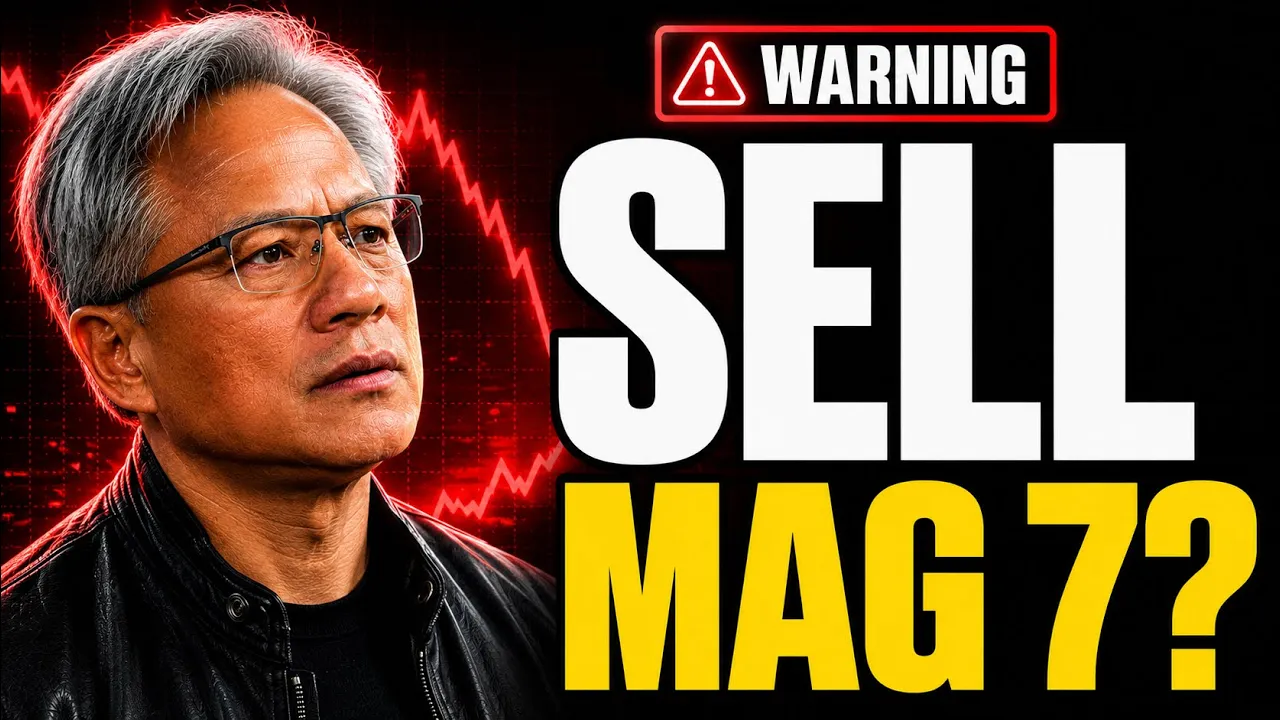
The Magnificent 7 Just Split Apart — Here’s What I’d Buy Now

- Rendement de la vidéo
- —
- Appels
- 5
- Achat / Vente
- 3 2
- Publié
Recommandations
L'entrée est le cours de clôture de l'actif à la date de publication. Le cours actuel est la dernière clôture enregistrée.
-
Entrée $356,09 01 sept 2026Actuel $355,16 02 sept 2026Résultat +$0,93vs. indice +0,3% SPY +0,0% sur la même période
Tesla is my number seven and I'd give it an avoid rating.
-
Entrée $325,13 01 sept 2026Actuel $325,13 01 sept 2026Résultat +$0,00vs. indice +0,0% SPY +0,0% sur la même période
Today, it ranks sixth and remains an avoid for new money.
-
Entrée $254,92 01 sept 2026Actuel $254,56 02 sept 2026Résultat −$0,36vs. indice −0,1% SPY +0,0% sur la même période
It's a buy and ranks third
Contexte “On balance, Amazon combines multiple growth engines, improving margins, and a price below estimated fair value. It’s a buy and ranks third...”
-
Entrée $217,44 01 sept 2026Actuel $217,44 01 sept 2026Résultat +$0,00vs. indice +0,0% SPY +0,0% sur la même période
Nvidia is a buy because today's fundamentals and valuation supports it, not because every customer investment or optimistic 2029 profit forecast must eventually succeed.
-
Entrée $578,54 01 sept 2026Actuel $598,71 02 sept 2026Résultat +$20,17vs. indice +3,5% SPY +0,0% sur la même période
Meta is my number one buy.
Transcription Complète
The Magnificent 7 is no longer one trade. One member is down more than 20% this year. Another's become one of the cheapest mega cap growth stocks in the market. And three now offer very different versions of upside. And if we look at the S&P 500 in just the last month, the split with the MAG 7 matters because buying the group blindly now hides more risk than it removes. The businesses and their cash flows are moving in different directions. So the price paid has become as important as the company chosen. And look at a first glance the group looks inexpensive. It combined forward price to earnings ratio is near the lower end of its recent range. But that average is misleading. Cheap members and expensive members. They're being blended into one comfortable looking number. And the earning story that's splitting too. The seven recently produced extraordinary growth. But the rest of the index is catching up. By the fourth quarter, analysts expect the other 493 companies to grow earnings slightly faster. And this is not a prediction that great companies suddenly stop growing. Together, these firms are approaching $700 billion of quarterly revenue. The question is which stocks still give shareholders enough future cash flow for the price that's being paid today? And some of these are down double digit from their recent highs. So what I've done is I've rebuilt the ranking from the bottom up using growth, profitability, forward valuation, free cash flow, reverse DCF expectations, and Wall Street targets. The result today, two stocks I'd avoid at today's price, two holds, and only three buys. And when we step back and look year to date, some of them have done extremely well. But the order today is probably going to surprise you because a stock can be down and still be expensive. A stock can look expensive on earnings and still be attractive on cash flow. And the strongest business in the group is not automatically the best stock. But before we rank the seven stocks, listen to how CNBC frame the market's problem after Nvidia's results. It matters because excellent AI demand is no longer automatically producing an equally strong reaction in every AI stock. We'd start with what is our takeaway from what happened last week was which was such a consequential week going in. Uh Nvidia, what did they do? They validated the AI story as much as they had to and where demand is currently sitting. And the war speech, he was definitely hawkish, but I mean that doesn't mean September is a shoe in in any by any means for a rate hike. So >> what now? Where does that leave us as we have September looming? And the important takeaway is that Nvidia validated the AI cycle, but validation alone did not settle what comes next. Investors already expect excellence, so future returns now depend on which companies can clear the highest expectations. And the clearest evidence is the momentum reversal before seeing the individual valuations. We're going to listen to the scale of that change. The panel that we just heard from, their figures show this is more than one disappointing trading day or just one week earnings reaction. Let's take a listen. >> I mentioned this piece uh in the journal by Greg Zuckermanman and uh Kungjan Banerjee. I thought it was interesting. The momentum index has tumbled more than 9% since July 1st, lagging behind the S&P's 2.8% gain. The index is on track for the biggest quarterly underperformance in 25 years. July was the second worst month for the momentum trade in around 40 years. That's according to Bank of America estimates that they cite. The only month that was worse was April of '09 when we were right in the midst of the the financial crisis. >> That is why the ranking cannot simply reward whichever stock rose fastest. Momentum's reversal does not end the AI cycle. It means valuation and future cash flow matter again. Credit markets, they're also demanding more compensation as hyperscala commitments rise. And earnings estimates, well, they've moved higher, but the hurdle moved with them. The next clip we're going to listen to explains why offthechart demand can still fail to produce the next leg higher and why this ranking focuses on expectations rather than headlines. Let's take a listen. >> Environment. And the challenge is is that just as you and Joe said, Scott, Nvidia didn't do it. And I think that again, you're looking for some sort of use case or um tangible change in terms of demand that's going to drive these names higher over the course of the next 6 to 8 weeks. >> I'm not even sure what do you need a change in demand? I mean, demand is off the charts. >> I I think what you need is I think you need a new I think you need a new narrative. I I think you need somebody This has been essentially priced in in my view in terms of what does that demand look like? We're not at risk. I don't think the AI narrative is at risk, but I think in terms of that next step function higher in terms of some of these names, I do think it's challenging right now to just look at those as being the market leaders. >> So that is the conclusion. The AI thesis remains intact, but many obvious positives are already priced in. So I'm asking which stock offers the best relationship between business quality, reinvestment, and the expectations which are embedded in the valuation. And we're going to begin today with a company where the valuation demands the most, then work towards the business where the market appears to demand the least. And number seven, the story is exciting, the math just is not. And before we dive in, let me know your own thoughts before we get to the ranking. Which one do you think is at number seven? Which one do you think is down at number one? And maybe least surprising, Tesla ranks seventh doesn't mean the company lacks opportunity. It means the current stock price already assumes an extraordinary amount of that opportunity becoming cash flow on time and at attractive margins. It's also down around 18% year to date over the last year up barely though 12% where today it trades towards the lower end of the 52- week range with just one buy rating although weak from Wall Street. And in terms of the near picture for Tesla, well, it's fairly mixed. Forward revenue growth that only sits around 7%. While both operating income, as we can see here, as well as in fact earnings estimate, they remain under pressure. Yet, if we look at the long-term EPS figure for the next 3 to 5 years, it sits around 27%. The market today is looking through the weak period towards a dramatic reaceleration. And that creates the first disconnect. Tesla's current operating economics do not resemble a mature software platform. In fact, if we look at their most recent quarter where we can see revenue reached $28 billion, we can see operating profit in comparison. That's tiny. We're only talking 400 million. That is roughly a 1% operating margin and a 4% net income margin. Now obviously these figures can improve but today's valuation leaves very little room for delays in autonomy, robotics, lowerc cost vehicles or the eventual return of stronger automotive margins. And then we get to valuation. Tesla trades near 197 times forward non-GAAP earnings and more than 300 times when we take a look at GAAP earnings. The multiples are imperfect, but it shows how much value depends on businesses that are not yet producing the required profit. And my base case discounted cash flow value sits at $264 against a market price today of 363. Well, that implies around 27% downside to the fair value. No margin of safety. In fact, we note a 37% premium. And the sensitivity range here, well, it makes the dependency obvious. At a low growth case, value falls to $185. The base case $264. Only the high growth case today reaches $375. That's barely above today's price. And look, the base case here is not conservative. It assumes free cash flow can rise from roughly $8 billion to more than $85 billion over 10 years, about 30% annual growth across an entire decade. And then look at the reverse DCF. It says the market is effectively requiring growth at around 34.5% under the model. That is a much higher embedded hurdle than any other stock that we're covering today. And if we look at the bull case, well, it points to robotics. Goldman Sachs estimates the total humanoid market could reach 6 and a half million units and 138 billion by 2035. But that is an industry forecast, not revenue that's ultimately assigned to Tesla. And the same caution applies to enormous factory and autonomy scenarios. They can be useful thought experiments, but they're not company guidance, and they shouldn't be treated as contracted cash flow in any valuation model. Now Tesla may ultimately build several huge businesses. The problem is that investors are paying today for the unusually successful outcomes across several of them simultaneously. At this price, the asymmetry is unfavorable. Tesla is my number seven and I'd give it an avoid rating. Now before we get to number six, which has the opposite problem, an exceptionally predictable company whose stock now ask investors to pay an exceptionally demanding price. I want to let you know that I've released my latest weekly article where we uncover 50 ranked stocks for September pinpointing the best five. As always, you can click on the pin comment below, sign up, read these straight away, where we talk about severely undervalued stocks, as well as what's gone in the market in just the last few days. And Apple is the one that ranks in sick place. Its shares they performed well. Its ecosystem remains unmatched and its latest quarter was strong. But the valuation now requires growth that the company's own Ford estimates do not clearly support. They're up 17% year to date. Over the last 12 months, they're up 38% trading at the upper end of the 52- week range. Like Tesla, a buy rating, but only weak and only from Wall Street. And in that June quarter, well, revenue reached $19 billion. That was up 16% year-over-year. Operating profit 36 billion, net profit coming in at 30 billion, and the iPhone that contributed 54 billion, up 22% year-over-year, while total products reached 79 billion. This was not a weak quarter being disguised by accounting. Demand was broad and it was profitable. Where services added $ 31 billion, up 12% year-over-year with a remarkable 76% gross margin. The mix shift makes Apple more durable and more valuable than a pure hardware multiple would ultimately suggest. And look, the long-term segment chart here tells the same story. Services grew at roughly 15% annually, faster than every hardware category, while the iPhone remained the enormous installed base engine that essentially feeds those recurring purchases. Will we have an issue? Forward revenue growth. It only sits around 10%. And the 3 to 5year EPS estimate, well, that sits at 10.6. Yes, it's healthy growth, is not obviously enough to justify a mid30s earning multiple. And Apple's forward PE sits at 35 compared with their 5-year around 28 and a half. Investors are paying a premium to Apple's own recent history. While expected growth, that's below much of the mega cap group. The yield also confirms the same valuation pressure at 34% sits well below their 5-year norm. Now, the stock is not expensive because the business weakened is expensive. I'd say because confidence become very high. And if we look at the blue tunnel from simply safe dividends which points out intrinsic fair value. It sits above the upper end of the fair value that points to a potential overvaluation signal. Look at the last 5 10 years though. Apple typically does trade at a premium. Very rarely do we see it severely undervalued. And the interesting thing with Apple is that it's also taking a different path through the AI investment cycle. Its quarterly capital spending remains around $2.5 billion while peers are spending multiples of that amount. It keeps the cash flow resilient today. But it also creates a strategic question. Is Apple brilliantly staying capital light while partners fund the infrastructure or is it underinvesting while competitors build the next computing platform? The answer, well, that could define the next several years. And my base DCF has Apple at $266. When you compare that to today's price, well, we're talking essentially at a 19% premium. And even using the hydro scenario, it only reaches $36. The low case falls to $231. None of these three cases create a meaningful margin of safety at roughly $316. The reverse DCF, well, that requires Apple 12% growth above the long-term EPS estimate near 10.5. The gap's not impossible, but it means execution must exceed the current consensus simply to justify today's price. And just look at their 10-year KGA sits below seven, their 5year at two. And Wall Street's average price target, well, we can see only offers two to 3% upside. Apple remains an elite business and a stock I'd happily revisit at a better price. Today, it ranks sixth and remains an avoid for new money. Now, next company we can see is growing faster, trading below its own historical multiple and leading the enterprise AI transaction. Yet, at current price, almost every one of those strengths is already reflected. And Microsoft ranks fifth is where the list moved from stocks I'd avoid to stocks I would hold. business exceptional expected return from today's price is simply less exceptional up 5% year to date pretty much flat interestingly over the last year trading towards the upper end of the 52- week range where we get our first strong buy that's from Wall Street respectable buy from seeking Alpha and the latest quarter that produced $90 billion of revenue up 18% gross profit coming in at 41 billion with a 45% margin and one of the largest revenue bases that we see in corporate history credit as well for their net profit coming in at 36 billion with a 40% margin. Very few business can essentially combine this scale growth, recurring revenue and profitability. The quality I would say does deserve a premium and intelligent cloud as we can see here that generated $39 billion up 32% year-over-year. Azour is essentially converting the AI buildout into revenue faster than most skeptics expected while office security and developer tools deepen the customer relationship. And in the most recent quarter, Google Cloud grew fastest from a smaller base. Azer followed a 43% and AWS grew 37%. Microsoft, they're not winning every metric, but it remains embedded across the entire enterprise stack. And more importantly, the major platforms adding similar absolute amounts of recurring revenue. It means Microsoft does not need to dominate every growth rate headline to keep compounding at a massive scale. And the Ford estimates, they remain strong. We can see here in fact doubledigit revenue growth, healthy operating income expansion coming in at 19%. And if we take a look at long-term EPS, that's coming in at 16 is the sort of consistency that deserves to anchor a long-term portfolio. And trading around 26 times forward earnings, Microsoft actually trades below its 5-year near 30, makes the stock look cheaper than Apple and more aligned with its expected growth rate. And we actually still get a slight undervaluation signal when we look at the blue tunnel, although it's been in severely undervalued territory over the last few months. But the cash flow model lands near $490 given where the share price sit around $500. We're talking about a 2% premium. So you could argue Microsoft is fair value, not at a compelling discount, but we do get a fairly wide range here. At 10% growth, the price falls to $389. 15% $490. And at the aggressive 20%, we get 615. The outcome depends heavily on sustained high teens compounding reverse DCF. Well, that requires 15.5% growth, almost exactly matching the long-term EPS forecast. In other words, the market's asking Microsoft to do what analysts already expect. No more, but not much less. The main caveat I'd say though is in fact the free cash flow. Heavy AI infrastructure spending suppresses near-term conversion. So, standard DCF can understate value if the investments generate durable returns. It can also overstate if spending becomes permanently less efficient. So, this balance leads to a hold. Existing shareholders own one of the best businesses in the world. New buyers should recognize that today's price already assumes a consensus growth path. Microsoft number five, wonderful company, fair price. We then move to number four, offering faster cloud growth. arguably the most underappreciated AI infrastructure stack in the group. But after a strong run, valuation discount that's pretty much disappeared. And Alphabet at number four, search remains enormously profitable. YouTube continues to scale. Google Cloud becoming much larger earnings contributor. And the company's not being disrupted in the simple way Bears once predicted. Up 8% year to date, up 61 over last year, trading mid to upper end of the 52-E range. was at all-time highs not long ago at $49 where we get a very respectable buy from seek Alpha, strong buy from Wall Street and profitability for Alphabet remains elite. Strong gross margins, expanding cloud economics, high returns on capital. It gives Alphabet the resources to fund Frontier models, custom chips, data centers and share returns all at the same time. And you can also see growth is pretty broad when we take a look in fact revenue, operating income, earnings per share. every single one of these when we do take note well they're expected rise at a healthy double-digit rate the most important change is that AI is becoming a source of monetization and efficiency not only an expense line and Google's cloud acceleration is central to the thesis as scale improves each new dollar of cloud revenue can contribute more operating profit than it did a few years ago changing Alphabet's consolidated earnings mix and we have one estimate that suggests cloud could approach half of Alpha operating profit by 2028. That's not guaranteed, but it illustrates why valuing the company as only an advertising platform now misses an important second engine. And custom silicon may be the hidden advantage, estimated TPU volume rise from roughly 2.8 million units to almost 9 million by 2027, potentially lowering internal compute costs while creating a differentiated cloud product. And you can see aggressive estimates place TPU related sales at $84 billion in 2027, 108 in 2028. Now obviously figures here should be treated as scenarios, not promises. But the strategic direction is clear. The trade-off, well that's familiar. Free cash flow is being pressured by infrastructure spending. Alphabet can afford it, but investors must distinguish between temporary investment and a permanently higher capital intensity required for them to remain competitive. At around 26 times Ford earnings, Alphabet now trades above its 5-year average near 2126. The market's already rerated the stock as confidence in cloud and AI improved. And that's ultimately why we get a slight overvaluation signal when we take a look at the blue tunnel. Now, my base ECF produces $343, only really 2% in terms of margin of safety against today's price. It's not overvaluation, but it's not the discount that existed earlier in the cycle. And the sensitivity case still offers upside if cloud margins and long-term cash flow growth outperform, but the base case gives almost no margin of safety, making the current setup more dependent on upside surprises. Wall Street though they see more upside with an average target around $428. I understand the optimism. Yes. Yet a disciplined ranking must separate a plausible target from a price that's supported by conservative cash flow. Alphareed for me is therefore a hold at number four. I keep owning it and I become more aggressive on a meaningful pullback but a roughly fair value. It misses the top three buy tier. Now the ranking changes. The next three stocks each offer a genuine margin of safety but for completely different reasons. Number three is using near-term spending to build a much larger profit engine. And that's Amazon. Number three enters the buy tier. The consumer business reacelerating AWS benefiting from AI demand. And the valuation is increasingly supported by operating income growth rather than revenue growth alone. And it's up 13% year to date over the last year up 15% trading towards the upper end of the 52- week range. Our first double strong buy rating with Wall Street and Quan seeing Alpha also giving it a buy. And online store growth accelerated from around 5% to more than 11% across the recent sequence. It matters because even modest improvements in retail efficiency can create substantial profit at Amazon's enormous scale. And the last quarter generated $200 billion of revenue and 27.5 billion of operating income. The key number is operating income because reported net income that's distorted by investment gains. AWS well that contributed $42 billion and it remains the highest quality profit engine AI training inference databases and enterprise migration create multiple ways for the engine to expand. We've got one long range forecast seeing AWS capacity rising from 14 GW to 120 by 2025 with revenue potentially exceeding $1 trillion is an aggressive scenario, but it shows the size of the infrastructure opportunity. And the near-term estimates, they're more useful. Roughly 14% revenue growth. We're talking 27% in terms of EBIT and earnings per share long-term projected around 21%. Profit is expected to grow much faster than sales as retail and cloud efficiency both improve. And at roughly 21 times forward earnings and a PG ratio that sits at one, Amazon's multiple look reasonable relative to expected earnings growth is much better alignment between price and fundamentals than what Apple or Tesla offers. And my base ECF values Amazon near $350 compared with today's price. We're talking about a 26% margin of safety. But the model still depends on sustained cash flow expansion and infrastructure investment can make annual numbers lumpy. But unlike Tesla, the current businesses, they already generate the operating cash which is needed to fund the next phase. And Wall Street's average price target comes to $328 implying 27% upside. That is below my DCF value, but still respectable upside implied. Two different approaches therefore point in the same general direction. The risk is that AI infrastructure spending stays elevated while returns arrive slowly or that retail growth calls as comparisons become harder. I'd also ignore temporary net income boost from changes in the value of anthropic related investments. On balance, Amazon combines multiple growth engines, improving margins, and a price below estimated fair value. It's a buy and ranks third, but the next company offers even faster growth at a surprisingly lower historical valuation. And Nvidia ranks second. The company has the fastest growth, the strongest profitability, and the clearest direct exposure to AI infrastructure in the group. Remarkably, its forward valuation is now well below its own recent history. Up 18% year to date, up 29% over the last year, trading towards the upper end of the 52- week range. Another double strong buy from Wall Street and Quant by rating from Seek Alpha. And quarterly revenue reached 96 billion. That's up 106% year-over-year. At this scale, tripledigit growth is almost difficult to comprehend. The numbers look like those of a startup attached to a mega cap balance sheet. Data center, well, that contributed $89 billion, up 117% year-over-year. Hyperscale demand accounted for 48.7 billion, while AI cloud industrial enterprise that came in at 40 billion. Look at their gross profit as well. That reached $72 billion at a 75% margin. Nvidia is not merely selling a scarce component. is capturing extraordinary economics from a full computing platform spanning chips, networking, systems, and software. Operating profit 64 billion 66% margin. It gives Nvidia unusual capacity to invest return capital and absorb inevitable swings in the semiconductor cycle. And we can see both on the forward revenue estimate as well as the forward EPS around 72 73%. Even if those forecasts fall materially, the growth profile remains far ahead of the rest of the group today. And the profitability table is equally unusual. We got 75% gross margin, 65% when we take a look at the EBIT return on equity. That's sitting at 117% exceptional even before comparing them with the sector median. I mean that sits we're talking single digit and it's trading at an 18 times forward earnings against the 5year of 36. That is insane. And I go as far to say potential severe undervaluation signal. Something that's also confirmed when we look at the blue tunnel. Just in their latest earnings, fundamentals continue to go higher and higher. Yet the share price is barely moved in just the last year. And the biggest evidence of confidence is also the biggest risk. Supply and capacity purchase commitments have surged to $279 billion. Nvidia's reserving enormous resources because it sees enormous demand. Now, those commitments can protect supply and reinforce the moat. They can also become a burden if customer spending slows, architectures change, or capacity arrives after the market's tightest period. This is the number I'd monitor most closely. And my base case produces an intrinsic value at $33. Against $27, we're talking a 28% margin of safety. And even the low case today at 8% that offers 17% upside, the base case 40% and the high case reaching 66. But here is essentially the caveat. The model jumps free cash flow from 97 billion to 180 billion and then 274 by 2030. These are ultimately based off analyst estimates. They're a major assumption. Definitely not a conservative starting point. The reversed ETF, well that shows only 4.5% growth, but this rate does apply from 2031. And Wall Street's average price target is $326 implying 48% upside. But the range is exceptionally wide, 180 lowend, 515 on the upper end. But before my final Nvidia verdict, we're going to listen to Goldman Sachs David Solomon where he explains why AI can create enormous value without making every AI investment successful. >> So start thinking about the next 5 to 10 years. I think with AI being developed into the economy and the enterprise um and that won't be a straight line either but the productivity opportunity the productivity gains actually gives us a real opportunity to run at a higher growth rate you know as we move forward >> do you think that it'll all be worth it all the investment >> I think it I I can't say that every investment will be worth it because of course you know there'll always be winners and losers some good investments some bad investments but the direction of travel as this gets adopted into the economy and gets adopted with enterprises and with individuals is a productivity boom that I think is going to be extraordinary. >> Solomon's distinction is crucial. Economywide productivity can boom while individual investments still fail. Nvidia is a buy because today's fundamentals and valuation supports it, not because every customer investment or optimistic 2029 profit forecast must eventually succeed. So Nvidia ranks second. exceptional growth, exceptional margins, meaningful upside balanced against concentration, cyclicality, and enormous purchase commitments. The number one stock grows more slowly, but ask investors to assume far less. And Meta ranks first. The stock is down year today. Capital spending has surged and free cash flow looks temporarily messy. Yet, the core advertising engine is accelerating while the valuation sits below its own history. is down 13% year to date over the last year down 22 trading near 52- week lows with a strong buy from Wall Street respectable buy from seek Alpha and all of this combination is exactly what creates opportunity the markets focus on the spending cycle near-term cash flow pressure while the operating business continues to grow revenue engagement and monetization at a high rate I mean revenue grew 28% year-over-year forward revenue is estimated to climb 23% these figures are dramatically ally above the sector median and in fact well above their own 5year as we can see we're talking year on year higher by 45% moving forward estimated higher by 40% and long-term EPS that's expected to climb near 20%. The glaring weak point here though is the levered free cash flow growth year that's down 34% and this is capital expenditure and infrastructure commitments accelerate with the underlining economics they remain superb. talking 82% in terms of a gross margin, 38% when we look at EBIT margin, 30% on a bottom line margin. So Medic fund a huge AI buildout while remaining one of the most profitable companies on earth and cash from operations that reached 130 billion and net income per employee, well that's more than 900,000, highlighting just how efficiently the company turns its global network and the recommendation systems into profit. And the revenue per employee tells the same story. It's risen from around $1.4 million in early 23 to $2.9 million by the latest quarter. The efficiency reset was not temporary window dressing and Meta's annual advertising revenue increased from $40 billion in 2017 to 196 billion in 2025, a 22% compounded growth rate. Google search remained larger but grew more slowly over the same period. And Bernstein estimates Meta advertising could briefly surpass Google search revenue in the fourth quarter of 26 is a forecast, not fact, but it captures how quickly Meta's monetization engine is closing the gap. And now look at the price. Meta trades 17.9 times Ford earnings below the 5-year average of 21.9. Yield is near its short history. So the undervaluation signal mainly comes from the earnings. And you can also see the undervaluation signal still present when we look at the blue tunnel. But there are real risk. Regulation is not abstract. Meta recently outlined an agreement with 52 attorney generals involving time limits, nighttime restrictions, school hour notifications, and new parental control for teens. The changes may reduce some engagement and create compliance costs, but addressing the issue proactively can also lower long-term legal risk. Either way, regulation belongs in the valuation rather than being dismissed as background noise. The larger near-term risk though is capital intensity, capital expenditure to equals roughly 39% of sales and lever free cash flow margin that's fallen below 10%. Meta must eventually prove that AI spending improves monetization, efficiency or new product revenue. My base ECF values Meta at around $832 against a market of 566. It implies a 32% margin of safety. And even the low growth case here reaches $770 36% above the market. Base case 832. The higher case 898. But the same discipline applied to Nvidia that matters here. The model seems free cash flow recovers sharply from 2 billion in 26 to 20 billion in 2752875 in 2029. The 2.1% reverse DCF applies only after the recovery doesn't mean medic can grow current depressed cash flow at 2% forever and still be worth $832. And Wall Street's average target is around $755, around 32% above today's price, sits below my DCF value, giving a more conservative outside reference while still indicating meaningful upside. So Meta earns the top spot because the core business is growing above 20%, margins remain elite, the forward multiple is below historical norms and both valuation approaches indicate a substantial discount. The market is demanding proof that the spending will pay off that creates volatility, but it also creates a better entry point than buying a perfectly admired company at a perfectly admired price. Meta is my number one buy. So the Magnificent 7 is split into three clear tiers. Tesla is an outstanding story whose valuation offers insufficient protection. Today, Apple joins it in the avoid tier for new money until price or fundamentals improve. Microsoft, that's a hold. Its AI position is real, but its base case DCF sits too close to the market price for aggressive buying. Alphabet, that's also a hold. Strong compounding, but very little basease margin of safety. Amazon enters the buy tier with diversified operating leverage and meaningful upside. Nvidia, well, that is the second buy, offering unmatched AI growth and profitability alongside substantial supply commitments. And Meta ranks first with the strongest combination of growth below history valuation and modeled upside. The biggest lesson, therefore, is not that one company wins forever. Is that price and expectations now matter more than a magnificent seven label. The group can keep growing while individual shareholders earn very different returns. Now, my ranking will change when prices, estimates, or cash flow assumptions change. That is the point of valuation is a decision process, not a permanent opinion about a company. If you found this breakdown useful, tell me which of the seven you would buy at today's price and which assumptions you think the market is getting most wrong. And don't forget to sign up to the weekly newsletter. As always, click on the pin comment. You can read these straight away. More importantly, have a great day. I'll see you all on the next
Commentaires 0
Connectez-vous pour rejoindre la discussion.
Se connecterAucun commentaire pour l'instant. Soyez le premier à partager votre avis !