Contexte
"He bought a number of different companies... One of them is Uber Technologies, 6% position... I think that this is a very good buy at this point."
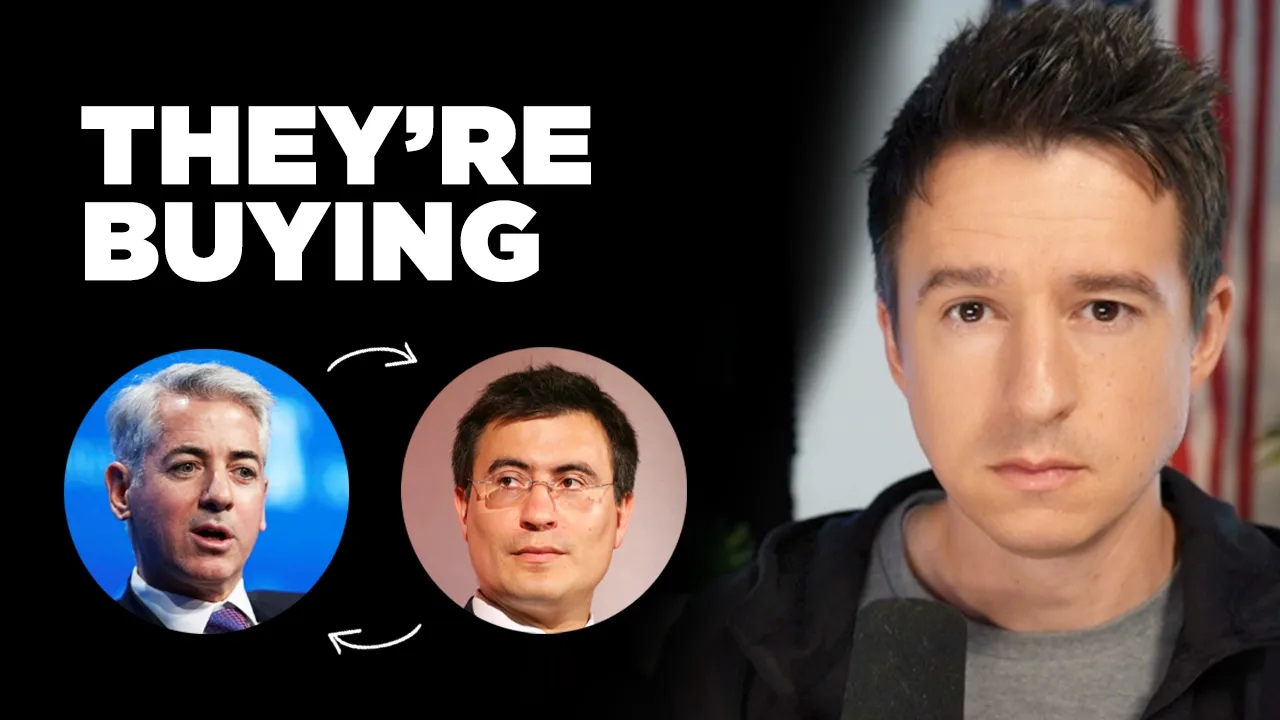
Well, folks, these super investors are buying and selling, and we get an insight into what's going on with their portfolios. We can see specifically what they're doing. We've already seen that some of them, like big-time investors, have sold a bunch of Microsoft and they're very worried about it. We talked about this with Chris Hone in the previous episode, but now we have Bill Aman saying he's buying a bunch of Microsoft. Who's correct? Who's wrong? We also have other big investors piling money into Google left and right, but Google's already at a high stock price. Who's right in this and who's wrong? Once again, we're going to be going over all of these portfolios. We're going to be trying to figure out what the actual strategy is here of each investor and if there's any insight into what we can do with our own money. Now, of course, we also have the fail of the week, which in this case is Whimo. The robo taxi company has goofed and we're going to be highlighting it in this episode's fail of the week. Now, I've said before that Chris Hone is one of, if not the best working investor today. And I say that for a couple reasons. First of all, Chris Hone has had incredibly good returns in the range of 19 to 20% for over a decade. So, he's consistently beaten the market. He's even beat the QQQ, which is very difficult to do. A lot of investors would have loved to gone back in time, put all their money in the QQQ. That's essentially what Chris Hone did. He beat the best indexes of the time before you knew that those were the best indexes. That's a very difficult thing to do. And he also did that while growing his fund to massive size. Now managing tens of billions of dollars. His fund right now is up to $45 billion. It's just massive. The TCI fund is gigantic. But even with that fund, he has an extremely concentrated portfolio. He has about 10 US stocks. Now, this leaves out a couple European stocks. He has uh ones that are like GE Aerospace that are also very high barriers to entry. So there's a couple companies missing from this list, but overall I believe it represents his strategy. When we look at his most active trades, we already know because he told us about a couple of them. One of them is that he sold a massive amount of Microsoft. He reduced his Microsoft holding by 83%. So 83% he sold 14 million shares of Microsoft and it went from a it was an 11% part of his portfolio. Okay. So it was 11% now Microsoft is a 2%. So he really took down Microsoft. Now he mentioned some vague reasons of why he sold Microsoft. He said that the software enterprise of Microsoft which constitutes majority of Microsoft's moat. We've discussed this in previous episodes. It's the bundling. It's the switching costs. It's all of those things that make the Microsoft enterprise so sticky and valuable. Well, he believes that that is becoming more pressured, that the mo is more questionable, that AI removes a lot of the friction. It makes it so other software applications can transmute the data from application to application as well as AI is becoming a layer on top of Microsoft products. You can see that with Claude. So he believes that Microsoft's moat is becoming more questionable both in the software portion and in the cloud p portion with Azure. So in both of that he becomes a little bit more concerned and he sells down the holding by 80%. Now in most cases if a company you own has some questions with the moat just a few questions you may just hold on to the company because it might not turn out that bad. But can you really do that when you have 45 or 50 billion dollars in 10 companies and half that money concentrated into only five or six companies? You can't really afford to take any guesses. You can't really afford to make any mistakes. Chris Hone is at a whole different level of concentration than we can even imagine. You might feel concentrated if your $250,000 portfolio or $300,000 portfolio has 15% into one position. That might feel like a little too much. Now imagine controlling $45 billion and having 15% of that in a single position. The stakes are incredibly high. And I believe that Chris Hone is extremely conservative when it comes to moes. He is the moat investor. He does not like playing games or taking chances with modes. He only invests in the highest quality with the widest modes possible. When I look at this, it's not an indictment on Microsoft. I believe that Microsoft will be fine, but what I see here is entirely consistent with Chris Hon's overall investment thesis. He's identified one area of a perceived possible weakness by Microsoft and he cuts the holding and he puts his money into far more predictable companies. ones that he does not see any perceived weaknesses. So you can see where this money went. He added to Google. He bought back into this company at a higher price than he recently did. And we'll be discussing that in a minute. He also bought into Moody's. He bought into Visa. He bought more into Google. And he bought into S&P Global. So he sold out of Microsoft, out of the AI concerns. And he doubled down on the igopies, the Moody's, and the S&P Globals. He also doubled down on the big network mo of Visa, buying a lot more Visa. He feels more comfortable with these companies and feels like they're more insulated than Microsoft currently. And again, what Chris has done here is entirely consistent with his investing style. He prioritizes moat more than price. So even though Microsoft has come down in valuation, the PE has come down from the 30s into the low 20s, most investors look at that and say, "Hey, it's Microsoft selling for cheaper. It's time to buy." Chris Hone looks at that and he says,"Wh is the the valuation going down? It's going down because Claude is infiltrating Microsoft. It's going down because Microsoft Azure doesn't have its own TPUs or Graviton chips. It's it's very behind in its own chips and it doesn't have its own AI models. So, he's looking at this from the risk factors while other investors are looking at it from the valuation factors. And right now he believes Microsoft has become more risky and the moat is less insured. And at the level of concentration that Chris Hone invests in, he takes no chances with those risks. So Chris Hone sold out of Google at a lower price and bought back into it at a higher price. And at first glance, I do think that this looks like a messy handling of Google. I think this was a little bit sloppy by Chris Hone. He sold out of the company at a lower price. Now he's buying back into it at a higher price. And if he would have held it, he would have had a vastly superior returns here. So just holding Google would have been the right decision or even doubling down on Google when it was lower would have been the right decision. But again with Chris Hone, he is not focused on timing valuation. He is focused on investing in the companies that he perceives as having the widest moat at any given time. When we look at Google, Google was under threat and under question at one point in time and I believe that's when Chris Holm became very concerned about it. He sold a huge portion of his position. This was during the time of chatbt of the the search business and the questions around it of the big capex spend before all the all the stuff about Google started to really play out in a really convincing manner. So he sold down Google like crazy and now he's buying back into it a little bit higher. While most investors would highlight this as a sloppy handling of Google and saying that Chris is selling low and buying high, what it also shows, I believe, is a more professional attitude about investing. For example, a lot of investors have a lot of ego attached to them. So, if they sell a company at like $300 and then later on the company's trading at $500, they'll never want to buy back into that company again. they will be anchored to their lower sales price and they'll never want to buy higher. That is a psychological thing with many novice investors. They'll never want to buy a company at a higher price than they previously sold it. But Chris Hone shows that he's he's fine doing that. If he believes that Google has improved as a business fundamentally that a lot of their risks are reduced, he's buying back in. He's bumping back up the stock as it's showing that it's fundamentally winning the game. Google's winning in cloud. It's winning with its TPUs. It's winning with Whimo. It's winning with YouTube. It's winning in the search business. In every aspect that you can look at on every front that Google's battling, it is dominating. So now Chris Hone wants to own the stock once again. Now he's bought back into it. He has no anchoring bias with the previous buy points of this company. And he's shown that repeatedly throughout his trading history. And I believe this year he's going to have very attractive returns. Once again, his portfolio maintains this highly concentrated positioning into some of the biggest, widest mo, fastest growing companies in existence. Now, next up, we get to Bill Aman. We all know him. He manages $13.7 billion. That's what Persing Square is at as of now. And the most interesting part of Bill Aman and this quarter, is that he basically did the exact opposite of what Chris Hone did, which is somewhat remarkable. Chris Hone sold Microsoft down 83% and bought Google. Bill Aman dumped his entire Google position to buy Microsoft. So they they did the exact opposite transaction, which doesn't typically happen with super investors because they're both very smart. They both have enormous resources. Bill Aman has a giant team working for them. Chris Hone has a giant team working for him. So what's going on here? How could they come to the conclusion, the exact opposite conclusion of each other? We look at Bill Aman and he bought Microsoft up to a 15% position. This is a huge position even for Bill Aman. This is very concentrated. They basically sold these companies to each other. Like Chris someone was like, "Hey, you can have Microsoft. Give me Google." And Billman's like, "Yeah, you can have all my Google. I want all your Microsoft." So they just swapped companies, Microsoft and Google. And although that's amusing because they're kind of contradicting each other, in a way it's still consistent with the investing philosophy of these two investors. See, Chris Hone clearly has a lower tolerance for moat than Bill Aman does. Bill Aman has a much wider tolerance for different types of moes of businesses. Chris Hone really doesn't have a wide a wide tolerance for different types of moes. He likes a specific type of moat. He likes very clear direction, very clear fundamental growth. He does not like moes that are being under attack. For example, when we look at Bill Aman's portfolio, he has companies like Uber, and I can't imagine Chris Holm buying Uber. I I just don't think it would happen. Uber's under attack by Whimo and Robo Taxis. Chris Hone would say, "That's a problem. I'm not going to own it." I don't think that Chris Hone would own Restaurant Brands International. I don't think he would have ever owned Chipotle. I don't think he would have ever owned Domino's. I don't think he would have ever owned Herz Global or even the Howard Hughes Corporation. These are all companies that have more questionable or at least different types of moes than the type that Chris Hone owns. Chris Hone owns extremely high barriers to entry. Companies that have technological advancements that are so difficult to replicate that nobody else really can do and they're just structurally advantaged companies. Bill Aman likes a variety of companies that are just cash flow generative. They have decent enough moes, brand value, all that type of good stuff. But where Bill Aman will buy companies like Nike, Chris Hone will not. His tolerance for any type of pressures on a moat is much much more narrow, much more small than Bill Aman's. So I look at it as consistent with these two investors. Now on the question of Google, Bill Aman has actually handled Google shares better than Chris Hone. Bill Aman bought the company when it was much lower. He held it until it went to a much higher price and now he's sold out of it. So Chris Hol bought it low and then he sold it and then he bought back into it. That's a little bit more of messier handling. So so far I have to give credit to Bill Aman here for actually handling Google a little bit better. In the case of Microsoft, I also think that Bill Aman's going to do well here. I don't agree with Bill Aman on every buy. I didn't like his Nike buy, for example. I didn't follow him into that but Microsoft is a company that I own and I believe the mo is very intact for Microsoft their core software suite the amount of applications they have I think is very unlikely to be under significant pressure by AI so Microsoft is one that I actually agree with Bill Aman and I think that Chris Hone is going to actually see that one rise after he sells it Microsoft in my opinion will likely go up that's my guess so I believe overall the trading from Bill Aman has been very good. Over the past couple of years, he bought into Google at a very low valuation. He rode Google up to $400 per share or around that point. And then he dumped Google entirely to buy Microsoft, which is now trading at a 22 Ford PE, a very high quality company that is likely going to have valuation multiple expansion. The rest of Bill Aman's portfolio continues to be anchored by companies like Brookfield. He's also loading up on Amazon. He's very bullish on Amazon, which again, I agree with now. He has Microsoft, Amazon as cornerstones of the portfolio, but overall, we can see the types of big tech companies he's going into these big cloud operators. And then he's mixing in Uber there. Out of all of these, I think by far the weakest one is restaurant Brands International, but Bill Aman has done well historically with food companies. So, I think he has some history here as well. Overall, I really like what I see. Now, next we have an investor fighting his own battles. This is Dev Canasaria who this year has been a bit of a struggle for his portfolio. Based on the analysis that I've ran and overall the math trying to retroactively recreate what his performance is, I estimate that he's down around 20% year-to- date. Now, that's not an official number that's not like from Valley Forge Capital, but that's just my estimate. So, it could be wrong, but I think he's down around 20% this year. So, the performance this year has been struggling. But what is DevCantasaria doing as a result? Well, we can see his reaction here. The first thing that I notice is that the big company that's in question is FICO and Dev did not sell any FICO. Now, he didn't buy any more FICO as it's already a large position and there are some questions about FICO, but he also didn't sell any. And I think that that's notable. He is continuing with this conviction on this stock. For DevCant Assasari's portfolio to do well and for it to recover, he needs his largest position making up a quarter of the portfolio, which is FICO, to do well. FICO is also facing a lot of challenges right now. I highlighted many of those by this exclusive episode where we go over Steve Eisman shorting FICO. It's about an hour episode going over Steve Eisman's thesis. He brings on a top analyst in the category to look at the situation. And there's a belief out there by some analysts that FICO will lose market share, meaningful market share from Vantage Score, and that's causing the pressure with FICO. Now, there's lots of disagreements with this. There's lots of people that believe FICO will be just fine and make a bunch of money. But in any case, FICO is under question right now. So, that one is under pressure and I believe it's going to take time for that stock to recover. We look at the other companies that he had and he did some interesting things here. He didn't change his Mastercard position at all, but he sold a third of his Visa position. Why does DevCant Assisaria like Mastercard so much more than Visa? I don't know, but he prefers having a very large Mastercard position over Visas. When I try to look at the reasons why, I believe it's because he believes that Mastercard is more diversified with its value added services, with its push into security and transaction settling, whereas Visa is more basing its entire mo on the network. Again, that's just a guess, but I believe that would be the reason. We also look at them adding more to ASML, which I'm happy to see. ASML has done incredibly well. It has an incredible moat in my portfolio. It's one of my two best performers right there next to Google over the past couple of years. And I believe ASML has a very profitable, bright future ahead of it. More of ASML's extremely expensive machines are being installed and established all across the globe in different countries. All of those need service and contracts, and the company's growing more profitably every day, and I still believe they're in a dramatic lead with their technology. So, this is one that I like seeing the addition of. He reduced his INT position by around 15% yet again. I think the company's likely more fine than investors believe. So I'm holding on to my shares of in it, but I can understand why some investors are bailing on the stock. So what we see here is Dev Canasaria sticking to the plan. He is not panicking. He's not giving up on his top holdings. He is simply holding to all the companies and all the thesises that he originally had even when sentiment in the stock price has worked against him. Now, next we have Bergkshire Hathway, which is no longer being managed by Warren Buffett as he's retired. Instead, we have Greg Ael running the joint. And we have a lot of trading. Let's go ahead and just zoom in on what's happened here because you really have to see it. There's like a couple new buys. We'll be going over these. There's a couple additions. We'll be going over those as well. But then there's a ton of sells, sell after sell. And these are 100%. These aren't just trims. All these different stocks. I mean, you name it that there's Pool Corp Domino's Mastercard Visa Amazon, uh, left and right, we're seeing 100% sales. So, what's happened here is that now that Greg Ael has taken over, we have another person that was involved in Berkshire, another person that used to be one of their top stock managers, which was Todd Combmes, who has left for JP Morgan. Since he left, Greg Ael has sold off all the stocks that he was managing. Basically, he doesn't want to cover all these stocks that he's not as familiar with, all these businesses and equities that he doesn't know as much about. So rather than monkey around with them and potentially screw things up, he's selling completely out of them. So when you look at these cells, I don't believe these are bearish indicators whatsoever on any of these stocks. It doesn't mean that he has a negative view on them. It just means that he doesn't want to manage these companies that he's not as familiar with, that he hasn't built an investment case for. And that makes total sense. What is more signal here than noise is the buys. He bought into Delta Airlines, clearly bullish on the company. He bought into Google, big time on Google, and then he also bought into Macy's. The buys into Google are dramatically bigger. We're talking about 39% here. This little buy into GG is already orders of magnitude bigger than the Macy's buy. And then the other addition to Google up here, another 203% is an additional 4%. So it's multiple orders of magnitude more than the Macy's buy. So even though some news reporters will put this right up next to each other, these aren't even in the same league. He is buying big into Google. So so far we have two big votes for Google currently with Chris Hone and Bergkshire Hathway. Next we have Terry Smith with FunSmith that has been struggling for years. To put this in perspective, I looked at the returns of Fundsmith through their fact sheet on their website. So, this is verified by them and I cross-co compared it against the S&P 500 and the QQQ since 2021. Since that time period, Fundsmith has had a total return of 19%. Meanwhile, the S&P 500 has had a total return of 112% and the QQQ of 133%. So by putting your money just in a US market cap index, you would have had roughly 5x the returns of fundsmith. And part of this is because of the recent trading by Terry Smith. This has not been good for them. For example, if we just look at some recent trading and handling of in it into it's a stock that they basically are destined to lose money on. That's seemingly what's going on here. In its a company that they bought high and sold low and then they bought it high again and sold it low again. So they found a way to lose money twice in two different situations on into it. And once again, just this quarter, he sold entirely out of in it. The same thing for Nike. Bought into this company and sold out of it. And so many other companies. You can see that many of these are small reductions. And this is obviously because of redemptions. So Fundsmith is having people pull their money out of the fund. They're saying that they want to put their money elsewhere. And so you see massive waves of selling. So there's been some subpar handling of different companies here for sure. But another issue with fundsmith generally speaking is that in this market a lot of the gains have been concentrated heavily into only a few companies at the top specifically the big tech companies. Google has been a massive winner. Microsoft massive winner. You have Meta massive winner in this market. You have companies like uh Netflix. You have you have other ones that have become massive winners. And if you're not in those stocks, you really haven't taken advantage of this bull market. The QQQ and the S&P 500 is very exposed to those stocks that are winning. Fundsmith is not. It has some exposure, but they're just midsized holdings mixed throughout the portfolio. Then you have a lot of consumer staple companies, companies like Church and Dwight, Proctor and Gamble. You have a lot of these mixed in with the portfolio and they simply have not performed to the same degree as big tech and all these companies involved in the AI revolution. So Fundsmith is taking a more conservative approach. It'll likely do better in a big downturn, but having a fund that is tailor made for protecting the downside has the significant cost of missing out on the upside, which in the case of this massive bull market is very expensive. Next up, we have Pat Dorsy. This is the guy that originally came up with the Morning Star Moat rating. He's since started his own firm and he went through a troubled phase for some point in time. He was having subpar returns, but Pat Dorsey has really turned it around. I like the moves that I'm seeing here. He bought a number of different companies that are pretty good from what I see. One of them is Uber Technologies, 6% position. I have a no criticism there. I think that this is a very good buy at this point. He also bought into S&P Global, another company, this one that I own that I think is a very good buy in today's price point. He also bought big into App 11. I've looked at this company before. It grows crazy fast. It has incredible metrics. I don't quite understand the company, so I stay away from it. And then he bought into Sunbelt Rental Holdings. This is an 11.4% position. Now, Sunb Belt Rental, this new buy that constitutes 12 or 11 and a half% of his portfolio is actually a company that rents out construction equipment. So, if you're building major projects, if you have a lot of capex and big industrial things that you're doing, these rental companies are going to do pretty well. And then I love the buy into S&P Global. This is a company that likely will turn out just fine. I have it in my portfolio. There is some pressure with AI analysis and cloud but S&P Global has a huge credit rating business. It is a massive data enterprise and I believe that it's going to do much better than investors are pricing in today. So this is another very strong company that he's buying into. Another super investor that I have to mention is Leelu with Himalaya Capital. When we look at this one, we can see the changes that he's been making to the portfolio. He sold out of Bank of America. This was an 11% position and then bought in more to Tencent Music Group, the HR Block to Moody's Corporation and S&B Global. So, two votes of confidence for these credit rating businesses. Bought a bunch of Crocs, the shoes company. But the most notable thing about this investor is that he manages $3.2 billion. Around half of his entire portfolio is in Google, which is just incredible. A huge vote of confidence for Google, and he continues to hold it even with the higher share price. We also have another super investor, this time Altter Rock Partners. Altter Rock Partners manages over $4 billion and their trading here is very interesting. We see more super investors being split on Google. In this case, he reduced Google by 74%. So that's a big reduction, but he bought more into Amazon. So Amazon already makes up now it makes up 38% of the portfolio as of March 31st. So massive amount. 40% of your portfolio is in Amazon. You have a big big bet there. and he also added a little bit to Moody's. So the super investors seem to still believe in the credit rating agencies. Now next we have Brad Gersonner with Altimter Capital and their portfolio is heavily concentrated into the AI bets in the AI phase. Brad owns Nvidia as a huge stake, Meta as a 20% position. Uber's a new position at 10%. Then we have TSM, Microsoft, Coree, Snowflake. We have Axon, Robin Hood and Broadcom and Grab Holdings. This is one vote against Google. He sold out of the company completely as of this last quarter, but he's likely to say that he still believes in the company. He's just investing where he thinks there's the best opportunity. Now, finally, we get to Chuck Ori. This is Ori Capital Management. It bears his name. But what I see with Chuck Orie's fund is that there's a new sheriff in town. Chuck Coach's legacy of investing in these extremely high return on capital investments, ones that have incredible fundamentals with extremely profitable business models. Well, they're basically selling out of those and they're buying a lot of newer companies, ones that don't quite yet have the same economics. They're buying into Perimeter Solutions, Service Now, Salesforce, Copart, Co-Star Group, Roper Technologies, Fair Isaac, lots of different types of companies. Now, some of these fit in well with their old strategy, but some of these do not. It's unlikely that Chuck Ori would have bought Salesforce. These are all companies that have more evolving landscapes. They have higher stockbased comp. They do a lot of things that aren't typical with the type of companies he used to buy. And I don't believe that this is necessarily a bad trade, but I believe that it overall lowers the quality of the portfolio that Chuck Ori made. So, it is a different type of investment thesis. And I think that this portfolio will struggle primarily because of the lack of big tech. There is basically no big tech here. They don't own Microsoft. They don't own Meta and Google and Amazon. You don't see these companies in this portfolio. And I think that they're going to have a very difficult time competing with the market when that's the case. So overall, we see these super investors sticking to the game plan. They continue to accumulate compounding machines. There's some disagreements on whether or not Microsoft is the best buy or Google, but regardless, they're buying into the highest quality, the most deeply integrated companies that also protect them from the downsides of extreme volatility. I noticed that a lot of these super investors don't buy into the Nvidas. They're not buying into the SanDisks or the Micron technologies. They consider those a little bit too volatile and not as predictable. So instead, they go the route of buying compounding machines. Now, moving on from this, we have the fail of the week, which in this case is Whimo. And I say this as an investor in Google. I I love Whimo overall. I think they're doing a great job, but this is hilarious. There's a recent report that Whimos have been going into small neighborhoods, finding culde-sacs, and just driving around in the culdesac. >> Wayward Whimos. This video here captured several of the self-driving cars just clogging up a neighborhood culde-sac. The people living in the northwest Atlanta neighborhood say dozens end up circling their community. Channel 2's Steve Gellbach is on one street where they want the Whimos to stop. Just look at this. The whole screen's just full of Whimos. There's like there must be two dozen of them there on this single street. Not a good look. Not great for Whimo, but we'll continue. >> It's almost every little culde-sac around our area. So, I think it's a real problem. >> Whimo after Whimo after Whimo enter this deadend street, usually early in the morning. >> I think yesterday morning, we had 50 cars that came through between 6:00 and 7. >> Neighbors on Battle View. >> She says there's 50 of them that came through between 6:00 and 7:00. And you look at the video and it's just nobody's in the car, no passenger, no driver. It's just a a you know, a ghost vehicle driving around your culdesac, dozens of them. She says 50 of them at one point in time. That would be a little weird. Imagine you just wake up and there's driverless cars circling about your neighborhood, circling your your culde-sac over and over again. They even shared video with us when neighbors used this little guy to put them right out here in the street to block the Whimos from getting into the culde-sac. And you can >> So they throw up one of those things that you put in the road to slow the speedy cars down, telling you that there's kids at at play. And that completely stops all the Whimos. their cameras look at that and they're like, "Well, we can't go there. There's a kid in the the street, so we can't pass." So, it's literally like a do not pass sign. They won't even seemingly go around it. And that's where you're getting dozens of Whimos bottled up on a single street. >> And we had at one point eight Whimos that were stuck trying to figure out how to turn around. >> So, obviously, this isn't a good situation. We have dozens and dozens of Whimos going around small neighborhoods, circling about, just going in and out of neighborhoods, 50, 60 of them. And the neighborhood the neighbors are like, "What's going on here? We're being invaded by Whimos." That'd be really weird. And some of them highlight that it's dangerous to some degree, which it might be, but these are they are the safest vehicles. They have cameras everywhere, so it's unlikely for them to really have an accident. But regardless, it's not good for them to be circling around the same neighborhood. But I believe what's happening here is the simple way Whimo works. Whimo has their fleet sent out in the morning before rush hour. They know that there's going to be people getting onto the app. They know that there's going to be a surge of demand during the morning commute. So, they send their fleet out real early. And she mentions there that it was like, you know, 6:00 or 7 in the morning. If that fleet isn't being used, they don't want to occupy the busiest streets in the city. Instead, they want to go to places that are a little bit less busy, less likely to run into things. So, they program the whimos to kind of get out of the way. Well, getting out of the way in this case could mean going to the lower traffic neighborhoods and just kind of circling around. Maybe the Whimos couldn't find anywhere else to idle. So, as they're idling, they're trying to just get out of the way, circle around, and they have a mistake where a lot of them are bunching in the same areas. But, I do agree with them that this is a bit creepy. It's weird to have Whimos circling around a neighborhood. If you saw 50 different driverless vehicles with no passengers, just cars circling around your neighborhood over and over again, I think you'd be a little creeped out, a little weirded out by that. Like, what's going on with this situation? So, not a good look for Whimo. They need to get it fixed. I think that they will, but that is the fail of the week. That's all for this episode. Hope you enjoyed. See you in the next one.

Commentaires 0
Connectez-vous pour rejoindre la discussion.
Se connecterAucun commentaire pour l'instant. Soyez le premier à partager votre avis !