SanDisk comes in number four as a speculative opportunity.
Contexto
"SanDisk, while it may be one of the most explosive opportunities here, but it also carries considerably more uncertainty than the stocks ranked above it. So, SanDisk comes in number four as a speculative opportunity."
Microsoft does not offer the most explosive theoretical return, but it provides one of the best combinations of quality, recurring revenue, competitive advantage, and valuation. So, it comes in today at number two.
Intel remains the one stock I would avoid despite the recent pullback.
Contexto
"At the other end of the ranking, Intel remains the one stock I would avoid despite the recent pullback."
Transcrição Completa
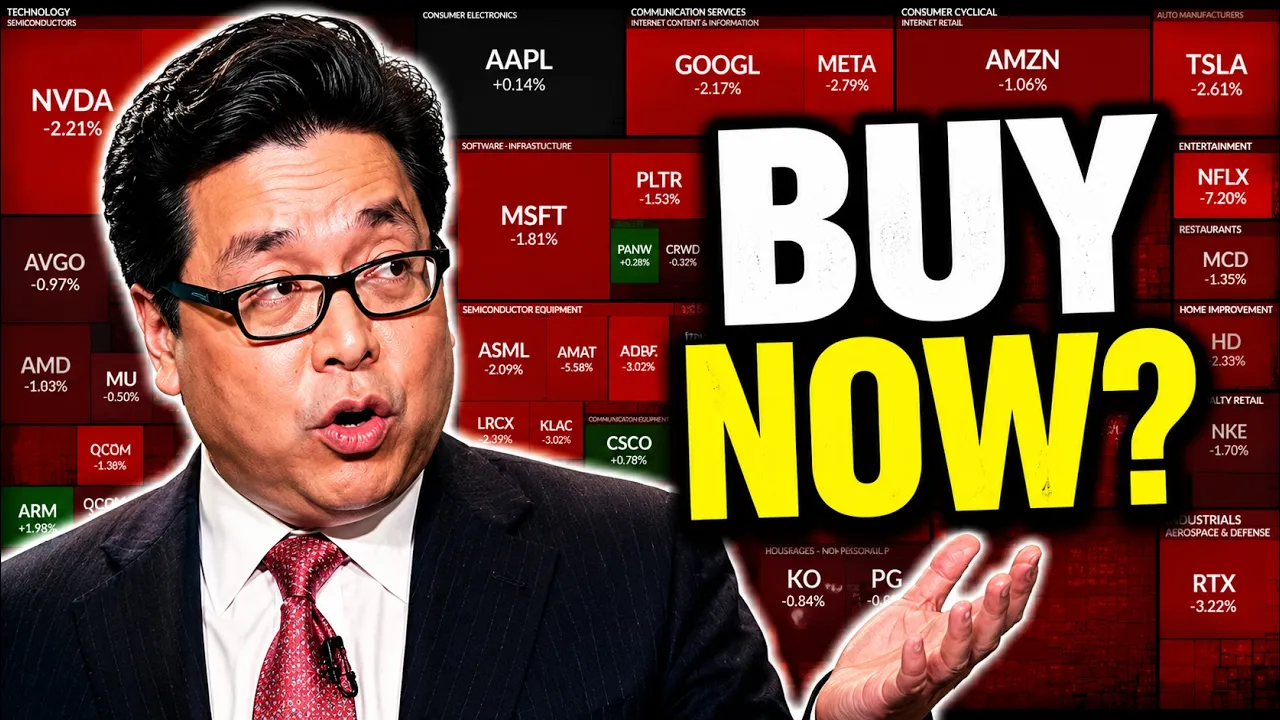
Everyone is selling AI stocks right now. The semiconductor index has officially entered a bare market. Billions have been wiped from the world's biggest technology companies. And investors are suddenly questioning whether the AI boom has gone too far. But is this the start of something much bigger or exactly the kind of panic long-term investors well should in fact start buying? And if we're honest here, the selling didn't begin on Friday. When we zoom out across July, while the damage is far more severe, we've got Micron down more than 26%, Intel more than 30, and several semiconductor equipment and memory stocks have suffered simly sharp declines. In fact, some of the market's biggest winners have already entered genuine corrections. MTOS fallen close to 30% from its highs. Micron is down more than 30%. and several former momentum leaders, well, they've already lost 40% or more. And we can also see that the Philadelphia semiconductor index, that's now fallen more than 20% from its recent peak, officially putting chip stocks into a bare market. Now, it matters because semiconductors, they've been leading the entire AI rally. If they continue falling, the rest of the AI trade, well, that usually struggles, too. and investor sentiment that's now slipped into fear, but history shows fear alone isn't enough to call a bottom. Markets can stay fearful for much longer than most investors expect. And there's another reason this correction may not be over. Despite the recent sell-off, many AI stocks are still sitting on enormous gains this year, leaving plenty of profits for investors to lock in if sentiment continues to deteriorate. So, the key question is simple. Is this just a healthy reset after an extraordinary rally or the beginning of something much bigger? Warren Pies, well, he believes the correction could continue for a little longer, but ultimately creates a compelling buying opportunity. >> Semiconductors specifically, has enough value been erased from the recent highs to make this a more attractive place that people actually want to nibble at right now? >> Yeah, I thanks for having me. I mean, you never know if this is like the bottom, especially with the news coming out of the K3 model coming out of China. Um, but I think when you zoom out that yes, we've had a nice rotation and a nice reset from the momentum trade that really carried us prior to July. And that momentum has become synonymous with semis and with hardware. And so semis and hardware are down along with the momentum factor the first half of July. I mean, our base case is that probably last for another couple weeks or so, but when you zoom out, yeah, I think this will be uh perceived as a good buying opportunity. >> And the immediate spark came from another powerful Chinese AI model. Just like when we saw with Deep Seek, it raised concerns that cheaper AI models could reduce the value of the enormous investments currently being made by US technology companies. But the bigger question, well, it isn't simply whether China can build competitive AI. It's whether businesses can justify the rapidly rising cost of artificial intelligence and whether those investments will ever generate acceptable returns. >> Everybody wants to do uh cost controls and they want to control their budgets because as one executive of a Fortune 500 told me uh his costs of AI are increasing exponentially. His revenue is not increasing exponentially. So if this come continues he will go bankrupt. So he has to do something. So then open source is how they want to you know for the really difficult questions let's ask the frontier American models and pay a lot for it. But for most of these mundane tasks that you're doing like hey take this field out of Salesforce and you know summarize it and enter it into workday use a cheap open source model. So that's what they want to do. But we're running so we are hosting these open source models like Kimmy. we actually offer it to our customers and we're running out of GPUs everywhere. >> That final point is incredibly important. Cheaper AI models may reduce pricing power, but they could also dramatically increase AI adoption, creating even greater demand for GPUs, memory, and computing infrastructure. And that's exactly what we're seeing today. TSMC's quarterly profit that's more than doubled over the last two years while Micron's earnings have rebounded at an extraordinary pace. Fundamentally, demand for AI infrastructure remains incredibly strong. However, the problem is positioning. Technology now represents a larger share of the US equity market than it did at the peak of the dotcom bubble. doesn't automatically mean another bubble is about to burst, but it does mean even a modest shift in investor positioning. Well, that can end up creating extremely aggressive selling. And honestly, this risk becomes even greater when leverage starts increasing. When investors become crowded into the same trade and borrowing accelerates, while even small change in sentiment, that can trigger much larger market declines. fearful of has it reached a point where we could see further market structure deterioration the likes of which we have not seen up to this point uh 100%. Margin debt today is now up 54% year-over-year. um which is the sixth highest rise in like 60 years when you look at monthly data and the other five times similarly the market consolidated over the next six months five to six times because when you have when when that cohort of traders is tapped out they borrowed money the market is vulnerable to a draw down which is what happened in Curry right in Curry I believe this the debt is 1.2 two million brokerage accounts had a margin call and and that may be as much as 10% of actual adult brokerage accounts. I mean some massive massive correction followed. So could that happen in the US? Yeah. So that's why a rolling correction that what we're seeing now and now comes the biggest test. Alphabet, Tesla, IBM, Texas Instruments and Intel even more companies. They're all reporting earnings next week, giving investors the first real indication of whether AI demand, capital spending, and earnings growth can continue supporting today's valuation. So, the setup is clear. Chip stocks are already in a bare market. Many of the biggest AI names have suffered doubledigit declines. Positioning remains crowded and earnings could either stabilize this correction or in fact accelerate it. But this isn't automatically another dot crash. Unlike many companies in 2000, today's largest AI businesses are generating enormous profits and in many cases trade on much more reasonable valuations, which essentially means the opportunity isn't simply buying everything that's fallen is identifying the businesses with the strongest fundamentals, the healthiest cash flows, and valuations that still make sense even if this correction continues. So today, instead of guessing, I've updated for the latest news, rerun every valuation model, and rank seven AI and semiconductor stocks from the weakest buying opportunities to the strongest. And by the end of the episode, you'll know exactly which companies I'd happily buy today, and which ones I'm still avoiding despite the selloff. And we're going to begin with Intel. And despite the recent pullback, this is still the weakest opportunity in today's ranking. The stock, as we can see, it remains up more than 150% this year as investors have aggressively priced in a successful turnaround. Now, optimism here is based on improving demand, restructuring, lower costs, and the possibility that Intel can finally rebuild its position across data centers and advanced manufacturing. But the recovery investor paying, well, that remains largely in the future. And it's also interesting to point out that Wall Street, well, at their base case, they see very minimal upside. We're talking 12% over the next 12 months. Average price target $107. Although some see it in fact double that price at around $200. But it's really worth pointing out here that when we look at their growth, yes, the headline A+ I'd probably say is potentially misleading. We can see revenue year-over-year is up only 1.4% 4% while forward revenue growth that's expected to reach 7.6%. That is an improvement but it's very weak compared with almost every other single company that we're going to analyze in today's episode. And you can see here I mean the stronger growth figures they come from earnings recovering from an extremely depressed base. Long-term EPS 74% but current earnings are too inconsistent for traditional comparisons to be fairly useful here. and profitability. Well, it does remain the biggest concerns. If we take a look at their net margin minus 6%, leverage free cash margin minus 15%, return on equity minus 3% and return on capital well is barely even here sitting at 1%. Intel is also continuing to invest heavily in manufacturing. CABEX may eventually rebuild its competitive position, but until those factories generate strong returns, that spending remains a major drag on their cash flow. And despite all of those problems, while the stock trades around 87 times forward non-GAAP earnings, it also trades when we take a look at other metrics at substantial premiums to the semiconductor sector. Massive. We're talking triple digits. But the thing here is the market is clearly pricing in a dramatic recovery. Intel's estimated P. Well, we can see here forecasted to drop from 86 times Ford earnings down to 59 on 27 numbers and then down to 24 by 2029. But this only happens if earnings grows almost perfectly over the next several years. And my DCF produces a value of around $44 per share. The low case that we can see here, $34. And even the optimistic scenario of 20% growth comes to 56. All three of these, as we can obviously and clearly see, they remain far below the current market price. Wall Street, as we said, not massive upside, somewhere in the 15% region, but my model is suggesting that the stock is priced more than 100% above its estimated intrinsic value. Now, Intel, yeah, it may eventually complete the turnaround, but today investors are already paying as though much of the difficult work has been completed. So, for me, Intel comes in at number seven. We then move on to sixth place which is ASML company. Well, that's up more than 60% this year even after weakening alongside the broader semiconductor market. Now, their most recent results were strong long-term demand for advanced semiconductor equipment remain supported by AI, leading edge chips and continued investment in global manufacturing capacity. The problem's not the business, it's the price. And we can note that Wall Street, they are expecting higher upside than Intel, sitting at 21% price target over $2,100, but the range is incredibly wide. The lower end actually sits below the $1,000 mark. And the current revenue growth of around 10%, well, that's actually below their 5year average of 19%. However, forward revenue, that's expect to accelerate towards 27% while forward earnings growth, as we can see, that's anticipated around 42%. Now these forecasts explains why investors are still willing to pay a significant premium. ASML owns technology that the world's leading chip makers cannot easily replace, giving it one of the strongest competitive advantages in the entire market. And their profitability, well that's outstanding. Net margin sits close to 30%, free cash flow margin sitting at 24%. And we can see here return on equity 52, return on total capital 33. These comfortably, as we can note, exceed the semiconductor sector average. Is also a far more capital efficient business than many semiconductor manufacturers. ASML doesn't need to spend the same percentage of revenue constructing expensive fabrication plants, which helps it convert more profit into cash. But ASML is not obviously cheap. Now, these have been updated for their latest earnings. It now sits at a full repeat around 32, only marginally lower than their 5year 33. So I mean I wouldn't call this trading at a major valuation discount and that's something that we can see clearer when we look at the blue tunnel from simply safe dividends. The recent earnings has really sent the underlining metrics even higher and it sits around the midpoint of the blue tunnel which tells us the intrinsic fair value. When we zoom out to the last 5 10 years this is a company that we can see is fairly cyclical spends quite a significant period in an undervalued level. Likewise, in a severely overvalued point. Now, my base case comes to a price of $1,583. That's around 9% lower than today's price. The low case here of 10%. Well, we can see here that's around 36% downside. And the higher optimistic case of 20% growth, well, that comes to around 28%. The reverse DCF, that's implying that ASML must compound free cash flow at around 16.4%. Now, I'll be honest, it is achievable for a company of this quality, but it leaves limited room for weaker orders, export restrictions, or a slowdown in semiconductor spending. And as we said, Wall Street see around 22% upside. So, I would agree here, ASML is an exceptional long-term company, but compared with the opportunities coming later today, this valuation is less compelling, and that's why it ranks at number six. Now, before we continue, I want to let you know that I release my latest weekly article. We drop one every single week where we cover severely undervalued stocks as well as what's gone in the market over the last few days. So, you can click below, sign up, and read all of these straight away. We then move on to Alphabet, which ranks fifth. The stock is still positive for the year, but when we take a look, it has in fact pulled back sharply from its May highs of around $49. Investors are questioning the cost and potential disruption created by artificial intelligence. So Google faces two major questions. Can it protect the economics of search as AI changes how people find information? And secondly, can the company generate sufficient returns from rapidly increasing infrastructure spending? Now Wall Street, they like it. They see 25% upside over the next year. The range is on the narrow side compared to others. Lower end 340, average 434, and the higher end 515. And it's good to see that the underlining growth here remained strong. Revenue was up 17.5% year-over-year. Forward revenue projected around 19%. Forward EBIT dollar growth at 24 and forward earnings growth that's sitting at the 22% region. So these figures aren't describing a business in decline. Search remains highly profitable. YouTube continues expanding and Google cloud provides Alphabet with direct exposure to growing enterprise demand for artificial intelligence and profitability exceptional. It generates an EBIT margin over 32% a net margin sitting at 38% and return on equity as we can see here 39%. All of these in fact comfortably exceed the wider sector. But there is one important weakness here. As we can see, CABX now represents roughly 26% of sales, almost double, as we can note here, their 5year average of 13.5. That is contributing to weaker free cash flow growth and in fact a lower free cash flow margin. It also trades at a forward P of around 27.6 compared with the 5year 21.6. It's sitting much higher. This is still a premium valuation despite the recent decline. And that's exactly what we see on the blue tunnel. Although worth highlighting, Google has been trading at a premium for most of the last 12 months. Last time this was trading severely undervalued was the beginning of 2025. In fact, this is one we spoke a lot about on the channel when it was trading right at 52- week lows. Now, my base case produces an intrinsic price of $311, the low case $284, while even the high growth case produces a value of 340 which is slightly below today's value. Reverse ECF is suggesting the market expects free cash flow to compound at around 18.4%. Now, Alphabet they may achieve that particularly if AI strengthens searching cloud but it's definitely not a conservative expectation. Wall Street though as we can see they clearly disagree with the value we have and the model in fact implies there's no margin of safety today. Now, Alphabet overall remains a company I'd happily own at the right valuation, but I'd prefer to see either stronger results or a much lower entry price. So, Alphabet ranks in at number five. Now, in fourth place, we have SanDisk, and this has been one of the most explosive stocks in the market. Is up more than 470% year to date before. As we can see, this one has suffered a sharp correction from recent highs at $2,354. Now, you can argue the decline reflects profit taking across the memory trade and growing concern that expectations have become too aggressive. But even after the pullback, investors who bought this near the beginning of the year, well, they're still sitting on enormous gains. And Wall Street, regardless of the drop that we've seen, are still incredibly bullish. They see 58% upside over the next 1 month. Again, we have another one with a wide range, $1,000, sitting right at the top, $3,250. And their operating recovery here has been extraordinary. Revenue was up 83% year-over-year. EBIT DAR more than 500% and EBIT sitting at 756. Long-term EPS analysts are forecasting 188%. However, several forward metrics are unavailable or unreliable because SanDisk has limited standalone financial history. It makes it more difficult to determine how sustainable the current growth really is. And if we look at profitability, well, it does look very strong. EBIT margin sitting just shy of 42%. Net income margin sitting at 34% and levered free cash flow margin that's sitting approximately 17%. Return on capital looking good 27% and cash generated from operations 4.6 billion. These are real improvements rather than rally based entirely on speculation. And on forward earnings alone, the company trades around 21 times earnings. We can see it is slightly lower in the sector in fact a 13% discount. But when we look at others for example sales and book value while the company still trades at quite a substantial premium but the earnings forecast reveal the real risk. The estimated forward P is expected to fall down to around six times based on 2027 numbers and in fact on 28 down to around 5.45 but consensus EPS is then expected to decline by more than 50% in 2029. That is the classic danger of a cyclical company. Now, my DCF comes to $1,660 per share. That suggests in fact more than 20% upside. But this model does begin with negative free cash flow. And assuming based on analyst expectations, it jumps around 5 billion in 2026, 12 billion in 2027. It means the valuation is extremely sensitive to future memory pricing. If the cycle remains strong, the upside could be substantial. If supply catches demand, free cash flow and the valuation could in fact fall rapidly. Now, Wall Street, they're expecting near 60% upside. My model around 19% and we can see a margin of safety sitting around 19. SanDisk, while it may be one of the most explosive opportunities here, but it also carries considerably more uncertainty than the stocks ranked above it. So, SanDisk comes in number four as a speculative opportunity. Micron that ranks today at number three. The stock is up almost 200% year to date, but it has fallen sharply. We can see all-time highs sitting at $1,255. Investors are questioning whether the memory boom is approaching its peak. And the rally that was driven by extraordinary demand for high bandwidth memory, data center, DRAM, and the infrastructure required to train and operate increasingly powerful AI models. Now, the demand that remains strong today, and Wall Street see this as an incredible buying opportunity. price target just shy of $1,500 76% implied upside higher level 2,200 the most bearish see this actually at $361 over the next 12 months and their recent growth honestly it's almost difficult to believe revenue was up 160% year-over-year DAR that was in fact up 332% and forward revenue expected to climb 110 their earnings growth is even stronger we can see dilute looted EPS that was up 706% while forward EPS that's expected to grow near 400%. And that also applies to profitability is reaching exceptional levels. We can see gross margin 73%, EBIT margin 66, net income sitting at 56. But the main weakness for Micron is their cash conversion. Despite extraordinary accounting profits, the lever free cash flow margin well is only at 8 1/2% because memory manufacturing requires enormous ongoing capital expenditure. And we can note on a forward P Micron is trading around six times lower than their 5year average of 11. The stock as we can see appears substantially cheaper than its own historical average. And this is also confirmed when we look at the blue tunnel. This disconnect could in fact imply a severe undervaluation signal. and my conservative DCF using the lower end that produces an intrinsic value of $961 suggesting around 14% upside. The medium case of 10% that suggests 55% while the high case that produces more than 100% but the model assumes free cash flow grows from 3.7 billion to 50 billion based on analyst projections. Now yes that can happen if current forecasts prove accurate but it shows how dependent the valuation is on peak cycle cash flow. Wall Street as we said very bullish in their projections considering more than my conservative model and we can note 12% margin of safety. So Micron offers a compelling combination of AI demand and a low earnings multiple. But investors must remember that memory stocks often look cheapest when profits are the strongest. So Micron comes in at number three. In second place, we've got Microsoft. Unlike most of the semiconductor stocks, Microsoft is down around 19% this year, and it remains close to the lower end of the 52- week range. Now, the weakness reflects concerns over the enormous cost of artificial intelligence. Investors, they want proof that Azour and C-Pilot can generate enough additional revenue to justify the scale of Microsoft spending. where Wall Street expects 42% upside over the next 12 months. Price target $558. Lower end sitting at 400. Not too dissimilar from where it sits today. But the higher end sitting at 870. Now the underlying business it does remain healthy. We can see revenue was up 18% year-over-year. Forward revenue expected 16% and EBIT dollar growth expected 22. earnings while that increased by near 30% year-over-year while Ford EPS expected to climb by 18. These figures are impressive for a company already generating hundreds of billions of dollars in annual revenue. However, the concern here is in fact the free cash flow lever free cash flow declined by around 29% year-over-year while expected free cash flow per share that's also falling is the clearest evidence of the cost of the AI investment cycle. But despite that spending, profitability remains outstanding. They produce an EBIT margin of 47%, EBIT margin 58, net income 39%. But capital expenditure, well, that represents more than 30% of sales. Compare that to their five average sitting at 17.1. His free cash flow margin, we can see that's almost half from its historical norm, 12 versus 22. The good news is, however, the valuation now reflects much of that concern. It traded 21 times forward earnings, substantially lower than the five average, sitting higher than 30. And we also get that undervaluation signal when looking at the blue tunnel. Over the last 5 10 years, Microsoft has typically traded at quite a significant premium. Investors, they've been more than happy to pay. Now, my base case here produces an infringic value of $423. We've used 13% which is in line with their 10-year KGA. The low case $337 while the high case produces $484. Reverse DCF requires long-term free cash flow growth of 11.4%. Far more reasonable expectation than the markets currently placing on Alphabet, ASML, or even Intel. And Wall Street, as we said, they're expecting more than 40% upside. Now, yes, Microsoft does not offer the most explosive theoretical return, but it provides one of the best combinations of quality, recurring revenue, competitive advantage, and valuation. So, it comes in today at number two. Now, this leaves Nvidia in first place. The stock, it's still positive for the year, but has fallen from its recent high. We can see in fact all-time high $237 as the market's questioning whether AI infrastructure spending can continue at this extraordinary pace. The main risk are clear. Nvidia remains exposed to export restrictions, a small number of enormous customers, competition from custom chips, and any slowdown in hyperscaler capital expenditure. Having said that though, Wall Street still bullish. They're projecting near 50% upside over the next year. $32 price target, some as high as 500. Lower case not too far off today's value, $180 target. But the current growth remains unmatched. Revenue was up 71% year-over-year. Forward revenue, that's expected to climb above 62%. And EBIT DAR, that was up 88%, diluted EPS, that was up more than 100%. And long-term earnings, that's expected to climb around 44. And profitability, that's equally extraordinary. Nvidia generates a gross margin of 74%, EBIT margin 64, and a net income close to 63%. return on equity that's also exceeded 100% while return on total capital and assets while they're far above the semiconductor sector average. Few companies have ever combined this level of scale growth and profitability. Yet the stock trades at only 21 times Ford earnings on the historical valuation chart. It's substantially below their 5year average of around 36, which is why we see such a massive disconnect. Although worth highlighting, this one hasn't really traded in a reasonable signal over the last 12. So the risks are there and that is why investors continue to hold off today. Now my base case produces an intrinsic value of $262 30% in fact above the current market price. The low case while not too dissimilar from today's value while the higher case that in fact produces more than 70% upside. Reverse ETF sitting around 10.8% 8% dramatically below their current growth rate as we can note here and in fact lower than expectations already priced into several slower growing companies in the ranking today. My valuation as well suggests a margin of safety of around 23%. We already said Wall Street near 50% upside, but the stock overall it's not risk-free and today's extraordinary margins may eventually moderate. But based on growth profitability valuation and competitive position, Nvidia offers the strongest over opportunity is why it comes in at number one. So to quickly summarize, at number seven, Intel, a turnaround story priced as though the turnaround has already succeeded. At number six, ASML. An exceptional business, but not yet an exceptional entry price. At number five, Alphabet. Excellent growth and profitability, but limited margin of safety before earnings next week. At number four, Sandis. Substantial potential upside, but also one of the highest risk forecasts in the entire ranking. At number three, Micron. A compelling AI memory opportunity provided current profitability is not close to the top of the cycle. At number two, we have Microsoft Worldclass quality at a valuation that looks much more reasonable than it has done historically. And at number one, Nvidia, the strongest combination of growth, profitability, competitive advantage, and potential upside across all seven companies. Now, look, the wider sell-off may continue, particularly with several major earnings reports still ahead. But falling prices do not automatically make every stock attractive. Some companies have simply become cheaper. Others still need to fall much further before the riskreward makes sense. For me though, Nvidia and Microsoft offer the strongest opportunity today. Micron also looks compelling but carries much greater cyclical risk. And at the other end of the ranking, Intel remains the one stock I would avoid despite the recent pullback. But let me know your own thoughts in the comments below. Don't forget to sign up to the weekly newsletter. But most importantly than all of that, have a great day and I'll see you all on the next

Comentários 0
Entre para participar da discussão.
EntrarAinda não há comentários. Seja o primeiro a compartilhar sua opinião!