I bought around $25,000 at a cost per share of $162, and I have a 114% total return.
Contexto
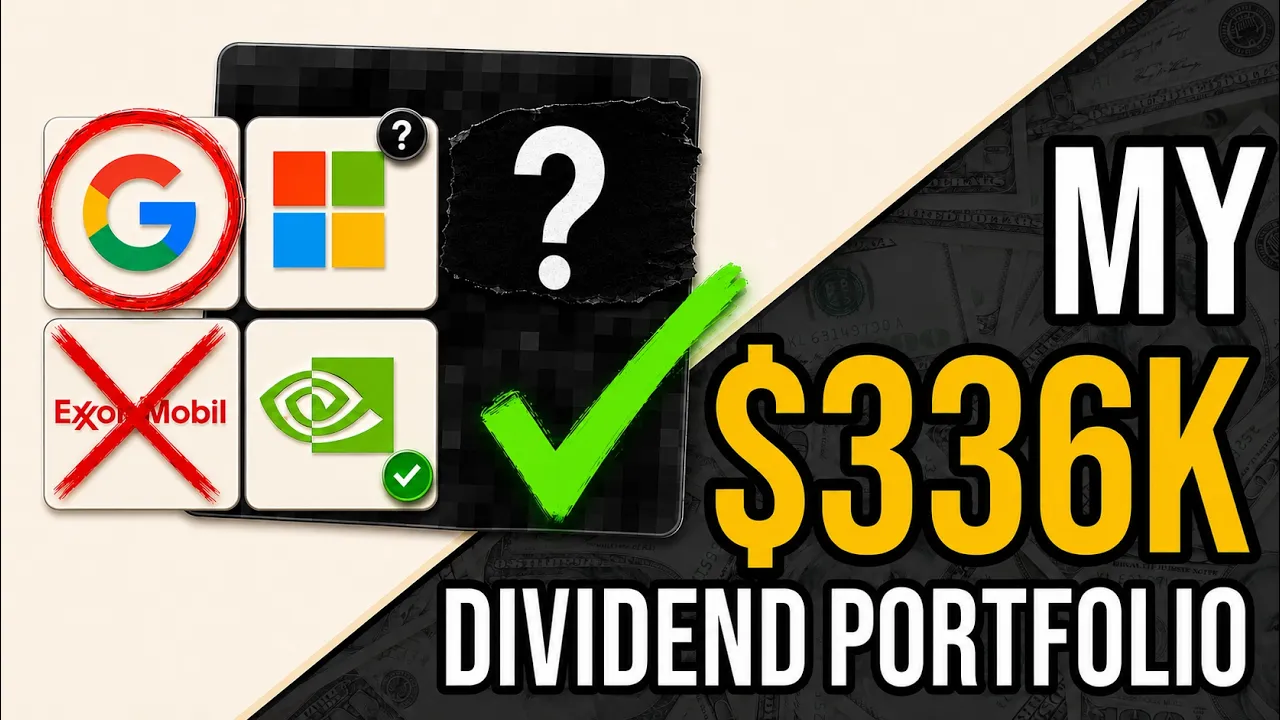
“In 2025, my best investment was Alphabet, the parent company of Google. I tried to load up. In hindsight, I should have bought even more. I bought around $25,000 at a cost per share of $162, and I have a 114% total return.”
I actually took advantage of that at the time and I sold some of those shares that I had bought higher at the beginning of the year
Contexto
“I mentioned how the price was actually a bit higher at the beginning of June and I actually took advantage of that at the time and I sold some of those shares that I had bought higher at the beginning of the year...”
I trimmed a little bit of my Altria position because it's trading at a very high price right now
Contexto
“...part of what I used that Microsoft stock that I sold I use that to fund a position in Nvidia... but it was also funded, I trimmed a little bit of my Altria position because it's trading at a very high price right now...”
Contexto
“...mostly Nvidia and Microsoft. I think I split it 50/50 on that buy. Here, I'll look up the exact prices for you guys. I bought three shares of Microsoft at $35,356. So, right near that bottom. And I bought three shares of Nvidia at $196.70.”
Contexto
“...I'm actually really liking those higher dividend income months because the compounding is there. I'm buying a lot more shares of HSM and MLX.”
Contexto
“...I'm actually really liking those higher dividend income months because the compounding is there. I'm buying a lot more shares of HSM and MLX.”
Transcrição Completa
Every month since May 2020, I have shared an update on my personal dividend growth stock portfolio. Many of you have watched me grow this account from $30,000 to over $336,000. Today, I'll be giving you a full update on my portfolio and the dividend income that it pays me, including how I'll get paid my highest dividend ever next month at $2.3,000. Plus, I'll provide a long-term forecast of what this portfolio can grow into. I've been building this account as a backbone of my financial future, and it's all about the long-term. Investing is a game of time and compounding. But first, I'm going to tell you about my best investment of 2026, which may surprise you. In 2025, my best investment was Alphabet, the parent company of Google. I tried to load up. In hindsight, I should have bought even more. I bought around $25,000 at a cost per share of $162, and I have a 114% total return. I was buying the stock during that April tariff sell-off. That was where I built up most of this position. And from those lows, the stock has a 118% total return. Over the past 3 months, I've been secretly making what I think will be my best investment of 2026. And it's actually not a stock. Shocker, I know. So, what is it? Well, it's actually the website I've been showing on screen throughout. This is the next generation version of dividenda.com. I've been working ungodly hours over the past 3 months to build this and it finally launches today. Click link in the description and pin comment of the video to get access. Current members, they get to keep their exact same price as I like to reward loyalty and all of their data that will sync automatically. I'll touch a little bit on that later. And for new members, there are actually a ton of features you can try out for free. And we have a special founding member deal where you can lock in 50% off annual membership. There's a 30-day money back guarantee, so no risk in trying it out. Now, yes, I know this is an investing channel and we always talk about stocks, but dividend.com is actually the most valuable asset I own. I rebuilt everything from scratch on a modern tech stack so that this website is built to last. It will continue getting better and better for years and years to come. And when I think back to how much I've learned over this journey from the first version of my website to now, it's been a humbling and truly amazing experience. I want to thank everyone who supported me along the way. When I set out to make this product, I was trying to build the ultimate tool that would help me with my investing strategy. Tons of you have found value along the way, and this really is such a milestone right now. This is the biggest upgrade I've ever had to the site. In fact, I actually think that there's a strong argument this is the best stock research website that exists. If you don't believe me, try it out. Link in the description and pin comment below. So, that's enough of the behind the scenes. I know I had a major announcement, but let's get back to investing and this month's portfolio update. And throughout, I'll show you some of the awesome new features as I update you on my portfolio and explain the new buys I made. With that said, let's roll the intro. [music] >> [music] >> The following reflects the opinions of a man who spends far too much time thinking about stocks. Please do your own research before making any investment decisions. Nothing in this video is personal financial advice. continue at your own risk. >> My name is Zach. This is Dividend Data. You should leave a like and subscribe to the channel if you want to see all my future portfolio update videos. So, let's dive right into it. Also, by the way, there's a dark mode now on the website. Some of you might find that to be awesome. It's usually my preferred way, but today I was rolling with the light mode. I think it made it look good for the video. Let me know in the comments whether you like dark or light for the video. So, I last updated you guys towards the beginning of June and my dividend portfolio. It's actually around flat in that time and there was quite a dip in the market, at least in my account in the middle of that period. We've rebounded over the past week. And as we know, one of my core holdings, it's Microsoft stock, that was actually quite a bit higher at the beginning of June, the last time we recorded, and that dipped nearly back down to those March lows. Actually, I think it got pretty close. is $352, but we've since got a pretty good rebound, 11% from the bottom. And as we dive into my holdings here, you can see that Hes Midstream, that's still my number one. And now that's over $40 a share. That's $102,000 of market value, 26.16% total return. And by the way, guys, now that I finished the launch development, I'm going to be putting a lot more content out. So, we'll probably have this Hess Midstream stock analysis. A lot of you have wanted an update. I'll probably update every stock that I own, plus a lot of the upcoming ones because earnings season is coming. So stay tuned for that. Microsoft, it's the number two stock, $84,000 of my portfolio. I'm still up 18.8% total return. Now, year to date, the stock is still down 16.7% and I bought this a little too early. I was buying in that January period and throughout February, March, April, really I've been buying along the way the entire time. And I do think this is an example of an extremely highquality company trading at a fair price and I look forward to it being a long-term staple of my account. However, there is an adjustment in my Microsoft stock. I mentioned how the price was actually a bit higher at the beginning of June and I actually took advantage of that at the time and I sold some of those shares that I had bought higher at the beginning of the year and that allowed me to take a little bit of losses since I had some gains that I sold earlier in the year. try to offset a little bit and in my opinion I think Microsoft it will continue having buying opportunities throughout this year and I already have a significant stake in the company and part of what I used that Microsoft stock that I sold I use that to fund a position in Nvidia now I've been covering that and it's actually my number one position it's actually my only position in my Roth IRA so overall Nvidia is actually my largest position and in general my main goal is just total return I'll probably do an update full Nvidia stock analysis video to give you my full thoughts. And to anyone in the comments who says Nvidia is not a dividend stock, well, they have very high cash flows and they did just increase their dividend by 2,400%. That said, it's still a low yield, very low payout ratio as well. And overall, I personally think Nvidia is a pretty attractive value over the next 2 years, as far as you can tell. Their earnings per share, it's up 83% year-over-year. That's based on the trailing 12 months earnings. And analysts are projecting continued earnings per share growth in the coming years, 91% next year. And in my opinion, I think they're underestimating 2028. I think 2028 will be another very high growth year as well. And over the past year, Nvidia stock, it's only up 18.3%. Meanwhile, the earnings have grown by 85%. So the earnings growth is far outpacing the stock price growth at this time. And we can see here that on a forwardlooking PE ratio, it's 22.5. And this is a company that is growing at a very high rate. They are a cash flow machine. As you can see, they generated $119 billion of free cash flow over the trailing 12 months, up 65% year-over-year. And in the latest quarter, they did $48 billion of free cash flow. That's going up next quarter and the quarter after that and the quarter after that. So, they're going to be on a run rate of 200 plus billion of free cash flow. And that's why they're able to raise their dividend payment. It's also why they're building up a killer balance sheet and they're starting to buy back shares at a high rate as well. So, the growth at Nvidia has been far outpacing the stock price appreciation. And if we take a look at the earnings per share of Nvidia and we look at the median multiple it's been trading at over the past 5 years, Nvidia is trading 47% below that median multiple. And if they go up to a P ratio of say 35, that would imply the share price should be $228. And if they trade at 40, that would be $261. And this is not even accounting for the actual fundamental growth because Nvidia is growing every single quarter and year-over-year. Their fair value is actually increasing. So people are looking at Nvidia and they're saying it's gone up a ton. But you also have to look at the actual fundamentals of the business underneath it. So this was my main addition during the month. It was funded by selling off some Microsoft stock, but it was also funded, I trimmed a little bit of my Altria position because it's trading at a very high price right now, $74. That's around where I trimmed it. And Altria I purely look at as a dividend stock when I analyze it. The forward yield is now 5.71% which is still pretty good, but this is a lower growth company. The dividends growing at 5-year compound annual growth rate of 4.27%. And over here you can see this yield analyzer chart. And if we look at it based on a five-year period, is currently trading at the lowest yield it has in that time. This basically gives you the daily yield over the time period selected. And you can see the 10th percentile and the 90th percentile. This one's actually inspired by my dad. He's been asking me to make this for dividend stocks for years. In his strategy, he likes to buy dividend stocks when they're at their historical high dividend yield. He's older, so he's focused much more on optimizing the income. And by the way, if you want that, it's on the dividend tab of any stock you analyze on dividend.com. I also trimmed Exxon Mobile a little bit. I have a 359% total return on that stock. It's been a great performer, but if I'm being honest, it's trading kind of crazy. There's a lot of better opportunities in the current market. So, I trimmed the position a little bit. And then aside from that, I added about $2,000 since my last portfolio update into this account. Mostly Nvidia and Microsoft. I think I split it 50/50 on that buy. Here, I'll look up the exact prices for you guys. I bought three shares of Microsoft at $35,356. So, right near that bottom. And I bought three shares of Nvidia at $196.70. I thought both of these were just too much to pass up, so I added to it. So, overall, as we go back into my account, you can tell it's very concentrated. And I've talked about this in the past. I think over time there will be some natural diversification that happens in the portfolio as I have some large stakes. But right now, I'm at a point where I have way more ideas than I do available capital. So, I have to be stingy kind of with where I choose to allocate it. And one of the big things I've realized personally in the past, and if we just go back to 2025 as an example with Google, I should have gone even heavier and more concentrated at time into that position. And if we go back all the way to 2020, I should have gone even heavier into Exxon Mobile at the time. If we go back to 2021, 2022 should have gone even heavier into Altria at the time. And I like to use those opportunities to buy into those large long-term stakes. I'm going to hold in those higher quality companies. I bought a good bit of Microsoft in 2022. I think that was a good buy then. Although 2022 there was a lot of opportunities in hindsight. And here you can see the dividend income this portfolio generates me. Most of it that's coming from Hes Midstream, my biggest pair by far, just under $8,000 for the year. Altria $1,600, MLX $1,400, and then my lower yield positions, Microsoft Nvidia Google they're collectively about a thousand together. Here you can see our new income calendar, and it gives you the month- by-month projected income. So over the next year, if I do not add anything to this account, and I don't have any dividend growth, so this is a conservative estimate, I should get paid $12.5,000 in dividend income. That's an average of $1,000 a month. And I have some months like August as high as $2,340. And I'm actually really liking those higher dividend income months because the compounding is there. I'm buying a lot more shares of HSM and MLX. And here you can see the dividend calendar. It actually gives you forwardlooking projected dividend income because as an example, HSM and MLX, they haven't actually declared their payments yet, but lets you know the X dividend date, the payment date, and how much you're estimated to be paid. You can also see this on a yearly basis for all your stocks as well. And here is my dividend history. So, I've been tracking this going back a bunch. If you link your portfolio, you most brokerages, they'll give you about a year's worth of data. But since I've started doing these portfolio updates, you know, you've seen me log this every single month. So, I have $29,300 of dividends received. That's all time. And so far this year, I've earned $6.81,000. And that's almost higher than last year's dividends. And we're only 55% of the way through 2026. So the longer you're tracking your income, I'm really liking this chart how it shows your progression over time. And by the way, you can go back and manually add in all your old dividend income if you want. You can add you can add it by a CSV file like a spreadsheet or you can do it one by one. It might take a bit, but you can do it. My most recent dividend payment this month that was the Altrier Group. I got $423.83. I reinvested all of that. And here's a new tab that I added to the account. It's called the forecast tab. And it's basically a dividend snowball calculator that prefills with all of your accounts information and the stocks you own. Gives you the dividend growth rate based on what you actually own. So my weighted average across all my holdings, that's 11.3%. We give a baseline of 10% annual growth. You can adjust that as you want. You can see it pre-filled with my current value, my current annual income. You can even customize this and add in a dividend tax rate if you want. You can turn off and turn on dividend reinvestment. You can adjust your monthly contribution. I have that set at $2,000. That's conservatively what I try to aim for on average. Some months I don't buy anything. Some months maybe I buy 10 or $15,000 worth of stocks. But this is really just for a forecast. I know some of you probably with more normal jobs, you focus on, you know, you have a more reliable dedicated paycheck. So, you'd have like a,000 or $2,000 you set aside from every paycheck or your monthly income. And you can set your dividend income goals of what you would want every month and your portfolio value goal. And it actually shows in the projection of when you're supposed to hit that goal. So, for me, let's say I want a 50, that's very high. Uh, let's say I want to hit $10,000 of monthly dividend income and I want a $10 million portfolio. Now, I'm on the younger side, so I have a lot of compounding ahead. But in the base case here, if I'm investing $2,000 a month and reinvesting dividends on this portfolio, I would hit that income goal in year 17. That would be in 2043. And in terms of the value, I'd hit that in year 2026. That'd be 2022. Oh, and you can adjust how many years you want to project out. This shows 30 by default. And it gives you a base case. A base case with your cont Oh, actually, I messed that up. There's a base case with contributions and a base case without contributions. With contributions, I actually would have hit my income goal in year 14. And the value goal in year 23, that's 2049. So, you have the base case, the base case of contributions, and the bare case as well as a bull case. And I believe it adds plus or minus like 2 or 3% annually. Now, I would probably adjust some of these. This dividend growth is pretty high and I don't know if longterm a lot of these holdings will have that. I'll probably adjust that down to 6%. And you can see that does push out some of those values out longer. But you can see your monthly income start to grow over time. And with investing, it's such a long-term game. That's why you have to start early. You got to get the machine compounding. There's some stat like uh Warren Buffett's net worth. If you look at it, like 99% of his value was earned after the age of 55. It's all about time. And that's why I thought it was valuable to add this forecast tool in because it helps get you in the long-term mindset. It's the why of why we're investing in this portfolio. It takes a while. You know, you'll be putting it in month after month after month. And over 1 to two years, you probably won't be seeing many results, but now I'm 6 years in, you're starting to see a little bit of the compounding. But in reality, I'm still so early in the process. And really, what we're doing here is we're investing for our financial future. And I designed dividend.com as a tool to help you find better investments. If you find a better company that gets you even just 1% higher annual returns, that compounds into a lot over the long term. Plus, if you can avoid mistakes, whether it's buying into a bad company that loses you money, or if you're focused on dividend income, buying into a company that cuts their dividend, these are mistakes you can avoid if you actually look into the data. And if you want to try out dividend.com, there literally has never been a better time to do it. I think the tool helps a ton and the price is super reasonable, especially when you consider the fact that this is a tool to help you with your investing portfolio. It's honestly a no-brainer. Now, if you want to try it out, links in the description and pin comment of the video. There's a 30-day money back guarantee, so no risk in trying it out. And when you join the pro plan, you get the full tool, everything, plus all of the additional features that will be coming long term. But really, this thing is packed with value right now. I didn't even get to touch on 90% of what's in here. So, if you enjoyed the portfolio update, leave a like, comment, and subscribe to the channel. And with that said, I'll see you in the next

Comentários 0
Entre para participar da discussão.
EntrarAinda não há comentários. Seja o primeiro a compartilhar sua opinião!