
- Retorno do vídeo
- -12,61%
- Chamadas
- 1
- Compra / Venda
- 0 1
- Publicado
Recomendações
Entrada é o preço de fechamento do ativo na data de publicação. Atual é o último fechamento registrado.
-
Entrada $317,69 23 jul 2026Atual $354,59 07 ago 2026Resultado −$36,90
Google could fall 50 plus%
Contexto I mean, Google could fall 50 plus%. And then I've made the argument that the more Google falls or any of these hyperscalers...
Transcrição Completa
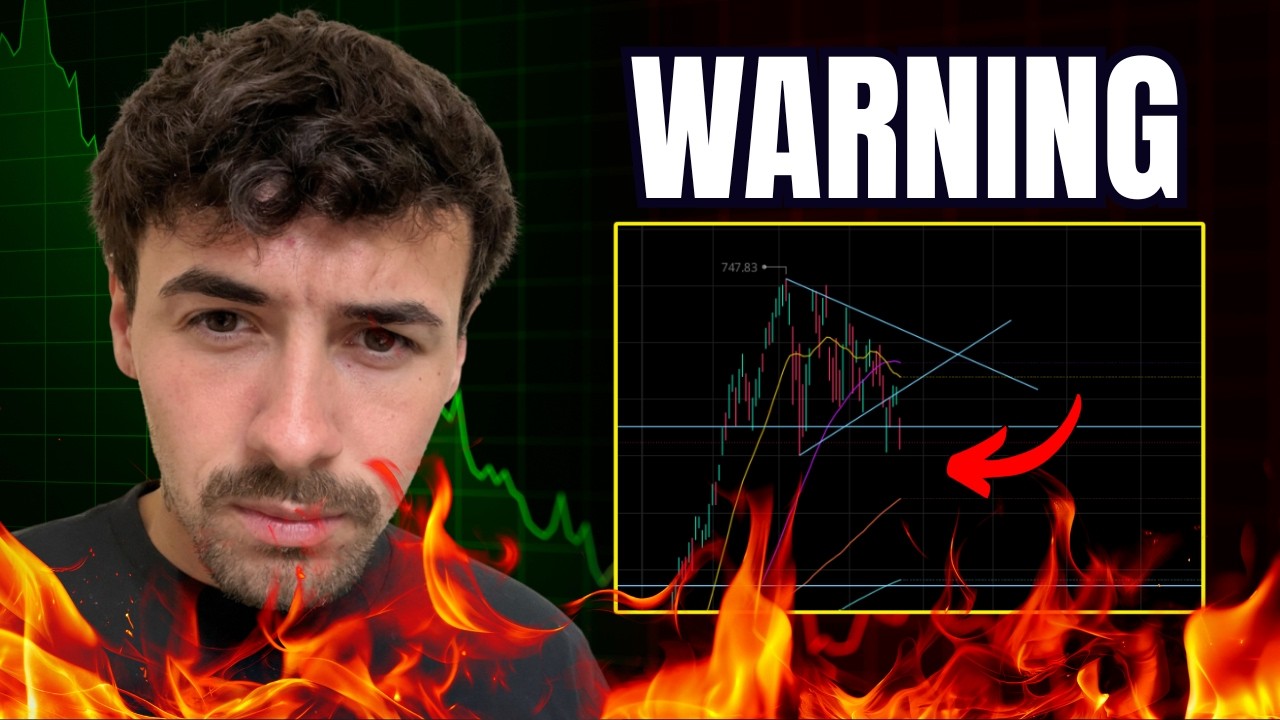
Following today's selloff in hyperscalers and really across the board in the markets, the NASDAQ is already down over 7% from its previous all-time high. It's almost down 8%. We are well on our way to entering into a correction or even a stock market crash. And in this video, that's what we're going to talk about. We are going to break down your upcoming catalyst for next week. Microsoft earnings, Meta earnings, Amazon earnings, what these could look like and what they could do to the market. We also have this ongoing really crisis in the Middle East. And this is driving up 10-year Treasury yields, making the Fed be more hawkish and giving us higher inflation. And it doesn't look like that's going to end anytime soon either. We are also entering into a period of volatility. This is your pre-midterm election sell-off. This also comes at a time in which retail investor activity is hitting its lowest levels you've seen since right before the co pandemic hit. So mix all of these factors together and we could have more downside in the markets. Now what good is that just telling you we could have more downside? Of course we can. I'm also going to share with you where I think the most opportunity is in this market. Ladies and gentlemen, before we begin, hit that like button for the YouTube algorithm because more people need to see a video like this, especially at a time like this. Also, hit that subscribe button if you guys find value or perspective out of today's episode. Keep in mind, you always want to come to your own conclusions. My opinions are my opinions. Yes, we do tend to be correct more often than not, but not every time. Okay. So over the past couple of weeks I have been warning about exactly what we are seeing today. Exactly what we are seeing today. What I've been warning is look hyperscalers they're going to raise capex. They're going to raise capex not enough to ignite AI stocks to go through a you know big rally and drive upside in the markets. But hyperscalers also raising capex means sell the hyperscalers. So, you don't have enough, let's call it, juice in the tank to drive AI stocks up to carry the markets higher. And you obviously have this big negative sell catalyst for hyperscalers. And that's exactly what's happening. Mix that with a drama in the Middle East and you have a cocktail for a correction or even a crash. Now, this would not be unheard of. You do tend to get volatility before a midterm election in July, August, September. You tend to bottom in October, around the midpoint of October, and then you actually begin to rally into the midterms, but what you really need to be focusing on right now is not what's going to happen in the next couple of weeks. Who gives a You want to be able to survive what happens. So, if you're heavy in margin and some of these areas we're going to talk about in this video, you obviously want to reduce some of that exposure, but you want to be positioning for what are the assets, what are the stocks that are going to do the best after the midterms in this 9month or so rally that we're going to see from October through about July of 2027. That is obviously not guaranteed that you're going to have a rally, but I would imagine hopefully the conflict with Iran is coming to an end. I would imagine by then oil is lower, consumers a little stronger, earnings continue to come in well, AI moderates a little bit, but it's not a bubble. Capex maybe slows down. That would be the hope optimistically. And yeah, you you definitely have an outlook that could give you a very strong rally next year. And I know there's a lot of people that are confused about hyperscalers and spending more in capex. There's a lot of people that believe this is a positive and long-term it could be. But one thing that I will tell you is in 2000 the.com bubble Cisco was a major provider of fiber, right? They were the pickaxe and shovel kind of company of the internet days. Well, Cisco was not the biggest winner from the internet. It was Google, Microsoft, Amazon, right? These companies that built things on top of the internet. So Google in prior years they've given back all of their free cash flow to shareholders in the form of buybacks, right? Well, today they've canceled all all buybacks. They're no longer doing buybacks and they were actually free cash flow negative for the first time in well over a decade. Google actually was negative free cash flow about $6 billion in the quarter. For this year, you're expecting negative free cash flows from the hyperscalers between 50 and hundred billion negative. Next year, that's expected to triple or more to over 300 billion negative in free cash flow. What does that mean? More debt, more stock issuance. That means more of this shady accounting. The fact of the matter is there is $1.8 trillion of shady accounting. That's basically debt being held off balance sheet. Now, why do companies do that? Well, because if they have to put the debt on their balance sheet, that means their credit ratings are at risk. That means everyone knows how much debt they have. That's not great. That's like Oracle, right? Oracle is like a triple B rating. It's one one downgrade away from being junk. Google and Microsoft and Meta and Amazon, they don't want that to happen because if you start to get downgraded, it becomes more expensive to borrow. But it also means that less investors can actually invest in your stock. It makes it harder to get those ratings back and it's a snowball like effect. Well, this debt comes in well only shows up on the balance sheet in operating income. So, it's going to be an operations expense for years into the future that will compress future profitability. And the fact of the matter is running physical data centers is never going to be a high margin business. It's just not going to be a high margin business. Not like Google selling digital ads. So these businesses, they are fundamentally changing. One would say actually getting worse. They used to be shareholder friendly. Now they're not shareholder friendly. They're quite the opposite. They are like a like a small cap company that's raising capital, right? And I hate to put them in that category, but they are no longer shareholder friendly stocks. And thus, Wall Street is telling you slow down. Be reasonable. Right? That's why Google's down 7 and a half% today. And other hyperscalers are also selling off because they are expected to raise capital as or raise capex also coming next week. So, the fact of the matter is these Mac 7 stocks, they're going to continue to sell off as they spend more money. This is only the start for Google. If they actually do follow through with their plans and spending over $300 billion next year, raising a lot of debt or selling a lot of stock, Google's not going to bottom until they slow down spending. So, that's going to be a huge drag. other hyperscalers. We'll see what they do next week, but if they continue to spend, they're going to continue to fall as well. Now, the problem is for a while there, the capex was so impressive, it drove AI stocks higher. Semiconductors took the baton and led the markets higher. Even though Mag 7, hyperscalers sold off a bit, right? Microsoft's down like 30% from highs, but AI stock, AI hardware stocks were holding the baton. Well, now you've priced in so much good news in the last couple of months. It's Google raised capex $15 billion for this year, it's not impressive enough to drive significant upside for AI stocks. You've already priced it in. So now you're in a position where hyperscalers are selling off. You're kind of getting a disappointment for AI hardware stocks. There's not a whole lot to to lift you up. Mix that with what's going on in the Middle East and yeah, if the Middle East conflict doesn't get better over the next one to two months, I don't know if I would bet on hyperscalers cutting capex anytime soon. Yeah, you have a recipe for a pretty violent I I I don't want to say it, but I think we have to a crash in this market. And look, long term, fundamentally, is Google gonna do well? I think so. But tactically, in the near term, people are not going to buy the stock. Stock's not going to rally to new highs anytime soon until they slow down capex. And Google sounds like they're not going to. Now, if Meta or Amazon or Microsoft come out and they cut capex, that's going to be positive, right? Whoever cuts capex first, their stock's going up 10% immediately. if they kind of suggest that they're going to become shareholder friendly, slow down spending over the next, you know, foreseeable future, their stock's going to go up 50%. In 3 months, right? That's going to be a huge offset to this selling that we are currently seeing, >> but I don't know if that's going to happen. So, I think next week is going to be really important for the markets. And assuming all of your hyperscalers come out and give you something similar to Google, which I think is probably the highest probability at this point, it does mean the markets are going to be under a lot of pressure in the next couple of weeks. So what does this mean for investors today? Well, it means you don't want to own hyperscalers because they're going to run their stocks to the ground. I mean, Google could fall 50 plus%. And then I've made the argument that the more Google falls or any of these hyperscalers, the harder it is to actually go to private credit, raise money because nobody wants to lend to a stock in which is down 50 plus%. They have to start putting that on the balance sheet. It becomes a vicious cycle that eventually means slowing will have to slow down, right? Eventually. I don't like to be the guy that comes out and tells you, "We have this problem and this problem and this problem that all hope is lost." If you're a long-term investor, this is great news for you because you might be able to buy Google at $150. You know, that would be fantastic. I I I'm just saying, look, you might want to be a little careful buying it at 320 if they're going to follow through with their spending. The stock's not going to be rewarded for that. Same goes for other hyperscalers. And I don't know what they're going to say next week, but I do know if they follow a similar path as Google did, you're going to have a similar re reaction. And again, if you look at the NASDAQ, you're already down or the triple Q's, you're already down about 8%. Uh yeah, the 100 day moving average would be down about 10.3%. 200 day moving average would put you down about 14%. Those are your next stops here. Now, if something positive happens with the war with Iran, that could slow things down a little bit. But honestly, again, at this point, I don't really see that happening either. So, where is the opportunity then in the markets? Well, I think you want to be careful not rushing out and buying the dip too quickly. You want to understand what forces are at play here. And again, for like the fourth time, I don't know what other hyperskalers are going to do. if other hyperscalers if Microsoft comes out and they don't raise capex and they signal capex is going to go up only a little bit next year right that's going to be bad for AI that's going to be good for Microsoft that's going to offset some of the weakness that we're seeing right now it's going to change things I don't know what's going to happen though so outside of other hyperscalers where is the opportunity I think the opportunity is looking out ahead towards 2027 and the post midterm election rally that we're going to see and asking yourself what are the areas that are set to do well. And I think by then hopefully the war with Iran is over with or the markets are caring a lot less about it. Oil has found other ways to be routed and hopefully by then the Fed is you know markets are no longer thinking the Fed is going to be a hawk, right? I think that's a pretty fair conclusion. What areas are going to benefit from that? cyclicals financials industrials small caps, software, because even to a certain extent, the more that hyperscalers spend on physical assets, the more valuable you could make the argument that software is. Because, you know, for a long time, Microsoft and Google and Amazon and Meta, less so Amazon, but more more the others, were low cyclicality businesses. They were high margin, very shareholder friendly. They were, you know, very quality businesses and now they're spending all their free cash flow. They're no longer shareholder friendly. They're becoming these physical kind of industrial plays. They now have a lot of AI cyclicality. They're all tied to the same theme at the end of the day now. So software is like the last area of the markets that is 70 80% gross margin that is you know uh high growth that deserves actually to see PE multiples expand. Now, it's going to take some time to work through some of the SAS apocalypse fears, but I think software is going to be one of those areas everyone, you know, a year ago says, "Oh, wait. We should actually be uh very bullish on software, right?" The companies that won heading, you know, out of the dot bubble were the companies that actually used the internet made products and services with the internet, not the companies that built it. And I think hyperscalers obviously they're not going to zero. So they have a place at the table. But if you're looking for opportunities right now, it is precisely in you know the areas that markets are overlooking. And you guys have to understand in a perfect world these discounts would not exist in cyclicals, industrials, financials, and software right now, right? But the fact of the matter is Wall Street, they're not long-term investors, right? Wall Street has never been long-term investors in anything, right? All they care about, the only thing they care about is beating the markets in the near term. They're all trend chasers at the end of the day, right? They all just want to report a profit to their clients so they don't lose clients. That's it. They're not trying to find the next 10 bagger or 20 bagger like we are. Link down below in the trading trading community if you guys want to come join us. They're only focused on what's happening right here and right now. That's why if you take this mindset approach of what's going to be popular six months from now, what's going to do better 12 months from now or 24 months from now, you're going to get exceptionally wealthy in the stock market. And unfortunately, hyperscalers until they cut capex, they are not great buying opportunities or not even cut capex, but slow down the spending spending more reasonable, right? and AI stocks, you're just kind of already pricing in a lot of good news. So, you need to see capex continue to accelerate, which, yeah, could happen, but the markets are going to crash anyways because of that as hyperscalers get punished for spending even more and going into more debt. So, it it seems so obvious to me because I've seen so many of these cycles before. I've been in the markets for a very long time. um where the real opportunity is let me say it again it is non AI non-capex trade it is software number one cyclicals things tied to the consumer tied to travel especially if the consumer gets stronger I don't think travel demand is going away I think co fundamentally changed the way people live go ask people are vacationing more now than really ever before and that was because of co and I don't think that's going to change so I think that's a very investable theme over the next couple of decades. I think industrials and financials and some of the areas that have been kind of forgotten about because of the capex and AI trade. These stocks could see a lot more money go into them over the next 6 12 plus months. Healthcare, you know, healthc care could be an attractive area also, you know. So, just my opinion, you know, it's just my opinion. Hopefully this video provided you some perspective on uh what's happening right now, where opportunity is. Again, if you guys want to come trade and invest alongside of us, there is a link down below in the description of today's episode. We are 2 3x outperforming the S&P year today. I believe it's even more than that following today. It might be closer to about 3x. uh yesterday's software selloff kind of kind of hit the portfolio, but um yeah, you know, I think it's only just the start. I think a year from now, we're probably going to be five or 10x outperforming the S&P. My thoughts, I'm not a financial adviser. I'm not a financial planner, so obviously come to your own conclusions. That is it. Have a great rest of your day and I will see you in the next
Comentários 0
Entre para participar da discussão.
EntrarAinda não há comentários. Seja o primeiro a compartilhar sua opinião!