Contexto
Absolute disconnect in the rating summary. We've got Seek Alpha with a strong buy, Wall Street with a hold and we get a sell rating from Quan.
Contexto
Absolute disconnect in the rating summary. We've got Seek Alpha with a strong buy, Wall Street with a hold and we get a sell rating from Quan.
trimming part of the holding before earnings is defensible.
Contexto
So, my decision is not to panic sell a normal long-term position. Apple remains an exceptional business, but I would not buy aggressively at this valuation. For investors whose Apple positions become unusually large, trimming part of the holding before earnings is defensible.
Transcrição Completa
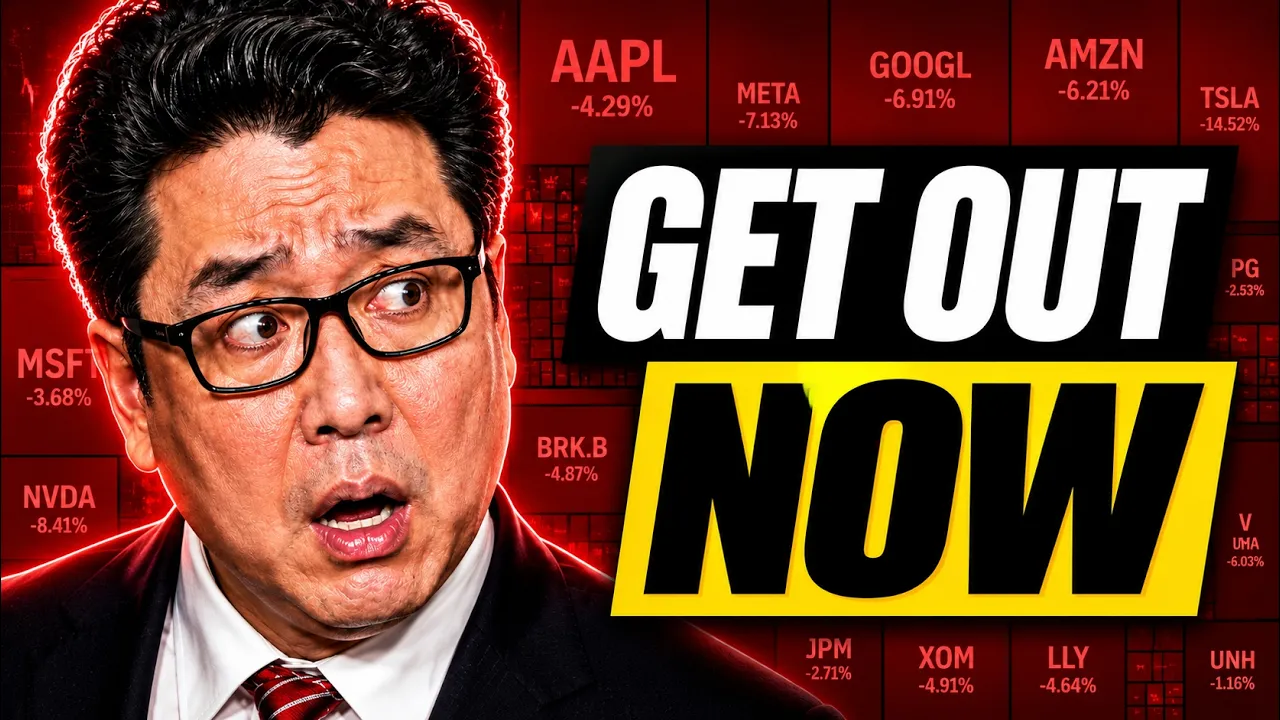
Earning season has just sent investors a warning. Some of the largest companies in the market are not merely falling when they miss expectations. They're getting crushed even when their businesses continue to grow. And here is why that matters. Around 86% of S&P 500 companies reporting so far, well, they've beaten earnings expectations. So, this is not a weak earning season. But once expectations become high enough, simply beating estimates is no longer enough, Alphabet they delivered strong growth yet investors focus on spending potentially reaching 205 billion. And will they punish the stock? And then if we remove Nvidia and the remaining Magnificent 7, well, they're now expected to grow earnings slower than the other 493 companies in the S&P 500. The earnings advantage is narrowing. The valuation premium, however, that is not. And well, this week we now have seven hugely popular stocks that are about to report. Some are almost exactly at record highs. One's already fallen nearly 40% this year, and several appear price for results that leave virtually no room for disappointment. And as you know by now on this channel, we don't simply ask whether a company is good. We ask whether the stock price already assumes too much and whether the potential return still compensates investors for the risk today. So in this episode, I'm going to rank seven stocks from least vulnerable to most vulnerable before earnings for every company. We're going to examine the growth, historical valuation, Wall Street's expectations, and my own intrinsic value models. and stay until the end of the episode because the stock I rank as most vulnerable is not the weakest company here. It may be the highest quality business in the entire video. The danger though isn't the company is what investors are already paying for it today. But before we get to the seven stocks, we need to understand just how unforgiving this market's become. Alphabet beat nearly every measure of the return on its AI spending and still had its worst day in three years, dragging the broader hyperscaler group lower on Thursday as investors focused on how much more cash the buildout will consume. The group is now on pace to spend 800 billion on infrastructure this year, another 1.2 trillion next year. >> And Alphabet did not fall because demand disappeared, search remained resilient, cloud growth accelerated, and the company continued to benefit from AI adoption. It failed because investors questioned whether the return could justify the scale and the speed of their spending. And it's also worth pointing out the spending is changing where the cash flows acrew. Forward cash flow expectations for semiconductor suppliers while they've surged while expectations for the hyperscalers financing the infrastructure well they've fallen sharply. And this is not an isolated reaction. The pressure is spreading across mega cap tech with investors now questioning whether the Magnificent 7 can continue justifying their premium valuations as both competition rises and margins come under pressure. >> It it's some of the fluctuations have been wild. I think Wednesday was the biggest drop of MAG 7 versus the S&P in four years. Um and you know there there's some some analysts are saying should we even call it the magnificent 7 anymore. Uh you know what moonshot competition uh margin erosion >> and that is the market environment these seven companies entering. Companies can beat expectations and still fall because investors have moved past the headline numbers. They now want to know whether the results justify the valuation. So, let's begin today with the stock that I believe has the strongest valuation support and is therefore the least vulnerable of the seven that we're covering today. And at number seven, it is Visa, which is reporting Tuesday after the closing bell. It's trading around $355. It's around 2.5% below. In fact, its 52- week high of $365. Yet, despite being near that high, Visa is up only around 1% this year. And we can see that Wall Street have given it a strong buy while C alpha yes a buy but on the weaker end. Now Visa currently trades around 26 times Ford earnings. Its 5-year average sits around 26 1/2. So the share price may be high but actually the valuation multiple is almost exactly in line with its recent historical norm. And then if we look at the blue tunnel from Simply Safe Dividends which points out the fair value intrinsic price. Well, it's actually sitting around the midpoint, which indicates a reasonable valuation signal. Zoom out to the last five and 10 years. Well, Visa is one that actually doesn't that often enter a severely undervalued signal and now we're seeing it right there towards the bottom end. The other point which also confirms a reasonable signal where the dividend yield is sits at 75, that's identical to its 5year average. So unlike several stocks that we're going to get to later into the ranking, there's been no major rerating and their forward revenue is expected to grow around 12%. That's actually above the wider sector median and almost in line with their own 5year average. We can see forward EBIT DAR 12% forward EBIT sitting around 12%. Those are looking very healthy and the company continues to combine double-digit growth with exceptional margins and relatively low capital requirements. If we look at earnings per share on a forward basis projected around 14% long-term EPS around 13.4. So this is highly consistent, highly profitable growth, not a spective turnaround play. And if we're to look at their history, well, they beat expectations in each of the previous four quarters. So the earnings question this week, it was center on consumer spending, payment volumes, and crossber activity. Analysts were there expecting for the full year $13.15 in 26487 in 2027 and using the following year's estimates where the forward P drops below 24 and interesting to see that Wall Street's average target sits just above $300 implying around 30% upside even the lowest target shown here around $330. That's not dramatically below the share price today. And my discounted cash flow scenario produces values ranging from $362 to $464. The medium scenario here produces a value of $410, approximately 15% above the market price. And the reverse ECF, very important, it suggests Visa needs to grow free cash flow by around 9.7% annually to justify today's valuation. I mean, Visa's 5year free cash flow growth that sits around 10%. So I'd probably say that the requirement does look achievable. So Visa could still decline if payment growth disappoints or management offers cautious guidance. But the valuation does not require perfection. That is the crucial difference. So for me, I would say that Visa is a hold or perhaps consider buying gradually on meaningful weakness. It's the least vulnerable stock because its valuation growth and implied expectations. They remain broadly aligned. Now, before we move on to stock number six, just to let you know that we release one weekly article where we cover severely undervalued stocks as well as what's gone in the market over the last few days. So, you can click below, sign up, and read all of these straight away. We then move on to the next stock, which is SoFi, that carries much higher earnings volatility. But unlike most stocks in the episode, it share prices already suffered a major reset. Now, they're due to report on Wednesday before the opening bell. It's down 37% this year and it's almost down 50% below its 52-bit high. This is not a stock where investors are currently celebrating record prices. And interesting to know the absolute disconnect in the rating summary. We've got Seek Alpha with a strong buy, Wall Street with a hold and we get a sell rating from Quan. And when looking at the Wall Street analyst average rating history, while sentiment has deteriorated significantly, the shares declined from around $30 to $16. While Wall Street's average rating, well, it's remained a whole during the whole process. But the disagreement, as we just highlighted, is extreme with a strong buy, hold, and a sell. This division can produce a huge earnings reaction. And something that perhaps we don't talk a lot about on this channel is short interest. While for SoFi it's close to 50% weak results could trigger another leg lower but a strong beat improved guidance well that could force short sellers to cover producing an equally aggressive move higher and their forward revenue growth that's expected to remain above 30% that's almost four times higher than the medium growth rate for the wider sector forward ebits are 46.3% so soi is beginning to demonstrate the operating leverage that has been central to the investment case forward operating income growth while 94%. The company's no longer being judged only on customer and revenue growth. It's now expected to translate scale into meaningful profitability. And forward earnings growth, well, that's estimated 28% long-term EPS sitting just below 41, the strongest long-term estimate among the seven companies today. Now, when we look at valuation, it trades around 27.8 on a forward basis. That is expensive compared with traditional banks sector sitting at 11. But so far is also expected to grow far faster than traditional banks. Hence why when we look at the forward PG, it's sitting at 68. Relative to the projected growth rate, the earnings multiple is not obviously excessive. But that only remains true if growth materializes. So far has also been expectations in three of the previous four quarters. We can see it met expectations in the most recent one, but the hurdle is rising as investors expect a rapid acceleration earnings. Analysts were their forecasting for this full year 60 cent and my 2781 cent which would reduce the forward P to around the 20 mark. Now, Wall Street's average price target just shy of $21. That implies around 25% upside, but the range is very wide at the lower end, $12 at the upper end 30. They're debating what kind of company SoFi will ultimately become. Now, my SoFi scenario produces values between $21 and 36. The medium case we can see at $27, but the model carries more uncertainty than the other DCFs in the video today. Because if we look at SoFi's historical free cash flow, well, it has in fact been negative and conventional DCF analysis is less straightforward for lenders because deposits, loan growth and regtors the cash flow picture. So I treat this model as a possible scenario, not a precise promise. Even so, much of disappointment is already reflected in the share price today. So my decision would be a specive hold. SoFi may produce one of the largest moves this week, but I wouldn't describe it as a get out now stock after a 37% decline. Now, this next stock is almost the complete opposite. The company's extremely predictable, but investors are paying an increasingly expensive price for that predictability. And number five, Coca-Cola reports Tuesday before the market opens. Now, it's actually up around 18% year to date and trades only around 4% below its 52- week high of $86. This is a considerable move for a mature consumer staples company. We can note a double hold from C along Wall Street with the very respectable buy rating today and it trades around 25 times forward earnings 5-year average at 23. So the premiums not enormous but investors are clearly paying an above normal price yield. While that's fallen to 2.6% below the 5-year average just shy of three. investors. They're essentially accepting less income in exchange for the perceived safety of the company today. And whilst we get a reasonable signal when we look at the blue tunnel, it is sitting right there at the upper end. Zoom out to the last 5 10 years. Another company very very rare to see it in an undervalued signal. Most recent period, we have to go back to the end of 2023. So we're talking about near 3 years ago today. Now forward revenue growth, that's expected to be around 2%. That is materially lower in fact than Coca-Cola's own recent growth rate and below its 5-year average. Forward EBIT Dar 6.4% forward EBIT sitting at 6.5 again is respectable for a defensive company but it's not the growth profile normally associated with a premium multiple. Forward diluted EPS sitting at 6.6% while long-term growth is expected to remain just shy of 8. Investors are therefore paying 25 times earnings for mid to high singledigit profit growth. Now Coca-Cola they have consistently beaten expectations but projected earnings growth. It is expected to slow towards a more normal mids singledigit rate. At this valuation perhaps a small beat may no longer be sufficient. Analysts are expecting 327 in 26 to then jump to 348 in 2027, even using the 27 figure, while the forward P still trades at more than 23 times earnings. Now, Wall Street's average $88 implies upside, although fairly trivial at 7%. Yes, it is positive, but it doesn't provide a particularly wide cushion ahead of their earnings. Now, my blended intrinsic value comes to $78. The multiples approach it is more optimistic at 84 while the dividend discount is low at 74. DCF coming in at 76. It leaves the shares modestly above my central valuation range. And if we take a look at the DCF, more importantly the reverse while we can see it requires around 11% annual free cash flow growth. It appears demanding compared with expected revenue growth of 2% and operating growth of around six. So my overall decision would be hold the don't chase. Coca-Cola remains a wonderful business but investors are increasingly paying a growth stock price for a defensive company today. Now number four here offers much stronger growth than Coca-Cola. But the stock is also trading at almost exactly its record high with very little upside remaining in the average analyst target. And that's ABV reporting Friday before the market opens. It trades in fact 1% lower than its 52- week high of $262. And unlike Coca-Cola, there is actually genuine acceleration story which is supporting the rally. Investors, they're essentially increasingly believing that a successfully moved beyond the worst of the patent cliff. Fear has been replaced by confidence in the company's next generation of medicines. And we can see a very respectable buy rating from Wall Street. Weaker from CE Alpha at 3.9 out of five. Now forward revenues expected to grow around 9% which we can see is materially above their 5year average of 5.4. Forward EBIT dollar growth projected 15.5% forward operating income growth sitting at 16 and forward diluted DBS 17.2 while long-term earnings sitting just shy of 13. So the underlying recovery here is definitely genuine, but investors have already recognized the improvement. AVY now trades around 17 18 times forward earnings compared with a 5year average near 14. The yields also fallen 2.7 well below its 5-year average of 3.7. Investors are accepting far less income because they expect a new growth cycle. Analysts in fact are expecting earnings growth to accelerate dramatically over the coming quarters. It creates an opportunity but also a much higher earnings hurdle. Now the estimates shown here do include growth rates above 100% followed by 47 and then 26. The market expects an extremely favorable recovery. A normal beat may not be enough without stronger guidance. And Wall Street's average target is $268 offering only 3% upside. The shares are already trading very close to the average analyst estimate and my blended intrinsic value is $244. The multiples valuation more supportive at $261 while the DCF and in fact the DDM they land around 24247. The discounted cash flow model while it produces a value of $247. SABV doesn't appear dramatically overvalued but the current price well in fact it provides a very little margin of safety. If we look at just the DCF while the reverse basis here requires 8.6% annual free cash flow growth is achievable if the recovery succeeds but investors have already paid for much of that success. So my decision would be hold but don't chase near the highs. Ay's recovery appears real. The risk is that the easy money from recognizing that recovery well it's already been made. Now we move on to number three which looks inexpensive compared with the wider market that compared with its own history. The stock has experienced one of the largest valuation reratings in the entire episode. It's Ultra which reports Thursday before the market opens. We can see year-to- date strong run up 27%. is an exceptional run. In fact, for a company expected to generate almost no revenue growth and the shares, well, they've risen from mid50s to above $72 in just a matter of months. But the underlining growth outlook has not experienced a comparable transformation. You'll also notice first time today triple hold rating right across the board. Now, forward revenue growth is expected to be only4%. The top line is essentially flat. forward EBIT DAR as well as operating income growth. Well, they're expected to be around 2 to 3%. This is still an extremely low growth business. If we take a look at the forward diluted EPS, that's 4.7% long-term earnings, that's sitting at 3.8. Yet, Ultra Trades around 13 times forward earnings, the highest in at least the last 5 years. Compare that with their 5year sites much lower at 9.8. The shares are trading today roughly 30% premium to their own historical multiple. The yields also massively compressed 5-year average around 8%. Now we see it sitting around the sixth level. Investors are accepting substantially less income for broadly the same slow growth business. And analysts expect only around 4% earnings growth in the coming quarter followed by similly modest increases. Ultra well it doesn't need high growth to support its dividend but it may need more than this just to sustain the rerating if we look at earnings per share expected to rise from 569 to 2027 588 and between the two well it's only a low singledigit increase you can obviously Wall Street's average target $71 slightly in fact below the current share price the low target sits at 59 analysts see little upside remaining after the rally and my blended intrinsic value comes to $65 implying around 12% downside. But the individual valuation methods produce a more balanced picture. Discounted cash flow that comes around $73 almost exactly equal to the current share price today. Dividend discount coming to 72. And the strongest bull argument here is the reverse DCF. The market actually requires virtually no long-term free cash flow growth to justify the price. Ultra is not priced for an operational miracle, but it does remain vulnerable to multiple compression. The stock does not need disastrous earnings to decline. Investors may simply decide that a 5.8% yield is insufficient for a business growing at less than 4%. So, my decision would be hold the core position, but consider trimming if ultras become overweight. The dividend still remains attractive. The valuation though, it's no longer obviously cheap. Now, the final two companies actually have much stronger growth, but they also carry the most demanding expectations in the entire ranking. And number two, we've got KLA Corporation reporting Tuesday after the closing bell is benefited from enormous expansion of semiconductor manufacturing required to support artificial intelligence. The shares themselves are up 73% this year, but the stock has actually fallen near it recent peak of $37. But a correction from an extreme valuation does not automatically make a stock inexpensive. >> Dr. Industry has really changed and the reason for that um because we used to build computers for people to use and we're going to still continue to build incredible computers. These are now a processing AIS for uh humans to collaborate with. But in the future, we also have AI agents and robots and they're going to be using computers. So instead of just a billion people using computers, we're going to have a 100red billion agents and billions of robots all using computers. The computer industry, the chip that's built on top of the chip industry surely is not big enough. >> That structural opportunity is already visible in the earnings data. Semiconductors are expected to contribute approximately 48% of total S&P 500 earnings growth just this quarter. I mean this contribution was only 16% during the first quarter of last year. Semiconductors have rapidly become the largest single driver of market earnings growth and their forward revenue growth is expected to be around 21%. That is substantially above both its 5-year average as well as the sector median around the 11 to 12% mark. Forward ebid expected to grow 24% forward operating income growth 26%. The current operating momentum is exceptional. Forward diluted EPS 29.3 long-term EPS 21.5. Ka is not expensive without a fundamental reason. But the historical valuation screen shows a multiple around 45 times earnings compared with a 5-year of 23. The stock trades at almost twice its historical norm. And using the nearer fiscal year estimate, we can see here the multiples around 57 times earnings. The precise figure depends on the fiscal period. The conclusion however remains the same. The valuation is extremely demanding and you can also note the yields fallen to 044% compared with the 5-year of one. Investors are paying entirely for growth. Now analysts are expecting growth to accelerate from around 6% to more than 28% followed by estimates above 40. The market already anticipates a major acceleration and EPS expected rise from $3.70 to $5.13. That would be impressive. But even on the higher estimate, it trades above 40 times earnings. And Wall Street's average price target, well, that's $234, implying only 11% upside with the targets, well, very wide, ranging from $150 to $325, highlighting the enormous uncertainty around the valuation. Now, my valuation scenarios range from $121 to 222. The medium case, well, that assumes 20% annual free cash flow growth and still produces a value of around 165. I mean, when we look at the reverse DCF, 24% annual free cash flow growth is expected. It's above their 5-year cash flow growth rate as we can see of 17% and also above its current long-term EPS growth estimate. So, my decision would be hold but partial profit taking before earnings is reasonable. KA does not need to report bad earnings to fall. It only needs to report growth that is slightly less extraordinary than what investors already expect. And yet, KLA is not my number one risk because the final stock combines a nearrecord share price, a valuation approaching 40 times earnings, and a market cap close to 5 trillion. Now, the stock I consider most vulnerable before earnings is Apple, which does report Thursday after the closing bell, is trading at $333, which is pretty much sitting at 52- week and all-time highs. You can also see their market cap sitting at $4.9 trillion and it may be the highest quality company in the ranking but around 37 times Ford earnings. Investors are also making extraordinary assumptions about their future. >> Exactly. So you got Apple heading into earnings with its anti-capex AI strategy really gaining fresh validation as these Chinese open- source models show that companies don't need frontier level models to win in generative AI. Now, after years of taking heat for moving too slowly with its AI strategy, Apple's virtually non-existent infrastructure spending is now working in its favor. >> That is the strongest argument in Apple's favor. While Alphabet, Amazon, Meta, and Microsoft commit enormous sums to AI infrastructure, Apple's actually avoiding much of that spending. Apple may be able to use models developed by other companies, distribute them across its ecosystem, and preserve more cash for shareholders. The strategy well it could prove extremely intelligent but it doesn't automatically justify any share price and when we do look at the forward P well in fact it's trading around 30% above its recent historical norm yield has fallen to.3 compared to the 5-year.5 investors are accepting an extremely low cash return because they expect sustained capital acceleration and forward revenue growth is expected to be around 10% is an improvement from their historical rate of seven but still modest relative to a near 40 times earnings valuation. Forward EBIT DAR as we can see as well as Ford EBIT both of those close to 11%. These are solid results, but they don't obviously justify one of the market's highest multiples. Hold EPS expected to be around 17% long-term earning though 11.5. The valuation implies that the faster rate will prove much more durable and analysts are expecting earnings growth to slow above 20% to around 9% then 4 1/2 and then improving again. That is uneven growth trajectory for a stock trading at almost 38 times forward earnings. Even using the 2027 estimate of 964, while Apple trades above 34 times, the stock remains expensive even after looking one year further ahead. And Wall Street's average target $319. Well, that's around 4% below the current market price. Even analysts who remain positive on the company may see limited upside from today's level. Now, my medium intrinsic value comes to $238, implying almost 30% downside. The stock trades today around $95 above my central estimate. The low scenario 210, the higher end 270, which is still 19% below the market price. And then we get to the reversed ETF 15.4% to justify today's price. But Apple's 5-year cash flow growth. Well, in fact, it sits at 2%, the 10-year closer to 7. So, the market therefore requires a sustained acceleration far beyond Apple's recent cash flow history. Yes, it's possible, but the margin for error is extremely small. And remember the broader context. Remove Nvidia and the remaining Mag 7 are expected to grow earnings slower than the other 493 companies. Yet, Apple retains one of the largest valuation premiums. So, my decision is not to panic sell a normal long-term position. Apple remains an exceptional business, but I would not buy aggressively at this valuation. For investors whose Apple positions become unusually large, trimming part of the holding before earnings is defensible, Apple's number one because it offers the greatest mismatch between business quality and the expectations already embedded in the stock today. So, if we conclude at number seven, we had Visa trading near its highs, but with a valuation still supported by its historical growth and cash flow performance. At number six, we had SoFi. Highly volatile, but with much of the valuation reset already reflected after its steep decline. And number five, Coca-Cola. An exceptionally dependable business, although investors are now paying a premium for the dependability. And number four, Abby. The earnings recovery appears genuine, but much of that improvement is already priced into the shares. At number three, Ultra. The dividend remains attractive, but the stock is rerated far faster than its underlining growth. Number two, KLA Corporation. outstanding AIdriven momentum, but a valuation that assumes extraordinary growth that continues for years. And at number one, Apple. Arguably the greatest business on the list, but also the stock with the widest gap between its current price and the cash flow growth required to justify it today. But the central lesson here is bigger than any single company. When approximately 86% of businesses are beating estimates, simply beating is no longer exceptional. The market begins asking whether the results justify what investors already paid. That is why earnings risk has become asymmetric. A reasonably valued stock can beat and move higher. A stock price for perfection can deliver respectable results and still lose months of gains overnight. These are shows that the stock can trade near a high without being dangerously overvalued. It expectations appear supported by its historical performance. Apple and KLA show the opposite risk. The businesses may remain excellent but the price requires exceptional execution for many years and this is the distinction investors must make. A great company is not automatically a great stock at every price. Now let me know in the comments which of these seven companies you currently own and what you're doing before earnings are you holding taking profits or waiting for a lower price. And don't forget to subscribe because after these companies report, I'll break down which businesses generally delivered, which valuations remain justified, and where any post- earning sell-off may create the strongest buying opportunities. And remember to sign up to the weekly newsletter. More importantly though, have a great day. I'll see you all on the next one.

Comentários 0
Entre para participar da discussão.
EntrarAinda não há comentários. Seja o primeiro a compartilhar sua opinião!