specifically kind of a heartbeat of the AI infrastructure trade, those stocks, Nvidia, Qualcomm, Broadcom, and that's also why now the leverage dynamic has been wiped out or been put in the past. These stocks now bouncing back very, very, very nicely, very, very, very powerfully.
specifically kind of a heartbeat of the AI infrastructure trade, those stocks, Nvidia, Qualcomm, Broadcom, and that's also why now the leverage dynamic has been wiped out or been put in the past. These stocks now bouncing back very, very, very nicely, very, very, very powerfully.
specifically kind of a heartbeat of the AI infrastructure trade, those stocks, Nvidia, Qualcomm, Broadcom, and that's also why now the leverage dynamic has been wiped out or been put in the past. These stocks now bouncing back very, very, very nicely, very, very, very powerfully.
Some of the others are Iran, P6, AMD, Intel, TSM. I mean, these are all good names, Corning, Micron, these are all good names, but I think some of my favorites are the ones we just talked about.
Some of the others are Iran, P6, AMD, Intel, TSM. I mean, these are all good names, Corning, Micron, these are all good names, but I think some of my favorites are the ones we just talked about.
Some of the others are Iran, P6, AMD, Intel, TSM. I mean, these are all good names, Corning, Micron, these are all good names, but I think some of my favorites are the ones we just talked about.
Some of the others are Iran, P6, AMD, Intel, TSM. I mean, these are all good names, Corning, Micron, these are all good names, but I think some of my favorites are the ones we just talked about.
Some of the others are Iran, P6, AMD, Intel, TSM. I mean, these are all good names, Corning, Micron, these are all good names, but I think some of my favorites are the ones we just talked about.
Some of the others are Iran, P6, AMD, Intel, TSM. I mean, these are all good names, Corning, Micron, these are all good names, but I think some of my favorites are the ones we just talked about.
Contexto
Another one you mentioned was SanDisk. I love SanDisk.
Transcrição Completa
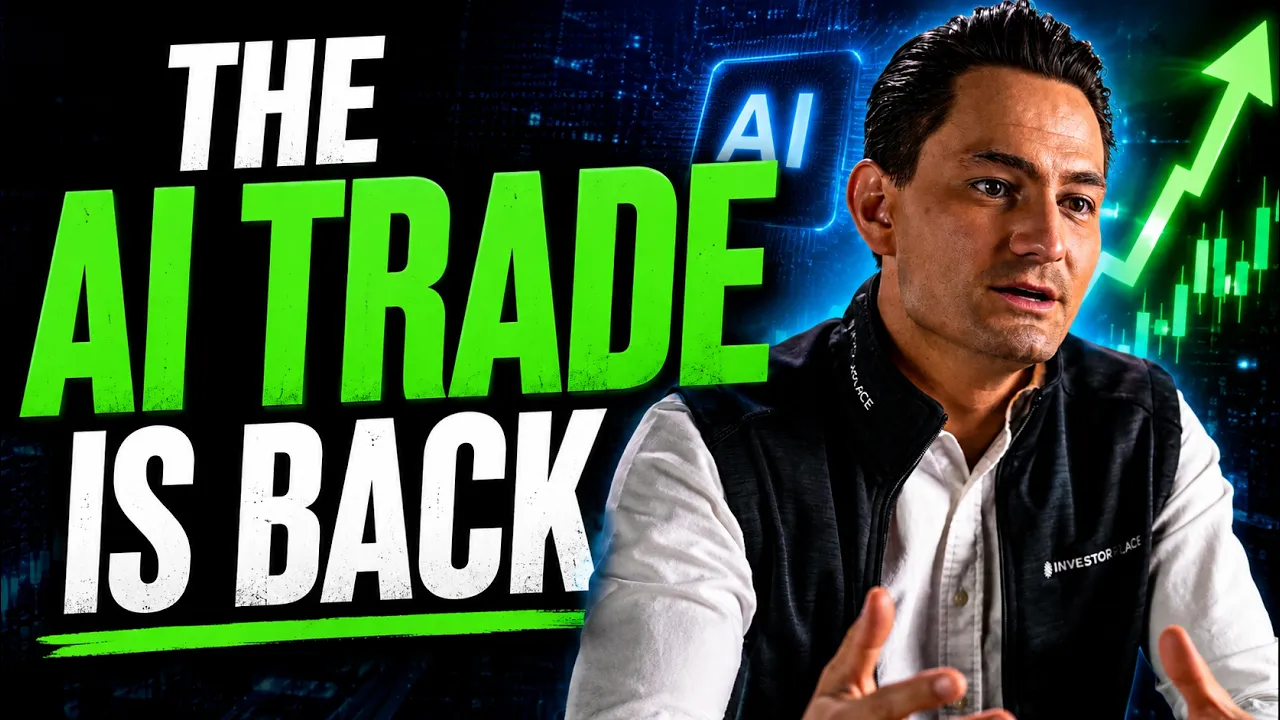
Sometimes the biggest moves in the stock market have nothing to do with fundamentals. Over the last few weeks, one of the Wall Street's hottest AI hedge funds imploded after a series of margin calls, triggering billions of dollars in forced selling across AI infrastructure stocks. The headlines made it look like the AI trade was falling apart, but beneath the surface, the fundamentals may have never been stronger. Today, we're unpacking the situational awareness unwind, why it happened, and why it may have created one of the biggest buying opportunities of 2026. First off, we're so back. Okay? Let's just let's let's put that front and center. Um partly because the Leopold low is in, partly because of hyperscaler earnings, partly because of just continuing strong fundamentals throughout the AI infrastructure complex. But we are so back. July sucked. Um it was you know, we had the best of times the worst of times. The first half of the year felt like the best of times from January 1st to June basically 22nd, 23rd, that's when the trade topped. And then from there until July 30th, it just felt like the worst of times, right? Shout out Charles Dickens. We had it felt like we were invincible, we were Superman with Lois Lane at our back, and then we just got absolutely crushed. Um but now we're so back. That that everything I've seen in the last week we had the theory throughout July that this sell-off is fundamentally incongruent and that it would be a buying opportunity. And everything I've seen in the last week suggests that um that thesis was correct. And the backup the truck moment happened last week that we're still in backup the truck territory this week, I think. But you know, this is like liberation day lows 2025, Iran war lows early '26, uh and then here today, right? I think those are like the three best buying opportunities so far in the AI cycle, uh and we're in one right now, kind of exiting it now that we're we're bouncing back so strongly. So let's talk about the Leopold low. Um Um Situational Awareness was a massive fund that Not massive, but a large fund that was started by this whiz kid Leopold Aschenbrenner or whatever. Forget his name. All right, butchering the pronunciation of his last name. Um and Leopold was this prodigy, this genius, right? This kid from Germany who had been focused on AI for a long time. Went to Columbia, I think at 15 years old. Graduated valedictorian at 19. Uh actually worked at FTX, weirdly enough, with Sam Bankman-Fried and that whole blowup. But, valuable work experience regardless. And then went to OpenAI and became a top researcher at OpenAI and then got fired for leaking some documents that he shouldn't have or It It's kind of a debate between the company what happened and him what happened. So, you know, he said, she said type situation. Um From there, went on to launch Situational Awareness, this hedge fund that was built on one premise. The premise being, "We believe AI compute is structurally under supplied and will remain under supplied for the next several years, probably their theory is a decade plus. And so, we're going to invest in all the stocks that supply that compute, whether directly or through the supply chain." So, they were big investors in Nebia and they were big investors in CoreWeave and they were big investors in Iren and Applied Digital and Bloom Energy and power and optics and all that stuff. And so, they became massive investors in that stuff. They had a lot of success. I think the fund was up like 2,000% or something because those are the stocks that have been working and have been crushing it. But, along the way, um optimism turned into greed. Uh belief turned into overconfidence. And Leopold got really levered up. Uh 4:1, 5:1, there are different reports out there. I'm not exactly sure what the right number is, but he was, I think, at least 4:1 levered. Uh 4x levered. And so he had a $45 billion fund. If he was 4x levered, then he was slinging around $200 billion or close to $200 billion. Um when the AI trade started to show weakness, but then everyone knew this. That's the thing is that everyone knew Leopold was the super levered AI fund. When the AI trade started to show weakness in late June, early July, I think there were some concerns among other hedge funds that owned AI stocks that Leopold may blow up if this sell-off worsens. And so then, let's say you're Leopold and you are super levered and I'm a different hedge fund that owns a lot of stocks that you own. If I get concerned that you're going to blow up and be forced to liquidate your stocks and that's going to cause a lot of share price weakness in your stocks, then I'm going to look at my book and say, "Anything that we have in common, I want to unload because I don't want to be a part of your liquidation fire sale that's going to really hurt me." So my plan would be to sell my stuff that I have in common with you, let you blow up, drive the prices lower, and then buy back my stuff at later after you've blown up at a lower price. And I think that's what happened throughout the hedge fund complex in July. We saw a lot of these um signals, these studies from BofA and Goldman Sachs showing that institutional selling of tech stocks was like super extreme in late June and early July and then in mid-July, uh hedge funds were selling tech stocks like crazy and people couldn't really figure out why. I think this is why. I think hedge funds looked at Leopold and saw, you know, fund that could blow up and so they sold their tech stocks. And then finally though, Leopold did blow up, right? So Situational Awareness got hit hard. I think they dropped 67% month-to-date in July. He was forced to liquidate to Citadel, offload his book to Citadel through his prime brokers. And now Citadel holds the book and he got his public equity book got wiped out. That was a clearing event for the markets because all of a sudden that now the other hedge funds look at that and they say, "Oh, okay, Leopold blew up. Leverage is gone. Citadel now owns the book. No more leverage, no more risk, no more liquidation event. Okay, now I can come back in and buy." So I don't think it's a coincidence that you know, we got news that that happened on Wednesday and then Thursday was like the big bounce back day. And then we've been bouncing back ever since. We've actually seen those same stocks from Goldman Sachs and BofA come out and say that hedge funds now become huge net buyers of tech stocks. So I think that's the leverage dynamic that played out in July which turned a one-of-the-mill pullback into a more extreme capitulation event for semiconductor stocks, specifically kind of a heartbeat of the AI infrastructure trade, those stocks, Nvidia, Qualcomm, Broadcom, and that's also why now the leverage dynamic has been wiped out or been put in the past. These stocks now bouncing back very, very, very nicely, very, very, very powerfully. And I think it's hedge fund buying pressure that is pushing these these stocks up. The same funds that sold in late June, early July, mid-July for fear of a liquidation event are now buying back their holdings because that liquidation event has happened and is now in the rearview mirror. So that's sort of the Leopold woe, if you will. >> So I I I think my question here is it it kind of gets a bit meta. Where do you stand in terms of this event being, oh, it was inevitable because he was, you know, leveraged to the gills, or some people are, you know, detracting the whole situation calling it market manipulation of sorts, you know, by allegedly by Ken Griffin. Like where where do you stand on that line where this was bound to happen eventually or this was almost engineered. >> Uh it was bound to happen eventually. I mean, I I'm not a conspiracy theorist guy. >> Right. >> [laughter] >> I don't believe in like this elite group of people that are just kind of screwing everybody else over and Ken Griffin's in charge of this secret cabal that won't allow young money or new money to come in. I don't I don't believe in that crap. Um what happened is you had a kid who had directionally the right bets and just got too confident and got over-levered and then got wiped out. Like that's just what happens. You know, this happened to Bill Hwang and Archegos in 2021. This happened to Long Term Capital Management LTCM in 1998. Like this happens. When you're in booms, when you're in cycles like this, there are people who are directionally correct but just get too levered and too confident. So what happens is when you own a bunch of stocks and you just own the stocks without leverage, you just need to be directionally correct. You don't need timing. Once you add leverage into the mix, you add a timing element to it. So not only do you have to be directionally correct but you have to be right about the timing of your directional bets. And you're not prepared for any hiccups along the way. Um and so he was just he was not prepared for that. I mean, this is a kid who was I believe at least based on the material I've read from him and the stuff I've seen from him and did the performance was fun, who is really really really intelligent. But there's a difference between intelligence and wisdom. And intelligence is the ability to like know things and see the AI and understand the stocks that are going to win and understand that's going to be correct. And wisdom is being prepared for even if that bet is correct, understanding things can go wrong in the interim and being prepared for that. He didn't have the wisdom to be prepared for a massive drawdown. Now, we'll just totally expect from a 25-year-old in his first time managing money. That happens. Right? You heard all the stories of Ken Griffin and all these other guys who blew up early in their careers and that's why they are today, right? Well, this is Leopold by blowing up early in his career and he'll be back and he'll be fine and it all will be well, but this was inevitable. It wasn't like this engineered thing by the Wall Street elite. It was an inevitable thing of somebody just getting over leveraged and then the rest of the market reacting to that. >> Got you. So, you know, I'm sure there was a bit of Schadenfreude by season investors like ah, you know, the young kid finally blew up. But my question here is about you know, the AI boom at large. So, the main three components were liquidity, leverage and concentration. Isn't there a bit of that going on right now with the AI market? We got the hyperscalers kind of getting into the debt market, getting a little bit levered up. Is there any fear, you know, there that we should be worried about right now? >> In terms of concentration, the market is heavily concentrated and I'm not too concerned about that. I don't think that there's much to be worried about in terms of over concentration because um Well, eventually concentration over concentration creates, you know, a bubble and then a bust, but you need It's not like over concentration Actually, what I just said is incorrect. Over concentration does not create a bust. Over concentration is a sign that there's a bubble. Okay, Captain obvious. Thanks for that observation. No, like no we're in a bubble. Like obviously, this is this is exactly everything is consistent with the bubble. I don't care that there's a bubble. I care when the bust is going to happen. Timing is what matters here. So, by telling me there's over concentration in the market, you're not giving me anything worthwhile in terms of what I'm going to do with my investments or my stocks. The worthwhile advice here is is the timing nature of it. When is this thing going to bust? And we've always been very consistent that the bust happens when the hyperscalers stop spending. And they are not doing that right now. We heard from Amazon, we heard from Meta, we heard from Microsoft, we heard from Alphabet over the last 2 weeks, all four of them. What did all four of them do? They reported fantastic numbers. I know Meta stock got hit, but they reported fantastic numbers. Google is seeing an increase in Alphabet is seeing an increase in Google search usage and the effectiveness of their ads on both Google search and YouTube because of artificial intelligence. Google Cloud is growing at the fastest pace I think it really ever has. Their backlog is absolutely surging. Meta is seeing growth in its daily active people they call them now, which is absolutely crazy considering how ubiquitous that platform is. Time spent on those platforms is going up. That's because of AI. The effectiveness of their ads is going up because of AI. They're very confident about their new cloud computing business. Amazon Web Services absolutely on fire, massive backlog there. Azure, Microsoft, absolutely on fire, massive backlog there. So we hear from the hyperscalers basically saying, "Yeah, we're spending a ton, but it's paying off. Like all of this is paying off. We are seeing massive growth in our businesses and I got a lot of people run the numbers on this, but like the 2-year ROI on their AI investments, when you run the numbers actually on kind of the backlogs and the cloud stuff and all that um kind of shindig, the ROI the 2-year ROI or return on invested capital ROIC here is about 28 29% for the hyperscalers. That that definitely clears a 2-year hurdle rate, right? Weighted weighted average cost of capital right now for these guys is probably 8 to 10%. Uh so that means that you know on a two-year basis the two-year whack two-year hurdle rate is going to be about 16 to 20% they're clearing that with flying colors right around 30% so because of that they're not slowing down in their spending so all four of them hiked their CapEx guidance for 2026 all four of them provided directionally bullish commentary about spending plans in 2027 and even implied that they're going to keep spending into 2028 so when you look at the estimates of the hyperscalers spending is expected to go up in 26 27 and 28 the spending is not stopping so long as that remains true the bubble will not burst the AI boom will persist and the AI infrastructure stocks that have been leading the way will continue to lead the way so we got the Leopold low and then confirmation that the earnings will stay strong that equals sell-off in July was fundamentally incongruent funds pile back in retail piles back in and we get the sharp rebound run that we're seeing right now this is the bounce you want to buy >> Excellent so we did our due diligence there by asking kind of those negative questions but the thing we really want to know is the stocks in question so some of the key positions in situational awareness where core weave Bloom Energy SanDisk and those have seen immediate rebounds now the question here Luke is what are your favorites what are what are say your top five for the the Leopold low that we should be looking at >> So let's talk about them Bloom Energy I you know I love Bloom Energy I've liked this stock since it was in the teens now it's 230 it was 350 I mean it gets back to 350 look at this chart okay we came in right to Leopold low right here July 29th 163 this is one of his biggest holdings I think I'm looking at he owned 6 million 6.5 million shares of this puppy Here's the Leopold low right here at what is it a buck 63 All all highs right here are right around a buck 70, a buck 60 from the first half of '26. So, we basically came to what was a major shelf here from the first half of '26, the first few months of '26, and are now bouncing. >> [clears throat] >> Excuse me, bouncing big off that shelf, retaking the 200-day moving average today, very close to retaking 100 233, we're at 230. I think we retake that. This is a 45% 52% drawdown on the stock, and I think we're ready to rock rock and roll. This is a great fundamental story. Look at the estimates on this puppy. So, I was looking at Fabrinet from, you know, our previous podcast. So, let's look at Bloom Energy here. I'm a big believer that stock price trends should follow EPS estimate trends. The stock is not the company, the company is not the stock, Jeff Bezos' famous saying from 2001 in the aftermath of the dot-com bust. But, the EPS trend line to me is a tell of the underlying fundamental health of a company. When the stock price detaches too far from that fundamental reality, you get buying opportunities. Look at that detachment. Look at this massive detachment. This blue line, which is the forward 12-month EPS estimates on Bloom Energy, just continues to rise up into the right. And then you get this fundamentally incongruent sell-off. Well, it's time for the stock to bounce back to this white line, to bounce back to that blue line. Every other time you had this big sell-off where EPS estimates still rose, the stock bounced back, and we're getting that right now. And the technicals are telling me that we are, indeed, bouncing back. This is telling me back up the truck on Bloom Energy. So, I love Bloom Energy. Another one you mentioned was SanDisk. I love SanDisk. Memory is still super constrained. I get there's these open-source models from China. I get that they're, you know, they're memory efficient, and you get these efficiency breakthroughs, and that's what's going to happen with new technology like AI. You're going to continue to get efficiency breakthroughs. Every few months, there's going to be an efficiency breakthrough. You don't need as much memory to produce, you know, you know, per output or whatever. Okay, great. Jevons paradox kicks in. You increase the efficiency of a resource, you lower the cost of resource, then you're going to dramatically increase the volume, the use of that resource. And so, this is a volume story. Every time you get an efficiency breakthrough, it's going to increase the volume of AI demand. So, I think that all these efficiency efficiency breakthroughs are actually bullish for the memory stocks, for Micron, for SanDisk. SanDisk is, you know, kind of a high beta play here. Um Leopold owned a bunch of it, what 1.1 million shares I think I'm looking at right now. Uh and this is a stock, I mean, look at the technicals here. So, also, let's actually start with the EPS estimate chart because this is another one where you see a big fundamental divergence. Look at those estimates. Those estimates just keep on rising. Now, I get maybe they flatlined a little here, but they are way up, and the stock is way down. Time for white line to bounce back. The blue line technicals tell me the bounce is here. We had a what, a 56% drawdown in the stock, lost 100 of the average, still preserved the 200 though, that's nice to see. And then we bounced and our head in the 100 test, boom, no, now knife through the 100. So, we've retaken the 100-day moving average. We've also retaken this low uh from July 17th, 1354, we're 1440 right now. So, this trend of lower highs and lower lows is over. Sell-off turning into bounce, long-term uptrend intact. I I love SanDisk here. One I don't like as much, but I do think the bounce back potential is attractive, is on Coreweave. I like Nebius more. We've talked about it in the previous podcast, that's my favorite Neo cloud player. The technicals on Coreweave kind of suggest the stock is a bit stuck. I do like the fundamental thesis here. We are compute short, we need more supply, la-di-da, la-di-do. I think that makes a lot of sense, but the chart here is just kind of bleh, right? I mean, the stock has kind of been stuck in neutral since its IPO, really. I mean, it had that big first couple months pop, and then since then it's been stuck in neutral. 200 day is flat. It's below the 200 day. We haven't retaken it. I'm not too excited about this name, but long-term I like the the story. I like the fundamentals. So, I'm not going to knock the stock. I just think some of the others in the Leopold lower a bit of a better buy. Uh some other big names to own, I like Applied Digital a lot. I think APLD, if you're going to pick a Neo Cloud there, that is my favorite. APLD is my second favorite. This stock clearly has an uptrend. Big sell-off, loss of 200 day, but I think we're going to bounce back to that. Something I like about uh APLD is the estimates trend. The estimates trend here is very attractive. Estimates are bouncing back really nicely. Sorry, I'm kind of like thrown off here because it's it's negative, but you can see there's been a huge rebound in estimates recently. That's just really incongruent with the sell-off in the stock, and so I think that warrants a big rebound in APLD. So, I like those names in terms of like Leopold lows. Some of the others are Iran, P6, AMD, uh Intel, TSM. I mean, these are all good names. Corning, Micron, these are all good names, but I think some of my favorites are the ones we just talked about. >> Excellent. So, you know, with the situational awareness, I don't want to say it's over now. Uh so, what what sector are you looking at uh going forward uh now that the market is kind of swinging back in a the direction we'd like it to be in? >> Semi semi semi's, semi semi semi's, semi's, more semi's, and then a little bit more semi's. Um semiconductor stocks have been they they were the heartbeat of the market for uh 3 years, really. And then we had the July sell-off, and they got crushed. It was. And we kind of look at the charts here. We're going to an SMH. Um it was the biggest sell-off in AI infrastructure stocks and semiconductor stocks since chat GPT launched excluding liberation day, right? You can see here, here's max drawdown. We got a max drawdown in semi stocks SMH of about 25% in SOX, which is the other ETF that tracks semiconductor stocks, we were down more, I think about 30%. That is the biggest sell-off since the liberation day, obviously got wiped out. That's an exogenous event. Outside of that, you know, we had a 23 24% sell-off in in summer of 24, but that was smaller than we just had. So, it was the biggest sell-off in in infrastructure stocks and after stocks since chat GPT launched excluding the liberation day anomaly. That means it's either the best buying opportunity or time to get out. And as we talked about fundamentally, I think it's the best buying opportunity. And now technically, we're getting confirmation of that. Let's zoom back in here. SMH big rally, flat line, decline. Now we'll get the bounce. The bounce is almost an oversold RSI bounce. I like that. Lost 100, retaking the 100, I like that. Really like this. Here was the July 17th low 556, now we're at 575. So, took out that July 17th low. So, we retook the big moving average level that we lost. We are ending this trend of lower highs and lower lows. Looks like we're going to retake the 50 very soon. This is a sell-off turning into a bounce, and the chart for SOX, SOXX, looks very very similar. I mean, I you couldn't even tell the screen changed. Um it looks the exact same. You can see this sell-off was deeper in SOX, down about 30%. So, I just think this is where the trade is, right? This is this is where the sell-off was hardest in July and this is where the rebound will be biggest in August, and I think this is where all all earnings growth is. Especially when you look at So, let's pull up the earnings estimates for the actual Philadelphia uh Stock Exchange Semiconductor Index SOX. Look at that. Fundamentally incongruent sell-off. The estimates since let's see since June 23rd is kind of when this all peaked. That was 513. Now we're at 566. So, what is that? That's a 10% increase in EPS estimates since June 23rd, yet we look at the stock or we look at the uh ETF and it's down about 20% since then. So, when you get a 10% increase in estimates and a 20% drawdown in the stock, either the estimates have to come down or the stock has to rebound. Estimates are not coming down because the earnings are super super strong. Stock comes back up. So, I semis is where it's at. That's that's the trade. >> Excellent. Yeah, it's it's nice to finally see the numbers kind of matching up to what uh they should be matching up in reality. It's been this this dissonance uh in in July specifically where earnings are coming out, they look stellar, the backlogs they're orders are up out until 2029, and yet there was a dip in the markets. So, now it finally feels like we're back into reality. [laughter] >> Well, I I think the thing you got to understand is that these are estimates, right? They they If you look how I look at this, the SOX index, the blue line is estimates. And so, the concern with the sell-off is price leads fundamentals. I get that. And so, the concern here was that with this white line dropping, the reason it was dropping is investors were concerned this blue line would start to flatten and then decline. Okay? That like So, let's look back actually at um at the the tech wreck of 2022. Right? So, if you look at the tech wreck of 2022, we can see here, right? The white line falling, semiconductor stocks crashing, while the blue line kept rising. But, that sell-off continued because the price was right, and the blue line started to decline. Did you see what I'm saying here? So, the white line led the blue line. The concern here was that the same thing would happen. The white line is falling, and then the blue lines eventually going to flatten and decline like it did here in 2022. That was the concern. That's why we were seeing these beaten raises being met with nobody cares, and stocks continue to fall. But, the difference was that we heard from the companies that are actually powering this blue line. What's powering this blue line? This is actually true for the entire S&P 500 because AI earnings are S&P 500 earnings these days. What's powering that blue line? Amazon's $225 billion in CapEx, Microsoft's CapEx, Meta's CapEx, and Alphabet's CapEx. The 700-plus billion dollars those four companies are spending this year, the almost 800 billion, or probably over over 800 billion dollars are going to spend next year, that's what's powering that blue line. So, we got confirmation that the core, key, critical, primary driver of the blue line in this chart is going to persist, is going to stick around for at least the next 6 to 12 months, and probably longer. So, confidence that that blue line is going to keep going up has suddenly risen dramatically, and that is what's causing stocks to rebound. And so, that's why again, it all comes down to hyperscaler spending. The analogy we used a couple months ago, uh which I've actually gotten away from, and I think it's a really good analogy, is the hyperscaler spending is the pouring of water at the top of the funnel. And all of these stocks are down the funnel. They're recipients of that water. So long as the water continues to be poured into the top of the funnel, the rest of the stocks, the recipients down downstream, are going to benefit, are going to win. We just got confirmation that the pourers of the water at the top of the funnel are going to keep pouring the water. So continue to be invested in the recipients downstream. >> Love it. All in with AI, AI with AI. I think that's a great place to wrap the episode, Luke. Do you have any closing thoughts that you you want to mention before we sign off? >> I I do think one thing to to be concerned about, not concerned about, but aware of is um the AI sell-off in July coincided with a broadening out in the S&P 500, that the equal-weighted index started to outperform, you started to see a rotation into other names, into consumer staples, consumer discretionary, somewhat of rotation into software. So there was a lot of like there was a lot of good happening under the surface, and July was just an AI stock sell-off. But that took the headlines. Underneath the headlines, there was not money leaving the market, money rotating to other parts of the market. I think that we are now seeing a Well, we are now seeing a reconcentration of capital back into the semiconductor complex, into the AI infrastructure trade. I think that is going to persist. A bond product of that is that the rotation, the broadening that we saw in July is probably going to end. So I would say like as a rule of thumb the stocks that the market dynamics that persisted from January to June are the market dynamics you want to invest for. And the market dynamics that persisted in July or that existed in July, you want to fade those market dynamics. So, if a stock was a winner in July, I'm going to bet it's going to be a loser from August to December. If a stock was a winner from January to June, I bet it's going to be a winner from August to December. So, July was kind of like this reverse month where the opposite happened. What worked in January to June did not work in July. What did not work January to June worked in July. And now I think reverse the reverse. And so, if it worked in July, I don't think it works going forward. If it didn't work in July, it probably does work going forward. So, that's just something I want to be aware of because I know a lot of people are talking about the broadening and the rotation and all that stuff. I actually think that kind of gets cut short here and capital re-rotates back into the AI infrastructure trade, especially because when you look at the Fed and interest rates and stuff, that's going up. And so, if that goes up, that reduces liquidity. That reduces excess capital in the markets. There's only a a finite amount of capital to go in the markets and that finite capital gets lower as the long end goes up. And so, I think, you know, given that dynamic, there's just not enough capital to concentrate in AI infrastructure and broaden out at the same time. We ain't going to see that. What we are going to see is the broadening out re-rotates back into re-concentration and then these other stocks that are not in the AI trade don't do so well. So, I just want to be honest about that. >> Excellent. Love the insight there. All right. That'll be it for today's episode of Being Exponential. Again, please make sure to like, comment, subscribe. Please ask questions in the comments. Of course, we can't answer any personalized investing advice, but feel free to ask questions about your favorite stock. That's it for Being Exponential this week. We will see you on the next one. >> [music] [music]
Comentários 0
Entre para participar da discussão.
EntrarAinda não há comentários. Seja o primeiro a compartilhar sua opinião!