Sam Burns on Fed's Direction Amid Volatile Risks & TSLA, MSTR, SMCI Outlook

- Retorno do vídeo
- —
- Chamadas
- 2
- Compra / Venda
- 1 1
- Publicado
Recomendações
Entrada é o preço de fechamento do ativo na data de publicação. Atual é o último fechamento registrado.
-
Entrada $37,41 18 ago 2026Atual $37,41 18 ago 2026Resultado +$0,00
I know you said you like Supermicro here. Why is that on your buy list right now?
-
Entrada $92,52 18 ago 2026Atual $92,52 18 ago 2026Resultado +$0,00
So I think the fact that Bitcoin has been weak and that the strategy that it's had to kind of own Bitcoin in a leveraged fashion is, is kind of unwinding. So that would be certainly one to avoid because the business model I think is kind of, you know, broken or it was never really a strong one to begin with.
Transcrição Completa
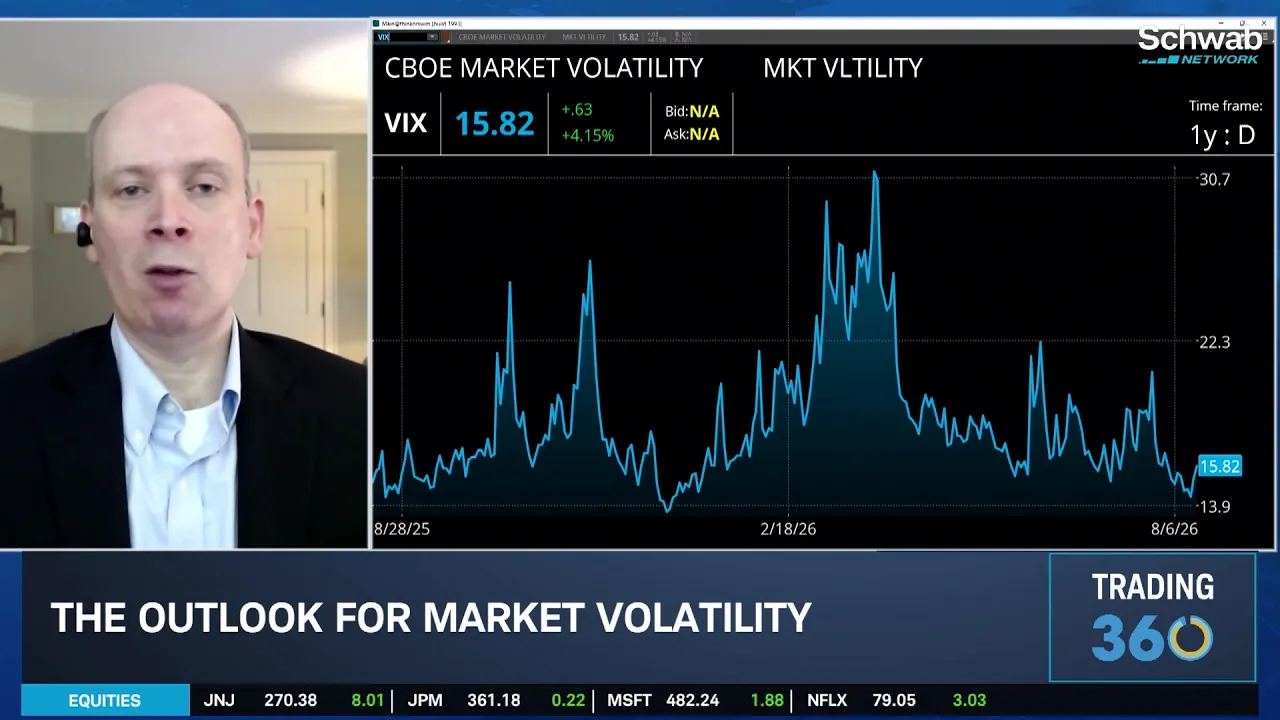
to those gains throughout the session. Really appreciate it. Jenny Horne, co-host of Next Gen investing, for breaking that down for us. I do want to welcome in our next guest, though. Joining us this morning, Sam Burns, the chief strategist over at Mill Street Research. Sam, great to have you on the show. Good morning to you. Now, your current equity risk model is holding about 49%. That's essentially neutral. We have a down day right now, but we're still pretty close with the S&P up near record highs. How is your model affecting how you're looking at the market right now? No thanks for having me on. And yeah, you're right. The model that that I've been using for many years now to kind of gauge, you know, kind of the 1 to 3 month outlook for, for the markets and kind of risk on risk off has been, you know, kind of a little more cautious, closer to neutral than you might expect given what the indices are doing, looking at the S&P and so forth, being near new highs and a lot of what it's sort of picking up is that the momentum that we've seen, you know, in the second half of last year and even earlier this year, and a lot of the really the volatile stocks, the leadership in technology and things like that has slowed down some. And that you're starting to see some rotation to other parts of the market away from the most volatile stocks. And that's kind of usually kind of step one, as you try to progress from the early stages of an intermediate term move to kind of the later stages. And so that's kind of an early warning in some of the indicators I look at to say that we're definitely not in the early phase of this market move anymore. And even though we're near new highs, some of the underlying kind of mechanics look like they're getting a little longer in the tooth. And therefore kind of the risk kind of profile is not as strong as it used to be. And one of the biggest headwinds that you identify is fed expectations here. And the uncertainty around those, some of that tied to Warsh and his new policies, some of that tied to just the general macro, uncertain backdrop that we have right now. What is the market getting wrong or perhaps misinterpreting about the path forward for the fed and interest rates? That's concerning you most right now, Sam? Well, I think we've had several years when the fed was either going to be cutting rates or at least just maybe holding them steady. And so now in the last few months where we've started to see the market pricing in rate hikes, even if it's only 1 or 2 rate hikes, you know, that's a shift from sort of being a tailwind to potentially a headwind. I think there's a lot of uncertainty about, you know, how the fed is going to behave and how it's going to respond to inflation that's been above target for for a long time now. Years now and maybe starting to go the wrong direction again, that they're facing both kind of, you know, fiscal policy and kind of global macroeconomic and kind of geopolitical uncertainty that, you know, would typically require, you know, particularly rate hikes, particularly in light of the AI spending, CapEx, that kind of thing. That's more demand driven than just the supply shock from from energy. So I think that there's more pressure on the fed to potentially raise rates. And I think that's going to kind of weigh against, you know, maybe investor sentiment, which had long considered the fed to be, you know, at least neutral, if not a tailwind for for a number of years now. And in the absence of any commentary or clues from the fed, we are seeing expectations shift with every headline and every data point that comes out. I was just refreshing the fed watch tool where a chance for no. 65%, no change, 35% chance for a hike in September. If I go out to December, we're up to 67% chance for a hike, 0% chance for a cut at any of those. What parts of the market are most exposed to any shift in fed expectations? Because we have seen it shifting quite erratically in the absence of this sort of predetermined strategy that we've grown accustomed to with previous fed chairs. Yeah, you're right, there's been a lot more uncertainty about the fed since since water took over that the sort of lack of guidance that he's focused on has been a real shift from the past several fed chairs. So the market's really trying to work out what the response function is from the fed nowadays and how they're going to respond to to different sets of data. And the data has been been mixed. I mean, we've had, you know, different measures of labor markets showing some positive some negative inflation. You can find metrics that are, you know, improving and some that are getting worse. So I think a lot of people are still uncertain about how the fed is going to react. But the fact that, you know, inflation, headline inflation is still quite elevated and getting closer to the fed funds rate itself means that there's potentially room for at least a rate hike or two. And particularly if you think that there's still a lot of money floating around from fiscal policy and from the all the CapEx that's going on spending by the big tech companies, you know, that typically would be a scenario where you would see, you know, the fed wanting to lean against that, you know, push rates up a little bit. And so you've got, you know, things like financials and the banks that are benefiting from a steeper yield curve because the yield curve steepened quite a bit recently. And then other areas like housing and even Home Depot that you just mentioned, you know, still feeling the pressure from those kind of elevated rates, the lack of activity in housing and, and all that kind of non AI related construction in the economy is still, you know, relatively weak. And then only the data centers and things like that are really seeing the kind of the spending still come through despite rates. So I think that's what we're seeing is that the rates are still affecting the traditional parts of the economy, but not the tech data center AI parts of the economy so far. And Sam, with everything that we just talked about, I want to talk about volatility because the VIX. I mean we were near a record low. We're at 15 right now. I'm just looking at 15.79 coming off of the lowest levels we've seen in a long time here. But we just talked about a very uncertain backdrop in the markets. So as you look at the VIX right now do you view the markets as underpricing risk. Or is it appropriate hovering around 15. No in my in my market model and in just kind of my own perspective you know this looks like a VIX that's too low. And of course you can see the fact that individual stocks certainly have been much more volatile than what the VIX would make you think. And in part what you're seeing is that the indices are fairly stable. Because you know the correlations among stocks rotation and dispersion that we've seen that even on days like today you know the technology stocks are going down. But the rest of the market, you know, health care, consumer staples, other sectors are going up. And so you get this sort of finely balanced kind of tendency where, you know, if one part goes down, one part goes up and it keeps the indices from moving very much, but there's still a lot of volatility and potentially risk under the surface. Investors are kind of getting nervous and rapidly moving back and forth between, say, tech and everything else, or even semiconductors and software within the tech space. That's pretty unusual to see that level of kind of finely tuned kind of diversification or very low correlations among stocks. I don't think it can last forever. And I think that the macro environment, both geopolitics and rates and things, as well as the fact that earnings have been super strong but have not really produced a response that you would expect for Q2 earnings the way they did for for very strong Q1 earnings. I think that means that expectations are very high. And, you know, there's more potential downside to expectations now than there was, you know, even a few months ago. So to me, this looks like a VIX is probably too low. And as we get into the fall, we might just start to see that pick up again. And with the potential for that to pick up and your overall neutral view of the markets right now there are still some individual names that you like. I know you said you like Supermicro here. Why is that on your buy list right now? Yeah. So the buy list we look at, you know, every week in our weekly roundup report, you know, screens for stocks where the earnings estimates are still rising. And, you know, the stocks are reasonably valued typically, and that the price momentum and price action is supportive. So any you know, the stocks that make it through those screens, you know, will show up on the top of our list. So there's still a number of technology names like that that have maybe had done well and have had a pullback. And that's typically what you want to see if earnings estimates are rising. The stock's been doing well. But it's had a pullback to maybe give you an entry point. That's usually what the kind of the model that I use is looking for. So there's still a number of technology names that meet those criteria. But there's also a number of names from from other sectors as well. So it's not strictly a technology AI kind of a tilt to the to the, to the model that's giving the stock ideas there. But that's kind of what we're generally looking for in the, the weekly ideas list that we published for our clients here. And you also have a void ideas on that list here. Strategy is one of them. What's your primary concern when it comes to strategy? Well, now see, that's going to be a name that probably doesn't work as well for an earnings estimate based kind of approach like I have just because it is such a, you know, an asset based, you know, basically just owns Bitcoin and tends to follow whatever Bitcoin is doing, you know, kind of with leverage essentially. So I think the fact that Bitcoin has been weak and that the strategy that it's had to kind of own Bitcoin in a leveraged fashion is, is kind of unwinding. So that would be certainly one to avoid because the business model I think is kind of, you know, broken or it was never really a strong one to begin with. And the fact that it doesn't really have the same kind of, you know, earnings that that a lot of most traditional companies would have, it's more of an asset play and it's kind of got the asset going the wrong way right now. And you also have Tesla on that list, which I'll be talking to Alex Coffee about in our disrupter segment today. But Sam,
Comentários 0
Entre para participar da discussão.
EntrarAinda não há comentários. Seja o primeiro a compartilhar sua opinião!