Contexto
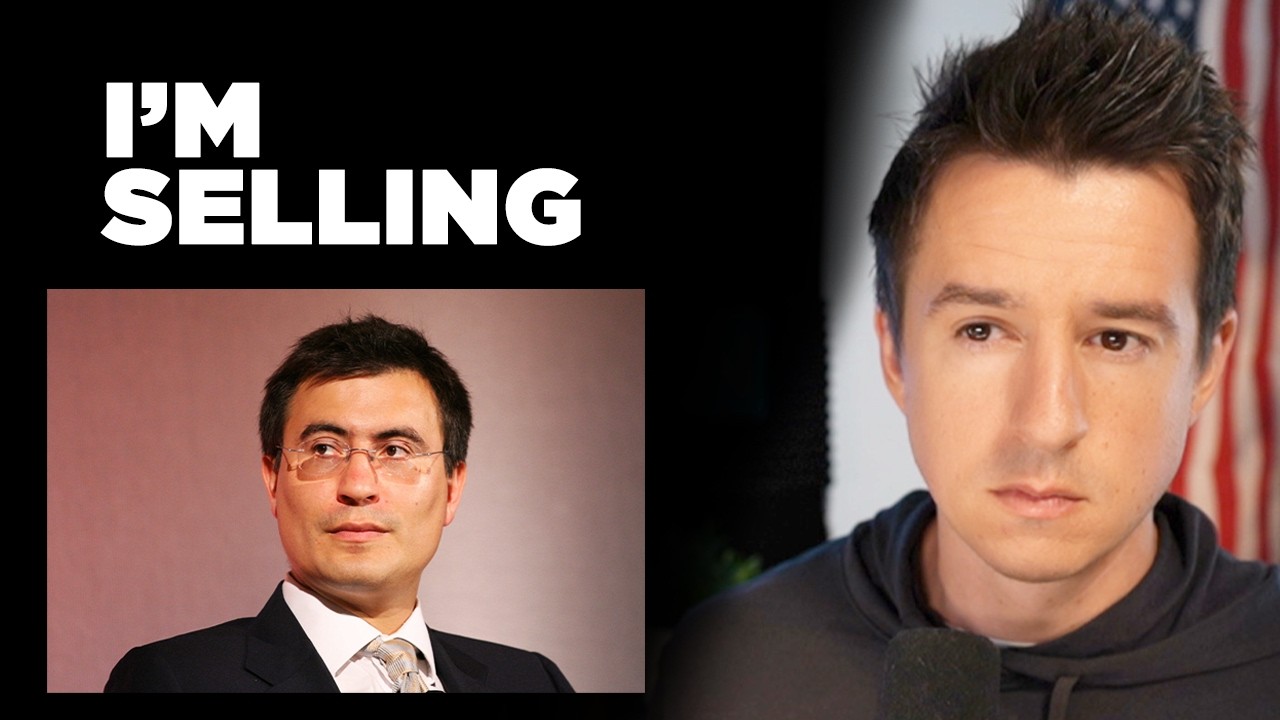
Today on the Jezel Carlson show, Chris Hone, who may be the best living investor today, he is a legend. He manages $50 billion. Well, he just sold all of his Microsoft.
Contexto
Today on the Jezel Carlson show, Chris Hone, who may be the best living investor today, he is a legend. He manages $50 billion. Well, he just sold all of his Microsoft. Well, almost all of it. He sold $8 billion, the majority of his position.
Chris Hone basically sold his entire Microsoft position.
Contexto
Now, we start things off today with the news that Chris Hone basically sold his entire Microsoft position. He took it down from a 10% to a 1% watcher position.
We reduced our investment in Microsoft because the rapid progress in AI introduces uncertainty over Microsoft's competitive position in the future.
Contexto
This sell of Microsoft happened recently and he notes the reasons why. He says, quote, "We reduced our investment in Microsoft because the rapid progress in AI introduces uncertainty over Microsoft's competitive position in the future."
He also had G O G. He sold that ticker as well even more.
Transcrição Completa
Today on the Jezel Carlson show, Chris Hone, who may be the best living investor today, he is a legend. He manages $50 billion. Well, he just sold all of his Microsoft. Well, almost all of it. He sold $8 billion, the majority of his position. He reduced the position from a 10% to a 1%. And he did so out of concerns. Concerns that Microsoft in and of itself is being disrupted by artificial intelligence. In today's episode, we're going to be going over this case. We'll first of all be looking at Chris Hone, how he's built up a $50 billion empire. We'll also be looking at his returns, how he's beat out other investors with a highly concentrated portfolio. And we'll be looking at what his thesis is on Microsoft, why he thinks that Microsoft is not just an opportunity, but in fact, it's a risk. It's a risk not worth taking in his case. So, we'll be going over all of that in this episode. Now, of course, we also have a lot of other news going on today. The restaurant Texas Roadhouse just reported earnings. The stock went up 15%. It's now up on the year. We'll be going over what's going on with these restaurants and why these may actually be an opportunity over the next couple of years. There's a very unique bull case for Texas Roadhouse. And then finally, we get to the fail of the week, which in this case is prediction markets. We'll be going over why almost everyone loses in prediction markets. So, we have a lot to get to in this episode. Let's go ahead and jump in. Now, we start things off today with the news that Chris Hone basically sold his entire Microsoft position. He took it down from a 10% to a 1% watcher position. And he did so after concerns of AI disruption. Now, to understand why this is important, why it matters when Chris Hone buys and sells things, it's because if you don't know about Chris Hone, he's arguably, in fact, I'd say convincingly one of the best investors in the world actively working today. He may be in the conversation of like the top two to three. And the reason why is simply in the data. Chris Hone runs a Londonbased investment fund. And while you may not know his name as much as like Warren Buffett or Peter Lynch or the legends of the past, Chris Hone is actively working today building an empire today. He's not quite as vocal as the likes of Bill Aman. He's not on interviews all the time or writing lengthy posts on X. He mostly keeps to himself and he does interviews sparingly, but his performance speaks for itself. Chris Hone has built a massive fund. It's now above 53 billion. To put that in perspective, Bill Aman's fund, which is also massive, is around 15 billion. So Chris Hone has this incredible fund, the TCI Fund, the Children's Investment Fund, and he's done so by compounding, by having attractive returns. In fact, he's compounded at a rate of around 18 to 20% for the past couple of decades. In 2025 alone, in a single year, he had $18 billion of gains for investors. He was a top performing hedge fund and even at the massive scale and he's done so not by luck, not by happen chance, not by buying a company that happened to do really well. He's done so by buying the most impenetrable companies that exist today. Companies that have moes that are so strong they have unassalable moes. They cannot be competed against. He's invested in a highly concentrated portfolio of these companies. See, early on in Chris Hon's career, he was hurt by the financial crisis. He owned a lot of banks and a lot of companies that at the time seemed okay, but they were actually weaker. They had leverage. They didn't have as big of moes. They were more commodities, but they were profitable nonetheless. Once Chris Hone went through the financial crisis, he completely changed his investing strategy. He decided to go into companies that would never cause him those type of griefs again. He considered them to be the strongest companies in the world. Impenetrable business models, incredible incredible balance sheets, companies that had outright monopolies. They controlled the markets that they they lived in and he built up these positions over time making slight changes year after year. Now Chris Hone's portfolio has around 9 to 10 positions today. Some of them in Europe, most of them in the United States. And they have many of the type of companies that you would expect. They have GE Aerospace, which makes technology, these engines that nobody else can create. It's a little bit like ASML but for plane engines. You also have Visa with its massive network effects. You have S&P Global and Moody with their credit rating business. You have railroads like Canadian Pacific. It's very difficult to try to compete with a railroad. They are integral to the economy. But then you also have companies like Microsoft. And this is the position that used to be a fairly large position in his portfolio that now is no longer a big position at all. In Chris Hon's US portfolio, Microsoft was around 15% of the total portfolio. If you include his European holdings, it was around 10% overall and now he's reduced that down to less than 1%. This sell of Microsoft happened recently and he notes the reasons why. He says, quote, "We reduced our investment in Microsoft because the rapid progress in AI introduces uncertainty over Microsoft's competitive position in the future. We are primarily concerned about Microsoft's Office productivity software franchise where AI could establish workflows and lead to the emergence of new productivity platforms. But we also see some risks in cloud and Azure. The letter added. So he blames it on artificial intelligence primarily as a threat to the software portion of Microsoft, but he also doesn't leave out Azure. He says that even Azure is vulnerable, but he doesn't expand the reasons why. And when we look at Chris Hone, you may just scoff and say, "Well, maybe he just trades a lot and he's switching out this position." But he doesn't. Chris Hone has owned Microsoft for years and years. The sale marks a major moment for Hone's Fund, which has ridden a nearly 400% increase in share price over the past 9 years, and it held a large stake in Microsoft almost continuously since the fourth quarter of 2017. So for 9 years, Chris Hone has held Microsoft as one of the top positions. He's made a fortune on this position. He loves the company, but now all of a sudden he's changed his mind and trimmed it down to a symbolic 1%. And now he's warning about artificial intelligence. When we look over the reasons why why this is happening, I think it can be brought back to the growth of Microsoft initially. What makes Microsoft's moat? What makes Microsoft have pricing power? When we look at the growth of Microsoft initially, this is pre-subscription and this is pre-bundle. We had Microsoft way back in the day in the 1980s and 90s come out with products like Microsoft Excel and Microsoft Word. Those were the OG products. Now, they had something that was really cool early on, especially for Microsoft. It was called network effects. It's the same thing that caused Facebook to grow. Everybody uses Facebook because everybody else uses Facebook. That was the initial growth path. But what happened with Microsoft Word was every time you used Word and you saved a document, it saved in this extension that was a doc and you could only really use that extension or use that file if you had Word. So in order for other people to use that document, they needed to have the same software. This meant that when when some people used it, other people had to sign up and use it to be able to read the documents the other people are using. This is a network effect. It's reinforcing. And the same thing happened with Excel. Excel has its own little unique extension. So every time somebody saves something in Excel, the best way to open it is with Microsoft Excel. And then you have the situation where it just continues to grow. People are using these products because other people are using them because it's a network effect of the file format, the usability. And quickly Microsoft had massive scaling because of this. It boxed out other competitors. If you weren't able to open those extensions, you couldn't really work in corporate America. So, by default, every company that got mature said, "We need to support these extensions. We need to be part of the actual workspace crowd." And Microsoft grew early because of that, because of those network effects. Now, later on, as Microsoft matured, they found out about a much superior business model to one-time sales. Instead of just selling these applications a single time, they're going to wrap them into software and make them as a subscription that you pay every month or every year. Big corporations could sign contracts, sign up for annual accounts, and therefore they could receive continual updates. Microsoft loved this because it created an annuity-like stream of income. But there was an even more important thing than just the billing and the profits that this created. The most important part of this was the bundle. And this is at the heart of Microsoft's moat, the bundle. Everybody knows that when you bundle products together, it creates a little bit of a moat. But nobody understood this better than Microsoft. They started to bundle all their office productivity software together. They put it into a single subscription. And what they did is they they did something kind of genius. Every time they would bundle their core products together, anytime a small competitor made a different product that was outside of the bundle that was really good, Microsoft would look at their product, they would copy their homework and then they would put it in their bundle for free. No additional cost. They' just throw it in and then they'd kind of just raise the price of the bundle over time anyway. So, it's never really free, but to the user it was free. Now, think about this as a business. If you have a Microsoft product that's thrown in the bundle that's included for free in the subscription you're already paying for, you're much less likely to sign up for that that other product that the other company made. So all of a sudden, every other little product that's getting made by different companies. Microsoft copies, puts in the bundle, says it's for free, and you have no incentive to pay for this other product. In many cases, these other companies were making products were even superior. They were better than Microsoft's. But the bundle wins. Look at Microsoft Teams against Slack. Slack has more functionality. It was a better user interface. Overall, it was a far more robust product, especially at its release. But Microsoft came out with Teams. It was an inferior product, but it got the job done. But the important thing that Microsoft did was they just included it in the bundle. That created rapid adoption. Microsoft Teams quickly accelerated above Slack. Slack tried its best. It wrapped it with Salesforce. They combined companies. Uh they they tried to get user adoption, but it just wasn't enough. Microsoft Teams won out with communication. The bundle always won because again, you can just throw in more products, say it's for free, and slowly increase that bundle size and increase the subscription along with it. And over time, this has boxed out competitors for decades. In fact, Microsoft did such a good job at this that they even survived the Bomber years. Even as bad as Steve Balmer was at allocating capital, it didn't matter. The core franchise, the bundle in and of itself was so strong, it would weather any storm. Microsoft created one of the most impenetrable modes ever to exist in corporate software. There was nothing that could uproot this bundle. It was deeply intertwined with network effects. Every single company used it. And to be able to even communicate with other companies in the corporate world, you needed Microsoft's products. This massive SAS bundle of Microsoft, all these products together in all of corporate America was this self-reinforcing cycle that Microsoft needed. And then you have another era of Microsoft. You have cloud. This was spurred by Satcha Nadella. This was his hallmark. Now, Microsoft Azure has been a massive success. It's second only to AWS. See, with Microsoft Azure, Microsoft had a problem. They were nowhere as good as AWS. AWS had a decade leads. Their tooling was way better. They were way more advanced in a lot of different ways. So, Microsoft had to find a different path to grow and they did. And what do you know? It was reliant on the bundle once again. Even though Azure is an independent product of the Microsoft software bundle, it's still heavily reliant on that that thing existing. For example, the sales team of Microsoft Azure would go to corporations and they wouldn't just say that we have better tooling than AWS or Google Cloud. That wasn't the sales pitch at all. They went to skeptical IT teams and they said that you're already using Windows Server. You're already using Active Directory. You're already using the entire Office ecosystem. And guess what? We have a cloud that integrates directly with all of that. It's all in one big process. You can simply just take everything you have and migrate it to Azure seamlessly. we have tools to express the process. So it was a sale based on the existing bundle that people were already using. Microsoft Azure grew unnaturally fast because of this migration because of already the existing customers using all of their products. Amazon Web Services didn't have that. Nobody's using an Amazon suite of office tools. Even Google doesn't have the same advantages of Microsoft when it comes to the migrations. So Microsoft leveraged their bundle once again even with Microsoft Azure. So you can see that the driving factor behind Microsoft's primary growth, their monopoly is the bundle even when it comes to Microsoft Azure. So what's changed over just the past couple of years? What is Chris Hone so worried about? When we look at Chris Hone, he's always observing potential threats. And that's smart because when you run a concentrated portfolio, when you're putting tens of billions of dollars in every single position, you better be absolutely sure that that company has the same mode it had yesterday. With Microsoft, Chris Hol believes the moat is materially being weakened. And he believes so by artificial intelligence, primarily Claude. Claude has created AI plugins for almost every single workflow of Microsoft, almost all of them. They are changing the way people work with Microsoft products. They're making it so that you can now automate things on Excel that you couldn't automate before. There's entire windows of how you can just control things and create things by plain text. Claude is actually making it so that you can automate things agentically. So people aren't even interacting primarily with Microsoft's interface. Now they're interacting with Claude's interface and Microsoft is being moved to a back seat. Claude is pitting itself right between the end user, the person that used to be hands-on with Microsoft and Microsoft. they are now disintermed. They're right between them. When you look at the workflow of an average corporate company, if you ask them, "What's something new that's changing with your work over the past year?" They will almost invariably say, "Oh, we're implementing Claude. Yeah, we're trying to get it to work. We have a lot of agentic workflows. We're having it do a lot of different things." Like all of them are doing that. Anytime I talk to a business leader, they're talking about Claude, how they're now automating things. They're working through Claude. They're having Claude do the things with Microsoft that they used to do directly. And that poses a specific threat. See, when you have exact contact with the end user, you have that relationship. You have the pricing power. You have the control. There's a simple mental model to use here. The thing that the user interacts with primarily is the thing that's likely going to have the most value. Value is shifting from Microsoft's products into claude. when they control the workflows, when they control the relationship, when they control all the agentic controls on top of Microsoft, some of the value proposition in the user's mind is switching from Microsoft to claude. And that's not the only problem for Microsoft. See, another thing that I mentioned early on as part of the moat building process of Microsoft, where are those switching costs? Remember, if you save a file in Excel or you save it in a document file, you're going to have a very specific Microsoft extension that's incompatible with every other piece of software. It's proprietary to Microsoft and that ensures to be able to open up this document, you need a Microsoft application. Now, there's been attempts to break this switching cost, but they've been tough and most people figure out that it's just too much work. It's too much work to try to take Microsoft coded documents and use them in any other application until now. Claude, of course, and any other AI works as a universal translator. You can easily take any document of any file format, Excel, PowerPoint, any type of document extension, and you can just tell Claude to translate it into the application you're using, and it will do it instantaneously without much error. It does this easily. And this erases the switching cost associated with Microsoft products. When you can easily translate any type of document into any other application, you're no longer locked into the bundle in the same way that you were. Now, there's still some other factors that may make it more valuable to have the bundle, but the compression of switching costs and the lack of control over the experience and the user interface, what users are interacting with are gigantic changes in Microsoft's mode. These were important factors in their growth for the past decade and they're changing. And that brings us back to Azure. He also expressed that there are some concerns with Microsoft Azure. Now remember that Microsoft Azure did not grow on its own merits. It had the help of the office suite. It had the help of active directory. All those type of things that people are using. If the office suite gets disrupted, if it's no longer being used in the same capacity it was before, then there's not quite the sales pitch that they had before. Microsoft Azure would have to compete on the merits of its own tooling and its own its own fees, its own process against AWS. AWS is more battleh hardened. It's proven itself that it can compete without the help of a software empire. So Microsoft would lose another selling point for Microsoft Azure if they lose those migration processes. Overall, this is a fundamental deterioration. It's a weakening of Microsoft's mode. So given that context, it makes sense that Chris Hone wants to cut back on Microsoft and trim the position from a 10% to a 1%. But the big question is, is Chris Hone right? Does he have this call actually right? Well, even though his reputation is incredible and his track record is respectable, Chris Hone has been wrong before. And I think this is worth pointing out because sometimes you get the idea that because someone controls a lot of money or he's super smart that he can never be wrong. And that's certainly not the case. When we look at Chris Hone, he did get one call on a company that was a significant position very, very wrong. that company was Google. If we look for example at his trading with Google, this is Chris Hone's trading. He sold the position in large part back in Q1 of 2023. Q2 of 2023. These are 56% reductions. 21% reductions. And this is just G O G L. He also had G O G. He sold that ticker as well even more. So, he completely reduced his position from a top position down to almost nothing, down to just a couple percent. And he did that when Google was trading at about $115 per share. Today, Google's trading at 391. It's been one of the best performing stocks in the market since Chris Hone sold the company. Now, Chris Hone didn't only just sell the company to rebalance or to shift things around. He had very similar concerns about Google. And he expressed those concerns publicly. He wrote a letter back in 2022. This is November 15th. And he wrote this letter directly to Sundar Pachai. Now, an important piece of context here is that at the time that he wrote this letter, Google was $96 per share. So, under $100 and now it's nearly $400 per share just a couple years later. In this letter, he is extremely critical of Google's management. He excoriates Sundar Pachai. He says that they're paying their employees too much, that the culture is all wrong. He says, "We are writing to express our view that the cost basis of Alphabet is too high and that management needs to take aggressive action. The company has too many employees and the cost per employee is too high. Management should publicly disclose EBIT margin targets, substantially reduce the losses and other bets, and increase share buybacks." He goes on very specifically highlighting how the headcount is too high for Google. He talks about Brad Gersonner. He says that he agrees with Brad Gersonner who is a notable bear on Google and also got it wrong during this time. No offense to Brad, but he was invested in open AI and he continually talked about how Google is going to be disrupted. He said it's a poorly kept secret in Silicon Valley that companies ranging from Google and Meta and Twitter to Uber could achieve similar levels of revenue with far fewer people. Now, why was Google hiring all the employees that they did? It was because of Google Cloud. They were investing in Google Cloud aggressively. These employees were incredibly useful at the time, but you couldn't really see the rewards yet. They were an investment after all. In Chris's letter, he gives details about the growth of the employees. He says how they should just fire these employees, not invest as aggressively. And then probably the most damning part of this entire letter is when he specifically addresses Whimo. He says over the last 5 years the other bets has generated 3 billion in cumulative revenue but incurred a massive 20 billion of cumulative operating losses. Alphabet's investment in other bets has been unsuccessful. Alphabet should reduce annual operating losses in other bets. The biggest component of other bets is Whimo. Unfortunately, enthusiasm for self-driving cars has collapsed and competitors have exited the market. Ford and Volkswagen recently decided to shut down their self-driving car venture, saying, quote, "We have looked at this every way you can, and we just see the profitability a long way out." Whimo has not justified its excessive investment and its losses should be reduced dramatically. He tells Sundar to cut spending on Whimo to instead return that money through share buyback so we can save a couple billion dollars from the losses of Whimo. So during this time period obviously Whimo was not uh it wasn't booming at the time but almost right after Chris Hone told Google to cut losses on Whimo to pair back their spending on it Whimo proved to be a massive success. Now the little investment that Google did make into Whimo is worth hundreds of billions of dollars. Whimo is a massively, massively valued company because so far it's literally the only compelling robo taxi company in the country and it's spreading internationally, opening up in Europe, opening up in Japan. It's it's going everywhere. Whimo is doing over 500,000 weekly paid rides with a five-star rating in the app store. The cost of Whimo between Whimo and Uber is also getting more narrow as you rule out tips because there's no driver. If Sundar Pachai listened to Chris Hone, that would have been a massive, massive mistake. It would have destroyed hundreds of billions of dollars worth of capital. And it likely would have done the same if you listened to them and cutting their workforce for all of their cloud hosting. Google now has the best full stack cloud hosting existing with the models, TPUs, and distribution. The investments that Sundar made were precient. They were future-looking. Chris Hone was very wrong on Google and he could be wrong again on Microsoft. And in fact, after Chris Hone agreed with Brad Gersonner, he criticized Sunder Pachai. He said to cut Whimo, he said to cut back on employees and he sold the company at $115 per share. Now he seems more excited about Google than Microsoft. It says in the letter that TCI stake in Alphabet increased from 3% to 5% and now it's the largest tech position in his fund. He did sell Google at a low and now he's buying back in at a much higher price around four times the price. When we look at Microsoft, this company is also trading at a relative low with a Ford PE ratio in the low 20s. PE ratios for Microsoft typically hover around the low30s. So it's a full 10 PE ratios lower than it typically trades. Microsoft is on a big dip and this is typically not the time to become bearish on Microsoft. I think that there's a lot of things to look forward to with Microsoft. For one, it is still just a massive distribution. Microsoft has so much distribution. They own the core suite of tooling in virtually all of corporate America. Certainly the Fortune 500, but the Fortune 1000, the top 10,000 companies, even small businesses, they're using Microsoft's products every single day. Yes, they'll have integrations. Yes, they'll have Claude. Yes, they'll compete with C-Pilot. There'll be a tangle to some degree, but I believe it's unlikely for things to turn out as bad as perhaps Chris Hone is portraying. And in the case of Google, we've seen that in some cases the downsides and the concerns can be overemphasized, especially during times of lower valuation. So for me, even though Microsoft isn't my most exciting position, it's not the one that I've been talking about. I'm much more bullish on Google and Amazon and Meta. Those are the three that I've been talking about incessantly. I still have Microsoft as a smaller position. Now, if I see things evolve in a negative way for Microsoft, I could believe Chris Hone side more, but as of right now, I feel like it's worth a hold. I'm going to continue holding Microsoft, and I believe there's a good chance the multiples will actually increase. Now, moving on, we get to one of my favorite companies in my portfolio. Texas Roadhouse just recently reported earnings, and the stocks skyrocketed. Now, it's a dicey game investing in restaurants during uh during this time period where commodity costs are high, there's inflationary costs and costs of beef, for example, are very high. We have other companies like we can look at McDonald's. This is one of the most well-managed companies in existence. And we look at it today and it's just going downwards, down 10% year to date. We have another example with Shake Shack. We can take a look at Shake Shack. They make a good burger, sure, but they're having a difficult time with the input and inflationary costs of beef. Shake Shack was down 33%. It's down 33% in the past 5 days. Then again, we look back at Texas Roadhouse and like usual, this company just does something a little different. But then it reported earnings and it was up 15% after earnings. In fact, just today it's up another 1.7%. Texas Roadhouse continues to be an elite operator. They have their systems down better than anyone else. And that shows through the fundamentals of the company. For example, Texas Roadhouse increased its foot traffic year-over-year. There's more people going to them every single evening, which seems impossible because they're always packed, but they're even more packed. Like, they just keep growing. More and more users per location. More and more revenue per location year-over-year. More to go orders as a percentage of total orders. Higher check volume. Customer satisfaction is great. Texas Roadhouse is dealing with these input costs, but so are every other restaurant. And Texas Roadhouse is just better than the other restaurants. So, they continue to grow. They grew their revenue double digits. They grew their earnings per share by 9% during a deeply inflationary time. And this holding just recovers. It keeps going. Texas Roadhouse refuses to lose. I now have this position as a $47,000 position with 44,000 of that being gains. And I already took $40,000 worth of gains out of this company. Now, why does this one in particular do so well? Well, there's a couple factors. First of all, the food is just good. It's good food. I don't care who you are or how snobby you are. Uh the food is amazing at Texas Roadhouse. There's a lot of it. The portion sizes are great. The value is great. The technology works well. The staff is extremely attentive. They greet you as soon as you get in. They seat you very quickly. And overall, it just makes a very difficult a difficult value proposition and experience to beat. Other restaurants have their work cut out for them to compete with Texas Roadhouse. This looks like a software company. Like you'd have a subscription model SAS company. No, this is a steak dining joint. Look at how linear and gradual and consistent the growth of revenue is. The only time it even had a divot was during co when their restaurants were literally shut down. So we have a company that continues to grow revenue. Now this is important because their input cost is also sky-high. There is a record low cattle lot number in the United States. It's actually at a 60-year low and that may change over the next two years. In fact, it's almost certainly going to improve over the next 2 years and that will cause massive profits in Texas Roadhouse. If this company continues growing revenue and the cost of cattle goes down, they will have massive operating leverage. I am more bullish on Texas Roadhouse today than I think I've I've been before. I think the company's going to do great and right now, even after it spiked up 15%, I still think it's a buy. Now, moving on, we get to the fail of the week, which is the prediction market. Now, if you know me, I'm no fan of gambling. And for solid reason, gambling is one of the shest, most predictable, quickest ways to reduce your wealth, your buying power, your your family's comfort, your future, and your overall financial situation. It is a tax against the ignorant. Warren Buffett has been correct on this subject for decades. Gambling is one of the most pernitious problems that consumes consumers. It's highly addictive and more than not it just leaves you with less money with nothing to gain. Now there are some forms of you know speculative gambling and small amounts is more of a entertainment that some people can get away with doing. I've even gone to Vegas and I've put $100 on a slot machine before. So this comes with a little dose of hypocrisy as well. You may see me in Vegas put a $100 in machine. Over the course of my life, I can safely say that I have gambled less than $1,000. But when I look over what's going on with gambling, that's not the case for everyone. Some people are doing this weekly, even daily. They're doing it habitually, where no longer can someone watch a sporting event or any type of major event without having money on the line. And that money, although seemingly small bets from time to time, do add up over the course of people's lives. This is costing a lot of money that could have otherwise been invested at very attractive rates and this is becoming an even bigger problem as we have now changed the definition of gambling to incorporate prediction markets. Prediction markets are advertised as not gambling because gambling sounds a little bit dirty or degenerative. Prediction markets sounds a little bit more upper class. It's like a financial tool. It's like you're investing in some sense. But the underlying mechanics are the same. You're giving very speculative predictions on future outcomes of which you're going to lose the majority of instead of gambling where you primarily bet on sports with prediction markets you can bet on anything. So the whole scene of gambling has just grown and grown and grown. Now try as I might to have fought against this I've I've said my piece with gambling many times. I've said that I don't encourage it. I don't like it. I don't think people should do it. I think it's a waste of time and a waste of money. I actually block advertisement of gambling on this channel. I've never taken a sponsor from a gambling company and never will. But despite my best effort, gambling continues to grow like a weed. And now we see the ugly results of it start to manifest. John Peterson, 33, couldn't work. The former Outback Steakhouse line cook was recovering from a car crash and running out of money. Koshi, the prediction market, promised a quick way to fix that. He took out a variable interest loan and started betting. At first, it worked. Peterson turned about $2,000 into $8,000 by betting on a daily snow uh snowfall total in Detroit. So, right there, that's the problem. The biggest problem with gambling is when you win on the first gamble because then you're hooked. That dopamine hit, it's very difficult for that to go away. He continued to gamble. He parlayed that into 41,000 by trading on sports using a strategy he developed with the help of AI according to the Wall Street Journal review of his accounts. Then he placed his most audacious bet yet. All 41,000 that a celebrity would say a particular word on TV and he lost it all. Khi and its competitor Poly Market advertise himself as life-changing tools for regular people, implying that everyone has a fair chance to score. quote, "I was about to be unable to pay my rent, but I got two years of rent through Koshi predictions," gushed one woman on Koshi ad on Tik Tok. So, Koshi and Poly Market, which are just gambling in disguise, are saying with their advertisements that you can pay for two years of rent by just predicting things. The reality is nothing like that. Instead, Koshi traders are bleeding cash while small number of sophisticated pros, including trading firms with access to vast streams of data, eat their lunch. On Poly Market, the journal found that 67% of profits go to just 0.1% of accounts. That is insane. About 70% of all profits generated from gambling proceeds on Poly Market go to.1% of accounts. Uh this tiny person and a half there, 67% of profits go to that person. So, at first thought, you may think that gambling has around a 50% chance of winning, maybe 49%, but it's way worse than that. Only a tiny portion of users are making any money and those are the sophisticated accounts. On Cal sheet 2, losers vastly outnumber winners. There are 2.9 unprofitable users for each profitable one based on data for the past month. And in fact, a lot of studies are showing that the data is even worse than that. 70% of polyarket users lose money, a journal analysis found. And a working paper last month from researchers in France and Canada had similar findings. They found that the gains on prediction markets go almost entirely to sophisticated traders. The least successful 10% of polyarket users have on average lost around $4,000. And those are likely people that need that money the most because a person likely to spend the most money on gambling are typically not high income earners. They're people with low income looking for a a great return. They're looking for a way out of their current situation. And unfortunately, this ends up making their situation much worse. And this isn't just a problem for the 10% that lose money. This is a problem for everyone. These companies, Poly Market and Cali, are making an absolute fortune off of taking money predictably from lower income people, from people that they know will end up losing on their platform. And the cost of that is shared with the rest of society. People need health care. They need their retirements paid for. They need their kids to go to school. They need all of these things. and they're losing their money on prediction markets. The prediction markets make a lot of money. The taxpayer that funds these losses through social programs and different things are the ones that are the ultimate payer. The truth is unfortunately that the data verifies my concerns about gambling over and over again. The vast majority of people lose money. It is a drag on society. It makes things generally worse for society overall. It can also for a portion of people become very addicting. In fact, there's also adjacent studies to this showing that people who gamble and lose money like most of them do, have strained relationships, strained households, less likely to have a good situation at home as a result. It's not directly the cause of this, but it's certainly a contributing factor. And there's a strong link there. When I look over the prevalence of koshi poly market, people are accepting these sponsorships left and right. It's difficult to even find a YouTube channel that doesn't have some type of integration or sponsorship with them. They have completely saturated social media, but I'm not going to participate in it. I don't want any part in it, and I believe that we're going to see more of this in the future. Gambling is a complete waste of money. Don't do it. Put your money in productive companies that earn cash flows, that grow revenues, that have great moes, and are competitive. Put your money in lowcost ETFs. Put your money in almost anything but this. That's all for this episode. Hope you enjoyed. See you in the next one.

Comentários 0
Entre para participar da discussão.
EntrarAinda não há comentários. Seja o primeiro a compartilhar sua opinião!