Contexto
You've been in the market for decades. You've been doing this a long time. And one thing we repeatedly hear from viewers on this show is that they hate hearing about stocks that have already had a big runup. And you mentioned Google. And I feel like this is such a great case study. Uh Google a year ago was 140% less than what it is right now. And a year ago, many investors were looking at it saying it's priced too high. The stock is uh is already soaring too high. Why would you recommend this as a buy?
Home Depot as a stock to get out of your portfolio.
Contexto
Well, it depends on uh the the industry and the company. If they have a big dividend uh and they got a solid balance sheet and you're a very long-term investor, uh you'll probably be fine. But, uh we featured a month ago in Market Insights and I think talked about on the show Home Depot as a stock to get out of your portfolio.
Transcrição Completa
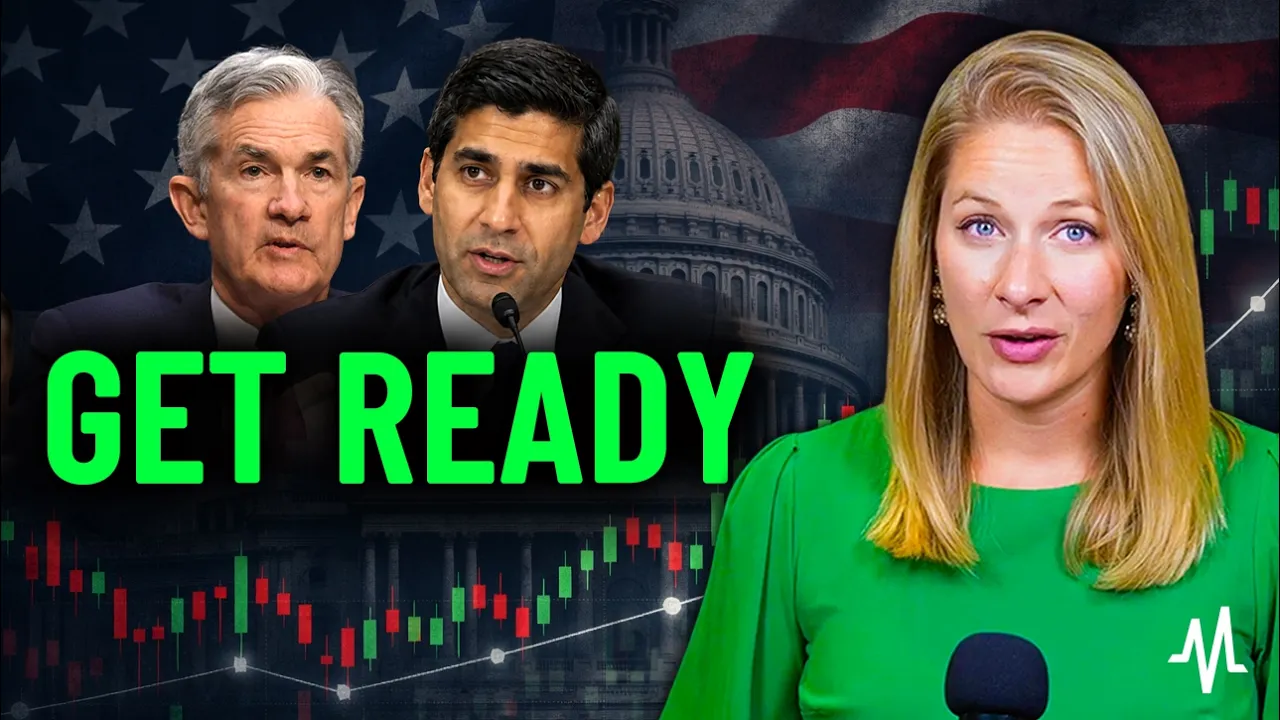
It's been a hot couple of weeks in the market, but May 15th is nearly here and it's a date every investor should be paying attention to. Joining us today is Mark Chaken with Chin Analytics. Mark, you are a Wall Street veteran. You've been through plenty of these, but we have a major change coming up in the Federal Reserve this week. A new chair starts on May 15th and the entire market could potentially be impacted. So, we're going to get into which sectors could be impacted most. But before we talk about this new Fed chair and the change and what to expect, let's just talk about where the market is leading into this change happening later this week. We're at still around new all-time highs. >> And we're there because of a meltup that's been earnings driven by the tech sector, specifically semiconductors, memory chips, and the whole AI buildout. A market meltup is defined as a a market that's blown through all resistance levels and has really not even had a minor pullback in we've had six straight up weeks. The one fly in the ointment is that with the S&P 500 10% above its 200 day average, but only 50% of the stocks in the S&P are above their 50-day average. And that means that fewer and fewer stocks are carrying the load and pushing the market to new highs. So far, it's okay because there's plenty of cash on the sidelines looking to buy the dips. But unless that situation improves, that's a problem the market's going to have to deal with down the road. And that really speaks to the conversation about what the new Fed chair Kevin Walsh can do or might do going forward. >> That really is a great indicator. I think every retail investor should be paying attention to right now, especially in this type of a market. I know it's something you and your team at Chicken Analytics are paying close attention to in your new special report that really covers a warning about Anthropic's next major impact on just a few of these key stocks and the specific moves investors should be making with their own investments before June 16th. This is a really interesting read and you can find that full report and gain access to Mark's power gauge system with this special offer just for our market beat YouTube viewers. You can scan the QR code or click the link in the description to access that report with this special offer today. But Mark, back to that really big meltup that we're seeing in a few of these key stocks right now. How do you think this new Fed share changing out on May 15th could impact that bull run? Is it an end to the bull run? Is it going to just heat it up even more? What is your take on what this Fed share change could mean for the overall market? >> In the short run, nothing much will change because interest rates have been on hold in terms of any uh rate cuts. But in the last Fed meeting, three Fed governors lean toward raising rates. And I think a new Fed chair with uh pressure from the White House is unlikely to raise rates in the short term. The problem that he's going to face is in the second half of the year when the effect of persistently higher energy prices is going to keep inflation elevated. And by the way, we have inflation numbers coming out. The CPI is coming out on Tuesday and the PPI is coming out on Wednesday. And the Cleveland Fed is estimating elevated inflation rates, 3.6% 6% headline rate for CPI, which is well above the Fed's 2% goal. And that's why Kevin Walsh is coming in with his hands tied. >> Yeah, that's the point that I wanted to to really focus on. We're going to cover the three areas of the market, three specific sectors that could really be impacted by some of what the decisions this new Fed chair may have to make in the next few weeks and months as he takes over the reigns. I know there was so much discussion for months we've been talking about this Fed chair change out and the implications it could have but now the reality comes in this new chair is starting in the middle of a major war that is really impacting the energy market. So what kind of an impact do you think that has and I know you kind of hinted towards his hands are tied a little bit right now. What do you mean by that? Well, uh if you look at the bond market, the bond market has not participated in this big rally that we've seen in stocks. Uh interest rates are moving up, not down. And there's not much that the Fed chair can do about that right now because uh of the inflation rates. So, um a number of sectors are very much impacted by rising interest rates and by rising gasoline prices at the pump. And the two sort of go hand in hand. There's an index uh that's very simple. You add the uh 30-year mortgage rate to the price of gasoline at the pump and you come up with a number that adds up to 11. 6.4% 30-year mortgage rates, $460 at the pump. That's a pain index for the average consumer. It's going to be hard for the Fed share to do much about that by lowering rates because of the high cost of energy which of leads to a really elevated inflation rate. >> Okay. So, when you have an elevated in inflation rate like this, does that really mean that this whole rate cut idea is just off the table? And even I again, I know you mentioned that there's the potential of some people talking about a rate hike. Why is that? Why does this inflationary number make such an impact of what this new Fed chair can do when he starts? >> Well, because cutting rates in a highinflationary environment with the economy overstimulated by AI buildout spending is a prescription for even higher inflation. The consumer is not going to like higher inflation at the supermarket, at the gas pump, and in terms of mortgage rates. So, it's very tough to lower rates when inflation is high because it just adds fuel to the fire and pushes the inflation rate up even higher. You uh run the risk of stopping the sort of economic resilient expansion that we've been witnessing for the last 3 years. If you raise rates, but you can't bring inflation down unless you do. That's why I say the Fed chair is in a box and there's going to be a lot of pressure from the White House to lower rates and I don't think you're going to see lower rates in 2026. >> That's a that's a bold call and I think that there's a lot of people making calls just like that or on the opposite end too. This is a debate happening. I'd love to hear from our viewers in the comments what you think is going to happen with this new Fed chair starting. But now I want to have that important conversation is how do retail investors prepare for the impact that might happen? Again, whatever your take is on where interest rates might fall this year, which are the sectors of the market that are going to be impacted most and how can investors prepare themselves and their portfolios for what's going to happen? Uh let's talk about that first sector. What's the first one that you're watching? There's a potential bearish impact from the changes happening at the Fed. >> The first sector is consumer discretionary. And in consumer discretionary, you have homebuilders, you have automobiles, you have specialty retailers, and you're already seeing bearish ratings on the individual stocks. And consumer discretionary has a bearish rating in the chaken power gauge. So, uh you're already seeing the impact of higher inflation and higher energy costs in consumer discretionary sector. Uh it's not a good place to be right now. Do you see that changing depending on what the Fed chair has to do? Or is that assumption that that that bearish uh rating and that bearish sentiment will continue? Is simply because we're likely not going to be cutting rates if that does change and we do get that surprise rate cut even in this inflationary period. Could that change the story for this sector of the market? >> Well, uh no, because inflation is the problem and lower rates bring higher inflation because they stimulate the economy. So I think that the scenario going forward is no rate cuts in 2026 about a 30% chance of a rate hike if inflation stays persistently higher if they can't open the straight of Hermuz if they can't get fertilizer moving to Brazil. If they can't get natural gas flowing again and helium and for all the things that are disrupted by this war in Iran. If they can't get that going, inflation is going to bite in the second half of 2026. And that means no rate cuts. These three sectors that we're talking about have already come under pressure because they know that rate cuts are not coming. >> What is that that second sector that you're talking about? So the first one is this consumer goods. What's the second sector? >> Well, it's consumer staples. So it's the bread and butter of the US economy. It's the Proctor and Gamles and Colgates of the world and the consumer staples sector has a bearish rating in the power gauge as well because ultimately people have to make a choice. Do they buy groceries or do they fill their gas tank and do they cut back on some of the basic essentials that are reflected in the consumer staples index? By the way, on Friday last week, Whirlpool, which is the largest appliance manufacturer in the United States, basically said that there's a recession-like environment out there for big ticket items. And they had the largest one-day drop in over 20 years in the stock when they reported 352 a share in earnings versus an expected $6 a share in earnings. and they came right out and said, "We're in a recessionary environment right now for big ticket items." So, the consumer is already pulling back. >> Yeah, we just had another guest on a week ago who shared about Colgate as well saying very similar thing that when you're in a situation where consumers are facing financial pressures, those name brand uh brand loyalties really disappear quickly for staples that can be less when you go to a store brand or or things like that. So, I think that that's a real factor to pay attention to for retail investors is where can the American consumer cut and where will they choose to cut first and I think big appliance purchases uh name brand uh consumer staples absolutely makes sense. I do have another perspective that you might see some retail investors have is that when these consumer stable companies uh that have been solid for years are down in a recession like this, the temptation can be buy these kind of names when they are down when they are in heading into this recessionary period. Is this the time to be looking at adding these to your portfolio at a discount or do you have a different way of looking at investing when we're in this kind of a season mark? Well, it depends on uh the the industry and the company. If they have a big dividend uh and they got a solid balance sheet and you're a very long-term investor, uh you'll probably be fine. But, uh we featured a month ago in Market Insights and I think talked about on the show Home Depot as a stock to get out of your portfolio. And believe it or not, with the market up 8 12% over the past 4 weeks, Home Depot was down 5%. And Home Depot is part of the consumer discretionary sector in addition to Lowe's and a lot of the other building supply companies. Would I be bottom fishing in Home Depot here? Absolutely not. Not only do big ticket items get put on the shelf in a high interest rate, high energy environment, but people put off do-it-yourself projects. So, you would think, okay, if homes aren't being built and bought, then maybe people do DIY home repair improvement projects. It's not happening. You just have to look at the price of Home Depot, which is down about 40% from its high, to know that there's a problem out there in Mid America. >> Solid advice, and it was exactly the answer I expected from you, Mark, because I know the power gauge system is all about looking at the stocks that are bullish right now, that have some momentum, that have some progress happening, and getting rid of or trimming away the ones that are more of a bearish rating. And that is what the power gauge looks at. Again, if you want to take a look at what this system is like for the stocks in your portfolio, you can scan the QR code or click the link in the description to try out the Power Gauge today. Plus, you'll also get that full special report with the important warning of how to position yourself for a major anthropic move about to hit the market on June 16th. You can gain access to all of it with this special offer today. Mark, I want to get to this last sector that you are looking at in the market. We've talked about a couple of different consumer sectors here. um and and why those could be negatively impacted in this kind of environment. What is that last sector that you're looking at? >> Well, the last sector is really interesting. It's communication services and it's dominated by Alphabet which has is the only stock in the sector with a bullish rating and there are about 12 stocks in the sector with bearish ratings. And we're talking about things like Verizon and T-Mobile and we're talking about other communication stocks and they're not doing well, which is a surprise because normally technology and communication services particularly because these are capitalization weighted indices. So the bigger names like Google do have a positive impact when they're bullish. And that's the only stock Google's up 140% in the last year. Google's the only stock in the communication services sector with a bullish rating. So again, under the surface, there's a problem. Markets making new highs. You'd think everything is great. Uh Google, Amazon, Apple, all making new highs, but there's a problem under the surface. >> Yeah. When the the growth in Google doesn't apply to the rest of the stocks in the sector, that is something to pay attention to for sure. How do you think communication services is tied at all to the Fed discussion of interest rates and inflation and things like that? Is there a tie there or is it just happen to be timing in the market? >> Well, a lot of these communication services stocks are interest rate plays like Verizon. And in a environment where interest rates are going up, not down, uh the value of that dividend is is diminished because you can get that same yield from short-term treasuries. Uh and so no direct link, but something is changing out there. Uh you know, the the people are making decisions about cable, about streaming, about uh where they're going to spend their dollars. And it's a sort of tectonic plate move concentrated in AI. That's why I think you've got to focus on the stocks that are part of the AI buildout. There's no doubt that compute power is going to the demand for compute power is going to go up up up and up for the next 5 years. The question is who's going to profit from it? Who's going to get hurt by the rising cost of electricity and to power these plants and so forth. So, uh actually utilities are another sector with a bearish rating. actually swang from bullish to bearish in just one month as people are re-evaluating uh the likely profitability for the energy companies as they have to keep meeting the demand for compute power electricity to power these power plants. So it's it's an interesting market that we're in. Hard for investors to deal with it unless you have the discipline that you talked about. doesn't have to be the power gauge. It can be fewer technicals because typically if a stock has a bearish power gauge rating, it's also in a downtrend. And it's all and you can get this information from other analysts that come on market. I know that because you have good people who come on. The bottom line is what you said. Got to be diligent. Prune the weak stocks from your portfolio. focus your buy uh your dollars on buying dips in stocks that are benefiting from this AI buildout boom. >> Yeah. >> I want to end on that piece of education for investors too. You've been in the market for decades. You've been doing this a long time. And one thing we repeatedly hear from viewers on this show is that they hate hearing about stocks that have already had a big runup. And you mentioned Google. And I feel like this is such a great case study. Uh Google a year ago was 140% less than what it is right now. And a year ago, many investors were looking at it saying it's priced too high. The stock is uh is already soaring too high. Why would you recommend this as a buy? And then we see a year later that growth happen. So just talk about that that theory in investing what you have noticed when you're looking at stocks that are already experiencing a little bit of a bull run and getting in on those even during that kind of bull run they might be seeing. Well, as you know, we've suggested uh since uh March that investors keep a cash reserve of about 20%. And I know a lot of our subscribers have seen their portfolios go to new highs, even holding 20% in cash because of the performance of stocks like Nvidia, uh Alphabet with bullish ratings and of course the chip stocks like Micron and Western Digital. The question is what you do with that cash. I'll I'll say this and I've said it before. Bottom fishing is the most expensive sport in America. So, you don't want to put that cash to work in stocks that are making new lows right now. It just doesn't work over time. It's it's the worst thing you can do with your money. So, there, what do I do? Well, you buy strong stocks on dips or you keep the cash reserve. But I can tell you the feedback from our subscribers is that they're seeing their portfolios at all-time highs along with the market even though they have cash on the sidelines because they followed the power gauge. >> Very good, Mark. So great to have your expertise and insights for our viewers today. Really appreciate your perspective on the market. If you want to hear another perspective on what to do in the market when we have these kind of uncertainties happening, make sure to watch this video on three stocks to get out of right now. Sometimes it's just as important to know what not to buy as what to buy in the market during a bull run like this. So you can watch that full video

Comentários 0
Entre para participar da discussão.
EntrarAinda não há comentários. Seja o primeiro a compartilhar sua opinião!