stocks when Robin Hood was 150 bucks, it was ahead of itself. When it traded down below 70, that was a huge opportunity.
Contexto
Near the end of the transcript, discussing valuation/opportunity in fintech stocks: "we see, you know, stocks when Robin Hood was 150 bucks, it was ahead of itself. When it traded down below 70, that was a huge opportunity."
But when I look at Coinbase, I still look at a company that we believe... Coinbase is still in our view the leader.
Contexto
In the Coinbase discussion about long-term positioning and leadership: "But when I look at Coinbase, I still look at a company that we believe... Coinbase is still in our view the leader."
Contexto
In the section about identifying blockchain winners: "But then you go down the list like one that we like called Sooie" (interpreting “Sooie” as SUI).
Transcrição Completa
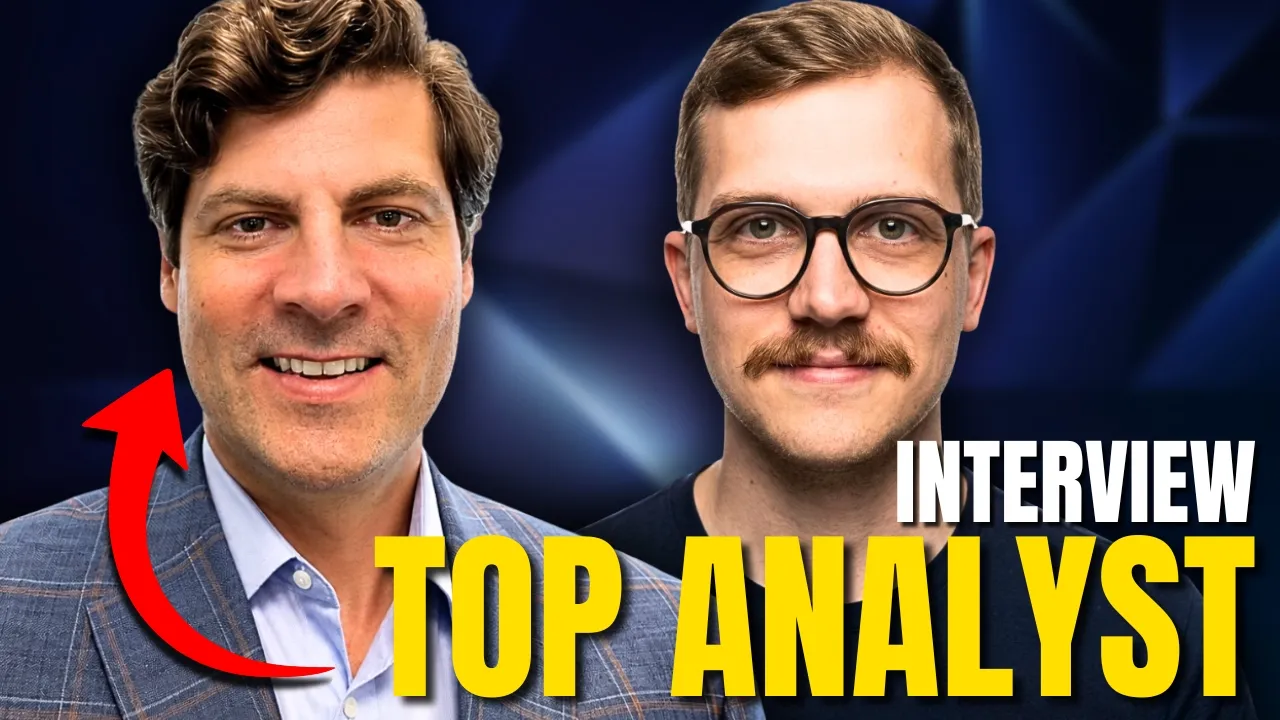
Today I'm speaking with Devin Ryan. Devon Ryan is the managing director and head of financial technology research at Citizens. He has spent decades focusing on the intersection of markets, banking, payments, cryptocurrency, and AI in financial services. And this conversation was exactly focused on that. The future of finance, how all of this intersects, what rate hikes mean for the current stocks like SoFi and Robin Hood, the massive boom of aentic trading, cryptocurrency and when this is potentially going to come back and how that's going to change the financial markets. This conversation was great and I learned a lot and hopefully you guys will too. But thank you so much to Devon Ryan and their team for their time. But please enjoy the podcast with Devon Ryan. Devon Ryan, third time on the on the show. This is pretty exciting. We're going to talk about fintech stocks and now artificial intelligence and crypto and how that all plays into many of the names that you cover, but how are you like we just came off of earnings season so far out of all the names that you're covering? How are you feeling so far? Like like what what what's the vibe on the street? >> I feel I feel okay, Tanner. First off, great great to see you and be back here. I know it's a trilogy, but hopefully that doesn't mean it's our our last time together here. So, um I you know it's been uh I can't believe we're only halfway into the year. We're not even halfway into the year. It feels like this has been three years into one. And uh and I probably would have said the same thing last year. Uh just so much volatility, so many new things you're navigating. And so I I say I feel good because I I like what I'm seeing um under the surface at a lot of the companies that I cover and and structurally um how companies are building. But at the same time um you know, it's been challenging. Uh it's been a challenging market backdrop. It's been incredibly complicated macro backdrop. Um and and so uh there's been a lot of defense. Um and so you're playing defense probably before you're playing offense. And I was watching uh the Knicks game last night and uh I'm a Knicks fan, but the Spurs were playing phenomenal defense. And defense is is not as much fun in a lot of sports, but um you know, it wins games and ultimately it leads you to being able to play offense. And so as a financials investor, I think financials are one of the more complicated industries because it's not just about the company story and getting excited about the growth, but it's about what are the macro risks? Uh what are the areas that the model could break down, what are the existential risks to the model, both from a disruption perspective, but from a capital perspective, um a regulatory perspective. And so um th those are all things that are that are front and center right now. But but ultimately covering the space for you know 25 years what I found is if you can find companies and make sure you're protected during these macro moments where the stocks are going to be volatile because investors are going to um you know they have to bring down their risk. They have to think about all the bad things that in theory could happen even if the that's a tail event and so that gets priced in. But if those things don't play out and the company is still head down building, then oftentimes you come out of that moment. But not only do you come out of it, you come out of it with more momentum with greater earnings power because you've had your head down, you've been building. So that's what I'm looking for in companies, you know, are they positioned to come out of this? Are they going to come out of it with better earnings power than people appreciate? and trying to disconnect the recency bias, every all the bad stuff happening in the macro today and how that's influencing businesses to the longer term opportunity in how companies are are positioning themselves. >> Yeah. I mean, going back to the original thing that you just said where, you know, the volatility is crazy and it's we're only halfway through this year. You've been doing this for decades now. It is this uh like is this a little bit of recency bias where things seem crazy but it almost always is or honestly going back is this similar to you know.com you know uh late 2000 like like 2010s how does this compare honestly >> yeah it's it's a great question Taylor I mean it's you know I covered investment banks through the financial crisis right where you woke up one and they weren't all there. And so, uh, that that was a pretty extreme moment in my career where I look back and like those were days where a lot of that stuff had never happened before. And so, you're constantly dealing with things that haven't happened. But then, you know, just COVID recently that we all live through. A lot of that had not really happened in modern history. And so, you're navigating something brand new. Um I would say today a lot of the themes are things we've dealt with before whether it's questions around consumer credit or um you know higher interest rates and how does that affect business models but what really is different I think is AI and the speed at which things are changing um and that is a little bit disconcerting I think for the market and I'm seeing that you know I cover a lot of stocks beyond just the fintech and crypto names that I think we normally talk about but I cover traditional financials like Goldman Sachs and Morgan Stanley and Charles Schwab and wealth managers and you these stocks are all over the place because you people are trying to question like how much will AI help their models versus how much will it replace things that they do. Um and and even if like I personally disagree with a lot of the negative thesis around AI in financial advice for one example you can't disprove all of it in that very moment. And so as a result of that you're just in this cloud of of uncertainty. And so as as institutional investors that I talked to, they're having a hard time navigating this. Like, hey, Devin, these look like pretty attractive valuations. But can we say definitively that earnings are going to be X or Y, you know, three years out? And it's a harder argument to make because we all see the rate of change from AI. We did a you 50page research report, you know, three or four weeks ago around the agentic economy is here. And that is like things are going to change a lot with agentic finance the you know agents working on behalf of people or on their own behalf relative to uh you know self-directed investors or um you know individuals that are optimizing their financial life. So the point is that this is uh a lot of what we're seeing today I think are is n we can navigate it and and that's why I'm constructive on you know I think the broader space but I do think you have to find names that are going to be able to position for this world of AI in virtually all aspects of the business models agentic finance uh coming together with uh traditional um manual finance and then ultimately uh you know something hopefully we'll talk about is how that marries with blockchain and crypto and I think AI and crypto together um are going to be a big theme over the next couple years as well. >> Well, let's touch on that but first let's stay on the uh AI side. So I I think for for many companies there are you know an AI line like like a revenue line item for them. uh for for finance it doesn't seem like it's going to be that direct that a lot of the the moves that these companies are making is potentially on the back end more code generated for them which means more products but it's not necessarily uh you know forward- facing agentic products at least not yet we're starting to see this from Robin Hood from it Toro potentially a new acquisition from SoFi what what does artificial intelligence look like for the finance industry Yeah, it's it's such an interesting place to explore because I think we talk about this for we could talk about it for hours. Um, so I think >> at a high level you're right. So what has AI been in business models thus far? It's been about um how can we automate support functions? How can we um and yes, how can we write code with AI? That's been a big deal for companies that are engineering heavy or or even financial services that are shipping products uh faster. Um you know how can we automate other tasks um you know detect fraud things like that but it has been more back office and I think there's still a ton more to do there and and probably efficiencies the companies are going to get and that's going to lead to expense savings operating leverage uh you know higher productivity per asset dollar if you will. Um but then the next phase that's coming here that's really going to be transformational is agentic. Um and it is going to be automating uh but with agents a lot of things that are done manually today but but not only automating them but doing it in a better way. So my vision and I think you know firms like Robin Hood and e Toro and private company called Public and there's payment firms are launching you know Gentic Payments Circle with um you know USDC and their stable coins like there's very early use cases and product market fit but it's still very early what we're seeing is a lot of companies are launching hey bring your own agent to our platform and you can plug it in and then it will trade on your behalf or do payments on your behalf. But the reality is most people like tradition normal people don't all have their own agents today that are they're doing things for them. So like that's a more sophisticated individual that's already comfortable with AI, comfortable with agents, comfortable giving their financial information to agents. >> Where I think we're going and probably not like this isn't three or four years away. This is all within the next 12 months is I think companies are going to launch solutions where in natural language you explain your personal circumstances. So, hey, my name's Devin. I'm 45 years old. I have three children. I want to retire in 20 years. Here's my financial situation. Here's my risk tolerance. Here's a type of financial products that I think are good for me, but also I'm open to recommendations. I don't know anything about options, but if option, if there's moments of volatility and you can take advantage of that, please do that. Um, please in real time tax loss harvest my portfolio. Um, but ultimately I want to have the uh most optimal asset mix whether it's investments or insurance or other assets in my financial life. And I want to have the lowest liability costs. I need the best mortgage. I need if I have credit card debt, you know, lowest credit card rates or personal loans, whatever it may be to optimize and then do that all the time, every day. And so in natural language, I'm explaining that's my situation. Go execute. an agent's going to go execute on my behalf or numerous agents executing on my behalf 247. And the reason that's such a big deal is because when you think about like I use this example for Robin Hood, if you look at Robin Hood's customers, the average customer trades three times per month, but only a small fraction of their customers are trading a lot and then most are trading almost nothing. So like zero to one times a month is I would say like the tail like there's probably 20% trading many times and then 80% are trading a couple times if that if you just take basic investment principles around let's just say we want to do a direct index uh strategy around the S&P or the NASDAQ and say I want a little bit more I want to tell my agent I I want the the NASDAQ direct index but I want uh it to be a little bit more weighted towards AI because I a longerterm horizon that I'm very bullish on this technology. Um, I want if there's volatility, I want you to leverage options in my portfolio. Um, and then I want to tax loss harvest in real time. So, when you have volatile markets, there's a lot of opportunities to optimize around tax loss harvesting. So, go execute that. This is this is just the trading side. We can talk about all the other elements of your financial life, but in those scenarios, the work that I'm doing, um, you know, we're talking to companies that have already launched AI solutions. Uh if you look at some of the robo advisors like Wealthfront, uh you can look at you can get some indication of how much in an automated strategy. But in this AI world, I think that you're going to see trading volumes um AI agents trading 10 to 20 times more um volume than the average customer at a firm like Robin Hood. And so as you think about that, two things. one, you have like if if the AI agent is implementing best practices and principles of investing, you would think that they would hopefully be able to generate a better financial outcome for somebody that maybe is less they don't have time to invest all day. They don't have the the experience or the education to do it, but putting some options overlays on a volatile portfolio could be, you know, pretty pretty valuable. And so I do believe that we're going to get pretty good evidence pretty soon that these AI agents can truly outperform if they're executing strategies that look like basic investment principles. And so then therefore, what does that mean? Firms like Robin Hood or others that are leaning into this could see a massive massive multiplier on the amount of transaction volume. And nobody's model like no one even my institutional clients are just starting to talk about this and and they're c coming to us because we've been writing about it but I don't none of this is in sellside financial models looking out 24 months like it's not going to happen this year but you know 2027 there could be some in 2028 there there definitely could be some and so that's when I think about what gets me excited and what's not in the market's view right now. Yes, we're focused on rates and, you know, balance sheet uncertainty and and all kinds of things like that and we have to navigate that. But on the other side, there's this really exciting world that I think can be really beneficial both to consu consumers of the data or of the of the product, you know, users of these platforms, but then also to the platforms themselves. And and we just talked about trading, I think, you know, payments um integrating stable coins, optimizing on credit, being able to use agents to uh you to lend money, you know, intraday. You know, agents have no time threshold. You know, there's eight billion people in the world. At any given time, there's probably only two billion people that are actually doing anything. Everyone else is sleeping or or not working. Agents are going to work 247. They don't take lunch breaks or bathroom breaks, you know. So, it's just their time preference and the and the preference of what the value of a of a transaction is is just very different than how you and I think about anything that would make sense to do. the the only thing that I don't know the answer to with this because of course I think aentic trading is going to lead to more transactions but um what does this mean for the margin for let's say a public or a Robin Hood adding this new service like the the the token cost for them to to potentially run these these these services and then obviously that probably is in the wash and not a big deal comparatively to how much they're going to make on the actual transaction But are those bots going to outperform? Or if there is, you know, hundreds of thousands of agents now trading and taking in real time information, does that kind of lose the arbitrage of the trade of saying, hey, you know what, maybe I tell my agent, hey, I want to buy AI stocks. And it tells you, well, actually, statistically, that's not the best trade right now. It's this. But it's on the same model that's also telling it to rotate into dividend stocks. And then everyone rotates into dividend stocks. then the multiple goes up and then it's no longer the trade. Like how does this work out? >> Yeah. Yeah. Uh yeah. So I mean you're hitting on all the the right things. So first off I think on the token costs um what we're already hearing from companies that are employing this is that you know I think there's going to be a lot of ways to optimize on token cost. So right now it's a little bit of like a blunt everything's a blunt objects and you just go use AI and spend whatever it takes. Um we are very quickly getting >> front tier models and everything like this and >> exactly we're getting to a place where already where I think companies are saying hold on a second we can use something lower cost here higher cost there and we're going to optimize and ultimately I think so some I'm not saying AI spending is in any way going to slow in the near term like we're in the first inning of adoption but but I do think optimizing for use case is going to get um you more sophisticated within firms and I think we're already starting to see that so I think companies will navigate that element of it. And then the flip side is, you know, if you have 10x, 20x, 50x the volume, then you probably, I think in any scenario, going to make up for it. Now, I think the other thing you didn't ask is if volumes are going up by 20x, what happens to take rates on that? And they're going to come down because that competition is going to squeeze them down. Um, that's the way it's always been. That that's okay. That's great for revenue growth. Um, and the companies that are here early and that are building into this vision will take more market share and that's how they're going to grow revenue. Um, and that's what we've seen over, you know, decades and decades and decades. Um, in terms of the performance, you know, so I I don't know the answer. I mean, I think this is going to be interesting like we're going to see this all unfold. And so it's a great uh kind of question and thesis. Um, my view though right now is that you're you're it's it's what are you comparing it to? So, if you're already comparing it to everybody's running a super sophisticated institutional portfolio or has their own family office managing their money and they're like fully optimized, then yeah, are you going to get a lot of incremental value? Maybe a little bit, but but relative value is going to be small. If you are a first-time investor and you're buying three stocks and they were exciting to you when you bought them, but then you didn't do anything with them for two years and you didn't really, you know, they went up and down. You could have tax loss harvested. Um, but ultimately after you bought them, that's kind of where your either interest stopped or your ability to continue to participate, you know, in those companies and their stories. And so relative to that person, I think that uh you're going to get much better outcomes. Now, you could say maybe that person should just have an index fund as a jumping off point. And I think that's a good argument, too. But I think the point here is that it's going to be, for example, say, "Hey, I'm a first-time investor. I want to effectively direct index. I want like a robo solution, but I want a robo solution that is truly customized to me. And then I don't want it to stop there. I want it to integrate into my entire financial life. So I don't want just my investment sleeve to sit here and then everything else is over here. I want everything coordinated so that we're constantly optimizing. And that's where I think AI can truly help kind of bring a full service optimization of somebody's assets and liabilities just like a family office can do or institutions are doing for uh or financial advisors in some places are doing for their clients. Um and a lot of individuals that don't have the time or the education or or maybe the net worth today are going to get brought up uh to that standard which is I think really exciting. So that that's how I'm thinking about I think it's like does the market just because every arbitrage get taken out of the market in the future maybe but I think there'll be all different types of strategies so every you know every strategy won't be the same so it's not like every dollar is going towards the same same trade >> that that makes a lot more sense because to me I always go to the most extreme case where I'm like okay well how does this help the sophisticated active trader but really what you're saying is that it's going to raise the tide for everyone else that might be you know making an odd trade here and there and buying the stock that they like. Now they can essentially say, "Hey, make me my own index of, you know, these names that I want and constantly DCA into them without having me to set up in each individual one. It does the fractional trades. It does all the things that I need. It potentially writes options trades that are way out of the money, safe, creating me a little bit of a dividend here. That makes a lot more sense." >> Yeah. >> Yeah. Um, how does crypto tie into this? because um obviously crypto no one even wants to hear about it right now. It's um it it was it was extremely hot. Now we're in the dumps. Um but I still think that tokenization, all of these things are still in effect. We can also talk about Clarity Act as well. I'd love to hear your thoughts. But um >> how does crypto tie in with potentially agentic trading and and this sort of >> whole uh whole view for retail traders? Yeah. So I think it's about blockchain, right? So it's not even you cryptocurrencies or it tokens. I mean tokens matter because they power the blockchains, but it's really you if you think about um agentic payments and money moving, you know, agents, I believe, are going to, you know, they they agents move at a speed that we don't, right? And so they need systems that can support uh that speed at many many many multiples of humans. And so blockchain is effectively built for that, right? Blockchain is built for millions of transactions in some cases a second. You know, it's it's infinite almost how much can get done. And it's constant uh uh execution, settlement 247. So agents in trading, agents in payments, agents in lending um I believe um in an AI world are going to leverage blockchain technology uh to to you use as rails for that. So you know stable coins as um you know a payment solution um trading tokenized assets that are settling real time and can be moved and settled um amongst each other uh instantaneously I think is going to be very valuable. So I do I view that agents as kind of a multiplier on kind of the blockchain demand if you will. uh and so then therefore the question is which blockchains are built for agents and I think that's where if you listen to Ethereum people around the Ethereum uh network or around Salana around Sooie um or um some of the you know even even circles blockchain arc um you know that they're all promoting hey we're the blockchain for agents because that they know that um a lot of transaction activity is going to be driven by uh driven by agents So it this is also one of the unlocks I guess for 247 markets as well. Do you think that that also drives more volume or just different times of whenever people get their three transactions in per month as you said? >> Yeah, I I think it's going to drive a lot more volume. Um it's one of those things where of course like today's world liquidity gathers around certain periods where humans are active. Uh, and so like the negative view on 24/7 would say, well, if you're trading at midnight, who are you trading against? What do they know versus what do you know? And are you going to get best execution in a illquid market? And I think to some degree that's a fair remark, but that's also like trying to apply this technology to backward-looking market structure. And I think the way to think about it is what is the future going to look like? Are people like crypto is already 247 trading? And I think that's one of the advantages of it. That's one of the reasons uh it kind of leads good and bad on macro and you get Bitcoin selloffs when you people get anxious over the weekend because it's an asset that's liquid uh that that is moving 24/7. And so I do think that other asset classes and and not all will will always be liquid 247, but asset classes that are liquid today in markets will probably be liquid 247 on blockchain rails. And then yeah, that's very important. I think being able to do financial transactions at any time that you want versus where the the company that's offering them wants um is is a big upgrade. And so I think most financial markets are going to move to 247. And that is one of the technology upgrades that that blockchain um that blockchain brings. And then not to we can go here if you want but like I think this does tie back to crypto and crypto prices and and where sentiment is right now which is you know a lot of negativity around the macro that's connected I think to Bitcoin but then everything is still emanating off of that but then also I think negativity around it's just we're waiting we're we keep waiting for when like Devon that's interesting but we talked about crypto adoption and blockchain adoption a year ago and we're still waiting for, you know, stable coin market cap is like the same as it was uh, you know, three months ago and five months ago. And so there's there's a lot of waiting here that I think people are getting tired of. Not to mention, uh, in order to speculate on some of these tokens, you need to see the demand function for the blockchain. And so it's it's chicken and egg. Um, but but I do think that we're still at this moment where like I'm still very constructive around the trajectory. If you look at all of the building that you know payment firms are you don't you don't rearchitect the financial system in like three months or six months like it it's and by the way you also don't do it when you're not 100% certain that the rules that are being laid right now are going to be the rules that are in place two years from now and five years from now because the cost to do it and the complexity to do it is so large that you want to be completely certain. So that's where having this delay on uh both you know market structure you know the clarity act I think is something that is that is very important to getting past to really unlock this this next phase of um you know tokenization and stable coin usage. Of course, you can tokenize assets today. In some instances, you can use stable coins today, but they're not we haven't truly broken through the mainstream because a lot of the potential adopters don't have the clarity that that they want or need to get there. So, I I do think, you know, we're getting the SEC, the CFTC, bank regulators, etc. think are making progress to offer these um solutions in a consumer, you know, protect, you know, they want to protect consumers. They want to make sure that, you know, business models aren't disrupted overnight, but at the same time, they want to let the technology thrive. And I think the regulators are putting a process in place to get there, but until we have it codified in law, you're not gonna like the huge unlock is not going to be there. And so that's where I'd say the Clarity Act is going to be still incredibly important uh for this vision of crypto. And then in the vision of crypto, I don't think it means all tens of thousands of crypto tokens are are going to have value. And I think that's what's changing is like the pure the speculative element of crypto. Unfortunately, I think for a lot of people that that had participated in that, like I think that game is effectively over and I think we are transitioning to a more serious world of crypto where uh there's still going to be many blockchains that are going to see real adoption in this vision I just laid out. And in that world, their tokens could see real demand. But just like commodities like oil has demand, oil's demand comes from real users of oil. you know, airlines are going out and they're buying oil to uh to to power, you know, the the the the the transportation. And then you've got banks that are hedging exposures out of the couple years. And then you've got um market participants that are speculators in that market that are trading supply and demand curves and they're trading geopolitics. And that's a nice market structure. You've got real users and that's why the commodity truly uh exists at any value. But then you've got people speculating around what the end demand's going to be and what the supply is going to be. And then you've got market structure like financing and custody and and and all of that around that that market. And I think that crypto markets are progressing towards that where ETH as an example, you're going to have institutions or users of that that need ETH to power the blockchain and they're going to drive potentially an exponential uh growth in demand for ETH, the token. Uh but at the same time, you'll have um people that are hedging out future needs of ETH. And you'll have people that are in the market, institutions and retail investors that are speculating on whether they think ETH's price is going to go go up or down based on how much Ethereum's blockchain is actually being used. But up until now, it's been primarily the speculative function. And it's been a speculative function about all these other layer one and layer twos and meme coins and stuff that you know really I mean it's fun, it's interesting, but like does it actually have economic value? And I think that's more debatable. >> So let let's stick on crypto here for a second, but there's a lot of companies that you cover that if not are entirely dependent on crypto are at least a a high percentage of their overall revenue. E Toro, Coinbase, ESB, even um you know, some of these names, Robin Hood, really require crypto as the full part of their diversified revenue or in in ESB's case, like that's their business. >> Whenever I look back at Coinbase, you know, this stock had dropped down to like $32 a share or something like this, and you look back at that price, you go, that was so obvious as crypto had come back that they were going to be a big winner. Now we're starting to get deep into that that cycle again where people are really getting fearful that Coinbase is not going to grow back into a major financial institution comparatively to whenever they were, >> you know, really making a lot of fees. How should investors look at investing in Coinbase, potentially trying to time it versus just holding it long term? like it is such a an extremely speculative place and while there might be a market for Ethereum, the um volatility on these types of markets because right now I mean the the actual like trading fees that Ethereum is making on its blockchain for the amount of usage is extremely small. So I think people are still trying to wonder like where does this settle out at and and is the price even does it have to go higher or is it going to settle lower than where we are today? Yeah. So, um it's complicated is the the is the is the short line. You know, the the space is uh if you believe the thesis of tokenization, stable coin adoption, AI, and they all connect together. We are in the still the first inning of that. And what that means is that Ethereum's usage right now is very low because no one's really using it because we can't. Uh and so that's the the challenge is that we're transitioning. But once people can use it, it's not going to grow by like 50%. It could grow by like 20x or 50x. Like that's the order of magnitude. So if you're investing in things that are related to this, it's a high risk, high reward. And I think that's important like that that your audience knows this that like these are not steady stocks that you're playing for like five or 10%. >> You're playing for something potentially really big, but you're also playing for, you know, if if Clarity Act doesn't get done. That doesn't mean crypto's over or like that. But it just means we're just extending the timeline even further out and this is going to take longer and you're probably going to have a longer crypto winter. You're going to have um more moments of, you know, kind of despair. And so that that's the the tension. But when I look at Coinbase, I still look at a company that we believe that we are like I don't think you're putting blockchain back in the bottle here. I think that there's been too much money that's been spent. The amount of multi-billion dollar acquisitions in the space is it's it's growing pretty substantially both from tradi firms, payment firms buying stable coin infrastructure, you know, with Mastercard and Visa's getting in and you've got um traditional financials. I cover Morgan Stanley. they've um really really uh leaned in here on adoption of blockchain and their business model and kind of building the plumbing for institutional connectivity in uh financial markets. And then you've got large players like Black Rockck and others that you really um are talking about this that they want to see this vision play out. And so you're not putting it back in the bottle. And so in that world, Coinbase is still in our view the leader. They have the most um engineers. They have the most expertise around all the facets of the crypto economy. But even for them, the challenge is they now have to evolve their business model away from reliance solely on trading the speculative tale of of tokens, right? Because if we if if our argument is correct that even if crypto adopts that it's going to be less around memecoins and less around like that that part of your business is going to shrink and you have to make up for it in more institutional trading. You have to make up for it in more picks and shovels to institutions and and and a better experience for retail so that they're going to use, you know, margin lending. They're going to use securities based lending. They're going to use all different types of traditional financial products to participate in this market where they can generate incremental revenues. And then on the other side of the coin which is you know 40 plus percent of the revenues today and I think will be many multiples of that is all these non-trading revenue streams whether it's connection to payments and stable coins. I think that Coinbase >> will be uh you know essentially a infrastructure provider for for firms that want to integrate stable coins or crypto into their model. they'll be able to charge both helping them get onto the blockchain but then a probably recurring fee to to maintain their blockchain based business because these other firms in the market don't have the expertise. Very few even large incumbent financial companies have crypto expertise because there's just not thousands and thousands and thousands of crypto engineers that are that are looking for jobs. So, it's a very specialized market and Coinbase has incredible critical mass and a long history where they understand the pitfalls of the technology, but then also where the puck is going. So, that's like what you're playing for is you're betting on can they get you there? Are they going to be the one of the, you know, not the only fastest horse, but one of the fastest horses in a race that is still in its early days, but the the end outcome is going to be many, many multiples bigger. And then what we're seeing for the first time is the convergence back into the traditional financial world. So when I started talking about crypto probably eight years ago, I was like on the bleeding edge, you know, I covered banks and investment banks forever. So people knew me as like conservative uh balance sheet centric uh traditional financial analyst. And then it's like I'm talking about crypto over here and like what what's got into Devon? You know, you know, this sounds a little bit crazy. And now what's happening is my worlds are what my initial vision was that this is just an infrastructure and it's an infrastructure that can be applied to a lot of different industries of which financial services is one of the biggest ones and here we are today they're coming together and so now my traditional companies whether it's Morgan Stanley or Schwab or other banks and payment firms are building their own capabilities and the cryptocentric firms are coming towards them. What the cryptocentric firms have in their favor in certain instances is that they understand like if you're going to tokenize all assets, who's positioned to do that? Well, on one hand, traditional financial companies have clients and they have assets, but on the other hand, firms like Coinbase have they they've been running uh tokenized rails for for a decade. And so, they understand how to tokenize an asset and how it works on the blockchain and how all the blockchains differ from each other. uh and so they're going to be a player when assets are tokenized and and it's fair game to trade stocks and uh bonds and money markets and private shares and now they're doing pers on you know private shares even on Coinbase like they're going to be a player in a lot of that. So that's why I think there's a convergence happening here. So it's kind of like who are you going to put your chips on for the next generation of this financial system? And I do, you know, I think that there's I wouldn't say incumbents are all disadvantaged, but incumbents have to recognize how fast things are changing. And I think the fintech companies I cover and the crypto companies I cover are aggressively leaning in. And you know, in that way, you know, they can break some glass and they can stub their toe. But a lot of these founder-led companies, like in a world where we talked about at the beginning here, AI is speeding everything up. like you got to be speeding up and making decisions quickly or you're going to get left behind. >> So, we have a a little bit of time here. Um I want to do a little bit of a a lightning round and go through a couple other questions that I had. So, first off, I know this this is not new to crypto, but um any technology change, it's about trying to find the winners, right? because I I think everyone's certain that a lot of these things are going to happen, but is it going to be on Ethereum or is it going to be on ARC or Tempo or any of these other ones? >> Yeah. >> What what what kind of work are you doing to try to understand who the winners might be? Why does ESP deserve a spot betting on Ethereum? >> Yeah, I think there's a couple factors to it that at least I'm looking at and and things will evolve and so we'll have to this is happening quickly so we may have to come back and evolve our thinking, but but ultimately I'm looking at two things. I'm looking at the technology side and what technologies are set up for for this future. And you could say Ethereum on one hand is an older technology in crypto. They've been around longer and so they set themselves up for um for for a vision of the future that things are evolving I think largely in line with that. But they keep changing and so that Ethereum's older but what Ethereum has is Ethereum's never gone down. Ethereum is trusted. So if you are a firm that needs to have a trusted platform, trusted infrastructure, there will be tradeoffs in other elements and I think you're comfortable with that and that's every decision you make. You're always making trade-offs but what is best for you and so Ethereum has already won some of those network effects that are important. So the technology is one side and then the other side is uh customers and distribution. So where I look at Ethereum has both sides of it right now and they're a leading horse for a utility chain or smart contract chain where they both have I think a technology that works and is proven plus they've got distribution and connectivity into them. So they've already built some pretty powerful network effects. So they're way out ahead of many others. So that's in their favor. But then you go down the list like one that we like called Sooie uh is you know they're they're a more of an AIcentric. They don't really have the brand yet, the the um they don't really have the uh distribution yet, but I think the technology really was built for AI and AI agents. So, like that'll be interesting to watch. But so, you've got a spectrum in there. And then what you've got is then a lot of other traded to see launch their own blockchains in the not too distant future. So, Coinbase has Bass. One thing we didn't talk about for Coinbase is will base have its own token and that could be a massive catalyst for the stock. Circle, you know, their their stock went up a lot if you go look on last earnings because they launched a token for ARC and that was a big driver. Base has a much more developed blockchain today, much more established network effects of who's using it. Uh, and so that could be a token that could be worth tens of billions of dollars out of the gate. And my view is BAS is getting like zero value in Coinbase's valuation. So very interesting. But you've got now the Tradfi blockchains as well that in theory could have their own like here's our use case uh circle. We're really focused on payments and agentic payments and we're going to push this into the financial system and we've got already partnerships with firms and people know us and they answer our call and so like they could scale that but like so I think it's a little bit of looking at who has potential connectivity with users of the blockchains and do they have a right to win. So that's we're looking at all those factors in addition to who has the best technology. There's way too much block space we don't need. That's my whole point at the beginning. We don't need tens of thousands of layer 1 tokens. There's there's no need for that in in the world of they're not all that differentiated. You need a smaller number and it's like going back to the, you know, the the the late 90s on the tech. Everything was a dot company and then ultimately a lot of those companies went away. But we emerged with five or six massive companies that have essentially consolidated all the market share and those are worth a lot of money today. And that's what I think you'll see with some of these blockchains where a small number will aggregate a lot of that network activity. And there, you know, that doesn't mean you can't have the next innovator that's doing something slightly differently, but that will have to play out where we're going to see, you know, which ones are really winning on the both the technology side and the and the distribution side. >> I've got a few more questions. We don't have much time. Um, I want to ask really quickly. Uh, Mastercard just showed off partnering with a bunch of different companies. Circle, Paxos, Ripple, SoFi USD. Um, how do you sort of break out what the economic benefits to SoFi is based on these types of partnerships? And are they going to like like will there be a rerating based on these types of products for SoFi? >> Yeah, I I think um probably not until there's real revenue from it. So I think the question is how much revenue uh will come from this uh and then ultimately um and and and in areas that you know I think this would be an area that uh would get a higher multiple than some of the other you know just a direct lending uh model is going to get a lower multiple and and happy to go through more in SoFi if you like. I know we're running into time here. Maybe we do that for a follow-up. But but ultimately, I think, you know, from Mastercard's perspective, I can't speak for them, but I think they're putting chips with a bunch of different companies because they're they understand that you need to have stable coin um optionality and stable coin settlement. So, they're going to a bunch of different partners, but SoFi being in the mix, I think, is important because what it shows is SoFi's got, you know, they're regulated bank. um they've got connectivity to both end users, so they've got a big distribution network, but then also um they've got their technology platform which they can integrate with um institutional clients as well and and corporations. And I think what I'm looking at at SoFi is I do think that their business banking is going to be a very interesting um trajectory for them over the next few years because you know, think about crypto clients. crypto clients have really uh in the industry, you know, they they were left out of the banking space for a long time. They're finally getting brought back in, but even getting brought back in, not all traditional banks have the capability to move from fiat to crypto rails back and forth. And so, SoFi is clearly building for that future. And so I think the connectivity between uh crypto companies within their business banking, but then probably other um you know internet and and online native companies are probably the first foray um to then online payments with Mastercard and then having the ability to do digital money movement is going to be just a natural connection point in there. And I think that, you know, there's gonna there's still questions outstanding around interest pass through. And so, are people going to use stable coins simply as a payment mechanism versus are they're going to be a store of value? If they're more of a store of value, this could be it could be huge. You know, stable coin market cap right now is a little bit over 300 billion. We wrote a report last year projecting out getting to $3 trillion over the next five, six years. And so st SoFi just getting a small piece of that um could be hundreds of millions of dollars of revenue if we do maintain a kind of store of value for stable coins. I think what it shows more than anything is stable co uh sorry uh SoFi is going to be on the front end of a lot of these technology changes that are happening whether it's with payments and stable coins or tokenization more broadly but bringing blockchain technology into the business model in a functional way but then also AI into the business model. So when I give that vision of in natural lang language explaining hey here's my financial condition I need all these different types of products in my in my financial life go execute SoFi is connected to all of them and so I think they're they're thinking like this too and they want to be a leader in connecting in all that they've built into one relationship with the customer and that's that cross productduct adoption how do we go deeper into our customer base in addition you know there are 15 million members today growing at, you know, 30 plus percent a year. But really, the opportunity is to become a primary financial relationship across all the, you know, assets and liability products that an individual would need. And they they've got a lot of the pieces today. It's really connecting them together. >> Last question and probably the biggest, unfortunately. Um, it's IPO market. We're looking at a ton of major companies coming online. How does this affect companies that that you're interested in, whether that's the investment banks or even Robin Hood, SoFi that also offer retail IPO access? What do you think that uh this year is offering to the markets that's different than the previous? >> Well, I just think it's it's these are massive deals. I mean, this just is the putting the pin in the point of the AI era is here and it's going to be a big deal and everybody's underwriting the future based on, you know, if you're going to underwrite these IPOs, you got to underwrite a view of how big AI TAM is going to be. And so therefore then people are spreading that view across all the winners and losers, not just in I mean that this is happening across every stock in in in a portfolio today. And that it's challenging because a lot of stocks are getting hit. you know, you've got this enthusiastic market around um certain elements of semis and anything AIcentric is going up a lot. So you and that's driving the averages of indices up a lot and then a lot of other stocks are getting crushed. So this isn't like this is a weird market for my seat because I see a lot of what I'd say are high quality companies that are trading at the lowest multiples they've traded at in a very long time because they're getting perceived as AI losers. Even even if I disagree with that, you can't disprove it all right now. So, money is getting sucked into the AI trade. We're going to have to see if these are the right valuations, but I do think it highlights the enthusiasm for where where we're going. And, you know, it'll it'll help revenues around the edges. Um, it's a question around uh you even for like a Robin Hood and others like SEC lending and things like that. those are all tied to um tied to IPO calendars and hard to borrows and so having a massive record amount of equity issuance coming into the market uh is going to drive probably pretty big demand for SEC lending for some of these companies. So there will be other secondary elements that I think people are going to have to think through that maybe aren't yet. Um but you know I think net net a positive uh but you know my my hope is that the market continues to do the work on um on the winners and losers and we don't get carried away with like just because it's AI it you buy it at any price and just because something is perceived to have in the next five or 10 years um you know maybe some change in their model from AI that you can't buy it at any price and I think there's what's positive is that a lot of these software companies right now you've got horizontal software ware where yes, there's going to be some challenging business models, but we're seeing vertical software seeing a pretty big move higher in the markets just over the past month. That is really encouraging. So, I think the market's starting to distinguish between good and bad and um and and we need that to happen more across other industries, I think, for this market to be more balanced. And so, that that's what we're looking for. But it's been a it's been a long year. It's been a challenging year, but I think also um a lot to be excited about. And yeah, I think as long as you can play defense uh in this market, then you're going to be in an opportunity to play offense. And we see, you know, stocks when Robin Hood was 150 bucks, it was ahead of itself. When it traded down below 70, that was a huge opportunity. Uh we're kind of, in my opinion, closer to the lows than than the midpoint. And we're going to once people feel like it's an all clear and the mark broader macro settling down, I think some of these really good companies uh are going to have some some pretty substantial moves from here. >> Devin, thank you. so much for your time once again. I mean, it's just a pleasure. And uh any last uh words or anything that you want to say? >> Uh no, no, Tanner. Like I said, uh hopefully uh the trilogy isn't our last. We can uh we can put it into like a four quarter game or something. So, we'll come back for the fourth quarter. But, um yeah, I think uh you know, like I said, it's it's a exciting market. You have to respect the macro and that like even good stocks can go down a lot when people get concerned about the macro particularly because people have to risk off and even good businesses have some tail risks or thing you know so you have to it's a it's a it's a game of probabilities and that's what we're looking we're not saying this will 100% happen or this 100% won't happen it's what are the probabilities and what do I get paid if I'm right versus what happens if I'm wrong and that's how we're trying to think about the market and educate kind of our institutional clients but I think it's probably good for your audience as well to be thinking about. >> Yeah, I really appreciate you coming on and help us understand as well. It's uh really appreciated. But Deon Ryan, thank you so much for joining us. Really do appreciate your time. >> Yeah, thanks. Never seen it.

Comentários 0
Entre para participar da discussão.
EntrarAinda não há comentários. Seja o primeiro a compartilhar sua opinião!