…ameco's current current market cap. Now, even if it's not that good an IPO and an IPO in this market probably won't be that good. You're still getting at least 50% if not more of your of your market cap covered. So, at Cameco we're buying, we're buying NextGen, another super uh you know, very solid. You know, and 6 months ago I would say it was too expensive. >> Right. Yeah. >> But, they're just ridiculously cheap now relative to the price of uranium. So, unless the price of uranium collapses, these price these stocks are just ridicul…
we're buying NextGen, another super uh you know, very solid.
Contexto extraído por IA
Uh you know, Cameco is ridiculously cheap. If the Westinghouse IPO goes ahead, some analysts are saying that the IPO price of Westinghouse could actually be more than Cameco's current current market cap. Now, even if it's not that good an IPO and an IPO in this market probably won't be that good. You're still getting at least 50% if not more of your of your market cap covered. So, at Cameco we're buying, we're buying NextGen, another super uh you know, very solid. You know, and 6 months ago I would say it was too expensive.
Transcrição Completa
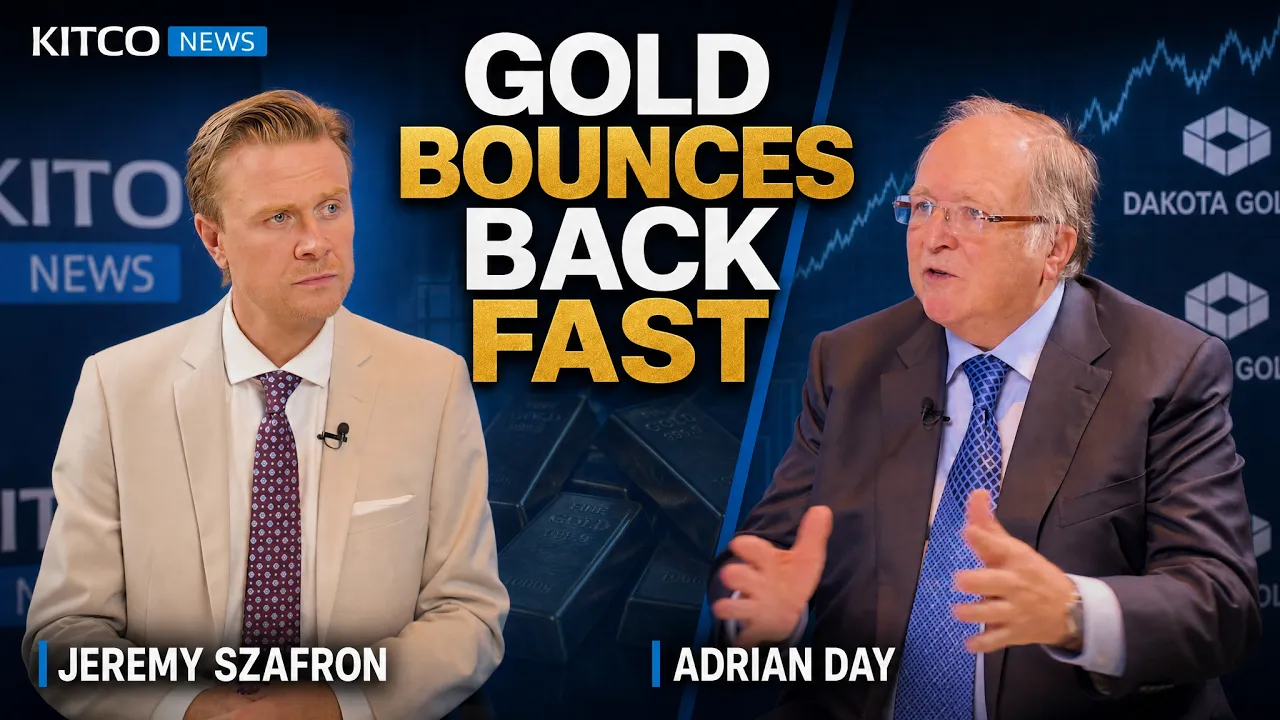
Kitco News [music] on-site coverage of the New Orleans Investment Conference is presented by Dakota Gold. >> Everyone, welcome back to the New Orleans Investment Conference. I'm Jeremy Saffer. Now, same fuel, two very different quarters. Just Friday, Exxon's refining business posted a record $9.05 billion quarter, almost five times just a year ago. Now, Agnico Eagle, the world's second biggest gold producer, says that that same diesel could add about $80 an ounce to its cost in 2027. So, one industry cashes in, the other one pays the bill. And on the day Exxon reported, I should say, gold dropped more than 3% at one point, back under $4,000. Now, if you own gold stocks, you're getting squeezed from both sides. My guest has been picking resource stocks for more than three decades, and he always tells you what he owns. Adrian Day, of course, from Adrian Day Asset Management, joining me now. Good to see you. >> and thank you for having me, Jeremy. >> Uh not a boring day in the market, Adrian. I must ask you. Uh let's first talk about this diesel trade, as I was kind of getting into. Obviously, the same barrel of diesel, Exxon made money on it, Agnico paid for it. I mean, what side do you own? >> Well, we own a little Exxon, but frankly, most we Agnico's one of our largest holdings. And look, there's no question, but an increase in the cost of diesel and energy generally is negative for gold miners. There's no question about that. But let's look at Agnico for a second. They'd hedged seven almost 70% 67% of their diesel was hedged for this year um at a third of the current cost. Uh so, it really only starts to hit them next year the all-in sustaining costs are up to what? Less than 1650. You've got >> sustaining costs of 1650, and you've got gold I was going to say at 4,000, but let's revise that. You've got gold at 3,800, even at 3,600. Um that's still an incredible margin. Uh and and that's something people have to really focus on. The gold miners today, the good ones, the large ones, are making incredible cash flows, which translate into free cash flow because most of them have paid down or off or significantly down their debt. Agnico still has some debt, but it's net cash positive. So, this is free cash flow. So, you know, yes, it's it's a negative, but it's not the end of the world. >> Yeah. And I mean, on the oil trade, one could be a contrarian. I mean, Exxon's keeping its $20 billion a year buyback. Is big oil better than a gold hedge right now? >> No, we're not buying oil at the moment, and frankly, I really want to see the war over, the war in Iran. I I don't like to buy or sell. I don't like to buy or sell things on a something that's temporary. The war is clearly temporary. Maybe it's gone on longer than we thought it would, but it's it's not a new factor that's with us forever. And so, when the war ends, the price of oil will come down. I'm very bullish on oil long term. I think it's ridiculously cheap right now. But, when the war ends, the price of oil will come down, the price of the oil stocks will come down dramatically. And so, I'm waiting for that frankly. >> You know, I know you've been on a lot of stages talking to a lot of investors here. You haven't been in the news like me. So, let me just brief you here temporarily. The US just finished its second largest emergency oil release, plans to buy back about 200 million barrels over the next year. What happens to oil when the government stops selling and and starts buying? >> Uh well, the price of oil goes up, of course, but typically, you're not going to be accumulating oil at a time like this. Um and, you know, people criticize have criticized this administration for releasing oil from the reserve. This is exactly what the reserve is for. So, I think I think that's a misplaced uh you know, misplaced criticism. But, I don't I mean, I certainly don't see them replacing that oil until oil is lower. >> You know, the Agnico I mean, US diesel futures is about 484, about five bucks a gallon, up two and a half percent. Like you said, Agnico Eagle sustaining cost in Q3 was $1,648. I mean, it's still ranging up here. So, Agnico's Canadian miner partly runs also on on hydro, right? And and and nuclear powers, which miners have no cushion to that. >> Well, generally speaking, just generally speaking, um energy will affect um open pits more than underground mines. It will affect uh the the least uh the ones that are the most insulated are North American, Canadian, US, and Africa tend to be less than European and Asian mines and Latin American mines tend to be the most exposed. Um copper more than gold. So, if you've got a for example, if you've got a uh an open pit copper mine in um Switzerland, um that is going to be much more exposed than an underground uh gold mine in Canada. This is a very general, very broad. Most of them have hedged for limited periods. Agnico actually had hedged more than most. Uh I think their hedges on diesel are like 70 70 or 75 cents. I mean, very good hedges. But, um you know, uh to the extent that they come off next year, then obviously that's a huge negative. >> Yeah. And I mean, the market today is selling gold as if like the margins already gone. I mean, how do you kind of calm those investors here and say you're you're doing the same problem as this AI sell-off? >> Yeah. A lot of this or some of this I suspect is uh margin issues based on AI stocks falling and other things falling sharply. Um as you say, when I'm I I when you're to conference, on stage talking to investors, you just don't have the time to keep up with the news. But, anytime anytime that there's a a sector that fall sharply, like in this case AI stocks falling sharply, you get liquidity liquidity events uh as well as the Bitcoin, all that stuff. Uh you get liquidity events, and people will sell. And one of the things that they always sell is gold because gold is is an asset that you hold precisely for that purpose. You know, people sometimes criticize countries and institutions that sell gold during liquidity crises. Well, that's exactly what you own gold for. So, and of course, when the gold drops, then then the gold stocks drop. So, you know, this is probably likely You know, anytime you see a drop like this, which I wasn't expecting, you it's it's never going to do a V-shaped recovery. >> And you didn't expect 4,000 I mean, 4,000 I I was surprised it went below. >> I thought the odds were better than 50% of 4,000 would hold. I never ruled out a drop. So, I think now that it has dropped, we could easily get down to 36, 36.50, which looks like strong support. It could be another 2 3 4 6 weeks. Um I mean, fundamentally, I remain extremely bullish. >> And you talk about it you know, this say I trade, it's getting caught in this wind, the copper as well. Intel, down 22%. >> Wow, is it now below his 1999 high? >> It's pretty hard to believe that. >> It didn't Well, 2000, it did not exceed its 2000 high until earlier this year. >> Let's talk about what did hold up. I mean, at one point today, I looked at silver was down nearly 6%, platinum more than four. Talk about the portfolio a little bit. Has it held up better than you expected? >> Uh yes. Yes, I mean, this year, we're still up. Well, no, I don't know about today, sorry. >> Knock on wood. >> Knock on Yeah, sorry. That's I'm I mean, that's not a joke, but um uh the royalty companies have held up very, very well. And >> don't buy diesel. >> And that is what you would expect. They're not affected by the diesel price. They're only So long as the mine continues to produce, doesn't matter if Agnico's losing money. So long as they're producing, you know, Franco gets his royalty, for example. So, the royalties have held up a lot stronger and of course Franco, as we know, has about 20% of his revenues from oil and gas, not diesels per se, but obviously that's a bit of a hedge on the rest of the portfolio for diesel. Of Franco VSE, Franco's the only one that does have oil and gas. Um but they've all held up better than the big ones I'm talking about now. The big ones have all held up better than better than the market. >> Were Was there a point where, you know, I mean, no one will say that their evaluation was too high, but was there a moment where we needed a bit of pullback? And I mean, which royalty company would you just never sell? >> Um do you mean specifically royalties? I mean, certainly the gold and even more so the silver stocks were just well above um where they should have been in January, February. No question about that. Um >> [sighs] >> Franco for me is you know, I'd never say never, but Franco is a stock that I would expect to hold till the day I die. And I would urge my daughter to hold it, you know, till the day she passes. So yeah. >> a haircut day like today, where everyone's going it's Friday after market, I mean, do you go shopping with gold? >> Well, I don't know what the price is, Jeremy. I'm I'm at a I'm always at a disadvantage at shows. This is really bad, especially on a day like this where the world is going crazy. >> But would you go back into the market on a day like this or wait till that volatility >> I would definitely wait a little bit because again, you're very unlikely to see a one-day V-shape recovery. Um I but but definitely I would be looking for opportunities. And if I didn't own if I didn't own Franco or I didn't own a Mag Silver or I didn't own, you know, Altius, those are the kind of stocks that I would certainly be a little more little more ready to buy. >> You've been looking. And I mean, producers or royalties in this market? You going after the royalty companies? You prefer producers? >> Well, the royalty Okay, it's very selective. The royalties are definitely more uh more more conservative way to play. No question about that. And they do have upside. People forget and Franco in particular, of course, if Cobre Panama if when Cobre Panama comes back on, that will give a huge boost to their revenue uh for their stream. Um so but the these companies have growth potential as well, but they're much lower risk assets. So they would always be the first ones I would go to. But you know, I don't know what price Agnico is right now, but um you know, Agnico is going to be a screaming buy if it gets to 150. >> 150. And you know, I got to ask cuz there's a lot of people that are walking around here a little jittery this morning with the price and a lot of people say just look at it later. I mean, somebody has $50,000 say in an one gold stock fund. I mean, what do you tell them? >> Uh well, first of all, I'd say I wouldn't unless it's your a Pacific gold fund, um I wouldn't put it all in one gold fund. Um No, I think you just hold on, frankly. I mean, if you look back at any time you've had a market sort of market disturbance, let's say, whether it's 2008, whether it's 2000, 1997, 1974, any time you've I mean, just think of the days I've just said and then think what happened to gold and gold stocks in the 2 3 years afterwards. You know, 50 100% returns in in the 12 18 months afterwards. So yeah, it's painful at the time, but these things gold stocks in particular tend to bounce back very very quickly. If you're not already in it, you tend to miss it. And part of that is psychol- They move so quickly, but part of it is psychology. If a stock If a stock, let's say, has gone from 20 to 18 to 15 to 12 and you don't own it, and then it jumps to 15, you say, "I'm going to wait for it to go back to 12." And you're probably going to miss it. I say I mean, I'll I'll be honest with you. I've had a few clients over the years who said, "I just want you to sell everything. I'll tell you, you know, and then I said, "Well, you tell me when to get back in." They never get back in. Never. >> That's not Peter. He's never left. Is he buying this haircut? >> I Look, I'm not going to speak for someone else. Um You know, in a fund, you have to buy cuz you have to be fully invested. Um or reasonably fully invested in a fund. For individual accounts For individual accounts, we were very, very fortunate. We did a little bit of trimming in January. Obviously not as much as I wish we had in retrospect, but we did raise some money in January. But we were very lucky. We had two stocks. I think I can say this without violating SEC rules. We had two stocks that were taken over for cash. See, I didn't say they were taken over a profit. That would have been a violation. They were taken over for cash. So in in um May and June, which is when it happened, we had a lot of cash coming to our gold accounts. These were two stocks that we owned. Like 10% of accounts and 7% of accounts. We had a lot of cash coming in. >> You probably can't disclose that. >> What they were? Well, Orion was one and then Fox River was the other one. But again, I didn't say if we had a profit in them. >> 100%. >> Um So we had a lot of cash coming in. So we were very fortunate. But with these lower prices, I could justify spending some of that money, but still have cash in reserve. Um so we were in a lucky position there. Um But I think I I I I don't think someone wants to spend 100 I I wouldn't be buying today. >> Yeah. Yeah, that's kind of what I thought. And I mean, you know, we're talking about Agnico, we're talking about Franco. We talked about a couple of those stock takeovers, which frankly a lot of people may not have never heard of those companies. What's you know, one name nobody's talking about yet? >> One name nobody's talking about? Well, by its nature if I'm talking about it someone's talking about it. >> Um I mean I gosh, I think Origin is an incredible company. Little company 200 300 million market cap Canadian. Um but the 30 million dollar balance sheet uh cash on the balance sheet and revenue from the cash flowing uh royalty probably has another seven or eight years to go. So, strong financial position, strong alliances with Altius South 32 and Triple Flag. So, strong partners on these alliances where the partner spends the money, you would do the exploration, and you share the properties. So, but someone else is spending the money. So, in a very strong position. I think that would be one I would definitely be looking at. And another one would be Lara, which has a copper project uh with a pre-feas in um uh in in Brazil. But, obviously they're shopping it. It's going to be sold. They're not going to build it. Um so, those would be two I would be looking at. And we obviously own a lot of them right now. >> Are you in uranium right now? I mean, I was looking at the the delivered price today. I mean, it's up again. And yet we're seeing these equities come down. >> there is we started buying the uranium stocks about a month ago very and increasingly aggressively. Um I'm normally not an aggressive buyer of anything. We're normally, you know, incremental buyers and sellers. But, the disconnect between the uranium price, which in my view is only going to go up over the next two three four years, but the disconnect between where we are today and the uranium stocks is amazing to me. I don't fully understand it to be honest. >> But, it's an opportunity. >> It's an oppor- other than the disconnect you get between gold stocks and the gold price, you know, the fact that people in the market in the S&P until this week were seeing the S&P go up every month. And so, they didn't feel the need to buy anything else. But, there's a massive disconnect between the uranium price and the price of uranium stocks. So, we've been buying and we've been buying basically the best. You know, in a market like this, you don't have to look down the food chain. Uh you know, Cameco is ridiculously cheap. If the Westinghouse IPO goes ahead, some analysts are saying that the IPO price of Westinghouse could actually be more than Cameco's current current market cap. Now, even if it's not that good an IPO and an IPO in this market probably won't be that good. You're still getting at least 50% if not more of your of your market cap covered. So, at Cameco we're buying, we're buying NextGen, another super uh you know, very solid. You know, and 6 months ago I would say it was too expensive. >> Right. Yeah. >> But, they're just ridiculously cheap now relative to the price of uranium. So, unless the price of uranium collapses, these price these stocks are just ridiculously cheap. >> fundamentals seem bullish for that not to happen. >> No, absolutely. Absolutely. And we're also buying like the Sprott Uranium uh uranium miners. They have a uranium miners ETF. Um and you know, they're very good managers. They know the space very, very well. And when I look at the list of their top five holders, I say, "Hey, I like them all. Want to buy this instead." So, for smaller clients, you know, by smaller I mean clients with you know, where I'm only putting 10,000 into uranium, I'll buy the fund. But, for others we're buying the individual stocks. >> Now, let me uh uh spring some more news on you. We were talking about it a little bit before. Uh just yesterday it came out around midnight. I was looking at Twitter. Unfortunately, I was still up. Uh hackers drained more than $6 billion from Binance, obviously the world's biggest crypto exchange. Um Elliptic, which is a blockchain analytics firm, called it almost certainly the largest theft of any kind in history. I mean, right now there's some discussion about North Korea being involved. I guess my point is just on the macro space. I mean, what does that do and what does that mean for people who own gold? I mean, this is a a group in this room that are going hard assets hard assets today. It just makes the case, doesn't it? People have been saying and been pooh-poohed. People have been saying that Bitcoin et cetera can be hacked. One day it will be hacked and people have been pooh-poohed. And we've only had a couple of smaller cases in the past. And gold, of course, physical gold, which you can touch and hold in your own, you know, under the mattress, in your vault, in someone else's vault. It's yours. It can't be hacked. >> Yeah, and to your point, I mean >> It can be stolen, of course, but it can't be hacked. >> Tether came out today, I think preemptively. They they froze the the stolen tokenized gold. Is that protection or or more of a proof someone else holds your gold? I mean, hold it yourself. >> You know, with with with Tether, at this point, with the limited information we have at the moment, and you and I both know we will get more information on this in the next few days. I would suggest I would think that they're just likely doing it as a preventative measure. >> Yeah. >> You know, this has happened, let's shut everything down so we can't be hacked. Um and how long that lasts, I don't know. But again, it it does say that physical gold in your own grubby hands is the safest way to own gold. >> Yeah, and I mean, but you know, Binance did come out today and says that it'll cover every single loss that is in their balance sheet. If you I mean, if you can't hold it, do you own it? >> Well, you know, look, we we I mean, we own some gold ETFs. I mean, you know, sometimes it just makes sense if you're doing trading, if you're a small client, uh it makes sense to own a gold ETF rather than physical gold. But for store for for savings, for long-term savings and accumulation, physical is the way to go, no question about that. >> All right, let's get back to, you know, bringing money back as we really like to call it. I mean, the momentum has obviously been in oil, the refiners as we've seen. Uh what brings the generalists money that are in that into gold? >> Well, today we're a little further away from that than we were. >> Yeah, we've have this and we've been waiting right? >> But I think I've said for a long time, but I think what brings people back into gold and other areas is when the S&P stops going up month after month. So, we have meaningful declines in the S&P for two, three, four months in a row. Then, you know, the dentist in Oklahoma calls his registered investment advisor and says, "You know, I think we need to reduce the S&P, and let's do something else." And something else might be overseas stocks, which is a different subject, but I think the you know, the overseas stocks are at their lowest relative level to the US market in history. >> Yeah. Are we talking about emerging markets >> No, just overseas markets, the Morgan Stanley Capital International World ex-US. So, everything except the US. But the better value is in the smaller markets, no question about that. I don't like to use emerging anymore because the you know, the emerging markets have now become pretty small. But, you know, the smaller markets, whether it's Singapore, Hong Kong, even Brazil, that's a whole different topic, of course. But that's where you're getting a better value. But you know, so so people are going to reduce their S&P exposure, and say, "Well, how about some overseas stocks? How about some value stocks?" You know, value has underperformed growth for its longest ever period on history. Um you know, value over the last 100 years has outperformed growth, which is surprising to most people, but over the last 100 years has outperformed on a meaningful basis. But for the last 18 years, last 12 years, last 12 years, sorry, that uh growth has outperformed value. That's the longest period of outperformance of growth ever. So, that's a time for a rotation. >> Do you touch utilities in this market? I mean >> Well, again, a lot of people would go to defensive stocks, which have not been so defensive stocks, which might be, you know consumer uh stocks, it might be uh utilities. And then, some of that money will go to commodities. Some of it will, you know, uh, go into commodities. And of course, gold in particular, being such a small market relative to Nvidia and everything else, such a small market, it only takes a little bit uh, to have an oversized oversized uh, effect. But that's what I'm looking for, the S&P to drop meaningfully, not necessarily an '87 crash, but to drop meaningfully for three or four months so that the guy who only looks at his state, or gal, who looks at his statement once a month says, "Whoa, wait a minute, something's happening now." >> Do you see any clients who just want some safety in T-bills and treasuries? They want to get into bonds and just have a little bit of that rotation? >> Well, uh, okay, we are fully discretionary managers, so we don't have people saying, "Hey, I want some, you know, 10% in T-bills." We certainly are uh, we certainly have a lot of money in short-term treasuries at the moment, yeah. For particularly for the more conservative accounts. You know, a lot depends, you know, when you manage money, um, you know, you're dealing with a lot of different clients. So I might have one client here who gave me half a million dollars for gold, but he's got a hundred million dollars in the bank. Well, we want to be fully invested, we want to be aggressive, that's what he wants. We might have another person who gives us the same amount of money, what did I say, half a million? And it's everything they've got. It's got to last them the rest of their lives. So obviously you're much more conservative with that person. And for the more conservative people, yeah, we've got a quite a reasonable amount in cash right now. >> You know, back to the miners here, Adrian, too, because you were just talked about that run-up to 5,600, maybe you would have liked to have trimmed a little bit more in January. With that being said, I mean, where we are right now, starting to see these balance sheets grow, starting to see the free cash flow grow, um, miners are still, you know, obviously earning big margins. Are they paying shareholders enough? And and what do you prefer? Is it a buyback? Is it a dividend? >> Good question. So first of all, yes, just to emphasize, the gold mining sector today is in the best shape it's ever been in terms of balance sheets, in terms of cash flow. Frankly, in terms of management, the management today at the heads of the companies is far superior to what we saw in 2011. Um the discipline uh in in acquisitions. And so, even though we've seen acquisitions, they've all been There's not been any head scratchers. There's not been any head scratchers. So, the the industry is in a in a in an incredibly strong shape. That's the first thing to say. Secondly, even if a company has no debt, this is a capital-intensive industry. So, for me, if you're dealing with a company, I'm not talking about a royalty company, they're separate, but if you're dealing with a miner who at some point is going to need capital, why do I want to see them distribute that in dividends to shareholders? So, Big Wolf, it goes from a 0.8% yield to a 1.2% dividend yield. You know, Big Wolf, I Why do I want to see them give that money to me? I have to pay tax on it. Well, I don't cuz I'm in Puerto Rico, but most people have to pay That's a little plug for Puerto Rico. Most people have to pay tax on it, and then 6 months later, go out and do a dilutive equity raise to raise money that they need. So, personally, I have never been never been one urging miners um to make greater shareholder returns as they call it. Um I want the shareholder returns to come from growth in the business and therefore growth in the stock price. >> Uh we got this segment called Day's Rules, and I'm just going to ask you about what you live by here, my friend. I mean, what are your rules for when to sell a gold stock? >> Oh, um look, the first thing and it applies to more or less anything. Uh the first thing is if if a if a if a company deviates from its stated strategy, um and if the reason that I bought a company goes away. The reason might have been the management. And if the management goes away, then I will probably sell immediately, but I will re-evaluate very very with a very sort of jaundiced eye. If the reason you bought it goes away, I sell. You can always re-evaluate and come back later. Um if a company deviates from its strategy, I will sell. Now, in terms of of of market, um you know, if a stock has a oversized move up on good news. Let's say they have a good quarter. You thought it might go up 4%, but it goes up 18%. That's definitely a time to trim. No question. >> Have you ever broken your own rule? >> Oh, I'm sure I have all the time. And what what I mean, you know, as human beings, we're always second-guessing ourselves. >> And one of the disciplines that I have, Day's rule if you like. Yeah, you asked for Day's rule. One of the disciplines I have is that when I buy a new stock, I write it's like two sentences, three sentences. Nothing deep or anything. Shorter the better. I've always thought the shorter the better. Why am I buying this? What will make me change my mind? I write it at the begin when I buy it. I'm buying this particular expiration stock. What will make me change my mind? It might be the expiration results from this particular zone. Um and and it's a great discipline. And I >> That's interesting. It allows you to actually see what your hoping was at the beginning and if they're going from that goal. >> as human beings, we like to, you know, post factor rationalization, ex post factor rationalization. You know, we like to say, "Oh, well, those results were bad." But yeah, they've got another zone down here. And yeah. >> How does, you know, a London School of Economics grad end up in gold stocks? >> I must correct you. It's economics. >> Economics, not economics. >> No. No, that's American. Um sorry. >> Econ 101. >> You know, I studied history. London School of Economics, needless to say a lot of the history was economic history. So, I got fascinated by the gold standard. Um my first investment as a little schoolboy in short pants at um on the Strand >> Okay. >> was a gold Britannia coin. They did look at me a little peculiar, but they sold me the coin. Um and so one thing just really led to the other, you know? Um interested in gold standard, interested in gold. Mm. How about the miners? And then >> Yeah, there is it. Uh the speed round at the very end for the quick answers the audience is what they wanted to know. Uh you can you can say one word if you want. I mean, is it gold like you just talked about that that coin or is it the gold stocks? >> Well, gold stocks are much much cheaper. You know, the disconnect in value between gold and gold stocks is is extraordinarily broad. The valuations of the gold stocks the valuations are at within 10% of their all-time historic highs at lows lows lows. Just doesn't make sense. Even with a day like this with gold down. >> Yeah. >> You know. >> But if if you're going in and and maybe buying at these levels on the physical side, I mean, you do coins or bars? >> Oh, I think coins or bars it just a lot depends on how much money you're putting into it. Yes, let me just say if someone is new to the space and owns no gold has no gold exposure at all, I would definitely recommend you start with physical gold. No question about that. >> Okay. >> But assuming a person has some physical gold, wants to add, the stocks are a better buy than the gold today. >> And on the oil side, I mean, you know, I mentioned Exxon. I look at White Cap for instance. There's just a lot of smaller producers doing well. Is it oil or gold over the next year? >> I think gold has a better risk reward. And it has the more certainty to go up. But we are now in the point of the commodity cycle. Typically in a commodity cycle, gold leads the beginning. Gold and silver lead at the end, and then other commodities lead in the middle. And we are entering that phase now where uranium not uranium stocks, but uranium, copper, oil are beginning to outperform gold. We're in that phase now. So, for the next couple of years, I would suspect that oil, uranium uh copper and other base metals will do better than gold. Oil, not necessarily from today's price. Again, from the price where we're at the end of the war. >> Now, how much attention do you pay to the macro environment as a financial When it comes to right now, the in-between midterms are coming up. Don't need to get political, but is there any concern from anybody if it goes to the Democrats and legislation with miners, all these things that have been somewhat fast-tracked under the Trump administration will change? >> Yeah. Well, a a lot of that, of course, is administrative, not legislative. So, a lot of that fast-tracking won't change. Now, Congress can always pass a law that stops something, but the That's all of those are administrative actions. Um The one thing I would say, again, without getting going too deep into the weeds, that whether it changes anything or not, there's a perception that it will change things. So, that's negative for the market. But I don't I don't think You know, you might get increased taxes. You might get windfall taxes. So, a windfall tax every time gold goes over 4,000 or every time margins are more than 50% or whatever. Uh same for all companies. Um you know, we know we know that there are a lot of Democrats who want windfall taxes on oil companies, forgetting, of course, the many, many years when they lose money, and forgetting, of course, of many billions of dollars that they put in at risk before they earn their windfall profits. But anyway, that's a political point. Sorry. But yes, so you could easily see higher taxes. So, I would think on on balance is going to be a negative. Um again, without getting political, but in terms of fast-tracking, um, you know, it might make some companies say, "Well, okay, we're going to we can fast-track now, but how long is this administration going to be in?" >> Right. >> Um, >> Yeah, that makes sense. And and last one for you before I let you go. I mean, you we first started talking about Agnico, one of your favorites. I mean, from the public perspective, from the public company perspective, how I mean, how many companies are making a product for $1,646 and selling it for $4,000? >> I know. >> That's I think it's >> Well, sorry, to to to other than say I know, um, of all of the sec- subsectors in the S&P index, which is about 150, they break it down pretty granularly, there is no sector that has had more rapid growth in cash flow over the last 3 years in the gold mining sector. >> Wow. >> Um, it is it is the, you know, there's there's companies obviously that are making a lot of money, um, but there's nothing like the gold the gold space [music] for the growth in those cash flows. >> All right. Adrian Day, founder of Adrian Day Asset Management joining us here. Thanks again for your time. Appreciate that. >> Thank you. >> Of course, you'll find his work at AdrianDayAssetManagement.com. [music] Now, we're going to be here at the show all week long. We got some fantastic guests coming up from New Orleans. Stay with us. >> Kitco News on-site [music] coverage of the New Orleans Investment Conference is presented by Dakota Gold.

Comentários 0
Entre para participar da discussão.
EntrarAinda não há comentários. Seja o primeiro a compartilhar sua opinião!