…ountains of debt and they have mortgages. So technically the banks own the homes. I mean it's a really wonky system because we've destroyed the money at the base layer and and Bitcoin is the fix, but it's not going to be the fix overnight. And I think people just need to start slowly transitioning into this parallel system that exists little by little, dollar by dollar, Satoshi by Satoshi. Um you can start with a very small um modest allocation. And I just had Eric Belchunis on the show who recommends about 3% um if you're just starting out learning about it. But you know, it's encouraging to see folks like Rick Edelman who I think was on your show recently. He started out with a …
And I think people just need to start slowly transitioning into this parallel system that exists little by little, dollar by dollar, Satoshi by Satoshi. Um you can start with a very small um modest allocation.
Contexto extraído por IA
Bitcoin is the fix, but it's not going to be the fix overnight. And I think people just need to start slowly transitioning into this parallel system that exists little by little, dollar by dollar, Satoshi by Satoshi. Um you can start with a very small um modest allocation. And I just had Eric Belchunis on the show who recommends about 3% um if you're just starting out learning about it.
Transcrição Completa
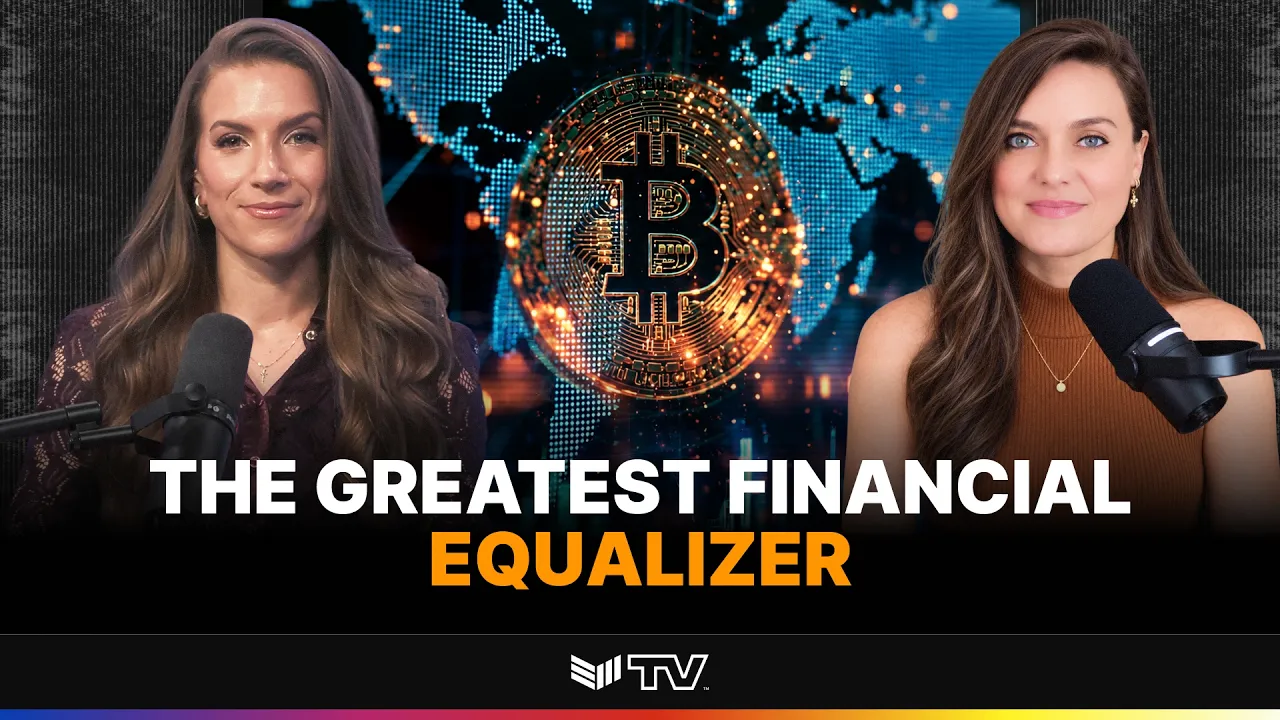
All right, now joining us on the show, it's Natalie Brunell, an Emmy awinning Emmy-winning journalist, host of Coin Stories, and author of the book Bitcoin is for Everyone. After more than a decade in TV news, she's brought her reporting experience to helping people understand Bitcoin and how money shapes their everyday lives. And she joins us now to break it all down. Natalie, great to see you. >> Hey, great to see you. Congratulations on this new show. >> Oh, thank you so much. Um, well, I was reading your essay on the Bitcoin magazine website last night and it's titled Why I left my ne leg legacy news job for Bitcoin. And first, I have to admit I um got PTSD when you mentioned one man banding in local news. So, I'm glad we escaped that. But uh largely the environment and sentiment has not changed. I mean, you wrote that in 2021 and and we're still here um talking about the same things. But um one thing I want to hear about uh your Bitcoin origin story and your parents have a really inspiring um story immigrating from Poland. So could you tell us about how that experience shaped where you are today? >> Sure. Well, I think the seeds for Bitcoin were planted very early on. I just didn't appreciate them until um about 10 years ago in 2017 when I first encountered Bitcoin. And of course, like most people, I was a total skeptic. I dismissed it. I assumed that it was too technical for me to understand. And I also just didn't think that um the problems that I saw around me could could actually be fixed. Uh at the time, like you, I was a I was a news reporter when I first encountered Bitcoin. And I noticed that everyone was really struggling with the same things, which was that the cost of living was going up and everyone was feeling frustrated and turning to sort of um political solutions that never even really solved anything. But my family's journey started in in Poland. And so I think that again my upbringing sort of shaped me to appreciate hard money um before I even understood it because my parents fled communism when I was very very young. We came to the United States I was five and I just saw them work really hard. They asked for nothing um except a chance an opportunity to work here and give their kids the the chance to get an American education. Um, and so I grew up believing in the American dream and then I went off to school and graduated into the great financial crisis recession and my family lost everything during that time. Um, so for me it was this moment where I thought well uh is the system as fair as I I thought it was like is the American dream something I could actually achieve? Um, and I I didn't know the answer to that for a while. And I was kind of struggling working as a reporter, feeling like I will never be able to afford a house and and afford to retire. Um, and I never connected the dots to our broken financial system until I learned about Bitcoin. Um, and so now I really I'm so grateful that decentralized media and decentralized money have sort of veered my career in a new direction and I'm able to teach people about Bitcoin because no matter where you come from, no matter, you know, who your parents are, what you wanted to be, we're all impacted by how broken money is. And so I think it's just so important to to teach people about it so that we can come to a conclusion that isn't rooted in politics. It's it's rooted in something deeper. um and and something that we can actually solve and fix through fixing the money. >> And Natalie, on that topic of just learning about Bitcoin, we we've talked to CEOs, hedge fund managers, economists, policy advocates, and and the central theme is what they're seeing in their surveys and engaging with their investors or the market is there's this, you know, gap of understanding in Bitcoin. Uh a lot of people just still don't get it. uh you've won an Emmy for educating people uh and you're quite you're quite effective at it. Uh big one of the biggest if not the biggest uh podcasts in the space. Uh what what is the market getting wrong? Why are people still not uh understanding this and what should Bitcoiners be doing differently to try to close that gap? Yeah, I mean I think about that a lot because I can really relate to the people who are skeptical about Bitcoin because that's how I think we all were at the very beginning and I can also relate to the fact that I really had no foundation of economic education. And so I I've talked about this on the show as well as in my book that about 15 years ago I was one of the people who said we need to tax the rich. we need to redistribute, you know, that we need to have this benevolent actor being the government come in and sort of make things more fair. And that truly was an example of my own ignorance. I didn't understand how the financial system worked. I didn't understand that we didn't have true capitalism and true free markets. We had a system that pumped money from the top into the banks which then started to inflate asset prices and led to the Cantalon effect and made all of our dollars worth less and less over time and really um tax the middle and working class. And you really have to go on the journey to understand that you can't really appreciate Bitcoin until you appreciate what the problem is. And so that's one of the reasons why I wrote Bitcoin is for everyone. And I just wanted to meet people where they are. And you know, all of us are are busy. We're we're trying to survive and and work up in our various careers. That's what I was doing when I was a news reporter. I was like, you know, how can I just advance to the next level? How can I achieve financial security? I wasn't thinking about, oh, I really need to sit down and learn about the financial system. Um, and Bitcoin kind of just, you know, slapped me in the face and made me realize things that I never understood and made me appreciate things that I now do. Um, and that's why we really need to just meet people where they are. Uh, people are busy. People are placing the blame on the wrong thing. I think that they have good intentions. They just don't understand. And so, we need to simplify it in, you know, in in a language and in a way that people people really get it and it's approachable. And so, there are lots of great Bitcoin books out there. One of the wonderful things about this space is I feel like there's something for everyone. Whether you learn best with a book or with a podcast or with a documentary, I mean, there's something out there. It's just about sparking someone's attention and and getting them to care. And that's a challenge for all of us. So, we just need to continue. I mean, every day we we bring on more Bitcoiners and and we uh we expand our our mission, but we've got a long way to go. And I think we we recognize that as well, especially during the bare markets where it seems like everybody's turning to to other things. But um Bitcoin will go back to its all-time highs and it's so much more than its price. It's really a tool for for freedom and economic empowerment. And I think that, you know, things just move a little slower than a lot of us want or expect. Meeting people where they're at is so important. And a lot of people may not want to become investors in Bitcoin yet, and they think it's it's fine to just p preserve what they've already earned. So, how do you explain Bitcoin's role as a savings technology to someone who wants financial security, but maybe they're they're scared off of the price swings? >> Yeah, I mean, the volatility um can scare people off because they don't really understand the asset. I think anything that um that swings as as far as Bitcoin does and it's a little bit technical, of course, it can make people feel a little bit wary, but that's simply a reflection of them not understanding it, right? Because those of us who have been in Bitcoin, we stomach through 40 50% draw downs and we just use those as opportunities to stack more. I think people just need to start small. I mean, um there's no one out there saying that you have to go from zero to 100, that all of a sudden you have to put your entire life savings before you actually understand what you own. I think it's important to take those steps and really understand first of all, you know, why is your money losing purchasing power? Why are we all forced to invest rather than save? That's something I cover and Bitcoin is for everyone. You can't save anymore. You can't just put your dollars in the bank because if you do, your your purchasing power is going to slowly be destroyed by inflation. And so, we're kind of forced to to speculate and um and we can see the assets that have outperformed over the last few decades. We can see that the stock market is now too big to fail. Uh homes are people's um primary savings vehicle today in in America. And yet people still have mountains of debt and they have mortgages. So technically the banks own the homes. I mean it's a really wonky system because we've destroyed the money at the base layer and and Bitcoin is the fix, but it's not going to be the fix overnight. And I think people just need to start slowly transitioning into this parallel system that exists little by little, dollar by dollar, Satoshi by Satoshi. Um you can start with a very small um modest allocation. And I just had Eric Belchunis on the show who recommends about 3% um if you're just starting out learning about it. But you know, it's encouraging to see folks like Rick Edelman who I think was on your show recently. He started out with a 0% recommendation, moved it up to 10%, now he's all the way up to 40% allocation of Bitcoin in your portfolio. So I think that it's going to grow. It's going to become a larger and larger share of people's portfolios and savings. Um and it's just going to take time to get there. But I think we've also made a lot of progress just in the last 5 to 10 years. >> And Natalie, you know, you keep mentioning that the money's broken. And I absolutely loved the video you put out uh the other week exploring this contrasting your dress to AOC's dress. Um so if anyone hasn't checked that out, go watch that video. Um but you know, I think sometimes we take for granted the you know, terms like the Cantalon effect and and the money is broken. Um c could you just walk us through the mechanics of what what do you actually mean by those things? Um, what I mean by broken money is you can't save. You're basically on a on a treadmill and it's running faster and faster and faster and you can't keep up uh based on just your income. You have to think of creative ways, you know, three side hustles. Uh what one what once cost one income now costs three. And we need to ask why. And the reason is because we have a system of money that is at at the core manipulated and driven by inflation. We have to print more and more units in order to satisfy our debt obligations. And that means that every unit is worth less and less over time. And you've done nothing to um to contribute to that. It's not your fault. You might be working harder, but it's not your fault that you feel left behind. And that's what we need to actually fix. Um, I think that we're never taught in school what inflation really is and do we need to have it. And that's something that I'm so grateful for my early teachers in Bitcoin like Safeodine and and Jeff Booth and all these great voices that have shaped the the earlier community. um they caused me to stop and ask these very questions like why do we need to accept a world where every single year your purchasing power is destroyed by a target of 2% when we really know it's not even 2%. Um why why is it that stocks and and homes get more more and more valuable but yet again it's like you see a 30-year-old house it's falling apart but it's worth 10 times what the original owner paid for it. there's something broken there and I think people need to understand first of all what caused that so that they can appreciate okay what are potential solutions and through technology um through the gift that Satoshi Nakamoto designed we do have a potential solution uh maybe not everyone appreciates it you know it's still a very small asset class competing with very very large ones um but Bitcoin is the solution that can empower people and I think you know I don't know anyone who's spent $10,000 and hours learning about Bitcoin like me and doesn't think it is the solution. So, it's just a matter of like you mentioned earlier sort of that education gap. But we'll get there over time. Every single day I I see more and more hope of people actually recognizing what that problem is and understanding what they need to do to protect themselves, which is own hard, scarce assets. And the best one, the one with the best properties is Bitcoin. You mentioned this earlier, but the young person who doesn't see a path toward buying a home or starting a feel uh starting a family. Um there are real feelings of hopelessness and anger about there. And that anger may be directed at what they perceive to be capitalism. Maybe they're angry at billionaires. I mean, you see, they're angry at their own boomer parents, which I think is the saddest part of it all. But when you are having those conversations with people, where do where do you even start? How do you separate what they're right to be angry about from the actual causes of the broken money? And um how do you explain the type of hope that Bitcoin offers? Yeah, this is one of the reasons why I made that video recently because of all the rhetoric out there of I hate capitalism. Capitalism has failed. It's something I I also address in the book. I mean, hope is a very important motivating force. If you don't have hope, um there's really no reason to get up in the morning and to work hard and and cooperate and be a good person and and sort of progress your life. It's it's a very um demoralizing feeling when you lose hope. And I think that's what a lot of young people have experienced because they've played by all the rules and yet they're not winning the game. They're falling further and further behind and they don't see things like the ownership of a home, the ability to afford a family as something that's within reach. And that's a huge issue. Um, and so the thing that will solve that is empowering them. But they currently exist in a system where they see very few winners at the very top. They don't believe that the game is fair. They don't believe that the winners necessarily deserve to be at the top and they are justly frustrated. Um, but I think that they are a lot of people, it's not just young people, it's really people of all ages, they're venting their frustrations and placing the blame on the wrong things. Again, I did this. I thought the government needs to come in and make things more fair. We need to tax the rich. What I didn't understand is how did the rich acquire so many assets? Is it a really truly free market? Is it really capitalism that we've had here? And that's why I I would argue that people really really study the financial system to learn that we've sort of created a system of socialism for the banks. And so anyone close to the banks and those of those structures of power, the largest institutions, the wealthiest individuals, um the political apparatus at large, that is what has been able to achieve levels of wealth that we've never even imagined at the expense of everyone else who's working because we've privatized, you know, the gains and socialized the losses. And there is a sense of injustice in that. it isn't fair and we wouldn't have that in a system of fair, truthful money. Um, and that's a lot for, you know, people to, I think, take in all at once. You really need to break it down in a simple way because we're taught that we live in the most capitalistic system. And look, America's better than a lot of places. I'd want to be here over most other countries, but we have a system where our money is corrupted at the core. Um, and until you understand that, you can't fix it. You can't appreciate the solution. So that's why I go back to meet meet people where they are. Start asking them questions because a lot of people I think when you see the interviews today of people out in the street, they don't even know why they believe some of the things they believe. It's just it's more based on feelings and experience and frustration. And we need to get to the facts. We need to drill down to what is actually broken. How has our money and our experience with money impacted all of our lives and the work that we we put in the energy that we give and whether we're able to actually store it in a meaningful way for the future? And if it's broken, then what does actually fix it? What addresses these things and and levels the playing field? And I think that Bitcoin is the greatest equalizer. It's not a system that's going to make everyone, you know, have the exact same outcome and status. It's going to make the the game more fair so that you actually can appreciate the winners and so that the the the um assets don't concentrate in in the hands of the few who most of us feel didn't work that hard or deserve it. Um, and so I really I really believe in the future of of Bitcoin as this sort of equalizer and and an egalitarian system that allows us to work hard and have our work be rewarded and have value really um be something that we can recognize and I think we'll get there. I just think it's going to be a long uh painful journey at times. When buying Bitcoin, what I really care about is the final amount of Bitcoin I'm getting for my dollars. When every sack counts, even a small spread can make a difference. Cash App charges zero fees and zero spread on Bitcoin buys over $2,000. The same applies to Bitcoin purchase through AutoInvest roundups and paid in Bitcoin. The number that matters is how much of your money ends up in Bitcoin. For a limited time, new customers can get $21 added to their balance. Just use code BMTV21 when you sign up. And don't forget this part. Send at least $5 to a friend in the first two weeks. Terms apply. Bitcoin services by blocking. See the Bitcoin disclosures at cash.appleodcast. >> Yeah. And and you know, American society like like you said, people in the street interviews don't know why they believe what they believe. They just know they're unhappy. Um and you know, it's leading to some some wonky ideas and political theories kind of creeping into the mainstream. Our politics at large are becoming increasingly populist. Um, and and as a result, uh, you know, as Bitcoin's matured at the same time, uh, it's become an increasingly political, uh, issue or at least painted that way. It at least has this political gloss on it now. Um, did this happen faster than you expected? Um, do you think that it's unfair the way Bitcoin is being painted as this sort of politically aligned money? And and what kind of hurdles is this presenting to Bitcoiners trying to reach new people? I mean, Bitcoin is the ultimate neutral tool. It is apolitical. It should be bipartisan. So, I I do get a little disappointed when I see the folks on Capitol Hill and in Washington DC turn it into something politicized or something that represents only one party's ideals because it is it's it's a tool of empowerment and I don't think that there's anything more neutral than that. Um that just shows the education gap though. I've been on Capitol Hill and there are some um some Congress members and their staff who are open to welcoming us and to learning and to reading the books and taking the time and there are others that are not. And that's why we really need to take the steps, be active politically to get the right type of people in office who will actually listen and learn. Um, it's one thing to decide you don't like something when you've taken time to learn about it, right? And then we can have a debate that's thoughtful and you might agree, I might disagree. But when someone won't even open the door to you, that is what's frustrating because we have folks legislating that are in their 70s and 80s who have never used this technology who have um no no relation to the issues that are facing their constituents and and we need to get them out of office. And so that's why I really do encourage people to get involved because you do have a say. um you should be more active in the political process at the local level, the folks that represent you all the way up to DC. And it does matter. Your voice matters. And I've been excited to see how politically active some of the Bitcoiners have become because when you look at the Bitcoin community, it really does have people from all backgrounds, all walks of life, both sides of the political aisle. And and that's something worth examining and it's something worth celebrating as well. Natalie, before we let you go, I want to ask you about media strategy as well. We both study journalism and I think it's fair to say proper journalism communication writing speaking, organizing your thoughts, that is a real art form and skill that is kind of just lacking in overall society these days. But at the same time, you have media literacy from the consumers. Um, it they're just holding on. I I think people are just lacking. they don't pull their news from from many sources. They kind of clutch onto one source, you know. Um so when it comes to Bitcoin and and educating, what is how do we get the message out there? How have you seen in media um successful media ventures get the message out there? And where do you think the Bitcoin industry is still missing the mark? >> You know, I really do applaud the work that we've done. I mean, there have been so many podcasts that have come out, independent creators that are working so, so hard. It's not easy to um create a media business on your own, but what an amazing tool that decentralized media has allowed for the decentralization of information. I mean, it drastically transformed the industry that I worked my way up in. It just completely like threw a a bomb into the entire news industry. And now news networks have to compete with us, have to compete with independent voices. um it does create more of an onus on the audience to do your homework, do your research, you know, know where you're getting your information from because now anyone can really turn on a camera and start analyzing the the stories that are out there. But I also think it it puts an incredible amount of um pressure on the on the institutions and the legacy media world that they can lose, you know, our ears and our attention if they're not following the journalistic integrity practices that that you mentioned. Um, I mean, you can actually see that a lot of those channels and programs and cable news, they have all-time low trust because people now have other options and they know that they're not necessarily getting the full story. They're they're getting um stories that are filled with bias, stories where there's some sort of an agenda because the government and uh some of these media outlets are sort of handinhand with each other on both sides of the political spectrum. and and now you have more options and you could get your news from from various podcasts, YouTube channels, um different media outlets that have formed. And so I actually think it's incredible. I think the more competition the better. Um the freer market that we can actually try to create um the more abundance and the more um opportunity we'll have. And that's what I'm trying to do with the show. That's what I'm trying to do is is educate people, use my background in communications and media to teach people about Bitcoin to keep them updated on what's happening um and give them also a platform and a voice to to share their thoughts because uh the world is changing drastically and we need to adapt and these technologies are going to affect our our our lives for better and for worse and I'm talking about AI and all all the the the emerging technologies and it's a fascinating convergence of all these things and I'm just grateful to be on on the front lines. But I urge people to to really um take it seriously where you get your information, do your homework, and learn about Bitcoin. And if you know about Bitcoin, share the message of Bitcoin with anyone you can. Decentralized media is such a good way to put it. I would have never thought to phrase it that way, but I love that. Um well, Natalie, it was great having you. Obviously, I mean, your work is incredible. I recommend it to everyone. So, thanks so much for joining us today. >> Thanks so much for having me. appreciate it.
Comentários 0
Entre para participar da discussão.
EntrarAinda não há comentários. Seja o primeiro a compartilhar sua opinião!