… more aggressive around $150 per share. That's roughly 35% below today's price. While ARM still wouldn't be cheap by traditional standards, the long-term risk-reward would be considerably more attractive. So, where do I stand on ARM today? Personally, I'd give it a borderline buy. I think the business is spectacular and its position in the semiconductor industry is extremely attractive. But investors are already paying a spectacular price for it. At $150 or below, assuming the business fundamentals remain intact, I'…
Personally, I'd give it a borderline buy.
Contexto extraído por IA
Of course, that assumes ARM delivers the growth and maintains an extremely high valuation. Neither is guaranteed. And that's why the price you pay matters so much. Personally, I'd become more aggressive around $150 per share. That's roughly 35% below today's price. While ARM still wouldn't be cheap by traditional standards, the long-term risk-reward would be considerably more attractive. So, where do I stand on ARM today? Personally, I'd give it a borderline buy. I think the business is spectacular and its position in the semiconductor industry is extremely attractive.
Transcrição Completa
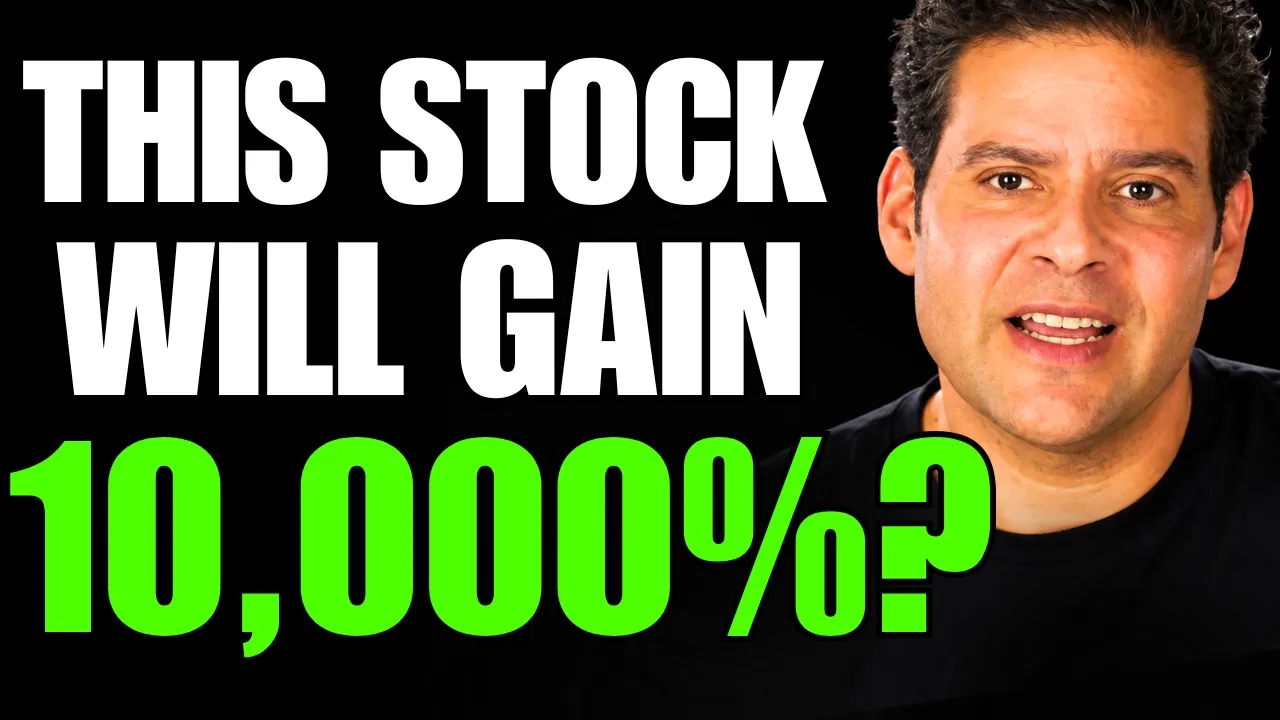
Popular stock picker Dylan Jovine is out with a new shocking claim. He says Elon Musk is preparing to launch his biggest venture yet. An ambitious project that he claims is going to be worth 28.5 trillion dollars. And Jovine claims one little known company could be one of the biggest winners. Back in his latest presentation he's calling it Elon's 100 X AI stock. He points to Musk's history of making investors millionaires through Tesla and SpaceX and said this next opportunity could be much bigger. But here's where things get interesting. Jovine says investors need to get positioned before October 24th when a major event could send money pouring into the stock. The problem is he won't tell you the name of the stock unless you buy his newsletter, but I have good news. I sat down and watched his hour-long presentation and was able to figure out the stock and in this video I'm going to reveal it completely free. But before we do anything, let's look at Dylan Jovine's recent track record to see if he's worth listening to. One of his best stock picks was recommending Palantir when it was $8. Obviously that one has done very well. One of his biggest winners has been AMD. That stock absolutely took off after his recommendation and gained more than 300%. Then there was Big Bear.ai and that one has nearly doubled since he recommended it, but he's also had some major misses. The Metal Company has been one of the worst falling nearly 50% since the pitch. He also recommended Kratos Defense. That stock has been hit hard and is down around 46%. And finally there was Recursion Pharmaceuticals. That one also went badly and has lost roughly 40%. So overall Jovine's record has been very boom or bust. He's had some big winners, but he's also had some stocks get absolutely crushed. Now let's quickly go through the presentation and figure out the stock. Jovine is pitching what he calls Elon's 100 X AI stock and he believes it could become one of the biggest winners from Elon Musk's next major venture. The idea centers around a problem I'm sure you've heard about AI and it's electricity. Companies spend hundreds of billions of dollars building AI data centers. Jovine says Musk has a radical solution. Move those data centers into space where they can run on solar power. And according to Joe Vine, SpaceX wants to launch as many as 1 million satellites, roughly 100 times its existing fleet. Targeting what he describes as a $28.5 trillion opportunity. And Joe Vine points to other stocks that have benefited from Elon's previous ventures. He highlights Piedmont Lithium, which surged as much as 1,400% and AST SpaceMobile, which he said climbed almost 7,000%. His His argument is that the company supplying Elon's new ventures could get similar gains. And he claims one publicly traded company is particularly well positioned to benefit with October 24th being a potentially important date. Now, let's look at the specific clues Joe Vine left us for the stock. Let's start with the biggest clue. Joe Vine says this company supplies technology that could become essential to Elon Musk's plan to build AI data centers in space. Now, that still leaves us hundreds of semiconductor and technology companies, so we still have to keep digging. But Joe Vine gives us something more specific. He says the company specializes in extremely power-efficient chips, technology that becomes especially valuable in space where electricity is limited and getting rid of heat is incredibly difficult. That narrows us down to a few dozen serious candidates. But here's where things get interesting. According to Joe Vine, this company doesn't actually need to manufacture the chips itself. >> [music] >> Instead, it licenses its technology to other companies collecting royalties when chips using its designs are produced. Now, we're down to just a handful. And Joe Vine says this technology is already embedded through Musk's empire from Tesla's vehicles to Starlink equipment. So, we're looking for a chip design company with a royalty-based business model and deep connections to Musk's businesses. But the final clue is what really gives it away. In 2020, Nvidia announced a massive deal to acquire this company outright. Elon Musk reportedly opposed this acquisition and the deal was eventually abandoned following regulatory opposition. All clues point to one company. I'm going to reveal the stock in 15 seconds, but before I do, I want to tell you about my free report on the top 10 stocks to buy and hold right now. These are companies I believe have the best mix of strong long-term potential and growth. When you're done watching, click the link in the description, enter your email, and I'll send it right to your inbox. The stock being pitched here is Arm Holdings, ticker A R M. If you appreciate me figuring out the stock for you, make sure to drop a like. Also, figuring out the stock was the easy part. Now we have to figure out whether or not this stock is actually a buy. And to do that, first we're going to start with what this company actually does, and then after I'll give you my buy rating. Unlike Nvidia and AMD, Arm Holding has traditionally been less about manufacturing or selling chips and more about designing the technology that makes those chips work. [music] Think of Arm as the company creating the blueprints. Other companies build processors using Arm's technology, and Arm collects licensing fees and royalties. That's an attractive business model because Arm can benefit from millions of devices being sold without having to manufacture those chips itself. And its technology is everywhere. Smartphones, data centers, automobiles, and even satellites. But here's where I think Joe Vine's presentation is a little misleading. He describes Arm as this obscure company that most investors haven't discovered. In reality, Arm is already worth nearly $245 waiting for Wall Street to notice it. And just because Musk wants to launch 100 times more satellites doesn't mean Arm's revenue will increase 100-fold. The royalties depend on which chips are used and the licensing agreements behind them. Now, the actual business is growing pretty quickly. In its latest reported quarter, revenue increased 22% to 1.29 billion. Royalty revenue also grew 22% reaching around 715 million. And perhaps most interestingly, Arm's data center royalties more than doubled from the previous year. So, there's substantial demand for this company's technology even if Orbital AI never takes off. But at roughly $230 per share, Arm trade at approximately 40 times annual revenue. That's a very significant premium, which raises the question, how much additional growth would Arm need to deliver to justify that valuation? And could Musk's space ambitions realistically make a meaningful difference? All right, let's head into my final verdict now. First, let's start with Joe Vine's biggest claim, Elon's 100X AI stock, because I think that number needs some serious context. Arm Holdings is already worth $245 billion. For the stock to increase a hundredfold from here, we're talking about a company worth nearly 25 trillion, more than China's GDP. So, obviously that's not a realistic number. But there's an important distinction in Joe Vine's presentation. He's connecting the potential for SpaceX to launch a hundred times more satellites with Arm's opportunity to collect additional chip royalties. Those aren't the same thing. Even if Musk successfully deploys a million satellites, that doesn't mean Arm's revenue increases a hundredfold, much less its stock price. So, I don't think it's smart to analyze Arm as a potential hundred bagger. The much more interesting question is whether Arm could outperform the broader market over the next five to 10 years. And there's actually a pretty compelling argument that it could. First, I love Arm's underlying business model. Rather than spending tens of billions of dollars spending semiconductor factories, Arm licenses technology to companies designing chips. That creates a business with enormous reach and the potential for very attractive margins. And demand for this technology is exploding well past smartphones. As AI becomes more widespread, companies increasingly need processors that deliver more computing power while consuming less electricity. That's particularly important for data centers, where power consumption is becoming one of the industry's biggest problems. And we're already seeing this translate into actual growth. Arm's revenue increased 22% last quarter and its data center royalties more than doubled. Even more interestingly, customer demand for its new AGI CPU has exceeded $2 billion across fiscal 2027 and 2028. So the AI opportunity here isn't just speculative. Arm is already benefiting from it and it doesn't need Elon Musk to launch a million satellites for that growth to continue. But here's where I start having problems with the investment. At approximately $230 per share, Arm trades at nearly 48 times its annual revenue. That's an enormous valuation for a company growing revenue around 20 to 25%. And when you pay that much for a business, you're assuming years of exceptional execution. Even a temporary slowdown could cause the stock to fall significantly, simply because investors become unwilling to pay such a premium. There's also an interesting risk developing with Arm's business. The company is moving beyond licensing technology into selling its own processors. That opens up another revenue opportunity, but it also risks creating conflicts with existing customers. In fact, Arm recently suffered a partial legal defeat in its dispute with Qualcomm, with potentially significant royalty issues still unresolved. And then there's Jovian's overall AI thesis. I find the concept fascinating, but building enormous AI computing systems in space introduces serious challenges involving launch costs cooling maintenance and economics. We have no reliable basis today for assuming that orbital data centers will become a major contributor to Arm's earnings. So here's what would have to happen for Arm to beat the broader market over the next few years. First, Arm needs to continue taking market share in data centers where its power efficient architecture has a a competitive advantage. Second, royalty growth needs to remain strong as more customers adopt its newer, higher value chip designs. [music] And third, its expansion into complete processors need to generate meaningful additional revenue without damaging its existing licensing business. Here's one way to think about the upside. If ARM could grow annual revenue from roughly $5 billion today to $15 billion over the next 5 years, that's approximately 24% annual growth. If investors were still willing to value the business at 30 times revenue, ARM could be worth approximately $450 billion. That's a potential 80% gain from today's valuation, or 13% annually. Not 100x, but potentially a very respectable market-beating investment. Of course, that assumes ARM delivers the growth and maintains an extremely high valuation. Neither is guaranteed. And that's why the price you pay matters so much. Personally, I'd become more aggressive around $150 per share. That's roughly 35% below today's price. While ARM still wouldn't be cheap by traditional standards, the long-term risk-reward would be considerably more attractive. So, where do I stand on ARM today? Personally, I'd give it a borderline buy. I think the business is spectacular and its position in the semiconductor industry is extremely attractive. But investors are already paying a spectacular price for it. At $150 or below, assuming the business fundamentals remain intact, I'd argue it's a strong buy. And before you go, don't forget to grab my free report on the top 10 stocks to buy and hold right now. These are companies I believe offer the best combination of long-term growth potential and strong underlying businesses. Just click the link in the description, enter your email, and I'll send the full report straight to your inbox.

Comentários 0
Entre para participar da discussão.
EntrarAinda não há comentários. Seja o primeiro a compartilhar sua opinião!