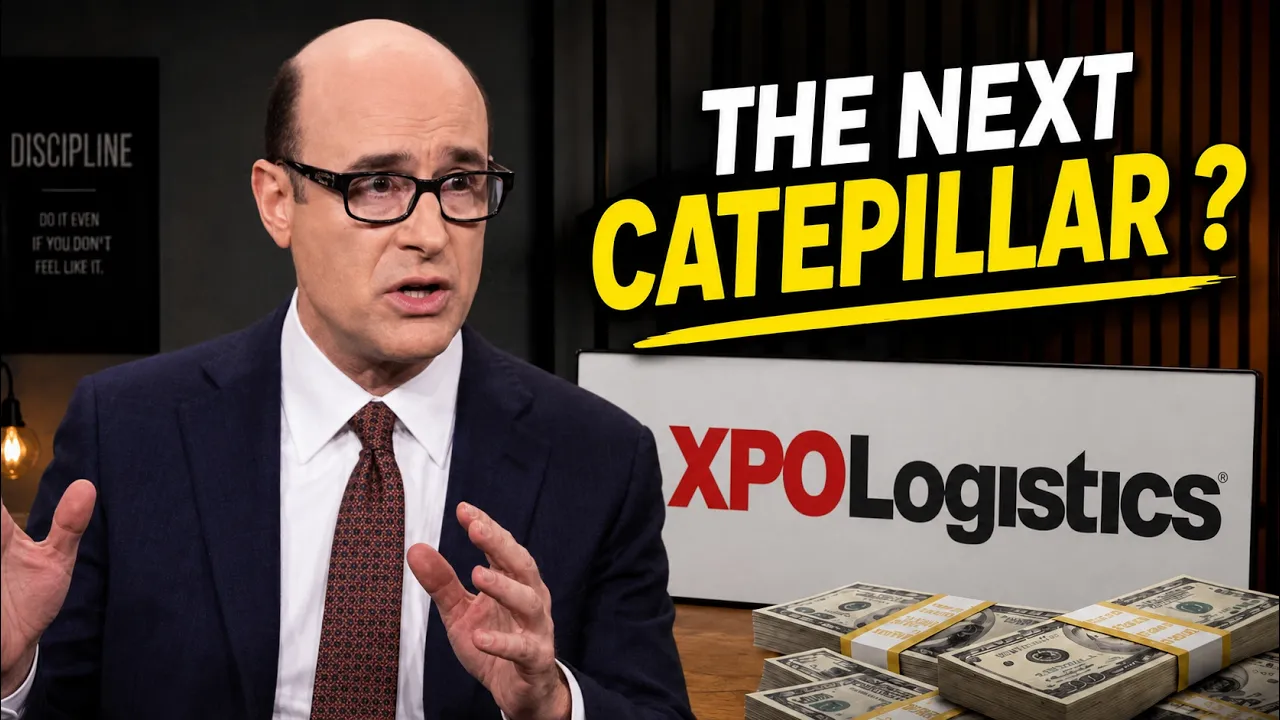
Wall Street Is Quietly Buying This 70 P/E Stock — Should You?

- Video return
- —
- Calls
- 0
- Buy / Sell
- 0 0
- Published
Recommendations
No buy/sell recommendations found in this video.
Full Transcript
Good day to you everyone. Welcome back to the channel. Today we will talk about why the industrial shipping giant XPO has taken Wall Street by storm, trading at a staggering 70 price to earnings ratio and skyrocketing 10 times over the past 5 years. The trucking sector is normally known for slow growth and low profit margins, but this particular player is behaving more like a high-flying tech stock. Investors are actively bidding up the stock to record highs near $27 per share. And this massive rally has caught many retail investors completely offguard. We are going to look closely at what is actually happening behind the scenes to see if this valuation is a speculative bubble or a brilliant operational masterpiece. Around a year ago, we discussed how the restructuring of this transport giant would unlock massive hidden value. At that time, we noted that the market was heavily discounting the business due to its complex corporate structure. I told you to watch whether their plan to strip away non-core assets would pay off and today we are seeing the direct results of that strategy. The stock was trading much lower back then and those who followed the thesis have watched their positions grow tremendously. Our previous analysis highlighted that the less than truckload business was a gold mine waiting to be polished. The market has finally woken up to this reality, rerating the stock to multiples that seem almost fictional for a trucking company. Now, we must look at the recent catalysts to understand why this momentum is accelerating so fast in 2026. The company has successfully executed its massive corporate spin-off program, turning itself from a sprawling global conglomerate into a lean domestic specialist. Wall Street has historically hated conglomerate structures because they hide the true profitability of individual business lines. By spinning off their contract logistics and freight brokerage segments, management essentially forced analysts to value the core trucking business on its own merits. This strategic pivot is a textbook example of unlocking shareholder value through corporate restructuring. Many traditional value investors missed this opportunity because they were focused on the backward-looking consolidated financials. However, our community was tracking the underlying shift in operating metrics which signaled a massive turnaround. The actual performance of the core trucking division has completely vindicated this forward-looking thesis. We are seeing a complete transformation of their entire operational model as they execute their growth plan. Before we dive into the latest numbers, we need to take a quick pause for a brief disclosure. If you have not noticed yet, this version of me you are seeing on screen is actually a highly sophisticated digital clone. I am making these videos in hope to bring new perspective and analysis on stocks and markets in general. If you like what you are hearing, do consider giving me a follow as it helps bring this video to more people. Your support helps push this content to more passionate investors like us and keeps the community growing. It means the world to me. And now we are going to jump right back into the core drivers of this business. We are dedicated to bringing you the most transparent and honest stock breakdowns on the internet. The primary catalyst driving the massive rerating of XPO is their transition to what management calls the LTL 2.0 strategy. This shift focused entirely on the North American less than truckload shipping market, which is a highly lucrative niche. Unlike standard truckload shipping where any independent driver can buy a rig and compete, less than truckload requires a massive network of physical terminals. This network acts as a natural moat because building out hundreds of nationwide hubs is incredibly expensive and logistically complex. The industry became even more consolidated following the high-profile bankruptcy of Yellow Corporation in 2023. XPO capitalized on this industry disruption by aggressively acquiring 28 of Yellow's closed service terminals to expand their own capacity. This acquisition gave them a huge competitive edge by instantly adding strategic real estate to their network. They now have roughly 30% excess door capacity across their nationwide footprint, which is a massive operational buffer. Having this extra capacity allows them to handle a massive surge in freight volume without needing to build new terminals from scratch. Wall Street is loving this operational setup because it represents immense hidden operating leverage. As industrial production and freight demand begin to recover, XPO can quickly onboard new customers with almost zero incremental overhead. To make things even better, the company is using cuttingedge artificial intelligence to optimize their entire logistics operation. They are deploying proprietary AI algorithms to handle route planning and automated pickup scheduling. This technology has allowed them to significantly reduce empty miles and lower fuel consumption across their entire fleet. It has also allowed them to cut down on costly cargo damages, reaching a record low damage claims ratio of less than 0.2%. Customers are willing to pay a premium price for shipping when they know their goods will arrive on time and fully intact. This reputation for superior service has allowed the company to consistently raise its pricing even in a sluggish shipping environment. Let us look at their latest earnings report to see how these operational gains are translating into real financial numbers. The financial results for the first quarter of 2026 show that the company is executing its business plan flawlessly. They reported quarterly revenue of $2.1 billion, which represents a solid year-over-year increase of over 7%. Their net income for the quarter jumped to $11 million, representing an outstanding 47% increase compared to the prior year. Adjusted diluted earnings per share came in at $11, which beat Wall Street consensus expectations by nearly 15%. The star of the show was their North American trucking segment, which saw its adjusted operating income rise by 20%. This impressive growth was driven by an operating ratio improvement of 200 basis points, bringing the metric down to 83.9%. For those unfamiliar with the trucking industry, the operating ratio measures operating expenses as a percentage of revenue. A lower operating ratio means higher profitability and better cost management across the network. Historically, elite players like Old Dominion have maintained operating ratios in the low70s, which is why they command premium valuations. XPO is rapidly closing the gap with these industry leaders, which is exactly why Wall Street is rewarding them with a higher multiple. This trend is a major milestone for the company because it proves that their technology-driven efficiencies are actually working. However, we have to address the elephant in the room, which is the company's valuation. Sitting at a trailing price to earnings ratio of around 70, this stock is trading at an absolute peak compared to its historical average of 25. A 70 multiple is typically reserved for high growth software businesses, not cyclical transport companies. Even on a forward earnings basis, the stock is trading at around 40 times, which leaves very little room for operational error. This premium valuation suggests that the market has already priced in a full freight market recovery and perfect execution from management. If the broader economy slows down or if diesel fuel prices spike unexpectedly, this multiple could experience a severe contraction. We also have to look at their balance sheet which carries a meaningful amount of debt from their aggressive expansion and acquisitions. Their net leverage ratio currently sits at around 2.4 times EBIT DAR which is manageable but definitely limits their financial flexibility. This debt burden means they must continue to generate strong free cash flow to meet their obligations and fund future capital expenditures. They are planning capital expenditures of between $500 million and $600 million for 2026 to upgrade their fleet and terminals. This high level of investment is necessary to maintain their competitive edge, but it does eat into their short-term cash generation. Investors need to weigh these massive capital requirements against the potential for long-term margin expansion and market share gains. To help you navigate this complex riskreward profile, let us run through a few hypothetical scenarios based on your current investment position. Understanding these different paths will help you make a logical decision rather than trading on pure emotion. The first group consists of investors who bought this stock recently and are sitting on quick gains of 20 or 30%. If you fall into this category and find yourself lying awake at night worrying about a sudden market pullback, you might want to take some action. It is always a completely reasonable strategy to reward yourself by locking in some profits and taking your initial capital off the table. Pullbacks are an entirely natural part of market cycles and securing some gains can give you immense peace of mind. You can let the remaining portion of your position run to see if management can continue to deliver on their growth targets. This balanced approach allows you to participate in the upside while completely protecting your hard-earned principle. It is also an excellent way to maintain a clear and unemotional head as market volatility begins to rise. The second group is made up of long-term holders who bought this stock years ago and have enjoyed a multi-bagger return. If you are in this position, you should feel incredibly proud of your patience and your ability to spot this massive turnaround early. You should expect to see some normal cooling off periods and temporary price drops as the stock digests its massive gains. Cyclical transport businesses will always experience volatility, but the long-term structural changes at the company remain highly positive. If you believe in their technologydriven mode and their ability to reach a 70% operating ratio, holding your position makes sense. You can simply ignore the short-term noise and let the power of compounding do the heavy lifting over the next decade. Keeping a long-term focus is the ultimate key to building generational wealth in the stock market. The third group consists of sideline buyers who are currently feeling a massive amount of fear of missing out. Watching a stock go up 10 times over 5 years can make you feel like you missed the train. But buying at peak excitement is incredibly risky. History shows that chasing high multiple stocks after a massive rally is how many retail investors become exit liquidity for larger institutions. Instead of going allin at these current levels, a much safer approach is to ladder your way in slowly. You can start by buying a very small starter position and then wait for a market correction to add more shares. This strategy allows you to build a position over time without exposing your entire capital to a sudden valuation contraction. Saving your heavy capital for buying environments is always a highly disciplined move. XPO has executed one of the most successful corporate turnarounds in recent history, turning a debt laden conglomerate into a streamlined trucking powerhouse. They have leveraged advanced technology and made smart real estate acquisitions to build a highly profitable less than truckload network. However, the market has rewarded this execution with an incredibly demanding 70 price toearnings multiple that leaves no room for mistakes. Investors must decide whether they want to pay this massive premium today or wait for a better entry point during the next economic slowdown. I will continue to closely monitor their operating ratio and quarterly earnings as this fascinating growth story plays out. This company has truly proven that a traditional legacy business can innovate and thrive in the modern era. But as always, you should make your own informed decisions based on your unique risk tolerance and financial goals. Do your own deep research on their debt profile before making any long-term commitments. I want to hear your personal thesis on whether this stock is currently overvalued or if it is a buy. Let us keep this friendly conversation going in the comments section below. Thank you so much for watching. Please share your thoughts on this company and I will see you in the next in the next
Comments 0
Sign in to join the discussion.
Sign inNo comments yet. Be the first to share your thoughts!