Another strong buy as well that we've seen today from Wall Street
Context
Another strong buy as well that we've seen today from Wall Street where they're predicting respectable upside 22% over the next year, $432 price target.
Context
So, Amazon looks expensive compared with the average company, but the current price only requires modest long-term free cash flow growth. AWS advertising and retail margin expansion provides several potential drivers. So, I classified as a buy today.
Context
The seventh stock we have is Meta, and it's gone almost nowhere this year, trading around $656. We're talking around 21 times Ford earnings with another strong buy from Wall Street.
I'd probably say stock number one, Nvidia, is a buy today.
Context
based on the current earnings trajectory and valuation, I'd probably say stock number one, Nvidia, is a buy today.
Full Transcript
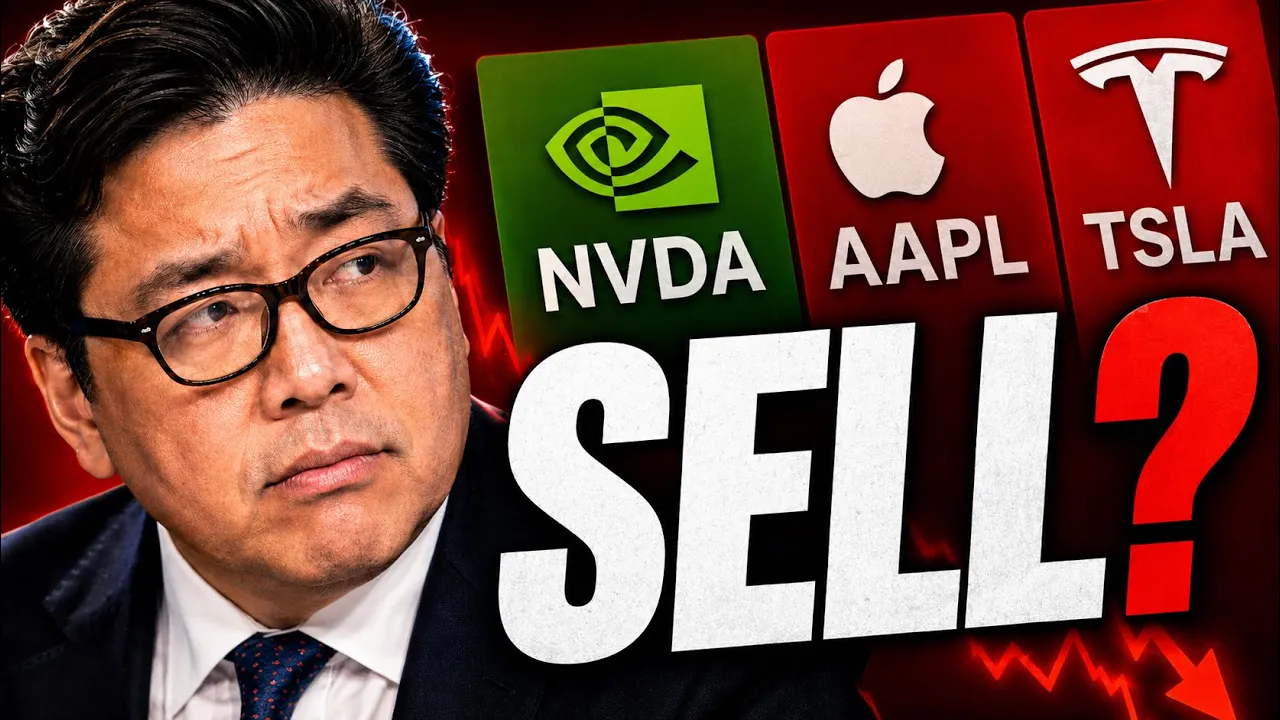
The stock market suddenly looks a lot cheaper than it did just a few months ago. But this headline sums up the danger perfectly. Don't be fooled because a falling valuation does not always mean a stock has become undervalued. Sometimes it simply means the earnings estimates are just too optimistic. And right now when we look at the S&P 500, it trades at roughly 20 21 times expected earnings over the next year compared with around 28 times trailing earnings. It was as high as around 22 23 just in 2026. So on the surface you could argue it makes the market look reasonably priced, but the gap is unusually wide and it tells us that investors are expecting a large acceleration in corporate profits. And to be fair, betting against earnings growth has not worked particularly well. Wall Street's underestimated S&P 500 earnings for 13 consecutive quarters. I mean, last quarter, analysts expected earnings growth of roughly 13% while companies ultimately delivered close to 29. So earnings, they've repeatedly cleared a very low bar. And now we're going to see as earning season really kicks off the next test. The banks report first followed by some of the most important companies for the broader market. ASML that reports tomorrow, TSM and Netflix report on Thursday. And these results will determine whether the recent weakness in tech is an opportunity or perhaps an early warning. And today alone, while it brings results from JP Morgan, Bank of America, Cityroup, Goldman Sachs, and Wells Fargo is going to give investors an immediate look at the consumer credit conditions, trading activity, and just the broader economy. But for today's video, the more important question is what earnings will tell us about technology and AI spending. I mean, hedge funds, they've already reduced semiconductor exposure sharply. But Tom Lee, he believes investors may have pushed the selling just too far. Listen carefully to how he describes the recent weakness. >> You just recently said that the selling that we've seen um in the last maybe five to six weeks or so in semis, in memory, and momentum trades, you think that's overdone? So looking at SK highness, so selling off right after it's a US ADR. Do you think that's just really a volatile process of finding a bottom in this space? >> Uh yeah, I mean maybe the best number to look at is year-to- date. Um Korea and SKH Heinix and Samsung are up. Uh they're absolutely outperforming other countries. So I think that it is very normal to expect a month or even two months of selling. But yes, in my opinion, especially when I look at the US semis and US memory and US momentum stocks, I think we've we are overshot to the downside. So we would be buying any of those dips. Now that is the bullish interpretation. The semiconductor trades become crowded. Investors took profits and the recent sell-off has now created genuine opportunities. And we can see from the NASDAQ heat map from just July alone. Well, we can't treat every tech stock the same. Some names have recovered, others remain deeply underwater. And you could argue that, well, perhaps the clearest example of why this debate matters. Its share price has risen substantially over the last 2 years. Yet, its forward valuation has fallen from around 36 times earnings to now hovering around 19. sounds incredibly attractive, but only if the earnings estimates behind the numbers are achievable. And then you also got performance beneath the surface. That's been extremely uneven. Micron, AMD, and Intel, they've produced enormous gains over the year. Meanwhile, companies like Microsoft, that's down. Meta slightly negative, and Oracle that's fallen sharply. This is no longer one simple tech trade where we can see the broader market that's also started participating. The equal weight S&P 500 is now outperforming the market cap weighted index in 2026. What this means is that investors are moving beyond the handful of mega cap names that previously carried the entire market. But remember, broader participation does not automatically mean lower risk. In fact, single stock volatility is now near cyclical highs. And Muhammad Elaran believes investors are beginning to recognize the core problem with the AI boom. That ultimately the technology may succeed, but not every company that's funding it will. >> I am a big big believer in the transformational ability of AI. >> I'm also a big believer that's going to cost a lot of money. So if you look, the sources of funding is a little bit less. The uses of funds is a lot more. And the only way you get this to to equal without a recession or anything awful is higher yields. >> But but I think the thing that I'm trying to think about is if in fact there's not not enough money to go around but there's going to require a lot more cost to all of these companies that should be reflected in the stock prices. No. >> So it is I mean if you look we no longer have the straight up >> right >> um thing that we've had. I think people are now realizing two things. One is it's more expensive than we thought. And two, not everybody's going to win. >> That last sentence is key to this entire video. Not everybody is going to win. Artificial intelligence can transform the economy while still producing terrible returns for companies that overspend, issue too much debt, or even fail to monetize their investment. That's why a lower share price alone does not make something cheap. And retail investors, well, they appear to becoming more cautious as well. Weekly net buying of individual stocks has fallen to its lowest level since COVID. That suggests investors are no longer blindly buying every dip. But it can also create opportunities when fear becomes indiscriminate. And then at the exact same time, foreign demand for US equities has reached a record high. So this is not a simple story of investors abandoning America. Global capital, well, it's still flowing into the US market, but it's becoming far more selective about where the money goes. And that creates another contradiction. Institutions are reducing the dollar share of global reserves. Yet foreign inflows into US equities are surging. So investors, they may want less exposure to the currency while still believing that the strongest companies remain listed in the United States. And even in just the last few days, we can see the markets already separating perceived winners from potential losers. And on CNBC, investors argued that several tech leaders have now fallen into value territory. >> Cap tech stocks are frankly trading at uh value value territory. Uh I could look at Meta, I could look at Microsoft as two examples of that. And I think this is a time that you have to stay true to your knitting. That's the second thought. These rotations and Joe, you've been all over them for weeks and weeks. These rotations have been coming fast and furious from semis to software, from large cap to small cap, uh from the market cap weighted uh ETFs to the equally weighted ETFs. Pick your style of investing and stick with it. And I do think this is a time when many styles can work. So somebody who's more I'm going to say price aware as opposed to price sensitive like myself, I can find plenty of bargains out there. >> So there are bargains available, but fear is still dominating sentiment. Rotations are moving quickly and earnings expectations remain extremely demanding. That means the easy strategy of simply buying whatever has fallen the most well is unlikely to work. And now we've also got genuine macro risk hanging over earning season. Oils climbed above $85 as tensions around the straight of homes intensify once again. High energy prices, remember, can pressure consumers, raise inflation, and keep interest rates high for longer. And the markets, well, they ultimately believe the conflict will remain contained. But if oil continues moving high, companies may face rising costs at precisely the moment investors are expecting a major earnings acceleration that ultimately leaves very little room for disappointment. So today, I'm looking beyond headline valuation multiples. I'm going to test eight of the most popular stocks before earnings to answer three questions. Is the company still growing? Are the earnings estimates realistic? And does the current valuation provide enough upside to justify the risk? And by the end of the episode, I'm going to separate the strongest buys from the value traps. So, let's begin with stock number one, and that's Nvidia, and it's probably the clearest example of why rising share price does not automatically mean a stock is expensive. We can see it currently trades around the 203 mark. Based on seeking alpha data, we can see the forward P sits in the 2223 region. And for a company still delivering exceptional growth, the valuation immediately deserves attention. Wall Street, well, they give it a strong buy. And in fact, they see some very attractive upside, 48% over the next year. Price target on average $32. Some sit as high as $500. And it's worth highlighting that out of the Mag 7, I believe they are the latest to report, we can see the 19th of August. So, there is still some time for Nvidia. And we can see that Nvidia's beaten earnings expectations in each of its last four reported quarters. And we can see Consensus expects earnings per share of around $9 for fiscal 27, just shy of $13 for 2028. That places Nvidia at roughly 23 times next year earnings and less than 16 the following year. And in terms of the year-on-year growth, well, for fiscal 27, analysts are expecting 88% growth, followed by 42% into 2028. These expectations are extremely high. But they also explain why Nvidia's forward valuations continued falling despite the share price remaining strong. And it's also worth pointing out that growth is expected to slow over time, as it should for a company of this size. But analysts still expect earnings per share to rise from around $9 in January 27 all the way down to around $38 by 2036. These later estimates we do have to point out come from very few analysts. So they shouldn't be treated as precise forecasts, but the direction remains clear. And Nvidia, well, they've delivered eight EPS from eight reports over the last 2 years. The only time they've ever missed was once in fact in the 2-year period, and that was one revenue miss. So we can see from the green bar chart below the size of the earnings surprise what it has started to moderate but Nvidia continues clearing the bar while estimates keep on rising but this is really where Nvidia becomes very interesting. The forward P while sitting based on this data 21 times is much lower than the 5year of 36. So even despite the strong share price performance, Nvidia trades at a substantial discount to its own historical valuation and based on the blue tunnel which comes from simply safe dividends where it does highlight the intrinsic fair price. There is a massive disconnect from the stock price and even the bottom end of the fair value for Nvidia. This just highlights the potential severe undervaluation signal we're seeing today. And my discounted cash flow, well that comes to an intrinsic price of $262 against where it sits today. We're talking around a margin of safety of 23%, potential upside of 29%. And as we said earlier, Wall Street, well, they're even more bullish. They see the company over $300, around 50% upside in just the next year. And I do want to flag that based on the sensitivity table, if we were to use the lower estimate of 10% long-term free cash flow growth, where Nvidia would be slightly down, $193. medium what we've used at 15 29% and that 20% what we can see 75% upside more importantly though the reverse DCF suggests the current price only requires around 11% long-term growth just look at that in comparison to their own historical rates so the markets no longer pricing Nvidia for perfection the current price requires long-term growth around 11% while analysts expect substantially more over the next several years risk however is that AI spending slows faster than expected, but based on the current earnings trajectory and valuation, I'd probably say stock number one, Nvidia, is a buy today. Now, before we continue, I want to let you know that I've released my latest weekly article. We drop one every single week where we cover severely undervalued stocks as well as what's on the market over the last few days. You can click below, sign up, and read all of these straight away. Now, the second stock we're covering is Apple. And unlike Nvidia, while Apple doesn't look cheap, when we examine the valuation closely, is trading around $317. We can see forward P it's sitting around 36 is a premium valuation for a company with a comparatively modest growth outlook. And interestingly, it's one where Wall Street actually see no upside over the next year. Their average price target, $315, is pretty much the price that we're seeing today. And unlike Nvidia, this one is due to report fairly soon on the 30th of July. So in two weeks time, we will find out a little bit more about the company. And maybe no surprises to note that Apple is one of those companies that continues to beat quarterly expectations. However, analysts, they do expect earnings growth to slow materially after the current fiscal year. We can see from these numbers here, the next several quarters expect deliver growth ranging from mid single digits to low teens. That is respectable, but not enough to make a 36 times multiple look inexpensive. And you can see analysts, they're expecting around $9 EPS in 26, increasing to around 9.61 by 27. It means Apple, very interesting to point out, in fact, still trades at around 33 times next year's expected earnings. So, the valuation remains demanding even after allowing for another year of growth. And you can see that Consensus expects earnings to rise steadily from around $8.76 in 2026 to around $1542 by 2031. It does represent solid compounding, but the current price already assumes Apple continues growing smoothly without a significant slowdown. And good to see that Apple's delivered eight EPS beats from eight reports over the last 2 years. They have missed although only once in terms of revenue and the consistency. Yes, it does justify a premium, but the earning surprises have generally been modest, leaving less hidden upside than the beat rate might suggest. But as you're probably aware, the issue with Apple is the valuation is trading 35 times forward earnings, 5year closer to 28. Investor therefore paying a significantly higher multiple than usual despite a growth outlook that's not clearly stronger than Apple's historical profile. So unlike Nvidia, we actually get the opposite sign on the blue tunnel for Apple. We get an overvaluation potential price today sitting above what we can see here on the fair value. But again, maybe no surprises to those that have followed this company for a long time. Apple is one of those that spends a vast majority at a premium. Investors, they've also seemed more than happy to pay the price. Now, my DCF model produces an intrinsic value of $238. Again, where it sits today, well, pretty much looks to be trading at a 33% premium. And as we said, Wall Street, they pretty much see no upside over the next year. Then if we take a look at the numbers, well, at the lower end, we've got 8% long-term free cash flow growth. Apple would be valued 210, medium 10%, $238, and even at a 12% growth rate, $270. That's still showing downside. The reverse DCF, let's take a look here, suggests Apple needs around 15% long-term growth to justify today's price. Well, over the last 10 years, they've only really managed 7% annually. Most recent year, in fact, declined 9%. So, I'd conclude on Apple saying it remains one of the highest quality companies in the world. But quality does not make every price attractive and more than 35 times Ford earnings with almost no upside from Wall Street's target and a DCF value well below the share price. I'd really say that Apple is a pass today. The third stock we're looking at is Taiwan Semiconductors. This one we can note here is already up around 39% this year. It traded around $421 today sitting at roughly 26 times Ford earnings is not obviously cheap but the growth behind the valuation honestly remains exceptional. Wall Street, well, they've given it a strong buy rating. And we can see they're expecting around $500 over the next year, implying 18% upside, but the range is very, very wide. Low 354 at the higher end. Some analysts seeing $700. And TSM is one of those companies that is expected to report their earnings very soon. We're just talking 2 days away. And TSM, well, they've beaten earnings expectations in each of the last four reported quarters. analyst they're expecting around $16 for 26 rising to around 20.3 by 2027 reduces the forward P we can see to just below 21 on next year's earnings and consensus expects EPS growth of 50% in 2026 followed by 27 the following year and then in 28 around 30%. It reflects continued demand for advanced semiconductor manufacturing and AI infrastructure and they've delivered eight EPS beats from eight reports. Revenue well it's beaten expectations six times missed twice. Execution is remain dependable although the size of the recent earnings surprise is generally been fairly modest and it trades above its historical valuation 24 versus the 5year of 22 premium. It is understandable given the growth outlook, but investors you could perhaps argue are already paying for stronger future performance. And we get a very very marginal potential overvaluation signal sitting just at the upper end. When we look over the last 5 years, there have been quite a few opportunities to buy this in an undervalued signal. Now, my DCF comes to $411. So, it's only trading slightly above. We're talking a 2% premium. Wall Street, as we highlighted, around 18% upside. Now, if you want to use the lower end today of 15% free cash flow growth, will it be worth 295? Middle rate is what we've used today and the high rate of 25 35 potential upside $570 price target. Reverse ETF though, this is a slight issue is suggesting the current price today requires around 20% long-term growth. So TSM exceptional business, but at today's price, investors are already assuming free cash flow compounds at roughly 20% for an extended period. The company may deliver the growth, but the margin of safety is limited. I'd call TSM watch list. I become more interested following a meaningful pullback or stronger earnings guidance this week. We then move on to Alphabet. This one's trading around $352, sitting around 25 times forward earnings. Based on seeing alpha data, it appears reasonable compared with some other mega cap tech stocks. But the earnings outlook reveals a slightly more complicated picture. Another strong buy as well that we've seen today from Wall Street where they're predicting respectable upside 22% over the next year, $432 price target. And we're actually expecting their earnings results next week. So this one is coming very soon. Now Alphabet, as we can see, they've beaten earnings expectations over the last four quarters. However, analysts, they are expecting earnings growth to slow sharply the first quarter of 2027. While they even expect to show a year-over-year decline of around 32%. Analyst they're expecting 1423 by 2026, it only rises very small 14.59. So, while it does trade around 25 times forward earnings, consensus expects just a 2.5% growth next year and the longerterm outlook becomes much stronger. analysts. Well, they're expecting 17% in 2028, 20% in 2029, and around 18 by 2030. But the number of analysts fall significantly. So, just bear that in mind. And you can see a bit of a mixed picture when we look at consistency. They've delivered seven EPS, one miss over the last few years. Revenues beaten expectations, five out of eight. The execution, yes, it's good, but less consistent than Nvidia, Apple, or even TSM. Now when we take a look at the data from simply safe dividends we can see it trades around 28 times Ford earnings much higher than the historical 2122 it does mean something to bear in mind that as an investor if you're buying today you're paying a meaningful premium for future growth from cloud AI and advertising and we also notice the potential overvaluation signal here if you want to see though we've talked about this many times on the channel there were so many chances to buy this severely undervalued in fact since Then the price has more than doubled and my DCF comes to $311. Against where it sits today, we're talking a 13% premium. Wall Street we highlighted they are a lot more optimistic. And when we take a look at the low end of 14% or the price would be $284 and at the high end 340. In fact, in all three cases, we can note here downside from today's price. And the reverse ETF, well, it's suggesting the market needs 19% long-term growth. So for Alphabet, for the conclusion, I'd say it remains an outstanding company, but the current valuation requires stronger long-term growth than I'm comfortable assuming. Even my optimistic scenario falls slightly below today's share price. I'd say it's a pass or even on the watch list. The fifth stock, Micron, is already gaining more than 228% this year. And in fact, we get a double strong buy, not just Wall Street, but also from Quant. Now, the forward PE, it is low, but bear in mind, low P ratios often appear near peak earnings in cyclical industries. And this is one of Wall Street's favorites where they're expecting 59% upside over the next year. Price target just shy of $1,500, some as high as 2,200. And like Nvidia, this one isn't due to report this month. We're talking the 30th of September. So, actually quite some way to go. And their earnings recovery, well, it's been extraordinary. is peing expectations in each of the last four quarters and the size of those beats well it's expanded sharply. Analysts are expecting $73 of EPS in 26 150 in 2027 and at current price well it trades based on this data 13 times. In fact when we look towards 2027 is trading around six times. It makes micron one of the cheapest stocks in the entire episode at least on near-term earnings. But the long-term estimates reveal the risk. Consensus expects EPS to rise again in 2028, but expected a full 26% in 2029, full 60% in 2030. So, the market is explicitly expecting another memory downturn. But it is good to know that Micron's delivered eight out of eight EPS over last year, revenue seven out of eight. It does provide confidence that the current recovery is real, but honestly, it doesn't eliminate the industry cyclicality. And we can see it currently trades below its historical average 6 and a half versus 11. The market, yes, is applying a heavy discount because investors do not expect current earnings to last indefinitely. And no surprises given what we just saw. There is a massive disconnect, hence a potential severe undervaluation signal. Now, a conservative DCF produces an intrinsic price of $961. So, you're getting a margin of safety very small around 3%. As we said, Wall Street very, very bullish and at 5% long-term free cash flow growth, which is what we've used today, 961. This rises all the way to 1781 if you believe they can climb 15% over the long term. Reverse ETF, well, it's just below 5%. So, we can conclude with Micron saying that yes, it passes the valuation test, but this is not a low-risk compounder. It's a deeply cyclical company experiencing exceptional profitability. I would say it's a high risk buy. I treat Micron as a smaller position rather than a core holding. We then move on to Amazon. This one's trading just shy of $250. And in terms of forward earnings, well, it sits around 28. Interesting to note, another double strong buy from Wall Street and Quant. Now, the forward earnings doesn't make it look especially cheap, but the headline multiple doesn't fully reflect Amazon's potential earnings growth. Great to see as well respectable upside from Wall Street's predictions. 27 price target $314 and they're also expected to report in around 2 weeks time 31st of July. Now Amazon is pretty much beaten nearly every single quarter the previous one we can see Q4 that was in line and the near-term growth path well it remains uneven as Amazon continues investing heavily in AI infrastructure logistics and capacity and analysts are expecting around $869 in 26 increasing to just shy of 10 in 2027. Now it does reduce it down to around 25 but it's not a bargain but it does become more reasonable if earnings continues to compound and we can note that consensus expects earnings growth around 21% in 2026 14 in 27 27 in 2028 so growth as you can see does remain fairly strong through much of the decade so Amazon I'd say has a better earnings to valuation relationship than the headline P suggests and they've delivered seven EPS beats and one miss Over the last 2 years, revenues beaten seven out of eight. So recent execution has generally been dependable. And when we take a look at the valuation table, well, obviously it is expensive relative to the wider consumer sector. But comparing Amazon directly with an ordinary retailer ignores AWS advertising and its logistic networks. So it deserves a higher valuation than the sector average. And it trades around 28 times on 26 numbers, falling to around 16.5 when we look at 2029. And the forward PG sits around 1.3 which does look reasonable relative to the expected growth. May my own DCF while it comes to $33 against today's price a 19% margin of safety. Wall Street as we highlighted are expecting around 27% projected upside over the next year. And at the 8% low rate we still see upside of 9% at the 16% price target 343. Reverse DCF, not bad, suggesting today's price only requires around 5 and a half% long-term growth. So, Amazon looks expensive compared with the average company, but the current price only requires modest long-term free cash flow growth. AWS advertising and retail margin expansion provides several potential drivers. So, I classified as a buy today. The seventh stock we have is Meta, and it's gone almost nowhere this year, trading around $656. We're talking around 21 times Ford earnings with another strong buy from Wall Street. Is definely a much more attractive starting valuation than Apple, Alphabet or even the likes of Tesla and Wall Street even after the little climb we've seen over the last week while they're expecting 26 p upside price target $827 where Meta is due to report next week. So very exciting. We've got a lot of big names and probably great to see that MED has beaten earnings expectations over the last four quarters and in fact near-term's earnings growth although it is expected slow but analysts are expecting stronger growth to return in early 27 and as they're expecting $32 EPS by the end of 26 increasing to 36 by 2027 does reduce the forward P down to around 18. So for a company with Meta's margins and competitive position, I would say that is fairly attractive. And consensus, well, they're expecting earnings growth around 14% in 2027, 15 and 28, around 21 by 2029, and EPS is expected to hit $57 by December 2030. The key uncertainty here is whether AI investment continues suppressing the free cash flow. And nice to see that Med has beaten revenue expectations in all eight reports over the last two years. EPS that's been six out of eight. So the advertising business remains extremely resilient even while capital spending rises. And in fact today they're trading below their historical valuation 20 versus 22. The market is applying a modest discount despite Meta's profitability and their growth outlook where we get the slight undervaluation signal although it is sitting just at the bottom end of the fair value tunnel. Now my DCF comes to $824 still giving a margin of safety around 21%. Wall Street pretty much in line with the intrinsic value that we have from the DCF. And you can take a look at the low end of 10% while Meta still showing upside at the higher end of 14 39% upside projected price 92 and the reverse DTF well it suggests today's price requires around 6.8% long-term growth. So for MED, I'd say it's one of the clearest opportunities in the episode. It trades below its historical valuation. The implied growth requirement is modest and both my model and Wall Street indicate meaningful upside. So I'd say Meta is a buy today. Now the final stock that we have is Tesla. This one is down around 12% year to date. But even after this decline, the stock trades at 185 times Ford earnings. The market still pricing Tesla as something far larger than an automotive company. and Wall Street price target $425 8% implied upside and they're also due to report next week. So it's looking like over the next few days we're going to see some very big and important companies report. Now their recent earnings execution it has been in fact inconsistent. One quarter we can see in line one missed expectations two delivered modest beats. Analysts are expecting growth to recover but the absolute earnings base remains small relative to Tesla's market value. In fact, they're expecting $2.15 26 27 2559. It prices Tesla's earnings over the next year at 152. Even strong growth doesn't make the multiples easy to justify and the Tesla investment case depends heavily on later years. Analysts are expecting earnings to rise from 335 in 2028 down to more than $41 by December 2035. It requires enormous success in autonomy, robotics, energy, and software. But the late estimates do come in fact from very few analysts. Now, in terms of their consistency, they've beaten five out of eight for EPS, the same for revenue. It is the weakest recent earnings consistency among the major tech companies in the entire episode. And Tesla trades at more than 11 times the sector's median forward P. It valuations also materially above its own 5-year average. Investors are paying today for business lines and profits that may take years to materialize. And as we can see here, even after several years of projected earnings growth, Tesla remains expensive. I mean, if you're looking up to 2029, it's estimated to be 48 on the forward P. It leaves very little room for execution problems. And my DCF produces a price of $252. We're talking a 56% premium. And then when we take a look even aggressive growth assumptions 35% well it still struggles to justify current price today and we can see the reverse DCF that's the clearest warning Tesla needs long-term free cash flow growth around 37% simply to justify today's price requires nearperfect execution across multiple emerging business lines. Now look Tesla may eventually become much more than a car manufacturer. Autonomy, robotics, and energy could create substantial value. But today's price already assumes a large portion of the future success. So for me, Tesla's a pass. So we've now tested all eight stocks, and the results show why recent price performance tells us very little about whether a stock is genuinely cheap. Some stocks have risen while their earnings have risen even faster. Others have fallen but remain expensive because too much future growth is already priced in. And at the bottom of the ranking is Apple, Alphabet, and Tesla. Apple trades far above my DCF value. Alphabet requires close to 20% long-term free cash flow growth. And Tesla, well, that requires approximately 37% growth simply to justify today's price. And TSM that sits in the middle. The company is exceptional, but the current price is almost exactly equal to my fair value estimate. So, I'd become much more interested after a meaningful pullback or stronger guidance. That leaves four stocks that pass the valuation test, but they don't all carry the same level of risk. At number four, I'd have Micron. Valuation is extremely low. The reverse DCF requires less than 5% long-term growth, but the memory cycle creates substantial earnings and share price risk. So, I'd say it's a high risk buy. In third place, Nvidia. The stock trades well below its historical valuation, while the current price only requires around 11% long-term growth. At number two, Amazon. The current price only requires around five and a half% long-term cash flow growth. AWS advertising and retail margin expansion provides multiple paths to outperform that assumption. And my number one opportunity from these eight stocks is Meta. It trades below its historical valuation, requires only around 6.8% long-term growth, and offers around 27% upside under both my DCF and Wall Street's target. But let me know your own thoughts below, whether you agree, whether you disagree, and don't forget to sign up to the weekly newsletter. More important though, have a great day. We'll see you all on the next one.

Comments 0
Sign in to join the discussion.
Sign inNo comments yet. Be the first to share your thoughts!