part of a diversified tech portfolio should include semiconductor companies, but also the actual end market companies as well. Not just software, but also companies that include software and infrastructure and other services like the hyperscalers.
part of a diversified tech portfolio should include semiconductor companies, but also the actual end market companies as well. Not just software, but also companies that include software and infrastructure and other services like the hyperscalers.
part of a diversified tech portfolio should include semiconductor companies, but also the actual end market companies as well. Not just software, but also companies that include software and infrastructure and other services like the hyperscalers.
part of a diversified tech portfolio should include semiconductor companies, but also the actual end market companies as well. Not just software, but also companies that include software and infrastructure and other services like the hyperscalers.
part of a diversified tech portfolio should include semiconductor companies, but also the actual end market companies as well. Not just software, but also companies that include software and infrastructure and other services like the hyperscalers.
part of a diversified tech portfolio should include semiconductor companies, but also the actual end market companies as well. Not just software, but also companies that include software and infrastructure and other services like the hyperscalers.
Full Transcript
The following video is an excerpt from
one of our CSI Live Events we have every Wednesday morning at 8:00 AM Pacific. And the reason we made this video
is we really need to just get back to basic fundamentals here. Why are semiconductor stocks, especially
memory and optical, booming in 2026? It always has been and continues to be
the hyperscaler capital expenditures. Massive amount of money moving to the
semiconductor industry because of the build-out of these AI data centers. We're gonna take a look at this
hyperscaler CapEx with the help from our friends over at fiscal.ai. We've got a ton of charts from them today. Fiscal.ai has a great set of tools to
measure and continue to track things like hyperscaler CapEx with company KPIs. Make sure you check out fiscal.ai/csi. It gets you a 15%
discount on any paid plan. They've got a ton of new features. As I mentioned, fund
letters is a new thing. Connect your brokerage account. Fiscal keeps getting better and better. fiscal.ai/csi. And with that, let's take a
look at that hyperscaler CapEx. Where is all of this coming from? It's pretty simple. Hyperscalers. Here's hyperscaler capital expenditure. Microsoft, Amazon,
Google, Meta, and Oracle. Oracle just reported, that's why you
see they're all alone there on the Q2 2026 line all the way to the right. But all of these companies
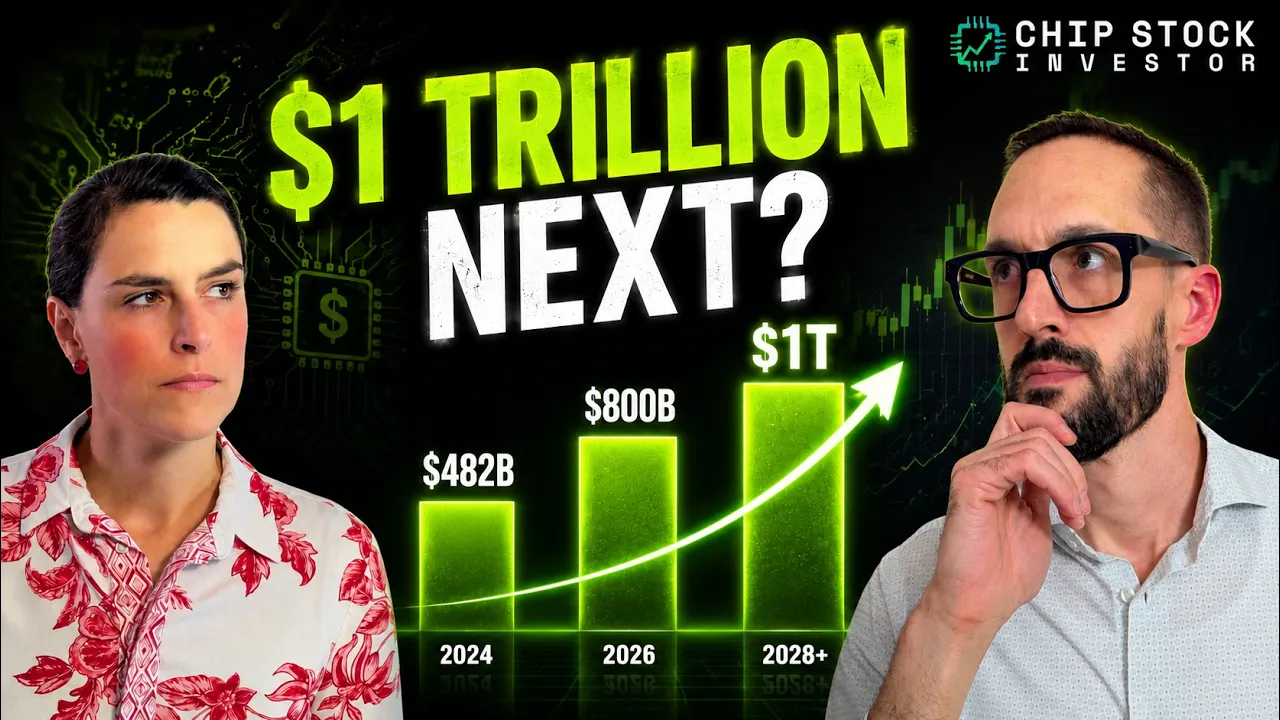
spending massive amounts of dollars, 800 billion this year. We're gonna see this number, the trailing
12-month number there in Q1 2026. It was at 482 billion. We're gonna see that probably go to
800 billion by Q4 of this year, over the next three quarters, and then
the expectation is it probably sails through a trillion dollars next year. At this particular point,
that's the expectation. This is, as Warren Buffett famously
gets quoted as saying, "A rising tide floats all boats." This is the rising
tide, these capital expenditures. And what's crazy about this, some of these
talks about rotation out of tech stocks, out of hardware happening the first week
of July, this is actually the rotation, and there's gonna be bumps in the road. But after 15 years of big tech
dominance, of very fast and steady growth, accumulating massive amounts
of wealth, having massive amounts of money flow through their ecosystems,
there you can see the free cash flow, that money is now getting redistributed
via the CapEx to the semiconductor companies and to manufacturing companies,
in various areas of the economy. Not just semiconductors, but also the
power grid, the electric grid, and energy generation, construction, having
a pretty good field day here with this. And it's not just the free cash
flow that they have to burn. Look at the cash and cash
equivalents on balance. They can basically fund this crazy
amount of capital expenditure via their cash on balance and their free cash
flow generation for probably a couple of years before they ran out and then
had to start making hard decisions. Not everybody's in the same boat. Obviously, Oracle raising debt,
they're not nearly as big. But this is the actual rotation. This is the actual tide that's
lifting all of this, and so this is the primary macro indicator. Everything else really is
some variation of noise. Some of it may be slightly
relevant, others not so much. And so, the stock volatility kind
of just goes with the territory. This is also why we say part of a
diversified tech portfolio should include semiconductor companies, but also the
actual end market companies as well. Not just software, but also companies
that include software and infrastructure and other services like the hyperscalers. They have advertising
businesses, media businesses, infrastructure, they have devices. They have all sorts of stuff going on. When they decide they've
collectively spent enough on the infrastructure, what's going to happen? The tide's gonna change. That will be the actual rotation. If they stop spending CapEx, what
happens to their free cash flow? It goes back up. And probably to crazy new all-time
high levels because they're picking up lots of new revenue along the way. So when they turn off the CapEx, if
their free cash flow margin rebounds back to 30%-plus like they were reporting a
couple years ago, you're getting a 30% free cash flow margin on a much, much
larger revenue base than in the past. Just kinda going back full circle again,
this is one way to be fully diversified. I know the hyperscalers and Nvidia
have not been super fun to be invested in the last 9, 10 months. But if you're worried about the rotation
out of semiconductors, especially the hottest semiconductor stocks, this
is one way you can be diversified.

Comments 0
Sign in to join the discussion.
Sign inNo comments yet. Be the first to share your thoughts!