I was loading up and I bought a large stake in the company.
Context
Google is a cash cow with one of the best businesses in the history of the world... Well, somewhat large relative for me. But since then, the stock price has gone up quite a bit around 105% from there.
I am really not a fan at the current price, which is Intel.
Context
I'm going to talk about two different examples here. They both kind of relate to the AI buildout, I guess. We have Intel, ticker symbol INTC...
Context
And then the last two examples I'm going to talk about of companies reporting earnings this week, Verizon, another high yield dividend stock similar to AT&T...
Full Transcript
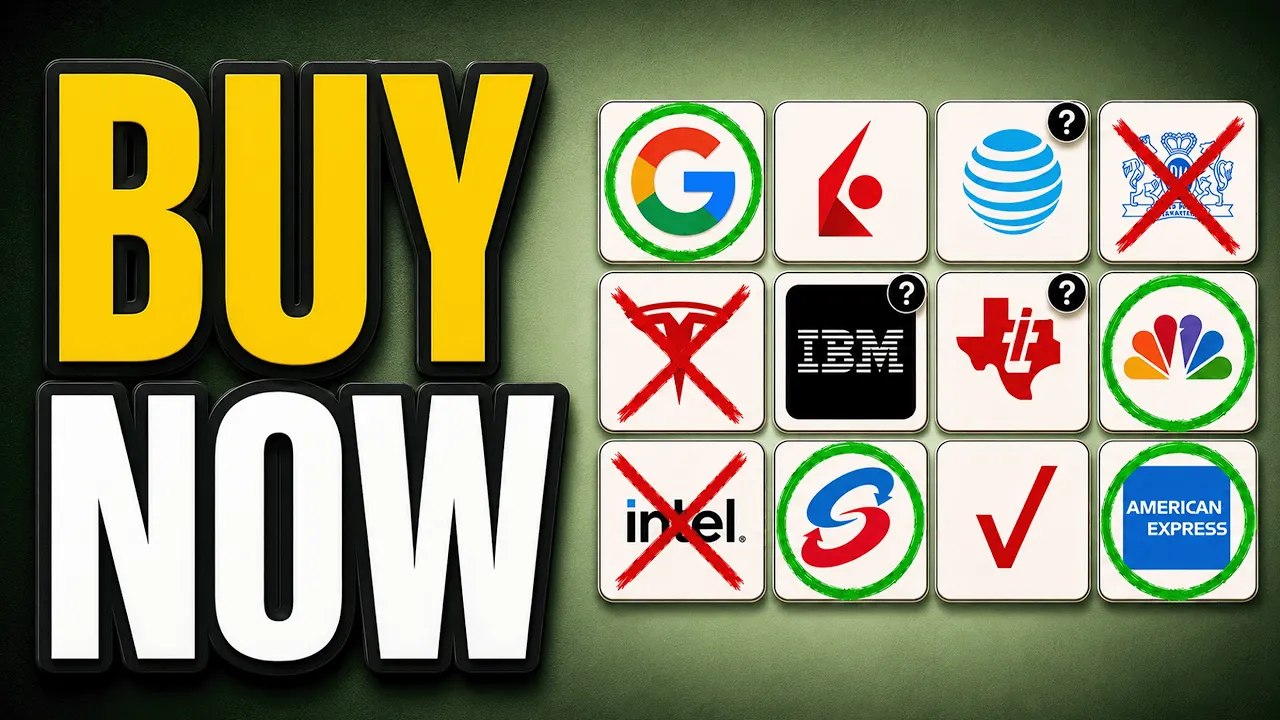
Earning season is starting to ramp up again. This week we're off to a bang with top tech giants like Google reporting on Tuesday. This matters a ton for the broader market as it's the latest report from a top AI spender in the data center buildout. Google is a cash cow with one of the best businesses in the history of the world. 174 billion of operating cash flow over the trailing 12 months. And they have been piling this cash flow into data center construction. Over the trailing 12 months, they have $19 billion of capital expenditures and it was $ 35 billion in the latest quarter with guidance expected to continue to grow. So, we're going to be seeing if top AI companies like Google continue to have fantastic financial results that leads them to want to continue spending. But big picture, earning season matters a lot as an investor. Ultimately, it's the earnings of these businesses which actually power the long-term growth. In the long run, the valuation of a company will reflect the earning power of the fundamental business. So, how do I plan to win this earning season? Well, I'm going to be following the fundamentals of all the top companies on my watch list and of course companies I actually own in my portfolio as well. But a big part is also what I'm not going to do. I'm not going to make rash decisions based on whether a company beats or misses their earnings. I'm not going to try and trade the earnings news. I'm going to be patient and focused on the long-term fundamentals of all of these companies. I'm going to keep laser focused on investing in highquality business that continue to grow year after year. And Alphabet will be an example of that. So, in today's video, I'm going to cover all of the top stocks I'm watching for earnings this week. That includes names you may know like Domino's Pizza, Interactive Brokers, United Rentals, AT&T, Philip Morris, Next Era Energy, Tesla, IBM, Texas Instruments, Service Now, Comcast, United Pacific, Loheed Martin, Intel, Fix, American Express, and these are just some of the companies on my watch list. Now, if you want to follow along and use the exact same earnings calendar that I have, this is a new feature on the next generation version of dividend data.com. The tool just launched. I talked about that in my portfolio update video, which I recorded yesterday. The link is in the description and pinned comment. On these earnings calendar, you can get a view of all the companies. You can also filter it by stocks on your watch list and in your actual portfolio. And with that said, let's roll the intro and get into today's stock analysis video. >> [music] [music] >> The following reflects the opinions of of a man who spends far too much time thinking about stocks. Please do your own research before making any investment decisions. Nothing in this video is personal financial advice. Continue at your own risk. >> My name is Zach. This is Dividend Data. You should leave a like and subscribe to the channel if you enjoy the video. And let's jump right into it. I'll briefly cover that Domino's was reporting this week, but that happened this morning. So, we already had results here. So, let's focus more on some of the upcoming ones starting with Google. So you can see that in their Q1 they beat on both earnings per share and revenue. They had a huge EPS beat. That was an outlier though to the upside. I'm pretty sure they had some investment gains that ended up boosting their EPS in the quarter. Their actual cash flow growth was more modest at that time. And revenue-wise they beat by 2.73%. But that was a quarter they crushed it in. Overall, Google has been firing on all cylinders. Google Cloud Growth, that's their second largest business segment and has become a good profit generator too for the company. At the end of this fiscal year, their revenue is up 36% year-over-year, and Google Search is growing double digits as well. And as we look big picture, Google is expected to continue growing at a solid rate. Expectations among analysts is that Google will grow their earnings per share in the double digits pretty much every single year on a compounded annual basis. Expectations are by 2030, their annual earnings per share will be $24.26. And at today's stock price, that would be a 4p of 14.6. So today the company is trading at a 2030 P ratio of 14. And if you assume a 24.7 target P ratio, that would mean Google would have an estimated stock price of $599 by 2030. That's up another 70% from here or 12.6% annually. And overall, I would say Google is trading at a fair value right now. Now during 2025, there were periods where Google stock was super cheap. I was loading up and I bought a large stake in the company. Well, somewhat large relative for me. But since then, the stock price has gone up quite a bit around 105% from there. But this is a growing company, hitting all-time highs as well. So, the fundamentals are improving along with the stock price. But over the past few months, the price has been outpacing the fundamental growth a little bit at Google. So, I would say they're around fair value at the moment. If you're wondering, this is our value graph tool on the new dividend.com. It's available to pro members. And if you want to sign up and become a pro member, there is a 50% off sale for founding members. You can lock in that discounted price for life. So the link is in the description and pinned comment. Other companies reporting we have Interactive Brokers. I actually have this company on my watch list and it's pretty interesting. I know some of you in the audience own it as well. I haven't done a deep dive on the company, but they have been crushing it. Over the past 5 years, the stock price is up 487%. That's a 42% compound annual growth rate. And the company does pay a small dividend as well. So that makes their total return 504%. That's a 43% kegger. Interactive Brokers, it's a free cash flow machine. 16.76 billion over the trailing 12 months. It's up 75% year-over-year in free cash flow. Another company you should take a look at is AT&T. If you've been following me for a long time, you know this was one of my original dividend stocks I was buying. However, you'd also know that I made some mistakes around AT&T in the past. And if we take a look at the company's dividend, you can see that mistake right here. They had a dividend cut. They had a 46% dividend decrease. Now, the current dividend yield for AT&T is 5.06% which is still pretty attractive. And some income focused investors, they do like the company for its reliable consistent payments. And the payout ratio is much safer than it has been in the past at around 37% on earnings and a 42% free cash flow payout ratio. However, the problem with AT&T has been an utter lack of growth. As you can see, over the long term with their stock price, it has gone nowhere for decades. And that's because if we go and look at the earnings, again, earnings matter. Over the long term, they're not compounding. there is no long-term growth. So, that is ultimately why I exited my AT&T position back in the day. However, with that said, dividends are an underrated part of investing. People forget about it. So, despite AT&T stock price going nowhere for a large chunk of time, the total return if you owned the company and you reinvested dividends over the years, it's actually done far better than that stock price chart would let you believe. Going back to 1985, the company has nearly a 7,000% total return. That's a 10.79% compound annual growth rate. By comparison in stock price alone, it was a 393% return based on price. That's a 3.9% kegger, which is terrible. So that shows how much dividends can matter. And how are these dividends paid from a company's earnings? You see, it's all connected here. So even if a company like AT&T, they're not growing, they have remained highly profitable all these years and they've been able to return that to shareholders. Over the past 5 years, AT&T has a total return of 40.65%. That's a 7% kegger. And coming from 2024, it did quite well in that time. All right, going back to the earnings calendar, we have Philip Morris. This is another popular dividend stock. Now, historically, I've been a buyer more of Altria. That's ticker symbol M O, which is Philip Morris USA. This is Philip Morris International and PM stock. It trades at a much more rich valuation relative to Altria. And the stock price has done pretty well over the past 5 years. It's up 102%. That's a 15% keger. Total return 156%. That's a 20% keer. But I would say this is an example of a company where the stock price growth has been outpacing the growth of the fundamentals. And historically over the past 5 years, the median multiple that Philip Morris has trade at is 18.5, which I think makes sense for a slower growth company. At today's earnings per share, that would imply a share price of $131. So the company is trading above fair value right now, and it really has been for most of the past year. However, you can see historically there was a lot of opportunity to accumulate Philip Morris at an attractive price, especially in that 2020 to 2024 period. The current dividend yield for Philip Morris, it's 3.06. 06%. And this payout has been slowly growing over time, a 5-year keer of 4.14%. And if we analyze the company based on its dividend yield, and you're trying to optimize your buy price to get a higher dividend yield on the stock, over the past 5 years, we're in one of the lowest percentiles. So, it's the most expensive it's been over the past 5 years. And again, as I was mentioning earlier, there was a period of time you could have bought this stock at a 5 to 6% dividend yield. And now we're in that 3% range. Next up, Wednesday after market close, we have Tesla, ticker symbol TSLA. This is a company that I own in my growth portfolio. I've had this for a long time going back to 2016. This is another example of a company. I think it's trading at a rich valuation at the moment. $1.4 trillion market cap. And with Tesla, we've actually seen an earnings decline since they peaked in fiscal 2023. And the company is trading at a very rich multiple. And part of that's because they have so much growth ahead in their various business segments, whether it's self-driving or with their Optimus robots, but a lot of that it's out in the future. So, you can see analyst estimates, they're projecting earnings per share to be much higher in 2029 and 2030, but it's going to be a bumpy road along the way. So, I personally, I wouldn't be a buyer of Tesla at this current valuation. But as you can tell, this company has a very volatile stock price, and I think that creates opportunities. So, here you can see our value graph and how the fundamentals and growth have actually been reversing over at Tesla in recent years. As an example, back in early 2023, I bought a big chunk of Tesla in my Roth IRA. Got a good 100% gain or so in a couple years, sold that, put into a different stock. So Tesla's one I would be monitoring the situation, making sure they're on a good long-term business plan, but at today's price, I don't think it's that attractive. Other companies reporting Wednesday after close, that's IBM, and they have a very interesting story in that they basically last week, they kind of had a report that they're going to have some misses on earnings. And the stock actually dropped like 25% in a single day, which is crazy. So we're from that depressed phase. But over the past 5 years, IBM has actually been a pretty strong performer in the market. And this is a dividend payer too. So if we look at total return, 5 years, 95.88% total return, 14.3% keer. But the dividend growth has been much slower over here at IBM. I'm personally not that interested in IBM. Perhaps I need to do a deeper dive on the company, but I think there's a lot of other opportunities in this market. And another kind of legacy big tech company. This is a semiconductor company, Texas Instruments. I own this briefly. They report Wednesday aftermarket close. But this is kind of another weird one where I'm not a fan at the current price. And I'll tease something. There's another stock coming up where I am really not a fan at the current price, which is Intel. While we're on the semiconductor wave here, though, Texas Instruments, their stock price performance, it actually hasn't even been that good over the past 5 years. I guess it's fine. 53% 8.8% KGER. This has been a dividend stock though, so the total return boosts that up a bit. And historically, the reason why I own this company is because they have a rock solid market position and they were a dividend growth machine for years. They were having 10% plus annual dividend growth. But that has slowed down a lot to 4% keer over the past 3 years. But a bigger problem is actually in the fundamentals of the business. Texas Instruments, their stock price is trading higher than ever, but the actual business is not doing better than ever. They're actually doing much worse over the past few years based on free cash flow. Their payout ratio is skyhigh. This is three years in a row of paying dividends far in excess of their free cash flow. In 2025, 192%, in 2023, it's 337%. And even based on earnings per share, it's 100% of their EPS. Now, the bright side if you're investing Texas Instruments is that capex curve is starting to come down for them. So perhaps the fundamentals will be improving in a year or two. So again, Texas Instruments in my opinion, it's a very expensive stock at today's price. But hey, not everything is expensive right now. In software, we have the software selloff right here. You can see now that's service now. They've sold off a ton. It's a pretty interesting stock. Maybe I'll do a stock review on it. But to focus on dividend stocks here, we'll talk about Comcast, ticker symbol CMCSA. They have been beaten down like crazy. Over the past 5 years, Comcast stock is down 58.15%. That's a 15.99% keer. But what's interesting is the actual fundamentals of the business have not declined nearly at that rate. They're just trading at a much lower multiple. So, if we take a look at the earnings for Comcast, over the long term, they've had pretty significant growth. They're only down a little bit from their all-time high. And over the past 5 years, they've grown earnings per share at a compound annual growth rate of 8.5%. In terms of the dividend, this is a sneaky dividend growth stock that is now trading at an attractive dividend yield, 5.53%. In terms of payout ratio, it's a 22% free cash flow payout ratio and 24% net income payout ratio. So, it's very safe. And I was giving examples of companies that are overvalued. Comcast is actually trading historically cheap right now. In terms of its dividend yield, it's trading near its all-time high in dividend yield right now. It's in the 98th percentile over the past 5 years. And over the past 10 years, it's in the 99th percentile. This is a company that used to trade at a 1 and a half to 3% dividend yield. And now they're nearly at 6%. So, if you're someone who thinks Comcast will be around, it is certainly trading cheaper than ever has. In fact, if we do a dividend discount model valuation on the company, this is in our intrinsic value tool. It's a part of the pro plan in dividend data.com. And again, you can lock in 50% off annual membership to that pro plan. That's a part of our founders deal. The link is in the description and pin comment. So, this dividend discount model tool, it prefills with the dividend information of Comcast. So, we take the current forward yield. We assume a 7% 5-year compound annual growth rate. It'll be the dividend growth rate moving forward. And if we just want a 10% annual return and we project this forward, Comcast based on its dividend, the intrinsic value is $35.86. The current stock price $23.90. So that implies 50% upside from here. And this is a very conservative method of valuing a company where it's based on the present value of all the future dividends the company will pay you. So Comcast is an interesting one to watch. We have other top dividend stocks like Loheed Martin reporting, Union Pacific, that's a top railroad, good dividend growth stock. I'm not going to dive into all of these because this video would take forever. We got Honeywell, AM stock, a lot of people like that one, too. NASDAQ, honestly, Thursday, there's a ton of dividend stocks that are reporting. SNAP, RO, but I'm going to go back to the after close. I'm going to talk about two different examples here. They both kind of relate to the AI buildout, I guess. We have Intel, ticker symbol INTC, and Fix, which I identified a while ago and has been a fantastic performer, and I should have bought it a couple years ago. I don't know why I didn't. Hopefully, some of you watched the videos and ended up buying it. So, let's start with Intel. Now, Intel, over the past 3 years, the stock price is up 322%. And does that make any sense? No, it does not. You're right. The company is now valued just under $500 billion, which is historically the highest valuation ever in the history of Intel. So you might say, "Oh, maybe things are actually doing well in the fundamentals of the company." And you would not be correct. I want to preface that technology-wise there's a lot of things going better at Intel and they're starting to make more deals and it is a frothy environment and they are a fab and they do have some leverage in the space with the fabs they have constructed and new ones in development. But financially speaking, Intel's not doing good right now. Yet, they're trading at the highest price ever. So, if we just take a look at the recent earnings per share performance, they peaked in 2020 and have been on a decline in earnings per share. And they were deeply negative in 2024. And they basically came out flat again, as in they're not making money as of fiscal 2025. And they're starting to now recover. Their fullear estimates for 2026 is a $19 per share, which means they would be trading at a P ratio of 90. And if they can continue growing, and they won't until 2030 exceed their high of 2020 earnings. If they grow that much, then their 2030P ratio looks somewhat reasonable at 16.7. And no matter what way you look at Intel right now, it looks expensive. If we take a look at their operating cash flow, the company has been making less money than ever. They're trailing 12 months. It's as low as it was in 2009. So, their cash flow, it's not good right now. Their capital expenditures, they have been spending more money than ever. Now, it did peak in 2023, 2024, but they still have very high capex, $13 billion over the trailing 12 months, but they definitely are starting to go down from that peak. So, if we take a look at the free cash flow for Intel stock, negative $3 billion over the trailing 12 months. So, yes, their EPS got back to where they're only kind of losing money, but their free cash flow deeply negative and it has been since 2022. And this isn't like the data center buildout where at least the capex is there, but the revenue growth is there and you're seeing all the actual progress. Intel has been piling in all of this capex and nothing has been happening in terms of actual positive financial performance because of it. The revenue has gone down in that time. Now, this isn't a full Intel stock review video. There's interesting things we could talk about whether it's like possible increases in CPU demand and servers relating to AI agents, but even there there's competition in that space. Other interesting things, Intel's kind of partnering with Tesla and SpaceX and the Terrafab buildout, which will be cool for US manufacturing of semiconductors, but that's a long-term project, and it's really unknown how Intel is going to benefit from that. So, the other example I mentioned here was Fix, ticker symbol FIX, and this is a company that has gone up even more than Intel has, but actually deserves it. Over the past five years, if we take a look at fix stock price has gone up 2,184%, compound annual growth rate of 86.97%. And why has that happened? Well, their earnings per share has been growing rapidly and it's expected to continue growing at a high rate. Over the past 5 years, their EPS has grown at 768%. That's 57% annually. And this is really such a crazy chart right here. and fixed. They are a dividend payer as well, albeit it's a very low yield, 0.19%, but it's a super low payout ratio, sub 10%. But I bring this up really just to talk about the dividend growth. 5-year keer, 47%, they increase the dividend every single payout pretty much. And these are 15% increases every single payout. And Fix, they're Comfort Systems USA. They are primarily an HVAC company, and they work in a lot of commercial applications. And a big growth driver for them has been the data center buildout. And I like this as an example as you can see how interconnected the whole economy is. This company, they're benefiting from all the AI spending happening right now, but the business necessarily didn't have anything tech to do with it. So, I think it's an interesting company. You should probably add it to your watch list. And then the last two examples I'm going to talk about of companies reporting earnings this week, Verizon, another high yield dividend stock similar to AT&T, although they did not have any dividend cut. They're in the same telecom industry and it's the same thing of they don't have a lot of fundamental growth long term. So their stock price performance for decades has not been that great but they have been a cash flow generating business that continues to pay out high dividends as well. So their total return over the long term is much better than their stock price appreciation. They've grown an 8.84% compound annual growth rate in terms of total return. That's since 1985. and the company has been paying reliable dividends, growing 2% compound annual growth rate pretty much a year. So, I'm personally not buying Verizon stock, but if you're someone who, you know, you just want some reliable dividend income and you're closer to retirement, not focused on growth, Verizon could be a good addition. And then the final stock we're going to talk about is American Express, one of Warren Buffett's favorite companies. This has been a great compounder in the stock market. It's been a dividend growth machine over the long term. 10-year compound annual growth rate of the dividend has been 12.6%. And based on dividend yield right now, it's around fair value. It's not trading historically high. In terms of historical earnings per share, it's a little rich right now. But analysts are projecting continued earnings per share growth double digit for American Express. Overall, I would say it's trading at fair value. So, I hope you enjoyed this earnings week coverage, all of the different companies I'm watching as we go into the week. And if you want to use the earnings calendar tool on dividend.com, link in the description and pin comment, you can try it for free. And if you want to get the full pro version with all of our tools, you can get 50% off annual membership. And that's to celebrate the relaunch of this tool. I spent the past 3 months slaving away building the next generation version of dividendata.com and it's here. I launched it yesterday. With that said, thanks for watching and I'll see you in the next

Comments 0
Sign in to join the discussion.
Sign inNo comments yet. Be the first to share your thoughts!