Context
So I had to sell my stocks which included selling my Berchshire Hathaway, my Dagio and my Amazon.com.
Full Transcript
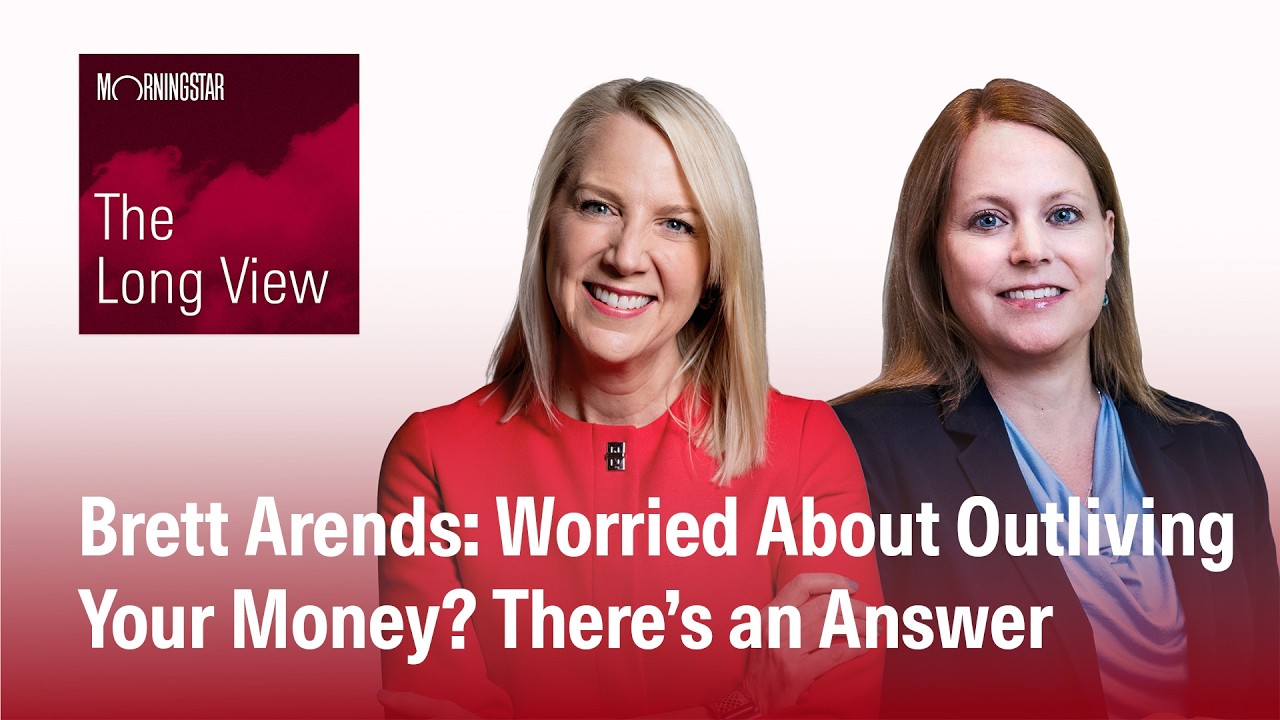
Please stay tuned for important disclosure information at the conclusion of this episode. Hi and welcome to the long view. I'm Christine Benz, director [music] of personal finance and retirement planning for Morning Star. And I'm Amy Arna, portfolio strategist for Morning Star. Our guest on the podcast today is Brett Arens. Brett has been a columnist for Market Watch, [music] the Wall Street Journal, and other Dow Jones publications since 2007. His regular column for Market Watch [music] is called ROI, and he has also written for Smart Money, The Street.com, and the Boston Herald. In addition, Brett has written several books, including Stormroof Your Money: [music] Weather Any Economy: Rebuild Your Portfolio, Protect Your Future. Brett took a double first in history at Cambridge University and did post-graduate research at Oxford University. [music] He's also a chartered financial consultant. Brett, welcome to the Long View. >> Great to be here. >> Well, it's great to have you here. Uh, we wanted to start with just a little bit about your biography. I think I always operated with the assumption that you're British, but you're actually born in the US. Can you talk about your early life and also how you got interested in financial journalism? Sure. Uh, I was actually born in Pikipsy, New York. Given my accent, people find that hard to believe, but you know, back in the days when I was on Twitter, I'd occasionally get angry people telling me to go back where I came from, and I'd say, "Why would you want me to go back to Pikipsy?" And every sort of silence. [laughter] So, I was born in Pikipsy back in the days when it was a booming uh IBM town. Family stuff meant that I moved to England when I was just about to turn nine, I think it was. And I was in England for about 25 years actually. I mean I came back a lot. So it wasn't like I was over there exclusively but I was mainly based in the UK particularly for high school and college and then the early days of my professional career. And then in 2004 I came home to the US. It's funny how you know you sort of explain why did it happen like that and just life that's the way it happened. So, but it was funny because I was um I was at the time a huge fan of the Boston Red Sox baseball team and I came back and joined the Boston Herald just in time for them to end the Curse of the Bambino and win the World Series. It was quite extraordinary to be actually in in a bar in South Boston during the uh famous 2004 playoff series against the Yankees. Anyway, so uh how did I get into this? It's sort of a a kind of a convoluted way. I always wanted to be a journalist, but I uh I read history of all things at university. In the UK, you don't just sort of major in something, you just do one subject. So, I really in both undergraduate and grad school, I just did history. And then I talked my way into a job at Mckenzian Company for which I had [laughter] no qualifications whatsoever apart from a willingness to learn and I guess a certain degree of native wit. But anyway, um, I got hired as if I had an MBA, even though at the time I was just doing a history doctoral program. They were hiring, they were looking for nontraditional hires. So anyway, I got into Mckenzie. And the thing is, when you if you're not interested in something, it usually means you don't know much about it. Almost anything can be interesting once you learn about it. And the immersion I had in business and finance and economics was so intense that I got absolutely fascinated by it. And then I walked from there onto a job initially well Fleet Street. I was initially on the Daily Telegraph uh business and finance pages. And then I moved to the Daily Mail um business and finance pages. I'm probably the only person in history to have worked for Mckenzian Company and the Daily Mail. Um, so that was kind of interesting. But what was great about the Daily Mail was that our finance pages were all about stock tipping. It was like a it was like a racing sheet. We were all about company news, stock tips, going to this was in the late 90s, going to press actual press conferences, meeting tiny, you know, small companies traded on the London Stock Exchange and writing them up and working out whether the shares, you know, were a buy or sell. It was like kind of like writing for the racing post. It was it was very very entertaining and uh you learn a lot and what's fascin it's it's halfearly not quarterly and um you know you track over time you you sort of learn that some people say they're going to do X and it doesn't happen other people say they're going to do X and it does happen and so forth and um so that was really a a deep immersion in business and finance economics, the Mackenzie background and then the the real world experience of writing about company news for actually I was there for six years and then uh I came back and I was at the Herald and then Jim Kramer poached me at the street.com and then the Wall Street Journal poached me and I've been at Dow Jones ever since Wall Street Journal then I was smart money and market watch. So you've been writing about money and markets for many years. Did you start investing on your own right away or did it take a while to kind of, you know, bridge the gap between having a theoretical interest in writing about money versus a more practical application? >> I I did start I did start straight away. It is very difficult. The problem is it's very difficult doing what we do um or doing what I do writing about markets. It's very difficult to invest. You have to make absolutely certain not only that you don't um end up in any kind of conflict of interest but you don't end up in any situation where you can be accused of uh a conflict of interest even unfairly. It's like Caesar's wife. You have to be beyond reproach. When I started out, we were actually encouraged to buy and sell shares, but of course, we couldn't own anything. We couldn't write about anything we owned, and we had to be very careful not to trade within days of any article appearing about it, either by whether you'd written or somebody else. But we were encouraged, and actually, I learned a lot. I I can tell I could always tell when I read financial news articles whether the the journalist has had experience directly investing or not and it sort of comes through and I and I understand since those days the rules have become uh much tighter and I just own funds and most people I think just own funds and there's a lot of re good things about that but there's something lost as well which is that I think we end up with a whole generation of financial journalists who do not have direct experience of owning stocks, buying and selling, you know, and when you do that, you learn that you can do everything right and still lose money. You can do everything wrong and still end up making money. I mean, it's quite interesting. In my early days, I was very fortunate because I had some technology stocks and they went absolutely to the moon in the dotcom bubble. And I thought this is crazy. And so I sold them not at the top but near. And then as it happens, this was kind of an interesting experience. In early 2000, it was the peak of the dot bubble. It was absolutely insane. I thought I'd never see anything crazy as crazy again. Uh I was wrong. But for the first couple of months of 2000, the dotcom bubble, the technology bubble was so insane that fund managers just dumped all the stocks that weren't technology stocks. So anything that was what was called the old economy was just thrown overboard. And I remember going up to my editor in the end of January 2000 and I said, I got to do a column about these tobacco stocks and these pub companies and these all these retailers. I said, "They're on price earnings ratios of five. They've got dividend yields of 10%." I said, "This is crazy." And he said, "No, no, you're wrong. They're going to keep falling." I said, "Well, how do they keep falling? They're already down to a PE of five." So, he said, "Oh, you're wrong." So, he wouldn't let me write. I was I was quite junior then and and Britain is very hierarchal, so I wasn't allowed to write anything. So, anyway, I had some vacation coming up and I went away to Antigga of all of all places. And I remember my first day in Andrea calling up internationally, which was not easy back then, calling up my bank. I bought my stocks and shares through my bank at the time and buying a whole bunch of pub companies and tobacco stocks in February 2000 and the wheel turned a month later. I wish I could say I timed it perfectly and I wish I could say I sold all my technology stocks. Neither is correct, but it was just very interesting. It was an interesting experience to me because what I find most fascinating is the psychology of the markets. Now, having studied history, modern history, one of the recurring themes of of history is popular delusions and the madness of crowds, which is the name of a famous book written in the Victorian era about the South Sea bubble. the persistence of mass delusions, mass hypnosis, people go through manus, social contagion, people, you know, whole crowds become convinced of one thing, then they become convinced of another. And during the com bubble, it's fascinating because I watched everybody become absolutely convinced that these companies that had no business and no business model were worth, you know, vast amounts of money. And then a couple of years later, the crowd was absolutely convinced of the opposite. People were telling me Amazon was going to go bankrupt. People were telling me Amazon I remember a a guy who worked as a venture capitalist in the US telling me in 2002 that he thought Amazon was going to end up as the e-commerce department of Barnes & Noble. And I looked at the balance sheet. And this is where the Mackenzie stuff came in because I was, you know, quite good at looking through balance sheets. And I thought, this company is got tons of money and there is absolutely no way they're going to go bust. Not only that, all their competitors have gone out of business. So I did actually buy Amazon stock in 2002. But when I moved to the street.com, Jim Kramer's outfit in 2006, we were not allowed to own stocks. So I had to sell my stocks which included selling my Berchshire Hathaway, my Dagio and my Amazon.com. Um given that I also sold my apartment in London to move to the Boston Herald, there was a period of time when I wondered if I'm if I might have been better off not working and just basically keeping my investments because for a period of time they were doing very well. So there we go. >> I wanted to ask Brett about the current environment. There's been a lot of discussion about the similarities and differences relative to that early 2000s period or late 1999 with the internet stocks. Where do you come down on that? >> Having learned a long period of time, you can never be entirely certain about anything. Uh I have to caveat that, but basically this looks just like the same bubble. It is I feel like I'm watching I don't know. It's like watching Jaws 2 or Jaws 3 or Jaws 4. It's like, you know, I've seen this movie. I saw the original. The original was much better, but basically it's the same stuff all over again. This massive buildout, this massive arms race, gigantic amounts of money being thrown into these data centers, the SpaceX IPO at a valuation that I don't even know how anyone reaches that that number. And you know, you have all the same things. You have vendor financing. We had that back in the late 90s when it was a fiber optic cable buildout. the, you know, the manufacturers of the equipment like Cisco or whoever were essentially lending the cable companies or the upcoming cable companies the money to buy their products. It was insane. It's a circular a circular loop. And there's all the mania and it's the fear of missing out. People are terrified of missing out. Oh, you know, and you you'll hear all these things. Oh, you'll um you know, you've been wrong before. You've been wrong for ages. Oh, it's going to keep going up. All the rest of it. It does until it doesn't. It keeps going until until it stops. As the old joke about the guy jumping off the Empire State Building and as he passes the 50th floor, he says, "Well, so far so good." It's like, "Well, that doesn't tell me anything." I mean, so you look at the valuations, you look at the the mania, which is very difficult to measure in practical terms, whether it's online buzz or chatter or just the way people talk. When you have sensible friends who feel that they cannot be out of the market, they cannot be out of particular investments, it's one of those sort of signs that it's become all-encompassing. And you know, I would not be remotely surprised to see this come crashing down. And I would not be remotely surprised to see at some point people go to the other extreme and insist that all the AI companies were going to go bankrupt. But I don't I mean it's fascinating to me because I I don't know how readers use AI. I find it very good as a search engine. I mean it's basically Google was always sort of dissatisfying. I'd go online and I'd search for something and I' and I had to scroll through like 50 pages before I actually found a link that gave me what I was really looking for. And now it's a much more efficient search engine. I can actually find stuff. I think it's one of Gemini an and Anthropic are the two you know I use Claude as you say are the two I use but I don't really understand what the consumer business model is that these people think they're investing in. I can understand how businesses are going to use AI in all sorts of ways and it's going to increase the efficiency of businesses and it's going to drive down a lot of costs. What that does to employment and therefore the economy is another matter. But I can see how someone would say, you know what, AI is going to increase the productivity of the economy. It's going to help, you know, companies all across America reduce costs and increase output. I could see those arguments, but I don't understand this argument that somehow these companies, AI companies are going to make trillions and all as simultaneously. I was reading there's a guy who runs a hedge fund. that I don't really know the headphone called Pritorian Capital. It's a guy called Cupperman. He's a very entertaining writer and he did some just very good, I thought, very good back of the envelope calculations on the amount of investment going in to AI and the revenue that these people had to get in order to generate a positive return on invested capital. And the assumptions are extraordinary. They're heroic. It's a you look at it and you say, I don't see how that's going to happen. Now, there was a paper put out of the National Bureau of Economic Research the other day that did this in a much more systematic way. And a friend of mine who's a German physicist found this this particular approach much more to his liking than the hedge fund manager and the blog, but came to the same conclusion which is this doesn't you have to believe all sorts of extraordinary things to think that this will produce a positive um return on investor capital. And then you have to ask yourself how much of that is already reflected in the prices of the stocks. >> So what about the argument that you know back in 1999 we had things like pets.com where they were trading at elevated valuations with you know no profitability whatsoever. You know the valuations were sort of built on nothing. But if you look at the major components of the S&P 500 like Nvidia, Apple Microsoft Amazon they [clears throat] may have steep valuations, but those companies have actually, you know, generated strong earnings and profitability. Do you think there's a valid argument that it is different this time? >> Not really. I I I wrote about that not long ago. This I think is where memories are uh we misremember the past. Actually, it's one of the things you learn in history is you have to go back to the original documents because people misremember the past. We refer to it as the dotcom bubble, but at the time it was referred to as the TMT bubble, technology, media, and telecoms. The dotcoms that we remember, pets.com, etoys.com, those were actually very small. Those were very small a very small part of the overall bubble. The you know the biggest companies were companies real companies like Microsoft and Cisco, Oracle. These companies had genuine businesses, genuine sales, genuine profits. They're around today, but they went to absolutely gigantic valuations. That was the issue. It wasn't that, you know, everybody lost their money on pets.com. People who bought stockandpetss.com of course did lose their money, but those actually when you go back and look at them, the market value of those things was very small. They were they're sort of the poster child. They're what people remember, but that wasn't actually what was going on. The real story, the real money was in particularly the cable companies, the companies making equipment Cisco uh Nortell gosh I can't remember. There were a whole bunch of them. They've now [laughter] it's a quarter of a century ago. I can't remember the name. Juniper Networks, all these companies that they I mean they had genuine businesses but they were just instead of being valued reason they were valued as if they were going to you know take over the world and and the thing is even if one company is going to take over the world they can't all take over the world. So what I find interesting is that essentially everyone is basically betting on anthropic and chat GPT and Grock and Gemini as if each one is going to end up as the next Google. Well, even if one of them does, the other three won't. >> You referenced that early as period when growth stocks, technology stocks very nicely handed it off to value and smaller cap stocks which were so beaten up during that dot boom. Do you think that this period's a little different in that there doesn't seem to be a lot of value hiding in plain sight or or what's your take on that? like are there pockets of value for investors who want to derisk and get out of some of these AI related names? >> I think that's a very good point. You know, it's not the same because back then if you weren't a large cap growth stock, you were absolutely on the scrappy. You were, you know, singledigit price earnings ratios, which essentially for a sound company is very, very cheap. I don't think you have the same opportunities today. I do take the argument that so-called value stocks are probably a better bet than growth stocks. Small cap is probably a better bet than a large cap. Uh but it's relative and I don't know of anything I don't know of anything that's like a oneway bet. I don't know of anything now that looks so easy as the non tech stocks did back in the bubble. But if we get to another blowout insanity as we did in 2000, maybe that'll happen. I mean, it's very interesting. A guy I knew in London, um, long since dead now, but a veteran money manager, he used to say, Dan Bunting, he used to say, "You'll make the most money from the worst stocks." And he'd also say, "You never want to let a bubble go to waste, and you make the most money in a bubble right at the end." So essentially, even though we're living in what I think is a mania for AI stocks and the AI trade and the tech trade, and I can't see how this is a sensible long-term investment, it's perfectly possible that from here that we're essentially in the 1998 phase, and from here it goes goes up vertically. It basically goes from a bubble to an absolute mass insanity. I mean, it's difficult because I'm much older and the world has changed and the media has changed. It's difficult to to compare directly. I remember the dotcom bubble being all pervasive, but it may be because I was in my 20s and I was more plugged into that kind of things. I remember at the time it was absolute insanity. I remember Doomsbury had a whole series of um cartoon strips about uh Mike Doomsbury becomes a dot guy. I mean, it's like it was everywhere. It was everywhere. I remember there was like half the Super Bowl ads one year were were docoms. I don't know if we are at the same stage and I don't know if we ever will be because the world is much more fragmented than it was back then. You know, we have crypto bros and then we have people who have nothing to do with crypto and so on. So, it's very difficult to measure whether we're today near the tail end of a dot type insanity or whether this boom is going to keep going and if it does whether small caps and value stocks and anything that isn't an AI stock will get thrown overboard. But at the moment, I find it hard to say there are the kind of one-way bets that existed back then 25 years ago. So, if you're an investor who owns a broad market index fund, it sounds like you think they probably are courting a fair amount of bubble risk just given the US markets concentration in stocks like y >> Nvidia and Apple. But at the same time, if you sell out of your index fund and take refuge in cash, there's also the risk that, as you mentioned, you know, the bubble keeps going for another year or longer. So, what do you think is a prudent course of action for >> an everyday investor in this type of environment? >> It's interesting. I was actually talking to somebody who was trying to invest some money just the other day, and he was looking for an equity investment. So he was taking a longer term view and he wanted to avoid SpaceX and all the rest of it. And I said well look at he actually he was based in London. I said look at an equal weighted global equity portfolio. The advantage of something like an equal weighted portfolio as opposed to the traditional fund like an S&P 500 is as the name implies an equally weighted stock portfolio has the same amount in each of the 500 or 600 stocks. Whereas the real problem for me for an ordinary investor, let's put aside anyone who wants to worry about timing the market. Let's put aside active investors and just worry about the ordinary person who may be in their 20s, 30s, 40s, even 50s and they're saving for retirement. The worry for me is that in the S&P 500 now the technology stocks, these these big AI related stocks, the tech stocks now account for the top nine. It should be 10, but Google unfortunately has two classes of stock. The top nine account for 36% of the entire S&P 500 by weight. So the issue for me isn't so much should people bet on this, but why would you place 36% of your money on this one thing? Capitalization weighted stock funds don't make much sense to me from the point of view of an investor. I understand why they're attractive to fund companies. But from the point of view of investor, if I believe in the argument behind indexing, which is that essentially each stock offers the same prospective risk return ratio, it's impossible to you don't pick stocks because each one is essentially priced to offer the same prospective return in relation to risk. Why then would I place most of my money on a handful of stocks rather than others? So if I was allocating to a portfolio today, I'd probably prefer to look in the US at midcaps or small caps, but even just midcaps than large caps because then you're again you're you're in the stock market. You're basically taking a a bet on the US stock market, but you're avoiding that massive overweight in the handful of stocks. And as I said, look, I don't know, you know, as one of the things you learn in this business is how often you can be wrong. And finance is a very hard discipline following the stock market. Predictions you make end up, you know, living egg all over your face. So, even if I admit that maybe the AI boom isn't a bubble, maybe it's going to keep going, maybe whatever, I still don't know why you'd want to place 36% of your your stock investment or stock bets on a small handful of massive uh highly expensive companies. It seems to me that you're going to get much better riskreward or sort of sounder debt just avoiding that. So either equal weighting the US, midcap, small caps and again the same on international. We actually as American investors we have a very very poor set of options when it comes to international lowcost ETFs. There used to be an equal weight non US ETF and it closed because nobody nobody had any interest in it. So you have to sort of you know find workarounds but essentially midcaps international stocks if you are want to stay with the stock market and you are not trying to time the market you know you're prepared to ride out a correction if one comes you know you're looking at the long term you think equities are the way to go longterm I've got decades to save or whatever you can still be in invested in equities the same percentage allocation to equities but my worry is the S&P 500 and it's particularly because it's now so skewed. So much of your money goes into a small number of stocks. That's what bothers me. I >> wanted to ask Brett about private securities, whether equity or credit. We've been hearing so much buzz about them and the Department of Labor a couple of months ago came out with a proposal that would make it easier for 401k investors to access those types of investments. What's your take on the appropriateness of private securities for smaller investors? >> I think these are a bad deal. I wouldn't own these barring exceptional circumstances. I can't think of a good reason why they would be in 401ks unless the people who run them and make huge fees from them want to essentially get more money into their funds, which I understand, but that doesn't benefit the investor. Look, there's been all sorts of analyses of private equity and of hedge funds, and they have come out arguing that their supposed superior benefits are grossly misstated. There are a number of reasons why they appear much better than they are. Essentially during the 80s and the '9s and the 2000s they bought small company stocks with leverage and interest rates collapsed from 15% down to what were they at the bottom 2%. So essentially you took a mortgage on small company stocks that certainly in the early 80s were very very cheap and so that really flattered the performance. You could have basically taken out a mortgage yourself and bought small cap stocks and done just as well. The most if all of the benefit accrews to the managers of these funds. They make gigantic amounts of money. And what I find is astonishing is not only do they make gigantic amounts of money, but they get a special favorable tax treatment through something called the carried interest loophole, which I sometimes call the two Ferrari tax break. I mean it is absolutely you look at it and you think of all the industries of all the people to get a special tax break to give it to private equity venture capital and hedge fund managers makes no sense whatsoever. Warren Buffett famously, I think it what was it 15 years ago, he offered a bet. He said, "I will let I offered a million-dollar bet. Someone can pick their five favorite hedge funds, and I'll bet on the S&P 500, the market index, which at the time was not 36% in a small number of companies, and I bet you I will outperform over 10 years." And somebody took the bet, and they lost. Warren Buffett won as he usually does. Essentially, when you have these high fees, it becomes an almost impossible hurdle for managers to overcome to produce superior returns. I remember years ago, I did the math on this. I was actually at a hedge fund conference in Las Vegas and I just sat down and I realized that the hedge fund managers had a bigger take. They pocketed a bigger share of the investment returns than the Bellagio did of the money people were betting at the tables. I thought this is crazy. It's essentially, you know, it's almost impossible for yeah for investors in these things to overcome the costs of the fees. There is another issue with a lot of these funds, private equity in particular, is they give an illusion of stability and and low correlation that isn't real. And the reason they give an illusion is because on the stock market your shares are priced every second of every day that the market is open. So you know the index will be at a different place than it was you know an hour ago or 10 minutes ago. Every share price moves and so you can mark to market. You can look at your valuation in real time. Private equity ventures privately held assets simply just don't update their values that often. They essentially do it every quarter. So during the entire quarter, you give the illusion that the price hasn't moved, but actually you couldn't sell it at that price. It's just that's just a a bookkeeping illusion that's got nothing to do with the fundamental reality. So these things are a way of making lots of fees. They're great for the managers. Uh I do sometimes wonder why I didn't go into hedge fund management. I know some people who did and they made it rich. I have no idea how well their investors did. I suspect that the impact on the customers of the businesses they bought was probably not positive. But overall, I would see no good reason to own these in a 401k unless, as I said, unless you had a specific situation. For example, uh Bill Aman is a hedge fund manager, runs something called Persing Square. About 8 years ago, maybe yeah, about eight years ago, I was working for Baronss at the time, another one of our stable publications in the Dow Jones stable and Aman Hedge Fund actually had a closedend fund vehicle traded in Europe. A closed end fund is essentially, how do I describe it? It's a regulated mutual fund that trades like a stock. And the beauty about closed end funds is that sometimes the stock price falls a long way below the underlying value of the assets because the investors don't want it or whatever and so you can end up you know paying 50 cents on the dollar for anyway and at the time and I got Aman actually called me back at the time Aman had had a very bad run and his closed end fund was trading at 50 cents on the dollar. So the the fund had come down, the fund's assets had come down because it had performed badly, but the stock price had absolutely collapsed. And it looked to me like not quite a one-way bet, but it looked to me like for this to be a bad investment, you had to believe that this guy who had previously been a very, very, very successful investment manager had turned into a total you had to you had to be so um gloomy and bearish about his abilities to manage investments to make that look like a bad bet. So if someone offered me a private equity fund or a closedend fund that performed reasonably well and I was able to buy a closed end version of 50 cents on the dollar, yeah, I might look at it, but that's not what's being talked about here. This is essentially a Wall Street racket. I would give it the widest of births. >> So, you've also written about inflation and we're taping this toward the end of June with the most recent inflation number of 4.2%. You've written that you think inflation could actually get worse and that tips or Treasury inflation protected securities look incredibly attractive today. Can you talk a bit more about that? Why you think tips are attractive now? Sure. This is uh one of my favorite topics and readers I think suspect find it very boring and it's interesting why people will ask me why they would invest in TIPS. TIPS are Treasury uh United States Treasury bonds like the regular Treasury bonds that we'll you know follow on you know the 10 year or whatever but the value is adjusted to reflect changes in the CPI. They found somehow the world's most complicated mechanism to do it. And even people who are experts admit that they find the mechanics um overly complicated. However, essentially all you need to know is that tips promise to pay you inflation the inflation rate plus or minus depending on the price of the tip at the time plus or minus a certain amount. What I like about TIPS is that essentially your return can be measured in real purchasing power dollars. To me, TIPS are the real risk-free rate. There's no point telling me, well, you know, treasuries are going to pay you 4% a year for the next 10 years because I don't know what inflation's going to be. If inflation turns out to be 5% a year, the 4% I' I've lost money. So, the 4% I don't know what that 4% is going to mean to my purchasing power. I don't know in real terms whether I'll be able to buy more groceries and you know rent a bigger place or fewer groceries and rent a smaller place and so on until I know what the inflation rate is. Whereas with tips you know you say well okay so there's a 10-year TIPS bond and it's paying actually I think at the moment there's been quite a big move in the last couple of days in the markets but I think at the moment it's significantly over 2% real as they say which means a real return inflation adjusted return. Let's say you buy a TIPS bond with a 2% real return. What that means is that no matter what happens to inflation over the next 10 years, assuming Uncle Sam doesn't default. No matter what happens to inflation over the next 10 years, you will get that inflation rate plus 2% a year over that period. So you can work out exactly how what will happen to your purchasing power, exactly what real inflation adjusted return you will get, what return you will get in real money. And so to me, the interesting question isn't why would you buy TIPS, it's why would you buy so-called nominals? Why would you buy regular treasuries? Now, if the uh regular treasuries, if there was a big discount in the price, then I might buy the regular treasuries. I might say, well, the market is now expecting, you know, 8% inflation a year for the next 10 years. That looks crazy to me. I would buy the nominals. But to me, the default purchase is our inflationadjusted inflation protected bonds, not for technical reasons, but for ordinary real main street people. It's like you're saving so that you will have money to spend to meet your needs and wants over the years to come. You don't know what will happen to the price level over that period of time, assuming the United States government does not default on its debt. TIPS bonds are the only thing that will tell you exactly what you're going to get over that period of time. So, I find it quite interesting. Um, it may be one reason why I think TIPS are both neglected and usually underpriced compared to regular bonds because there seems to be people just don't seem to be interested in them. They don't seem to understand them. And I just to me it's it's as I said I think this is the default risk-free asset because essentially I'm not taking any inflation risk and if I assume for the sake of argument that the United States government is not going to default on his debt then I know how much I can earn in real money without taking any risk over the next 5 10 15 20 25 years. So to me, tips are sort of where you'd start. And I I'm much more reluctant to buy uh nominal or traditional Treasury bonds than I would be to buy TIPS bonds. As it happens, at the moment, these real yields on TIPS bonds are very high by historic standards. Or to put it another way, the the bonds themselves are very cheap. you can actually now get uh 2% real return per year even at the short end even over bonds you own for three or five years and if you go out if you buy very long-term TIPS bonds you can again assuming the United States government doesn't default you can get 2.7 2.8% 8% a year in real return over the next 30 years. >> So you uh think tips are neglected, underutilized. Do you also think that for older adults who are looking to generate income from their portfolios that a basic income annuity is also underutilized that retirees should consider them more? Can you talk about that through the lens of if we're worried about inflation, should we be spooked by just locking in a payout from an annuity that doesn't link itself to CPI in any way? >> Great questions. It's a favorite topic. It's fascinating to me that there has been so much debate about the so-called 4% rule, 4 and a.5% rule, 3 and a half% rule, which is essentially debate about how much money can you safely withdraw from your retirement portfolio per year when you retire. The 4% rule was coined by Bill Beg, a financial adviser back in the 90s, and he essentially said a balanced portfolio of stocks, US stocks, bonds. Historically, what you could have done is you could have withdrawn 4% of your portfolio's value in the first year and then adjusted that amount in line with inflation every year and you could be certain almost certain historically that it would last at least 30 years. Now, what I find very interesting about this is this there's an enormous amount of interest in this because people are very worried. They're trying to where how much can I actually spend in retirement? And when I look at immediate annuities, and I'm talking very specifically about income annuities, I'm not talking about all sorts of other things that are called annuities that are essentially investments in an insurance company tax wrapper. I'm talking very specifically about income annuities. You basically, it's like an oldfashioned pension. You take a pot of money, you buy an annuity, and the insurance company pays you a guaranteed income for the rest of your life, whether you live 5 years or 50 years. And it's all based on actuarial tables and so on and so forth. And what's interesting is when I compare this 4% rule with what you can get from annuities with no risk, the numbers don't really stack up. The risk of inflation is always the big worry about annuities. you basically you lock in an income rate from annuities and if inflation takes off like it did in the 1970s your payments don't keep up. So in real terms they fall and there are with the exception of social security there are no that I know of no inflationprotected annuities because they're very difficult to calculate in a way that would I think satisfy regulators. However, you can buy annuities that have a fixed annual step up so that every single year the payment goes up by a certain percentage. And you you hope that either that will exceed inflation or at least keep up with inflation or if it falls behind inflation, it won't fall too far behind inflation. Now, what's interesting is if you go to the market today, these annuity rates have risen because they're priced off bond yields. If you go to the market today and you shop around, if you are, let's take I just did these numbers literally before coming on here. If you are a 65 year old woman and you want to buy an income, a lifetime income annuity today, you would get a payout ratio of 7.7%. That's without any step up. So in other words, you've exchanged the 4% rule for a 7.7%. Nearly twice as much in your first year, but of course there's no inflation increase, but that's a huge you're basically getting twice as much. So you could theoretically take that 7.7%. You could take half of that money and invest it in the stock market if you wanted to and you'd still have the 4% left over to live on. However, if you lock in annual increases, you're still way ahead of 4%. So, a 2% that 65-year-old woman who wants an income annuity, if she locks in a 2% annual increase in her payout, the initial payout is 6.2%. Roughly, this is the market when we're speaking in June, it moves daily. If you lock in a 3% annual increase, you will have a starting payout of 5.6% 6% at the moment, which means that essentially if you had a million, your first year's payout, you'd have $56,000 and then every year after that, that sum would go up by 3%. Now, the Fed's official inflation target is 2%. So 3% gives you some leeway. I happen to worry that the new management at the Fed is going to re-evaluate how they calculate inflation with the time-honored goal of reducing the headline rate even without reducing actual inflation. In other words, they're going to come up with a more flattering number. And I think that they have an enormous because of the US debt burden. I think all governments uh this one and any future governments have a strong incentive to let inflation real inflation rise beyond 2%. Three or four even 4% annual inflation would be really helpful for the government's finances over a 5 or 10 year period. Without that, the government's finances look extremely alarming. So I wouldn't be surprised if we have 3% annual inflation in real terms or even more. But if you go on 3% you are still you're starting with a 5.6% initial payout going up from there. So it's interesting to me economists people much smarter than me economic theoreticians and professors and Nobel Prize winners and all the rest of it. They sort of scratched their head about what they call the annuity puzzle, which is why people don't buy annuities when so many people complain that we've, you know, we've lost the supposedly good old days of final salary pension schemes. They weren't actually the good old days that people think they were. But actually, you can create a guaranteed lifetime income very easily by buying annuities. And these things are heavily regulated at the state level. So the as long as you go to a sound insurer, the risk that an insurer will default is minuscule. So your your money is um that's not really a major issue. People don't want to give up the liquidity of having a large pot of money. I guess they worry, you know, they sort of loss of control. They worry about what happens if I have a massive suddenly need, you know, a massive amount of money and my money is all tied up in annuities. I can understand that. However, it doesn't explain why people buy them so rarely. The sales are minuscule compared to the high fee investment products known as you know index linked and variable and all these other things which are also called annuities and they do not it does not help the the brand because whenever I write about annuities people say dude you know annuities are a terrible deal they lock I'm not talking about those I'm talking about this specific product and my go-to website is always immediate.com and that's essentially like the basic marketplace and every day, every hour, you could check what's happening in the market and what the payout rates are. And I just think anyone who's worried about outliving their money, this is where you start. >> So, in the few minutes we have left, we wanted to just briefly touch on Social Security. And you wrote a pretty pessimistic piece a few weeks ago based on your reading of the Social Security Medicare trustees reports of the program's fundedness. Why do you think things are worse for Social Security and Medicare than we've been led to believe? >> Um, the simple truth is there is no such thing as the Social Security trust fund. Not in any meaningful way. I was watching a Senate hearing yesterday about Social Security and I I ruminated that every single senator uh who spoke right or left managed to say some things that were absolutely true and some things that were total nonsense. And of course, depending on which side of the aisle they're on, you know, what they said that was true, what they said that was nonsense varied. And it was sort of why can't we just have everybody just telling the truth? Ron Johnson, not someone I I always agree with, but Ron Johnson, who's a very conservative Republican, was I think one of the may have been the only person to say there actually isn't a trust fund. On that particular point, he is absolutely correct. It's an accounting mechanism. All it basically means is it counts how much money has been paid into social security over the years through taxes and how much is being paid out. In real terms, it's all government money. In real terms, the government is already bailing out social security. Social security is already spending more than it is taking in in social security payroll taxes. And the difference is being made up by general government spending. In other words, the taxpayer. So the talk about the trust fund is very misleading. It is very misleading because people think there's this part of money and you know I stopped writing about this because now finally everyone else has woken up to it so so it's no longer interesting but for years I was writing that this is it is insane that this is the only pension fund I know of that is not invested in the stock market. Um, if the social security money, if the Greenspan Commission in the early 80s had invested social security or some of Social Security's assets in the stock market, we wouldn't have any kind of funding crisis today. There would be a real trust fund. Um, it would have real assets and it would be fully funded. They didn't do that. The money essentially was lent to the federal government. And when you get through all the accounting malarkey, if you like, when it comes down to it, there isn't a trust fund. And it's the same for Medicare, the majority of Medicare is actually funded by general taxation anyway, but the part A hospital insurance part technically has a trust fund like social securityities. But again, it's just an accounting mechanism. The reality is we are already at the point where we are paying out more than social security taxes are bringing in, which means that social security is already in deficit. And all this talk about the trust fund and the trust funds plural is misleading. By the way, there is a lot of debate about the year that this trust fund supposedly runs out of money. If you look at the social security and disability insurance trust funds together, which is what they usually do, I think we have a little bit more time than uh if you just look at social security on its own. However, fundamentally these trust funds uh they they sort of exist in law, they exist in accounting, but they don't exist in reality. We as Americans should stop thinking about the trust funds. We should be thinking solely about the actual cash flow of social security yeartoyear. >> Well, Brett, Amy and I have about a hundred more questions and I think we could take a couple more hours chatting with [music] you. We have enjoyed this so much. Thank you so much for being with us on the long view. >> Oh, it's been wonderful [music] being here. I'm so grateful and I'm very flattered you wanted to talk to me. >> Thanks so much, Brett. >> [music] >> Thank you for joining us on The Long View. If you could, please take a moment to [music] subscribe to and rate the podcast on Apple, Spotify, or wherever you get your podcasts. [music] You can follow me on social media at ChristineBens on LinkedIn or at Christine_Benz on X and [music] at Amy Arna on LinkedIn. George Cassidy is our engineer for the podcast. [music] Jessica Beble produces the show notes each week and Jennifer Garrett copy edits our transcripts. Finally, [music] we'd love to get your feedback. If you have a comment or a guest idea, please email [music] us at the long view@ morningstar.com. Until next time, thanks for joining us. This recording is forformational purposes only and should not be considered investment advice. Opinions expressed are as of the date of recording [music] and are subject to change without notice. The views and opinions of guests on this program are not necessarily those of Morning Star, Inc. and its affiliates, [music] which together we refer to as Morning Star. Morning Star is not affiliated with guests or their business affiliates unless otherwise stated. Morning Star [music] does not guarantee the accuracy or the completeness of the data presented herein. This recording is forformational purposes only and the information [music] data, analysis or opinion it includes or there should not be considered [music] investment or tax advice and therefore is not an offer to buy or sell a security. Morning Star shall [music] not be responsible for any trading decisions, damages or other losses resulting from or related [music] to the information, data, analyses or opinions or their use. Past performance is not a guarantee of future results. All investments are [music] subject to investment risk, including possible loss of principle. Individuals should seriously consider if an investment is suitable for them by referencing their own financial position, investment objectives, and risk profile before [music] making any investment decision. Please consult a tax and/or financial professional for advice specific to your individual circumstances. [music] Morning Star Investment Management LLC is a registered investment advisor and subsidiary of Morning Star, Inc. [music] The Morning Star name and logo are registered marks of Morning Star, Inc. [music] [music]

Comments 0
Sign in to join the discussion.
Sign inNo comments yet. Be the first to share your thoughts!