I wouldn’t build the entire position in one transaction because spending could continue rising. But at this valuation, I’d be comfortable accumulating Metagradely. My verdict would be buy and the strongest opportunity among the five companies that reported.
Context
“I wouldn’t build the entire position in one transaction because spending could continue rising. But at this valuation, I’d be comfortable accumulating Meta gradually. My verdict would be buy and the strongest opportunity among the five companies that reported.”
At number one, Meta. the highest spending risk but the lowest expectation and widest margin of safety. I give this a buy gradually verdict.
Full Transcript
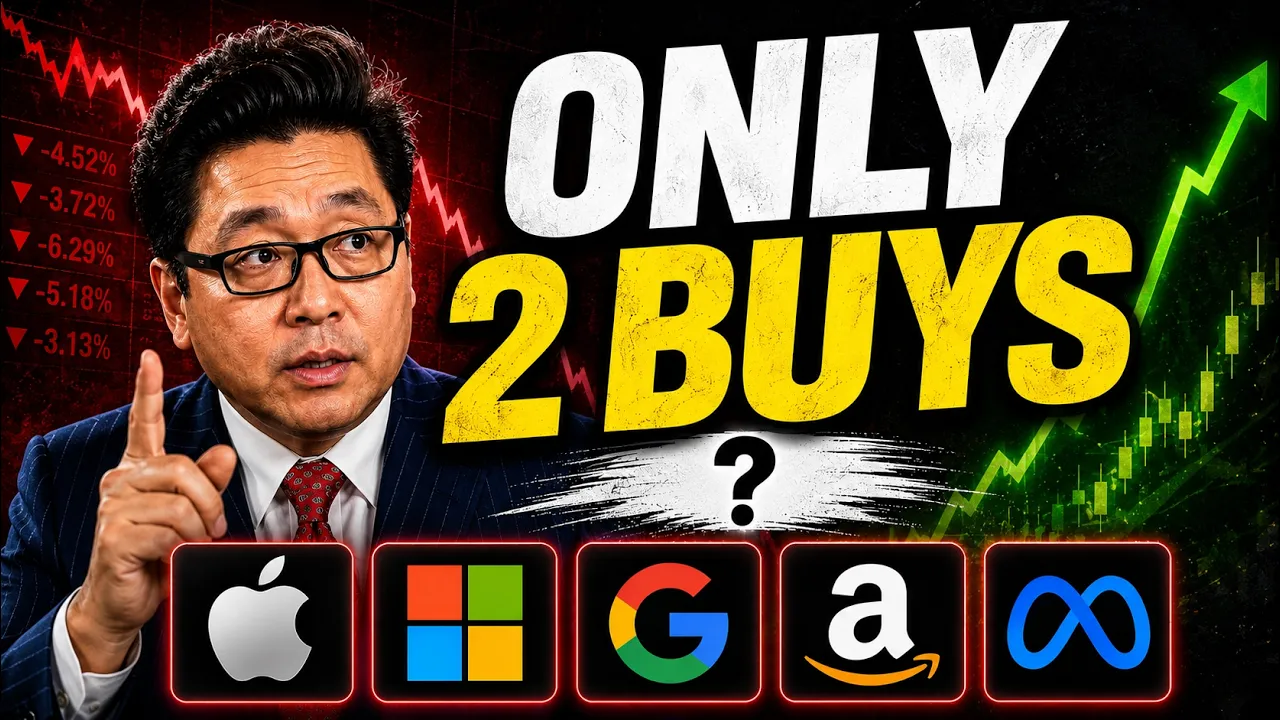
Big tech earnings have just divided the market. We've got Microsoft which was up 15% after reporting is up now around 20% in July. We've got Amazon that was up around 12% in the pre-market up a fairly similar amount for the month. Meta, well not that great. That was down around 8 to 10% after reporting. Down only 3% though for the month. And Apple, well that reported yesterday and that's up around 6 to 7%. both in fact after the report and for the month of July. But here's the problem. The stocks Wall Street rewarded are not necessarily the stocks that are offering the best returns from here. Microsoft, well, that may have delivered the cleanest quarter of the group, but after this enormous move, is the stock still offering enough upside? Amazon, well, that delivered one of the biggest earning surprises we've seen this season. But a large part of that headline profit came from an investment gain, not necessarily the underlining business. And Meta, well, that was punished after reporting falling earnings and another enormous increase in artificial intelligence spending. But after updating my valuation model, the sell-off may have created the largest opportunity of all five companies. And Apple, well, they delivered an excellent quarter. Yet, even after the decline, we can see 7% in the pre-market, the valuation remains the most difficult of the entire group to justify. So, in today's episode, I've updated the valuations for Microsoft, Amazon, Meta, Alphabet, and Apple. I'll rank all five from worst to best, explaining exactly what changed after earnings, and reveal the only two stocks that currently pass my buy test. and stay until the end because Nvidia's not reported yet, but everything these companies just told us may provide the strongest indication of what Nvidia reports next. And also bear in mind, this is no longer one unified Magnificent 7 trade. The combined return from the group has fallen from more than 100% in 2023 to 64% in 2024 to around 25% in 2025 and now negative in 2026. The markets separating these businesses based on execution, cash flow, and valuation. And although questions surrounding the artificial intelligence cycle have intensified, Tom Lee believes AI remains the market's most important long-term story. However, he also believes leverage and margin debt are contributing to the volatility that we're now seeing. Let's take a listen. I I think that there the AI trade remains the still the most important story and people of course are having longevity doubts but you know if someone goes back to 94 to 2000 there were many times when the internet story and even stocks like Cisco uh came under question whether there was durability and I think we're in that questioning its durability at this moment uh but I think it's still in very good shape and I think the second big story out there is that margin debt is still needs to work off that high level of growth just like what happened in Korea which had a sort of a margin call and I think that's why stocks are stalling here but to me I think AI still works strongly through your end and that distinction matters the underlining AI demand may remain strong while individual stocks still fall because expectations positioning and valuations have become too extreme no longer asking whether these companies can grow revenue is asking what investors must sacrifice to fund that growth. And that is the framework I'll use throughout this ranking. Not simply who reported the highest growth, but which company is producing the best combination of growth, cash generation, and valuation. Let us begin with number five, and that's Apple. In fact, I want to be clear here. Apple did not report a bad quarter. Revenue reached 109.4 billion, slightly ahead of expectations. Earnings per share reached $22 too compared with expectations of 189 around a 7% beat and revenue increased 16% year-over-year while EPS increased around 29 and overall the underlining business also remains exceptionally profitable. They generated 54.8 billion in gross profit, 35.7 in operating profit and almost 30 billion in net profit. I mean their gross margin reached 50% while its net margin sits at 27%. These are outstanding numbers and the iPhone remains the center of the ecosystem. On a trailing basis, iPhone revenues increased from 138 billion in 2020 to 246 billion today. But the most important long-term shift remains services. Service revenues increased from 54 billion to 120 representing a compounded growth rate of 15%. The higher margin revenue is making Apple a more resilient and profitable business. And in their latest quarter that they just reported, well, iPhone, it generated 54.3 billion. That's an increase of 22% year-over-year. Services, well, that was 30.7 billion, up 12%. And Mac revenue grew 29%. wearables around 6%. The only notable decline here came from iPad which was around 6%. Operationally, I would say this is a very very strong quarter. So the question is why in fact are they dropping after reporting the earnings we can see around 7% in the pre-market today. Well, bear in mind this company before it came into earnings was trading around 52- week highs, $345 and before the latest pre-market decline, while the company was up around 23% year to date, substantially outperforming most of the other magnificent seven companies. At some point, even excellent results cannot support an unlimited valuation. You'll also notice it has one of the weakest overall rating summary. Bear that in mind when we come to other companies down the line. Now valuation is something we always talk about specifically with Apple given their growth limitations. In terms of forward price to earnings, it's sitting at 36.6. That is much higher than their 5year average which already looks high in isolation sitting at 28.3. It means as an investor, you're paying a premium of almost 30% to Apple's recent historical valuation despite the company's underlining free cash flow growth remaining much lower than Microsoft, Amazon Meta or the cloud division Alphabet. And you'll also notice when we look at the blue tunnel here from Simply Safe Dividends, which points out the intrinsic fair value price, it's sitting quite a significant distance above the upper end of the fair value. Yes, we do have to make the point that Apple does typically trade at a premium, but it's worth noting that today investors are still paying a premium for a company as we've highlighted before where their growth is on the weaker end, especially when we compare it to other companies today. Now, my central Apple valuation assumes free cash flow growth around 10% annually, is already stronger than their 10-year KGA, which sits around 7% and considerably stronger than their 5year that sits at two. Now under the assumptions we can see here an intrinsic value comes to $238 against the price of 309 we're talking around 23% downside and the most concerning part here is the scenario analysis the lower end of 8% will that produce a value of 210 and even the more optimistic case which assumes 12% annual free cash flow growth that produce a value of $270. So every single scenario here, well, in fact, it remains below the current share price today. And the reverse DCF, well, it tells us something very important. It's saying that against Apple's current valuation, it requires 14.2% annual cash flow growth. That's roughly twice the company's 10-year historical rate. Now, Apple could certainly exceed my expectations, particularly if artificial intelligence creates another major upgrade cycle, but investors are already paying as though the success is almost guaranteed. So, using the middle case here of 10%, what we're ultimately saying is that there's no margin of safety, in fact, a 30% premium. And even Wall Street, they anticipated downside before they'd even reported around 3% where their average price target sits at $322, 400 at the higher end and 215 at the lower end. So Apple for me ranks fifth. It remains one of the highest quality businesses in the world, but an excellent business can still become a poor investment when the price demands too much. My conclusion is not that existing shareholders must immediately sell every share is at around 36 37 times Ford earnings and with every single DCF scenario below the current price. I personally wouldn't commit new money here. My verdict for Apple today is avoid at the present valuation. Now number four we get to Alphabet where headline revenue reached around 119.8 billion increasing 24% year-over-year beating estimates by 2%. Now the reported EPS figure reached $911 but that number requires some important context because we can see when we look at the breakdown they recorded around 98 billion in investment gains. It pushed the reported net profit to more than 112 billion and created enormous headline earnings beat. But that gain doesn't represent recurring operating performance. The more relevant numbers here are revenue, operating profit, search, YouTube cloud, as well as free cash flow and Google search generated around 63 billion, increasing 17% year-over-year. YouTube advertising 11 billion up 13%. Subscriptions, platforms, devices generated around 13 billion. But the standout was Google Cloud reaching around 25 billion, increasing an extraordinary 82%. And you'll be able to see that Google Cloud is now growing considerably faster than both Azour and AWS. Google Cloud grew around 82%. Azour and other cloud services grew around 43% and AWS grew around 37. Some of the difference reflects the smaller starting size of Google Cloud. But the acceleration here is still extremely impressive. And to be fair, Google Cloud is not simply just growing revenue. It's becoming highly profitable. Quarterly cloud revenues increased from around three billion in 2019 to almost 25 billion today and over the same period operating income has moved from a loss to around 9 billion. It means Google Cloud is now operating at a margin of around 36% and the amount of annual recurring revenue well added during the quarter that also accelerated to around 19 billion. That's nearly double the amount added in the previous quarter and dramatically above anything else Alphabet has previously achieved. It's strong evidence that demand for Google's infrastructure, artificial intelligent models, and enterprise products while they remain extremely high. But ultimately, this growth came with enormous cost. Alphabet generated its first negative free cash flow quarter. Free cash flow fell to around negative 5.9 billion despite the company producing almost 120 billion of revenue. Capital expenditure well that roughly doubled to around 45 billion during the quarter. And you can see this chart it shows how unusual that result is. Alphabet has consistently generated billions of dollars in quarterly free cash flow for more than a decade. It recently produced quarters of 24 billion and 25 billion. The latest quarter then dropped to negative6 billion doesn't mean the underlying business has suddenly collapsed. It means that the company's investing cash faster than its operating engine is currently producing it. And Alphabet well it now trades around 25 26 times Ford earnings. And you can see the 5year average sits lower at 22. So despite the recent share price weakness, Alphabet will still trades above its normal valuation. And we can also see similar to Apple, it's sitting above the fair value indicating potentially overvalued. Over the last 5 years though, many chances to buy this in an undervalued signal. And my central model assumes Alphabet free cash flow recovers from around 30 billion as we can see projected by analysts in 26 to 80 billion in 27 and then 120 billion in 2028. From there, I assume around 16% annual growth, producing an intrinsic price of $314 per share. Against today's value of 333, it represents around 6% downside. My conservative value produces 288. And even the more optimistic where we've used 18% growth, 343, that's only around 3% upside. Reverse ECF for Google here suggesting investors are already pricing in just over 17% growth. So essentially I'm saying based on the middle rate there's no margin of safety. It's sitting around a 6% premium. Now Wall Street they disagree. They see a lot of upside. Price target $427 around 28% over the next year. The highest target in fact sitting above the $500 mark. But for me Alphabet ranks fourth. Google Cloud may have delivered the strongest operational acceleration of any business in this episode. But the current share price already assumes very strong execution while free cash flow is under immediate pressure. So I would say for Alphabet hold but wait for a wider margin of safety before buying. And at number three we've got Microsoft where they reported revenue of around 90 billion increasing 18% year-over-year and beating expectations by around 3%. Earnings per share reached $481 beating expectations by around 13% and increasing 32% year-over-year. Unlike Amazon and Alphareet, this was a cleaner operating beat where we can see they generated 60.5 billion in gross profit and more than 40 billion in operating profit. I mean their operating margin remained at around 45% while net profit reached around 36 billion. Very few businesses of this size continue growing revenue by 18% while maintaining margins this high. And Microsoft cloud revenue, well that increased from around 13 billion per quarter in 2019 to around 59 billion today. The latest quarter represented another significant acceleration. When we take a look at their intelligent cloud, well that generated 39 billion, growing 32% year-over-year. Productivity and business processes including Microsoft 365 and LinkedIn that generated 38 billion up 14%. and more personal computing well that generated 13 billion. The strength was broad but Azour and artificial intelligence demand well that remained the key driver here and Azour and other cloud services well that grew around 43%. It does remain below Google clouds reported 82% but Microsoft is operating from a much larger revenue base. The absolute amount of new revenue and profit being created well that remains enormous and you can see yesterday in fact investors while they rewarded that performance immediately the shares were up around 15%. Now the company did enter the report down for the year but a significant portion of the underperformance disappeared in a single session. And this is where the distinction between the best quarter and the best investment becomes very important because even after the rally Microsoft's forward price to earnings ratio sits at 23 times. That's still significantly lower than their 5-year average of 3031. So I wouldn't describe Microsoft as dramatically expensive relative to its own history. But a historically lower multiple does not automatically mean a stock is undervalued on an absolute cash flow basis. And for consistency, we can see on the blue tunnel, Microsoft still gets that undervaluation signal today over the last 5 10 years. This one actually very rarely is in this situation and even stays in this situation for any time at all. We can see the last time was around mid 2023. And my Microsoft model assumes near-term free cash flow remains heavily affected by artificial intelligence investment. I then assume free cash flow recovers to around 32 billion in 2027, 50 billion in 28 and reaching 130 in the following year. These all pretty much using analyst estimates. From there, I use a middle rate of 14% annual growth. It gives us a value of $434 and against the current price today where we actually see downside around 4% conservative rate at 10% 373 and even the more optimistic case at 18% we get 503 not massive upside around 12%. Reverse ETF well that suggests the current price that is requiring around 15.1% of annual cash flow growth. Microsoft yes it could achieve that. The company owns Azour, Microsoft 365, GitHub, LinkedIn Copilot, and one of the strongest enterprise distribution networks in the world. But after the post earning surge, investors are already paying for a meaningful amount of the future success. You'll also note that this ends up being no margin of safety today with a 4% premium. Yet, Wall Street, they see upside around 24%, price target $561, the range lower end 400, at the higher end $870. So for me, Microsoft ranks third. It delivered the cleanest quarter, perhaps the strongest balance between revenue growth and profitability and one of the most credible artificial intelligence monetization strategies. But the share price reaction brought the stock close to the estimate of my fair value. So my verdict hold I become more interested again on a meaningful pullback below the central valuation range. And then in number two, we've got Amazon, which reported revenue of around 200.6 6 billion increasing 20% year-over-year beating expectations by 2% reported EPS 575 compared with expectations of 182. But just like Alphabet, the headline earnings here does need some context. And we can see they reported around 53.4 billion of other income driven primarily by the investment gains related to Anthropic. It pushed net profit to around 62.6 billion. So the 216 headline earnings beat does not actually represent the recurring operating performance of the business. The figures that matter most are revenue, operating profit, AWS and free cash flow. And AWS revenue while that growth accelerated sharply to around 37%. Growth had fallen to around 12% during 2023. It then recovered to 17 19 20 24 28 and now 37%. This is an exceptionally powerful reaceleration for a business of this size. And then when we look at AWS annualized recurring revenue that's now released around 169 billion is increased from 100 billion at the beginning of 24 and around 40 billion at the end of 2019. The rate of absolute revenue creation, well that's accelerating. And AWS that generated 42.2 billion in quarterly revenue and around 16.6 billion in operating profit. The online stores, well, we can see that was 70.4 billion. Third party sellers, 46.8 billion. And advertising that reach almost 20 billion, growing 26%. Amazon is no longer simply an online retailer with a cloudside business, is a collection of several enormous, increasingly profitable platforms. And Amazon's trailing revenue, well, that's increased around 330 billion in 2020 to roughly 769 billion today. online stores that remains the largest segment. But AWS, advertising, thirdparty services and subscriptions, they've all grown substantially faster. Those higher margin businesses are steadily improving Amazon's underlining economics and operating profit that reached around 27 12 billion. That represents a 14% margin, an improvement of around 2 percentage points year-over-year. That is the operational number that I would focus on, not the investment driven headline earnings beat. Now Amazon they have produced negative3 cash flow for two consecutive quarters. It was around8.2 billion in the first quarter negative 8.8 billion in the second. The company's generating enormous operating profit but it's artificial intelligence and logistic investments. They're absorbing even more cash. The key question here is whether AWS growth justifies the investment. At 12% growth investors would have been right to question the spending. At 37% growth, the evidence is becoming considerably more supportive. Amazon is spending heavily, but the revenue engine appears to be responding. My central model assumes Amazon free cash flow recovers from around 11 billion in 2026 to 51 in 27 and then 60 in 2028. And we can see the most aggressive step occurs in 2029 when the model assumes free cash flow reaches around 149 billion as investment begins normalizing. The recovery important to state is not guaranteed. So the model should not be treated as certainty. And we can see the central intrinsic value here under the 12% growth rate assumption. That's around $33 implying 15% upside. Conservative case 268 pretty much around fair value. And the more optimistic $343 representing around 30% upside. Reverse ECF. Well, we can note here in fact 7.4% annual growth. That is substantially lower hurdle than the growth currently priced into Microsoft Alphabet or Apple. The market's demanding less from Amazon while AWS is currently accelerating. So based on that central rate, we can see our first margin of safety today coming in at 13%. Where Wall Street also see $316 as the average price target, 34% upside, the range between $200 to just under $400 today. So for me, Amazon ranks second. The free cash flow profile remains the main risk and the valuation depends on investment eventually normalizing. But unlike Apple, Microsoft and Alphabet, the central valuation still offers meaningful upside after the earnings reaction. So my verdict would be buy cautiously or accumulate gradually rather than chasing the entire position immediately. And at number one is Meta. They reported revenue of around 60.8 8 billion increasing 28% year-over-year and slightly beating expectations but earnings per share reached 618 compared with expectations of 722 a miss of around 14% EPS also fell 13% year-over-year and 41% quarter over quarter it immediately explained at least part of this sell-off and the family of apps that generated 60.4 billion in revenue and around 23.4 4 billion in operating profit. Realy labs, well, that generates around 400 million of revenue while losing around 4.6 billion. Meta's advertising engine here remains incredibly strong. But the amount being redirected into artificial intelligence, infrastructure, and realy labs, that's risen dramatically. And Meta's quarterly revenue that's increased around 6 billion in 2016 to more than 60 billion today. The latest quarter was the company's highest quarterly revenue is on a company suffering from weak demand. Advertising revenue increased around 27% while total revenue increase around 28%. But capital expenditure well that's Riven even faster. Quarterly cavex was around 8 billion at the beginning of 2024. It increased to 14 17 1921 and around 30 billion in the latest quarter. That is the real reason investors are concerned. Meta's business is growing strongly, yes, but shareholders are being asked to accept a major near-term reduction in cash flow. And Meta, while they spent around 21.7 billion on research and development during the quarter, around 36% of revenue, operating expenses, well, that reached over 30 billion and operating margin that fell 12 percentage points to 31% margin is an enormous investment program. And unlike Microsoft or Amazon, Meta does not operate a large public cloud platform that directly sells the resulting infrastructure capacity to external customers. But Meta, they're already using artificial intelligence to improve advertising, recommendations engagement and monetization. It helps explain why revenue still growing by 28%. The question is not whether artificial intelligence is helping the current advertising business. is whether these benefits will eventually justify this extraordinary level of spending. And the company while it now trades around 15.6 times forward earnings, 5year average sites at 22, it places Meta around 30% below its historical forward multiple while Apple and Alphabet trade above their historical valuations. Meta wallet trades substantially below its own and that also gives us the severe undervaluation signal. The underlying metrics they're increasing as we can see from just the latest quarter but the share price well it continues to fall. The only thing to note is this is something we have seen quite a lot from Meta. Investors typically don't see this at a premium and more often than not don't really buy this up that quickly when it's trading at a discount. So does necessarily mean the share price will rise significantly tomorrow. And also worth pointing out that the stock is down around 18% year to date and sits very near its 52- week low of $520 doesn't make the stock automatically cheap, but it means expectations have already been reduced considerably. Now, my model is deliberately severe in the near term. As we can see, it assumes free cash flow falls around 2 billion this year, turns negative in 2027, and then starts to recover in 2028 as spending begins producing returns and the investment cycle starts normalizing. The recovery is the biggest uncertainty in the valuation. The central intrinsic value $773 implies 43% upside conservative 702 and the more optimistic 851 implying around 58% upside. The reverse DCF well that suggests the current share price only requires 4.6% annual growth. That is the lowest implied growth requirement among the five companies. Apple requires 14.2, 2, Microsoft 15.1, Alphabet 17.3, Meta requires only 4.6%, the gap provides considerably more room for mistakes, which in turn using the central estimate here, gives us a 30% margin of safety today. And Wall Street will estimate 43% upside, price target 772, lower end 580, which is still above the share price today at the upper end. The more bullish see this around the $1,000 mark. So Meta it therefore ranks at number one. It does carry the greatest uncertainty surrounding capital expenditure and near-term cash flow. But it also offers the widest valuation discount and lowest expectations. I wouldn't build the entire position in one transaction because spending could continue rising. But at this valuation, I'd be comfortable accumulating Metagradely. My verdict would be buy and the strongest opportunity among the five companies that reported. Now, the broader market, it confirms that investors are no longer simply rewarding size or artificial intelligence exposure. The average S&P 500 stock is outperforming the cap weighted index. While many of the former market leaders remain under pressure, we have Morgan Stanley's Mike Wilson here argue that the divisive factor is now the quality of the free cash flow. >> And as you know, the hyperscalers, the reason why those stocks have underperformed is because while the earnings have been good, the free cash flow generation is atrocious. And and so the market has punished them. I think a lot of that is is kind of behind us and that's now they're going after semiconductors and some of the storage names that also is pretty well advanced. These corrections are pretty severe. Look what happened in Korea last night. So now that people are getting, you know, kind of agreeing with us on this, I'm probably more inclined to say we're probably closer to this correction being over. The average S&P 500 stock, well, it's risen around 13.6% while the capweight index has increased only 8.8. It tells us the market is broadening beyond the largest technology companies and the spread between the best and worst performing magnificent seven stocks has reached around 55 percentage points. Apple up 24, Meta down around 10, Microsoft down 20, Tesla down more than 30. Owning the largest companies indiscriminately is no longer enough. And the wider market while it remains historically expensive. The shill ratio sits near 41 times compared with a long run average around 17 times and a dotcom era peak around 44. It doesn't predict an immediate crash, but it makes valuation discipline here particularly important. And interestingly, while sentiment still sits in fear rather than greed, the combination high headline valuations but fearful investor sentiment usually means the opportunity is not simply buying or selling the entire market. It means identifying the individual companies where expectations have fallen faster than the underlying business is exactly why Meta ranks ahead of Apple despite Apple delivering the cleaner quarter. And there is one company I'll deliberately exclude from the ranking is Nvidia because they've not yet reported. But Microsoft, Amazon, Alphabet and Meta have just provided an important read through for Nvidia's upcoming earnings. All four are still investing enormous amounts in artificial intelligence infrastructure and their cloud divisions are accelerating rather than slowing. The biggest near-term risk to Nvidia will be a sudden reduction in hypers scale investment. Steve Eisman explained why that scenario would matter so much. >> Nvidia, I think when they reported last quarter had 85% revenue growth. So if the hyperscalers cut it would be 85%. And you know, maybe that would be healthy for the long term, but I think the market would go straight down on that news. >> But the earnings we have just reviewed do not indicate a major reduction in demand. Google Cloud grew 82%, Azour grew 43, AWS grew 37, Meta's quarterly cavix reached around 30 billion. doesn't guarantee Nvidia will beat expectations, but it suggests the demand environment here remains supportive and analysts are currently expecting Nvidia to earn around $9 per share during the fiscal year ending Jan 27 and then rising to 1287 in the following year at a share price around $195. Nvidia trades around 21.7 and in fact around 15 times the following year. Now depending on the earnings estimate used, Nvidia currently trades around the 20 mark. 5-year average sits at 36. So despite the company's enormous growth, the valuation multiple has compressed substantially and that's also reflected when we look at the blue tunnel. Although this is something we've consistently seen from around the beginning of 2025. Share price does increase but not as much as we can see the underlining metrics move in the right direction. And importantly, the widest semiconductor group also trades around 18 times forward earnings. It places semiconductors below utilities, materials healthcare tech consumer staples, consumer discretionary, and industrials. The market is no longer valuing the entire semiconductor industry as an unlimited growth story. And my model in line with analyst estimates assumes free cash flow rises from around 97 billion in 26 to around 158 in 2027. It's a major increase and remains the most important assumption in the model. From there, I apply around 15% annual growth in the central case, giving a $262 price target. Against the current price today, that's 34% upside. The conservative case, $193, pretty much in line with today's value. And the more optimistic case, $355, 82% upside. reverse DCF. That's suggesting here that Nvidia's current price requires 10% annual growth is well below the company's recent growth rate. Of course, Nvidia cannot maintain 86 59% or even 100% growth indefinitely, but around 20 times Ford earnings, the stock no longer requires those extraordinary rates to continue forever. And you can see based on the central estimate, we get a 26% margin of safety where Wall Street anticipate around 55% upside over the next 12 months, $33 average price target range of 180 to 500 on the upper end. Nvidia therefore enters its next earnings report with a more balanced risk and raw profile than many investors realize. The conservative valuation leaves very little upside, but it also places fair value close to today's share price. Meanwhile, continued hyperscala demand creates substantial upside in the central and optimistic scenarios. Nvidia is not included in today's completed earnings ranking, but based on what Microsoft, Amazon, Google, and Meta just reported, it may now be the most important stock to watch. So, wrapping up, in terms of the final ranking, we had Apple at number five. An outstanding business, but even the optimistic valuation remains below the current share price today. So, my verdict would be avoid at this valuation. At number four, Alphabet. Exceptional cloud momentum, but negative free cash flow and limited valuation upside. I'd say hold and wait for a wider margin of safety. At number three, Microsoft. The cleanest core of the group, but around fair value after the post earning surge. I'd give this a hold rating. At number two, Amazon. AWS is accelerating and the central model still offers around 15% upside. So, I'd give this a cautious buy. And at number one, Meta. the highest spending risk but the lowest expectation and widest margin of safety. I give this a buy gradually verdict. So the most important lesson from this earning season is that the best company, the best quarter and the best stock and not necessarily the same thing. Microsoft may have delivered the cleanest result, Amazon may have delivered the strongest cloud acceleration, but at today's valuation, Meta offers the best combination of quality expectations and potential upside. And Nvidia is next. His upcoming earnings will tell us whether the spending boom across Microsoft, Amazon, Google, and Meta is translating into semiconductor demand. Let me know your rankings in the comments and which of these stocks you believe I've ranked too high or too low. And make sure you subscribe if you want the full Nvidia earnings valuation as soon as the company reports. Don't forget, we release one weekly article covering severely undervalued stocks as well as what's going on in the market over the last few days. Fresh copy is coming within the next few hours, so make sure you're subscribed. More importantly, though, have a great day. We'll see you all on the next one.

Comments 0
Sign in to join the discussion.
Sign inNo comments yet. Be the first to share your thoughts!