no one is investing more in innovation right now than JP Morgan, Morgan Stanley, Goldman Sachs, Bank of New York. The large, most successful banks are going to benefit from this.
no one is investing more in innovation right now than JP Morgan, Morgan Stanley, Goldman Sachs, Bank of New York. The large, most successful banks are going to benefit from this.
no one is investing more in innovation right now than JP Morgan, Morgan Stanley, Goldman Sachs, Bank of New York. The large, most successful banks are going to benefit from this.
no one is investing more in innovation right now than JP Morgan, Morgan Stanley, Goldman Sachs, Bank of New York. The large, most successful banks are going to benefit from this.
Context
"a number of the infrastructure firms, Circle is an example in stablecoin. I think hyperliquid is a great example in blockchain will also be one."
Full Transcript
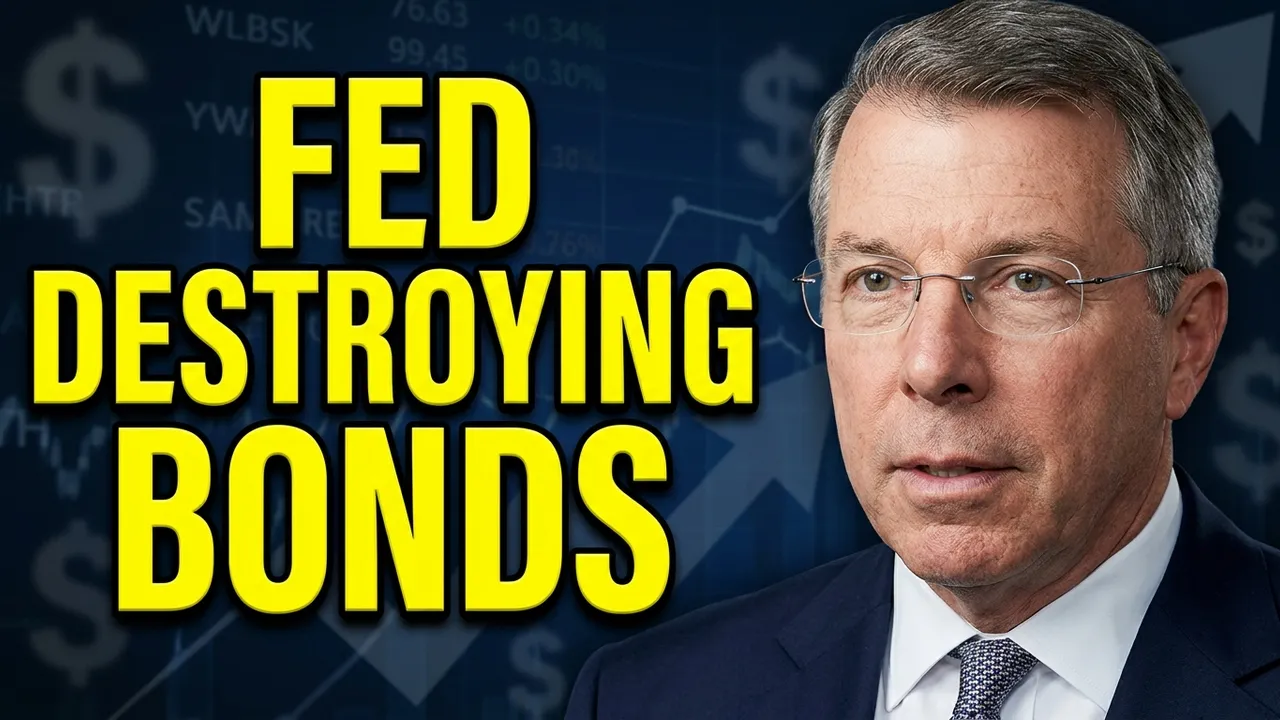
The Clarity Act, which aims to set clear rules for digital assets, appears stalled in the Senate because of conflicting opinions about stablecoin yields and other issues. For more on that and on the Fed and the markets and what we're seeing right now, we want to bring in Bob Diamond. He's the CEO of Atlas Merchant Capital, the chairman of Hyperliquid Strategies, and former CEO of Barclays. And Bob, thanks for being here. >> Good to be here, Becky. >> You want to start with Clarity or you want to just start with where we are with the markets, maybe with Treasury yields at this point, kind of pushing higher this week after the Fed's decision to stand pat. >> I don't see a big surprise in in yields right now. I think the expectation with um the new chairman of the of the Fed is you know, the markets are reacting to a little bit less forward guidance and things like that, but >> I guess specifically with the 30-year at the highest levels that we've seen in something like 18, 19 years at this point. Um does that concern you? It doesn't look historically um high if you're looking 40, 50 years back, but over the last 20 it does look like it's starting to push higher and you're looking at that pushing up mortgage rates as well. >> Yeah, and I think it's an accurate reflection of the economy continues to be very strong and inflation is above the levels that we would like it to be and I think >> Strong economy is great. Inflation above where we want it to be is a is a little concerning. >> But as you and I have talked, I've been rates higher for longer for a while and I think right now we're seeing Um you know, I think the debate at the Fed appears to have been pretty robust around potentially raising rates and I would be frankly surprised if rates don't go higher in the in the next meeting, but I don't I don't think it'll be a big shock to the markets by that time. >> Okay. So, forward guidance, it's okay that we're not getting it if you kind of gradually get us to that point. >> Becky, the forward forward guidance thing is silly. When when you go back to Paul Volcker or or Greenspan, the real regulators. >> They they went the opposite way. And it was really the academics of Bernanke and Yellen who were more focused on kind of teaching and and focused on putting those numbers out in the market. And I think you know, with with with price stability and full employment, we have all the guidance we need with the Fed. And I think trying to produce more forward guidance just makes it more difficult to to manage. So, I think Kevin's absolutely correct to to eliminate the forward guidance. >> Probably worth bringing up that that forward guidance was brought in in in the wake of the financial crisis, too, to try and maybe calm a jittery market. We've come a long way from that. >> Maybe, but I think it was also a function. I go back to what I said, and I think there was an evolution from from Volcker and Greenspan who were very much brought up as regulators. >> Mhm. >> And Bernanke and Yellen who were much more from an academic background. And I think it's fitting with that academic background. Um You know, I I think we've seen it with the ECB a lot more uh as well. And I I you know, what why put out all of that when you have the core you know, dual mandate of price stability and and full employment. >> It's kind of funny because I was just thinking about well, then where does the the anger, disillusionment come? Which people does it come from that Borsch isn't going to give forward guidance? And it's media reporters that cover the Fed. >> Of course. >> So, they're mad. And and it's people that get paid at at firms like yours or Goldman Sachs or other they cover that and they want to be spoon-fed. So, both of them sort of have a a horse or a dog in the race. And they're mad that they're not going to get those are the only people that probably don't think it's a good idea that the Fed is was so involved in our lives and and every single word left out of a statement, you know, could send the markets tumbling. We should I mean, they they they should not be that intricate intricately involved with the economy. Should should should they? >> In the in the period of the probably the worst period for inflation scares during the Volcker Volcker time. I mean, this will age me a little bit, but they didn't even announce when they raised rates. >> No. You know, the traders on the floor would say the repo rate is a Fed is higher, right? He uses a briefcase indicator to try >> And and and we would find out because the Fed had raised the rate to borrow money at the Fed and then they raised the repo rates. It wasn't it it just wasn't a big thing. >> Let's talk a little bit about the real economy and where where you think things are right now. If you're looking at higher interest rates, it makes sense if you're talking about this buildout for the data centers with AI. There's a lot of money that's slashing around, but we do talk all the time about the K-shaped economy. What does it mean for people at the lower leg of that K? >> Listen, there are sectors [clears throat] in the economy that are better off with higher rates. Financial services is one of those. Um certainly mortgages are going to be a trick a more tricky issue, but where I [clears throat] go back to is this administration with less regulation um and more focus on business. From my kind of perch as um chair of the advisory board of the Exim Bank, I really do see middle market companies, middle market CEOs also with our investments in middle market M&A firms like like Cascadia, we see middle market companies day in and day out having you know, being very very positive. Profitability continues to be strong, and I think that's the key is is we have a uh we have an environment which is less regulation in the way of of of business going forward and and I do think we're going to have higher rates, and I think that will dampen that to some extent, for sure. >> Let Let's talk about regulation and the Clarity Act because you're somebody who has a pretty unique perspective on this. You come with this both from hyperliquid uh secure hyperliquid strategies and you know, understanding the crypto side of things of this, but also from the banks as the former CEO of Barclays. Who's right in this? This has pitted those two sides against each other. The banks have been really mad um about the idea that you could give away you could give away some of their advantages that they have because they're highly regulated. They should have a first rights at some of these things. What do you think? >> I think this is really good for the banks over time, and I'll come back to the interest rate thing on stable coins cuz I think, Becky, that's an interesting one, but no one is investing more in innovation right now than JP Morgan, Morgan Stanley, Goldman Sachs, Bank of New York. The large, most successful banks are going to benefit from this. What we're talking about is innovation. What we're talking about is is 24 hours, you know, trading 24/7. We're talking about instantaneous settlement, which is a positive thing. We're talking about blockchain, which has a permanent record in perpetuity. That was a little bit duplicative, but in perpetuity of every transaction that happens, and all of it at a fraction of the cost with the hyperliquidity. These things are very, very positive, and I think the investments that are being made by the banks that a number of the banks that have been investing will be big winners in this, and a number of the infrastructure firms, Circle is an example in stablecoin. I think hyperliquid is a great example in blockchain will also be one.

Comments 0
Sign in to join the discussion.
Sign inNo comments yet. Be the first to share your thoughts!