Why I Have $103,863 in One 7.63% Yield Dividend Stock

- Video return
- -0.84%
- Calls
- 6
- Buy / Sell
- 6 0
- Published
Recommendations
Entry is the asset's closing price on the publication date. Current is the last close on record.
-
Entry $40.28 04 Aug 2026Current $40.00 07 Aug 2026Result −$0.28
But today, I'm going to explain why I bought Hes Midstream Stock.
Context Today, I'm going to explain why I bought Hes Midstream Stock.
-
Entry $40.28 04 Aug 2026Current $40.00 07 Aug 2026Result −$0.28
by the end of the video, you'd have the exact price where I'd consider buying HSM stock.
-
Entry $40.28 04 Aug 2026Current $40.00 07 Aug 2026Result −$0.28
I think that'll prove to be another good long-term entry point for HSM stock.
-
Entry $40.28 04 Aug 2026Current $40.00 07 Aug 2026Result −$0.28
So there can be opportunities to buy.
-
Entry $40.28 04 Aug 2026Current $40.00 07 Aug 2026Result −$0.28
And that's when I was loading up on the stock.
Context That's when I was loading up on the stock.
-
Entry $40.28 04 Aug 2026Current $40.00 07 Aug 2026Result −$0.28
I plan to continue dollar cost averaging into it over time.
Full Transcript
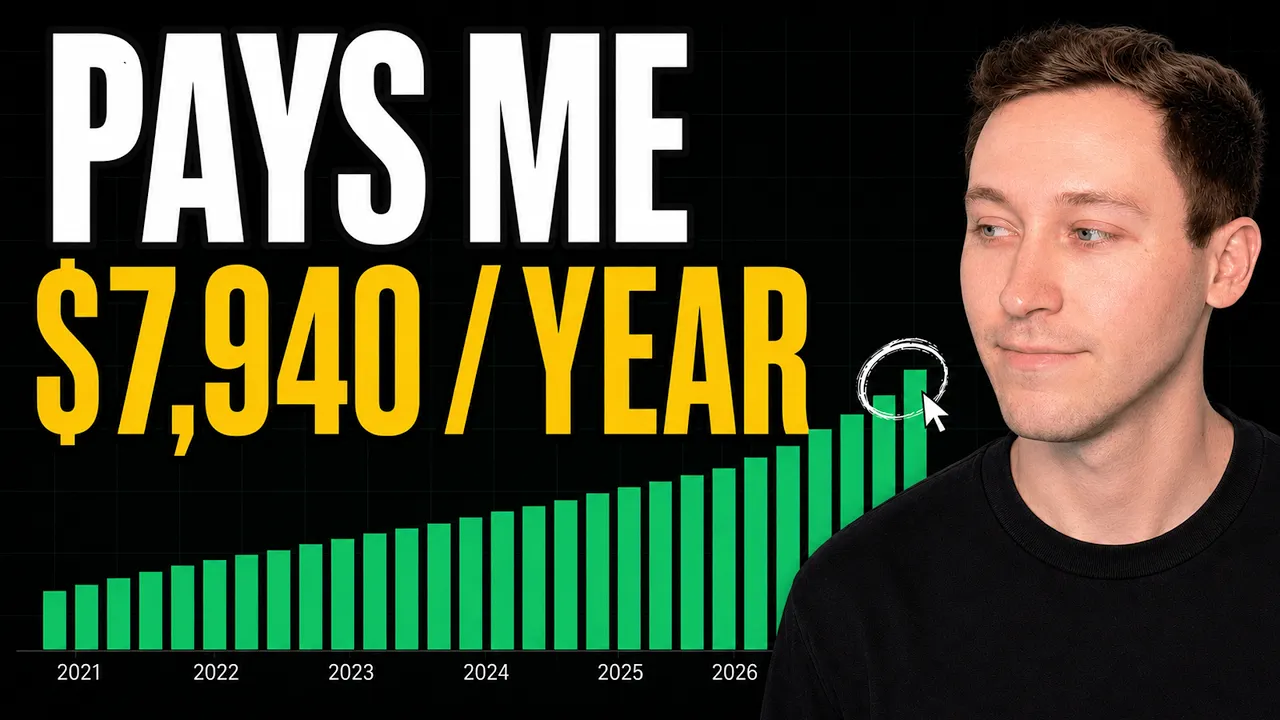
Today I'm going to talk about the highest yield dividend stock that I own in my long-term dividend growth stock portfolio. 103,860 invested. That's 28.71% of this account. And it was the largest position until Microsoft finally started performing over the past week. It pays me $7,940 in annual dividends and is paying me that dividend this month. That'll be over $2,000 which I'm planning to reinvest and buy more shares. The forward-looking dividend yield for the stock is 7.64%. The stock is Hest Midstream LP, ticker symbol HESM. It's a company most dividend investors have never even heard of. I know I didn't until last year. And that's when I initiated my position, making it the largest holding in this account. And so far, I have a 27.43% total return. And the reality is this stock has a lot of confusing things about it that even when people look at it, it kind of puts red flags out there. And it's also not that large of a company at an $8 billion market cap. So it really flies under the radar. And depending on what you're looking at, you might think the dividend could be unsustainable. And you could be scared off by the fact that their customer list is basically one customer, Chevron. And I'll explain all that later. But today, I'm going to explain why I bought Hes Midstream Stock. I'll show you exactly what the business is, how they've been able to grow their dividend payments so much over the past five years, what you could expect in dividend growth going forward, how they've been able to have such a high dividend yield and high dividend growth. I'll give my thoughts on the company's latest earnings report, which just happened yesterday, and then I'll give a valuation on the company using different methods. So, by the end of the video, you'd have the exact price where I'd consider buying HSM stock. So, with that said, let's roll the intro and get into today's stock analysis video. >> [music] [music] >> the following. reflects the opinions of a man who spends far too much time thinking about stocks. Please do your own research before making any investment decisions. Nothing in this video is personal financial advice. Continue at your own risk. My name is Zach. This is Dividend Data, and you shall leave a like and subscribe to the channel if you enjoy the video. Throughout, I'm going to be using the best stock research tool, which is over at dividenda.com. We just put out our next generation version of the product, and it's awesome. The early feedback has been great. You can click the link in the description and pin comment of the video to follow along and analyze HSM stock with me as well as use our portfolio tracking tools. With that said, let's get into the HESM analysis. So, as you can see, the current share price is $40.77 and it's up a good bit over the past month, up 6.78%. Since going public in 2017, though, the returns don't look that good. If you're just looking at price, it's up 59%. That's a compound annual growth rate of 5.11%. But the real story and compounding effect here with HSM comes from the dividend. You can see over that same time period that boosts the total return to 217%. That's a 13.19% compound annual growth rate. So 158% of that return is from dividends reinvested. But there have been periods where you could have gotten an insane return on HSM. As an example, during 2020 when we had the whole energy stock collapse, that was when the price of oil went negative and this stock and a lot of other smaller energy companies, they got forgotten about. So if you bought anywhere near the low for HSM, then you'd have a 983% total return, 45.29% compound annual growth rate. But even after it bounced back 5 years ago in mid 2021, still would have been a good return. 130% total return from there. That's an 18.23% to 3% compound annual growth rate. I primarily bought my position during October 2025 along with some of you who are watching my videos back then where I was analyzing HSM and I think that'll prove to be another good long-term entry point for HSM stock. So, I'm going to go into all the financials including the dividends since this is going to be a big video for dividend focused investors. But first, let me just talk about the company because there's some weird stuff going on with HSL. And honestly, if you're not going to spend a lot of time looking into it, it makes it kind of complicated, which is why I think people don't talk about the stock. So, some of you may be asking, Zack, is this a partnership? And the answer is, yeah, kind of. And a lot of people, they just turn their ears off because they don't want a K1 there. This is a tax form you often have with partnerships. However, Hess Midstream is a very interesting company in that they're a partnership that you don't get a K1 for. It actually comes on your 1099 div and I verified that myself this tax season. So, no K1. They are what's called an up C structure. So, if you're buying HSM stock, you are part of the public investors and you are buying a share in Hest Midstream LP. This is a corporation they formed that is separate from the partnership but that corporation owns economic interest in the partnership. So collectively all of us public investors we own 62.3% of the partnership Hes Midstream Operations LP. But what's interesting is that this company has a long history with what's called sponsors. Originally it was Hess Corporation which got acquired by Chevron. Then there was also a large private equity company GIP. When Chevron bought Hes Corporation, they got that stake in the company and they're now the dominant sponsor and the number one customer of Hes Midstream. And GIP has since exited their position in 2025. So Chevron owns 37.7% of this partnership. And as of Q1, 96% of the revenue H Midstream generates comes from the production assets that Chevron now owns. This company is what's known as a midstream company. And there are a lot of factors why I like this side of the energy market. They basically play as middlemen in the transportation part. They own gathering pipelines, gas processing plants. They own rail terminals. They have water gathering pipelines and water services as well. And I'll dive more into the business part when I go over their earnings. But this will set the stage so you understand a little bit more about why these financials get a little weird. So let's start with the dividend because that's the big thing why everyone is buying HSM. This is where a bulk of your returns will come from. The forward-looking payment is $3.112 per share. And that's based on the latest declared dividend, which was a 1.23% raise. And you'll notice something interesting here. Smidstream actually raises their dividend payment every single quarter. And over the past 5 years, that's been a 9.36% compound annual growth rate. And this stock back then, it was still a 7 or 8% dividend yield. So, a high yield stock over the span of five years grew their dividend 56%. They've been paying their dividends since they went public in 2017 and it's been a raise every single quarter. They continued paying throughout 2020, even raising during that time. And if we look at HSM over the past 5 years and see how their dividend yield has changed over time. Right now, we're right in the middle of the packet fair value, 7.63% dividend yield. The median in this time is 7.65%. And you can see during 2025 when I was buying it, you could have gotten up to a 9.4% dividend yield. But if we go back over 10 years, the real outlier period was that 2020. In order to get crazy returns with a stock like this, you got to buy it cheap. But you can still get pretty good returns, especially if you buy it at a sell-off period like I did. And one thing I like about HSM stock is the fact that it's a pretty boring, simple business model that's predictable. And if you're kind of into value investing, you can do the math on it and you can find the exact kind of fair value point that you want to buy below. You can buy with a good margin of safety. And the market often forgets about this company completely. So there can be opportunities to buy. Well, let's go over one of the red flags that some dividend investors see when they look at ETSM. Well, first off, they just look at the GAP earnings payout ratio. And this is what most websites show you. They only have one version of payout ratio. And earnings per share isn't even the right metric you want to be looking at for a stock like HSM. It's a mid-stream oil and gas partnership. So there are other ways of valuing the dividend sustainability. But basically in the entire history of the company, it has not looked sustainable pretty much ever based on this metric. Although in 2025, it finally is covered at 99%. But yet the company has continued paying and growing that dividend payment the entire time while reducing their debt. That should let you know that there's more to the story. So, the company just reported their earnings per share, and we'll get to that, but first, let's actually cover the earnings results for HSM. They had an 11.6% beat, coming at 75 cents for the quarter, and that was 1.35% growth year-over-year. You can see earnings per share have grown 97% over the past 5 years. That's a 15.33% compound annual growth rate. Here you can see the company's revenue. It's $399 million in the latest quarter, which is actually down year-over-year. The trailing 12 months revenue though is $1.61 billion, up 3% year-over-year. So, one thing you'll notice here with AGSM is it's not necessarily a high growth company. And that's why price matters a lot and the valuation you're paying. In the latest quarter, the company generated $278.6 million of operating cash flow. That was up 0.61% year-over-year. And this is getting to a metric that I think is more reflective of their actual operating results and the potential dividends they can pay you. You can see over the trailing 12 months, they've generated $1.04 billion of operating cash flow, up 7.66% year-over-year. And over the trailing 12 months, the company's paid $382.3 billion in capital expenditures. Over the trailing 12 months, the company's generated $652 million of free cash flow. That's excluding this latest quarter. I'll talk about that in a bit when I dive into the new earnings report. And you can see over the trailing 12 months, the company's paid $376 million in dividends. So yes, the dividend payment is sustainable. It's much less than the operating cash flow, free cash flow, and EBIDA that the company generates. And as I'll soon explain, the company's doing a lot more for shareholder returns. They're paying off debt. They sometimes do share repurchases as well. Although there's some weird things around the share repurchases, too, because of course there is. So what's going on with the share count with HSM? If you've ever looked at the company's metrics on a per share basis, you may notice things just look weird. And that's because their share count has changed a lot over time. And it has to do with this chart that I brought up earlier. So what happens is there's the shares that public investors own. That's what's represented in that share count chart I was showing. And then there's what the sponsors own. And both of these entities own part of the partnership. So if you were looking at HSM stock over, let's say, the past 5 years, you would think that the stock has been diluting. There's been dilution. They're expanding the shares outstanding. But it's really not what's been happening. The partnership has actually been repurchasing shares and the repurchase shares from the sponsors which were originally Hess and GIP now Chevron. So when that happens those shares got transferred to the public and they were then publicly owned. Likewise the attributal earnings of those partnership shares then went over and the adjusted earnings per share grew in that time. But it causes some weird things when you look at metrics on a per share basis. In some cases, when you look at revenue per share, it looks like it's declining even though the revenue of the overall partnership has been growing. And there's a lot of just confusion around this. If you're someone looking at HSM stock, honestly, it took me like months to kind of like fully wrap my head around. And that was with me like on and off looking into the stock again. Now, luckily that part of the confusion is hopefully over because they have stopped repurchasing shares from the sponsor and the share counts actually slightly declined in recent quarters. So hopefully that like dilution thing stops so that it just makes it easier to look at the company. Let's dive into the latest earnings report though, look at their guidance for the coming year, whether the company's bullish. Then I'll explain some of the key reasons of what I love about the business and why it's a core holding of mine. And finally, I'll do a valuation on HSM stock, sharing what I think the intrinsic value of the company is and when you can buy it below that price to where I think the margin of safety is. So, here's some of the highlights of the quarter from their latest press release. And then I'll also go through an investor presentation that they had from earlier in the year. It was only a couple months ago because they really highlight some of like the top reasons why I personally own the stock. So, in the quarter, they generated $278 million of operating cash flow. Adjusted Ibido was $313 million. Adjusted free cash flow was $231 million. And they mentioned how they increased the quarterly distribution again. They also gave out guidance for the full year 2026. They're expecting adjusted IBIDA in the range of $1.22 billion to $1.275 billion. Capex being lower, which is a big part of the restructuring they did with Chevron. When Chevron purchased Hess, the Hess Corporation, they did some restructuring in the Bakan region, which is where all of Hes Midstream's assets are. And basically, they're trying to do a bunch of cost savings. They reduced one of the rig count, and they're trying to run the whole region more profitably, look for cost efficiencies. So, they're not investing more right now in increasing production. And because of that, Hesidstream removed one of their growth projects they were investing in. It was like a gas processing plant. So right now they actually don't have a lot of projects going on and they just have all this existing infrastructure they've been building up for like 10 plus years and they're just printing money and they have very little capex. So their capital expenditures for fiscal year 2026 is $15 million. That's what they're expecting. If you remember earlier in the video trailing 12 months was like $300 million. So this is going to lead to adjusted free cash flow growing a lot. And they've said they're going to use that money to reward shareholders and pay off debt. So expect continued dividend raises. Also in these reports they give very detailed analysis of all their different volumes for gas gathering, crude oil gathering, gas processing, crude terminals, water gathering, and you can go through all their historical earnings reports and compare all the numbers. That might be a little too deep for the purposes of this video. I might keep it more on the stock analysis and looking at the financials, but I'll also go over some of the key business related concepts for why I think it's a quality business. And that comes from their investor presentation. So, let's go that. So, first off, the one thing that some people see as a negative is the fact that their number one customer is Chevron. Now, they always did have this customer concentration risk, but I actually think it's gotten improved by the fact they're owned by Chevron considering Chevron is one of the dominant oil majors and Hes Corporation was much much smaller than Chevron and inherently just had a little more risk associated to it. So, I would actually say there is less customer risk than there was prior to Chevron purchasing it. So, here's the things that I really like about Hass Midstream. They have long-term commercial contracts already extending through 2033. They've renewed these in the past. If you go and look at historical things, so in my opinion, I'm expecting these contracts to get renewed again in the future. They are 100% feebased contracts. So, this minimizes commodity price exposure. One of the big risks investing in oil stocks is how oil prices go up and down, up and down over time. They're profitable, they're unprofitable. this mid-stream layer of the business, especially the way they have their contracts set up, it's entirely volumebased and feebased. So, they have very little commodity price exposure. The only risk they have is that Chevron decided to stop pumping for some reason and producing oil and gas, which could happen in a 2020 like environment. But here's the thing. H Midstream is protected in that scenario because they have minimum volume commitments or MVCs. And that's set on a three-year roll in basis currently set through 2028. And this provides protection to the downside. And I've dived into those minimum volume commitments before, and it's more than enough to support the dividend. So even in the scenario where they're in the MVC mode, the dividend's still good. You can see here 95% of revenues are protected by MVCs in 2026. They prioritize shareholder returns and a strong balance sheet. They focus on financial strength. They've been paying off debt and they target a 3x ratio. This is a debt to adjusted Ebido ratio. And they're at 3.1 as of the making of this report. They're now at three. And they said on the latest earnings call, which I listened to at the gym. I It's kind of crazy. They said on the latest earnings report, they're expecting to continue paying off debt. And they could hit a 2 and 1 half debt to Ebida ratio. That would be in the coming years. So among midstream peers, this is one of the best balance sheets in the industry and it has such reliable cash flow. So they've been targeting at least 5% annual dividend per share growth through 2028. That's been the guidance they've been giving for many years. But here's the interesting thing. I talked about how they had 9% annual dividend growth over the past 5 years. Well, guess what? That whole time they've had the 5% target. They continue to raise above that target every time. They do these incremental increases on top of it. 5% on top, 6% on top, 5% on top, 3% on top, and they're expecting to generate approximately $1 billion of adjusted free cash flow after distributions through 2028, which will give room for even more shareholder returns. So, here's even more of a breakdown to that feebased contract. So, they have a base fee, which is agreed upon, and there's a CPI escalator, so an inflation escalator. So, that means that base fee steadily increases over time. This is 85% of the revenues come from this fixed fee. Then they also have cost of service which is 15% of revenues. And this applies mostly to their water gathering and terminaling agreements as well as gas gathering agreements. And here's more details into the minimum volume commitments. You can see what it is for every year and in each category. One potential red flag you can see here is that in 2028 it is lower numbers. But I went back I did my research cuz that worried me a little bit. I went back and looked at some of the old investor presentations in the old MVCs and it was the same thing where it was the last year of the agreement it went down a little bit and then they ended up renewing with the new agreement and it was higher. Here you can see how the adjusted Ebida of the company has grown over time and you can't really expect like massive growth here with anything with HSM but it's a reliable cash generating business and I actually learned a lot about the industry when last year I was analyzing HSM stock and MLX as well. EPD is another one I've analyzed. I find the midstream sector really interesting because it's infrastructure and it's more volume dependent and in my mind I think I can make more confident bets on the idea that there will be volume needed especially for natural gas. HMIND stream is more concentrated in natural gas compared to crude oil. But I feel fairly confident about the demand for those over the long run. So that's a good overview of HSM's entire business and their core financials. But is the stock a good buy right now? and what do I think is a good valuation to buy HSM stock. And throughout, I'm going to be using some of the valuation tools on dividend.com. That includes the value graph and the intrinsic value calculator that has various methods of calculating intrinsic value. Today, I'll be using the dividend discount model, and it prefills with all the information from the stock, but I'll make some customizations that I think will give a more accurate and even more conservative estimate. And by the way, if you want to be using the same exact research tools that I've been showing throughout, it's all available at dividendata.com. And we're currently doing a sale to get 50% off annual membership and lock in that discount price for life. It's to celebrate the launch of our next generation tool so you can be a founding member and keep that discounted price. And if you're someone who invests consistently in stocks, you're tracking your portfolios, you want to keep up to date on your dividend income, you're researching new companies, this tool is honestly a no-brainer. I designed it with everything that I want for stock analysis. If it helps you stay more consistent due to the tracking, or if it helps you find a higher quality investment or the right price to buy that investment, then it way more than pays for itself many times over. So, if you want to use everything I've been showing, it's all available at dividenda.com. The link to the sale is in the description and pin comment. So, I'm going to be using the value graph tool. And for HSM, I'll be looking at earnings per share and dividend here. So over the past 5 years, the median multiple that HSM has traded at is 15.36. And what I like about this value graph is you can select a time period and it will give you an implied fair value of the company based on the median multiple it trades at. Whether you select earnings per share, dividend, free cash flow, operating cash flow, etc. So you can see when the company is trading at a discount relative to its historical median multiple. So with earnings per share, you can see the median multiple as trade at is 15.36. The current P multiple is 14.06. So you can see it's currently trading 9% below the implied fair value. If the stock goes back up to that median multiple, the implied fair value would be $44.54. That implies 9.3% upside from here. You can also see how the fair value of the company is growing as the earnings per share have grown over time. Now, in my opinion, I value HSM purely based off its dividend. And if we click here to look at the forward-looking dividend yield, which is even under representing because they raise it every quarter, the forward is only based on the most recent payment. So the median multiple over the past 5 years for ATSM is 7.65%. The current forward looking dividend yield is 7.64%. So if the stock went to that 7.65%, implied fair value would be $40.74, which is basically today's price. So, HSM stock is currently trading at fair value based on the dividend and what it historically has traded at. You can see it was below fair value by a lot during that fall 2025 period. And that's when I was loading up on the stock. But if we go over the past 10 years, you can see that 2020 really was the period that it was nuts in terms of trading below fair value. And because I value HSM stock mostly off of its dividend payment, this is one of the best examples of a stock that you can use the dividend discount model to value. And this calculates the intrinsic value of the company based on the future dividends it will pay you. So you can see it pre-filled with the annual dividend per share, the dividend growth rate, your required rate of return, how long you're going to project it out. And I'm going to make some changes and be a little more conservative because I don't think 9.36% is realistic to assume over a long time period. Now, yes, that is what it's done over the past five years and three years, but it did slow down a little bit over the past year. But I'm going to be even more conservative and assume 5% dividend growth. And if we want a 10% annual return, then purely based on the dividend, if your goal is a 10% annual return, the intrinsic value to pay for the stock is $5912. At a current price of $40.77, that implies 45% upside from here. So based on the dividend discount model, intrinsic value, if you want a 10% annual return, this stock is still undervalued today. So if you were looking at this and you're assuming it's around fair value, yes, it is relative to what it has historically traded at. But from first principles thinking, a 7.63% dividend yield on a company that's growing its dividend like that, that's really rare to find. Now, me personally, I'm going to be even more conservative with it because I would actually like a little bit higher than a 10% annual return. Let's raise that to 13. With a 13% required return, that would imply an intrinsic value of $39.91. That implies 2.11% downside from here. However, if we assume 7% annual growth, that goes up to $52.23, 28% upside. And with 7% dividend growth, if we up the return to 15%, it's still around fair value right now. But if you assume 5% dividend growth with a 15% return, the stock is overvalued by 20%. And the intrinsic value is actually closer to what I was buying it at back in 2025, which I was buying around 33.5. You can see my cost basis here is $33.77. Also, you can see here the difference in this projection when you're at 50 years versus 30. You can see it goes down to $49. But overall, even though HSM stock has done well in 2026, I don't think it's overvalued. I think worst case scenario, it's fairly valued right now. And you can definitely make the argument that it's still undervalued. And frankly, I almost hate the fact that I have to make these videos, but I try to be transparent with you guys because I don't want anyone to even know this stock exists. I like this as a core pillar of my dividend portfolio. It's a really rare combination of yield plus dividend growth. And it's my top dividend payer by far. I plan to continue dollar cost averaging into it over time. I haven't bought much recently other than reinvesting dividends because I built up this huge stake in 2025. And I'm going to be getting a $2,000 dividend that I'll be reinvesting on August 14th. And when we look at my dividend income, it's HSM and MLX that make up my two largest dividend payments. They power this $2,340 month. By the way, I'll be covering MLX stock soon, doing a full deep dive just like I did here. So, subscribe if you want to see that. It's another mid-stream oil and gas stock. I also consider it to be a core part of my dividend portfolio I'll be adding to over time. That one though does have a K1, so buyer beware. With that said, I hope you enjoyed this HSM stock analysis video. And if you want to track your portfolio and research stocks just like I do, check out dividenda.com. We have that 50% off sale and it really is the best way to support these videos and all the work I do. With that said, thanks for watching and I'll see you in the next
Comments 0
Sign in to join the discussion.
Sign inNo comments yet. Be the first to share your thoughts!