there's only a handful of names SK Hynix, Samsung, micron that are making those enterprise pieces at the level that they are. And so they're expected to gather a huge portion of that 1.2 trillion next year
Context
Ted says Micron is one of the names expected to benefit from the massive AI build-out spending.
Full Transcript
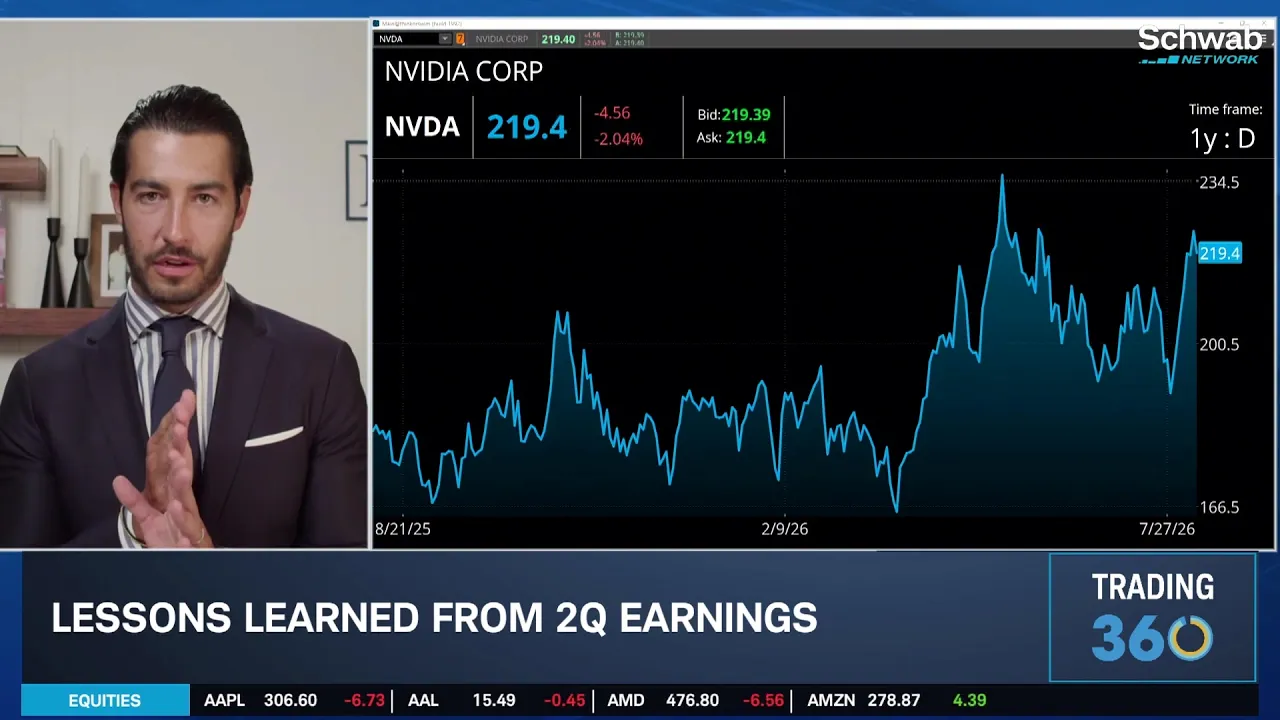
you breaking all of that down for us. That's Jenny Horne, co-host of Next Gen investing. Do you want to welcome our next guest though, Ted Thatcher joining us this morning, president over at Bright Lake Wealth Management. Ted, great to have you back on the show. Let's start with the job market. I mean, we got the jobs report on Friday. So unexpectedly came in as a loss instead of a gain. The markets didn't really seem to react too much. We saw yields move a little bit. We did see some adjustment in fed expectations for a hike here. The employment rate fell a bit. But you argue that there are some misleading numbers in the report. So I want to dive into the numbers with you. How did you look at the data that we received last week? Yeah. First, it's always great to be with you. And yes, you know, when we looked at the initial and continuing claims, actually, you know, they were a little soft. But what really did surprise me was that 4.1% print, you know, initially at face value, we'd all think, hey, this is a good thing. Unemployment's going down. But when you pop the hood and look under the hood there, you start to see really quickly that over a quarter million workers left the workforce in. Our labor force participation rate came down significantly to 61%, basically the lowest it's been since Covid. And so I think one of the reasons the market didn't move too much is because we're kind of in that situation where bad news is kind of good news, because so much of the risk that has been being priced in, in the markets has had to do with the potential of fed rate increases. And obviously, a soft labor market decreases that probability. And so overall, how are you looking at the labor market right now with the data that we received last week, Ted, are you still viewing it as fundamentally healthy or are you viewing it as weakening? You know, at the end of the day, when you see a number of 4.1%, it's hard to say that it's like the worst it's ever been or anything like that. But I do think that it is weakening, and this cannot be seen as a sign of strength when we have that much labor force participation walk away. And so obviously this week, all of our eyes, I think, are going to be pinned on what inflation data we get, because that's going to tell us a lot about how the consumer is doing when we pair that labor market with, of course, the pressure the consumer is getting and hopefully getting relief from when it comes to inflation. And so then, Ted, with the inflation data, we're going to get, I mean, we got the jobs data. We saw the chance for a hike fall a little bit more than 10%, sort of flipped the narrative to be a hold more indefinitely based on that data. What are your expectations for the inflation data this week? And then what they will do to the expectation for a hike or a hold? You know, when it comes to the CPI specifically, what I'd actually expect is about a 0.1% increase. But what I don't want to see more than anything really is the core number to go up. Obviously, that is what the fed is monitoring most closely, the PCE core. And of course, they're going to take a look at the CPI core. And so that's what I would say most concerned about if that goes up more obviously bad news there. But fundamentally when we look at the, you know, earnings in the economy, when we look at the stock market more broadly, we just had all time highs last week. And so on the financial market side, obviously things are doing great. So as we look at that, then with the earnings backdrop that we have, I mean we've got yields that are ticking higher. We're holding right now under 4.7. But we've certainly seen us pop over 4.7. We're we're pretty much done close to done here. We're about a 86 a little north of 86% I think right now of course we're waiting on Nvidia at the end of the season, which could have a big impact is the strength that we've seen so far and the presumed strength that we might get from some of these big mover names that are left over enough to hold up the broader market, even with these stretched valuations and these potentially higher yields, I do. And it does come down to the fundamental earnings that we see. You know, we've talked about how the market has sort of priced and repriced because earnings have risen so much, meaning the multiples at times in the last quarter have actually come down on the broad market. In the S&P instance, for example, being cheaper than it was at the start of the year. And so, you know, obviously we do have most of the earnings in now. I'm interested to see, of course, like everybody else, what Nvidia prints, but I expect something strong. And the story that I'm seeing here is that the strength in Q one, which was I think a huge story in Q one, has continued in Q two basically to the same almost fever pitch. I don't know, I expected a strong Q two but I don't know if I expected it to be this strong earnings beats across, you know 85% of companies. The margin at which they're beating, you know, 25, 27, 30% when you start to look at some of the averages, depending on how you slice those numbers, it's hard to look at a market like this and say, okay, you know that it can't keep going as long as earnings are there. That's obviously at the end of the day, what drives valuations. There's all these different things that can affect multiples of earnings. But when you see the fundamentals, that's what makes me, you know, constructive of course about where we're headed. So Ted, you mentioned that we've seen these double digit beats in the 20s, 30%. So we certainly have some of those have been met with negative price action, though, in terms of the response to those numbers. So you said you have expectations. Nvidia's numbers will be good. More important than that, what do you expect the reaction to be to Nvidia? Because if we're looking at a trend, when we look at Nvidia in terms of the reaction, the trend is negative. Certainly. You know it's interesting. You know you see these beat raise and then sell offs. It's almost like I mean I've said it a couple times, but walking the CapEx tightrope these days is an incredibly hard thing to do. It's like, I'll give you a quick example. Space-x last week, obviously SpaceX is above IPO price today, but they had exceptional results across the board. Beats everywhere. But that, you know, CapEx print brought them down and sold off on that news. And so, you know, a company like Nvidia, obviously they're the beneficiaries of all that spend. And so I, you know, do expect earnings beats from them as well. I think that basically what it's going to come down to is how fast they can get their product out. And so I'm very interested to see, you know, what comes in that specific measure for them. But what I actually see happening, and I think Microsoft is a good example of this, Molly, is a little bit of a hand off. These mega-cap hyperscalers have lagged. They've been called the lag seven the first half of this year. But when you see what Google just did, when you see what Amazon just did, when you see what Microsoft's done, you're starting to see that baton get passed back off. And so there's this discussion about, like you said in the entry here, the ROI on all of this spend. I actually think that Jeff Dean's departure from Google is proof positive for the market beginning to price in more and more ROI. Why is that? He's a chief scientist at Google, focused on putting them at the frontier. And of course, Google is has their own frontier model. But the when the scientists go and say, hey, I want to be working on the frontier science, you see Google's focus from a capital standpoint, not being on building the frontier necessarily, although I'm sure that they may disagree. But I think a departure like that says a different story. But when you see them emphasize the capital expenditure of building out those data centers, you see the ROIC at 32% over a 22 year period. When you see an 80 plus percent beat on their cloud revenue, that tells me the market is going to start to see that ROI more and more. All right, so we got all these AI CapEx spend questions with Microsoft. We still are hearing about Nvidia. I was talking about Intel. We got all the semiconductor names. We saw this massive summer pullback in semis. You view that you said as a healthy consolidation and not as a potential end to the AI cycle or a slowdown in AI spending here. What is the biggest piece of evidence that tells you that this is a dip buying opportunity instead of a time to get defensive in semis? I actually think it's because the number you started this segment off with $1.2 trillion is expected to be spent next year on these AI build outs. Depending on what projections you look at, the number is over $10 trillion by 2030. And so when you see that much demand, you follow the money. And obviously it's going to end up in the chip makers hands. And specifically right now, of course, we know that Dram and HBM is the bottleneck in the chip business. You know, there's only a handful of names SK Hynix, Samsung, micron that are making those enterprise pieces at the level that they are. And so they're expected to gather a huge portion of that 1.2 trillion next year, bringing us full circle right back to where we started. Appreciate it always Ted. Really appreciate your insigh

Comments 0
Sign in to join the discussion.
Sign inNo comments yet. Be the first to share your thoughts!