total bare markets uh for a lot of them, which is a great buying opportunity for people that want a dollar cost average in and buy that back at a cheaper price
Context
"What do you make of some of the names that I guess were last year's winners, but like Palanteer, Robin Hood, Tesla that haven't had that momentum this year." >> "Yeah. total bare markets uh for a lot of them, which is a great buying opportunity for people that want a dollar cost average in and buy that back at a cheaper price..."
total bare markets uh for a lot of them, which is a great buying opportunity for people that want a dollar cost average in and buy that back at a cheaper price
Context
"What do you make of some of the names that I guess were last year's winners, but like Palanteer, Robin Hood, Tesla that haven't had that momentum this year." >> "Yeah. total bare markets uh for a lot of them, which is a great buying opportunity for people that want a dollar cost average in and buy that back at a cheaper price..."
total bare markets uh for a lot of them, which is a great buying opportunity for people that want a dollar cost average in and buy that back at a cheaper price
Context
"What do you make of some of the names that I guess were last year's winners, but like Palanteer, Robin Hood, Tesla that haven't had that momentum this year." >> "Yeah. total bare markets uh for a lot of them, which is a great buying opportunity for people that want a dollar cost average in and buy that back at a cheaper price..."
Full Transcript
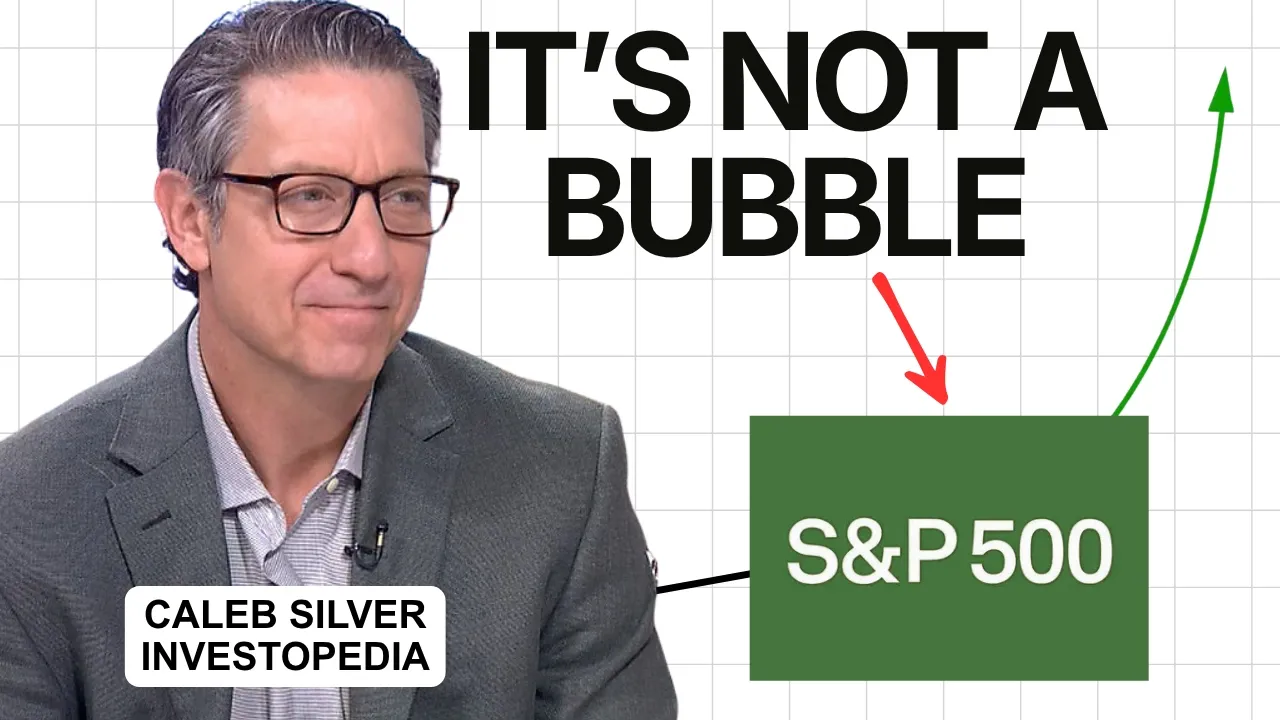
Hello everybody, it's Gav Blackburg, CEO at Wolf and your host for today on the Wolf Show. And joining me is Caleb Silver, the editor-inchief at Investopedia. Thank you so much for coming on today to talk about the markets and investing with us. >> Happy to be here. Thanks for having me. >> Absolutely. It's a pleasure. And people are more desperate for education when it comes to these markets than they've ever been. You know, it's a tumultuous time. We were talking before we got on here. People are asking, you know, why are the markets down? But are the markets down? We're hitting all-time highs on Dow, S&P, equal weighted S&P especially. Maybe the QQQ and tech are lagging a little bit, but still I think now is a time where people should really be able to settle in and get to understand these markets. That's why I think it's a perfect time to bring you on. You have a storied background in the world of investing, interviewing many of the investing greats and now come to share it together with us. So from a high level right now, when you look at the markets, when you look at investing, what do you make of this current time period here 2026 and how it stands out versus maybe the last decade or two? It just feels like a relentless bid. And you know, we've been waiting and waiting for the bubble to pop and it started to pop in different places around the market, but as you mentioned, the equal weight S&P 500 at an all-time high. You got 46% of the stocks in the S&P 500 beating the market right now. You want market breath, you got it. You got earnings galore right now. Earnings are incredible. And guess what? They're going to get even better next year. So, this is kind of what you want as an investor, although it doesn't feel right. And that's kind of been the vibe, I don't know, for the past couple of years, maybe even longer than that, but really pronounced in the past couple years because it doesn't feel like it should be this good when you think about all the different things that are happening and all the factors that are happening. But if you talk to the people that are spending the money and investing tens of billions or hundreds of billions of dollars and building out the AI ecosystem and infrastructure, this is just the beginning for them. So I think maybe we need to just kind of get used to it. Something will happen at some point in time. It always does. We just don't know what. Just don't know when. But we haven't had a a real dip in the market in a long time. >> Definitely haven't had a real dip. Obviously, you have April, you know, last year. You've got COVID if you go back a few years, but it's really just mostly gone up and to the right. I like how you phased it though. It doesn't necessarily feel right. What do you think are the things that right now do feel right within the market and then what are the things that don't feel right? >> Yeah. Well, earnings feels right and Edard Dr. Edardini famous for coing expressions says FOMO or FOMO. either the fear of missing out on the rally or your fear of this earnings momentum uh not being able to be sustained. But right now it's more than sustained. It keeps growing, right? Earnings expectations and earnings growth actually higher this quarter than last quarter. Again, yet another sequential quarter, but much higher. But as I was saying, looking at BFA securities research, they show they show earnings looking fantastic next year and potentially the year after that. So if you're going to get that, that's what we're paying for as investors. That's going super well right now. Productivity is going well, gross profit margins are expanding. Um, are they coming though at the expense ultimately of jobs, uh, of spending given the fact that all of this is inflationary one way or the other? And so consumers feel as terrible as they've ever felt, even though we continue to spend. We love to complain, but we do continue to spend so far, right? But the cure for inflation and the cure for this this uh anxiety and consumer anxiety is high prices. And high prices usually cure high prices because we tap out. We haven't done it yet and the rich are sustaining a lot of that. How long is that going to last? And I think that's part of it. And also the jobs print, you know, for July was ugly and was uglier than we thought a couple of months prior. So is that going to get even worse? Are we really heading into stagflation? Not the bad Tom Hanks movie, but the 1970s version of slow growth and rising prices. >> It's a good point though on the rising prices. It does feel, you know, maybe something like gas goes up and down and fluctuates, but it feels like a lot of the other staples, food, housing, and pieces like that. They don't seem like they've come down at all ever almost in my lifetime. And it doesn't feel like these stores are going to be apt to say, "Okay, I'm going to lower the price of food or something like that." It just feels like it's going to continue to either stay the same or just continue to escalate. Are we wrong to think that? >> Yeah, it just it doesn't come down as fast as it goes up. It doesn't come down at all. It's just sustained higher prices. inflation year-over-year when you look at a lot of the staples, it is three or 4%. But roll it back to 2021, we're up like 20% for some things. Air airfares, you know, that used to cost 350 bucks or an easy 480 right now. Health insurance is much higher than it was last year and the coverage is being reduced everywhere you look. Um, you know, gas prices is the thing we feel and touch and fill up every day, every week with and that's the one that really kind of gets us gets our goat because we got to do it all the time. But other things have just risen in price and they've just held this price elasticity. And there haven't been many retailers that have done much to help out on that except for Fredo which made an across the board cut a lot of its its uh its snacks savory snacks about a year and a half ago. I think that was more GLP1 related um than anything else. But still you you know they when they feel price elasticity and they can hold the prices right where they are and either blame tariffs or blame higher oil prices and still pass them on, why wouldn't they continue to do it? their gross profit margins look fantastic. >> Yeah, it's a good point. So, with this knowledge of hey, you know, the market maybe doesn't feel right right now, but the fundamentals are there. The earnings look great. I think it was around 85% of companies beat on earnings in this earning season. And so, we're continuing to see, you know, strong strong fundamentals. And when you look back, that's a lot of what I'm sure, you know, there's there's so much more with Investopedia. I associate a long time with fundamentals. Like, that's where I was digging in and understanding fundamentals and what they meant and pieces like that. So for general retail investors, how do you think they should be approaching the market from a capital allocation standpoint right now? Is it continue to just uh you know invest into this market on a regular basis, DCA into it? Is it buying these dips uh when they do dip and happen because the fundamentals are so strong or is there more to it? >> Yeah. Well, they've been wrong if they haven't been doing that or at least stayed consistent with their investing. And we ask our readers every quarter, you know, what are your top stocks? What's the top of your portfolio look like? Looks just like the top of the S&P 500, right? It's not diversified. It's diversified as my friend Mary Espazito likes to say and that we're all kind of piled into the same thing. Then you look at the funds flowing into techonly funds, right? I was checking this chart out earlier and they're at like 217 billion. They're maybe at a record high funds that continue to flow into tech. So we worry about bubbles in the same stocks that we own, yet we continue to buy them both as retail investors and institutions. And you've been wrong if you haven't. Why? because they're the ones that are stacking profit margins. They're the ones doing the big spending, spending amongst each other. Some of it, a lot of it is circular. That said, you can't argue with fundamentals and fundamentals show strong profit growth. They show strong margin expansion and they show continuation of that for as long as we can see just because of the big spend on this buildout. And it's not just, you know, the top 25 companies anymore. You have companies like Caterpillar at all-time highs. Why? They're building the data centers. So you're getting this nice diversified rally in a bull market that's 3.8 years old, you know, getting on there, but still running pretty strong. And now you have good sector rotation. So that's what you kind of want, even though it's like how long can it last? Probably long long laster than last longer than a lot of us can take. Uh but I think investors have just held in and retail investors don't don't dump out of our portfolios that easily, right? We ride the horses that got us here. It's very hard for us to rotate and and and uh rebalance and uh you know last year's losers. We we don't tend to do that. We tend to stick with what we got. >> What do you make of some of the names that I guess were last year's winners, but like Palanteer, Robin Hood, Tesla that haven't had that momentum this year. >> Yeah. total bare markets uh for a lot of them, which is a great buying opportunity for people that want a dollar cost average in and buy that back at a cheaper price because they probably got in late like the rest of us. Uh and maybe want to, you know, have a have a chance to get it at a reasonable valuation. But then you have to ask why? Why have they sold off so much? Well, overbought goes to oversold pretty quickly around here. Um just look at the chip stocks. Um but uh they're also sold off because they're vulnerable to what might come or what is already happening with AI. and you look in the software patch and that's just where it's really more pronounced because you can see those seats easily being devalued you know by the second when you look at what these uh AI clients can do. So and that's just early days of that um and then there are companies and industries that are adapting well to it. You see it in healthcare, right? You definitely see it in robotics. You see it in defense and and even in finance. So, um you know, as long as you see that spreading to other sectors, you're going to have the health and you're going to get the, you know, big sell-offs in these big stocks that were probably overvalued to begin with, maybe that's good. Maybe a reasonable level setting expectation is great and a rotation into a broader rally. Actually, I think I like that given how old this uh this bull market is. >> Yeah. I want to talk AI for a few minutes here since you did touch on that and that to me seems to be this you know fourth revolution that's happening right now and you talked about you know something people point to which is circular revenue and then maybe not as so much revenue as people would like to see for the capex that they're you know seeing go into things. What do you make of that? Is it just people need to have a longer time horizon here or you know maybe the revenue is more palpable than what people are pointing to things like that? >> Yeah, it's not that palpable. That's the problem. Um, you know, I I worry about all the spending and all the circular spending and all the debt financing and now it's eating into cash flows. That's when investors start the ears pop up, you know, like a dog. They hear something. Oh, you're actually eating into free cash flow to fund your spend on capex going forward. Well, that's not what we signed up for. We signed up for continued profit growth because profit growth usually translates into higher stock prices and more dividends. But now you see it eating into free cash flow. That's why you saw a lot of those stocks that you mentioned get punished, right? And even the Alphabets of the world and the Microsofts of the world, they can't but not spend. It's a zero- sum game at the end of the game. So, they have to. And then you hear from the people who are the benefits of the of the spending, the beneficiaries, the Nvidia of the world, the AMDs of the world, Taiwan Semiconductor recently reported just blowout earnings and a forecast that, you know, just looks as rosy as can be for the next couple years. So, the spend's going to continue one way or the other. Do investors say at some point across the sectors, hey, if you continue to eat into our cash into cash, then I'm actually going to go find companies that are more stable and pay a better dividend and maybe won't explode higher in stock price, but at least I know that I'm locked into something valuable. >> I guess on the other side, that creates opportunity. I think in two areas, I wanted to ask your thoughts on stocks. One, Apple, who has refused to go down the capex cycle in the way that others have and has seen, you know, all-time highs off it. And then the other one to put together with it is stocks that maybe are, you know, getting sold off because people are like, well, you're not enough into the AI cycle. Something like Service Now where a lot of people have pointed towards they are actually going to be one of the beneficiaries of AI. Some of you how you see the companies like those. >> Yeah. Uh I think it's a couple of things going on. They're definitely a picking of favorites going on among investors and that's kind of been happening since the beginning of time, but really specifically this year. When you think about the high beta stocks and just the market in general, we're back at all-time highs, but basically we've been churning in the same 3% range for a pretty long time, right? But individual stocks have had these incredible beta, right? And you see that with mega cap companies, the microns now of the world, but you also see it with the service now is who investors are still trying to ascertain, are you going to make it through this or not? And the lower the cap, the lower the market cap and the kind of the more outside the ecosystem they feel, the more easy it is for investors to say, "Actually, I I'm not interested anymore." So there's that going on. But there's also proximity to power. And this has been really also going on since the dawn of time. But in this administration, if you are not close to this administration, you are out, right? If you're not at that at the inauguration uh ceremony, you're out. Right? If you're not coming to the White House and pledging spending and building more factories and jobs here, you're out. And this administration has clearly picked its favorites. It's clearly picked its sectors. So, you want to keep your eyes on the on the friends uh of the White House and not those that are just not invited to the party because are not benefiting as much as the others. It's just as simple as that. >> Yeah, we've definitely seen that, especially um just an example like solar. You know, there's actually pretty good solar data, but the administration's made it clear that that's not going to be an interest or focus for them. And solar's gotten hit really hard, right? >> Yep. Absolutely. And then you have, you know, an Intel which was really had missed a lot of the AI revolution that got a real boost in an equity interest on the on behalf of the of the government and you know that stock was near all-time highs before the chip selloff. So you you see what's going on here and you got to pay attention to that because it is a factor. Usually we say don't pay attention to politics. It's impossible today. >> Yeah. What do you what do you make? I mean, this is getting a little bit into the areas, but even things like uh the Trump administration stating that they would sell early access to Trump posts for $100,000 a month. >> Yeah. Well, there you go. That's who that's what we're dealing with. And um I think we've stopped being surprised by any of this. And maybe this was kind of all going on all along. And maybe it really has been in one form or the other. It's just blatant and in our face right now. But God, you put that together with uh probability markets. You put that together with the tokenization of assets. You put that together with the creation of crypto tokens out of nowhere with somebody's name and license on them. You put all that together with day trading and a market that is being whipsawed by headlines and what are you going to get? A kind of a mess right now. And the fact that we're at all-time highs is kind of surprising because I feel like any one of these things at some point in time could kick the plug out of the market and then take us into a little bit of a tail spin. But it hasn't happened yet. So then you have to ask yourself, well, why hasn't it happened? And you mentioned just some of the little dips we've had, the little baby bears, and they're not even bears, uh, over the last few years. There's there's a reason, right? It one of it is the relentless bid. Every two weeks, we get paid. We allocate our 401ks like good investors like we were told to do. That's what I preach and that's what I've been doing. And thank God. And and that's part of it. and institutions have to stay long uh because they don't want to miss out and they have FOMO and their clients are going to get pissed off if they don't own Nvidia if it rockets back up again. So, you have that going on at the same time, but also now you have Trump accounts, right? Now you have more Americans and more American families with exposure to the stock market. And I did a an interview with Eric Balchunis of Bloomberg Intelligence on My Pot a few weeks ago. And he's an ETF guy, but he's focused on this too as well, which is more ownership of the stock market by Americans means maybe it is too big to fail, right? Maybe it is the thing, you know, the warning light that the administration is worried about. I thought it was the bond market. It's absolutely not according to what's been going on lately. So, if it's not that, what is it? It's the stock market because they like to cheer it when it's at all-time highs and it's easy to do that. and they don't really seem to want to let it slip. And this is again bailout, you know, internet bubble, flooring of rates, natural policy reaction in some cases, but this one feels like it's much more supportive because now so many more people are exposed to the stock market and will be going forward. >> Yeah, Eric's definitely uh awesome to talk to in these areas. You you've conducted some really high level interviews over the years. I believe you even had a great one with Jamie Diamond, was it? No, I have never interviewed Jamie Diamond, but Buffett and Ray Dallio and you know I've had >> Okay, Ray Dallio was the one that I was thinking of. What have been some of your biggest takeaways when it comes to investing from the people you've spoken to? >> Well, let's just take Ray for example. He is super deep and if you haven't read principles or watched any of his videos, this is a deep deep thinking individual who has been at the forefront of using data uh to make investment decisions forever. Um, that's basically what Bridgewater became and he built the all-weather portfolio. So, when you talk to Ry, just be prepared to shut up and listen because he's going to go deep and he's going to take you all the way back to, you know, empires of the, you know, of the the Han dynasty and then bring you back through Rome and all of the sudden you're back here in 2026 thinking, okay, I see where, you know, I could see the connection. History doesn't lie. Uh, so he he goes super deep on you, but he's also very practical as an investor and you know, sometimes he's speaking to people that have a lot more money than the rest of us, but most of the time he's really giving you the the historical and economic context you need to make decisions, not just about portfolio allocation, but in life. Uh, and I find him super valuable and he's super friendly with Investipedia. He has been nothing but supportive of us. So, uh, you know, I'm glad to call him a friend and he's been really great to us. um was fortunate to to produce several interviews with Warren Buffett and Charlie Munger over the course of my career and they're unforgettable. Why? They keep it simple, right? They're funny and they they know how to work the the camera in the room. Um but they also keep it super simple. And you know, Charlie Mer in particular impressed me a lot because the conversations we had were not about stocks, sectors, rules of investing, but rules of life, how to behave as a human being and how to behave and evolve as a human being as you get older. We were talking to him in his 90s and you know he was telling us life lessons that he had learned through his own humility. It wasn't about other people. It was about Charlie and I'll never forget that. So I learned a ton from him on that. But you know I've also been able to you know interview the greats outside of investing too. Some of the greatest entrepreneurs of all time. Jay-Z was one of them. I just got was able to interview Mike Novagrats recently. Um, and so I've had a lot of exposure to some incredible people over my career and hopefully I'm going to have a lot more in front of me. >> With Warren Buffett, having had the chance to speak with him, what do you think allowed him to create such a long-term amazing track record? >> Um, he bets on people. He bets on businesses and he bets on businesses that he understands, but his ultimate bet is on people and people who know how to manage businesses and could be stewards of the business and also good to their people. Um, so if you look through the portfolio, that's basically what you get. And you want to look at C's Candies. Um, or you want to look at, you know, one of the, you know, uh, you know, Geico, you know, these are these are companies built to last, run by really smart individuals who know their game. So that was that's part of it. Um, also humility as well. You know, he he's first to admit that he was not not always right. Just being right more times than wrong is the way to win. And that learning from your mistakes is kind of where it's at. uh that's how you you grow and I think all great investors will tell you that all great people in any industry will tell you that. So that's that was part of the greatness. But you know there his whole thing was book value and you talk about fundamentals books don't you know numbers don't lie. What does Jay-Z say? Men lie, women lie, numbers don't. And in when you're looking at book value the most really fundamental of all uh the metrics then things are pretty clear from that point up and he would ignore things like EVIDA because it was earnings before everything else it didn't you know they didn't want to pay attention to. But if you look at book value and businesses that can grow that over time and continue to grow profits and return money to shareholders, well, that's how you win. >> How do you think that the everyday investor can aptly investigate and understand a company's governance and team in a way that Warren did where he has potentially so much more access? >> Yeah. I mean, you get more access to companies than you used to, but you get a lot more polished access to companies than you used to. I think about Netflix. It's a great company, don't get me wrong. what they did or have been doing with their earnings calls is actually coming on video and talking to you everybody not just the you know 20 analysts and you know members of the press they'll come out there and you'll you'll hear from Ted directly you know you'll hear from their head of product and their head of licensing directly and I think that's good um you know ultimately it's the shareholder meetings where we used to get that type of access but even at Bergkshire Hathway you couldn't get close to Warren if you wanted to but you could sit there for eight hours and listen to him uh and you know maybe you get what you know your question would be answered Um, so you just don't get it like you used to. And maybe you're going to get less of it. We're going to get less of it if companies go from quarterly to by, you know, uh, reporting twice a year. We might just hear less from them. And is that good or bad? I don't know. Don't think it's great. Uh, I don't know if I need the full the fully baked earnings report, but I would love to see the the metrics that matter most, and they should be very clear about those and maybe put those out every quarter. it. Um, you know, I think there's there's a reason also that there's like almost half of public companies that were around a decade ago aren't around today. There's just less public companies. It's just hard to be public. >> You know, there's a lot less public companies like you mentioned, but one of the things that we've actually seen a huge influx of is ETFs. Those have become more ETFs and stocks, more ETFs getting launched than ever. Um, more money in ETFs than ever. What do you make of this ETF revolution? >> There's an ETF for that. Um and there will be one for that of that and that of that. We've oversee seccuritized and overfinancialized everything. That said, they exist because there's demand. And you know, even for very small ETFs that have a very specific function, you don't need the type of liquidity you used to need 5 years ago, 10 years ago to run a successful ETF because it doesn't cost as much to launch them and it doesn't cost as much to maintain or manage them as they used to. Technologies come a long way in helping do that. But also portfolio construction is much more sophisticated. And so it's not hard to get carveouts, you know, from like a QQQ to a, you know, a concentrated QQQ, what is it? QQQM or, you know, it's not hard for them to now do, you know, the derivative of the derivative. Um, because the marketing costs are not that much. Uh, you don't need again a billion dollars in assets under management. You don't need the type of liquidity you used to. So there will always be use cases. And I was just thinking about SpaceX and even talking to Eric about this, which was, you know, there's SpaceX, which got all the the the attention in the room. But then when there was like a dozen ETFs filed just on single stock ETFs around SpaceX that you could have bet on if you wanted to, and they were waiting for the SpaceX IPO, and then literally it was like a parade of them coming down the street. The inverse, the triple inverse, you know, the the highly leveraged, the sometimes leveraged, the So there's an ETF for that. There will be for everything else. And it has been a great way for individual and retail investors to to to get a diversified approach to the markets in a lower cost way certainly than mutual funds and index funds and be very specific whether it's factors or industries sectors or preferences to get what we want and this is the Burger Kingization of financial services. Have it your way gov. Any which way you want it we got it for you. >> Yeah I do love it. I think that some of the cool things that are happening is, you know, we saw it with DRAM where people couldn't buy SKHEX directly. They said, "All right, you know, here's 20% exposure to SKHENX inside of an ETF. You can get it here." We've seen it with um great stock picking committees. I've seen this become a bigger thing. You know, ETF companies bringing on some legends of investing to be a part of their committee to pick the stocks on there. So, it's really cool the access that you can get. And I do like that having more ETFs is driving the fees down as well. And so, it's creating that type of ecosystem. I think it's uh you know I don't know if this is exactly Jack Bogle's vision but I don't think it's not his vision you know. >> Yeah I I don't think he would be that upset. He wasn't he was more in favor of the index fund obviously and and and for you know obvious reasons um I would think he would look at even at the the Vanguard stable and be like wow you guys have created a lot of product here. Um you know is there really you know do we really uh uh uh have to hammer all these nails? So, but there, like I said, there they wouldn't exist without the demand. And those that don't have the demand go away pretty quickly. So, there's creative there's creation and there's redemption within an ETF. And there's a lot of creation and redemption within the ecosystem of ETFs and all the ones that are out there in the industry. And I don't know if we're at about 12,000 right now, exchange trader products, they'll be 20,000 in five minutes, five years, but they're coming >> for sure. La last section here. Just want to talk about Investipedia for a second. You know, I kind of grew up uh I think I was using Investopedia all the time in school, researching things, finding topics. I quoted it in so many papers. What's Investipedia's focus and mission today? >> Our focus is just the same as it was 27 years ago. We're going to be 27 in in a few weeks here. >> I am 27 summer. >> 27 years old as a You're 27. So >> I'm 28 tomorrow. So I'm basically the the first version of uh Investopedia here. happy birthday to you and to us and um there's a reason and it's not just that it has a really good brand name that it says what it is. Uh and for years that's what it was an encyclopedia of of investing. Well, we've obviously evolved. We've gone through, you know, various owners, but we've been in the People Inc. family now for a good seven years. I've been with Investipedia 12 years. The mission has always been to make people smarter about money. Investing is a core of that, but so is personal finance, right? So is planning for retirement. So is starting a small business. So is saving for your kids education, going through life stages. So we're trying to be all things education about all things money and help people actually understand what how to use it, what it's all about, you know, how to make it work for you so you're not working for it for your whole life. And the mission, you know, started on the internet as a great idea. If you index all these answers about finance and investing, there's a company in Mountain View, California back in 19, you know, 99 called Google. these two engineers are starting it in a garage. If we put this on the internet, maybe they'll point to it. And they did. Fantastic idea, right? They grew that business. And it really helped a lot of people and it still helps a lot of people. In the age of AI, in the age of LLMs, obviously, it's a lot easier to get those answers, especially when they're indexed at a higherly reputable site like ours. We believe that expertise and authenticity and our strong brand and the people that stand behind the brand, and I'm just one of them. Oh my god, we got a whole team of really good editors and people that help run Investipedia matter and I think it does more matter more than it used to even a couple years ago where people crave the authenticity and the expertise because we don't always know what's real and what's not real, right? So you'll see a lot of our content at the top of the LLMs for a reason though that reason expertise, authority, and trustworthiness. That's what we're trying to be all about. We have to extend and expand our audiences outside of the website. And that's my job. And that's what we've been doing really for the past five years is like, how else can we reach audiences? So my podcast, the Investipedia Express out every Monday at 10 a.m. is part of that. Our social channels, our YouTube channels are part of that. The extensions and the c and the partnerships we create with our brothers and sisters at People Inc. I'm talking about food and wine or travel and leisure or even in style, you know, wherever we in health, wherever we can of cross over where finance and pick your lifestyle brand crosses over, we're doing a lot more of that. Live events, um me appearing on your podcast, me speaking at Investfest recently, me going to future proof. All these things are a part of extending the brand and making us approachable outside the walls of www.investipedia.com. It's cool to have that job. And I believe because of who we are and how long we've been here and the amount of content we have, we have something like, you know, 45,000 articles on the site and millions and millions of words, we have our own AI LLM on our site. But I believe because of that, all those reasons, we'll be here another 27 years. I love it. Yeah, it's well said and excited for future proof as well coming up. That should be a great time. And then just last question for, you know, some of my audience that are watching this and are going on to the site and poking around a little bit more. Many of my audience, you know, as retail investors, they are focused on individual single stocks, individual single stock research, finding opportunities. What do you think is the best way for them to utilize the site for that? >> Yeah. Uh, Investopedia Answers, which is our our uh our learn our LLM client on the uh on the site, is a great way right now. You could literally just search on the site in the search bar. That's a good way to do it. But we structured our content, and I'm glad we did it. Uh but it was also the right thing to do years and years ago with thinking about the reader journey. Nobody comes in investipedia the front door. People come in the side door, the attic, the basement because we all come in for spec specific reasons. It's a destination, you know, site where it's a utility in a lot of ways. It's a utility because you're actually seeking an answer. But sometimes the answer you seek is not based on the first question you asked. You know when I remember one example when spot bitcoin ETFs were launched more people were coming to us with what is an ETF they had a awareness of bitcoin but not not an ETF furthermore what's a spot bitcoin ETF but the real question is they're asking is do I want to own anything like this how might it perform what is the point of putting one of these in one of these types of rappers and what is spot you know like what they're asking is how should I allocate so the fact that people come to us with such defined intention is crazy powerful, but it allowed us to build our content in a way that took you through the journey that you probably wanted to get to or showed you the next door that you might want to open. So, are you here? You know, we get this question a lot. How should I invest $10,000? Well, the answer for you, Gob, is very different for me. I'm 55. You're 20 nothing years old, right? Right. So, that's going to be a different answer. We have to give you the right answer specific to you, but we do that through con, you know, through following your journey through our content and helping you open new doors. And I think that's that's the way to do it in on Investipedia. If you're trying to invest for the first time or you're thinking about buying a leveraged ETF, for example, God help you. But, you know, whatever you're trying to do, ask the question and Investipedia will guide you to where you want to go and hopefully we'll show you, you know, a couple of choices that help you define really what you're getting after because at the end of the day, you have an intention and we want to help you unlock that. >> Yeah, super well said. A lot of great resources for people to check out. uh many of them easily accessible with just a click on the internet. Really enjoyed the conversation. I think it's in line with what a lot of my audience is looking at, which is higher for longer, but how do I approach that and how should be thinking about it? Love the conversation around the fundamentals, the earnings calls. Encourage people, right? If you're think you're looking at a company, don't look at just how much am I up or down on this company or what is the stock price, right? Go and actually dig in to the fundamentals to the earnings and see is this a great company that's continuing to increase things like you said, free cash flow, right? Pieces along those lines, all those important items. enjoyed having you on. This was great. Any final comments before we close out today? >> Know what you own to amplify what you just said. And you guys do a great job at Wolvin. And I appreciate the opportunity to be on the platform and I like seeing you out there uh you know at the uh at the conferences and the festivals. I know you're on the grind as well. So I respect the work and and keep it up. >> Thank you, Caleb. Yep. We'll be at a bunch of them. We just hosted our first own uh Wolf conference last week in uh Times Square, which was super fun. And we'll be following up at Future Proof and more to come. Thank you to everyone that watched. This will turn into recording as soon as we close out. So, if you missed the beginning of it, you can go back and watch that. It'll also be up on YouTube in a few days. Make sure that you are checking out Investopedia everything as well from Caleb. That's going to do it. Take care everybody. Thanks for watching today's video. If you enjoyed it, go check out the Wool Financial Newsletter. Did you know that we make a ton of content? We host 60 plus hours of Twitter spaces and live streams every single week. We're posting on the timeline over and over and over. We put up YouTube videos and one of our prime gems is our newsletter. and it's free into your inbox multiple times a week. We mix it up. We give stock picks, market headlines, research, info. It's a great way for you to stay in touch with the stock market and your portfolio without having to spend eight hours a day staring at your brokerage screen. So again, link is below. It is free to grab and you're going to love the content in

Comments 0
Sign in to join the discussion.
Sign inNo comments yet. Be the first to share your thoughts!