…15 of those 20. The most recent one was the tariff crash in April of last year. And a year later, it was up about 66%. But it's no guarantee. After the drop in August 2024, it was still down about 12% a year later. But bigger picture here, I'd argue this is a great buy for the long term, and these prices are very juicy. Okay, number two, Applied Digital, APLD. So, what the heck is Applied Digital, Charlie? Can you apply some knowledge to our brains? Well, of course I can. So, picture a giant building in the middle of North Dakota packed wallto-wall with A…
I'd argue this is a great buy for the long term, and these prices are very juicy.
AI-extracted context
Since 1994, in fact, it's dropped 15% or more in 2 days, 20 different times. A year later, the stock was higher in 15 of those 20. The most recent one was the tariff crash in April of last year. And a year later, it was up about 66%. But it's no guarantee. After the drop in August 2024, it was still down about 12% a year later. But bigger picture here, I'd argue this is a great buy for the long term, and these prices are very juicy. Okay, number two, Applied Digital, APLD.
… obviously this is going to be one that gets sold off massively. While a lot of bears are expecting that the government actually goes in and decides that we're just not going to allow data center buildout or any tech future here in the US. Well, I'd argue that's a great buying opportunity because it's nonsense. In my opinion, the market is pricing this like the buildings won't get finished or the financing falls apart, but the leases are signed. Management expects 300 megawws live in North Dakota by the end of this year. And every time a new buil…
Well, I'd argue that's a great buying opportunity because it's nonsense.
AI-extracted context
While a lot of bears are expecting that the government actually goes in and decides that we're just not going to allow data center buildout or any tech future here in the US. Well, I'd argue that's a great buying opportunity because it's nonsense. In my opinion, the market is pricing this like the buildings won't get finished or the financing falls apart, but the leases are signed.
… a whole other level. The board says it has no reason to believe national security or company secrets were compromised. and Jensen himself said he'll cooperate fully. This is a man that's very cooperative, likes to do a lot of cooperating. Needless to say, I believe this is a great buying opportunity. An easy way to value Nvidia is to look at their PE. So, at about 11 times Ford earnings, if Nvidia made what analysts expect over the next year and handed every dollar of it to you, you'd get your money back in about 11 years. So, here's w…
Needless to say, I believe this is a great buying opportunity.
AI-extracted context
The board says it has no reason to believe national security or company secrets were compromised. and Jensen himself said he'll cooperate fully. This is a man that's very cooperative, likes to do a lot of cooperating. Needless to say, I believe this is a great buying opportunity. An easy way to value Nvidia is to look at their PE.
Full Transcript
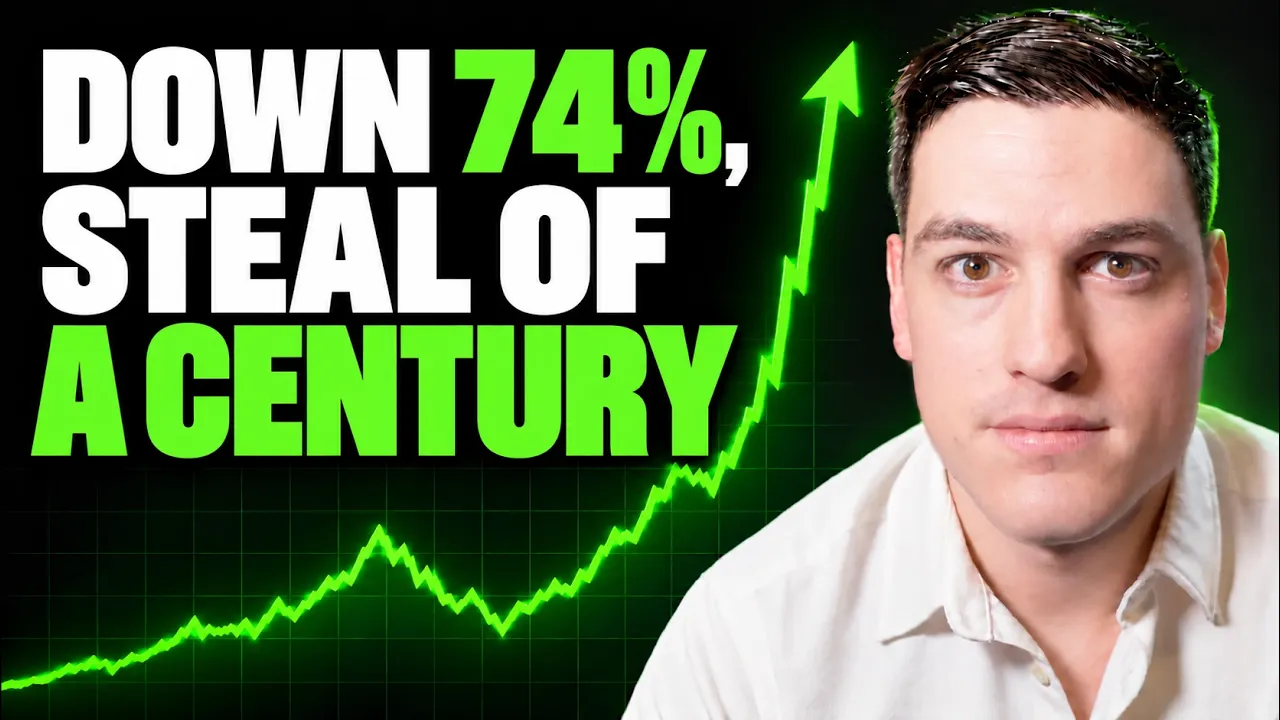
Folks, I hope you're ready because it is time to buy the dip. And in today's video, we're going to break down five stocks that I believe are perfect candidates for this. Each one of these stocks has a a business that's growing like crazy. B, a stock price that's been absolutely hammered. C, some really fascinating chart history behind it. D, it's actually making real money or is close to it and scaling rapidly. And most importantly, E, it's at a valuation that's way cheaper than it was just a few months ago. I'll make the case for each of these. and as always, let you be the judge. And then at the end of today's video, we're going to go on to our sponsored segment on our bond, which goes by bond, ticker symbol OBAI on the NASDAQ. They've built an AI powered personal security platform that big companies are already buying for their employees. This company's advisory bench is also really deep for a company this size. It includes a former US Secretary of Commerce, a former director of the Secret Service, a former deputy director of the FBI, a former New York City Police Commissioner, and a three-star Army general. I'll break down the company and why you may want to put it on your radar. And as always, folks, if you're the one taking the ultimate risk, you better be the one doing the ultimate frisk. Always do your own due diligence on all ideas presented. Okay, number five, SoFi Sofi. So, what is SoFi Charlie, and why is it so fly? Well, think about everything you'd normally go to a bank for. Your checking account, your savings, a personal loan, refinancing your student loans, a credit card, even investing. SoFi puts all of that inside one app on your phone, and it has its own bank charter. So, it's a real bank just without the branches. And the more of those products a member uses, the more money SoFi makes off of them. Now, pay attention to this part. So, last quarter, SoFi added a record 1.2 million new members. That's about 13,000 new members every single day. It's now at 17.1 million members, up 35% from a year ago. And revenue is growing right along with it. It was up 44% to a record 1.4 billion in profit a year ago so far made $139 million. This quarter it made $241 million. So for every dollar of profit it made a year ago, it's now making about $1.73. And they raised their guidance for the year again. So why has the stock been cut almost in half? It peaked at $32.73 last November and it closed at $16.75 on November 9th. Now, there's a few reasons this happened. Interest rates, as you know, have been rising and rising rates squeeze lenders like SoFi. So, the whole banking group has been getting sold. There's also a short seller report and hit piece. I'd argue one part of the business, the technology platform it sells to other banks and fintech companies, shrank 24% after one single big client left. And on November 5th, when the whole market got smacked, SoFi fell almost 8% in a day. So that's basically why it's down so much. But I think that's a deal. If you just look at the numbers, profit is up 73%, members are up 35%, and the stock is down almost half. Management is guiding to 90 cents of earnings per share next year, which puts the stock at about 18 and a half times 2027 earnings. I'd argue the market is treating SoFi like any other bank getting squeezed by rates. And I think that's a mistake for a company that's actually growing members by 35% per year. Okay, let's break out the chart. So, we've been here before. If you go back to April of last year, during the tariff crash, SoFi got cut almost in half, down some 44% dough from its December high to $9.50. 7 months later, it was over $32. It more than tripled. Then it gave a lot of that back all the way down to about $14 this October. And look at what happened on this last earnings report. So on October 27th, the stock jumped 13% in one day from $1446 to $16.40. And this was on 161 million shares, more than 3.5 times its normal volume. So the buyers showed up on these numbers. Now, one thing to look for, a close above $17.74, the November 4th high, which sits right on top of the 200 day moving average at $17.51. Get above that and SoFi is back above its long-term trend line and it's back to being SoFi SoFi. Okay, number four, Reddit. RDDT. Now, as you know, Reddit is basically the world's biggest collection of message boards. There's a community for literally everything. Stocks, cooking, fixing your car, strange hobbies, your favorite TV show, you name it. And if you've ever Googled the question and type the word Reddit at the end to get a real answer from a real person, well, you already get why it's so valuable. But anyh who, Reddit makes most of its money from ads. And it also licenses all of that human conversation to AI companies like Google and OpenAI to help train their models. Now, here's what's crazy, folks. So, last quarter, revenue was up 53% to $895 million. Profit was 283 million, up 74%. So, out of every dollar that Reddit brings in, about 32 cents ends up as pure profit. And it's sitting on three bill of cash with only about $31 million of debt. so it could pay off all of its debt almost 100 times over. That's a lot of moola. And on the day after that report on October 30th, the stock fell 29% in a single day from $129.60 to $91.73. So why? What the heck is going on here? Well, the number of people using Reddit every day in the US actually went down last quarter from 53.2 million to 50.7 million. And a lot of that is Google. You see, now that Google answers so many questions with AI right at the top of the search page, fewer people click through to Reddit and their revenue forecast for the holiday quarter came in a little below what Wall Street wanted. Now, a lot of people are going to say, "Charlie, are you cray cray? Isn't this a dying platform? Why would this be a top stock?" Well, worldwide, daily users were still up 12% from a year ago to 130.3 million. And the forecast that disappointed Wall Street is 1 billion to 1.03 billion in revenue for the quarter. The same quarter a year ago though was $726 million. So the disappointing guide that people are freaking out about is actually about 40% growth. So here's the deal folks. Look, this is a company that's trading at 11 times forward earnings and growing revenue at over 50% with basically no debt. Even if user growth in certain markets slows down for a couple quarters, well, I'm not so concerned. Okay, let's break out the chart because Reddit has done this exact thing before. So in February of last year, Reddit was at $225. By early April during the tariff crash, it was down to $86.91. That's down 61 whopping percent. And then about five and a half months later, it hit 270. It more than tripled. So what now? Well, from that 270 high, it's down 63% again. That's almost the exact same size drop. And on that earnings day, it traded 33.4 million shares, more than four times its normal volume. That's a lot of people throwing in the towel all at once. So, what would tell you the worst is over? Well, a close above 101 and 89 cents, the highest close since the earnings drop. Above that, there's a big gap all the way up to 129 and some 60s. Gaps love to be filled. Nvidia CEO would know a lot about that. We're going to talk about Nvidia a little bit later, but if it closes below $8928, the post earnings low, the selling isn't done yet. So, just from a technical standpoint, there you got the good and the bad. Longterm though, I think Reddit is a great buy. Number three, Microchip Technology, MCHP. Now, Microchip makes chips you've probably never heard of, but you use them every single day. Think about your car. You press a button and the window goes down. Your seat heater kicks on. Your brakes know when to work. There's a little chip in there telling each of those things what to do, and there's a good chance a company like Microchip or Microchip itself made it. They make these small control chips that you see here for cars, factory equipment, appliances, defense systems, and more and more data centers. They're not the flashy AI chips that are all the hoot right now, but they are in a lot of stuff. The profit is the part I really want you to see. A year ago, Microchip was making about $450,000 a day in profit. And now all of a sudden, whoop-dedoo, it's making about $4.4 million a day. That's almost 10 times more profit from the same company in one year. So, what happened? Why did the stock just drop some 22.6% in 2 days? Well, their guidance for next quarter came in basically flat. management says a big part of that is some one-time sales from September that won't repeat, but they gave no guidance at all for March and it all landed right as the whole market was getting smacked. Okay, so pull up the chart on November the 6th. Just a few days ago, Microchip closed more than 40% below its all-time high. I went back to 1996. Yes, 1996. I went back 30 years. I was born in 96. And that's what happened eight other times. A year later, the stock was higher all eight times, up 54.9% on average. But it usually didn't bounce right away. On average, it fell another 22% first. And it's not the first time that Microchip got hit this hard this fast. Since 1994, in fact, it's dropped 15% or more in 2 days, 20 different times. A year later, the stock was higher in 15 of those 20. The most recent one was the tariff crash in April of last year. And a year later, it was up about 66%. But it's no guarantee. After the drop in August 2024, it was still down about 12% a year later. But bigger picture here, I'd argue this is a great buy for the long term, and these prices are very juicy. Okay, number two, Applied Digital, APLD. So, what the heck is Applied Digital, Charlie? Can you apply some knowledge to our brains? Well, of course I can. So, picture a giant building in the middle of North Dakota packed wallto-wall with AI chips running 24 hours a day. Apply Digital builds those buildings, brings in the power and the cooling, and then rents them out to AI companies. So, you could think of it like a landlord for AI. Now, here's a key thing to understand about this, though. So, imagine you own an apartment building where all 100 units are already rented out, but only about 18 of the tenants have actually moved in. Well, that's Applied Digital right now. It has leases signed for 1.4 41 gawatt and only 250 megawatts of that is up and running. So most of the rent hasn't even started coming in yet. And with only those 18 tenants move in, look at what's already happening. For every dollar that Applied Digital brought in a year ago, it's now bringing in about $4.23. Now, if you do a little bit of research, you'll find that the Bears love to point out that it lost $221 million on paper last quarter. But if you do a little bit more digging, a big chunk of that was non-cash stuff. a loss on warrants and some one-time stock compensation. Strip that out and Ibata was positive $64 million. So misleading as the bears usually are. So why has the stock been beaten down to oblivion though? Well, it peaked at $50.72 back in May and it's down 67% since then. And this is a company that, let's be real, we've liked since very tiny prices, like you could see here. And it went up massively to over $50 just back in May. And now look at where it is back at what I'd say is a crazy buying opportunity. But why is it down? Well, a few reasons. The whole AI data center group has been absolutely destroyed in the last couple of months. And then right after the midterms, data centers turned into a real political issue. In the NBC exit poll, 76% of voters said they don't want one built in their area. So when people are getting nervous about AI buildouts, well obviously this is going to be one that gets sold off massively. While a lot of bears are expecting that the government actually goes in and decides that we're just not going to allow data center buildout or any tech future here in the US. Well, I'd argue that's a great buying opportunity because it's nonsense. In my opinion, the market is pricing this like the buildings won't get finished or the financing falls apart, but the leases are signed. Management expects 300 megawws live in North Dakota by the end of this year. And every time a new building turns on, a signed lease turns into actual revenue. So, if they keep delivering on schedule, I'd argue the stock is way, way, way too cheap down here. And if you open the chart a little bit, since April of last year, the stock has gone from $3.31 to $40, got cut in half, ran up to $50.72, and then at its low last week, it was all the way down to $13.11. That's down some 74% high to low. And here's the part that I find interesting. So, the last time APLD traded at $13 was September 8th of last year, 2025. About 5 weeks later though, it was at $40. And I remember talking about this back last year and people were like, "This can never go up again. It can never go up again. Data centers are dead. There's no need for data centers because it's all a bubble and AI is going to be a fad like the Teletubbies." Well, it actually turns out that they were wrong, very surprisingly. And 5 weeks later, again, it was at $40. That doesn't mean that this is going to happen again, but I think the case is pretty good for a resurgence either by the end of the year or an early Q1. And if you just look at the bigger picture, I mean, since APLD came onto the NASDAQ in 2022, it has fallen 60% or more from a high five other times. A year later, it was higher all five times. But here is the catch. In four of those five, it fell another 32% to 51% first. So, this one can get uglier before it gets better. But again, this is why we're big believers in buying good assets at good prices over time and not worrying about getting the exact deal that is the best. If it goes down more, you're happy because you get a better deal. And if it goes up right away, you're happy because your position went up. So that's how you look at things as a win-win. And when you're buying these for the long term, you can look at it that way. Okay. Now, the one that everybody's been waiting for. Drum roll, please. Boom, boom, boom, boom, boom, boom, boom. Nvidia NVDA. Now, I know this one doesn't need introducing, but just in case, Nvidia makes the chips that power artificial intelligence. When OpenAI trains Chat GPT, or when Microsoft, Meta, Amazon, and Google build out their AI data centers, they're mostly buying Nvidia chips and Nvidia networking gear to do it. And these days, Nvidia sells those chips in giant server racks, each one packed with a dozen of them. Now, nobody knows racks like Nvidia, and that knowing of racks goes all the way to the top, right at Jensen Hong. Rumor has it he personally inspects as many racks as possible. And don't take me the wrong way here or take me out of context. I'm literally talking about the Blackwell racks. They are game changers. And folks, the numbers are just absurd. Revenue more than doubled in a year. Last quarter, Nvidia made $59.7 billion in profit, which is about $649 million a day, about $27 million an hour. So anywh who, why is the stock down some 26.6% from its October 6th high? Well, it took two hits back to back. So on November 5th, after the midterms, the whole AI trade sold off on fears about new rules for data centers and Nvidia itself dropped some 9.3% that day. Then on November 8th, the board opened an investigation into Jeten Hong's relationship with a woman US officials believe passed information to China. Jensen admitted to the affair. Now look, Jensen Hong has a whole history of screwing Chinese models, but this takes it to a whole other level. The board says it has no reason to believe national security or company secrets were compromised. and Jensen himself said he'll cooperate fully. This is a man that's very cooperative, likes to do a lot of cooperating. Needless to say, I believe this is a great buying opportunity. An easy way to value Nvidia is to look at their PE. So, at about 11 times Ford earnings, if Nvidia made what analysts expect over the next year and handed every dollar of it to you, you'd get your money back in about 11 years. So, here's where it gets juicy, and not in the way that Jensen Hang thinks of it, but in the way that we think of it as investors. I went back through Nvidia's financials all the way to 2009 based on the profit it actually made over the last 12 months. The stock is the cheapest it's been since May 2019. That's before the pandemic and before Chat GBT even existed. And on next year's expected earnings, if analysts are right, you'd have to go back to early 2016 to find Nvidia this cheap. That's about 10 years. And just for fun, a year after that early 2016 spot, the stock was up 213% though. A year after that May 2019 spot, it was up 141% though. It's a different market and a much bigger company now. So, I wouldn't count on a complete repeat of those numbers. But it is interesting, isn't it? Now, the bears will say, Charlie, what about China? Every few months, a new Chinese AI model comes out and everybody screams that Nvidia is finished and now you have this situation with the models in China and Jensen Hong. Well, remember Deepsee? In January of last year, a Chinese lab said it trained a top AI model for a fraction of the cost and Nvidia lost 17% in a single day. A year later, the stock was up 32%. And the funny thing is, look, Deepseek trained its model on Nvidia chips in the first place. And Huawei, Hawaii, or Huaha, which I'll which I'll be honest, I never learned how to pronounce this, but let's just say Huawei, has been trying to build a chip to replace Nvidia in China for years, too. And meanwhile, Nvidia's profit just grew 126%. So yes, Jensen and Nvidia has had a rough week with China, but China still hasn't figured out how to replace him. At worst, China's going to send him some more women, and then we'll have some more sell-offs based on that. And people have been trying to copy Nvidia's chips for years, but nobody can even get close because it's so damn complex. >> Jensen can develop the most complex computer chip in the world that nobody can copy for 10 years. >> Okay, let's break out the chart. So, since the AI boom started, Nvidia has fallen 25% from its high three times, and this is the third. August 2024, a year later, it was up 80%. March of last year, it fell another 14.7% first into the tariff crash. And then a year later, it was up 65.2% though. Now, it's not always that clean, though. Go back to January 2022 and Nvidia fell another 53.5% and was still down a year later. But back then, its profits were about to shrink. Right now, profits just grew 126%. So, what matters from here? Well, earnings on November 17th, and I went back and looked at every time Nvidia went into earnings, already down more than 20% from its 52- week high. And since 2002, that has happened 36 times. The day after the report, the stock was up 22 times and down 14. So, a little bit better odds than a coin flip. But a year later, it was higher in 27 of those 36, up 53% on average. Now, earnings almost always are a coin flip, quite frankly. So, I wouldn't try to guess the report, but historically, the bigger move came over the following year. So, that puts Nvidia squarely and historically backed at a great buying area today. For what it's worth, I went back and I looked at seven times a big company CEO became the headline like this. And the first day of the sell-off was rarely the bottom, but still on a good company. Long-term, it's a good buy. Anyways, folks, there you have it. Let us know what you think about these ideas down below. Are you buying the dip? Let us know below. Okay, and now it's time for our sponsored segment on our bond, which goes by Bond, ticker symbol OBAI, on the NASDAQ. And the segment is disseminated on behalf of our Bond Inc. So, what is Bond, Charlie? Well, Bond is a personal security company. It runs an AI powered platform connected to command centers around the world, staffed 24 hours a day by trained security agents, and you get all of it through an app on your phone. The company is headquartered here in New York and the service is live in 28 countries in five languages. Think about it like this. You're walking to your car in a parking garage at night. You could put a Bond agent on standby before you even step off the elevator. You can have Bond track you until you get home. You could have a live agent watch over video while a stranger is inside your apartment, like a repair guy or a delivery you weren't expecting. And if something actually goes wrong, the agent is already watching, already knows where you are, and can get police, medics, or the fire department moving without you having to explain anything. There are 14 different services inside that one app. And beyond the app, Bond also runs an airguarding service with first responder drones, plus executive protection, guarding, and security consulting with operations in the US, Israel, and France. Now, here's the gap they're going after. So, there are roughly 240 million 911 calls in the US every year. And by most estimates, only a fraction of those are real emergencies. But underneath that, there's a much bigger set of moments where people feel unsafe and nothing has actually happened yet. Walking through a parking garage at night, opening the door for a delivery you didn't order, sitting in the back of a ride share that just turned down the wrong street. A Gallup poll found that about 40% of Americans say they don't feel safe walking alone at night where they live. That's well over 100 million people. And there's no real product for that moment. It's too early to call 911. So most people just call a friend who can't actually do anything. Personal security has always existed, but at $100 an hour, it was for celebrities and executives. Bond's pitch is that it can deliver it for about 13 cents a day per person. For companies, the argument is even more concrete. Businesses have spent decades making their building secure, but the moment an employee walks out the door to a parking lot at 11 at night, that protection stops. Estimates the company sites put the cost of workplace violence at around $2,000 per employee per year or roughly $300 billion a year across American businesses. And bond sizes its total opportunity, the new preventative market plus the existing private security market and more than $435 billion. Okay, but Charlie, how does it make money? Well, Bond sells licenses. A company buys a block of them for one team. The employees use it and then the company comes back for more. Management says enterprise retention is around 95% and the pattern they describe is land and expand. Start with the sales team or the night shift, then roll it out across the whole workforce and into offices in other countries. Earlier this year, one of the three biggest telecom companies in the US rolled Bond out to one of its sales teams in a deal the company says could grow past $2 million a year if it's adopted across the broader workforce. And it's not just companies anymore. This year, Bond opened a government channel. In June, One City bought licenses covering all 270,000 of its residents, fully paid for by the city. In July, they took the same model to higher education with an international university covering about 4,000 students, faculty, and staff. And also in June, Bond announced a US government funded contract that it says will add more than $3 million in annual recurring revenue once it's deployed. According to the company, that's roughly a 30% bump to its recurring revenue. And the company says that deal could grow a lot bigger over time. Now, who's running it? Well, the founder and CEO is Doran Kemple, a serial tech entrepreneur. The two companies he founded before this one, both an IT infrastructure, were bought by IBM in 2008 and Huelet Packard Enterprise in 2017 for a combined value of roughly $900 million. According to the company, the advisory bench is also really deep for a company this size. It includes a former US Secretary of Commerce, a former director of the Secret Service, a former deputy director of the FBI, a former New York City police commissioner, and a three-star Army general. The company says it has spent about 8 years and more than $100 million built in this platform, and it has handled about 1.4 million service requests and around 10,000 actual emergencies. Now, what's new in the last month? Well, in October, Bond did a 1 for20 reverse stock split and got back into compliance with NASDAQ's minimum price rule. And earlier this month, it announced a restructuring that converts about $15 million of debt and preferred stock into common stock and lines up as much as $10 million in new investment. The company says that wipes out about 90% of its stockholders deficit, which could clean up the balance sheet quite a lot. And the next big date is November 13th. That's when Bond reports its third quarter results before the market opens with a business update webinar at 11:00 a.m. Eastern. That's where you'll want to see whether those city and government contracts are actually showing up in the revenue. Now, it's time to talk about some of the risks, and there are some real ones. Of course, Bond is a very small company at around where it's traded right now. The whole company is only worth about $3 million over the last 12 months. Revenue was about $9.9 million, roughly flat, and it lost about $17.7 million. So, the growth from these new contracts still has to actually show up. Converting debt into stock and raising new money also means a lot more shares. And that's dilution for anyone who already owns it. And pretty much every small cap company gets a ton of dilution because these companies are so early stage and they need to raise money in order to grow into their ambitious plans. And I think this one is no different. And with a company this small, the stock can move a lot on very little news in either direction. This volatility is something to be aware of. Selling a brand new category to companies, cities, and governments all at once is expensive, and it's never guaranteed to work. So, make sure to read all of the SEC filings and come to your own conclusion. Anyways, to cap it off, Bond is a personal security company. It runs an AI powered platform connected to command centers around the world staffed 24 hours a day by trained security agents and you get all of it through an app on your phone. This company's doing some exciting things and has already shown some interesting results. And if you want to begin doing your due diligence into it, I'll put the link to the company down below. Anyways, have a great rest of your day. We'll see you in the next video. Anyways, folks, that is it for today. Looks like the sun is starting to set here in New York, so I'm going to go outside, get some dinner. I'll see you in the next

Comments 0
Sign in to join the discussion.
Sign inNo comments yet. Be the first to share your thoughts!