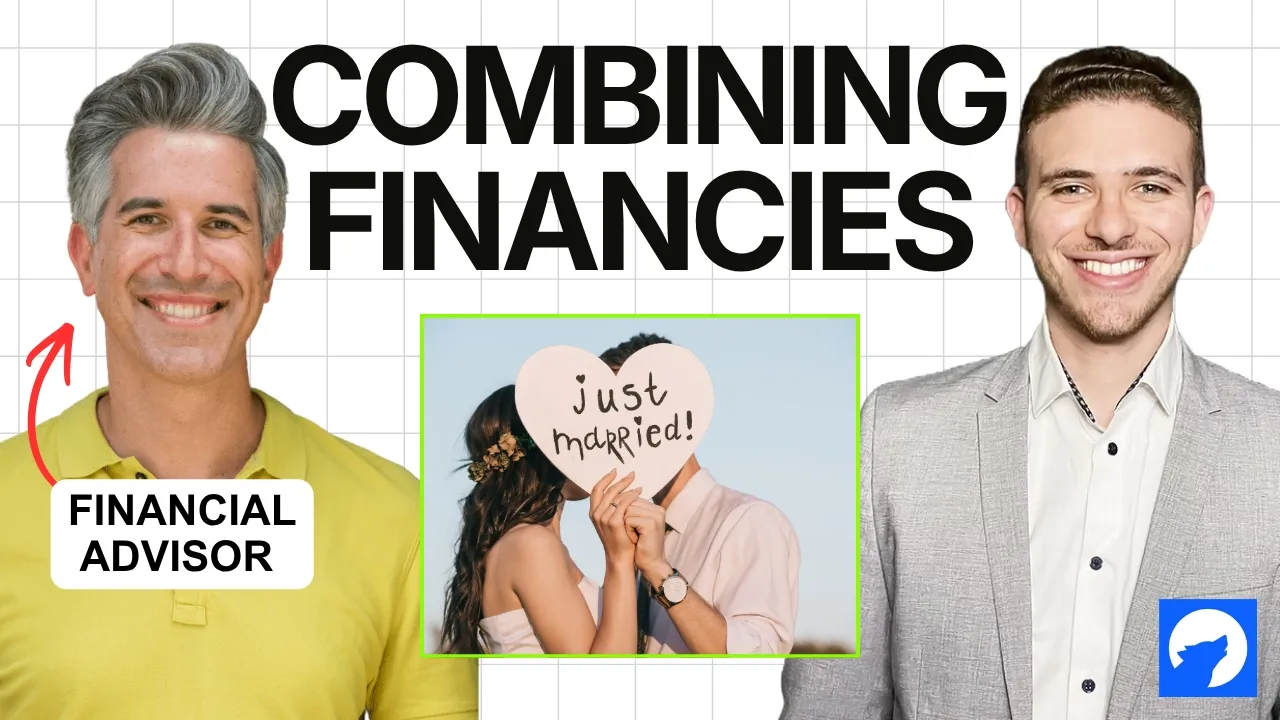
A Financial Advisors Advice for Couples Combining their Finances (Doug Boneparth)

- Video return
- -0.02%
- Calls
- 1
- Buy / Sell
- 1 0
- Published
Recommendations
Entry is the asset's closing price on the publication date. Current is the last close on record.
-
Entry $63,311.00 13 Aug 2026Current $63,301.00 14 Aug 2026Result −$10.00
you can then put in the 5% or you know couple percentage points of your your you know of your Bitcoin or whatever it is that you have a conviction for
Full Transcript
Hello everybody. It's Gav Blackber, CEO at Wolf and your host for today. Joining me is the incredible Doug Bonearth, the money manager with a million followers himself. Joins us today to talk about personal finances and a special segment around marriage finances as well as I'm recently married and I've realized, hey, there's not really a blueprint for how to go about the finances side of things here. And he did he did, I guess, write the blueprint. So, we'll say that within those pieces. But Doug, how's it going? Good to have you back on. >> Oh, it's always good to see you, Gav. How are you doing? >> Living the dream. It's been a crazy week. Hosted our conference in New York. Was at the NASDAQ all types of stuff. Um, but now I'm back in the seat ready to do some content. I've been already live streaming a bit today. So, thanks to those that are, you know, welcome back if you're on our earlier live streams. >> Uh, and, you know, welcome if this is your first one for today. But, let's dive right into things. So, I thought this was a good time to do this because the market, I think, and finances in general are making people think a lot of different thoughts right now. You have people, especially those that are in tech and stuff like that, they're experiencing wild swings in their portfolio, right? One week we're eating lobster, the next week we're eating ice sandwiches. >> And then you also have S&P 500 hitting all-time highs. And it's like, okay, well, how are these two things happening in tandem? Plus, you have inflation, expenses, right? All these different things. So from your you know bird's eye view when you just first look at what's happening in this economy and this market how do you how do you think about it as a financial adviser and then we'll dive deeper from there? Well >> that's a really great question a very loaded question too but I I I love it because you know this is an absolute clinic in you know human and investor psychology taking place right before us. You know let's let's set the stage if we will. Um, I don't think there's ever been a noisier time to be an investor in all of history, right? Whether we're contributing to that or helping with that, I would like to think we're obviously helping with that. But nonetheless, that there are more sources of information than ever before. Um, a lot of legitimate sources and a whole bunch of stuff that, you know, maybe you should put over here. And that makes it very hard uh to do the thing that I believe most investors need to get be really good at and that's be consistent and disciplined like the super boring stuff. So if the goal is to be boring so you can compound your returns over time but almost everything on earth is trying to make you do something when volatility strikes right and you're right there's there's no shortage of that. We got two wars going on, right? We got oil spiking. We got all-time highs on the good side. K-shaped economy. The Fed wants to You got three governors that want to raise rates. That's, you know, creating chaos. Of course, an administration that's walking back peace going for pe it. It's nuts. I don't even think I got half of them, but that certainly is is a good amount to send markets back and forth. But, you know, let's let's be mindful of just how much volatility we're actually seeing. I I think we have to go back to April of last year to see the real big draw down, that 20 plus% draw down because of the uh tariff tantrum, right? Liberation day that really set things into to a spending, but that that dip got gobbled up super fast as well. So yeah, I mean, if you're talking sector specific, if we're talking chips, right, and we're talking the AI trade, we're seeing a lot more volatility out of that than we are, let's say, the S&P 500, you know, this year, we haven't seen that April of 2025 move, but we're seeing plenty of volatility. You want to go emerging markets, and I could do this all day long. You're going to see a different set, you know, of price movement there. And to your point, yet over the last few days, not to time stamp things here, but we're seeing all-time highs. We're seeing earnings come out where what was it 83% of companies something like that earnings showed really good earnings companies are making money here and again a lot of this like oh what what about the AI trade discount the AI trade for a second right and you're you're seeing companies actually do quite well not just in the US but across the board all that tariff stuff has been a boon for international stocks and emerging market why deal with tariffs when we can go get something overseas right so you know basically every you know it's It's it's a poo poo platter, you know, of asset appreciation, I guess, except for bonds, right? So, it's it's crazy. How do we how do we make sense of that? >> Well, that leads my next question, which is right now, you know, you do construct portfolios for a variety of clients and obviously there's some differences from client to client, but right now when you're building out a portfolio and and you know, we can use somebody in their let's say late 20s, 30s area as an example right here. What are you favoring in those portfolios? It's always going to be what the investor can stick with to do the very boring thing of sticking with it, right? And then I want to win around the edges. And what that means is paying particular attention to. Are there tax strategies that put real hard dollars back in the pockets of our clients? You want to call that tax alpha or just good tax planning. That's one area we want to go down. Actually having a system in place to buy the dip. Everyone says that. But who can put their emotions aside and actually implement the dip buying opportunities, right? Is there a system that you've implemented? Okay, we're down 5, 10, 20%. I've been dollar cost averaging money in. I'm going to accelerate that or I'm going to be so bold to take some of my cash reserves and maybe go buy the dip with that. But it's all about the system. Do you have someone doing that for you? Have you automated that? Because if it's left up to you, the vast majority of the time, someone's going to fumble that ball because our emotions take over. It's in those moments, those winning around the edge moments that put an extra 10, 20, maybe 50 or more basis points of annualized performance to your portfolio. I want to see I I think to me like that's the epitome of an excellent investor. A really good investor is just going to navigate volatility. Is not going to take the bait of I'm going to do something. that 20, 30 year old, if we're talking about that demographic, I'm looking at your earning potential, your income, your ability to cover your expenses and take your dry powder and put it to work, that excess capital, and be able to be a consistent investor. So, not only like, hey, can I stay the course and stick to my portfolio, whatever that is, and and and look, that's very subjective. I am as boring as it comes. Risk adjusted portfolios, right? Maximizing reward for the risk we're willing to take based on your risk profile. I'll do that all day long. Always room for opportunity portfolios. You want to take five or 10% of your investable assets or investable net worth and go after a sector or go after a digital asset because you have high conviction. That's not going to ruin your future. That's going to be something that and by the way, you're still holding on to that for like you're not trading it, right? We can get into trading, you know, aside, but if we're talking buy and hold, build wealth, it's that boring stuff. anything we can do to encourage you know that you are going to successfully compound over time. >> Yeah, a lot a lot of questions come to mind off that but just to run through a few. When you think you talked about the S&P 500 you know all-time highs and being a staple of a lot of these portfolios. How do you think about the SP 500 versus the Q's? >> So again volatility I think you know uh well I think a few things right I think well what kind of risk characteristics are we going to find ourselves investing in? Because back to my thesis, is this going to make it harder or easier to hold on to? So QQQ, right, you're you're going to have more volatility there, right? Compared to the S&P 500, those draw downs are more severe, but some of those moves to the upside are are much more parabolic, right? And if we're talking, you know, from the lows of 2022 or the epic, you know, fang, mag fang, now mag seven selloff, that was brutal, right? You had 50 60 70% draw downs. But if you held or even better if that was like your entry point, holy cow. But if you were holding before that and had to go into that, I mean, you had to eat some crow before what? Going absolutely parabolic, you know, in 23 24 and then the trade got a little interrupted in 25 into 26 here, right? So could that investor hang tight in that, you know, more than the S&P 500? Can can you deal with that kind of volatility? And if the answer is yes, then you're going to get the premium for having done it. And then the second piece of this, of course, is, you know, do you believe in the theme of tech and QQ? Like, are you biting down hard on, you know, this being the future of where capital is going to go? I'm an early adopter of like all the gadgets and gizmos. So like indoctrinated in me is I do believe in tech. How do you how do you not? So, I think those are my two main thoughts around, hey, S&P versus QQQ. >> Yeah, even with all that volatility and SPY being at all-time highs, Q's not at all-time highs, Q's are still up more than 3% above S&P 500 year to date. Um, and obviously outperformed a good amount over the last several years. How do you think and just to kind of expand upon that and then roll into some other questions outside of buying the views, I'm sure you are no stranger to a variety of other ETFs and index funds and pieces like that. How do you go about picking and choosing the ones that you, you know, gravitate to? I know you've outlined some of the risk type pieces, but going a little bit more of a deeper level into that, you have like, you know, some very cool funds from Vanguard and Black Rockck and others, right? Technology funds and pieces along those lines. >> Sure. >> Yeah. So, again, the the base layer here is is boring. And I'll be very specific with you, like if we're talking about your SM, like let's talk about an 8020 portfolio. I'll give you some insights into what that might look like, right? And we're going to be boring. So, we're going to go with just the core indices. And it could be Black Rockck, it could be Vanguard, it could be, you know, Stage Street, it could be any of your absolutely monolith financial institution because what are they doing? They're competing for price, right? They're basically it's a race to the bottom in terms of what they're charging, which is virtually nothing for like your S&P 500 ETF. Maybe you'll cough up 10 20 basis points for, you know, the emerging markets, you know, core index, right? Whatever that is. Um, so you're going to look at something that's maybe like 35% in the S&P 500. you're going to see 12 in midcap, seven in small, 20 in developed international. I hope this adds up to 100, seven in maybe um your emerging markets and the rest is going to bond. That's pretty close to 8020. I think someone can check that. Might be off by a percent or two here. But this is constructed not because I'm I'm guessing at it. It's because you're looking at risk statistics. You know, you're looking at the historical data to provide you. We're still using, you know, tried and true stuff or at least the best stuff we have. In this case, it would be sharp ratio or standard deviation to get an idea of how much reward we should expect for the risk that we're willing to take. That's what you're optimizing for, right? And so to me, that is a great way to start building portfolios and get your discipline super high before you start messing around by throwing in that sleeve of biotech or semiconductors or whatever the shiny object is of that moment, right? you can then put in the 5% or you know couple percentage points of your your you know of your Bitcoin or whatever it is that you know you have a conviction for but also understand typically when you go down these roads you're adding V I don't know too many yeah you're going for the opportunity right um most people view it that way as opposed to hey what can I add to my portfolio that's going to actually bring the risk down because if that's what you're doing you're probably going to bring the opportunity down as well. But you you might be trying to do that. I don't know what investor we're necessarily talking about uh or the object. But there you go. Like that's your blueprint, your base layer before you start adding on um the opportunity portfolios or start putting in sleeves of sectorbased type investing. >> What's the best piece of personal finance advice anyone ever gave you? >> Playing long games. Like get good at playing long games, right? that folds so nicely inside of what I've been sharing with you so far. Like the greatest rewards you will receive in your life on any front and we're talking in the context of your portfolio and and finances here. It holds true for your physical health, your mental health, your relationships, which we're going to get into, right? This always seems to hold true that if you can play long games, be consistent and disciplined, the best and biggest rewards are going to come out of that, right? Immediate gratification versus delayed gratification. And there are much quippier ways to talk about this, but that's the best advice I've been given and I've seen it play out in terms of building business um as an entrepreneur. Um where you know being an impatient child, someone who was a kid that was very impatient, I somehow chose to be extraordinarily patient with how I built my business and the type of clients that we work with, which when I started I was going after, you know, millennials when, you know, that word was just coin. Now we're in our 40s and unks, right? So, um, but that was a big bet. That was, hey, I'm I'm going to go invest in my peers when we're basically all broke coming out of, you know, and starting our adult lives in the recession. >> Do you ever share what's in your own portfolio? >> I more or less just did, you know, as far as a risk adjusted >> outlined it. >> The vast majority is going to be that very passive risk adjusted take. um we were early investors in in Bitcoin and and kind of got lucky in right place, right time with that. So, you know, that's something we do believe in as as a household. Um my opportunity portfolio is very very techheavy, right? Um it's got your AI play. We got Nvidia in there or, you know, got in early enough for that to have, you know, been a great buy. Um ARM Holdings uh was a great play. I remember being fond of that before SoftBank, you know, took them out and then they spat it back out. Of course, maybe a little late on, you know, this runup in in semiconductors and and RAM and and chip stocks, but you know, I'm looking 20 30 years down there. There's just not enough of it. Yeah, we don't we don't we don't have enough to, you know, do the compute power that we need. So, you know, it's I'm I'm okay with massive draw downs, which we will almost certainly see when it comes to, you know, the AI space. We've already we already saw that kind of in 22. It's probably most definitely going to happen again, but you got to survive it. Hey, those would be some great entry points. But yeah, very boring stuff. We own a home, so we got we got some real, but that's not an investable asset. And then the business the business is probably, you know, the biggest asset in the portfolio. But when it comes to investable assets, there you go. It's it's it got some exciting stuff in it, but the vast majority is pretty boring. >> Yeah. And one last topic before I go into the marriage stuff. Are you using I was doing some research and when it comes to hedge funds, 95% of hedge funds are using some type of generative AI in their work and I think that a lot of people look at AI and AI agents maybe being a very good fit for the advisor space or just for portfolio. Uh allowing people to remove a lot of the emotions, right? Because now if you >> Sure. Let's say you would typically um you know dollar cost average, right? You can have it do it for you necessarily or build out strategies. You could have it uh like you said maybe accelerate dollar cost averaging on dips. How are you using this? >> Yeah. Um so massive shout out to Altruist, our you know custodian that we've um transitioned to as of last year. It'll be a full year making that pretty big change at at the firm level. And they've created pretty much an AI native custodian with its tool Hazel. Ironically, the name of my older daughter. None of this by design, just >> kind of a share it. Um >> now you have to make her Hazel AI. >> Yeah. Yeah. Yeah. Exactly. So, um what we're seeing from, you know, the operator level, right, the administrator level of running a wealth management firm is is some of the absolutely most massive lifts that we could imagine when it comes to uh operating a firm. And everybody's got a noteaker. Everybody's got something that will summarize their meeting or take transcripts. This really takes it to the next level if you're a financial adviser helping people make financial decisions through planning and investment management. Um the amount of you know custom uh data that we can put together. Let let me back up for a second. The fact that it connects to the actual custodian level, it knows the accounts. It knows the client relationship based on our communication and the meetings and emails. It starts to build these profiles up from the ground. you know, we can obviously feed it years worth of financial plans and meeting notes and start to get depth in or rather a more robust profile for our client. As the advisor, I mean, I can see things how attitude and moods have changed throughout the meeting talk, you know, analysis from talk time um all the way to reactions to a particular thing that we talked about. And those could all be ways in which I then address the client and seek out opportunities for them or address concerns or come up with solutions for things that you know they have to deal with in their in their lives. Let alone the fact that AI has just you know made you know a commodity but hey if I yeah I can do I can do deep thinking deep planning thought much more quickly and much more customized based on the solution that you know Hazel has been has been providing us. I think that's amazing. Then there's the other side, right? The do-it-yourself investor uh who is leveraging AI to be a better investor or a better manager of their household finances. You can go create your own agent. I've created multiple agents for our household as well. Um one to know what people are doing and two to actually actually use it in tandem to how we operate as professionals. It's getting I you know the question must be aren't you threatened you know by I maybe at some point but like right now this is one of the most deflationary things that I've gotten my hands on when it comes to running a business to the point where when we think about hiring and we think about you know salary and wages and what we need to grow like it constantly has us rethink do do we need that person you know uh we can do so much more we can have so much more capac Don't listen, Cliff. Don't listen, >> Cliff. No, no, these are open. Cliff's in. Cliff, he's not going anywhere. The whole the whole thing the whole thing falls apart without Cliff, of course. But him and I have been blessed, you know, with using AI uh from more of an operational perspective certainly to be able to, you know, do things on that end and from what we can do with our clients as well. Spend more time talking about the things that matter and the human component that I don't think AI has really gotten into. Yeah. >> Very cool. Very cool. All right. This gets us to the marriage side of things. So, you wrote a book. Uh, you want to pull that from the back? It's a little blurred right now. People can't see it. >> Put that on the screen here. Money together, Heather and Douglas Bonapart. >> Uh, excited to hear about this. So, just for context, I also did get married this year. Um, ended up getting I had my religious wedding, then I actually had a legal wedding uh more recently. And so, now I'm kind of getting to the point, you know, and I don't, you know, I don't necessarily have like um full-on game plan, I would say, in terms of these things, right? We've we've uh couples do it differently. Like there's some couples where when they're dating, right, finances are together already at that point and they're living out of stuff. But I've got my bank accounts, she has her bank accounts, I've got my cards, she has her cards. Um I think I gave her like one card that she has access to or something like that. But it's really separate right now. And so I'm trying to figure out okay, you know, we're we're going to now have a joint bank account, but like what gets paid out of that? What gets paid separate? Who contributes to it? How does that happen? So how do how do you think about this for uh marriage and finances? Yeah, I think there's two sides of it. One, which is probably a little more straightforward and the the less hard work than than the other side, which is really what the book gets into. You're talking about more of the structure and how to operate as a financial household. And it's very important, right? Your first joint bank account, who does what in the relationship, how money flows in and out, right? The net worth statement, the balance sheet, the cash flow, how you invest as a couple, and the account level stuff. Obviously, you need to do all of this to actually be a financial household, but it's, you know, the stuff in the book that I think really moves the needle, right? And it's on the premise that money is so much more than just money. Money is going to tap into who you are, your identity that goes way back before you ever met that person you love, right? your culture, your parents, your socioeconomic status, the trauma, the privilege, whatever it may be that you experienced with money is going to shape how it is you function around it. Oh, and then it gets so much so much more difficult because now you're meeting you think that person that you met that you fell in love with has that same experience and understands, you know, what what your experience was like. No, they have their own, right? And it could by the way be completely opposite. In many cases it is or it could be similar and that's why you guys get along. In the case of Heather and I like a lot of similarities but we are very opposite people, right? So it's on that note where now comes the reconciliation of this. You're going to share your life with someone and deal with money every single day. And trying to get on the same page is what it's really all about. So, we're talking about communication. We're talking about making room for the other person so you can understand where they're coming from. Because you're going to be making joint decisions together, right? That plug into your goals and the things that you want for your life. You're going to discover things that you picked up as a kid that do not serve you well today and most certainly do not serve you together as a couple. and shaking those things, talking about these things, and doing the selfwork, caring enough to do the selfwork on yourself, and then the joint work as a couple. Hey, man, most people are going to run for the hills. They're going to bury their heads in the sand. They're not going to do any of this. And that's what leads to high divorce rates. You know, people, you know, your finances is is typically the number one reason marriages don't work out. And it's not a how much money problem, right? the billionaires, they get divorced at the same rate as us and normies or soon to be billionaires, right? So, you know, it's not how much money you have, it's are you able to see each other and understand where you're coming from and communicate around money effectively and then build your financial life around that and how the other pieces fall into play. >> So, what's what's the three biggest pieces of advice you'd say like, you know, do this if you do want the relationship to be successful when it comes to money? >> Yeah. So, I think number one is be able to make room for your partner and the other person. You know, you don't even you don't always need to have an answer. You don't need to always be able to fix something. You just need to make the space in order to understand what their money lens looks like because once you understand that, you can actually start to do things that will work for your relationship. The second one, and Heather's favorite, is the third section of the book, and it's about um caregiving. It's about caregivers being providers, too, right? Right? So, kind of unbundling this concept that the person who makes money that if you're making money, you're the only one, you know, actually contributing to the family. And that's that's just so boomer. That's just so old hat. um the person that's making money uh is probably unable to make money if they didn't have someone you know supporting them whether they're working or not as being you know we are talking about caregivers here whether they're taking care of the kids or they're taking care of aging parents or siblings and stuff like that so that's that's extremely important and then I would argue that understanding as I said that money is just more than money this macro level this desire to actually care enough to be interested in your partner and what their money story is. I think that's the whole thing right there because the minute you stop caring and not want to get into that level is what you know starts to create those cracks in the relationship. Um, so there's three. I'm sure I could have given you 30 more. We got five sections of this book of, you know, how to handle your origins and where you've come from all the way over to how you make decisions together and deal with risk as a couple. It should be, you know, it's all and it's all told through stories, right? We interviewed more than 60 couples uh of all walks of life, you know, as well as weaving in our own stories, which we hope are entertaining, but it's all it's all driven through the stories of others to help you understand how to deal with these mechanics in your own life. >> I like the story style. I remember reading how to make friends and influence people and >> really just, you know, it's all stories, right? And it's all, hey, here's a takeaway from this. And that's always very easy to grasp. >> It's how you got to do it. Attention spans run very short these days, right? We live in a >> three, four minute attention span world. >> I could definitely see the background stuff because, you know, obviously I'm in a very different place today, but and I've shared it on stuff, but money for me was like the number one issue, I think, through a lot of relationships because in '08, my parents really lost everything and declared bankruptcy. >> You know, once I got to college, I never had more than a net worth of $3,000, $4,000 at any given time. And so, you know, a lot of people uh just never experience that, right? And it's like, hey, of course I'm going out tonight. I got my dad's credit card, you know? Um, and like people don't even have to think about money as a thing, but for me, once I was 18, it was, hey, if if it's not coming down to my pocket, I ain't eating. Uh yeah, >> what's so crazy is that we've interviewed people who came from, you know, food insecurity and had housing insecurity and got to see how they treated money as they became successful and and made it in life, you know, whether it was always having a refrigerator stocked with food and letting it spoil or always buying like like one guy bought like 50 pairs of jeans. He didn't need 50 pairs of jeans, but it was filling a hole, you know, of not having clothes, you know, all the way over to the flip side where we talked to someone who came from immense priv, you know, Manhattan wealth, immense privilege, and he's like, "What's privilege?" He's like, "I I had friends." He's like, "We owned a brownstone on the Upper West Side. I had friends who own the whole block, you know, and no one no one's crying for him. That's not the point. The point is look how relative everything is. So your story, we start with the chapter. Your story is your story. We want people really to understand what that story is and be in a position to share that with their partner and your partner to share that with you. That's the first step. And really having a healthy financial relationship that you can build a life around. >> Yeah, makes a lot of sense. >> Exciting to exciting things to think about. >> Yeah. Look at the look of the look of fear on your face. I mean, you know, that's that's the look of of the newlywed like you know what? I'm just going to go out to dinner with my wife. Do the work. Do the work. >> So, you you hit on some really good things there in terms of the things that are maybe even less less quantifiable, right? They're emotion based with some of those pieces to bring it to the quantifiable spot. Are there anything that's like, hey, like here's some maybe some really good habits in your relationship. >> Exactly. Yeah. So, you know, listen, the feeling side is very important, but like we need to actually take action, right? We need to be able to do stuff to facilitate this. And I love that question. So, um, we strongly believe in regular money meetings. Call them what you want. We call them money dates, right? On a quarterly basis, you want to be able to sit down with your partner to have a conversation that is not, yes, 100% you're going to go through the financial mechanics, right? You're going to look at how money came in and out of your life cash flow. You're going to want to know where all of your assets are. That's your net worth table. What's the value of all the accounts, right? You're going to want to um take a look at uh risk, right? Your insurance, but it's a top- down review of all the financial things that are taking place in your life. But I also want you to go much further than that, right? I want you to talk about what's working and what's not working. Who got time that quarter to do the things that needed to be done? Is someone gasping for air? Right? That's a very important conversation that Heather and I have at these meetings. Um, we also want you to be able to start, by the way, guys, do do not start with your partner and say, "Hey, come sit down. Let's, you know, let's go take a let's take a look at the cash flow. Let's go look at investments." It will it will not work. So, some real advice here. Number one, when you're doing these meetings, don't do them frequently enough that there's not enough time for change to take place in your life. That's why I like quarterly. I think it's a perfect I think that's the sweet spot. Number two, um, do it over something that you really both enjoy doing. Heather and I like walking, we like cocktails, we like eating, and we play tennis. And we've done a money date on all of these things. Um, as well as just some quiet mornings with the kids out of the house, right? Um, think about something that would be very hard for you to smash the cancel button on your calendar. So, put it on your calendar, set the reminders, show up. All right? And do it over something you like to do so you don't cancel it. Um, as I mentioned, you're going to start with things that both people want to talk about. I'll give you a great example of that. Instead of saying, "Hey, let's go look at a spreadsheet together," which would have most people say, "I'm done." Let's talk about vacation, right? Hey, you know how we talked about uh wanting to go away uh with the kids over spring break? I know nothing gets people talking more than, you know, the ability to go on a wonderful trip or talk about something that you both would look forward to, a short-term goal um that you both want to talk about because what you can do off of that is then say, "Hey, all right, we know we want to go do this trip. Would you be okay?" Or now let's sit down and take a look at, you know, what we need to do in spending to cut back or make some changes so that we can do this trip together. Sounds good. Look at the buyin you get right there. All right. If that meant we're not going to go out, you know, with our friends for the third night this week or the second night or maybe, you know, we'll do something at home, you know, you're going to be motivated to do that. So, I think these are all great pieces of of tips to run this money meeting. And again, you're going to go beyond just the financial components of this. You're going to want to get into how everyone's feeling. You're going to want to talk about uh highle goals that you have. If you're running a business, you'll be getting into the business side of things as well. And that's how you do a money meeting in a in a nutshell and do this every single quarter. You only get four if you're doing it quarterly. That's only four a year. You know, we're on money meeting number, you know, 2030 something at this point. And I feel like we're just getting really good at this. So again, consistency and discipline. Show up here again. It will definitely help. >> How long are these money meetings usually? Um I've had them take anywhere from 45 minutes to two hours depending on what we're doing, what we're talking about, uh and what we need to get done. So um don't put a time. You're doing something fun, right? Like you played a game of tennis, you're now sitting down having a drink and going through everything. Don't be embarrassed. I've I've brought sheets of paper to and and you know, printouts to to dinner. Um but again, emphasis on a distraction-free environment. You know, you don't want the kids running in be like, "Man, what are you doing?" That's that's not the goal here. So, distraction free, something you very much look forward to. Spend as much time uh as you can. Get the babysitter. Take two, three hours. I don't care. But just be consistent in doing it. >> Actionable advice. I love it. Really, really good stuff here. We discussed the markets right now and how to approach them if you don't want to have to be freaking out all the time, >> right, within these pieces. talk a little bit about where AI, you know, and tech fits into these things. Some good stuff on the marriage things. Any other thoughts that you'd want to share before we wrap up today? >> Um, >> how does it feel to have a million followers? >> 1.2. What are we at? >> One, two. One, two. Um, >> well, the only things I I would I'll comment on the million followers. That's that's super interesting. Never never did I think uh you know telling funny jokes and being humorous on the internet would would result in in this. I feel it feels less fun now because like you hit this like you hit this huge mile like 100 thousand like wow this is insane and I don't know maybe it's because the counter doesn't go up as fast. You only see it humble flex here. You only see it by the hundred thousands now. Yeah. So there's that. Um, hey man, if this audience and and you know gets uh gets to buying you know the book and you know it results in them being a more financially literate you know audience then it's it's all worth it. Truthfully it's um one of my favorite places to be. It was a giant cope for me during you know the COVID era. I I always loved Financial X or Financial Twitter as a great place to network and meet people. Yeah, this going back in like 2018, 2019. What my old ass thinks is the heyday. And now I see it happening all again with the younger generation. Look at you. Look at everyone. The community is still thriving. It's gone in so many different directions. But at its core, it's still being used to network. And uh I'm just having fun. I mean, I I don't you know, Heather would yell at me and say, "You don't promote yourself enough and you don't you don't sell enough." So guys, go buy my book. go hire the firm, you know, for financial advice. I'm I'm do I'm doing it for the love of the game most of the time and as a giant cope for how crazy this world is and how sad and upsetting it can be at times, but you all seem to laugh along with me and I I couldn't ask for more. But yeah, I guess I can ask for more. Go, you know, make this a make this a bestseller. It'll make my wife very happy. >> The ad rev covers the money dates. >> Yeah, it uh sends a kid to camp, I think. I'm not sure. I have to go I would check it out. It's nice. I' I'd do it for free and that's the truth. >> We We were doing it for free. Been around a long time. >> Exactly. Like they wanna they want to, you know, give us money for this now. Okay. All right. So, we'll take I guess I'll take it. >> All right. That was that was my last question on those pieces. Any final thoughts here? Anything else you'd want to share before we wrap up? >> No, just, you know, I'll triple down on on, you know, I I really want you the audience. I want you all to win. Like I'm just a guy who's a dad and you know I know a lot about money and I help people every day make hopefully the best financial decisions for themselves. And I have a very privileged position to see those decisions pan out and turn into the achievement of goals whether that's sending kids to college or building an amazing business or finding financial independence someday. Um, and you know, to see that kind of happiness in the lives of individuals makes me happy and it's kind of a fatal flaw, but I want all of you to be happy. And one way I know you can do that is by caring enough to take control over your financial life, whether that's as an individual, in your relationship. Money touches every single breath you take in in life. And you can control this. like you you can have direct control over the outcome in which you know money plays a role. So I want you to win. So go out there take control. There's there's it's the golden age of financial media and information. Wolf here is a shining example of that. Uh as are we. So go do that. >> Thank you Doug. Appreciate that. Encourage everybody take these words to heart. Um, and especially the piece on, you know, long-term, right? The S&P 500 is not going to be the thing hopefully that moves 20% in a week. Um, but it is a thing that should, you know, over time continue to compound for you and be a great basis and stable part of your portfolio. >> Um, make sure, you know, like you said, at least 100,000 you're going to have to follow Doug for him to feel anything, >> but it's not. We'll see what we can get and make sure you're buy. >> We need to buy the millions now. Buy the millions. >> On Amazon, right? >> Books on Amazon. Anywhere you buy books, Money Together, check it out. Humble us. We love you guys. >> Thank you. Appreciate everybody for watching. We will see you on the next one. Have a great rest of your day. >> Thanks for watching today's video. If you enjoyed it, go check out the Wool Financial Newsletter. Did you know that we make a ton of content? We host 60 plus hours of Twitter spaces and live streams every single week. We're posting on the timeline over and over and over. We put up YouTube videos and one of our prime gems is our newsletter. And it's free into your inbox multiple times a week. We mix it up. We give stock picks, market headlines, research info. It's a great way for you to stay in touch with the stock market and your portfolio without having to spend eight hours a day staring at your brokerage screen. So again, link is below. It is free to grab and you're going to love the content in
Comments 0
Sign in to join the discussion.
Sign inNo comments yet. Be the first to share your thoughts!