
- Video return
- -0.11%
- Calls
- 1
- Buy / Sell
- 1 0
- Published
Recommendations
Entry is the asset's closing price on the publication date. Current is the last close on record.
-
Entry $69,439.00 19 Aug 2026Current $69,360.00 20 Aug 2026Result −$79.00
move a little bit from gold, okay, into Bitcoin.
Context Now, inside IBIT's 0.2% redemption rate, the next leg of this thesis is when the gold allocators, the real asset holders of the pension funds and sovereign wealth funds move a little bit from gold, okay, into Bitcoin.
Full Transcript
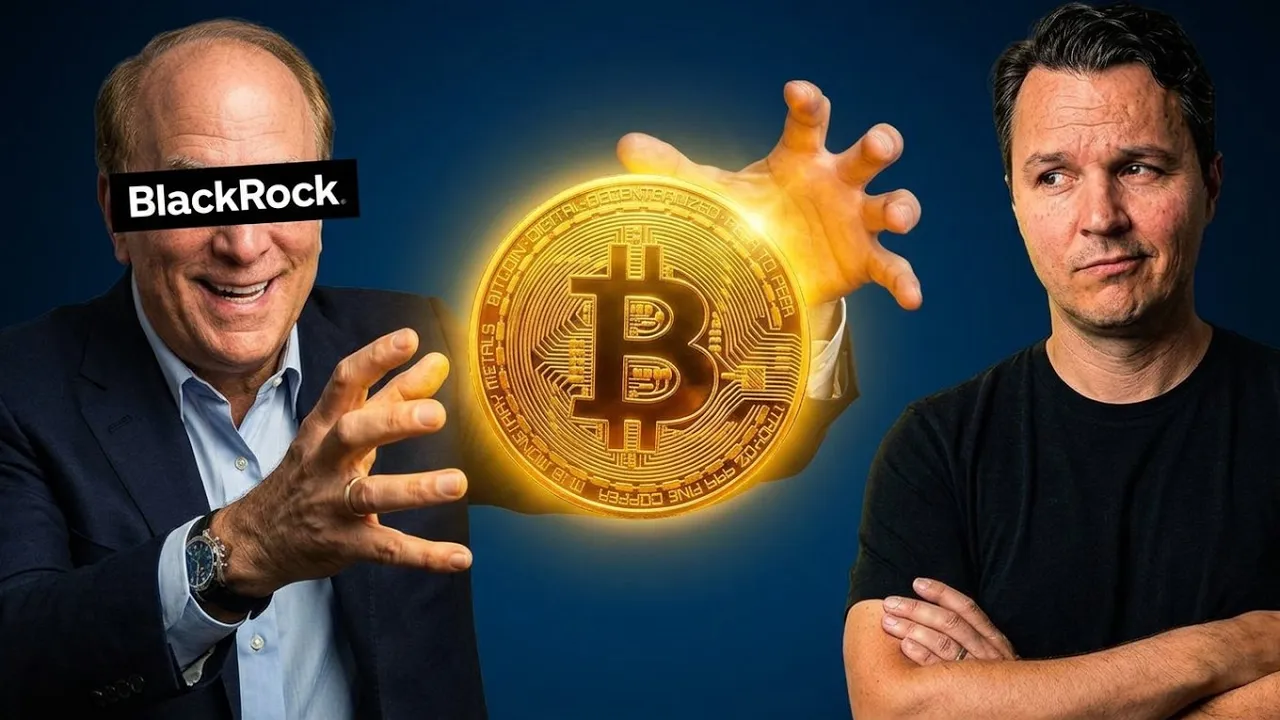
Bitcoin is down 35% year to date. Every retail sentiment indicator is flashing maximum fear. Everyone's giving up, walking away. The four-year cycle crowd calling the $40,000 in October. The comment sections have given up. The people who were loudest about Bitcoin in 2024, have gone very, very quiet. Black Rockck's Bitcoin ETF investors, the largest, most sophisticated institutional allocators on Earth, have redeemed exactly 0.2% of their holdings during this entire draw down. Not 20%, not 5%, 2%. The people managing trillions of dollars in capital with the best research teams that money can buy with fiduciary obligations to their clients with every tool available to exit if they wanted to are not selling. That's not a sentiment indicator. That's a revealed preference. And it tells you something about this draw down that the price chart alone cannot. Black Rockck's Robbie Mitchnik, head of digital assets, just went on Bloomberg and said something worth sitting with carefully. The investors inside IBIT are predominantly long-term fundamental buy and hold allocators, not momentum traders, not leverage speculators, not retail FOMO buyers who get in at the top and are waiting to break even before selling. Registered investment advisers, institutions, longer horizon allocators who made a deliberate portfolio decision are treating Bitcoin as a multi-year asset, not a trade. The distinction matters enormously. In every previous Bitcoin cycle, the marginal buyer was retail or leveraged crypto capital. When prices fell, that capital panicked because it couldn't afford not to. The psychology of the leverage trader and the retail investor is pretty damn same. Pain produces selling, which produces more pain, which produces the cascading 80% draw downs that defined 2018 and 2022 in previous bare markets. The capital inside IBIT, they don't think like that. They don't work like that. The money is different and they have big size. These are allocators who size a position they can hold for literally years without existential distress. The draw down is uncomfortable, but it's not forcing anyone out. 0.2% redemption rate during a multi-month 35% year-to- date draw down. That number has no precedent in Bitcoin's history because this kind of capital has never been here before. But here's what Mitch Nick said that I genuinely think will reframe how to think about the current price action. Because it's not just about who's holding, it's about what Bitcoin just did during the AI trade unwind that should have destroyed it. And the implications of what happened are bigger than the price move itself. See, when AI stocks pulled back sharply in July, Bitcoin held. In some windows, it even outperformed. That sounds like a small data point, but it isn't. For years, the bare case on Bitcoin as a portfolio asset was simple. It correlates with risk assets when you need it not to, and it doesn't produce yield. So, you're taking correlated downside with none of the upside stability of bonds. It's a high beta risk with no hedge properties. So, why own it? Well, Mitchnick specifically highlighted the July decoupling as meaningful for what he called the diversifier and potential left tail hedge thesis. When mega cap AI stocks, the single most crowded trade in equity markets, corrected hard and then Bitcoin didn't follow them down, something changed in the correlation math. A non-s sovereign fixed supply asset that moves independently from the AI trade starts to look very different to a multi-asset portfolio manager. Very simply, it's not as a speculative bet on crypto adoption, but as a genuine diversifier. This kind of allocation that earns a permanent 1 to 2% position in institutional portfolio, which is exactly the allocation that Black Rockck has been recommending. 1 to 2% of global institutional assets under management is not a small number. It's multiple trillions of dollars that doesn't currently own Bitcoin. The infrastructure to get in IBIT regulated custody inind creation redemption at institutional scale and it now exists. The thesis for why it belongs diversification fiscal debasement hedge non-s sovereign fixed supply is being validated by price behavior. The buyer base that matters for the next phase is forming right now and it's forming at these prices. Well, Black Rockck's institutional holders sit on their Bitcoin positions and wait. Well, guess what? Your cash shouldn't be sitting around doing nothing either. That's what I want to talk about. The Ether buy card. Man, I've been on holiday for the past few weeks. And I love it. It's such a good card to use. You get up to 3% instant cash back on every purchase. You can earn up to 5% on your account balance while you're waiting to spend it. So, while you're holding cash through the draw down, you're actually your cash is actually compounding on the side and you spend that the earned interest later. Zero fee forex on Euro USD. Borrow against your crypto without selling a single coin. Exactly what you need when you're convicted on a position, but you need liquidity. Travel perks. Lounge access. global transfers via bank or crypto instantly. Look, the institutional guys aren't selling, but they're also not letting their cash to idle. Neither should you. Sign up through the link down below and see why I love this card so much. Go check it out. Okay, so Black Rockck's been pretty consistent at one point across every public statement about Bitcoin. The most important long-term fundamental driver is the fiscal and monetary backdrop. US publicly held debt at 99% of GDP, net interest payments heading toward $2 trillion annually. The Fed with three dissenting members voting for hikes while inflation stays above target for the fifth consecutive year. Japan being bailed out by the US Treasury to prevent a carry trade unwind that would spike US yields even further. It's crazy going on, man. And an environment of persistent fiscal dominance where governments are structurally committed to running deficits that compound on themselves a non-soververeign asset with a fixed supply schedule and no central authority that can dilute it becomes increasingly relevant to serious allocators. Gold has already related for exactly this reason. up 60% while Bitcoin is down 35%. The monetary debasement thesis that Bitcoin is supposed to capture, gold captured it instead because institutional capital trusted gold's track record and didn't yet trust bitcoins. That trust is being built right now slowly and quietly. Now, inside IBIT's 0.2% redemption rate, the next leg of this thesis is when the gold allocators, the real asset holders of the pension funds and sovereign wealth funds move a little bit from gold, okay, into Bitcoin. Now, they're in gold for fiscal basement protection. But they start asking, does Bitcoin deserve some of that allocation as well? Mitchnick has referenced sovereigns buying Bitcoin during dips, not publicly but quietly. The next wave of buyers, pension funds, endowments, insurance companies, sovereign wealth funds, family offices. It's all still very early. The runway is very long. And now, of course, we have to have an honest caveat for this, okay? Because none of this elates near-term risk. Mishnick said it himself. These points describe a constructive medium to long-term case. They don't promise price can't make new cycle lows before the bull case fully reasserts itself. Liquidity conditions can tighten further. Regulatory clarity can be delayed. Capital continue can continue to prefer AI and equities over Bitcoin for months on end. The four-year cycle can deliver its October low still. All of that is very possible. But here's what's different about this cycle versus every previous one. The capital that matters for the next phase. The patient institutional capital using regulated vehicles behaving very differently than speculative capital that dominated previous cycles. It's just not selling. It's not panicking. It's not redeeming. Gold's post ETF history is the analog Black Rockck keeps referencing. Gold ETFs launched in 2004. Over the following decade, institutional allocations compounded steadily and price followed, not in a straight line, not without painful draw downs. But the direction of travel when serious capital found a way to access the asset through regulated vehicles was unmistakable. IBIT launched in January 2024. Okay, hasn't been that long, guys. The 0.2% 2% redemption rate during the recent draw down is what the foundation of a decadel long institutional adoption story looks like in the early chapters. Bitcoin down 35% so far this year. Silver up 107% in the last 12 months. The worst relative performance in the assets history against everything around it. And the investors inside the world's largest Bitcoin ETF. They're not budging. These are not retail investors panic selling at every red candle. These are the people who run pension funds and endowments and family offices with 50-year time horizons or at least multi-deade. They look to the draw down included if thesis was intact. they don't need to sell. Now, other ETFs have had more bigger draw downs. Black Rockck has had smaller draw downs to be very clear and this is the year to date. So, we had some big sell-offs in June, right? But we also had inflows earlier in the year that sort of negated that. But still, the picture is very, very clear. There has not been a mass exodus, a giant run for the exits of institutional capital. No, the institutions rotated a little bit in June, but the actual amount of redemptions when you look at the whole picture was minuscule. Tiny baby numbers, especially for the Black Rockck Bitcoin ETF. That should tell you something. That's the signal.
Comments 0
Sign in to join the discussion.
Sign inNo comments yet. Be the first to share your thoughts!