…xpense ratio, there's also the Robo ETF, which focuses on smaller cap automation stocks. Neither is my favorite ETF in the world. There's just really limited options in the robotics market, but they are a more diversified way to play this. You could also just buy Google, which tends to follow every tech trend. But, okay, let's get to stock number one on our countdown. and then I'll share my top stock pick from the list that we've looked at. One area where we have seen robot sales surge is surgical robots. And our next stock specializes in the mo…
You could also just buy Google, which tends to follow every tech trend.
AI-extracted context
That ETF also includes Novant and Symbotic. And it also holds some Japanese and even limited Chinese exposure, but that is a pretty small ETF. So for a slightly higher expense ratio, there's also the Robo ETF, which focuses on smaller cap automation stocks. Neither is my favorite ETF in the world. There's just really limited options in the robotics market, but they are a more diversified way to play this. You could also just buy Google, which tends to follow every tech trend. But, okay, let's get to stock number one on our countdown.
Full Transcript
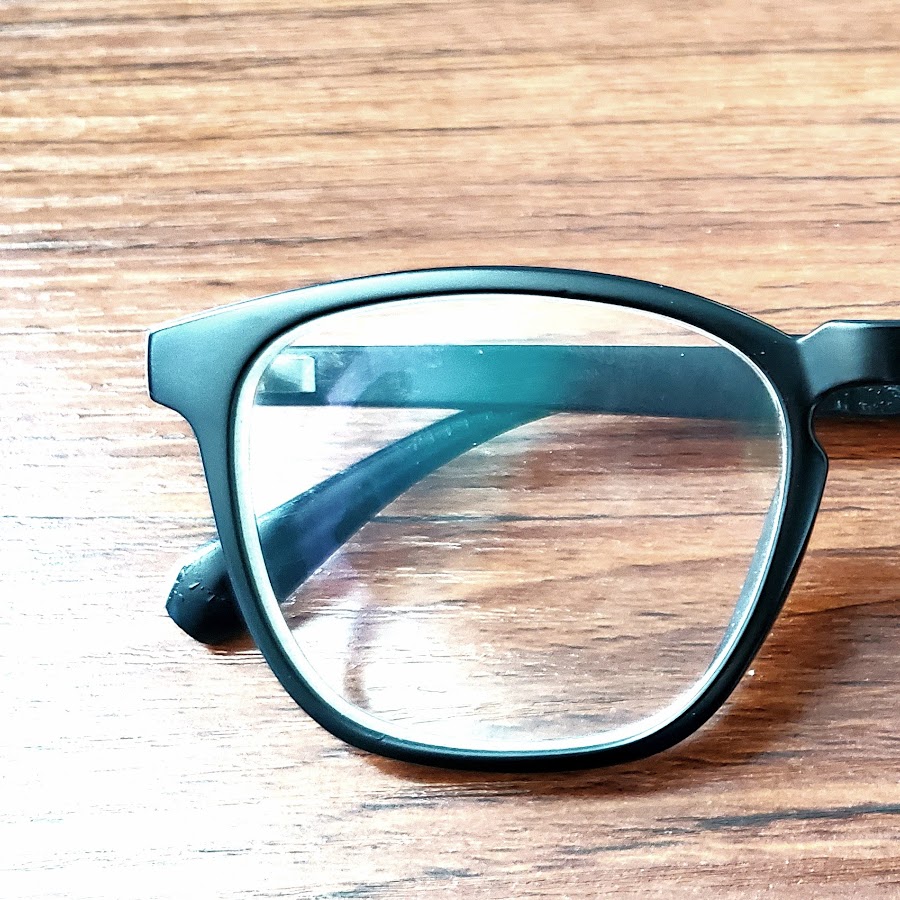
If you had invested just $10,000 into Apple when the iPhone first launched in 2007, that would be worth over $1 million today. If you had invested $10,000 into Nvidia with the breakthrough of Chat GPT 3 years ago, that would be worth over $100,000 today. Well, four big breakthroughs are now happening in robotics, and it's already an area that we can invest in because industrial and humanoid robots can't just run on a data center GPU. It requires a whole physical hardware stack to be invented. My name is Curran Francis and I have worked as a solution architect implementing emerging technologies at Fortune 500 companies for the past decade and I have never seen backtoback breakthroughs this big. So, let me show you what is happening and how I plan to invest in it. Starting with our first stock. This is the Novant Denali servo drive. It is small enough to fit inside a robot joint and it controls the electricity that makes that joint move. So, a robot's computer will tell a joint how it should move. The servo drive then sends power to the motor. An encoder measures where the shaft actually went and then the drive adjusts the power again. This is the closed feedback loop that allows a computer or an AI to turn a command into a consistent action. It's how we connect the digital to the physical world. And Novant specializes in these types of robotics components. And it's the first part of our robotics map that will touch on all areas of the industry, but they also sell force sensors and tools for the ends of robotic arms. Meaning they act as a supplier to the entire physical stack for robotic movement. And here's why that matters for investors. This is a chart of the total number of operational industrial robotic stock as of 2024, which we can see was more than three times the number from just 10 years earlier. These are not future promises of advanced humanoid robots. These are real industrial robots that are being used in factories and manufacturing today. Although we will see some of those others later on because today most robots aren't doing your dishes for you. They're being used in tasks like medicine or domestic applications like vacuums or lawnmowers or logistics and automotive. And it's these boring robots that offer the most potential for Novant's future. Because the big question for Novanta is how many of these robotics components can they supply each time a robot maker adds a new moving joint? They're very focused on the area that they know best. And based on the growth of the servo drive market, which is expected to pass $3.5 billion per year by 2035, with a big boom in demand coming from Chinese robots, where China is now the biggest buyer of both industrial and humanoid robots in the world, US companies are starting to compete more. So that's the story of this picks and shovels robotic supplier. But now, let's take a look at how well the numbers back that story up. And after that, we need to look at two big risks that anyone investing in this company needs to know about. So, Novanta is growing pretty quickly. They expect revenue to increase 21% in their next quarter with solid net income and very solid operating cash flow in their most recent quarter. The company is listed at 16% undervalued across 12 different valuation metrics, but I think that this chart is the most revealing one for this company. This is a chart of their revenue by segment. So in 2023 they broke that down into medical precision medicine and manufacturing and robotics and automation. But today they've merged that into two segments medical and automation with the company coming in just shy of $1 billion in revenue last year. And recently they have doubled down on the medical side. In July 2026 the company announced that they had acquired Riverpoint Medical for around 20% of their total value. It was a big investment. And with this investment, we also see the first big risk to any robotics investors here. See, this now brings Novant's medical revenue to around 60% of their total because while Riverpoint does make medical devices, it's more like sutures and headlamps than super high-tech robotics equipment. So, this has almost taken the company from a robotic supplier that specializes in medicine to almost a medical supplier that is also good at automation. And look, the medical robot market is expected to grow like crazy, more than doubling in the next 5 years. But this move does make them less of a pure robotics play. But one other chart we should look at is their revenue from different countries. Because we can see pretty clearly revenue from China is actually not climbing nearly as quickly as some other countries despite how big that market is. And this next chart really shows us why. It shows that China has been reducing their imports of both robots and robotic parts, especially their US imports, while they are developing their own internal robotics tech, which ties in with the second and I think broader risk here, which is that Novanta is a relatively small company. They're only worth around $5 billion today. So there's always the risk that a bigger competitor from China or Japan or even the US could step in and steal their market share. So the company is well positioned for growth, but while their medical robotic side has some regulatory lock-in, their industrial motion segment lacks what Warren Buffett might call a strong moat with increasing Chinese competition. So for me, I like the stock at today's prices, but if their automation business doesn't grow faster than the medical side over the next 2 years, I would probably sell to redeploy into a more pure play robotic stock. maybe like this next stock on our list, which also sells across the robotics market, but it goes one level deeper, selling the chips that robot makers need. And the best part, this is still a $6 billion company. So, it's under the radar. And after that, we'll look at some other robotic stocks, including my current biggest robotics holding. So, researching robotic stocks and trying to distill all the information down into a 20-minute video can be a lot to keep track of. So, I usually use my notes off my laptop screen, but today I'm not because all those notes are right here. This video is sponsored by Even Realities, and these are the Even G2 smart glasses and the R1 smart ring. The G2 looks like regular eyewear, but inside there's a dual 3D floating display that can put useful information directly into your line of sight, like the script that I'm reading right now. You can also use it for real-time transcription or even translation of a conversation. Or you can track relevant stocks directly within your field of view. So I can use voice commands or touch the R1 directly to navigate. Or I can use the R1 ring to scroll through information or tap to select without needing to reach for my phone or a second screen. There's no camera, so you can wear it wherever. And you get a heads up display that comes with you. But what I thought was really cool is with the even hub, you can now build your own tools for these using traditional coding or even AI agents. There's a whole developer platform and a fairly active Discord community building some cool stuff. So, I love that these are not trying to be a workstation replacement or some kind of spy glasses. They work with or without a prescription. I'm using a prescription that you can use as a second screen anywhere you're going, so you can keep relevant context in view without constantly pulling up a separate device. And you can check out the even G2 glasses as well as the R1 smart ring using the link in the description. So, thank you Even Realities for sponsoring this video and supporting the channel. We can only make videos like this with supporters like Even Realities. So, you can check them out using the link below. And I'll keep on using these. And now, let's move on to our second robotic stock. [music] Our next stock operates one level deeper, developing the chip layer of the robotic stack. Look at the hands on this humanoid. Algro isn't selling the robot. They are selling the multiple chips that control each aspect of its movement. See, advanced robots don't operate like a single brain making decisions. Instead, some intelligence is offloaded to edge chips that control one aspect of a robot. And our next stock, Algro Microsystems, specializes in these chips. So you have all these sensors, one to measure how much a motor has turned, a current sensor for electricity through the motor or a driver controlling power to it. Each of those different functions requires a chip to run it. And we're not talking AI GPUs here. We're talking core realtime sensing and motor reflexes that are offloaded to specialized edge silicon. That is Algra specialty, which I like because it's an area of the market that Nvidia investors aren't even looking at yet. And unlike the trillion dollar AI stocks, this company hasn't yet seen a big runup in value. So, it may offer better upside at today's prices. So, here's why the stock is interesting as an investor. This company talks a lot about potential markets in their earnings. Electric cars, where they've operated for years and have a track record, industrial robots, and now even data centers with like fan controllers. But this slide really summarizes the growth potential for this stock. It's three different automation markets and Algro estimates that they can sell around $5 in chips per household robot, $55 for factory robots and up to $150 worth of chips in humanoid robots. And so as we see the number of robot joints increase, whether by Google, Boston Dynamics, or Tesla, more complex use cases make Algro more money as they get paid per joint regardless of who actually wins the robot wars. That sounds a lot more ominous than it should, but that's the first principal story, and there's some early signs that it seems to be working. Algra reported design wins with large robotics customers in China and North America in its latest investor presentation, with sales in their industrial business up 59% in the past year. But a design win is not the same thing as a sale. And this is still a relatively small part of the overall company. This chart shows Algro's revenue by market. And today 69% of their revenue comes from automotive. And out of the remainder, we know that data centers make up 17% of their revenue. So what's left over for chips going into robotic limbs is still a very small part of the business. But it's also a part that's growing very quickly. And here is why I like the stock. And then after that, we'll also look at the biggest risk that investors need to watch for here. So their current business of selling to automotive makers and data centers puts them at a reasonable valuation. Not cheap, not expensive, but they have this whole stack of expertise building chips for cars. And they are saying they can carry that over into other robots too because cars are basically wheeled robots driven by a controller, a steering wheel. So there's almost this hidden business growing inside the company, which the market may not be fully pricing in, which if anyone has been watching since my early Palunteer investment days, is one of my favorite types of companies to invest in. Hidden accelerating growth. But the stock is not without risks and the biggest one is that they are unproven in the broader robotics market. So a bet here is really buying their future growth and not the current business. This is especially risky given how cyclical the automobile market can be. So there may be some trips up and down and up again in this stock if you hold long-term which is how you get in early on a stock. But it's also more risky than just buying an ETF, which I'll also cover some relevant robotics ETFs later in the video. But let's move from these super small, more speculative robot plays and into one of the most proven robotics companies in the market, but whose stock is actually down around 30% in the past year. [music] So, whenever someone sends me a clip of a backflipping Chinese robot that knows kung fu, I point them to this stock because flashy demos don't generate free cash flow, but this company shifts billions of dollars in goods every year and they are producing real value for their customers today. And there are some big updates on this stock since I last covered them. So, Symbotic is a warehouse automation company. They build the robots, package movers. They've even designed custom warehouses where the entire building acts like one giant robot system with lights out automation, meaning no humans even go to some areas. And they operate across the entire supply chain for businesses. They are an absolute leader in their field. And you'll probably recognize a lot of their customers. They represent an actual robotics company in our robotics map. They provide end value to a customer. But when I first covered this stock nine months ago, I said this, but I'm waiting to invest until I see how the Walmart deal will play out over the next year. I decided not to invest then because the whole investment thesis centered around one big deal that Symbotic had signed with Walmart worth up to $5 billion in backlog. Walmart being one of the largest warehouse users in the entire world. But 9 months later, we can now see just how well that deal has turned out, as well as one acquisition that changes the math on this stock. And of course, we'll also look at the biggest risks that investors could face here. So, Walmart originally sold its advanced systems and robotics business to Symbotic and then hired Symbotic to develop automated pickup and delivery systems for its stores. This was a really big deal, but it was also contingent on Symbotic hitting certain milestones to get paid out. In total, Symbotic had a backlog of $22.5 billion, but a lot of that revenue would only appear if they could actually execute. And now that they actually have more track record under their belt, things seem to be working out pretty well so far. Their modular distribution centers, which are designed to be expanded over time, have helped drive revenue of over $700 million in their latest quarter, up 22% in the past year. And with this growth, the company has finally achieved consistent profitability. Now, Symbotic didn't break out how much of this comes from Walmart specifically, but it does show that their numbers are headed in the right direction. But there was some even bigger news this quarter. In July 2026, Symbotic acquired Arms Innovation, a software platform for coordinating people, robots, and tasks across a warehouse. So, it gets all the data in one place and then acts as the digital brain for all the physical systems in a warehouse. But what matters to investors here is it offers a way for Symbotic to get paid twice. Once for the expensive warehouse setup and again as recurring software support plus any ad hoc support that customers need. And we know Wall Street tends to pay more for recurring revenue. Now Symbotic Software revenue was already up 57% in the past year, not even including this acquisition, but that was a relatively small part of the business before. After the acquisition, this higher margin part of the business seems like it's going to become a very core part of Symbotic's value going forward. So, we'll have to wait and see. But the company's stock price has fallen into a much more reasonable valuation range, and that's not even factoring in the potential growth from software in its acquisition. But there is still one capital Risk that investors in this company need to watch out for, and that is Walmart. Symbotic's 10 Q report showed a mysterious customer A that now accounts for 90.5% of their revenue, up from 83.8% of their revenue last year. Given that we know Walmart was planning to spend more with Symbotic as they hit certain targets, it's pretty clear that Symbotic's entire business is dependent on maintaining Walmart as their biggest customer. So, a lot of growth potential, but also some serious concentration risk if Walmart were to ever leave. Although Walmart does also own part of the company, which helps mitigate that a little bit. But for our next stock, I want to look at a different kind of robot supplier, one that doesn't need a specific robot maker to win. And at the end, I will also share my overall top pick from the companies I've covered. Now, I really wanted to include an ETF and a software company on this list to really round out the robotics market, but I decided to keep the video more focused on under the radar companies. That said, a big part of the robotics map is the software stack and machine learning models enabled by companies like Nvidia and trained by companies like Google. And one way to get exposure to the entire robotic space is through an ETF like the VANC robotics ETF, ticker symbol IBOT, which includes stocks like Nvidia, EMR, and ASML, chip and automation companies that are some of the biggest in the world. That ETF also includes Novant and Symbotic. And it also holds some Japanese and even limited Chinese exposure, but that is a pretty small ETF. So for a slightly higher expense ratio, there's also the Robo ETF, which focuses on smaller cap automation stocks. Neither is my favorite ETF in the world. There's just really limited options in the robotics market, but they are a more diversified way to play this. You could also just buy Google, which tends to follow every tech trend. But, okay, let's get to stock number one on our countdown. and then I'll share my top stock pick from the list that we've looked at. One area where we have seen robot sales surge is surgical robots. And our next stock specializes in the motion control systems that power this, but they also power this and even this. Regal Rexnerd is the last piece of our map and they're part of the broader power and industrial motion market. Around 31% of their sales came from their automation and motion control business or $478 million this quarter with a big chunk of that coming from their 2020 acquisition of UltraIndustrial Motion for $5 billion around half of their value today. This company sits at a pretty reasonable price. And while they are mostly an industrial company, they have substantial upside from automation. So, looking at all the stocks we've covered, if I had to pick one winner, I would probably go with Algro, just cuz I really like the hidden automation growth that's built into their business. But, every stock has potential upside and potential risks. So, let me know what is your top pick below. And if you found this video valuable, consider subscribing, or you can check out another video on this channel, which I'll link right right here. Click this button right

Comments 0
Sign in to join the discussion.
Sign inNo comments yet. Be the first to share your thoughts!