…ound, that's usually what gets springs like this to pop. That's extremely important because that confirms that the spring right now is still in that compression stage. So, let's take a moment and look at where exactly does Amazon land. So, the price has slipped into buy a little on my signal ladder and my investment system absolutely agrees with that. It's sitting at about 5% above its 200 day average and just under its 50-day. So, to me, this spring still has a little more compression to do before it's ready to go. So, I need to point out if you do follow me on Patreon, I'm not buying …
the price has slipped into buy a little on my signal ladder and my investment system absolutely agrees with that.
AI-extracted context
So, let's take a moment and look at where exactly does Amazon land. So, the price has slipped into buy a little on my signal ladder and my investment system absolutely agrees with that. It's sitting at about 5% above its 200 day average and just under its 50-day. So, to me, this spring still has a little more compression to do before it's ready to go.
…that I track were split almost right down the middle last quarter, and you can see it right now on the screen. until they pick a side. The spring is just sitting there waiting and just compressing a little bit more. So on my signal ladder, Broadcom's price has now dropped into buy. And my investment system steps that down to just buy a little because two different ways that I value Broadcom come back with very different answers. The price has also slipped below both its 50-day and its 200 day averages. So this spring, like I said, is still getting compressed. The biggest signal…
Broadcom's price has now dropped into buy. And my investment system steps that down to just buy a little
AI-extracted context
As of right now, the whales aren't making a move on Broadcom. The big funds that I track were split almost right down the middle last quarter, and you can see it right now on the screen. until they pick a side. The spring is just sitting there waiting and just compressing a little bit more. So on my signal ladder, Broadcom's price has now dropped into buy. And my investment system steps that down to just buy a little because two different ways that I value Broadcom come back with very different answers.
…major funds that I track cut their shares by nearly 30% last quarter, betting the bust is on its way. And that fight is exactly what's keeping this spring pressed down even further. The signal ladder now puts SanDisk price at by a lot, but my investment system pulls that back to just buy because my value estimates for SanDisk are all over the map. As of today, SanDisk has pulled back close to its 50-day, but it's still about 37% above its 200 day moving average. So, this spring isn't anywhere near fully compressed. I'm dollar cost averaging in because this stock has moved 10% or mor…
my investment system pulls that back to just buy because my value estimates for SanDisk are all over the map.
AI-extracted context
And that fight is exactly what's keeping this spring pressed down even further. The signal ladder now puts SanDisk price at by a lot, but my investment system pulls that back to just buy because my value estimates for SanDisk are all over the map. As of today, SanDisk has pulled back close to its 50-day, but it's still about 37% above its 200 day moving average.
Full Transcript
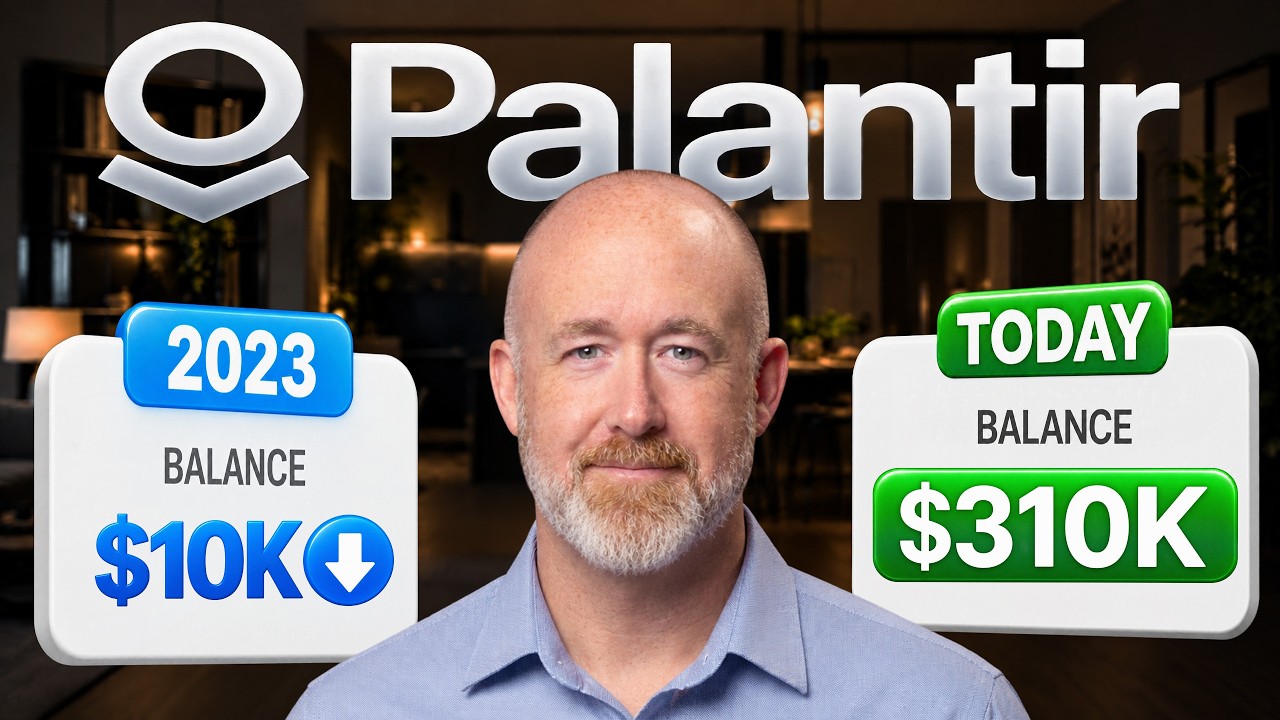
A portion of this video is disseminated on behalf of Greenland Mines. >> You think this market is a coiled spring ready to go much higher >> time, but even Q3 earnings are probably going to come in at almost 30% growth. >> I absolutely love the idea of a coiled spring because it's exactly what a lot of great stocks do. They slowly pull back or they just sit there going nowhere. Meanwhile, the business just keeps getting stronger underneath all of that and then one day almost out of nowhere, they just shoot straight up. And that's exactly why I keep saying that it's not about timing the market, it's about time in the market. Nobody, and I mean nobody, can tell you the day that the spring is actually going to let go. Look, I've got the perfect example to paint this picture. At the start of 2023, Palanteer was still running at a loss. Its business with American companies was growing fast, but it was still a small slice of the whole company. That fast growing piece happened to be the coiled spring along with profit margins that were just about to break out and turn positive. Then on February 13th, 2023, Palanteer reported the first profitable quarter in its history. And the moment that happened, the stock completely blew up. If you'd put $10,000 into Palanteer at the start of that year, it'd be worth about $310,000 today. But please keep in mind that it didn't just go straight up. Along the way, it dropped 25% or more five separate times and twice it fell more than 40%. With drops like that, would you have really made that same level of money if you were trading in and out of it regularly versus someone who would have just let it ride? Well, honestly, I really doubt it. In my experience, a setup like Palanteers only comes around once, maybe every 5 years. And Palanteer, I have to tell you, is not a pick for today. Instead, I want to show you four companies where I think the spring is extremely coiled. Maybe not as tight as Palanteers was, but tight enough to at least watch it closely. Now, we're going to start with one of the biggest companies in the world, and then we're going to work our way down to a much smaller one, which happens to be my long-distance play. If you're new here, I'm Brian, and I retired at 46 after a career of making billions of dollars for companies like Target and Amazon. And I put those same skills to work on my very own investments. And also just a quick reminder that I am not a financial adviser and I am doing this for educational purposes. Now those same skills I learned in the corporate world are what's baked into how I judge every spring in this video. Now I'm not going to get into the details of my personal system, but I will say that I've got a signal ladder that tells me the price that I'm willing to go in at. And then I also have a separate system that interprets all that information and it tells me if today's even the right day and whether or not the signal ladder is accurate for my needs. And please just know that I am looking at all the technicals and the fundamentals before I make any decision. In fact, the entire system is based on it. For today's video, it's worth noting that when the price is still way above those 250day averages, the spring isn't fully compressed quite yet. So, even when my system says buy, I am dollar cost averaging just a little bit on the way down and a little bit on the way up because I got to be honest, I am never going to pick the exact bottom. And anyone who does say that they know when a stock has hit its complete bottom, I think is completely full of it. Now, let's go ahead and put those checks to work on the biggest company on the list because the business is way out ahead of the stock where its cloud business, which rents computing power out to other companies, is completely sold out. We will still not have enough capacity to meet all the demand we have in 2026. And I believe this dynamic will also be true in 2027, too. Obviously, this is my prior employer, Amazon, and that cloud business is AWS. It grew 37% in a single year, the fastest that it's grown in about 4.5 years, and it's now bringing in about $42 billion a quarter. >> As fast as we install this capacity, this AI capacity, we are monetizing it. >> Now, you might be wondering, if the business is that strong, why has the stock actually trailed the S&P 500 year to date? It all comes down to how much Amazon is spending. About $220 billion this year, most of it on data centers, which we'd expect. The cash that they have left over after paying for everything else went from tens of billions of dollars a year to about $8 billion in the whole, or said another way, in the negative. >> We'll spend a lot of capbacks and encounter free cash flow headwinds until these data centers come online. >> And of course, once those data centers come online, that's when the spring is going to let go. And Amazon has really done this before. So back in 2023, AWS growth slowed way down because customers were cutting back on their cloud bills. And of course, when that growth picked back up, the stock climbed about 70% over the next year and a half. One thing I need to point out is that Amazon does own a pretty big stake in Anthropic. And that stake has handed it about $80 billion of gains on paper. And of course, those gains do get counted as profit, even though Amazon didn't even sell a single thing. So, I'm going to take them out. Once you do that, you're paying about $31 for every dollar of profit that Amazon's expected to make this year. So, that's a PE ratio at 31 with the paper gains that are taken out. And yes, that might sound expensive until you check the PEG ratio. It takes the PE and divides it by how fast the profits are growing. As a reminder, anything under a one means that you're getting growth at a little bit of a discount. Now, Amazon's is a little over a one, so you're paying about fair price for its growth. Another data point that I keep an eye on is who's buying and specifically the whales, the big funds that I track. So, of the 32 that own Amazon, 15 added to their position last quarter and 17 trimmed. And overall, they cut their shares by about 9%. So, right now, the whales aren't buying this one quite yet. If anything, they're leaning a little bit in the other direction. And that matters because when the big money comes back in and it starts throwing its weight around, that's usually what gets springs like this to pop. That's extremely important because that confirms that the spring right now is still in that compression stage. So, let's take a moment and look at where exactly does Amazon land. So, the price has slipped into buy a little on my signal ladder and my investment system absolutely agrees with that. It's sitting at about 5% above its 200 day average and just under its 50-day. So, to me, this spring still has a little more compression to do before it's ready to go. So, I need to point out if you do follow me on Patreon, I'm not buying into Amazon simply because I'm already maxed out because of all the reserve stocks that I received when I worked there. Hey, before moving on, if you get any value from my research and my videos, please consider pressing that like button so my content can continue to grow. Most stocks reach a buy zone on price, but some setups start with a policy. That brings us to our sponsor, where this segment is disseminated on behalf of Greenland Mines Limited, one of the only handful of companies developing projects in Greenland. On September 22nd, the US, Denmark, and Greenland, they all signed a defense deal whose Article X is built to keep China and Russia from controlling Greenland's mining. That matters because there's just one company that mines platinum and palladium in the US, which is why we import about 89% of our platinum and nearly 3/4 of our palladium imports come from South Africa and Russia. Rare Earths happen to be a bigger problem because China processes roughly 90% of the metals in high-powered magnets and they're restricting their exports. Greenland Mines keeps its resource operations squarely focused on Greenland. Scar Guard for platinum, platium, and gold, and Sarur talk for rare earth. All of these metals, they go into drones, satellites, missiles, and AI hardware, which makes this a national security story. In late September, the company raised more than $59 million from existing shareholders at or above $12 a share. Investors tend to watch this kind of a setup because there's a deal that favors the West and a company that's already on the ground. But these projects are still in exploration, so the risk is real. As always, do your own due diligence and check the link down in the description to learn more about Greenland Mines. Let's go ahead and move on to the next spring in this video because this one is wound exceptionally tight. So, when the big AI companies like Google, Meta, and Anthropic want a chip built for exactly what they need, they have it made to order. Now, think of Nvidia as the suit off the rack and this company as the tailor that works with you to give you the exact best product that only fits your needs. And that company is Broadcom. >> In 2027, we have secured the supply to again double AI revenue to approximately $115 billion. Our demand actually exceeds this outlook and we will work to improve supply. Broadcom's AI chip sales climbed about 220% in a year to almost 17 billion in just a single quarter. On top of that, orders that customers can't cancel have piled up to roughly $179 billion. That's more than a year and a half of everything that Broadcom sells. >> Q3 demand was simply hot and we're just getting started. All of that demand has pushed Broadcom's earnings up about 43% this year. And what has it done to the stock? It's only up about 4%. And its pay ratio is about a 0.5, which is obviously well under a one. So that growth comes at a serious discount. And this is another obvious question that everyone's probably asking is why exactly is it that cheap? And the honest answer is that it all depends on who those orders are coming from. So about $120 billion of them came from one big contract in a single quarter. And Broadcom's five biggest customers now make up more than half of its sales. And next year, the biggest buyer is expected to be Anthropic. Broadcom has agreed to lend Anthropic up to $42 billion. And that money comes right back as orders to Broadcom's own chips. And this is the obvious part where people are going to be calling out that circular economy. And I think they're right in many ways. And it's also kind of smart in other ways because with interest rates being as high as they are, this becomes a much cheaper way to borrow by working with your partner. Broadcom's also backing up to $29 billion of the leases on the racks that those chips sit in. So, if Anthropic can't pay, well, guess what? Broadcom is going to be on the hook. But if Anthropic goes public in the next 6 months, I don't think the cash is going to be an issue for them at all. But with that much writing on just a few customers, the spring needs proof that they're going to keep ordering and they're going to keep paying. And for a little context, TSMC actually manufactures Broadcom's chips. So when it reports its earnings this week on October 15th, its AI orders are going to tell us whether that demand is actually holding up. As of right now, the whales aren't making a move on Broadcom. The big funds that I track were split almost right down the middle last quarter, and you can see it right now on the screen. until they pick a side. The spring is just sitting there waiting and just compressing a little bit more. So on my signal ladder, Broadcom's price has now dropped into buy. And my investment system steps that down to just buy a little because two different ways that I value Broadcom come back with very different answers. The price has also slipped below both its 50-day and its 200 day averages. So this spring, like I said, is still getting compressed. The biggest signal that I'm watching is whether or not these customers are actually going to pay first. But you also have to recognize that that might be the indicator that lets the spring just shoot off. Let's go ahead and move on to the next company where every AI chip needs memory to work with. And this memory maker is a spring that the market is kind of fighting hard against. Let's take a second and picture a chef in a kitchen. The fast memory sitting right next to an AI chip is the cutting board. It's small, it's fast, but it gets wiped clean when the power goes off. Longtime storage is in the pantry, which is bigger, cheaper, and it's going to keep everything. Every time that an AI answers a question, it jotss down working notes as it goes. Multiply that by billions of people asking questions every single day. And those notes spill right off the cutting board and they go right into the pantry. The company that builds the pantry is SanDisk. And if you're thinking, why not Micron, the biggest American memory maker that's out there? It's because Micron mostly makes the cutting board. And this video is focusing on the pantry. With regards to SanDisk, its sales climbed about 175% last year to roughly $20 billion. And Wall Street expects them to more than double again this fiscal year. The stock has already run up quite a bit. And even so, you're only paying about $7 for every dollar that SanDisk is expected to earn next year. As a reminder, the average company in the S&P 500 cost you more than twice that. That gap is the spring because the market's pricing a business this hot like the bust is already on its way. Obviously, the market isn't crazy for thinking this since memory has always been kind of a boomer bust business. In both 2018 and 2022, memory maker sales got cut roughly in half within a year of their peak. Okay, so what exactly is different this time? For me, it's who's buying and how they're buying. Data centers are now spending about 14 times as much with SanDisk as they were just a year ago. They're also signing their contracts just years out in advance in hopes that they're going to get their supply. And those contracts have more than doubled SanDisk signed orders in about 4 months to roughly $91 billion. Even that number assumes prices fall to the lowest level that those contracts actually allow. >> We expect attractive margins even at floor pricing. >> That's why I think memory may not be that cyclical boom and bust business that it used to be. This is where in the comments I'm fully expecting to have a pretty long discussion about whether or not memory is still considered cyclical. However, I need to point out a skeptic would push back on all of this. Most of SanDisk's growth last year came from charging just simply more for every chip. Because you've got phones, computers, and memory cards, they're all still about 2/3 of its sales. And at today's prices, those buyers are probably buying a lot less of them. Plus, those long-term contracts only cover about a quarter to a third of next year's expected sales. All that SanDisk really needs to do right now is have a few more quarters of those prices holding steady to prove that they have lasting power. And interesting enough, the big money has been taking chips off of the table with SanDisk. The major funds that I track cut their shares by nearly 30% last quarter, betting the bust is on its way. And that fight is exactly what's keeping this spring pressed down even further. The signal ladder now puts SanDisk price at by a lot, but my investment system pulls that back to just buy because my value estimates for SanDisk are all over the map. As of today, SanDisk has pulled back close to its 50-day, but it's still about 37% above its 200 day moving average. So, this spring isn't anywhere near fully compressed. I'm dollar cost averaging in because this stock has moved 10% or more in a single day more than 30 times this year. Going all in on something this jumpy would be a complete guess right about now. Now, let's go ahead and move on to the next company where every AI chip and every bit of memory has to live somewhere in a building with enough power to run all of them. That brings us to my long-d distanceance speculative play where the spring is still being wound extremely tight. This company builds giant AI data centers in places like North Dakota, five campuses signed so far, and rents them out to the companies that need the computing power right now. Think of them like a landlord who has to pay the mortgage before the tenants are even moving in. That company has applied digital and the tenants are already lined up. It's got about $36 billion of leases already signed and most of them run about 15 years. So when it reported earnings just last week, the rent that it collects had climbed about 50% in just 3 months to about $66 million a quarter. So don't be surprised if you're probably going to see a headline that's saying it lost $221 million. and most of that was stock pay for employees, paper losses on an outside investment, and money owed to partners that back some of its buildings. Now, the buildings themselves do bring in more than they cost to run. And that's before you count the interest on the loans. The interest for this company is truly the hard part because Applied Digital has borrowed billions to build ahead of the rent. From the math that I've done, the rent from the buildings running today still comes up about $90 million a year short of covering the interest. And that is clearly what is holding this spring down. And of course, any good investor should be asking when does that gap begin to close. My expectation is that the rent is nearly going to catch up to the interest bill around the end of this year. And that's when the first building for one of its big tech companies is going to switch on. So if the next building comes online as planned by the middle of next year, the rent could be close to twice the interest bill. Once the rent begins to pull ahead, I think the real next big push is going to come from the fight over where data centers are going to get built. More and more towns are pushing back and some projects have already been blocked or obviously delayed. So, in this case, if you've already got the power, the permits and the tenants, then you can probably charge a lot more. Applied Digital says it does expect to charge a good bit more on its next leases. And the other big push could come from the whales, and they're already starting to move in. Only two of the big funds that I track own Applied Digital, and both of them bought in for the first time last quarter. Something we need to try to answer is how do you even put a value on a landlord? So, Applied Digital doesn't even have a PE ratio because it's losing money on paper. Even once it is profitable, the wear and tear charge on billions of dollars of buildings will keep its PE looking a little bit wonky. That's why Equinex and digital realy the two other biggest data center landlords trade at close to 60 times next year's earnings. So in this instance for any AI landlord the better yard stick happens to be rent. By that measure those big landlords are valued at roughly 12 to 16 times their yearly revenue. And for applied digital is at about five times the yearly rent that it's already signed. And most of that hasn't even started to come in yet. Once all five campuses are up and running, if the market treats it like a landlord, my math gets me to roughly 10 to 14 billion for the company's stock. That's after subtracting what it owes. So today, it's worth about $7 billion. So back of the napkin math says that it has the potential to double within the next 18 months. It goes without saying that this is not a price target, and it's definitely not a sure thing because if the buildings run late or the financing gets a lot more expensive, then it could all fall a little bit further from here. For reference, about one in five of the shares that trade has been sold short, which tells you plenty of people are betting against it. As for where it lands for me in my system, the price has fallen completely off the bottom of my signal ladder. And my investment system flags it for a complete recheck. And of course, I went back and I rechecked the business in a complete deep dive. And I still believe where this is headed. But let's be honest with one another. This one is for somebody who's going to be patient because it's going to swing a lot between now and when the facilities are going to come online and when the revenue actually begins to beat the interest payments. As of today, it's sitting about 25% below its 200 day average. And it's still sliding under its 50-day. So, this spring is getting really close to fully compressed. I'm not going to call it, but it is getting pretty compressed. And sadly, I do think that it has a little bit more of sliding to do before it's ready to pop. For me, this is a very easy stock to dollar cost average into, but like I said, it has to be for a patient investor because, you know, it's going to take probably another year before this spring is ready to pop. Tom Lee might be right about this whole market being a coiled spring. But personally, I'd rather own the companies where I can actually see what's holding the spring down and what I think is going to set it off. For Amazon, it's those data centers coming online. And for Broadcom, it's customers truly paying. And for SanDisk, its price is holding. And for Applied Digital, it's the rent pulling well ahead of the interest payments. Remember that Palanteer example early on? Well, it had five drops of 25% or more. And every one of them is a chance to get shaken out. And that's exactly why I buy in stages and I hold through the drops. So, I already own the stock the day that that spring is ready to let go. I hope you're able to get some value from today's video. And as always, thanks so much for watching.

Comments 0
Sign in to join the discussion.
Sign inNo comments yet. Be the first to share your thoughts!