…ls and money market funds may sound complicated. They're not. Call your bank. Ask if they offer a money market fund and what it's paying. If it's garbage or they give you the runaround, call another bank. Open a money market account there. For treasury bills, you can do that in any brokerage account with one ticker. SGOV. That is the zero to threemonth treasury bond ETF. You can buy any amount you want. by $100, by a million dollars and it will automatically kick out a cash dividend every single month in your account. You can buy sell at any time. There is no restriction. Second is the long end. When the Fed is forced to cut, short-term r…
For treasury bills, you can do that in any brokerage account with one ticker. SGOV. That is the zero to threemonth treasury bond ETF. You can buy any amount you want.
AI-extracted context
First, let's talk about your cash. If your savings are sitting at a big bank earning half a percent, 1%, 2%, you don't need to accept that. Treasury bills are paying around 4%. Treasury money market funds pay 4.05 4.1 last time I checked. And if you keep cash at the bank, no, there is an FDI insurance limit at $250,000. You want to stay under anyway. Now, notes and bills and money market funds may sound complicated. They're not. Call your bank. Ask if they offer a money market fund and what it's paying. If it's garbage or they give you the runaround, call another bank. Open a money market account there. For treasury bills, you can do that in any brokerage account with one ticker. SGOV. That is the zero to threemonth treasury bond ETF. You can buy any amount you want.
…on for 10 or 20 or 30 years? Nothing in the world could make me buy a long-term Treasury bond today ever, frankly. And third is the trade, the opportunity, and that I believe is in the 2-year Treasury note. Now, it pays close to 5% a year. Right now, you can buy it straight from your brokerage account, or if you want, there's an ETF for that, too. The ticker is SHY. It just holds treasuries and mature between one and three years. Now, it's not going to make you rich, but it could juice your returns because when the Fed cuts, the 2-year yield falls first, and it falls fastest. And when yields fall, the…
Right now, you can buy it straight from your brokerage account, or if you want, there's an ETF for that, too. The ticker is SHY.
AI-extracted context
Second is the long end. When the Fed is forced to cut, short-term rates will fall fast, but long-term rates, they may not follow. If the market decides, I know it's crazy, but it's true. If the market decides the Fed is cutting to bail out the government instead of beating inflation, long-term yields will stay still, potentially go up. Plus, our government is bankrupt. Let's not sugarcoat it. Why would you lend money to a bankrupt person for 10 or 20 or 30 years? Nothing in the world could make me buy a long-term Treasury bond today ever, frankly. And third is the trade, the opportunity, and that I believe is in the 2-year Treasury note. Now, it pays close to 5% a year. Right now, you can buy it straight from your brokerage account, or if you want, there's an ETF for that, too. The ticker is SHY. It just holds treasuries and mature between one and three years.
Full Transcript
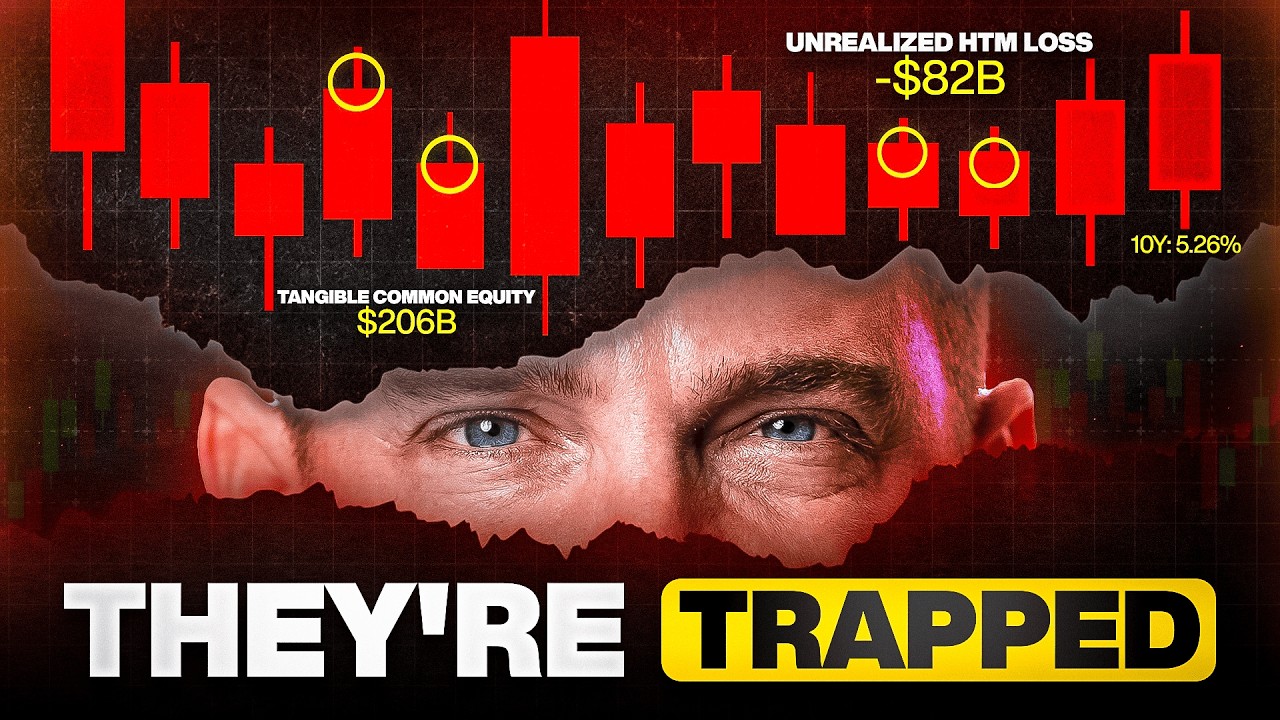
Everyone is dead wrong about interest rates. They're about to go down, not up. You see, last month, the Federal Reserve raised interest rates for the first time in three years, and Wall Street is betting on more hikes. But I think they've got it backwards. The 10-year Treasury yield is pushed above 5%. It's the highest since 2007. The 30-year hit a level we haven't seen since 2002. Mortgage rates are back above 7%. And in the month of September, regions in Bank of America fell about 10% each. Now, that's not a coincidence. Something is starting to crack. And we're going to see proof of that on October 14th when Bank of America reports their earnings. So, if you have money sitting in a savings account right now, you need to hear this. Today, I'm going to show you why the Fed is boxed into a corner. I'm going to reveal the most underwater bank in America. Then I will show you the only move the Fed has left and exactly where I'd want my money when it makes it. Be sure to subscribe to the channel. That way I can keep you informed and in front of what's about to happen. Now, let's start with the big banks. If you weren't aware, here's how a bank actually makes money. You deposit a dollar. The bank pays you a little bit of interest on it. Then it takes your dollar and lends it out or buys bonds with it at a higher rate. And it just keeps the difference between those two interest rates. Simple. That is until rates go up. Because when interest rates rise, the bonds a bank already owns lose value. So think about it like this. If you own a bond paying 2% a year and the government is now handing out brand new bonds paying 5%, well, nobody wants yours. The only way you could sell it is at a discount, a big one. And that is exactly what killed Silicon Valley Bank in 2023. During COVID, deposits were pouring in. Rates were near zero. So SVB took that money and bought long-term bonds because they paid a little bit more in the short term. And then the Fed started hiking. And by the end of 2022, Silicon Valley's bond portfolio was sitting on about $15 billion in losses. The bank's entire equity was about 16 billion. Then SVB had to sell some of those bonds to cover withdrawals. They took the loss and word got out. Then customers pulled $42 billion out of the bank in a single day. It failed the next day. Now, here's the part most people don't know. That problem never went away. It just got quieter. Bank of America, for example, is holding $56 billion of bonds and it is labeled held to maturity. And that's a cute little label they use, which just means they don't have to mark them down on the balance sheet. Now, as long as they never sell, the losses are just on paper. And as of June 30th, those bonds were underwater by $82 billion. Now, Bank of America is not Silicon Valley Bank. That 82 billion is about 40% of their tangible equity, not all of it. And nearly half the deposits come from everyday consumer accounts, not big tech startups. But here's the thing, that $82 billion was measured on June 30th. The 10-year yield was 4.45% back then. It's above 5% now. And every tick higher makes those bonds worth less. We don't know the new number yet. We find out on October 14th. My estimate, I think they're down roughly a hundred billion dollars. That's about half of their equity, more than a quarter of the value of the entire bank. And there's a second problem. This one is about your savings account. In the second quarter, Bank of America paid an average of just under 2% on its interestbearing deposits. Meanwhile, a 3-month Treasury bill or a simple money market account pays about 4%. So on a $100,000 deposit, you'd earn a little less than two grand a year at the bank or just over four grand from Uncle Sam. And when the gap gets that wide, money starts to move. It always does. If you haven't started moving money yet, you should. And when deposits leave, a bank has two choices. Either pay you more to get you to stay, which crushes their profits, or sell bonds to cover the withdrawals. That turns those paper losses into real ones. That's the SVB playbook and the stock market is already sniffing it out. Now, I want to show you who is the most underwater. Before I do, listen. If you are ready to take your finances seriously, if you're ready to learn how to make disciplined, welltimed, lower risk investments, you need to join my Black Ops trading service. It is five bucks for the entire year. And for an entire year, you, me, and other members are going to get together live, an interactive meeting every single week for an hour. We'll review the market, interest rates, the stocks I'm looking at. I'll show you the pattern that identify when to buy and sell. We'll review your stocks. Nothing is off limits. Completely interactive, all for five bucks a year, plus my newsletter and several other bonuses we'll include there. So, click that link, scan the QR code in the corner if you're watching this on a TV, or just go to tradewithrosts.com and get signed up right now. Now, here's something you might not know. The Federal Reserve owns trillions trillions of dollars of Treasury bonds and mortgage bonds. It bought a huge chunk of them during CO. All that money printing that caused the inflation, this is where it went. And back then, rates were near zero. So they have the very same problem. As of the second quarter, the Fed was sitting on $878 billion dollar in unrealized losses. That's about 18 times its capital. Folks, the biggest underwater bank in America isn't BFA. It's the US Federal Reserve. Now, unfortunately, the Fed can't go bankrupt. It prints the money. No regulator can shut it down, but it does have a cash flow problem. You see, the Fed pays banks interest on the money they park there. So, that Fed funds rate, the one that comes out every six or seven weeks, that's what that rate determines. And when they raised rates on September the 16th, it raised that payment to 3.9%. So every hike means the Fed pays more money out to the banks. And the Fed only climbed back to a profit this year after 12 straight quarters of losses. Every hike pushes it back into red. But the Fed, they're not even the biggest problem. The biggest problem is Uncle Sam. The Congressional Budget Office projected the US government would spend more than $1 trillion on interest in the fiscal year that just ended. That is more than we spend on national defense. It eats about 19 cents of every tax dollar the government collects. Remember that's interest on money they spent in the past. And that projection was built on economic conditions from last December. Well, what's happened since then? Rates have climbed hard. The 2-year Treasury yield is up more than a full point in the last 12 months. And here's why that matters. The government owes about $32 trillion to the public. And when that debt comes due, it gets rolled into new debt at today's rates. So every 1% increase in rates adds $320 billion a year in interest every year forever. And where does that money come from? More borrowing, which pushes rates higher, which means more interest, which means more borrowing. it snowballs and the Fed is the only one who can stop it from spinning completely out of control. Here's the trap. If the Fed keeps hiking rates, it breaks the banks. It breaks the Fed's own budget, and it blows a hole in the government's budget that gets bigger every year. It also kills the housing market, the job market, and just about every bit of GDP growth outside of data centers. If the Fed stops or cuts, it's cutting with inflation at 3.4%. With oil near $100 a barrel, and it risks letting inflation run hot, meaning get worse, for years. So, neither choice is good, but only one of them is survivable. And here's what I think. The Fed will cut, not because inflation is beaten, but because the alternative is worse. Now, they're going to call it insurance. They'll call it supporting financial stability. The White House will agree to end the war in Iran. And the Fed will cite some nonsensical metric like trimmed median PCE to build a narrative that inflation is not as bad as we think and it will soon come down. Sound familiar? You watch. They're going to use that word. But make no mistake, it will be a rescue and the market is already starting to see it. Just two weeks after the hike, the odds of another hike in October have already dropped to 39%. The New York Fed president said there's no rush to raise rates again. The Fed isn't done fighting inflation because it won. It's done because it cannot afford the fight. And here's the thing, the Fed doesn't even have to cut at the October 28th meeting. It just has to blink. a split vote decision, an off-hand remark about cooling inflation, a pause at the right moment in Wars' speech. The market will interpret that as a reversal. Bonds will soar, yields will collapse, and the stock market will rip higher just in time for midterm elections the following week. So, now that you know what is likely to happen and why, what do you do about it? First, let's talk about your cash. If your savings are sitting at a big bank earning half a percent, 1%, 2%, you don't need to accept that. Treasury bills are paying around 4%. Treasury money market funds pay 4.05 4.1 last time I checked. And if you keep cash at the bank, no, there is an FDI insurance limit at $250,000. You want to stay under anyway. Now, notes and bills and money market funds may sound complicated. They're not. Call your bank. Ask if they offer a money market fund and what it's paying. If it's garbage or they give you the runaround, call another bank. Open a money market account there. For treasury bills, you can do that in any brokerage account with one ticker. SGOV. That is the zero to threemonth treasury bond ETF. You can buy any amount you want. by $100, by a million dollars and it will automatically kick out a cash dividend every single month in your account. You can buy sell at any time. There is no restriction. Second is the long end. When the Fed is forced to cut, short-term rates will fall fast, but long-term rates, they may not follow. If the market decides, I know it's crazy, but it's true. If the market decides the Fed is cutting to bail out the government instead of beating inflation, long-term yields will stay still, potentially go up. Plus, our government is bankrupt. Let's not sugarcoat it. Why would you lend money to a bankrupt person for 10 or 20 or 30 years? Nothing in the world could make me buy a long-term Treasury bond today ever, frankly. And third is the trade, the opportunity, and that I believe is in the 2-year Treasury note. Now, it pays close to 5% a year. Right now, you can buy it straight from your brokerage account, or if you want, there's an ETF for that, too. The ticker is SHY. It just holds treasuries and mature between one and three years. Now, it's not going to make you rich, but it could juice your returns because when the Fed cuts, the 2-year yield falls first, and it falls fastest. And when yields fall, the price of that 2-year note goes up. Roughly speaking, every 1% drop in the 2-year yield adds about 2% to the price of that note. So, let's say the Fed cuts, you know, 1 percentage point over the next year, you'd make the 5% interest plus a 2% gain on the price, so call it 7%. And that's on a government bond. And if I'm wrong and the Fed keeps hiking, well, the price dips a little bit, but you still collect your 5%. If you hold the maturity, you get every dollar back. So, there's risk, but not a lot. And Wall Street has a fancy name for this. They call it a bull steepener. You're going to hear this used by guys on CNBC with elbow patch blazers and mustaches because it makes them feel fancy and elite. But all it means is that short-term rates, one-year, two-year bonds are falling faster than the long-term rates, the 20-year, the 30-year. So, the 2-year is where you want to be when that happens, not the 30-year. And fourth, a rescue like this gets paid for with a weaker dollar. Gold is already above 4,000 an ounce. I think it's going exponentially higher in the coming years. And I believe that hard assets across the board, gold, commodities, high quality stocks, anything with real cash flow, those are the assets likely to win over the long term as the dollar loses. So, if you want a date to watch, mark this in your calendar. October 13th and 14th, those are the days when Wells Fargo and Bank of America report their earnings. If those bond losses jumped, which they did, or if deposits are rushing out the door, the pressure on the Fed is going to get a lot bigger. Wall Street thinks the Fed is in charge here. It isn't. The math is, and the math says the Fed has to cut. Folks, don't forget to subscribe to the channel. And again, that $5 Black Ops special is still going on. No strings, no crazy renewal rates. It's end of the year. I just want to help. And we found based on our research, people just tend to value things more. Had to pull out their credit card and pay for it, even if it's a couple bucks. So, you'll get a live session with me. We'll work together every week for a year. We do another one-hour live session every Thursday with my analysts. You'll get my weekly newsletter in your inbox every single week, plus a couple indicators, plus bonus reports and a ton more. So, click the link, scan the QR code right down here, or just go to tradewithross.com to get signed up. and I'll see you in the next

Comments 0
Sign in to join the discussion.
Sign inNo comments yet. Be the first to share your thoughts!