…st this year, I mean, we talked about Lockheed, Sony, Alta, Corteva. I mean, what's on it now? And I know you own a little Google. I mean, anything else in this big tech that you would touch? >> Well, it's interesting you mentioned Google. We're sellers of Google. >> Okay. Yeah. >> Um and and Microsoft. Um so, in big tech, there's not much. I mean, we some of these companies occasionally get cheap. Like for example, a month ago, maybe it's been six weeks ago, Texas Instruments got really cheap. And …
We're sellers of Google.
Contexte extrait par IA
Yeah. You know, I think your shopping list this year, I mean, we talked about Lockheed, Sony, Alta, Corteva. I mean, what's on it now? And I know you own a little Google. I mean, anything else in this big tech that you would touch? >> Well, it's interesting you mentioned Google. We're sellers of Google. >> Okay. Yeah. >> Um and and Microsoft. Um so, in big tech, there's not much.
…st this year, I mean, we talked about Lockheed, Sony, Alta, Corteva. I mean, what's on it now? And I know you own a little Google. I mean, anything else in this big tech that you would touch? >> Well, it's interesting you mentioned Google. We're sellers of Google. >> Okay. Yeah. >> Um and and Microsoft. Um so, in big tech, there's not much. I mean, we some of these companies occasionally get cheap. Like for example, a month ago, maybe it's been six weeks ago, Texas Instruments got really cheap. And so, we took a small position in Texas In…
We're sellers of Google. >> Okay. Yeah. >> Um and and Microsoft.
Contexte extrait par IA
Yeah. You know, I think your shopping list this year, I mean, we talked about Lockheed, Sony, Alta, Corteva. I mean, what's on it now? And I know you own a little Google. I mean, anything else in this big tech that you would touch? >> Well, it's interesting you mentioned Google. We're sellers of Google. >> Okay. Yeah. >> Um and and Microsoft. Um so, in big tech, there's not much.
Transcription Complète
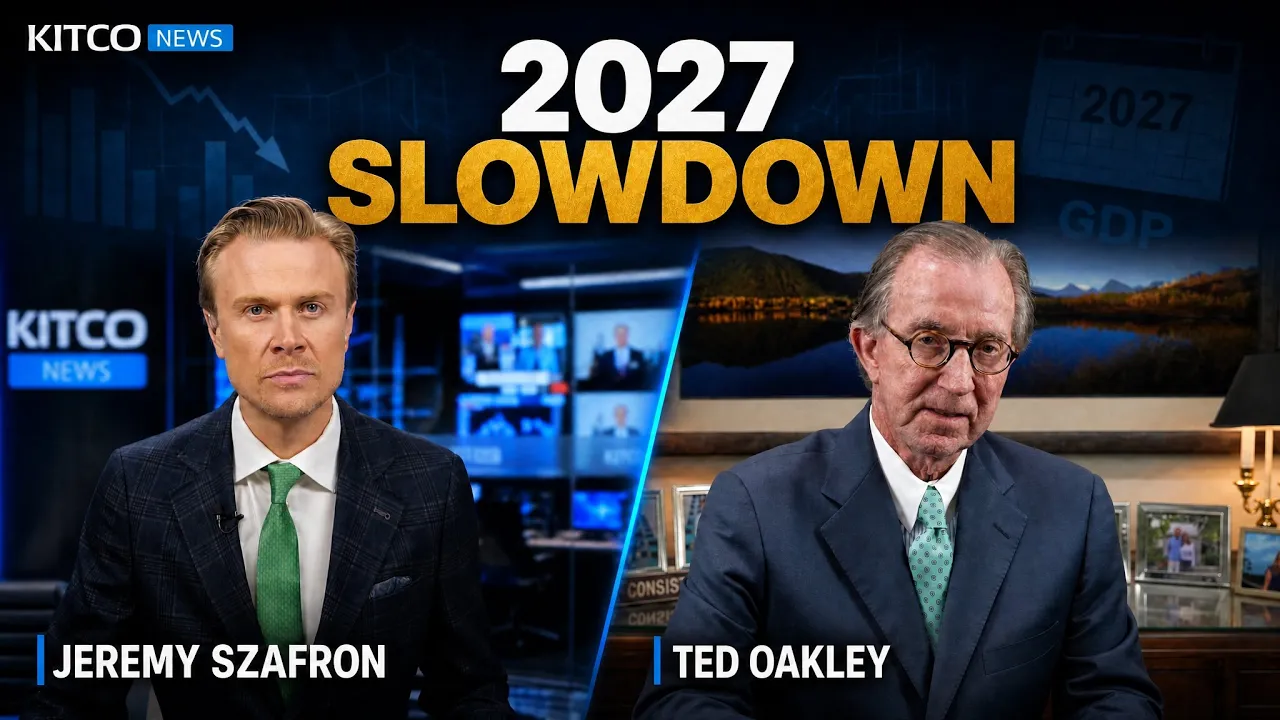
All right, Democrats won both the House and the Senate and gold surged more than $100 back above $4,000 an ounce on the spot side. Silver, platinum, palladium all up more than 4%. Meanwhile, the dollar fell against every major currency and stocks rallied, but the companies building AI data centers fell and Washington is already talking about scrapping the debt ceiling altogether. So, where should your money be now that the vote is over? My next guest sold most of his gold miners three weeks before the record in October. where he warned clients about a stock market signal he's only ever seen twice before in 1929 and 1999. Ted Oakley up next. Welcome back. I'm Jeremy Saffron. Joining me now, of course, Ted Oakley, founder, managing partner of Oxbow Advisors. I mean, he's managed money through every cycle since the 1970s, starting at Meil Lynch, and of course, he's an Army veteran. Ted, welcome back to the show. Good to see you. >> Thanks, Jeremy. Good to see you as well. Uh let's I guess open up a little bit with this election trade. We got to talk about it. I mean, gold's up, the dollar's down, bonds seem to be uh rallying. I mean, is the market reading this election, right? >> Well, I think there's a lot of uh chasing going on today. I mean, you always have that if you get a market move like that. And uh maybe it's just uh people think, oh gosh, I'm glad it's I'm glad it's over with. Um, but usually after midterms, you know, you'll have some >> you'll have some more buying, you know, between then and year end. I don't know how much. I mean, none of these averages are back at their highs. So, it's it's a balance, but it's they're not anywhere close to their highs. >> Yeah. Uh, you know, I was reading an article this morning. Obviously, there's a lot of analysts talking about what took place. Um, you know, Wall Street says gridlock is good for markets. So, I mean, is is a divided Washington good for your money over the next, say, two years? Well, you know, Jeremy, it depends on where you are in the cycle. Yeah. >> See, we think we're at the end of this cycle. >> So, it doesn't really make any difference, you know, uh whether they're in gridlock or not gridlock. But the main thing on gridlock >> is that if you have a weaker economy next year, which we think you will, then they can't get anything out of Congress because they won't agree on anything. So, that part of the money is out. Now, you might get some something from the Federal Reserve, but generally it slows the money flow. And that's that's what I think you'll get out of it. >> Yeah. You know, your October letter said that trust in top government institutions is at, you know, an all-time low as as we know and good for good reason, I think, is how you put it. I mean, does a new Congress kind of change that at all for the markets, you think? >> Well, they may think it will, but after it's been there a little while, I doubt if it changes anything. >> Yeah. Yeah. You know, it's an interesting one because there was a lot of businesses that were kind of on hold ahead of this vote. I mean, you brought it up off the top. Everyone kind of relieved that it's over. Uh, does it start moving again now, you think? >> You know, hard to say. I I do I think we're going into a transition period into a slower economy next year. >> And I we already see the signs of that. Uh, and I I'm I'm seeing that particularly in three or four different kinds of industries. So, I I I don't know if that happens that way or not. Maybe a little bit, but I don't think a lot though. >> Yeah. You know, it's funny. I The stock traders almanac talks about this. They they say that, you know, the S&P has been higher one year after every midterm since the 1950s with an average gain of about 15%. You know, I wonder and and you kind of brought it up there depending on where your position in the market, but does that hold up this time? Well, you know, statistically, uh, and you know, I know the Alman Act, I've read it for years, and sometimes it works and sometimes it doesn't. Um, and so you you never know that particular year. I just think that we're not ready for this, but we're probably going to have some fairly decent weakness the first seven, eight, nine months of the year. Um, and you know, it doesn't make any difference sort of after that because if you get a lot of weakness, I think you have to you have to work on that. you have to work your portfolio through that weakness >> and we we'll see but that's what we're expecting >> and I mean you know that that weaker economy Ted with inflation at 3.6% 6%. I mean, is is that stagflation kind of like, you know, the 1970s? >> Well, a little bit. But what what happens in a in an economy gets weak is that those things all take care of themselves. You know, oil comes down, the commodities come down, everything, you know, comes down in price because you're you're slower is what happens. And uh and and I suspect that it won't be as much stagflation. In fact, I'll be surprised if uh by the middle of the year, they're not lowering interest rates. >> Interesting. Okay. Uh a contrarian signal, which we have to get into. We got to talk a little bit about the Fed more. I'm just looking at the current markets here and defense stocks. They fell obviously after this vote. I I remember low heat was on your buy list this year. I mean, how do you think about defense now in that market? >> We still have we still have the positions. You know, it's not a it's not a big uh sector for us. We have a few but it's not a been a big sector for us but you know a lot of these companies make not only defense items but they make other things they sell to other countries that are private but um you know it's uh I I think you can I think they can always make a case for defense but again you get back to the budget situation and you know who knows. >> Yeah. Yeah. Let's get to that signal. I mean 1999 1929 and now. So just talk to the audience a little bit and some of them are familiar with this but what is it and why should people care? Well, what happens that you know there's three or four things that come up in there that but but primarily you know if you look if you look at two or three things all of them are the same but if you look at the cape ratio which is a cyclally adjusted price earnings or you want to take the market value total market value to GDP all of those all both of those signal the same thing which is at you're statistically at the high statistically does it mean you couldn't go a little higher. No, it doesn't. I mean, it could go higher, but see, we're already off the highs. We're off the highs on every average right now. Um, even with this day like today, you're you're you're off the highs, which sort of tells us that we're just going to move around back and forth, back and forth, and then you'll finally get eventually you'll get you'll get weakness. >> Yeah. You know, that that S&P I think it's within 1% of its record you kind of talked about. Um, I I got to ask you, I mean, you know, you just talked about these these new highs, these new lows. That's what you track on every single stock. I mean, what are those numbers kind of telling you right now? Because I mean, you know, I remember you wrote that the stock market's not what it seems. I mean, what's it hiding? Let's get into that. >> Well, it hides what goes underneath between the 20 stocks. Now, I will tell you in the last five or six weeks, those top 20 stocks have gotten weak, too. But prior to that, you know, you had all these other stocks getting weaker and talk about the other 480 in the S&P 500, and they were all off 18 to 20% off their highs on average. They were a high for the year. And then when you when you couple that with the fact that you have more new lows annual lows than make companies making an low for the year than you do highs for the year that just tells you that people are misjudging the average looking at the index over what's really happening underneath. And that's that's where we are. >> Yeah. Yeah. You keep bringing up these 20 stocks that kind of at least were offsetting that that loss of 480 in the S&P. What does that do to somebody who thinks that an index fund is diversified? And and I guess if the 20 stocks that carried the market are getting weaker, I mean, what's left holding it up? >> Well, not a lot. Particularly when you get into a really weak market, uh you're going to find that those 15 or 20 are going to suffer the most. And which will impa impact the averages. You know, for us, um we we own a little bit of a few of them. We're selling a couple of them. But um but in general, what happens is people think they're diversified when half the market that they're investing is like 20 companies that are all in the same industry. It's not like they're, you know, it's not like they're different businesses this that and the other. They're all they're in the same business >> uh generally. And so I think that's what people forget on investing. and they they've been sold by Wall Street and all these financial planners and the like that, hey, just buy the S&P 500 and it'll all be okay. Well, that's that concept we think is generally coming to an end >> because we'll probably go through five or 10 years here where, you know, you'll have to own the right companies. >> Interesting. And to your point, I mean, chip stocks are about 28% below their their junior highs. Is is that is that the leaders breaking? And I asked this Ted because you know in 2000 it was big tech leaders that cracked first. I mean is this the same pattern? >> It is similar. Uh you know one of the things that happens is so what happens with all these big companies that that took on the debt you know they raised money through stock offerings etc. Now they it affects it really affects their free cash flow. So by the time you get into the new year, if what we think happens, which is these companies will show up and all of a sudden not be as profitable, not saying they wouldn't be profitable at all, they just wouldn't be as profitable as everybody thought they would be. See, that's just as bad as as losing money almost because what happens is people turn around and sell them, right? >> So we think a lot of that will happen in the, you know, in the first two quarters of the year. Um, we'll see, but that's what it's what it looks like to us. I got to ask you. I mean, you know, I'm looking at this. The NASDAQ 100 rose more than 1% a after this vote. Is that a bounce maybe you'd sell into? >> Yeah, I would if I if I were somebody that owned the NASDAQ 100, I'd sell into that bounce. I sure would. >> Interesting. Okay. Well, it's not just the stocks. Credit is flashing something, too. When when the leaders weaken, people look for somewhere else to hide. And for a lot of people watching, Ted, that's obviously gold. Uh we got to talk about it. I mean, today it's just had its biggest jump in over two months. It's back above that $4,000. That's still well off, you know, the January record. But how much is someone's money >> should be in gold right now? >> Well, you have to distinguish, Jeremy, between the gold and the gold miners, >> right? >> Uh the reason in the last two months that we've cut back on the gold miners >> is because they suffer a lot more on when gold is going down. As an example, in two in 2008, gold was down over 20%. Well, the miners were down over 60. >> And so, you have to realize that the miners are trading vehicles. The bullion, we we never sell. Okay? And even a couple of the core positions in the miners, we don't sell. But when we're over when we're overallocated to it, which we were somewhat, you know, we cut back on the miners because we don't it doesn't look like it's over yet. Maybe it is. Um, but I think you'll have to get into next year before you really see it see it turn. Same way with silver. You know, we we we tried to we owned a lot of silver last year, but it had such a big year and then it you know, we sold it all and we bought some back in uh in July and but it fizzled. You know, we didn't lose money on necessarily, but it fizzled out. So we we're out of we're out of silver and silver miners, but we just cut back on that industry group because they suffer the miners suffer worse than the bullion. You can own the bullion forever who you should, but not the same way with the miners. >> Um, what gets you back in, Ted? I mean, is it is it a price? Is it a signal you're kind of looking for? >> Well, you have to go long enough to where everybody gets washed out, you know? And and like if you look at the miners today, they're up big because there's money still waiting. You know, there's a certain sort of cult mentality out there on gold and gold miners, uh that you know that that you have to own them or else. Well, that's true at times, but when they're in a downtrend, uh you need to wait till that settles out a bit before you commit a lot more money to it. And I just don't think it doesn't look like that comes until next year. Now, uh, if they get into the second quarter and they're lowering interest rates, you know, gold likes that. >> So, you might see it perk up some, but not right now. One of the problems you get into in markets that are going to be weak is the commodities come off, and we're real sensitive that because in one of our portfolios, we have a lot of commodities, but we've cut back on them because it's it's not a time to be on the aggressive end of commodities. we think going into a slowing economy next year. And I I disagree with people that think we're really going to be robust in 27. I just we just don't see that happening. >> Okay. Now, in May, you said miners margins were the best they've ever had. I know that they've come off a little bit. I've looked at Nico and what have you, but has that changed at all or is the market just not paying for it? >> Well, what happened after May was in July they hit a low. We bought them. Okay. We bought some extra miners in addition to what we already had and what we had in the gold bullion. But what happened is and they rallied hard. They rallied for about 3 months uh hard and then then you can tell it wasn't time for them to really go because they just fizzled out. You know, they they started come sort of come undone and [clears throat] that's a sign to you that that's a fake move in a lot of ways. So, a lot of the stuff that we bought in July, we we turned it. We sold it because it is not it's not acting right. That's not good. That's not a good look. Um, but we still have our core positions in gold miners and gold, but everything we added in July, we we've come out of that at this point. >> Right. Right. You know, the people who bought miners near that bottom in 2008 did very well, too. I mean, how do you know? You kind of explained it there, but for the audience, how do you know when it's the bottom and and not just a stop on the way down? Well, that stuff will all bottom before the market does, >> right? >> So, by the time you get to them, let's say, let's say the I don't know this, it happens. Let's just say the market comes off 30% next year. U these will bottom before that. They do they do they'll bottom before all that happens. And uh and you you'll have time, you know, from a low in the market, it's not going to turn around and go right back up to where it was. Uh, so you've got time to get back into them. But once once you have sort of a bottom in place and you spend enough time knowing you're not going to make another low, >> then that's just a time thing. >> Then you can add you can add things back. I think people are jumping too quickly now, but we'll we'll see. >> Yeah, speaking of jumping too quickly, I mean, we saw that last week with the gold price. It was coming off hard and it took a little bit of a haircut, but we got this new data. I mean, central banks bought 321 tons in the third quarter. the fastest pace since 2024. That according to the World Gold Council, if they're buying that hard, I mean, who's been selling? Do you think this is a liquidity quest? People, you know, just grabbing knives and thin air. I mean, a lot of people who are watching this bought gold in January above 5,000. They might be underwater. I mean, what do you tell them? Right. >> Well, I think the sellers are people that need to build liquidity. >> Yeah. Yeah, one of the things you don't see when markets are getting ready to go into a slower period economically is people don't necessarily uh they'll sell anything they can get the money out of >> and I think that's part of what that part of what's happening and plus you had a lot of hot money had got a lot of hot money in gold and so you know once once it had that big move and came off rallied again and started to come off again they just keep on selling it and I I think that's what's happened Before we get into the more on the miners to I'm looking at silver. I mean it jumped more than 4% after this vote too, but it's still less than half of its January record. I mean I think you sold almost all your your silver around New Year's. What gets you back in? >> We bought a little bit in July, but we turned around and sold it. Uh it's not acting right. I think you'll find all your readers will go back and look look at the times when silver and you can go back in four or five periods where silver had like a 200% or 300% move in one year. Okay? And that was 2025. Okay? After that, that usually signals for some time that you've got a peak in the miners, the silver miners, the silver and the gold miners to an extent. >> And usually there's a time frame after that. And it's not just 6 months or seven months. It's typically, you know, 15 months, 18 months. There's a period there where you have to just sift it out and get rid of everybody and then when you come back. But when silver's had a really big move back there, just go look at the periods that happened before. And you'll find that takes quite a while before that can get in position to where you're going to get a really big move out of it. Doesn't mean you don't hold it. If you know, if you're a individual investor and you want to hold your silver and your gold, that's fine. It's just going to be a while is what we're saying. And it may go lower, you know, but uh I think that's where we are generally. So I mean it's kind of it feels like a long wait because I remember I mean after the 80s peak silver took about 31 years to get back there. >> Um you know I think 2011 about 14 years. So I mean a lot of people at home bought silver near the top or some did maybe back in January. This is going to be a bit of a wait maybe. >> Oh yeah. If you bought if you chased it and bought at the top I mean you're you're going to be a while and you you've obviously got an a loss now if you did that. And um you going to like to either take it and come back or wait it out, but I think it'll be a while. >> Yeah, I appreciate the honesty. This is what I like about the show. And if that number helped, be sure to subscribe. Coming up, Ted's going name by name through his energy book and and tells us the one signal that he would make him sell. Um first, let's talk about the commodity book. I mean, you've called this a commodity decade. You own copper, I think, tungsten, antimony, fertilizer. Which of those has the best kind of setup right now here, Ted? Well, although again, and this has just changed in the last two months, I will tell you, but what's happened is the commodities have become weaker, particularly in the last three or four weeks. Um, I think what they're signaling is a slower economy because they they go down in a in a when you go into a down economy, commodities break. They break down. And what we're noticing in all the stocks now, we own them a lot cheaper than where they are, even though they're coming off, but we we will protect those profits if we have to and takes, you know, take some things out. But, um, in our core positions where we have the gold miners, we like antimony, that kind of thing. We do we have cut back on copper. You know, copper peaked and it's another one that when you get into slower times, it just it's going to roll over and come down on you. But um but our basic gold miners and and and iron to a degree, we've we've cut that down some um because China is just it was a big buyer of iron and it's it's slow there now. They're not doing anything. So that market's gone way down. um copper the same way you know all of generally a lot of the metals and and if you look at at um these all of these different metals that the US doesn't have a lot of those have suffered too I mean uranium's way down and we're short on uranium so >> short probably you're probably going to have to get through uh I think a slower economic period before you're going to have another turn in these on the upside >> interesting Okay. I saw this morning Freeport just approved a $4.5 billion expansion of their Arizona copper mine. I mean, are the companies betting on demand you're not seeing here? >> Well, I think I think they're right to do that as far as it takes a long time on a copper mine, but the thing is is that this the thing about a commodity is it can stop on a dime. When people when the markets are slowing, which they are right now, and people are buying less, then they just they just slow down and they slow down quickly. It's not like a tech stock or something like that. It just sort of stops. And you have to be ready for that because these stocks will they can hurt you if you don't know a little bit about how to trade them. And that's that's sort of where we are. You just need if you have full exposure to commodities, it'd probably not be a bad idea for you to cut back. That doesn't mean we don't like them >> really a lot the next 10 years. We do. Um but they have cycles >> and this is one of the down ticks and you have to keep that in mind. >> Okay. I I remember in May you owned a lot of uranium now you're short. I mean talk a little bit about what changed in that time. I mean a lot of this uranium story is obviously that power for AI data centers. Did the vote the did the limits on data centers play into this? >> Oh, not ton. What what happens to us is >> uh we're not going to lose a lot of money on a company. >> Like you you you'll see people have a position and they'll ride it down 75% or more, you know, and they just are too hard-headed to sell it. And for us, if we're getting close to that spot where we are going to lose some money on it, we're probably not going to let that happen. If we do, it's going to be a very minor amount because in the end, when you're running money, the key to managing money is you've got you have to live to play another day. And that means you can't get hung up on positions that are declining. If you go back and look at those positions in uranium, they kept on coming down. See, we turned them and I will tell you they kept on going down. And you can make a case for somebody that loves them is that, yeah, we don't have enough uranium, but sometime they're going to go again. It just doesn't seem like it's right now. >> Interesting. So, I mean, we talked about the miners. Obviously, it's a cyclical market. Where are we in the cycle? I mean, are we early? Are we middle? Are we kind of late? And when you look at a gold and silver miner, I mean, what's the first kind of number you check now? Well, you look at their free cash flow, which is huge right now. Yeah. >> Because you're working off of yesterday's numbers, okay? You're looking you're looking backwards over the last 12 months. If you look forward, that free cash flow is not going to be as high in our opinion. Number one, because gold is down, all right, from 5,600 to, you know, call it 4,000. So, naturally, the the you're not going to have as good a cash flow as you would have had at that level. And that's what you have to look for in these. You have to be able to look into the future to say, "Hey, can we can we make as much money as we did?" And probably not right now. Doesn't mean they're not making a lot of money. Um, but we we we'll see. But I I think they're they'll have their day. I just don't think it's right this minute. >> Interesting. And and so I mean if there are a lot of people back home and they're obviously invested in these minors, do you think big producers maybe royalty companies? I mean which would you rather kind of own into next year? >> Well, our core companies that we keep and we don't sell. I'll give you an example are Agniko Eagle. We we don't sell Agniko. We have Royal Gold which is obviously um you know they get overrides and royalties. That's something you know we don't sell. We own a a little company called Southern Cross in Australia that also has antimony and gold. We we don't sell that, you know, and um and we u and we own, you know, Wheaten First, which is another is another um uh royalty company as well. But with the the core companies, we don't sell. What we do sell are the companies we added that we thought would enhance it and they didn't. So, they're out. >> Yeah. Yeah. Hey, the biggest commodity bet in your book is has has been energy. I mean, we've talked about this. It's also been the best sector of the year. I mean, when do you start ringing the register? >> Well, uh I will tell you uh a week ago, it's been I guess uh it's been about 14 days. It was a week ago Friday or Thursday. So, it would have been uh two weeks from yes to tomorrow. We sold uh top five of our top winners. We sold about 20% of them because they had really moved up a lot between say July or August and now more than they probably should have. So we sold 20% of all five of those. Okay? Didn't mean we got out of the out. We didn't. Um but we also uh kept we kept we keep the companies that pay the high cash flow c big dividends that sort of thing but low dividend payers and companies that are not produc like the producers. Okay. >> Okay. >> So we also sold Shelmer and Noble. Okay. One's a driller and the other one's is a service company because you're not going to get the cash flow out of them that you will the producers. So we just again we've we have toned down that portfolio a lot because we think it'll be slower next year and we don't want as much exposure as we have had and we've had a okay year. It's okay but you can't let it get away from you you know >> and so uh that's why we did that uh two weeks ago or so. >> Interesting. What would make you kind of sell the other 80%. And I guess where do you deploy the capital? Well, I think anything you sell now, you shouldn't redeploy. You need to go into the to the fixed income treasury market. Uh, now we I I can go into that too. But what what the key now I think when you sell something is if you want to make more money, move your maturities out to four or five years in the treasury because you those will trade. Those are going to trade okay for you. Or maybe if you want a little 10 year, you could do that too. But it looks like to us by the time we get into the second, third quarter, all the bonds you bought here that are three, four, five, and six year maturities for us 3, four, and five will make a lot more money because we're putting them in at a really good price. Um, we'll see. But that's again, that's what makes a horse race. said, "Everything we're selling now is going in that direction." Cuz if you're slowing down and you have a market that's going to come down on you, and we think it will in 27, at least the first three three quarters, then you don't want to be buying something else because they all go down, >> right? >> It doesn't make any difference which one you buy. People will say, "Well, I can hide in this industry." No, you can't. They all go down. I've been there too too many times. And when the markets come off big, everything goes down, including gold, including the miners. >> Interesting. I mean, I got to ask you about the treasuries more, but before we do that, I mean, obviously, we're watching Brent here today, WTI. I mean, oil fell after this vote, and the president has said that there's no immediate plans to strike Iran. You and I have talked about is this what you kind of saw coming? I mean, what's your outlook for for the producers and, you know, I guess the pipelines next year, all of it? >> Well, the pipelines are off their highs, too. We don't sell the pipelines though. Um >> Okay. >> And I'll tell you why. They're like like a piece of real estate. Everything's paid on a K1 and so you don't pay any current income tax hardly at all. And so we buy those for long-term cash flow and they'll correct on you sometimes 20% or more. Um and and even more during during uh 0809, but but we hold them long term and maybe maybe we add to them if they're really cheap. But the pipelines are different than the producing companies. >> And I think I think um what's happening right now is that even though you have problems producing oil, there's a long term, I think you have to have take your core positions and you keep them for a long time because over the next 5 to 10 years, I think oil will do really well. I just don't think it will the next six months or so. It'll be it'll be a harder time because of the economy, but eventually it all comes to pass. And I think uh oil goes substantially higher than where it is now, but it's a long-term thing. And you got to hold on your core positions and all this outlying stuff that you bought that it's move. We have good profits in them, but um but we don't want quite as much exposure that we had. >> You know, speaking of you seeing some things, Ted, I know you have. And you started on Wall Street in the 1970s. Oil, uh, inflation, gold. I mean, how close is this to then? >> Oh, it's nothing like then. Um, then you had 18% interest rates. In fact, you could buy a you could buy a 30-year Treasury with 15% interest rate and nobody wanted them. It's typical individuals. They get a chance to buy something like that and they pass on it. They rather keep it in a money market at 6 to 17 or 18 which is okay until the rates start coming down but you get big move. It's not like that the rates you know the inflation it would swing big. I mean you'd have a big swing one year and 15 months later come back and then it was we had a poorly run Federal Reserve up until the point of Vulker came in. And even Vulker um you know you think well he he really knocked out inflation. Well, he he did, but he only got inflation down to 4%. >> It's not like like it went away or anything. So, you have it's a different time. It's different time now. I wouldn't compare the two. And we have a tremend uh in the in the whole system than we had then. >> So, the energy money goes straight into four, five year treasuries. I mean, how much of that book is in treasuries now? right now. Well, it depends on the depends on the strategy. In the stock strategy, it's about 40% 40 42. In the high [clears throat] income strategy, it's it's it's about 58 or so. Right around in there. Yeah, it's high. >> So, I mean, if >> that's okay. >> If rates fall next year, I mean, those bonds go up in price. Is that the trade or is it just kind of playing defense? >> Well, it's a trade. It's a trade for us because we we don't what we don't do is buy the 30-year. It's hard to I think the 30-year will really make you some money if you want to trade that, but it's not something we do because we like to keep them less than less than five year maturities. >> And you looking at corporate bonds? >> Yeah. Yeah. We own we own in the high income account, we own seven or eight corporates. I like I like corporates. I mean, we we're getting, you know, five and a quarter, five and a half on them. They're good buys. Um, but I think the MUN market, which front runs the Treasury, usually see it was paying 380, 390, say five or six weeks ago on a three-year MUN, which is really good in a high bracket. Well, today that's not even three. It's like 290. And see, it's that's come way down the whole point. And it usually front runs, you know, the these treasuries a little bit, but uh we think we'll make money on that on those three, four, five year treasuries. Yeah. >> Yeah. And I mean, for someone at home, right, that maybe I'm speaking a little jargon to them, maybe they're mostly in stocks. Maybe, you know, this passive investing, too. Is is that this the time to kind of move into treasuries? And how much do you think? >> Well, you need you need some safe money. And and I think people that don't have a safety buffer are making a big mistake right now. Now they're going to tell me I'm crazy because they spent the last 17 years not worrying about it and every time it came off it came right back. I understand that. Um but it's now is a different time. You've been at it a long time. You're probably not going to get the Fed come to your relief as much as you thought. And no matter who you are, you know, the only thing that'll protect you if you do get some downturn is somebody that has cash or treasure. You can always sell the treasure and buy something. But I find if you're 100% in the market and that's where you are, then when you get to a low, you can't do anything because you don't have any money. >> Uh so it gives you options. Money gives you options and it gives you a lot of options. Uh, and I think that we that's where we have our best years is at market lows and we have a lot of money, you know, because you can really that's where you really make a lot of money. >> You know, we talked about this. I'm thinking about it because a lot of people I mean joining us they just have big tech names in their 401k. I mean obviously we saw tech fall into that correction this month and it bounced after this vote. [clears throat] I I know I think I know your answer. It's not time to buy the dip, but I'm curious. I mean, is this a market where you kind of pick up the winners, not buy the whole thing? I mean, what are your thoughts right now? >> Well, if I were them, I wouldn't buy any of them. Uh, because I think it's just a bounce. And what happens in these things, and it happened in 2000, 2001, you think they're okay. Like in 2001, we had a sell-off, you know, in the summer 2000, I mean, in the summer of 2000, came back in October, not to a new high, but it came back quite a bit. And everybody was like, "Oh man, this thing is going again." Well, it rolled over and really died the next two years. And >> I think you have to be careful with those names because once they get in a downtrend or a disappointing trend for people, then you have nothing but sellers and uh that'll that'll confuse a lot of people because they're totally hung up on the fact they've made a lot of money in some of these. And I get this all the time from people. I can't sell it because I don't want to pay the tax. And we're like, well, why don't you sell half of it or like a third of it and pay the tax, you know, and then you don't have to think about so much about, you know, what you have. But people are very greedy on these companies, I will tell you, >> and they don't want to do that. >> Yeah. You know, I think your shopping list this year, I mean, we talked about Lockheed, Sony, Alta, Corteva. I mean, what's on it now? And I know you own a little Google. I mean, anything else in this big tech that you would touch? >> Well, it's interesting you mentioned Google. We're sellers of Google. >> Okay. Yeah. >> Um and and Microsoft. Um so, in big tech, there's not much. I mean, we some of these companies occasionally get cheap. Like for example, a month ago, maybe it's been six weeks ago, Texas Instruments got really cheap. And so, we took a small position in Texas Instruments. not a not a big one but a small position Texas Instruments and then you'll see a company like Ferrari got really cheap you it depends on the company we look at free cash flowing companies and what we think they can do later on and what's been great for us is we had a lot of companies that were in this big top 20 that hadn't performed the first six months of the year but they really came on in the last four months and and that's really helped our portfolios a lot because people realize that I got to buy some I need to buy something else besides these stocks because they may not be the big winners we thought they would be next year and that's what we're seeing generally >> now you know a lot of the time when we talk about treasuries a lot of people write me after and you know a lot of people have cash earning 4% is that a smart place to kind of wait or are they losing to inflation that's their that's their question >> well I understand what they're asking asking I don't think inflation will be four. I think it'll be for the next few months it'll be you know 370 or some whatever it's been about that level and so you're probably you know close to break even but you got to pay tax on I understand but uh I think the bigger question is looking out a year or two years how do you want to position yourself and you've got to spend a little time like that where yes you may not be matching the inflation rate and by the way I would think that inflation rate would also be much lower by the time you get into uh the end of the second and third quarter next year. It's we just feel like it'll go down. I'll be surprised if it's not down quite a bit actually. Uh and if that's the case and you and you position those treasuries, then you're getting the best of both worlds. >> Yeah. You know, it's interesting. You were talking a little bit about that that B that that big 20 and still protect yourself when it turns. I mean when it comes to that concentrated markets you always say it doesn't go well. Is it the same kind of rule as energy? I mean you sell 20% when they run. Well, if we have, you know, a lot of those companies for us are up 100 150% or so, and we've owned them now, you remember a number of years. And so when that happens, uh, we we typically, you got to remember energy is it it's cyclical. And so it's not the kind of thing that you could plug in like a Walmart and own it for 15 or 20 years. I mean, we owned Microsoft for 15 years. It's not like that. It comes and goes. It's cyclical. And so you have to be a little more careful with it. But when you get a big move like that, it always pays you to take some off the table and uh again live to play another day. >> I got to ask you, I mean, the the 30-year Treasury yield hit its highest level since 2002 in October. I mean, we talked about this and after the vote, the Treasury dropped the words at least from its promises to keep bond sales steady. That could mean fewer longdated bonds as soon as 2027. Is this just kind of the start of financial repression? You know, keeping rates below inflation so that the debt shrinks. >> Well, it sure could be and it probably needs to be. That's for sure. I don't know what rabbit they're going to pull out of the the hat on on debt because they can't pay it off. Okay. And maybe they do something, you know, and right now the private sector is buying more of the bonds than anybody, >> uh, the treasury bonds. So, I I don't I don't know what kind of what they're going to do necessarily, but I I think I think they'll do something. I think they'll have to do something that that changes that to a degree, but and but by the way, you know, 5% on a 30-year bond is not super expensive. I mean, we've seen a lot of times higher than that. So that's that's not out. But you know, if you've if you think you're the next 30 years going to inflate at four to five, then you need to be getting about five. That's probably why it equals out that much. >> You know that the US is obviously on course to default by late 2027. Unless Congress acts on the debt ceiling, the incoming House budget chair wants to abolish it. And an idea that the president has backed before, if there's no limit at all, I mean, what does that do to the dollar and to gold? Well, if there's no limit, eventually, you know, the dollar keeps on going down. >> You it has these periods where it rallies. Um, but that's because we're still 60% plus of currency reserve and trading, you know, across the world. But eventually it come just some down. If you look at the dollar, it it keeps on decaying on you. And I suspect it'd even be worse then if that happens. But um we don't trade the dollar, but we certainly notice it. >> Yeah. Yeah. I mean, deficits are running about$ two trillion dollars a year. I mean, can anyone fix that? >> Well, the first thing they have to do in Congress, and I doubt, seriously, if either of these parties has they've never had the guts to do it yet, so I doubt if they do it now, is you have to quit spending. Other words, you're not going to pay off the 40 trillion, but you can at least stop spending, you know, the two or three trillion that you're running in deficit. you can at least stop that. But they don't even do that. >> Yeah. >> So, that's the problem we run into. >> Uh, we've talked about mortgages before. I just want to know what you're hearing about it. I mean, it's a little off topic, but they've at least the rates fell for a third straight week, but they're still above 7%. I mean, does anyone get a break on a house next year? What are you What are you hearing about that industry? >> That industry is stuck, you know. Uh I you know and maybe the homebuilders, you know, I I I know Buffett and all of they bought some home builders and maybe on the long term they look okay, but the industry itself is just stuck because you've got a number of things going against them, but not just the interest rates though, but if you look at taxes are high, insurance is skyhigh, and the price is too high. So, uh, you know, a first-time home buyer, it's very seldom they have the cash to really come into a, you know, $350, $400,000 house. They still have the money. So, uh, they're sort of stuck in no man's land right now. I don't know how they come out of that, but probably it's going to have to be uh another cycle, lower interest rates, something. But it that industry is, you know, not in great shape right now. >> Yeah. Yeah. And, you know, gas, too. I mean, it averaged 413 uh I think just yesterday when I was looking up these numbers, record for that date. I mean, Diesel's 24 cents off of its record, but job openings hit a four-month high. I mean, is I guess my question is, is the consumer >> cracking or holding here? >> Oh, I think the average consumer, not the upper tier, you know, forget about the top 20% because >> they're taking it out of the stock market, so they don't they don't count. But if you take the the the bottom 80% I think is doing everything they can to keep their head above water which includes buy now pay later higher credit card debt ex extending on debt all sorts of things you know cutting back in certain areas and yeah they still seem like they're in pretty tough shape to me. M McDonald's I mean it saw fewer visits in the US last quarter. So when the cheap you know meals slow down I mean what does that tell you? >> Well it just tells you if you I've known a lot of people in the hamburger business private not not McDonald's but they all tell me the same things. that when they'll come in and order a burger, but they won't order a drink because they'll go home, maybe they order like four people. They would order four burgers, but they'll get large bags of potato chips or something that are cheap and cheap drinks in bigger lots that they have at home, and that's how they cut down on it. Now, whether they do that this time around, but I bet there's some of that going on. >> Yeah. Yeah. It's been wild to watch. uh tit and uh you've been incredibly accurate. Okay, before I let you go, we got to do a quick lightning round if you give me time. I say it, you tell me whether it's a buy, a hold, or a sell. Um gold at $4,000. >> Well, if you Okay, if you don't own it, you you can buy it there for sure. >> If you own it, I wouldn't be rushing to buy more of it right this minute. Uh so, it depends on whether you own it or don't own it, but if you own it, just keep it. >> Yeah. Silver. I wouldn't I wouldn't be a silver buyer right now. I just it it doesn't seem like it's quite ready to go. And uh maybe it is, but it seems like it's further out. >> Yeah. Yeah. And we kind of talked about this, but gold miners, >> well, you have to be particular on gold miners because right now they're suffering, you know, uh and they're suffering somewhat worse than the bullion is. And they always will, by the way. Um, so pick out a couple and take small positions in them, but don't take a full position so you can come back if they're cheaper and add to it. >> Copper, >> same. Go go go light. If you're going to buy it, go light. It's not the time to really bulk up on this stuff. >> Yeah. What about oil above $100? Doesn't sound like your target. Well, that doesn't mean over the next five or six or seven years it's not going higher because I think it will. >> But again, I keep coming back to this period where we feel if it looks like it will be will be weaker economically in 27, then oil will not be the strongest player. So, you've got time on oil if you want to just wait on it. I think I don't think you have to do it right here unless it unless it got to 70 bucks or something, 75 bucks or something. I just don't think you do it right here. >> Yeah. What about natural gas? We never really talked about that much. >> Sort of the same. I mean, gas is going to follow oil and it's had the gas companies have had a really good run. I mean, we've owned Antar, we owned uh Apache, APA, we sold Antar uh just recently, too. But uh it's it's again it all comes back to how robust is your economic base right now. And I don't think it's robust enough >> to really get those two going right here. It it I'm guessing I'm guessing they'll go back and forth. Maybe they don't do a lot of damage, but u you know I give it in I'd give most things into the second quarter, third quarter next year before I made a decision. >> Right. the 30-year Treasury uh at these at these prices. >> Well, we're not going to buy it. >> Yeah. >> But individually, you could buy it and and probably get a trade out of it. It's just that um we've been burned before on the 30-year Treasury. So, we try to, you know, stay away from it. Uh but we can make money to again, we can make money on shorter maturities as well. You don't have to be in a 30. You can make money on the 10-year. >> Yeah. and not as much as a 30, but uh if somebody wants to buy a little bit of it, they could, you know, they'll probably do okay. >> And I got to ask you, Bitcoin, because it's back in the headlines. What about that? >> Well, I'm probably not the person to ask, Jeremy, because uh I figure >> Yeah, we don't [clears throat] we don't own it. And I'm not knocking anybody that does, by the way. It's just not the kind of asset we own because we we can't touch it. We can't get any cash flow off of it. We we can't do anything with it other than if it doesn't go up, it's of no use to anybody. Um and I think the I think the blockchain will be used in a big big way, but I don't know that Bitcoin will be as much. >> Yeah. in cash. I mean, you you said it still king in this market. Have some dry powder. I >> I think for right now it is. Yeah. if you you need some, you know, we've had good returns this year, even though we've had a lot of cash because we had the right industries, but you you have to continually watch in money management. You have to continually watch things because if you're coming into a period and the markets are starting to show you that you're slowing down, that you're starting to slow down, >> then everything changes a lot because you got to get into a more protective mode than you have been before. And if you're in a protective mode, that's when you need to own the treasuries. So, I mean, >> you could own corporates, too, but I'm just saying you need to have something that's short enough you can get the cash if you want to use it. >> Some of those corporate bonds 7 to 9%. I mean, been surprising returns. Any risk there with the credit cycle? I mean, any default risk? >> I mean, if something's paying you eight or 9%, you know that there's risk to it. >> Yeah. Yeah. >> Doesn't meet the eye necessar. Now, for us, we're buying three year on a five and a quarter. uh two and a half year and a five and a quarter. That's that's that's good. That's good paper. >> Yeah, >> because you have the right companies. In addition, you don't have long to go. And so if I can beat the treasury rate by a full point, which we have been in those, then it's not a bad way to go. >> Yeah. All right. Last one, Ted. Uh a new client walks in tomorrow, let's say, with a million dollars cash. I mean, where does the first dollar go and what wouldn't you let them touch? Well, if it's all cash at the time, we'll start really really slow on them. >> And I I think on the stock side, we I doubt if we would put them in more than 20% stocks. Um might put them in another 20% 25% our high income strategy, but we'd have 50% I know in in treasuries, maybe maybe 60. Uh just this is not the time. We want them to be able to have liquidity. It's it's the hardest time to start. I'd say the last two months, three months has been one of the hardest times to start a portfolio because just think about it. Everything's rolled over a little bit. >> All the big top 15 or 20, they're off their highs. You know, rest of the market's off its highs. All of a sudden, you know, the top the, you know, the m gold and the miners energy things that have been kind of hot, they're kind of off their highs. And so you're starting you started at a time when um probably probably in our opinion there'll be some trouble ahead in the next few quarters and you just your timing's poor and if that's the way it is you got to have a lot of liquidity so that you can pull out of that then you may not you may lose a little money actually >> but if you've got a lot of liquidity you can make it up really quickly in a in a 12-month period of time. M you know I guess what the S&P is up 10% this year. Energy was up more than 50 through midocctober. I mean where do you land? I mean your clients have done well this year against the S&P I bet. >> Well they have if you risk adjust it they have in other words we're not as high as the S&P but we're not that far away from it but >> but we have 50% liquidity. And so in in in the high income we have almost 60 58. So if you look at it like that, you say, "Well, I'm making a good return. I'm just not fully in the market." Well, that's to me that's what it's all about. >> Yeah. >> You know, I can make a good return and not be totally exposed. So if the market cracks 30 or 40%, I'm not going to crack 30 or 40. Doesn't mean you don't go down, but you don't go down a lot. And I think for our investors, they come to us because their first mantra is you got to protect the capital. and and then you can go from making money, but you got to protect the capital. I see too many people lose capital and then they're just stuck. >> Yeah. Yeah. I was actually going to ask you before I dropped off just because I enjoy this so much. I mean, what's the one mistake you see people make right now with this market? >> Well, the biggest mistake I see is the over 65 crowd. and uh Chance Fenuk and our uh chief investment officer and I have a new book coming out matter of fact early January called asleep at the wheel >> and the by line on it is is you have too much stock for your age and what that's about is that all these people between 65 and 85 that we see we don't manage the account for but they come to us and they'll have 85 90% in the stock market and they're 75 80 years old and they just have too much. It's not like they're worth 50 or 100 million. I mean, they've got they've got $45 million and it's all they have and they got it all exposed to stocks. And we just think that will cause number one an economic hardship, but it'll also cause a social hardship because they've got children. Children are going to say, "Well, if you lose half this money, then maybe I've got to take care of you and that's not going to work." But that's what that book's about. And I that's probably the biggest thing I see today. Yeah, if you're young and you're 20 years old, you can lose a lot of it and got a lot of time to come back. >> Yeah, Tim, thank you. Thank you for opening up the playbook, the names and all that. I see that word consistency behind you in the shot and uh that seems to be your mantra. So, I appreciate this, of course. Thanks again. >> Well, I appreciate there's a story on that. Uh when I was a young man, I hadn't managed this account real well and I hadn't lost him a lot of money, but a guy that ran these businesses, he ran these businesses, a hamburger business, a matter of fact. >> Interesting. >> And he said, "You know what? I'm going to I'm going to do you a favor and I'm going to tell you the number one thing you need to do in money management and any business is to have consistency." And it stuck with me and he gave me that. And so I've always kept it because I've made my share in a lot of share of errors in my life, but a lot of people have helped me and he he helped me key in on that. That was a long time ago, but it made a difference. >> Amen, mate. I appreciate this. All right. Thanks, Ted. Thanks again. You'll find Ted's market letters and his interview series at oxbowadvisors.com. Now, if you got something out of this, do two things. Subscribe so you don't miss the next one and send it to someone who's sitting on cash and wondering what to do with it. And tell me in the comments, uh, Ted's [music] taking profits on energy and moving into treasuries. Are you? Yes or no? I'm Jeremy Saffron. [music] Thanks for watching. Heat. Heat.

Commentaires 0
Connectez-vous pour rejoindre la discussion.
Se connecterAucun commentaire pour l'instant. Soyez le premier à partager votre avis !