The NEXT 5 Stocks to Explode (Nobody Sees it Yet)

- Video return
- —
- Calls
- 1
- Buy / Sell
- 1 0
- Published
Recommendations
Entry is the asset's closing price on the publication date. Current is the last close on record.
-
Entry $41.26 04 Nov 2026Current $41.26 04 Nov 2026Result +$0.00vs. index +0.0% SPY +0.0% over the same days
Cite this call Watch source segment (1375s) *
Surrounding source transcript
…revenue and profitability for of these three and is trading at significantly cheaper on that. Kodiak just 18 times on a price to earnings basis. We did see a very strong revenue growth as very as well as very strong profitability for that. So, I would definitely be picking up shares of KGS, that's Kodiak Services here. Liberty trading for 99 times. So, a little expensive there. I I might be take a pass on Liberty for right now. Wait to see it come down a little bit in a better better valuation. Oh, we're not done yet though. YouTube thinks that you're go…
So, I would definitely be picking up shares of KGS, that's Kodiak Services here.
AI-extracted context Kodiak just 18 times on a price to earnings basis. We did see a very strong revenue growth as very as well as very strong profitability for that. So, I would definitely be picking up shares of KGS, that's Kodiak Services here. Liberty trading for 99 times. So, a little expensive there. I I might be take a pass on Liberty for right now.
Full Transcript
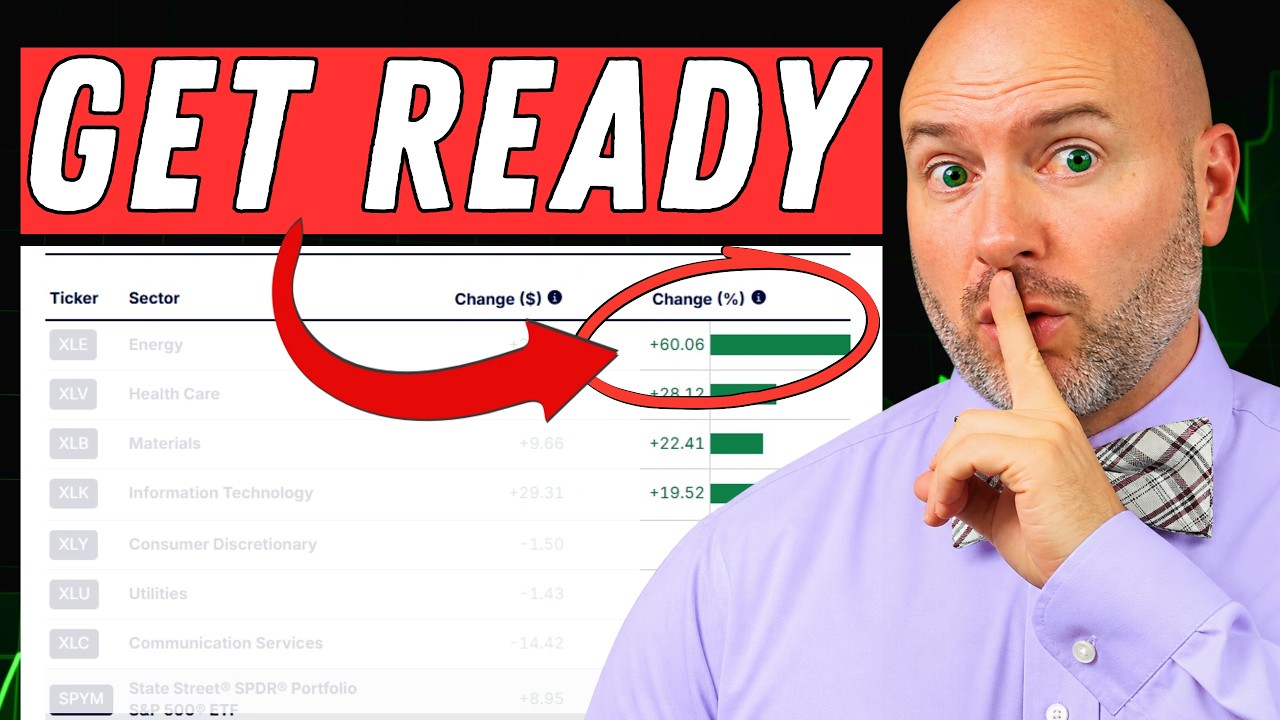
Oil stocks have exploded with the majors up 50 and 70%in the last year. Energy has become the best performing sector this year. A return of 53%beating even those high-flying tech stocks. There's another part of the energy market though barely keeping it up. But if you're following the money, it could be the next big opportunity over the next year. I'm going to reveal five stocks that could be the market's next big winners hiding in plain sight but with nobody talking about this. Now, I pointed to energy as the stock sector to buy in August of last year, but even I didn't see how high this could run. I called out the disconnect between the horrible earnings oil companies were reporting then but then the expectations for surging profits this year and the fact that the stock prices hadn't budged at all. In this theme, I was buying big into the explorers like ConocoPhillips, Diamondback, and Devon Energy ticker DVN. Fast forward and energy is now the top performing sector with those stocks up 53%this year even outperforming tech stocks in the AI boom. ConocoPhillips ticker COP is up 71%Devon up 60%even the laggard here Diamondback Energy FANG up 56%over the last year. And it's because that earnings bonanza I pointed to last year has happened with profits for the stocks in the sector up 108%this year. Almost double the profit growth in any other sector. This chart shows current year earnings growth of profit growth for energy dwarf any of the other 10 sectors and it's not slowing down. Earnings growth for the third quarter, the three months from July through September that are being reported right now are expected to show energy companies grew profits by 136%from last year. And expectations for the sector to book 153%earnings growth when those fourth quarter numbers are reported early next year. That is 154%earnings growth. It's almost four times the profit growth we see in the next best sector. But nation, not all energy stocks have jumped and in fact the market has left one group out. It could be your best opportunity for next year. Even as those major oil explorers have jumped over the last year with shares up 50 to 70%the stocks within the equipment and services part of this sector have struggled. SLB, the old Schlumberger here, has done well, up almost 50%, but the rest of these, Halliburton ticker HAL, up 34%. Baker Hughes, BKR, up 14%. Liberty Energy, up just 3%over the last year, while the rest of the sector has boomed. A part of the problem is that those big oil drillers, like Exxon, like Chevron, have been limiting their spending plans. Nobody expected the price of oil to stay so high for so long, so the explorers are all keeping production growth low, holding down that supply to protect prices, and then just riding that profit boom higher. And you see that when you break down the sector by industry here. Earnings growth of 462%for the refiners, 113%for the large integrated companies like Exxon, but then a completely different story for the storage and transportation, and especially for the equipment and services companies. In fact, versus the 100%plus increase in profits for the integrated explorers, the equipment and service companies are expected to report earnings fell 9%over the last quarter. But then, just like I predicted that massive turnaround in earnings this year for the oil explorers, now that same could be coming for those equipment and the services stocks, and nobody is talking about it yet. We'll put all this together into how to invest in the stocks to buy next, but first, I want to thank Quince for sponsoring today's video. One thing I appreciate more and more these days is convenience. I don't want to spend hours shopping for quality clothes, especially when I can find everything I want in one place, and that's what caught my attention when I found the Quince website. Quince brings together premium clothing and everyday essentials with a focus on quality materials, timeless styles, and the pieces you'll actually want to wear. I've been checking out their men's collection, and there is a lot to like here. From European linen shirts and pants to their organic cotton sweater polo, comfortable beach shorts, and performance wear, they've got options for just about any occasion. And what I really appreciate is being able to find well-made clothes without jumping between different stores or brands. Because Quince works directly with manufacturers, they can offer that quality without the traditional retail markup. So, you're getting the convenience, quality, and value together. So, nation, if you're looking to simplify your wardrobe with some great everyday essentials, check out Quince through my link in the description or scan the QR code to download their app for exclusive offers. They offer free shipping and 365 day returns and now ship to Canada and the UK, too. And nation, here's why I think this next opportunity in oil equipment and services stocks is almost inevitable, including three giant catalysts that could make those 50 to 70%returns in the oil explorers seem tiny. Oil companies have learned a painful lesson over the last decade. Just because oil prices jump higher doesn't mean you go out and drill every hole you can find. That's what's happened during the previous oil booms. Companies borrowed billions, flooded the market with new production, and watched those oil prices then collapse. This chart by the IEA shows how oil companies spent their cash flow over the 15 years through 2022. In it, you can see that even on those plunging oil prices after the financial crisis, oil companies continued to reinvest around 90%of their cash flow back into production, spending it on that equipment and drilling services to to grow rather than on dividends or share buybacks. But, then we've seen investors get burned in every crash on the price of crude as the explorers pushed every dollar into more production, increasing their supply until it overwhelmed demand. Stock prices of the major oil companies went on a roller coaster. The majors here fell 25%in the 2008 crash, rallied in the next few years, but only to crash again when the price of oil fell apart in 2015. And so, what's happened is that the explorers are now once bitten, twice shy and have prioritized dividends and share buybacks at the expense of that production. The 90%spending rate on growth has fallen progressively for nearly a decade. Now, this chart stops at 2022, but shows the scale. Oil companies are spending less than half their cash flow to to reinvest in that production, while 13%goes to paying down debt and 39%is returned to investors through dividends and buybacks. But, there is an obvious problem with this trend. Oil wells, they don't last forever. According to research from the International Energy Agency, nearly 90% of upstream oil and gas investment since 2019 has gone towards just offsetting that declining production rather than actually increasing capacity. And that is big news. That falling amount companies are spending to production is just barely enough to keep oil supply steady, let alone to increase it. But then here's the number that should get your attention. The IEA also found that without continued investment, global oil production would decline by about 8% every year over the next decade. That's not some worst-case geopolitical scenario. That is the natural depletion of existing oil fields. Global oil production could fall from 100 million barrels per day to just a fifth of that, 20 million barrels per day by 2040. Now consider Goldman Sachs forecast for global oil demand to increase. Oil demand of 110 million barrels per day by 2035. So that drop to 20 or even 40 million barrels could create an oil shortage like like we've never seen before and send energy prices soaring. So then put all this together. Just think about it. Even if oil demand doesn't grow another barrel, producers still have to spend enormous amounts just to maintain the current production. They need the new wells, the drilling equipment, the hydraulic fracturing, compression systems, the maintenance services. And that drop in spending over the last decade just is not going to cut it. So now with those profits booming for the majors, they're about to be forced into a choice between a restarting investment in production or watch their cash flow dry up over the next decade. Compounding this is new oil wells don't start producing overnight. It can take years and we've already seen how that reinvestment in new wells has has dropped for more than a decade leaving the industry on the brink of a production slowdown. That could shift this earnings growth from the refiners and the integrated players over into that equipment and the service providers. Now, before we look at those five equipment and service oil stocks that I want to highlight, I do want to look at the oil explorers and the integrated names here, because I still think there's some upside left in this as those oil prices continue to rise higher and and stay that way for a very long time on the shortage in oil. We could see these continue to to produce very solid returns. And in fact, they are priced fairly attractively here. So we got the uh major oil explorers integrated companies here. Exxon, ticker XOM, Chevron Corporation, ticker CVX, one of my favorites there. Diamondback Energy, FANG, Devon Energy, DVN, and ConocoPhillips, COP. So, three of these Exo XOMs, Exxon, Chevron, and Conoco, more of the larger integrated players. Conoco closer to the customer with a lot of its uh service stations. FANG there and Devon Energy, a little bit more uh concentrated there in the shell explorer region. And if we look at this price chart, we can see these prices over the last year have just boomed. Really since the uh you know, even before the the war with Iran, but then even since Iran there. ConocoPhillips up 75%, Exxon 70 63%, Devon Energy up 63%, Chevron 53%, even FANG or Diamondback Energy there up 49%over the last year. But, let's compare these on growth, profitability, and valuation cuz we want to see which are the still the the good buys to pick here. Revenue growth, we'll start with that. Fairly fairly moderate revenue growth expected over the next year. We'll look at the revenue growth forward estimates here. Just 7%for Exxon, 5%for Chevron, uh 6%6.9%for ConocoPhillips. So, you do see with these large integrated players, it is harder to turn revenue growth when you're when you're producing hundreds of millions of dollars in revenue a year. So, you do have a little bit slower a single-digit revenue growth for these these shell players though really ramping up. Just starting to ramp up production after a lot of that that limited production um spending over the last couple of years. Diamondback Energy expected to grow revenues by 20%, Devon 18%over the next year. But, you know that growth is nothing without the profitability. So, I also like to look at this EBITDA margin. That is the earnings before interest, taxes, and depreciation, the profitability on that. Uh the how much how much of that revenue they're converting into those core earnings. Here we see XOM, uh CVX 20 25%. ConocoPhillips 41%, Diamondback Energy 72%EBITDA margin, very strong. And then Devon, 47%uh EBITDA margin, very strong as well. So, very strong profitability for these companies. That means as those as that revenue grows, even the single-digit revenue growers like Exxon, Chevron, and Conoco Phillips, even with a slower revenue growth, they're still converting a lot of that into into earnings, and it's still going to help support the shares even at these even at these valuations, which we'll actually see are not that stretched if we look at the PE ratio here. So, the price of the stock divided by the earnings, and this is the forward earnings. So, what analysts expect the companies to report over the next year. With these, we see the price to earnings ratio. So, valuations not really that stretched on these given especially given how high the stock prices have gone, those returns over the last year. You would expect a much higher valuation, much more expensive stocks here. But just 13 times for Exxon and Chevron, about the same for Conoco Phillips. So, all three of those, about 13 times on a price to earnings basis. So, investors are paying about $13 for every dollar in earnings generated. That is that is kind of surprising for kind of a little bit lower revenue growth, a little bit lower earnings growth on those. Here we see Diamondback Energy and and Devon Energy, the relatively attractive ones of the group, just 9.4 and 9.5 times on a price to earnings ratio. Very attractive there especially especially given that that revenue growth and profitability that we saw. So, higher revenue growth, higher profitability at these two shale producers. I would go with Fang and Devon Energy here if you're looking at still still a interested or still buying some of those integrated oil explorers. Now, I'm going to highlight the five oil field equipment and services stocks to buy next. Compare them all side by side. But beyond spending by the oil producers just to maintain that production, there are three massive catalysts that could accelerate the shift. Three reasons that make this theme one of my favorite investing ideas over the next year. This first catalyst could be Venezuela with the largest oil reserves outside the Middle East. But over decades of corruption, the company has seen its production crash from over 3 million barrels a day to only half a million barrels produced when Venezuela nationalized the industry. So, the government took over those fields, control of those fields. Most of the majors just abandoned the country and a lot of these oil wells are completely shut. Now, with the change in government, that's really no change at all, but we won't get into that. Rystad Energy has estimated that restoring Venezuelan production to 3 million barrels a day could cost $183 billion in capital spending. That is hundreds of billions of dollars in equipment, rigs, drilling, and services. Considering the entire annual spending for oil field equipment only about $138 billion, that could mean a big increase in demand for this over the next decade. The second catalyst here is rebuilding in the Middle East. The war with Iran has damaged oil and gas facilities across the Gulf. The reconstruction bill is staggering here. Here again, Rystad provides an estimate as much as $58 billion in energy-related repairs. And that includes tens of billions in demand for engineering, replacing equipment, compression systems, and specialized services. And critically here, this is an estimate of current damage that doesn't include what we may be needed after the war is finally over. But then, the third catalyst might be the biggest surprise. This AI data centers. We're talking about an entirely different source of demand for some of these companies. JLL estimates the global data center buildout could require as much as $3 trillion in infrastructure and equipment investment by 2030, adding roughly 100 gigawatts of power capacity. Data centers need enormous amounts of electricity, backup power, cooling, and natural gas infrastructure. Companies like Baker Hughes, Kodiak Gas Services, and Liberty Energy are already expanding into these markets, supplying the turbines, compression equipment, and power generation solutions. That is three catalysts that could add hundreds of billions of dollars in revenue to the five stocks I'm going to highlight next, and that's just beyond the normal increase in investment spending desperately needed by the major oil companies. The result is going to be a 180-degree turn in the revenue and the earnings that could then send these stocks higher. We'll start here with SLB, one of the world's largest oil field technology companies with a competitive advantage just in its global reach, its global operations, reservoir expertise, and integrated drilling and production systems. Now, the opportunity is already developing in this one, and the stock price shows it up 53%over the last year. Third-quarter revenue in the Middle East increased 13%sequentially, while management expects Venezuela revenue to more than double this year with potentially much stronger growth even in 2027. SLB is also positioned to benefit from that rebuilding damaged Middle East production infrastructure and renewed offshore exploration. But then, here's that third catalyst that investors are completely overlooking. SLB's data center solutions revenue jumped 76%year-over-year to 230 million, and its planned Kelvin acquisition is going to expand its cooling technology capabilities. That is exposure to two major infrastructure spending cycles in one stock. Next up here, Halliburton, ticker HAL, another global oilfield services giant with strengthened its hydraulic fracturing, well completions, and drilling technology with Stock already up 28%over the last year. Now, its extensive equipment fleet, proprietary technology, and just those established customer relationships provide a huge competitive advantage beyond just its size. The opportunity here is in a recovery in both North American drilling and international production spending. The company reported that third-quarter Middle East and Asia revenue increased 8%from the last quarter, while Halliburton already signed agreements to pursue oil and gas development opportunities in Venezuela, where it has over 90 years of experience. Management also expects about 2%of operating margin improvement that profitability in 2027, which might not seem like it's that big, but it is a big improvement, and that's even without the fracking recovery here in the United States. That's important because any rebound in US drilling would be an additional upside surprise. And here, Baker Hughes, ticker BKR, may offer the most diversified growth opportunity of the group with shares up 21%over the last year. Could also be one of the best opportunities. Beyond its oilfield equipment and services, company is also a major supplier of industrial turbines, compression systems, and power generation equipment. Now, that creates exposure to LNG expansion, Middle East energy infrastructure, and that AI data center catalyst. Just recently reported in the third quarter, Baker Hughes secured an order for 1.1 gigawatts of power generation equipment from a major US technology company, alongside another approximately 500 megawatt AI infrastructure order. It's industrial and energy technology division booked $5.9 billion quarterly orders, bringing remaining performance obligations, so that backlog of orders to a record 39.4 billion. Now, that backlog provides significant revenue visibility, with the company betting not just on more drilling, but also more supply in the broader energy and electricity infrastructure expansion. Kodiak Gas Services, ticker KGS, it's a kind of a different opportunity, specializing in large horsepower natural gas compression equipment that that keeps that gas moving through production and transportation systems. Now, its competitive advantage here comes from a large installed fleet, long-term customer relationships, and that recurring contract revenue. A strong demand and limited compression equipment availability helped its core business deliver 70%adjusted gross margins in the second quarter. But again, like we've seen with some of these others, the bigger opportunity could be in electricity generation. Following its acquisition of distributed power solutions, Kodiak is expanding into its distributed power infrastructure, including data centers and energy microgrids. The company has secured a turbine supply agreement covering up to 1 gigawatt of generation capacity, and sees a path towards developing even more, more than 2 gigawatts by 2030. That's going to create an additional growth opportunity beyond just this traditional gas compression. And here, before I compare these all side by side, this Liberty Energy, ticker LBRT, offers more of a cyclical opportunity through its hydraulic fracturing business, where that that advanced equipment, the operational efficiency, and just its proprietary technology really helps differentiate it from its competitors. Liberty has another potentially significant catalyst here in that AI infrastructure as well. Its Liberty Power Innovations division recently announced a strategic development to deliver 1.2 gigawatts of integrated power services for AI data center campuses. It's targeting its first 500 megawatt service agreement by December. More than that, Liberty also reports that natural gas now accounts for more than 60%of its fracking fleet's fuel consumption and really reducing those customer costs. Investors get exposure here to both a drilling recovery and the emerging AI power demand. So, if we look at these five oil field equipment and services stocks, I think we're going to see something really interesting. It's kind of a disconnection between what the stocks have done over the last year and it really the upside in that revenue and earnings over the next couple of years. Here we have SLB, the old Schlumberger. They they're at SLB, Halliburton HAL, Baker Hughes Company BKR, Kodiak Gas Services, and Liberty Energy LBRT. We can see just the difference in size here that Kodiak Gas Services and Liberty Energy quite a bit smaller at just 4.7 billion and 2.7 billion dollars market cap on those versus 30, 50, 80 billion dollars for these major integrated or major oil field equipment services companies. So, these two really the the standouts as far as a small cap or small small stocks, small companies that could get a much higher boost if this industry can turn around. We can see here scrolling down on the year-to-date chart the stocks actually haven't done that bad other than other than Liberty down about 8 and 1/2%. Schlumberger up 20%, Halliburton up 28%, Kodiak 25%, and Baker Hughes up 21%over the last year. That is on fairly limited revenue growth so far over the last couple of years because those those major integrated companies, the Exxons, the Chevrons, ConocoPhillips just have not been spending much on equipment and services for their fields. But here where I think we see the real surprise here is in the revenue growth planned or the revenue growth expected for these companies. Right now forward revenue growth expectations here. So, forward over the next year only for a single digit revenue growth for most of these. Schlumberger is expected to post about 3.4%growth. Halliburton only 1%growth revenue growth expected over the next year. Liberty Energy about 4%and Baker Hughes about 5 and 1/2%. Kodiak really the outlier here expected to post about 14.5%revenue growth over the next year. But this is where I think we get the major upside surprise and what really takes these stocks higher. When we do see those major integrated oil explorers, the major integrated companies that really start increasing their production spending here into these when we see those catalyst catalyst take off. Venezuela, the Middle East rebuilding as well as the AI data center boom. I think you really see the revenue growth expectations increase for these and that is going to take the valuations as well as the stocks higher. Here looking at profitability on these good profit margins here 20%for SLB. We're looking at the EBITDA margin. So what is the conversion of revenue into those earnings before taxes and depreciation. We have 20%by SLB, Halliburton 18%, 17%for Baker Hughes. So very close profitability measures for all three those very competitive with each other. Liberty only at 12%. So I would like to see Liberty have a higher profit margin than that. Kodiak again the standout though 53%EBITDA margin on that. I want to look at the valuation for Kodiak cuz it is looking very good on this a growth and profitability measure. So now scrolling back up to these valuations. We'll look at here at the PE ratios again. So price to earnings, how much are investors paying for every dollar in earnings and kind of surprisingly these are expensive. we saw with the oil explorers and integrated companies really just 12, 13, 14 times price to earnings. These stocks, these equipment and services companies trading significantly above that. So more expensive on that. Maybe the market is thinking that that the higher revenue growth is coming and so is already bidding up the price to earnings on some of these stocks and going to let it come come back down and when those earnings do come up. But we see here SLB trading at 21, 22 times on a price to earnings ratio. Halliburton 15.5 and Baker Hughes 21.3 times. So of these three, Halliburton clearly the at least expensive of those on that revenue growth that is basically about the same and on the on the operating margin that is basically about the same for these. I would say Halliburton's probably the better deal here. It has relatively similar revenue and profitability for of these three and is trading at significantly cheaper on that. Kodiak just 18 times on a price to earnings basis. We did see a very strong revenue growth as very as well as very strong profitability for that. So, I would definitely be picking up shares of KGS, that's Kodiak Services here. Liberty trading for 99 times. So, a little expensive there. I I might be take a pass on Liberty for right now. Wait to see it come down a little bit in a better better valuation. Oh, we're not done yet though. YouTube thinks that you're going to like this video on the right here next. So, watch it and let's see if they're right.
Comments 0
Sign in to join the discussion.
Sign inNo comments yet. Be the first to share your thoughts!